7 Animals That Migrate Much Farther Than You Think
Migration is a familiar part of the animal experience, and it seems fairly straightforward: leave when conditions become untenable and return when they improve. But migration requires precise timing, major physical endurance, and navigational know-how that scientists are still working to understand. For some animals, the journey spans oceans, hemispheres, and even multiple generations. Here are seven animals with migration journeys that are farther than you may have expected.
Monarch Butterfly

Every fall, millions of monarch butterflies leave Canada and the northern United States to overwinter in the mountains of central Mexico, a journey that can exceed 3,000 miles. When spring arrives, the monarchs move north again, reproducing along the way so that each generation advances the journey a little farther. By summer, the butterflies in northern breeding grounds are several generations removed from those that left Mexico months earlier. Most live only two to six weeks, but the final late-season generation can survive up to nine months, long enough to travel south, overwinter, and restart the cycle the following year.
Arctic Tern

Each year, Arctic terns travel roughly 44,000 miles as they zig-zag between their Arctic breeding grounds and Antarctic waters. The small, gull-like sea birds breed in the far north during the brief Arctic summer, then set off down the Atlantic. In 2016, one tracked arctic tern logged a total of just under 60,000 miles on its journey. These sunchasers might just see more daylight than any other animal, effectively following summer from pole to pole.
Globe Skimmer Dragonfly

One of the longest-known migrations in the insect world belongs to the globe skimmer dragonfly. Their journey traverses about 11,000 miles between India and East Africa, primarily across the Indian Ocean. Parts of the route are done in lengthy sustained flight; individual legs of the trip by this two-inch-long insect are thought to stretch more than 3,000 miles without any stops. The full circuit is only possible with strong seasonal tailwinds and is completed across multiple generations rather than by a single individual dragonfly.
American Eel

American eels begin life far from the freshwater rivers they end up in, in the Sargasso Sea in the North Atlantic. After hatching, their larvae drift for months on the Gulf Stream toward North America, where they grow for decades. When fully mature, they undergo a transformation known as silvering, reaching reproductive maturity and increasing fat stores to begin a return migration of up to 4,000 miles back to the Sargasso Sea to spawn.
Caribou

Caribou undertake some of the longest terrestrial migrations on Earth, with herds in Alaska and Canada traveling around 800 miles each year between seasonal locations. Some populations, like the barren-ground caribou, move in herds of hundreds of thousands between winter forests and northern tundra calving grounds. In certain herds, annual travel can exceed 1,000 miles as they follow plant growth and avoid deep snow and biting insects, even though recent data suggests not only thinning herds, but shrinking migration paths as well.
Bar-tailed Godwit

The bar-tailed godwit holds one of the most impressive records in migration: a more than 8,000-mile nonstop flight from Alaska to New Zealand, completed in just 11 days. The Arctic-breeding bird’s journey across the open Pacific offers no chance for rest, food, or shelter; before departure, it prepares for the flight by doubling its body weight in fat reserves and undergoes a temporary reduction of non-essential organs such as the digestive system, absorbing parts that it can later rebuild. Once airborne, they rely on stored energy and favorable wind systems to carry them across thousands of miles of uninterrupted ocean.
Humpback Whale

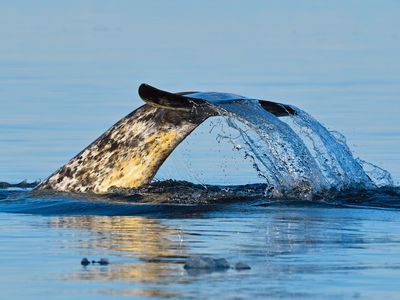
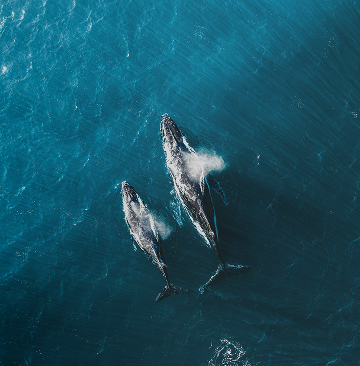
Humpback whales move across entire ocean basins each year, travelling roughly 5,000 miles between polar feeding grounds and tropical breeding waters. In summer, they feed abundantly in cold, nutrient-rich regions such as the North Atlantic or North Pacific, where vast krill and fish populations allow them to build the energy reserves needed for migration. When conditions get colder, they head for warmer waters near the equator; food is scarce here, and so whales begin fasting, using their built-up fat reserves to fuel reproduction and nursing as well as the rest of their migration journey. But that’s just the average, and it’s actually on the low end of humpback migration numbers: Recent tracking revealed that individual whales traveled distances exceeding 14,000 kilometers between breeding grounds in Australia and Brazil, including a record movement of just over 15,000 kilometers, the longest confirmed migration documented for the species.