5 Animals That Can Outjump NBA Players

If you had to grab something from the top shelf in your garage, could you jump to reach it? The average adult human with no athletic training can jump roughly 20 inches, or just under 2 feet. Athletes can jump much higher, especially those trained in sports such as basketball that require a lot of jumping.
The highest jump recorded by an NBA player goes to Michael Jordan, who achieved a vertical of 48 inches (4 feet) in 1984. To us mere mortals, this may sound like an almost superhuman feat, but to some animals — including those on this list — 4 feet is small potatoes.
Pumas
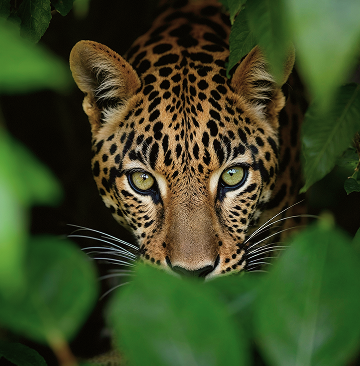
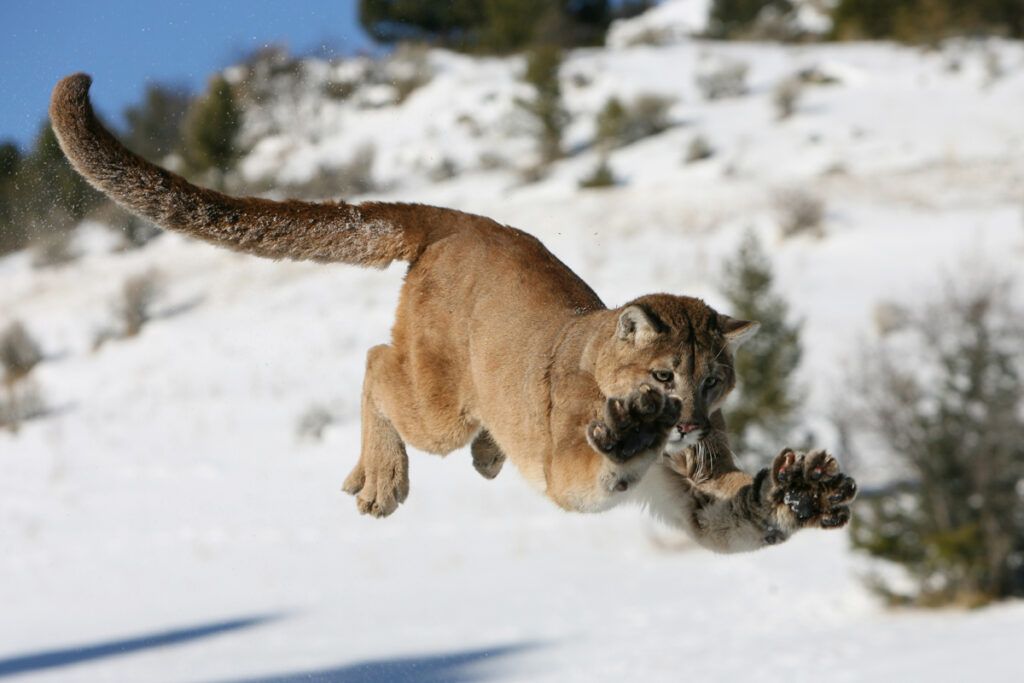
Also known as cougars, Florida panthers, and mountain lions, depending on the region you find them in, this land animal has the highest vertical jump of any creature on Earth. Pumas can reach vertical heights of nearly 18 feet and can cover an almost unbelievable 40 feet horizontally.
Pumas are classified as the largest of the small cats and also as the feline with the largest hind legs, which enables their incredible jumping ability. These cats are ambush hunters who need to pounce at a moment’s notice. Some of those leaps require them to cover a lot of ground, which they do with strong legs, a flexible spine, and a long tail to help them balance and land right on target.
White-tailed Jackrabbits
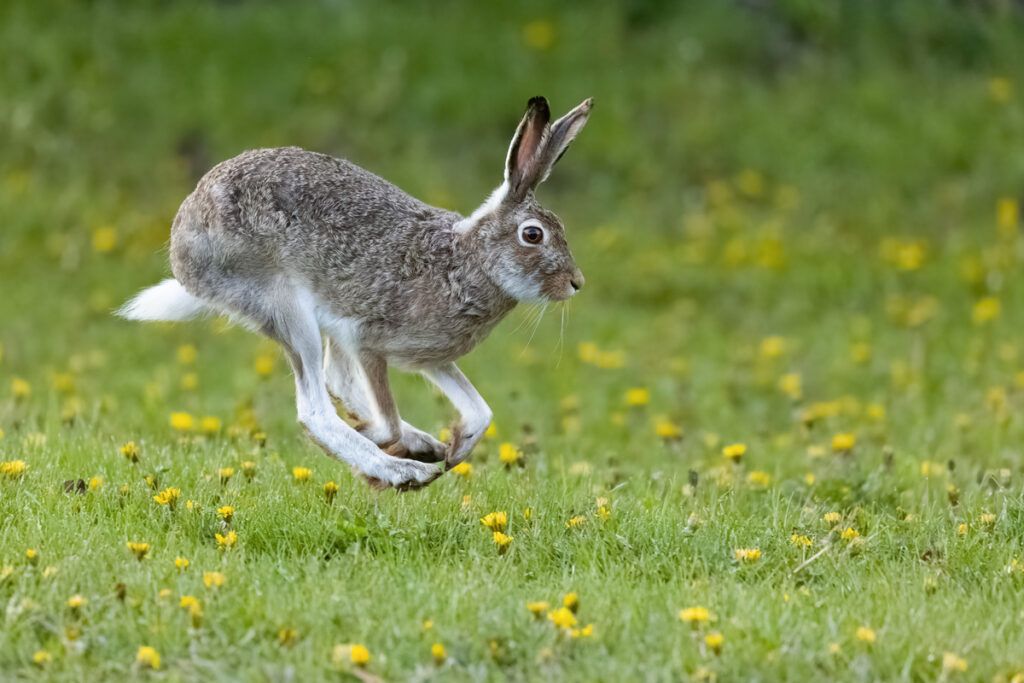
While the puma uses its pouncing prowess to tackle prey, the white-tailed jackrabbit uses those same moves to escape the clutches of hungry predators. These jackrabbits can jump up to 5 feet high and 20 feet long, helping them escape the many skilled predators they face, including pumas, coyotes, bobcats, hawks, and eagles.
The heights these rabbits reach offer an exceptional advantage: the ability to assess their surroundings, including potential escape routes and the animals they’re running from. Built somewhat similarly to pumas, these jackrabbits use strong hind legs to spring upward and reach fantastic heights.
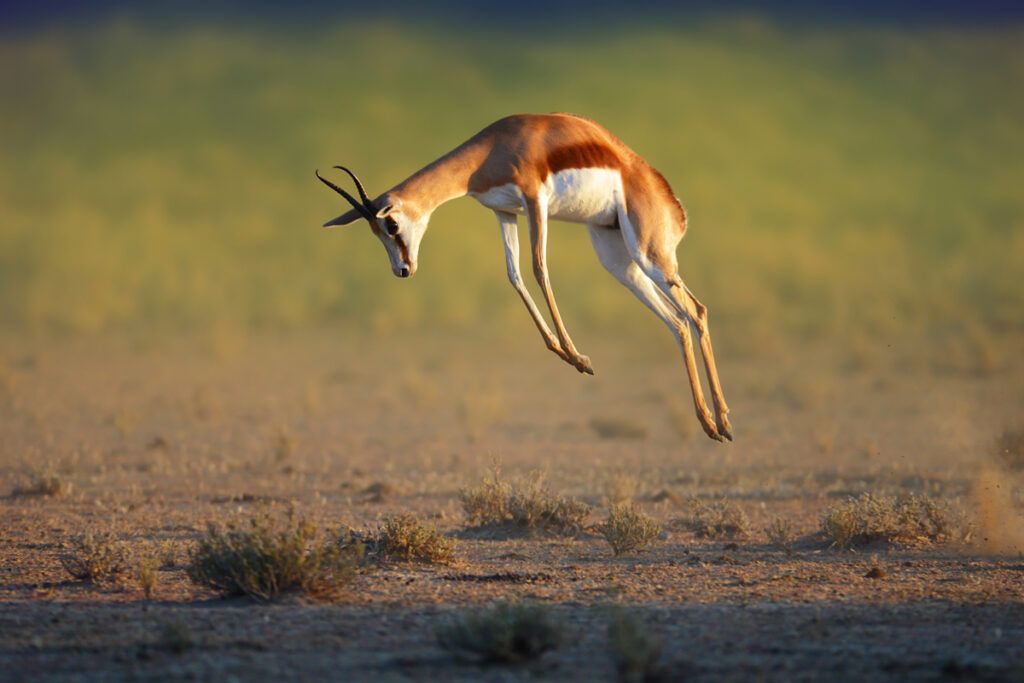
Springboks
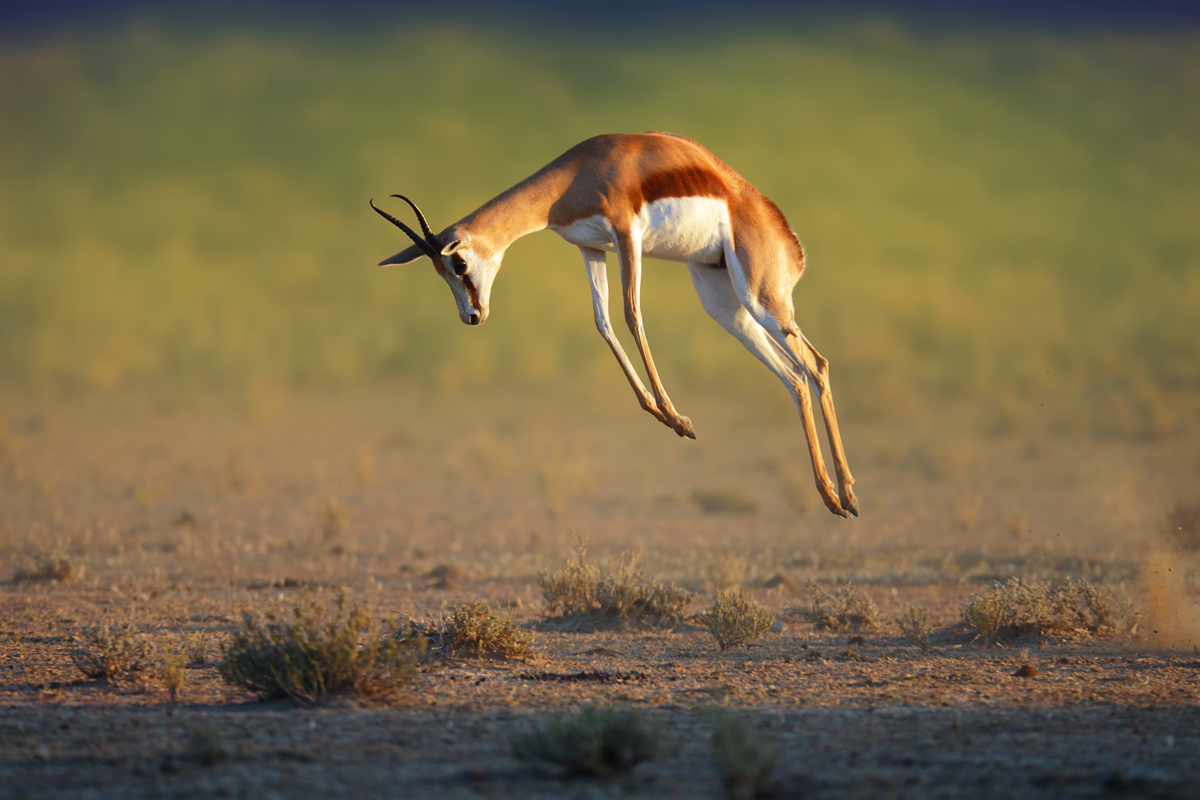
You can find these small antelopes grazing the plains of southern Africa, where they do two things especially well: run fast and jump high. Springboks can run up to 60 miles per hour, which is crucial when evading predators such as lions and cheetahs.
Those swift speeds help these small animals reach heights in such a unique way that it’s earned its own term: “Pronking” is a stiff-legged jump that allows the springboks to leap up to 10 feet high to dodge predators by breaking up their running patterns.
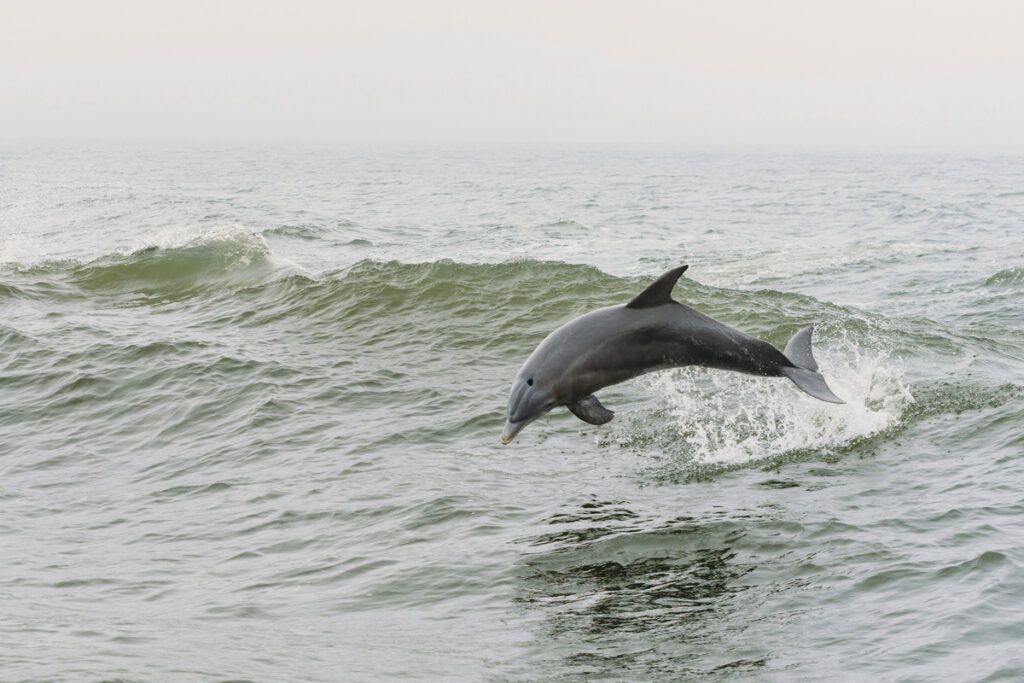
Dolphins
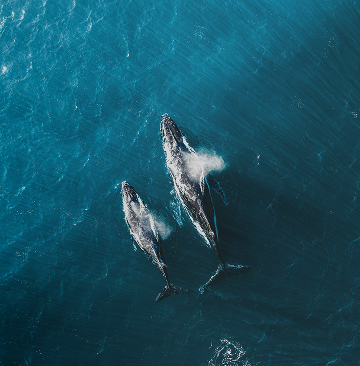
Not all animals need to find their footing on land to reach impressive heights. Dolphins can jump up to 20 feet in the air, making them the highest-jumping marine animal. They use their powerful tails to gain speed underwater before launching themselves upward into the air.
Once they’ve broken the surface, their already-streamlined bodies are perfectly shaped to project upward. One reason some dolphins jump is to send signals to other dolphins in their pods — they use sound to communicate underwater, and the big splash that’s created when they land an explosive jump can send messages to others. Dusky dolphins also jump to herd fish with their splashes, and others jump to fight and to play.
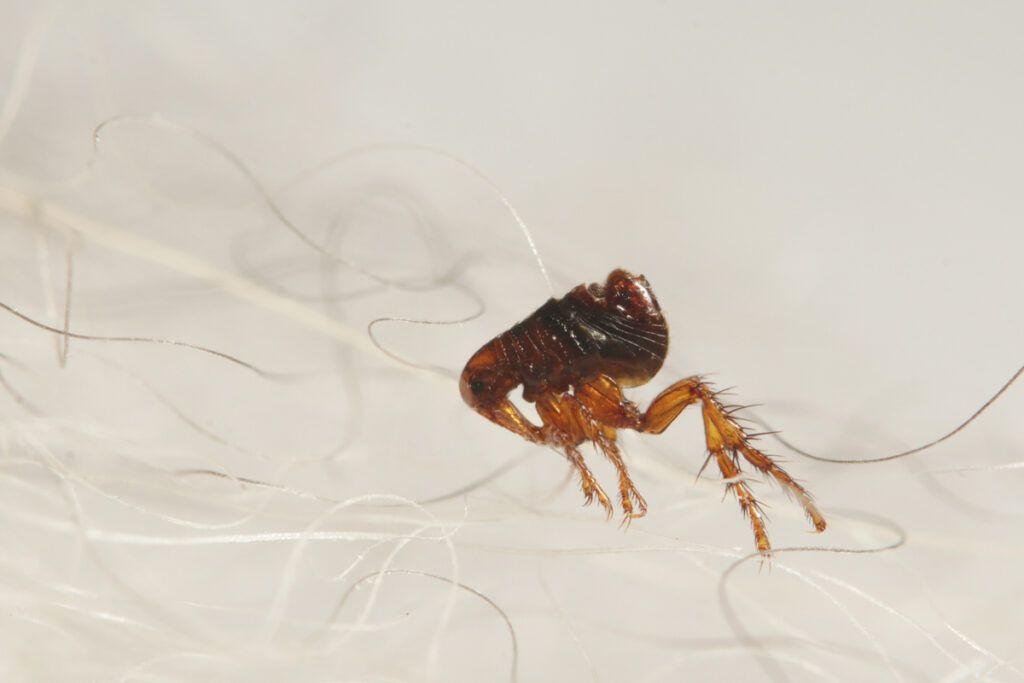
Fleas
So fleas may technically be unable to outjump Michael Jordan,, but they still deserved some recognition for their jumping skills. Fleas can only reach about 20 centimeters vertically, which may not sound like much but that’s 150 times the size of their tiny bodies. That’s the equivalent of a 6-foot-tall human jumping 900 feet.
What’s even more impressive is those heights are reached from a standing position, meaning the fleas don’t even run to build momentum. So how do these tiny pests reach such huge heights? Inside the thorax, fleas have a protein called resilin, a small elastic pad that stores the energy built up when a flea contracts its muscles to jump, which then springs them forward.