6 Animals You Forget Are Animals

Ask someone their favorite animal and they’re likely to name something well-known: dog, cat, parrot, dolphin, snake, etc. That’s largely because we tend to picture “animals” as creatures with faces, along with legs, wings, fur, feathers, or scales. But the animal kingdom is far stranger and more varied than the familiar world of mammals, birds, reptiles, and insects.
Some animals spend their adult lives attached to one spot. Others resemble plants, rocks, or even blobs, while some have no brain, no bones, and barely any recognizable body shape. And some are so unlike the animals we know that it’s easy to forget they’re animals at all.
Sand Dollars
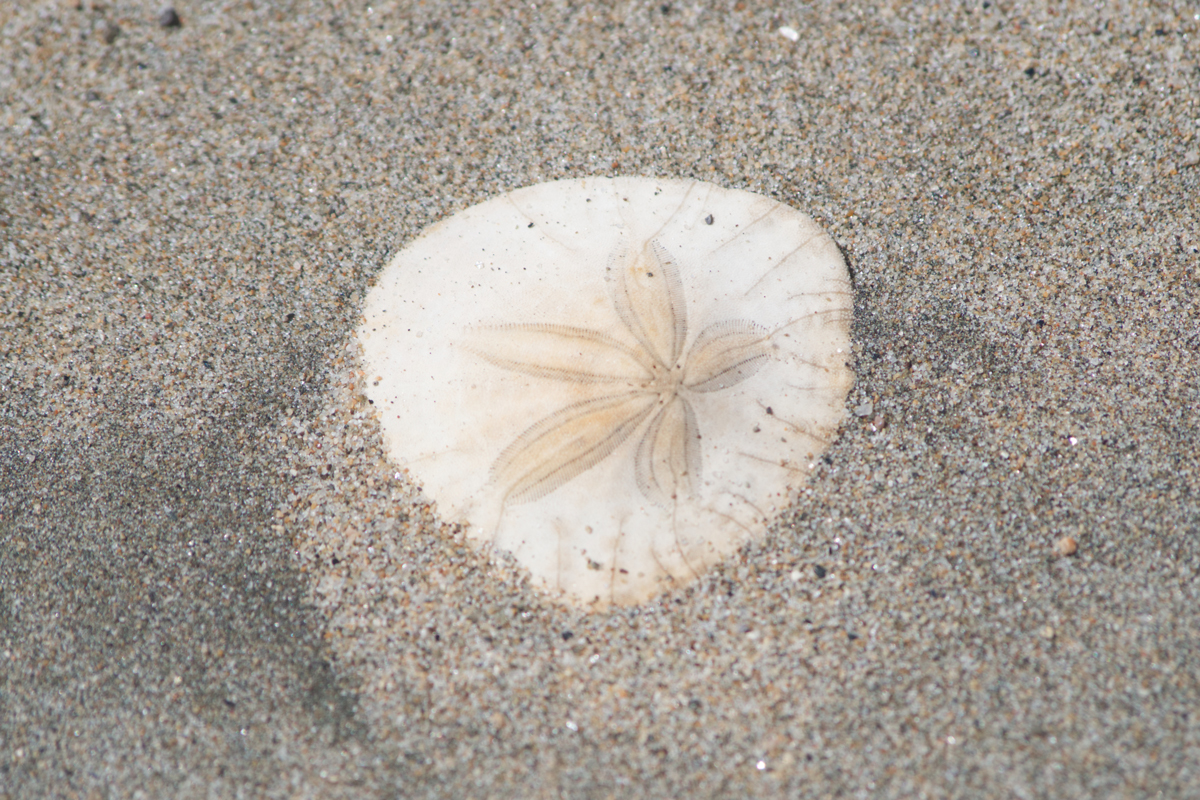
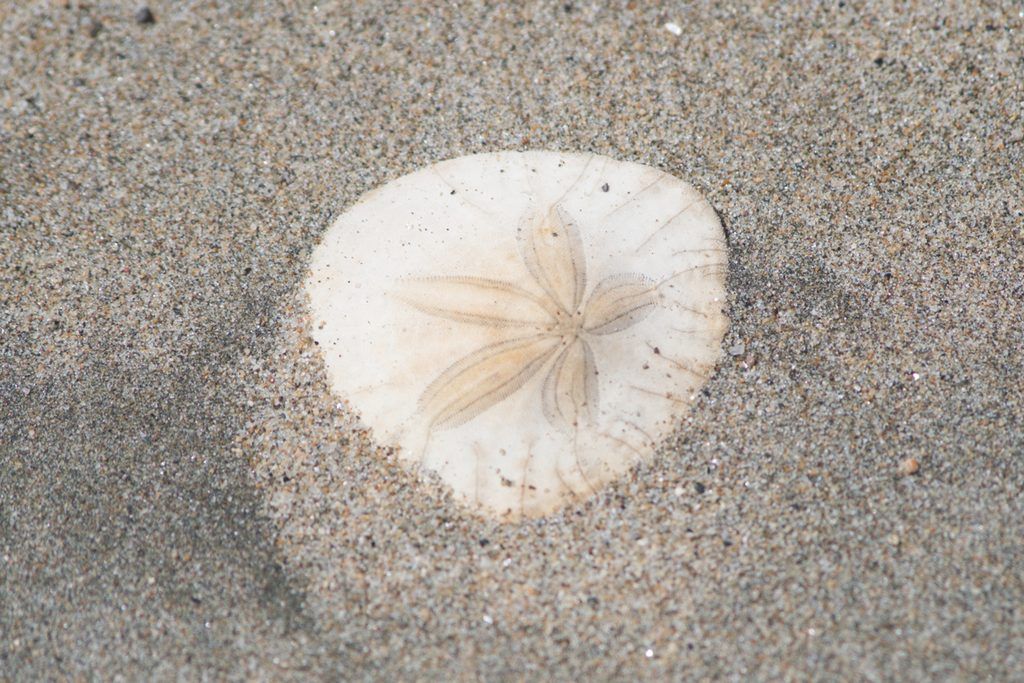
The flat, round objects you find washed up on the beach look more like pieces of pottery than animals, but a sand dollar is a living echinoderm, related to sea stars and sea urchins. While alive, sand dollars are covered in tiny movable spines and tube feet that help them move across sandy seafloors and gather food. Their flat shape also helps them burrow through the sand.
The familiar white sand dollar is actually the animal’s hard internal skeleton, called a test, which is left behind after it dies. As the softer parts of the animal break down, the test is bleached by the sun and becomes the pale object we recognize. What gets collected along with seashells and driftwood is actually the remains of an animal that was once alive beneath the sand.
Oysters
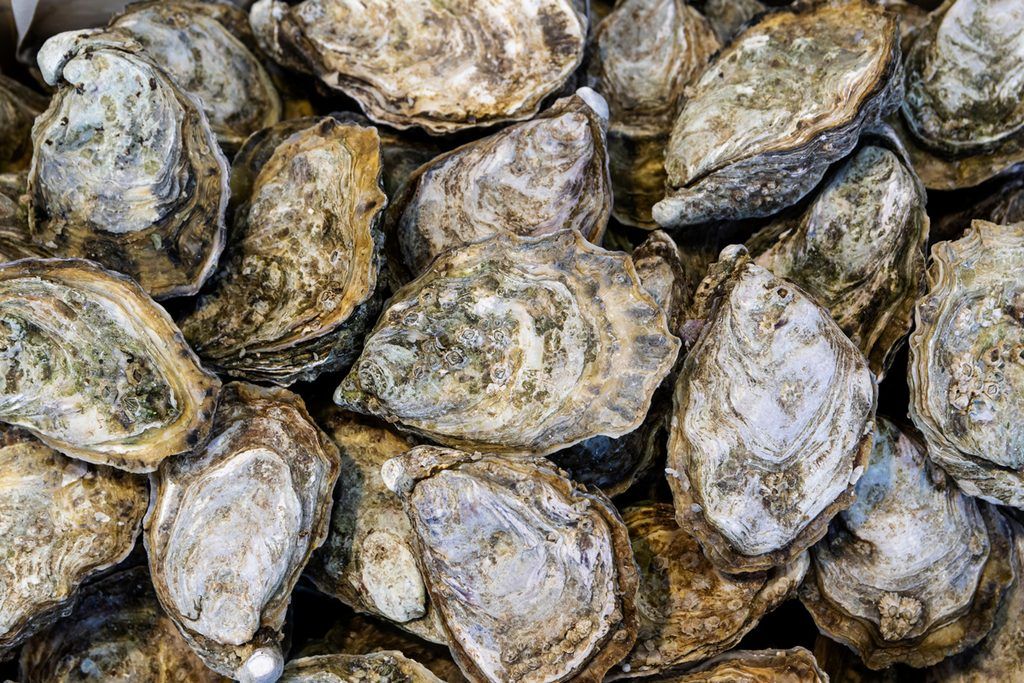
An oyster looks more like a shell than an animal. Once it settles on the seafloor or another hard surface, it generally stays in one place, opening and closing its shell as it filters seawater for food.
Oysters are bivalve mollusks, making them relatives of clams, mussels, and scallops. They draw water into their bodies and capture tiny food particles as the water passes through.
A single adult Pacific oyster can filter as many as 50 gallons of seawater a day. Groups of oysters can also form reefs that provide shelter for other marine life. Oysters also are known for producing pearls when they coat an irritant (like a piece of sand) with layers of nacre, the smooth, iridescent material also known as mother-of-pearl.
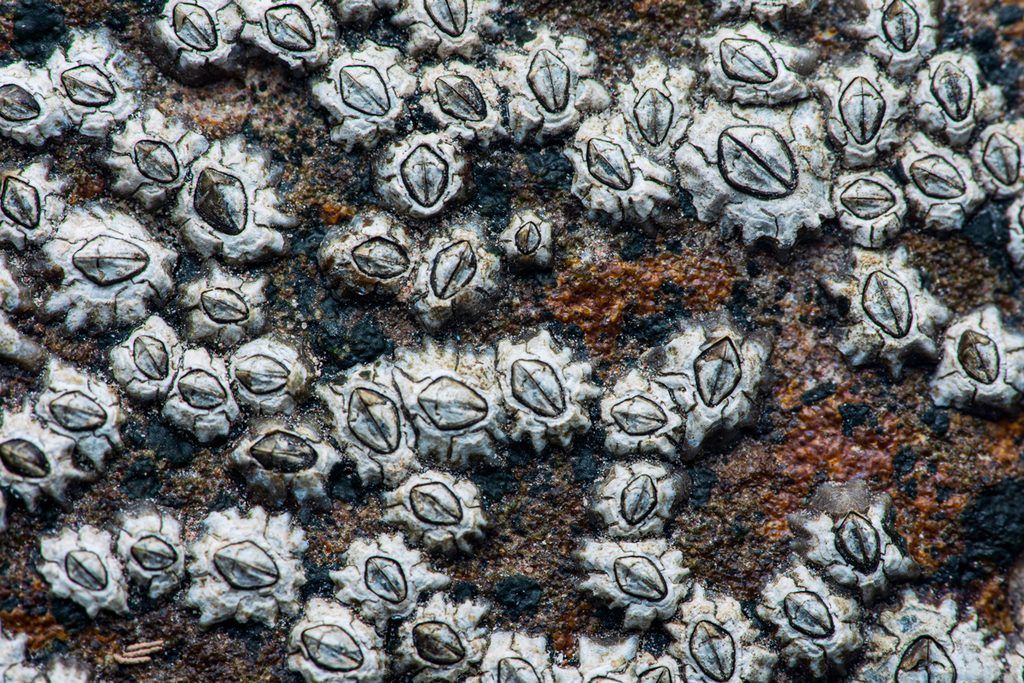
Barnacles
A barnacle looks like a tiny volcano growing on a rock, pier, boat, or even the skin of a whale. Yet these strange, stationary creatures are crustaceans, related to crabs, lobsters, and shrimp.
After a free-swimming larval stage, a barnacle settles onto a surface and permanently attaches itself. When the tide comes in, it opens protective plates and extends feathery appendages called cirri into the water. The cirri then collect tiny food particles as they sweep through the current.
Barnacles also produce an exceptionally strong natural cement that helps them cling onto their chosen surfaces through waves and tides. Their adult lifestyle is so different from that of most familiar crustaceans that it’s easy to forget what they are.
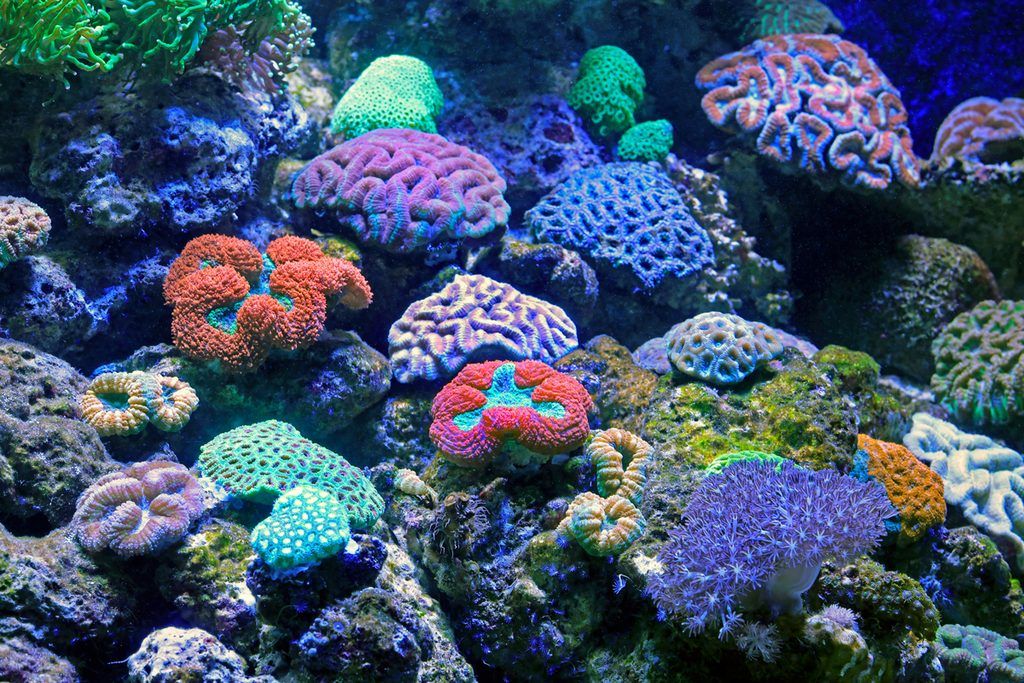
Corals
A coral reef looks like an underwater forest, complete with branching structures and vivid colors. But corals are actually animals rather than plants; in fact, they’re invertebrates related to jellyfish and sea anemones.
The individual animals are called polyps, and each has a mouth surrounded by tentacles that can capture food. Hard corals also secrete calcium carbonate, gradually building the skeletons that create reefs.
Additionally, many corals have microscopic algae living inside their tissues that produce nutrients through photosynthesis while the coral provides a protected home. So what looks like an underwater landscape is actually a huge colony of tiny animals, building the structures that shelter countless other species.
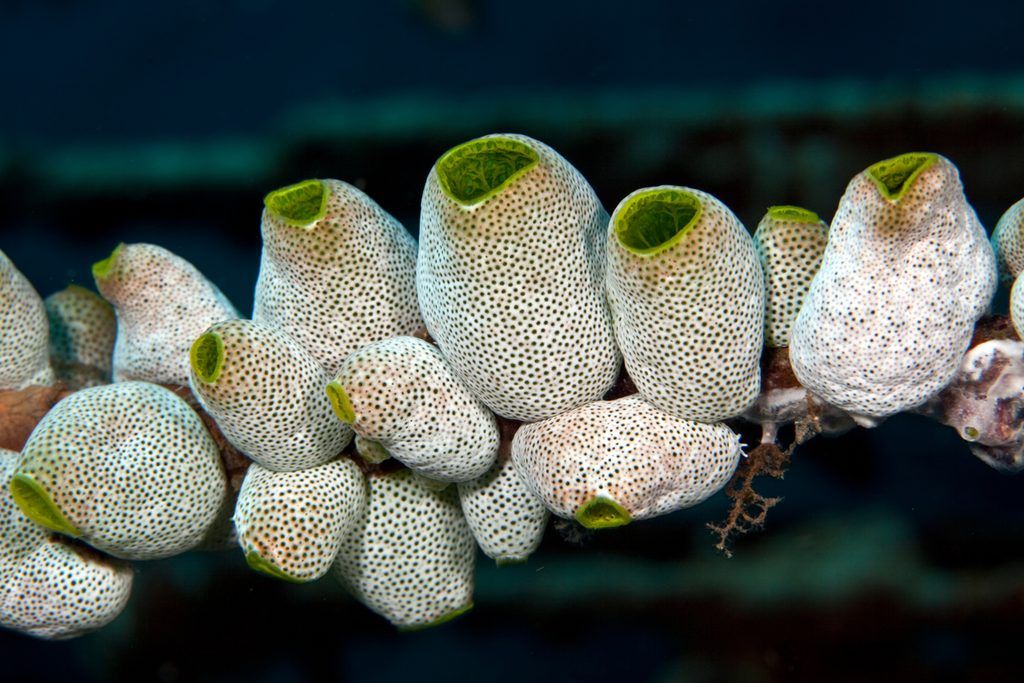
Tunicates
Tunicates, aka sea squirts, can look like rubbery blobs or translucent tubes attached to rocks, docks, and shells. Their adult bodies are usually stationary, and they feed by filtering tiny particles from seawater. Some species can contract their bodies and squirt water when disturbed.
Their appearance is especially deceptive because tunicates look very different as young animals. Their larvae resemble tiny tadpoles and have a notochord, a flexible supporting structure characteristic of chordates, placing them in the same major animal group as humans and other vertebrates. After settling onto a surface, many tunicate larvae attach themselves permanently and transform into the strange-looking adults you can see underwater.
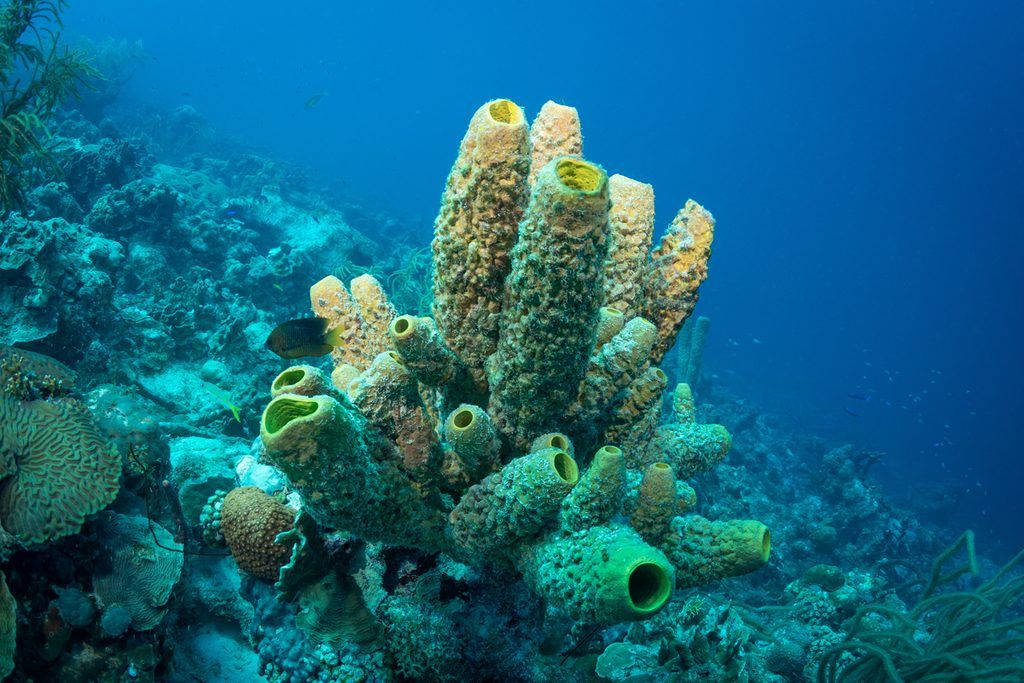
Sea Sponges
Sea sponges come in forms ranging from tubes and barrels to branches, crusts, and simple blobs. Beneath those varied shapes, their porous bodies are filled with channels through which water flows. Specialized cells create currents that pull water inside, where the sponge filters out tiny food particles before releasing the water.
Some sponges measure only a few inches across while others can grow to several feet wide, and their colors can range from bright yellow and orange to purple, red, and green. Sponges don’t move around or chase prey, which makes them particularly easy to overlook as animals, even though they represent one of the earliest branches of the animalic family tree.