5 Bizarre Hybrid Animals That Actually Exist

If you’ve seen Napoleon Dynamite, you already know about the liger — a fictional-sounding but real-life hybrid born from a male lion and a female tiger. But ligers are just one example of what can happen when two different species have a baby.
Most hybrids come from animals that are relatively closely related, but occasionally, species that are much more distantly connected can also produce offspring, particularly when they share the same habitat. The resulting hybrid can combine traits from both parents in some very strange ways. Here are five of the weirdest real-life animal hybrids.
Pizzly Bears
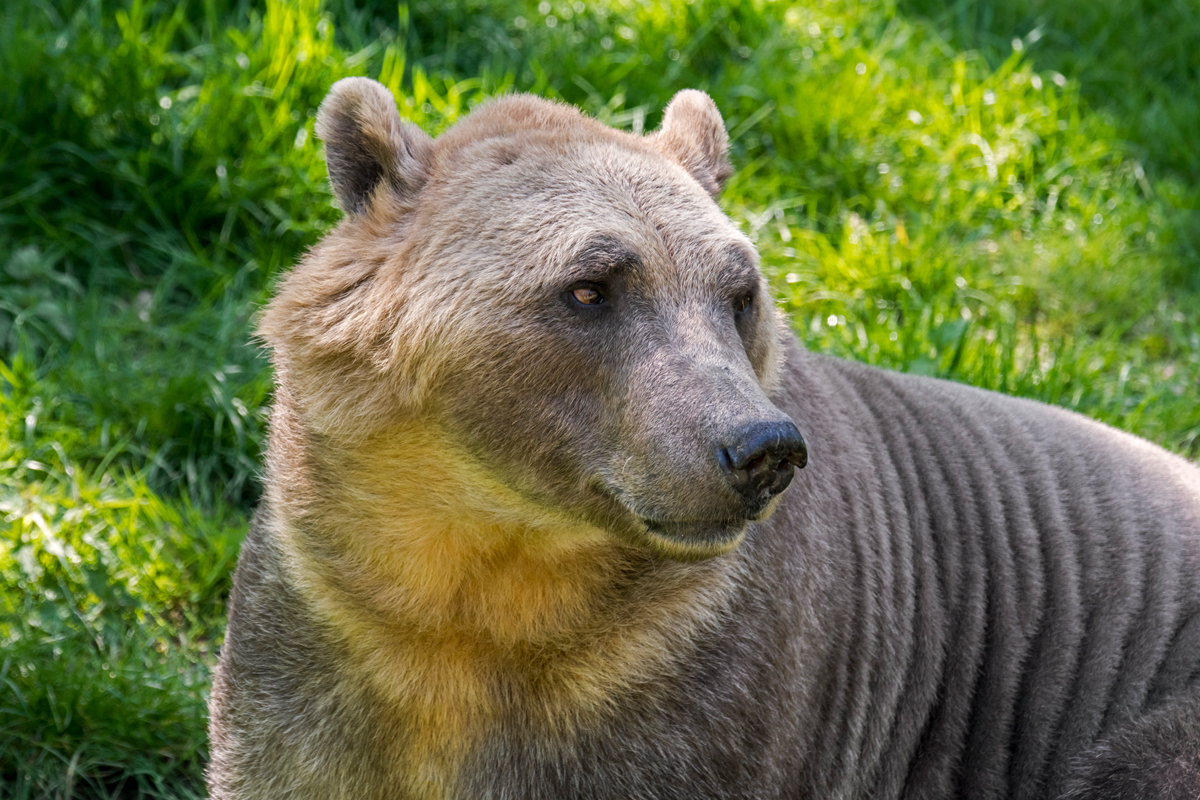
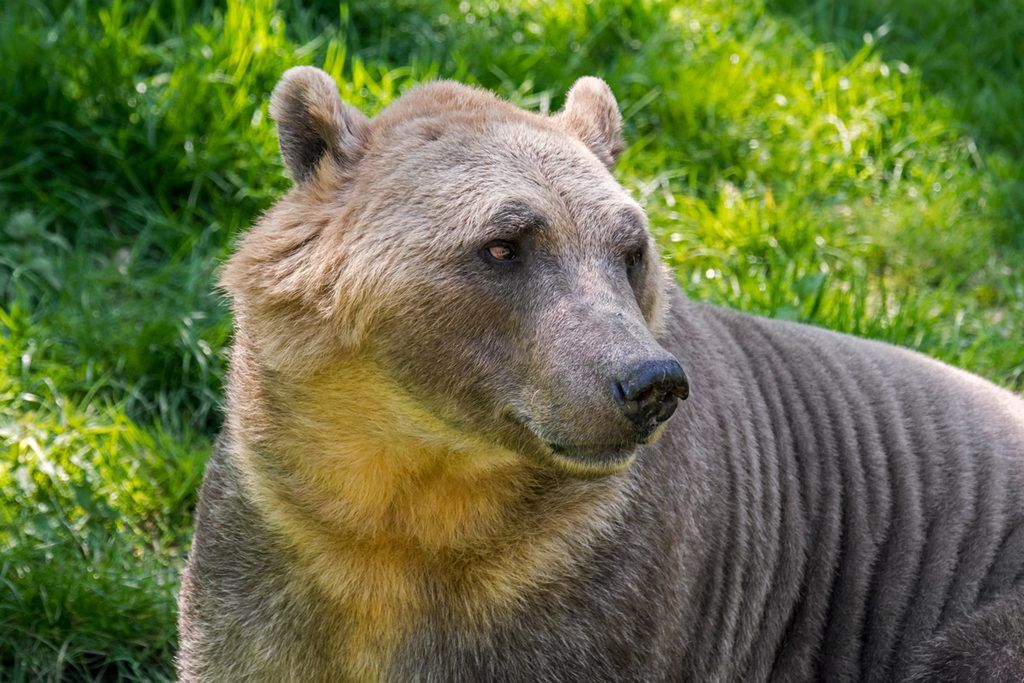
A “pizzly” sounds more like something you’d find in the candy aisle than in the Arctic, but it is indeed a real animal. It’s the result of crossing a polar bear with a grizzly bear, typically featuring the pale coat and broad build of a polar bear alongside more grizzly-centric features such as a darker face and dark patches on the body, longer claws, and a hump over the shoulders.
The first wild pizzly to be confirmed through DNA was discovered in Canada’s Northwest Territories in 2006. Since then, researchers have identified just eight wild polar bear/grizzly hybrids, all descended from the same female polar bear.
Polar bears and grizzlies are closely related enough to produce offspring, but they normally live quite different lives: Polar bears stick near sea ice, while grizzlies are primarily land animals. As the Arctic warms and sea ice declines, however, the two species’ ranges overlap more and more in parts of the Arctic.
Dogxims
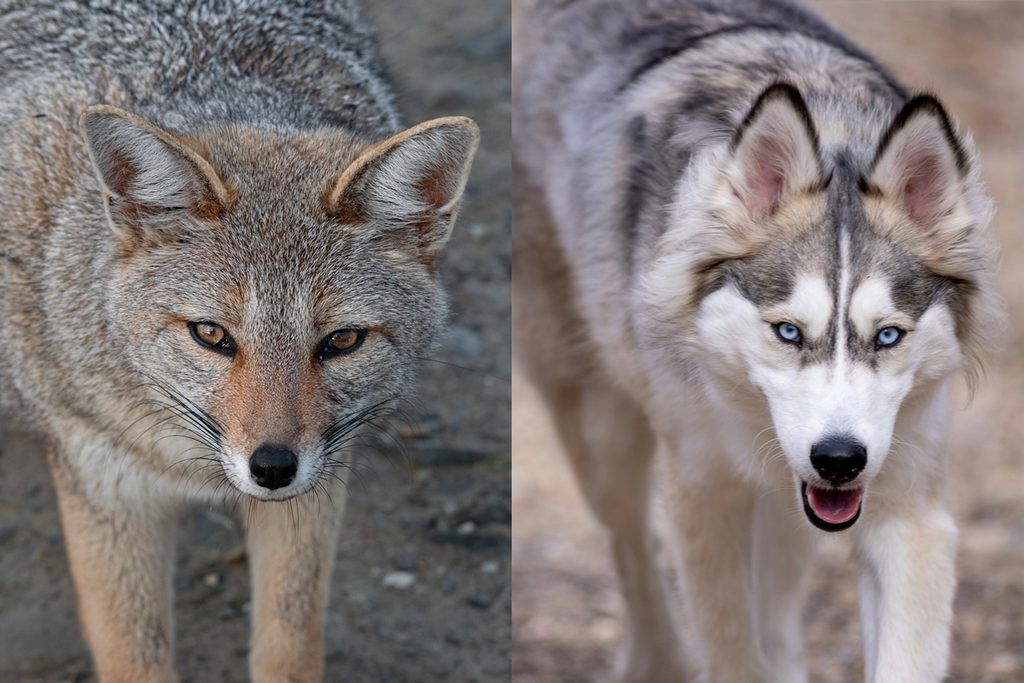
At first glance, the animal dubbed a Dogxim may just look like a slightly unusual dog. The animal was first documented in 2021 when one was brought to a wildlife rehabilitation center in southern Brazil after being hit by a car, and veterinarians began noticing some very un-doglike traits.
Although the animal looked and barked like a dog, its long, pointed ears were distinctly foxlike. It also liked to climb bushes, a behavior more typical of Pampas foxes from the region, and it refused ordinary dog food, preferring to eat rats instead.
While hybrids between closely related species such as dogs and wolves aren’t particularly unusual, the Pampas fox and domestic dog are a different story: They belong to different genera, and their evolutionary lineages diverged roughly 6.7 million years ago.
Narlugas
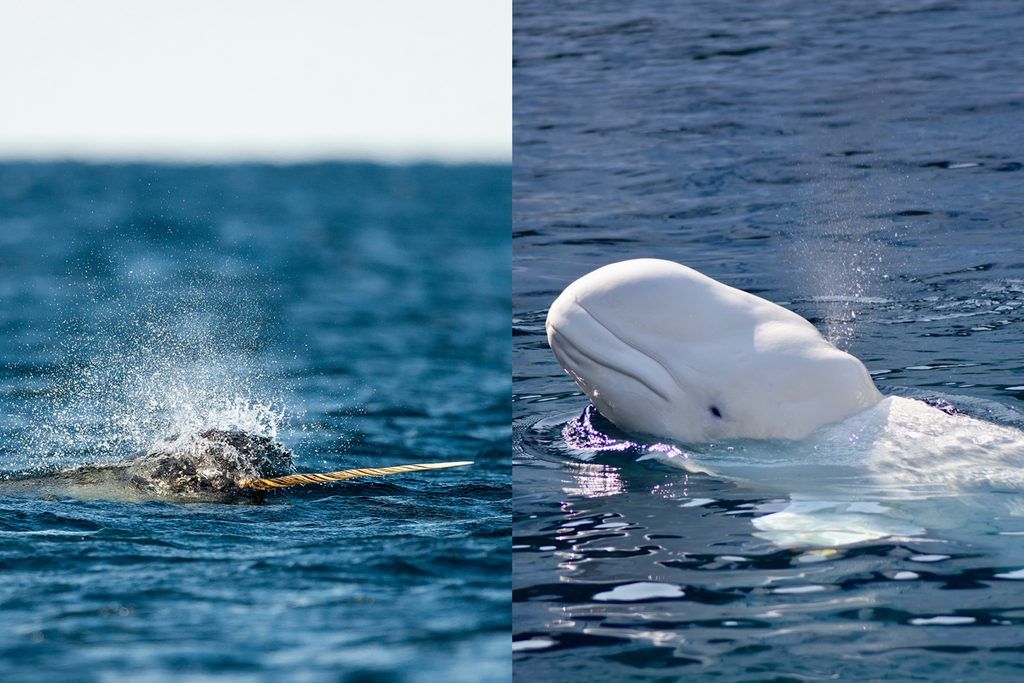
A narwhal and a beluga may seem like an obvious pairing compared to some of the others on this list, but their hybrid is still a strange-looking combination. Known as a narluga, the offspring of a narwhal mother and beluga father has features of both Arctic whales.
The first confirmed narluga came from Greenland in the 1980s, when an Inuit hunter killed a whale with a narwhallike tail but belugalike flippers. The skull was eventually analyzed by researchers and confirmed through genetic testing to be a hybrid.
One of its most notable features was the narluga’s teeth: Belugas have up to 40 similar-looking teeth, while narwhals have a single spiraling tusk on its head. The hybrid had 18 teeth of all different shapes, with some sticking out horizontally and others forming spirals like its own miniature version of the narwhal’s famous tusk.
Sturddlefish
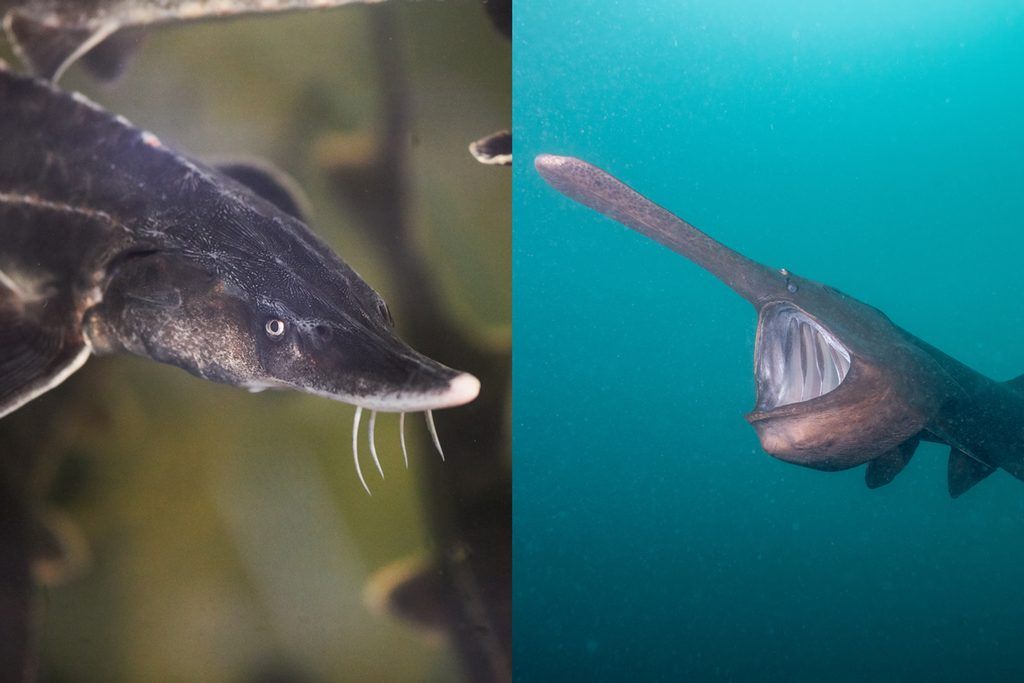
A sturddlefish may sound like something from a Dr. Seuss book, but it’s a real hybrid created by accident as the byproduct of a fish-breeding experiment in Hungary. Researchers were trying to reproduce endangered Russian sturgeon through gynogenesis, a process in which sperm from a separate species can be used to trigger the egg from the intended species to develop without actually contributing its DNA. The researchers used sperm from long-nosed American paddlefish, and to their surprise, some of the sperm fused with the eggs, producing hundreds of hybrids.
The hybrids had the appetite of their mother, the Russian sturgeon, and the long snout of their American paddlefish father. Genetic analysis also revealed that the offspring that looked more like sturgeons had twice as much sturgeon DNA as the more paddlefishlike hybrids. In the end, hundreds of sturddlefish developed and about 100 survived, a completely unexpected result for the scientists.
Golden-Crowned Manakins
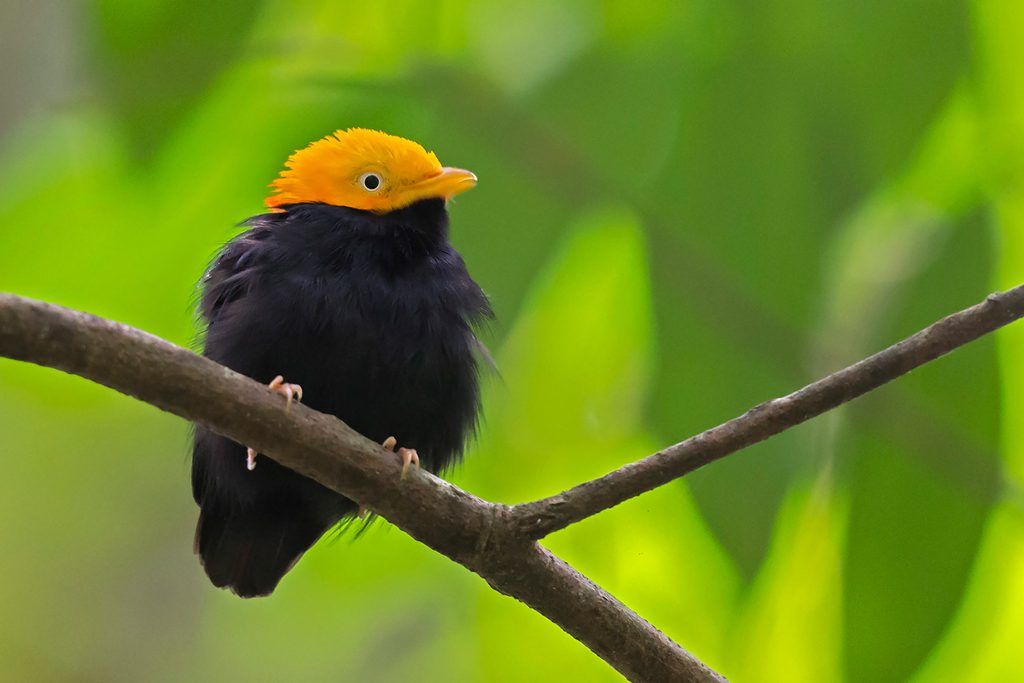
Not every unusual hybrid is a one-off curiosity. In the Amazon, long-term mating between two species of manakin birds eventually produced a distinct hybrid species called the golden-crowned manakin.
This small Brazilian bird originated from the interbreeding of snow-capped manakins and opal-crowned manakins, which are believed to have first mated about 180,000 years ago, and scientists believe that during a later ice age, the hybrid population became geographically isolated from its parents and evolved into a distinct species. The hybrid also developed its own distinctive golden yellow crown, unlike the original white and blue crowns of its parent species.