Why Will Lake Fish Die in the Ocean?

If you’re familiar with aquariums, you’ve probably noticed that freshwater and saltwater tanks are home to very different creatures. A goldfish and a clownfish may look similar, but a goldfish belongs in freshwater, while clownfish need saltwater. Freshwater and saltwater creatures live in very different environments, and their bodies have evolved to maintain the proper balance of water and salts in a process called osmoregulation.
The biggest difference between their habits is salinity, or the concentration of dissolved salts in water: Ocean water averages about 35 parts per thousand (or 3.5%) salt, while freshwater contains very little — less than one part per thousand (or 0.1%). That difference affects how water and dissolved substances move between an animal and its surroundings. Let’s take a closer look at how this all works.
Water and Salt Are Constantly Shifting
The main challenge to maintaining osmoregulation is osmosis, aka the movement of water across a membrane from an area with a lower concentration of dissolved substances, such as salts, to one with a higher concentration. Aquatic animals are constantly exposed to the water around them through gills, skin, and other permeable surfaces, so their bodies need to control the movement of water and salts.
Fish are a good example of this process: In freshwater, the surrounding water contains fewer dissolved salts than an animal’s body fluids do, so water tends to move into the fish while salts are lost to the environment. Freshwater fish compensate by producing large amounts of dilute urine and actively absorbing necessary salts through specialized cells in their gills. Because water continually enters their bodies, most freshwater fish drink little or no water.
Many marine fish face the opposite problem. Seawater contains more dissolved salts than their body fluids do, so they tend to lose water to their surroundings. They compensate by drinking seawater and removing excess salts primarily through specialized cells in their gills and with help from their kidneys to maintain the proper balance of water and minerals.
Some fish species can adjust their osmoregulatory systems when salinity changes gradually, but only within the range their bodies are adapted to tolerate. For most fish, a major change in salinity can quickly become fatal.
Other Aquatic Animals Face the Same Challenge
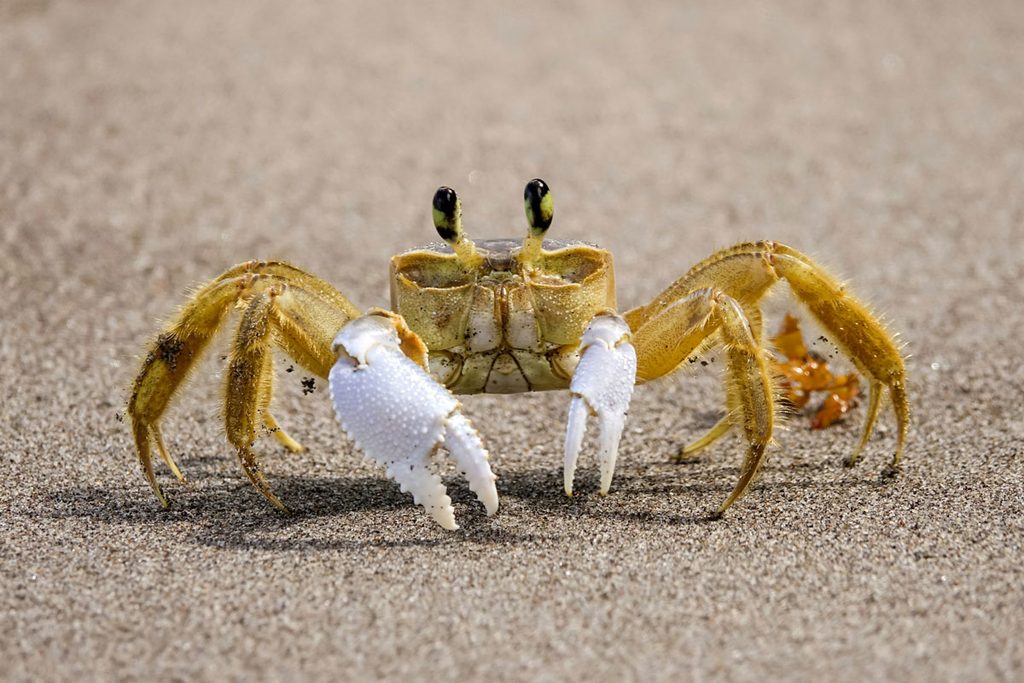
Fish aren’t the only animals affected by salinity. Crabs, shrimp, mollusks, worms, jellyfish, and other aquatic creatures also have to maintain an internal chemical balance compatible with their environments, but they don’t all accomplish that in the same way.
Some marine invertebrates, including many jellyfish and other ocean animals, have body fluids with salt concentrations relatively close to that of the surrounding seawater. Others actively regulate the concentration of salts and water in their bodies. Freshwater invertebrates generally face the same basic problem as freshwater fish in that water tends to enter their bodies, while salts can be lost.
Some Animals Can Move Between Freshwater and Saltwater
Other species are much more flexible. Animals that can tolerate a broad range of salinities are called euryhaline, allowing them to gradually adjust their physiology as they move between freshwater and seawater.
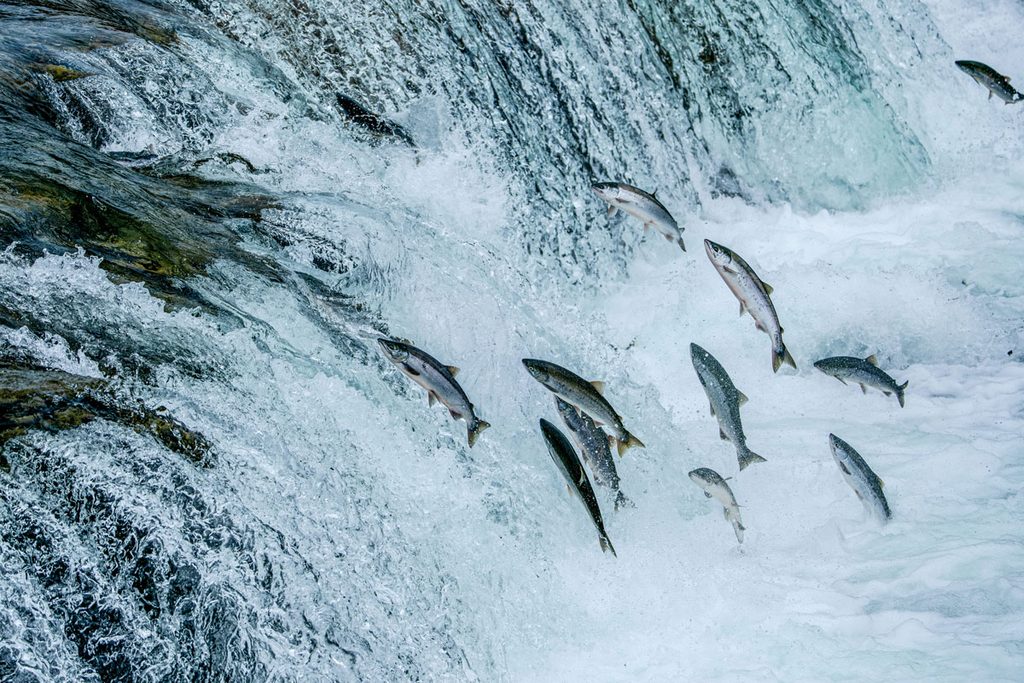
Salmon are among the best-known examples of this. Many species hatch in freshwater, migrate to the ocean, and later return to freshwater to reproduce. Their gills, kidneys, and hormones undergo changes that allow their bodies to switch from conserving salts in freshwater to getting rid of excess salt in the ocean. American eels take the opposite approach, growing primarily in fresh or brackish water (water that’s saltier than freshwater but not as salty as the ocean) before migrating to the ocean to reproduce.
Some invertebrates can also tolerate considerable changes in salinity. Blue crabs, for example, can live in water ranging from nearly fresh to quite salty, while oysters, mussels, and other bivalves can also survive changes in salinity, although each species has its limits. This flexibility allows these animals to live in places where freshwater and seawater mix and conditions can fluctuate.
The Spaces In Between
Estuaries form where rivers meet the sea, mixing freshwater with seawater to create brackish water whose salinity can vary from place to place and change with tides, rainfall, drought, and river flow. Animals that live in those places must therefore be able to cope with changing conditions.
Some species move to areas with more favorable conditions, while others adjust their internal chemistry. Some aquatic animals, known as osmoconformers, allow their bodies’ salt concentrations to change along with the surrounding water rather than actively maintaining a fixed internal concentration. Others, including many bivalves, can close their shells and reduce exposure when conditions become stressful.
Whether an aquatic animal can live in a lake, the open ocean, or somewhere in between depends largely on how its body manages the fundamental challenge of keeping its water and salts in balance.