6 Extinct Creatures That Lived at the Same Time as Humans

Outside of the Jurassic Park films, humans never actually shared this planet with dinosaurs, at least not the non-avian variety; there is a direct link between modern bird species and dinosaurs, but a tufted titmouse is hardly a Tyrannosaurus rex. For tens of thousands of years, though, early modern humans (who first appeared at least 300,000 years ago) walked the same landscapes as animals that have long since vanished.
Our ancestors saw those animals in the flesh, hunted them, and at times ran very quickly away from them. Here are six extinct animals you’ll be amazed to learn early humans lived alongside.
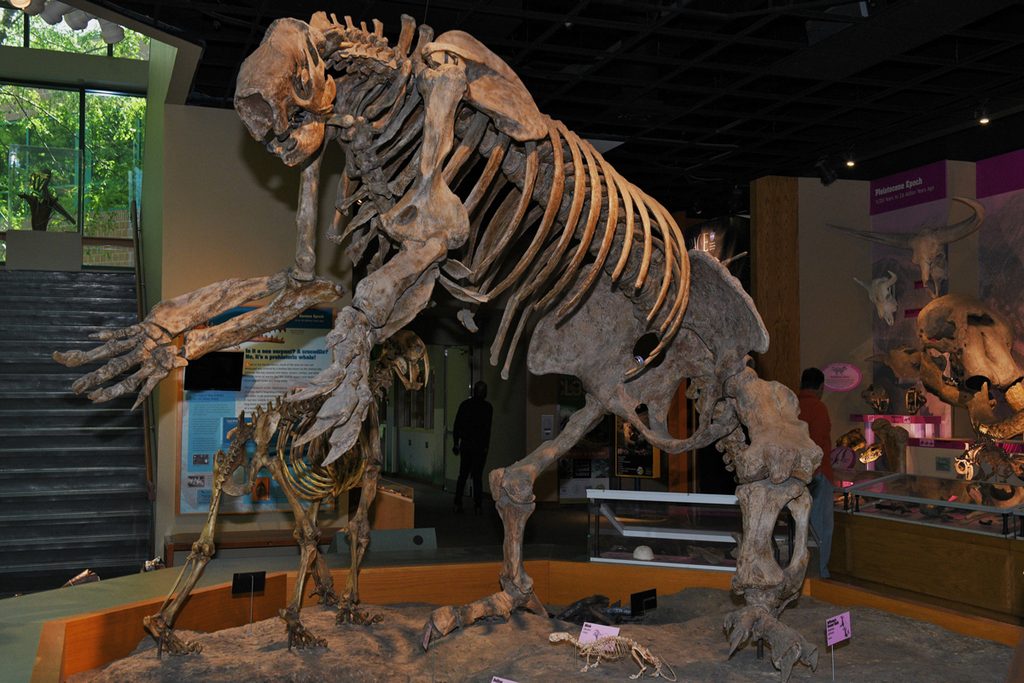
Giant Ground Sloths
Far removed from the slow tree-dwellers of today, giant ground sloths were enormous, powerful animals that went extinct about 12,000 years ago. The largest of all the ground sloths, Megatherium, was taller than a giraffe and weighed about 7 tons.
Despite its massive size, Megatherium, like most giant sloths, was an herbivore, using its massive claws to pull down branches and dig for roots. Early humans lived alongside these giants and left clear evidence of interaction, including cut marks on giant sloth bones that suggest humans hunted and butchered these creatures.
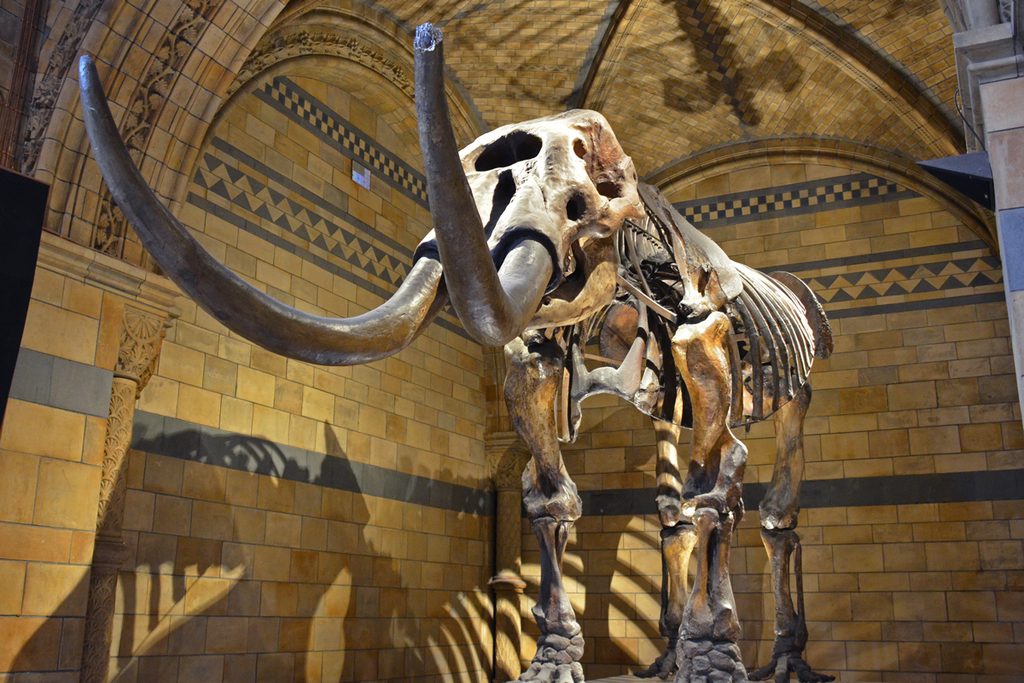
Woolly Mammoths
Did you know we once shared this planet with woolly mammoths? Standing 10 to 12 feet tall and weighing up to 8 tons, these thick, shaggy coated beasts were one of the defining animals of the Ice Age. Early humans hunted them, used ivory from their tusks to make tools and ornaments, and immortalized them in some of the world’s most famous cave paintings. Small populations survived on remote Arctic islands until about 4,000 years ago, meaning they were still around at least a few centuries after the pyramids of Giza were built.
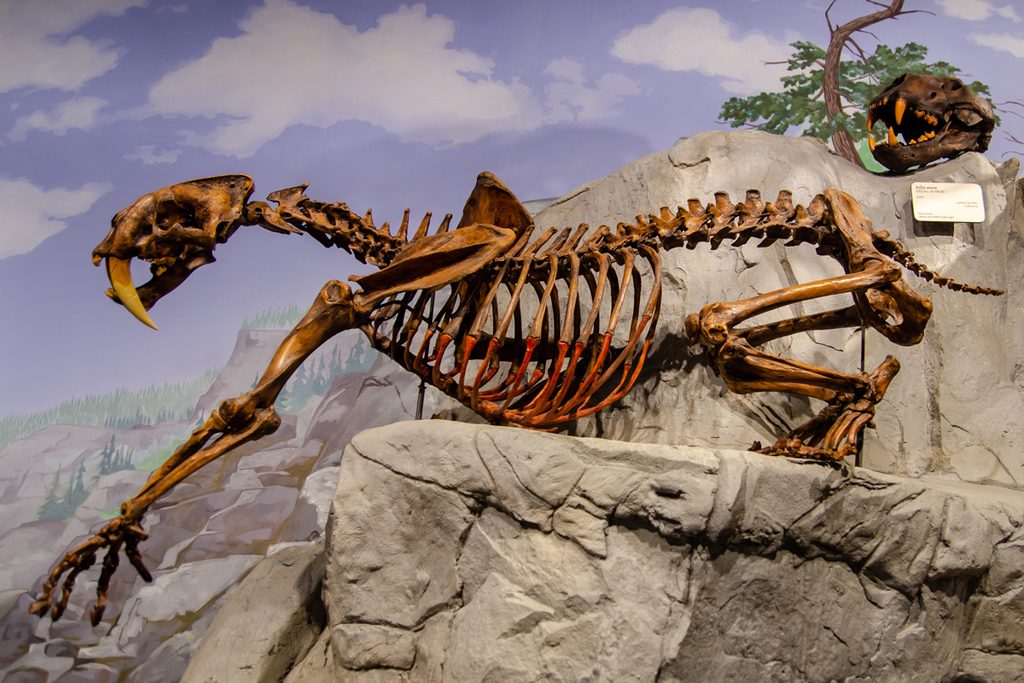
Saber-Toothed Cats
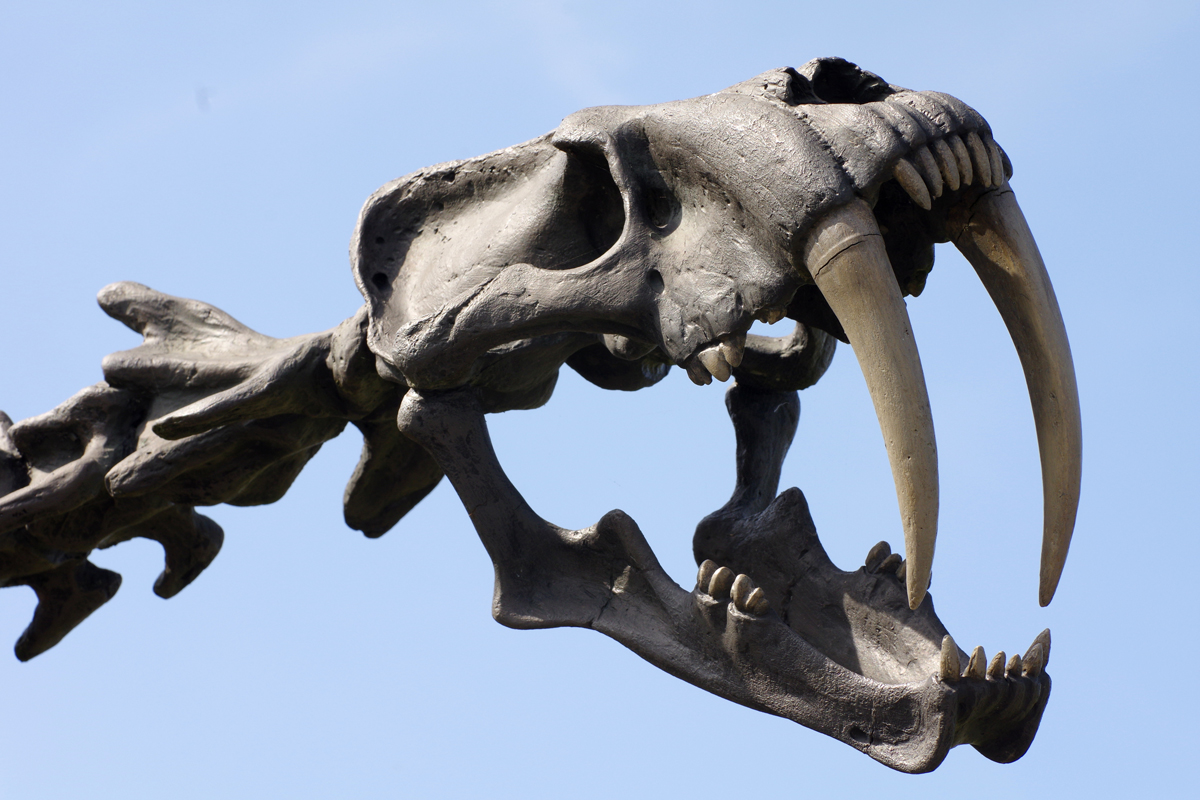
Around the same size as a modern African lion and with upper canines that could reach up to 7 or 8 inches in length, the saber-toothed cat was one of the most formidable predators from the Eocene through the Pleistocene Epochs (56 million to 11,700 years ago). The most iconic and widely known genus is Smilodon, sometimes known as the “saber-toothed tiger.” We know through fossil evidence that humans migrated to what is now South America and the southwestern United States between 30,000 and 21,000 years ago, so our ancestors would have definitely encountered these ferocious hunters.
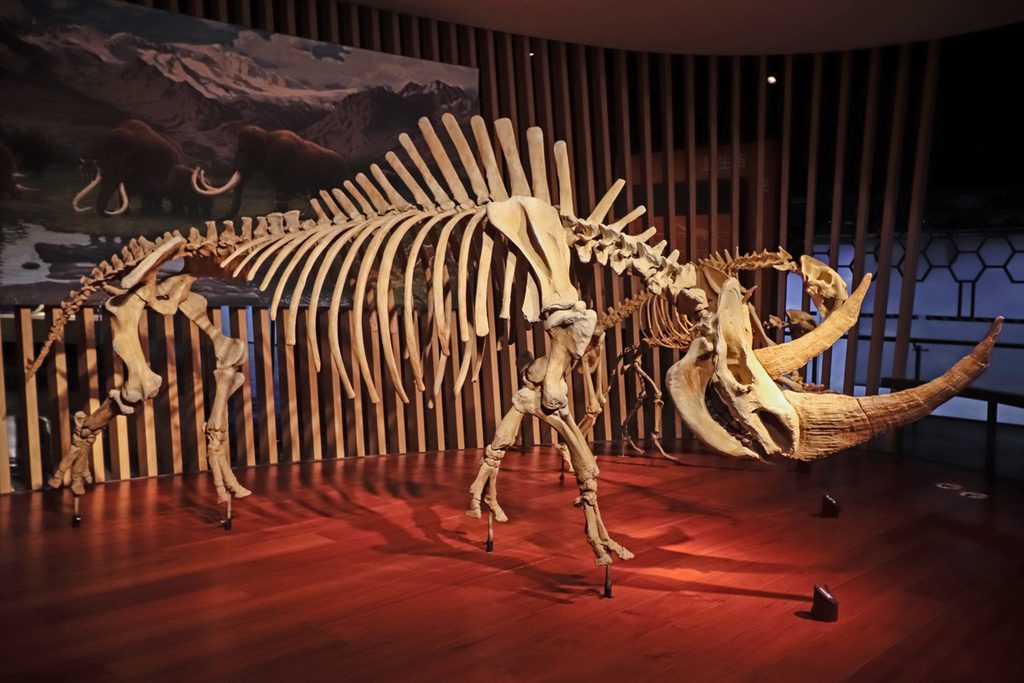
Woolly Rhinoceroses
Everyone’s heard of the woolly mammoth, but the woolly rhinoceros has somehow kept a lower profile. This stocky, thick-coated rhino was about the same size as the largest living rhinoceros (the white rhino) but was adapted to live on the cold steppes of Ice Age-era Europe and Asia. Its most striking features were the two horns at the front of its skull, the longest of which was almost 4.5 feet long.
Woolly rhinos existed alongside both Neanderthals and early modern humans for tens of thousands of years, until they became extinct about 14,000 years ago. Cave paintings depict them with careful detail, and their remains have been found in the same layers as human tools and campsites, proving humans were once very familiar with these powerful creatures.
Cave Bears
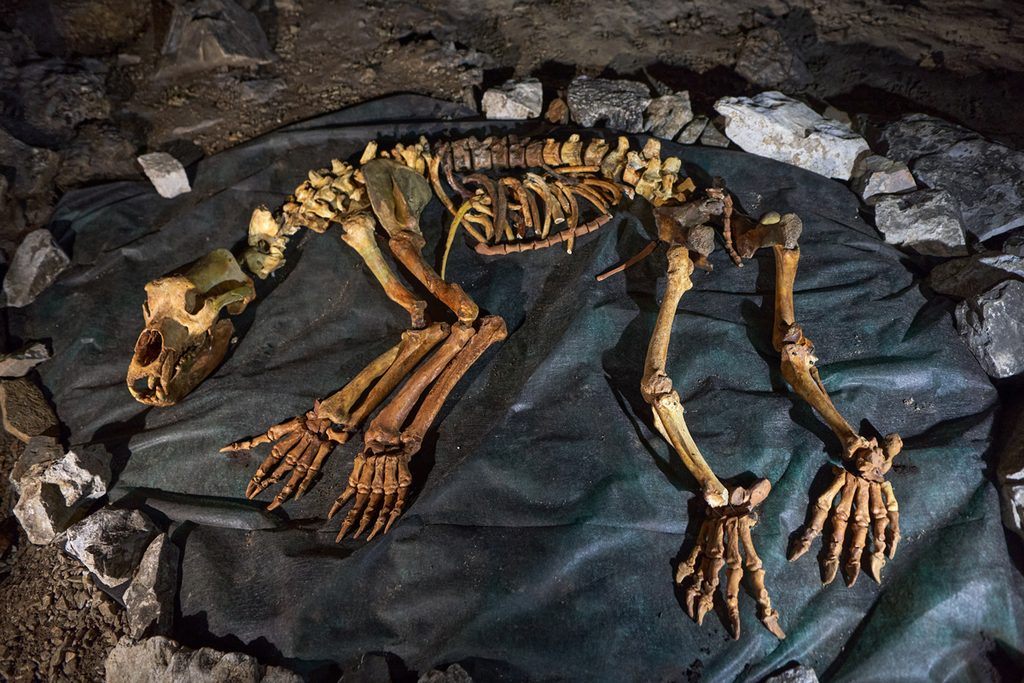
Until about 27,000 years ago, going inside a cave almost anywhere in Europe was a very risky business indeed, thanks to the potential presence of cave bears. These bears were about the same size as the largest modern bears but slightly heavier and with thicker bones, and they spent the harsh Ice Age winters hibernating in the same cave systems that sheltered early humans.
Debates continue about how often people hunted these bears versus simply using the same shelters, and it’s highly unlikely that human hunting caused their extinction, with severe glacial winters being a more likely cause. The cave bear itself was largely vegetarian, so it wouldn’t have actively hunted humans for food — but upsetting one would still have been a bad idea.
Dire Wolves
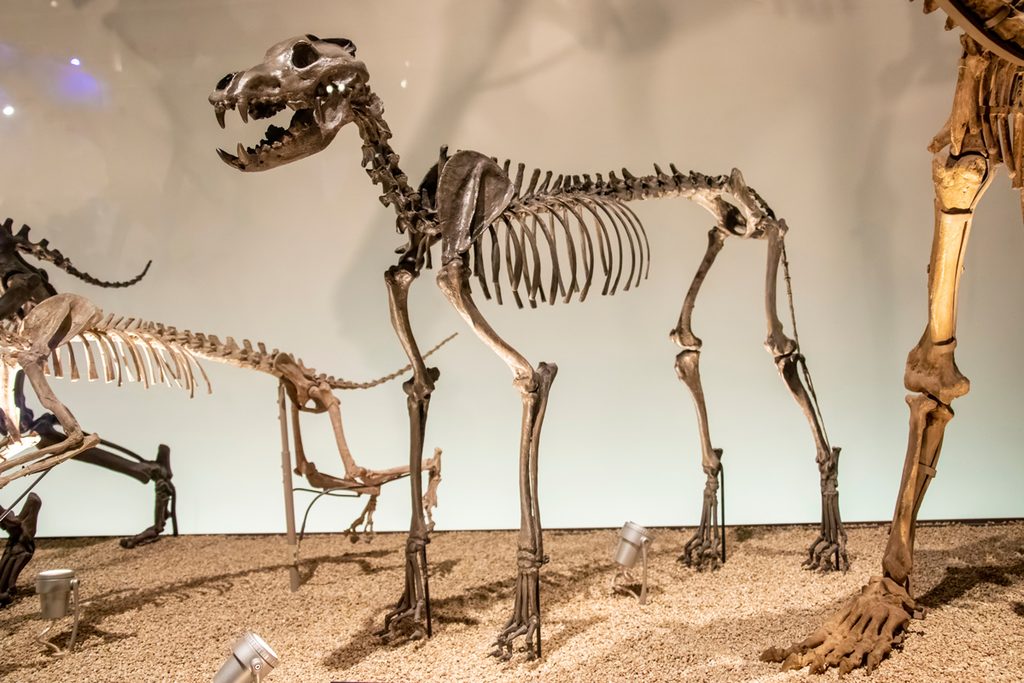
Dire wolves became something of a household name thanks to Game of Thrones. What some people don’t realize, however, is that those fictional wolves were based on a very real animal.
Heavier, more muscular, and with more powerful jaws than the modern gray wolf, the dire wolf was a potent pack hunter that roamed North America during the late Pleistocene. When the first humans reached the continent, dire wolves were still widespread. They went extinct around 10,000 years ago, likely due to a combination of climate change and competition with gray wolves, who proved more adept at catching smaller prey.