5 Fascinating Fish Only Found in Reefs

Coral reefs cover less than 1% of the ocean floor. That’s it. Yet that sliver of seafloor has produced some of the most specialized fish on Earth. Every inch of coral is occupied, defended, or fought over. Millions of years of that competition have produced creatures that build their own beaches, manufacture their own blue pigment, and hunt with a second set of jaws. Here are five reef species whose survival strategies are stranger than they first look.
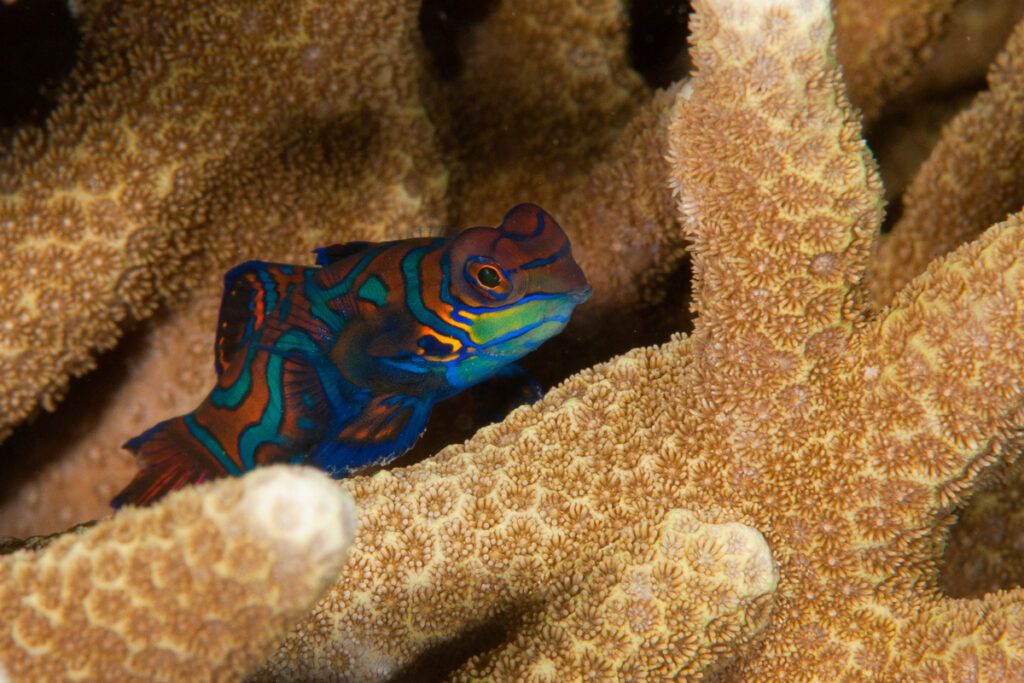
The Mandarinfish Doesn’t Need Scales
Most fish rely on scales for protection, but the mandarinfish skipped that step entirely. Its skin is covered in a thick mucus instead, one that wards off parasites and tastes bad enough that predators spit the fish back out after a single bite. Nobody’s going back for seconds.
The color is the real surprise, though. Mandarinfish are one of only a few known vertebrates that produce true blue pigment in their own skin. Almost every other blue animal on Earth only looks blue because of how light bounces off microscopic structures, not because of the actual pigment. The mandarinfish just makes the color itself, no tricks of light required, which is a strange flex for a fish that also smells terrible up close.
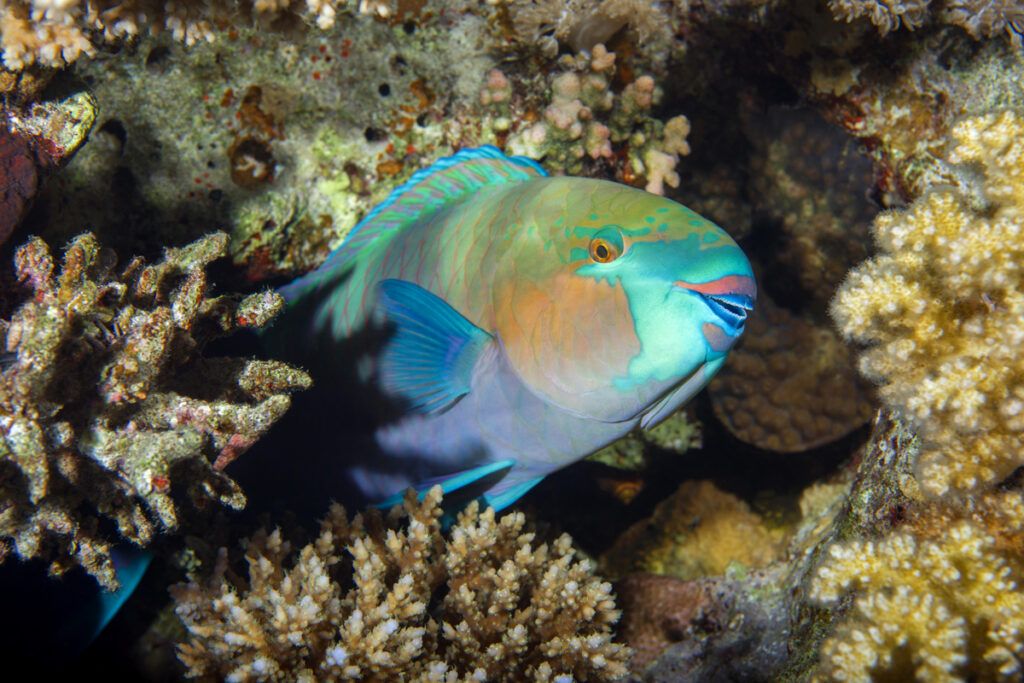
The Parrotfish Builds Beaches
A parrotfish spends most of its day scraping algae off dead coral with a beak built for the job. Along with the algae, it grinds up bits of coral rock, and what comes out the other end is sand. Real sand, the kind you might find under your beach towel. A single fish can produce more than 100 pounds of sand a year, and on some tropical islands, a good chunk of the beach exists because of this exact process.
At night, some species take it a step further and wrap themselves in a mucus cocoon before falling asleep, fully encased in a bubble made of their own spit. Researchers think it masks their scent from nighttime hunters like moray eels. Whatever the reason, the parrotfish doesn’t seem to mind sleeping inside a bag it made out of its own mouth.
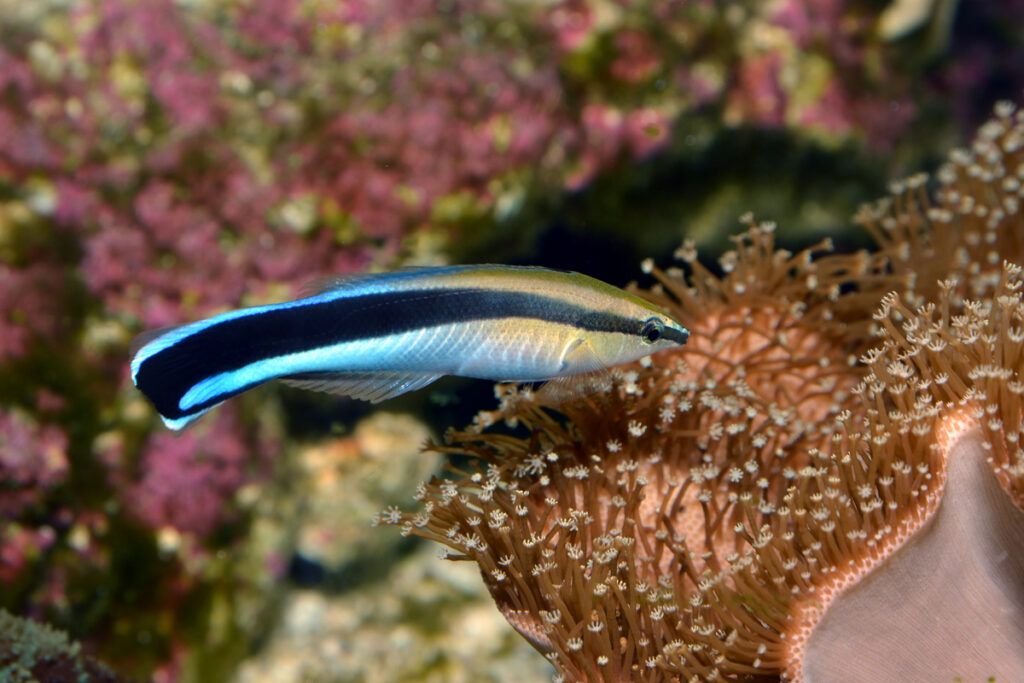
Cleaner Wrasses Keep the Reef Running
Cleaner wrasses set up permanent cleaning stations on the reef, and other fish, including predators, line up and wait their turn. The wrasse has a thriving business picking off parasites and dead tissue, sometimes swimming directly into a client’s mouth or gill chamber to finish the job. One wrasse can service well over a thousand fish in a single day.
The cleaning stations are so reliable that another reef fish evolved to take advantage of them. The sabre-toothed blenny closely resembles a cleaner wrasse and copies its behavior well enough to fool unsuspecting visitors. Fish expecting a routine cleaning instead receive a quick bite before the imposter disappears.
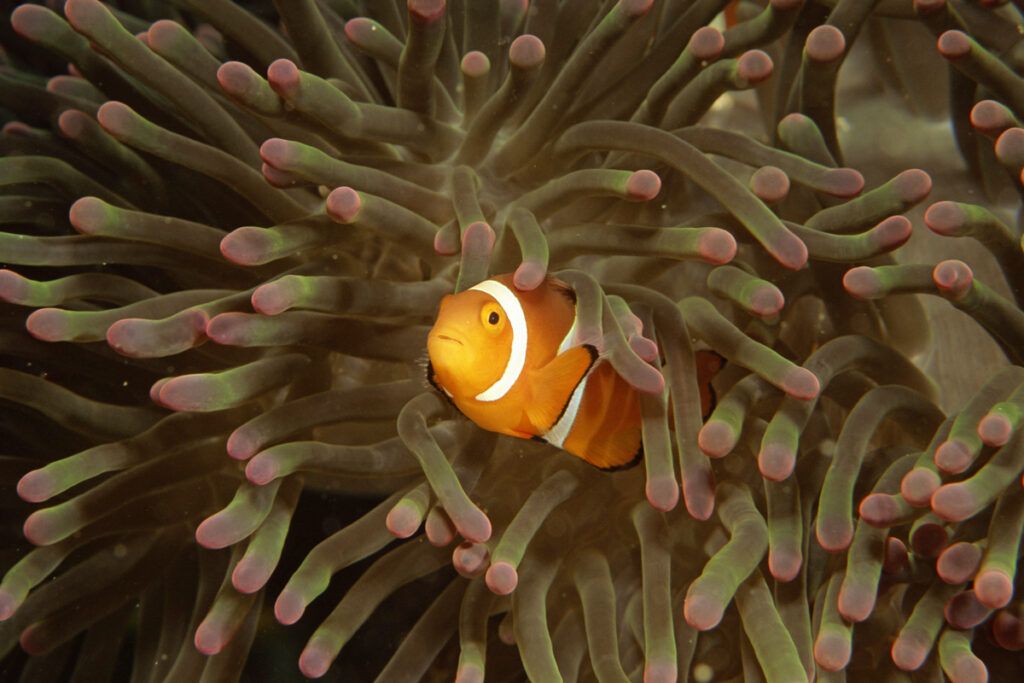
Clownfish Live in a Strict Social Hierarchy
Every clownfish begins life as a male. No exceptions. Within a group, the largest fish eventually becomes the breeding female, and the second-largest becomes her mate. Everyone else stays immature and waits.
If the female dies, nobody grieves for long. The dominant male changes sex, takes her place, and the next fish in line gets bumped up to breeding male. It’s one of the best-documented examples of sequential hermaphroditism in the animal kingdom, and it means the whole group can keep reproducing without ever needing a newcomer.
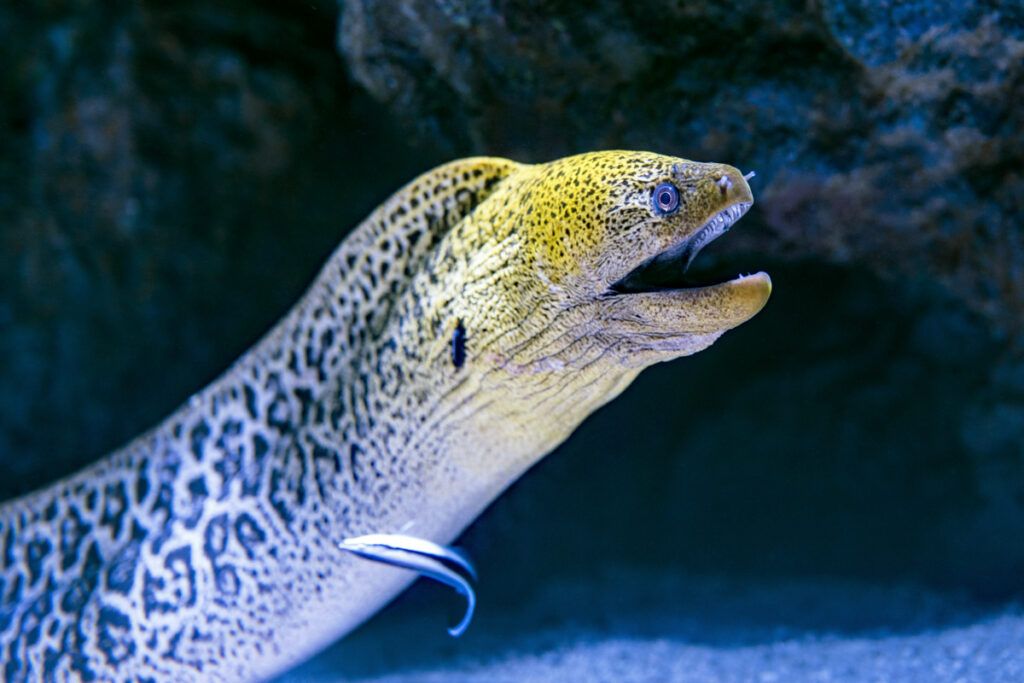
Moray Eels Hide a Second Set of Jaws
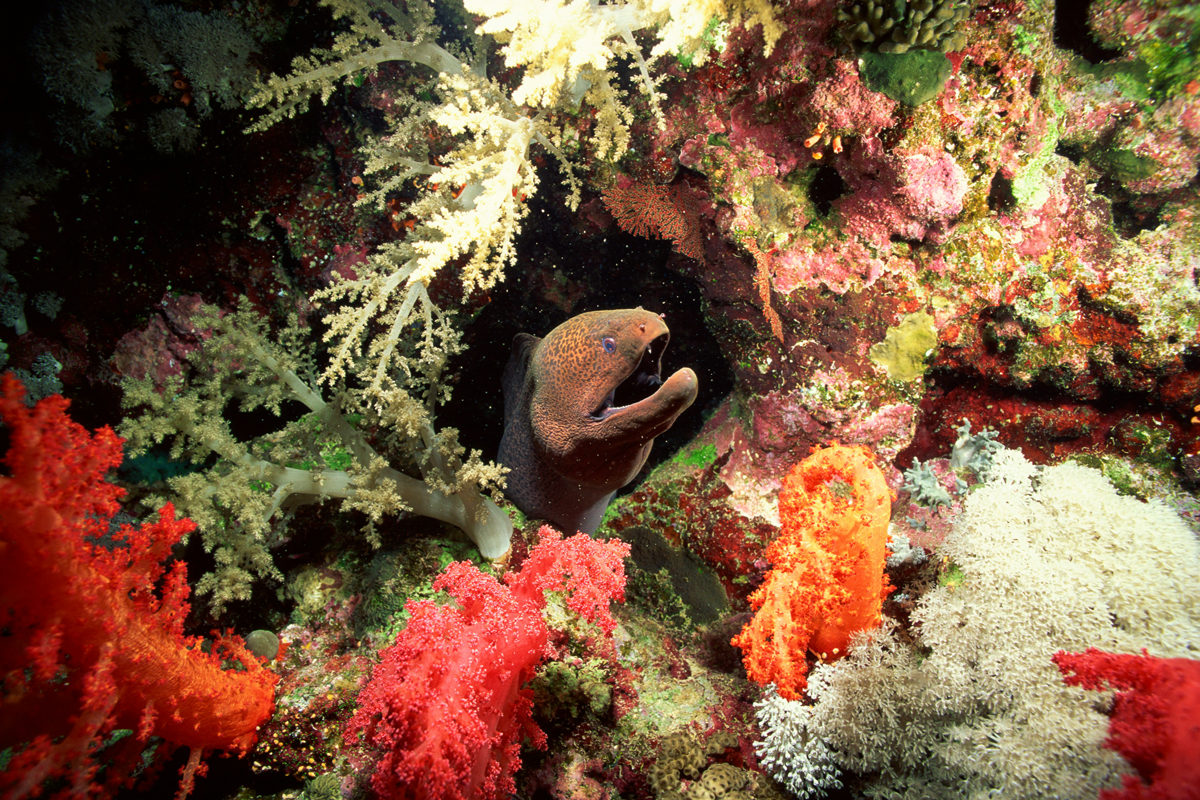
Most fish feed by sucking prey in with water pressure, but moray eels aren’t built for that. Instead, they rely on a second, independent set of jaws tucked deep in the throat. The outer jaws grab hold of a fish or octopus, and then the inner jaws shoot forward, seize the prey, and haul it back toward the esophagus.
Scientists didn’t fully understand this feeding mechanism until 2007, when a high-speed video revealed what was happening inside the eel’s mouth. Before that, morays were just assumed to feed like everything else. These pharyngeal jaws remain one of the strangest feeding adaptations known in any vertebrate, and they’d been hiding in plain sight in aquarium tanks for decades before anyone thought to look closely.
Reefs make up a tiny fraction of the ocean, and yet they’ve produced a fish that manufactures its own pigment, a fish that builds beaches, and a fish with a mouth inside its mouth. Small advantages add up fast when every inch of coral is spoken for. Whatever’s still undiscovered down there is probably stranger than any of this.