How Did Honey Badgers Get Their Fearless Reputation?
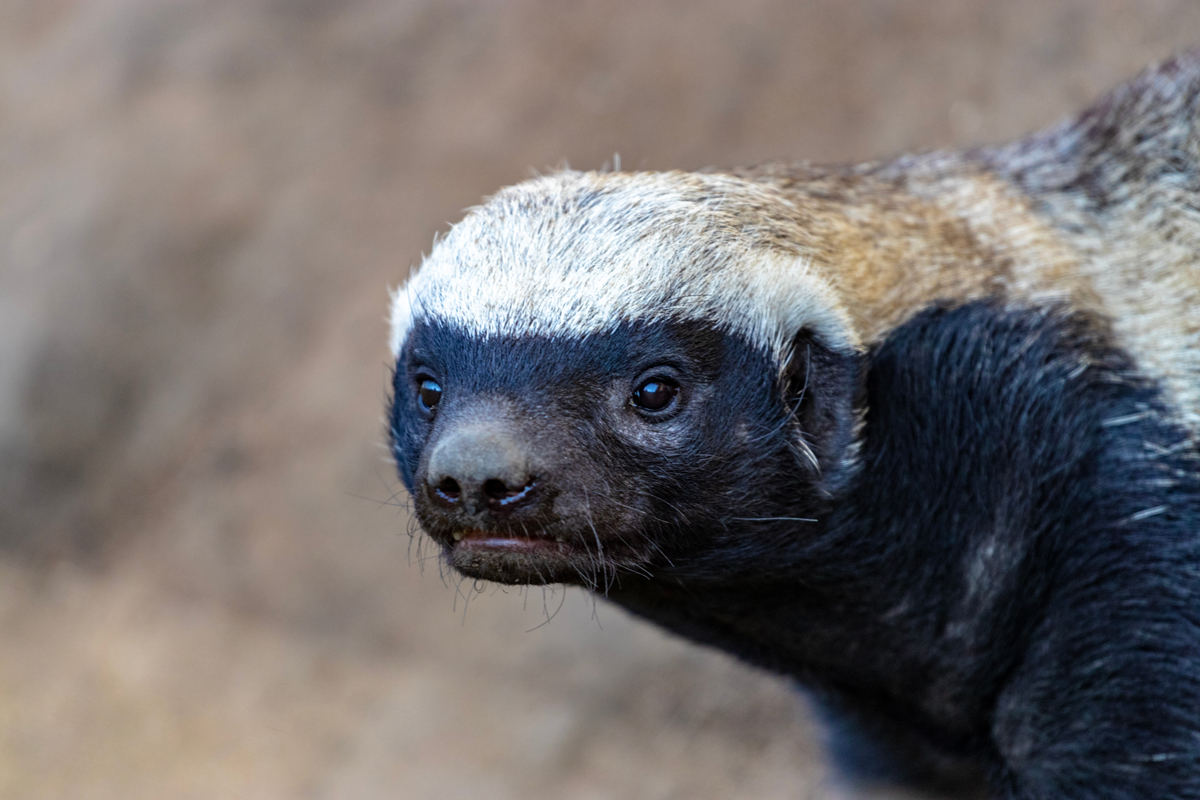

Plenty of animals have a bad attitude or at least a cultivated façade of ill-tempered menace — wild boars, Canada geese, triggerfish, and some particularly irascible housecats, to name a few. But if nature ever designed one creature specifically to be aggressive and to shrug off life’s hardest blows before biting back twice as hard, it would be the honey badger.
These compact, black-and-white mustelids — native to Africa, Southwest Asia, and the Indian subcontinent — have earned a near-legendary reputation for their toughness. Despite only being the size of a small dog, they routinely tangle with animals many times their size and walk away. Their fearlessness and aggressiveness are largely unmatched in the animal kingdom — but it’s not attitude alone that explains their reputation.
Like Liam Neeson’s character in Taken, they possess a very particular set of skills: physical and biological adaptations that turn an otherwise ordinary-sized animal into one of the planet’s most resilient mammals. Here’s what makes them so unstoppable.
They’re Very Thick-Skinned — Literally
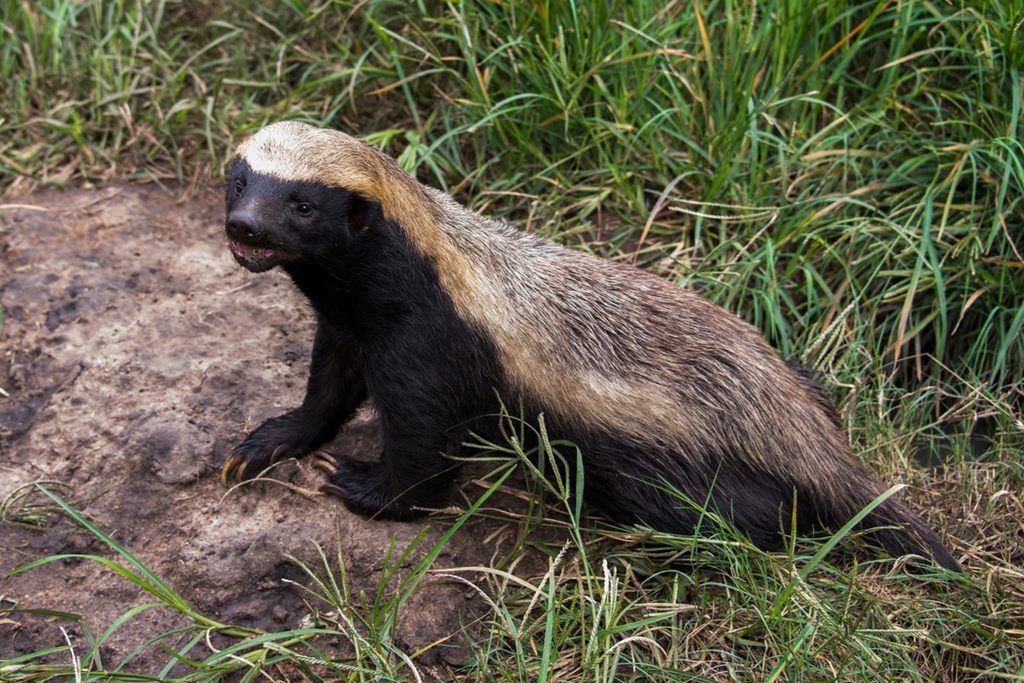
Honey badgers have unusually thick skin: Around the neck, it can be up to 1/4 inch thick, which is remarkable for an animal of its size. By comparison, human skin ranges from 0.5 to 4 millimeters thick, depending on its location in the body.
A honey badger’s skin fits loosely over its body like an oversized, rubbery coat. Predators trying to grab a honey badger often end up with a mouthful of tough, stretchy hide rather than a firm grip on muscle or bone.
If the badger is caught, it can twist and turn inside its own skin, spinning around to bite its attacker. Its thick, durable skin also means it can raid beehives without being affected by stings or engage in a fight with a porcupine without being seriously injured by its quills.
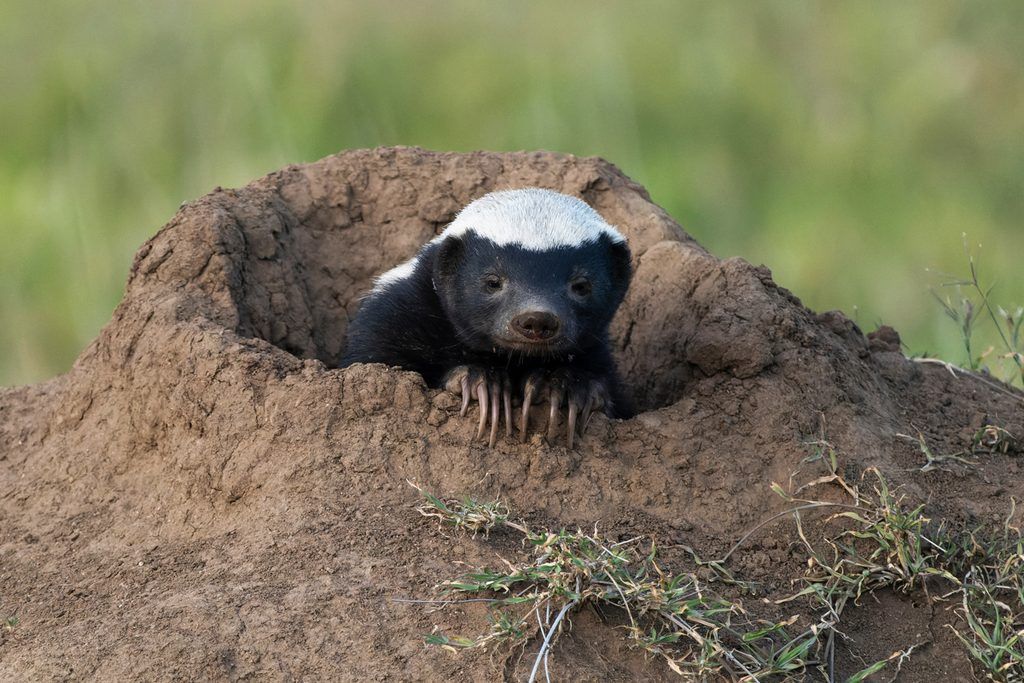
They Have Weapons To Match Their Attitude
Honey badgers come equipped with sharp, 1.5-inch-long claws perfect for digging burrows and breaking into beehives and termite mounds. Those claws also serve as excellent offensive and defensive weapons. Their jaw strength, meanwhile, ranks among the most powerful of all mammals, and that combined with their sharp teeth allows them to crush bones and even crack open tortoise shells.
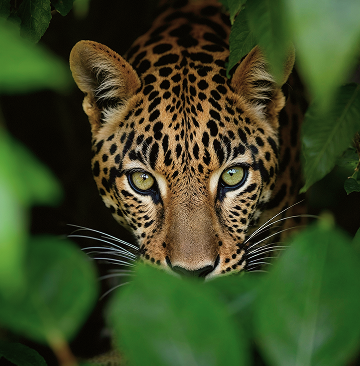
With their stocky build and powerful legs, these tanklike animals can quickly become a whirlwind of claws and teeth when a fight breaks out. Even larger predators such as leopards, lions, and hyenas — from whom honey badgers sometimes brazenly try to steal kills — have been known to back off after a determined honey badger counterattack.
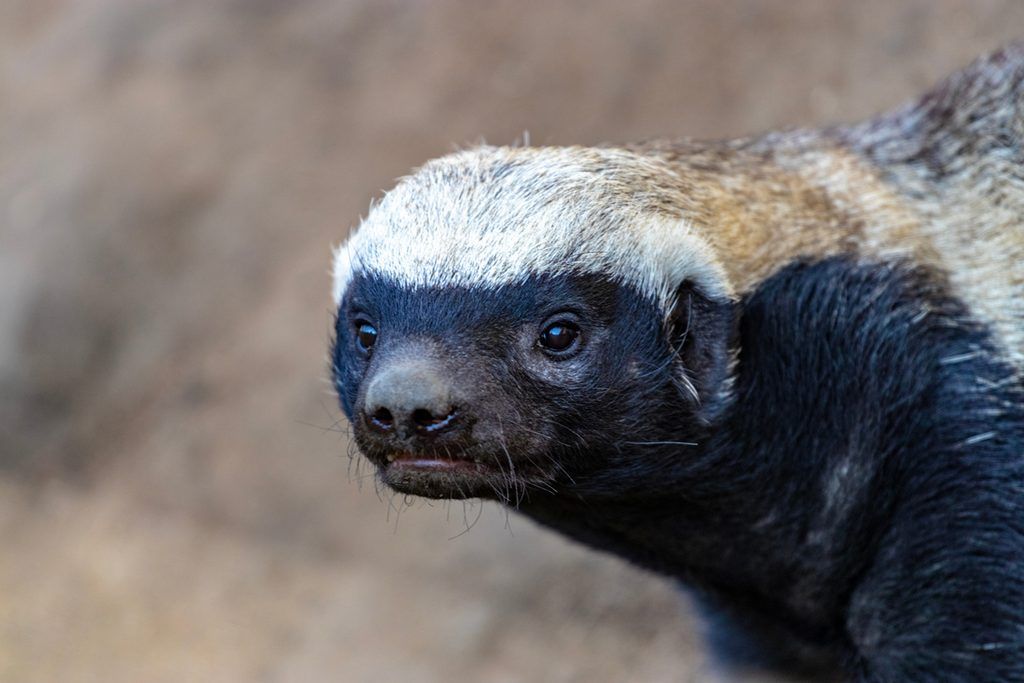
They Have High Levels of Venom Resistance
Honey badgers regularly hunt venomous snakes, including cobras, puff adders, and black mambas, which would normally be a very high-risk activity. And while not completely immune to snake venom, honey badgers seem to have evolved mutations in the receptors that snake neurotoxins normally target — and have perhaps developed further immunity through a lifetime of bites. A bite that would kill many other mammals often only temporarily incapacitates a honey badger, which can often sleep off the effects and recover within hours.
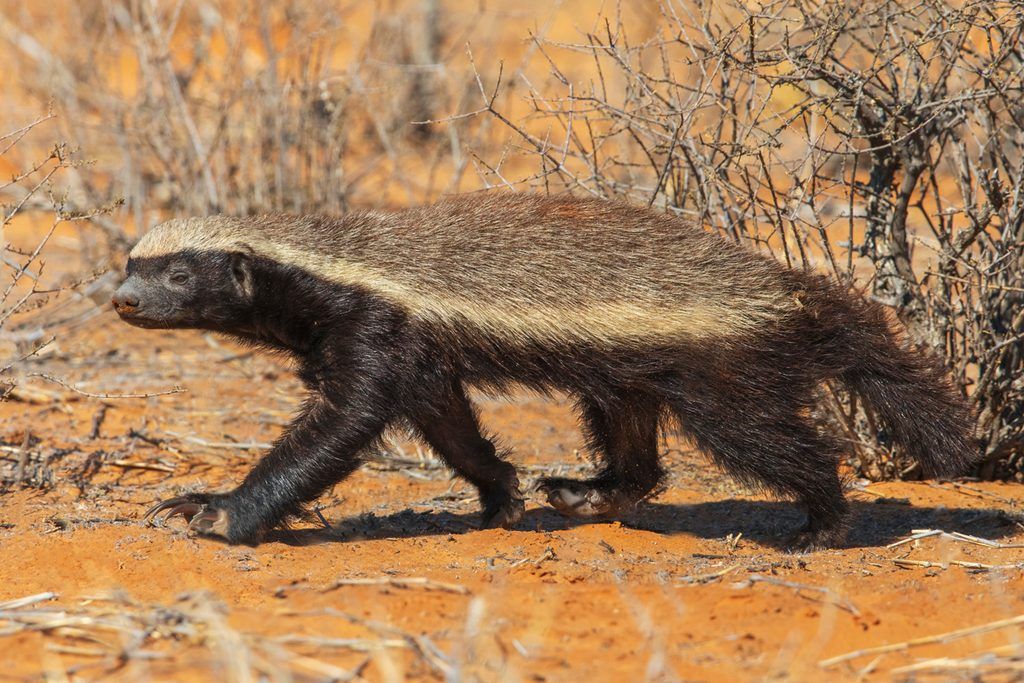
Honey Badgers Stand Their Ground
All these adaptations wouldn’t mean much without the right kind of fighting spirit, and that’s something honey badgers are certainly not short on. They’re genuinely belligerent when threatened or cornered, standing their ground with an aggressive display even against much larger predators.
In such situations, they rear up, make loud hisses and rattling noises, bare their teeth, and release a foul-smelling secretion from their anal glands — a stink bomb that’s potent enough to potentially make their opponents back off. This isn’t mindless rage, but a calculated defense. The honey badger’s physical durability gives it the confidence and the margin for error to confront threats from which most animals their size would flee.