Why Camels Are Practically Indestructible
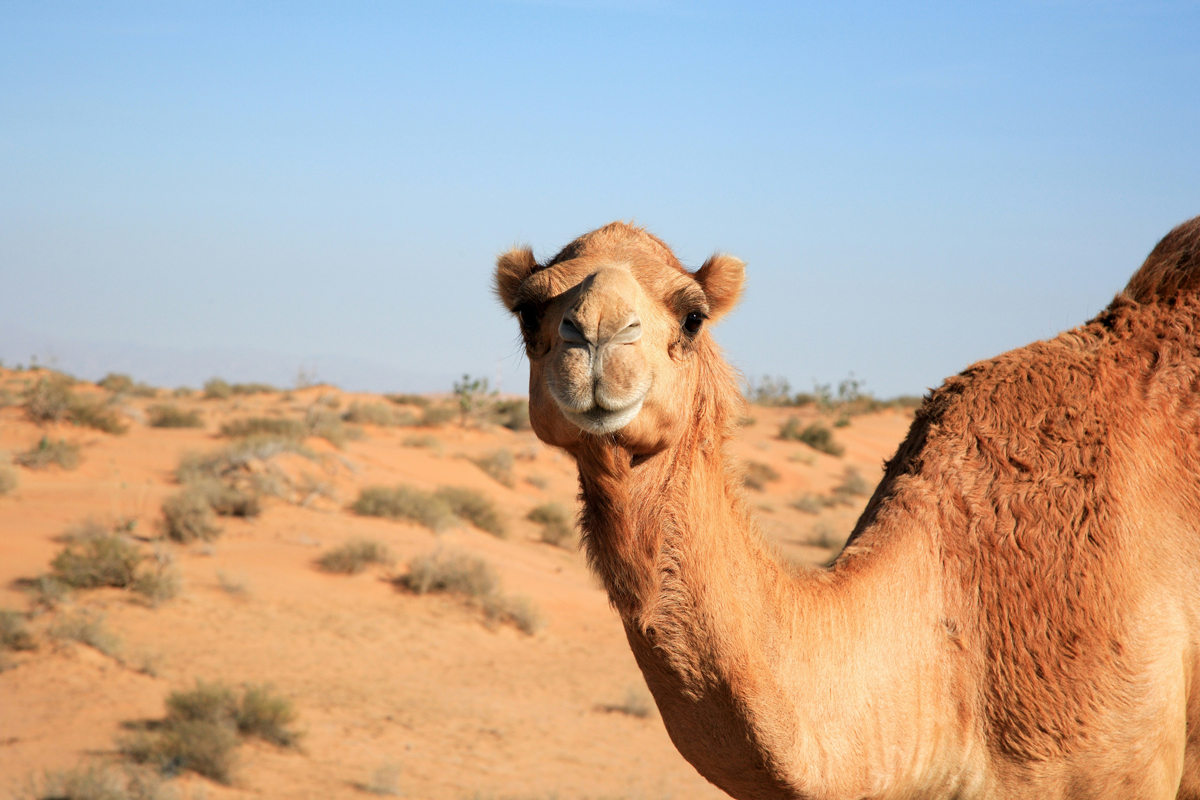

If evolution ever built a creature to laugh in the face of a dangerous environment, it’s the camel. While most mammals would collapse after spending a single scorching day in the world’s hottest desert, camels simply shrug off the conditions and keep on walking.
A camel’s body is a masterclass in biological engineering, purpose-built for extreme heat, prolonged thirst, and terrain that punishes ordinary anatomy. Here’s a look at exactly how camels manage to treat one of Earth’s harshest environments like a minor inconvenience.
They Can Lose a Lot of Water Without Collapsing
Most mammals, humans included, die after losing as little as 10% of the water in their body. Camels, on the other hand, can lose up to 30% of their body weight in water and keep functioning — an almost unheard-of tolerance for dehydration.
Much of that resilience comes down to their blood: Unlike the round red blood cells found in most mammals, a camel’s blood cells are oval-shaped, allowing them to flow more smoothly through the smallest of blood vessels even when the blood becomes dangerously thick and concentrated from fluid loss. When water finally becomes available again, a camel can drink around 30 gallons in about 10 minutes, rehydrating at a pace that would trigger a medical emergency in almost any other animal.
Their Humps Store Fuel, Not Water
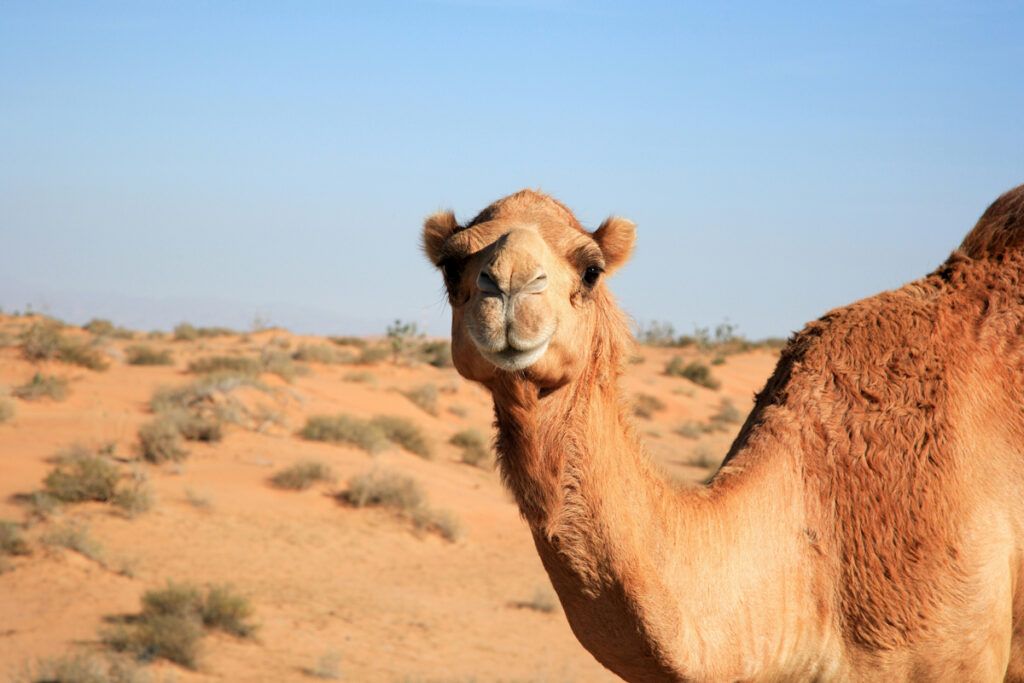
Contrary to popular belief, camel humps don’t hold water — they store fatty tissue. By concentrating fat reserves in one place rather than spreading it out beneath the skin like most mammals, camels minimize heat insulation throughout their bodies.
But that’s not all: When food is scarce, which happens often in the barren desert, the fatty humps are metabolized for energy, helping the camel to keep going over long distances. This process also produces water as a natural byproduct, effectively turning the hump into a self-contained emergency fuel tank.
It Takes a Lot To Make Them Sweat
Humans, like most mammals, have a fairly stable body temperature that differs only by a degree or two in normal conditions. A camel’s body temperature has a far larger range, swinging from around 93.2 to 105.8 degrees Fahrenheit (34°C to 41°C) over the course of a day. Camels can therefore tolerate much higher temperatures before they overheat and have to sweat to cool down.
As sweating is one of the primary sources of water loss in most mammals, this built-in tolerance to wildly fluctuating temperatures — brutally hot during the day and cold at night — dramatically cuts down on how much moisture camels need to survive.
Their Coat Helps Reduce Heat Gain
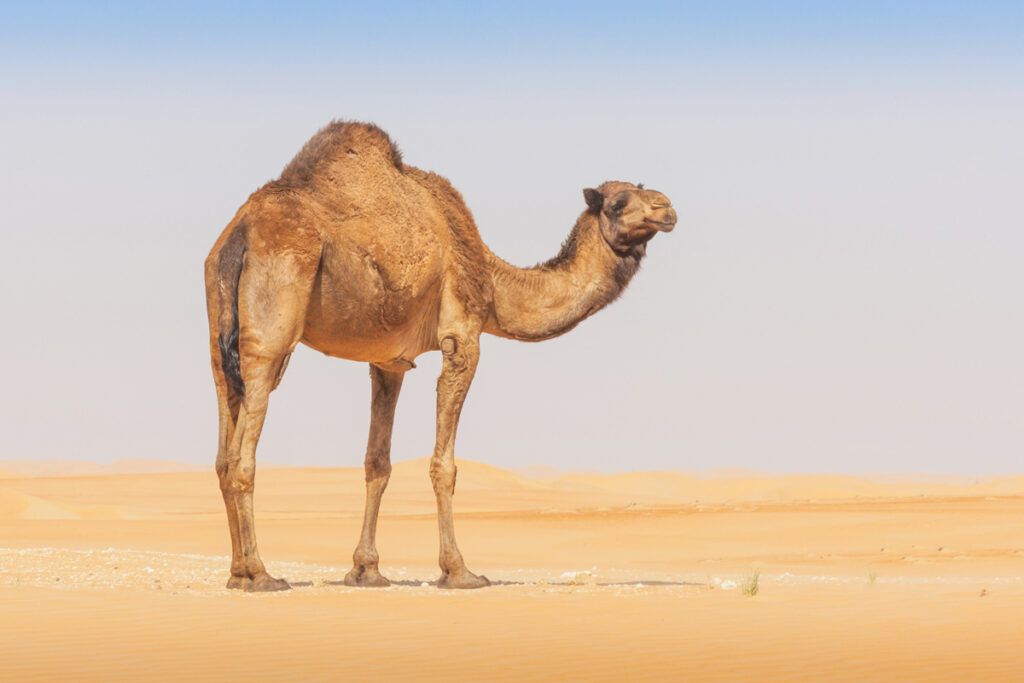
Wearing a fur coat in the desert may seem terribly ill-advised, but a camel’s coat, as scraggly as it may be, has three main mechanisms that help the camel stay cool: The fur’s light color reflects light energy, helping the camel stay cool, and it also traps air, minimizing heat transfer to the skin by conduction.
Finally, every individual hair in the camel’s coat helps to impede the movement of air, reducing heat transfer to the skin by convection. If a camel is shorn, it actually sweats more, proving how effective the coat is when it comes to insulating against the heat.
Their Exterior Is Built To Handle Sand and Sun
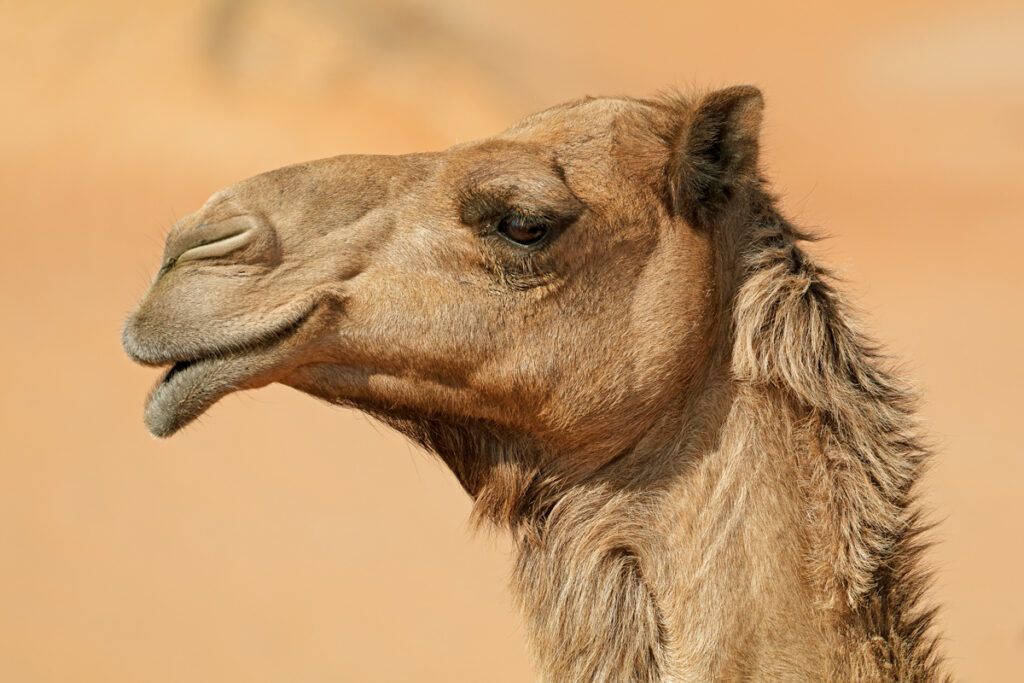
Just about every visible feature on a camel doubles as protective equipment — a double row of long eyelashes and a third eyelid function together like built-in goggles, sweeping away sand while still allowing some vision during storms. Closable nostrils also help keep the sand out.
Their wide, padded feet distribute weight evenly across loose sand; their long legs keep the bulk of the body farther from the intense heat radiating off the ground; and calloused pads on the feet, knees, and chest let a camel kneel or lie down in the scorching desert. Even their lips are tough and flexible enough to chew thorny, dry, and extremely tough desert plants that would shred most other grazing animals’ mouths. Combined, these features have justifiably earned the camel their nickname “the ship of the desert.”