Animal Pairs You’d Be Shocked Are Related

The animal kingdom is full of family connections, and some relations are easy to spot: lions and tigers, horses and zebras, dogs and wolves among them.
But evolution isn’t always so obvious — over time, related species can develop completely different shapes, sizes, behaviors, and lifestyles, even if they share a family tree. Sometimes, the result is a pair of animal relatives that look like they couldn’t possibly be related. Let’s take a look at five animals with surprising cousins.
Whales and Hippos
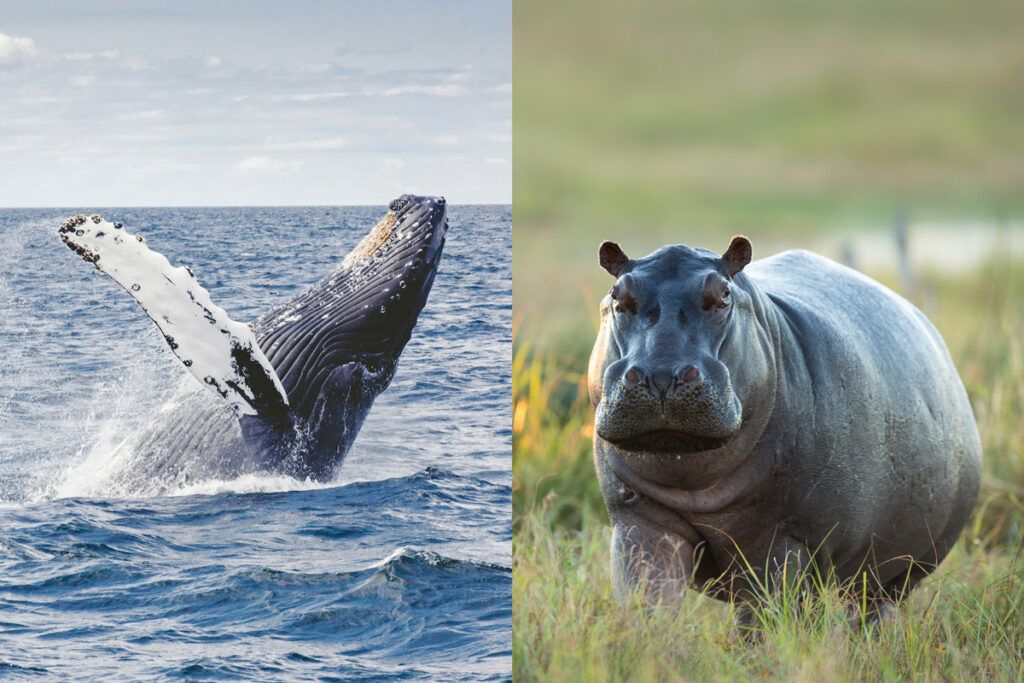
Blue whales spend their days cruising the depths of the ocean, while hippos can’t even swim and instead prefer to wallow in muddy rivers. So you may be surprised to learn that whales and hippos are actually each other’s closest living relatives.
Both belong to a larger group of mammals called Cetartiodactyla, which includes even-toed hoofed animals such as hippos, pigs, and deer as well as whales and dolphins. Their common ancestor lived around 55 million years ago: The anthracothere was a small, hoofed mammal that’s believed to have spent time in and around the water.
As this ancient creature’s descendants adapted to different environments, one branch became fully aquatic, eventually evolving into whales, and the other evolved into today’s semi-aquatic hippos. The connection, though not obviously visible, can be seen in the animals’ anatomy. Hippos and whales share similarities in their jaws, hearing structures, and even parts of their genes.
Elephants and Hyraxes
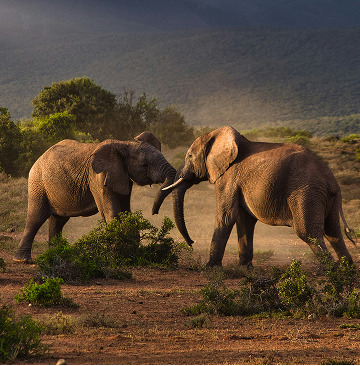
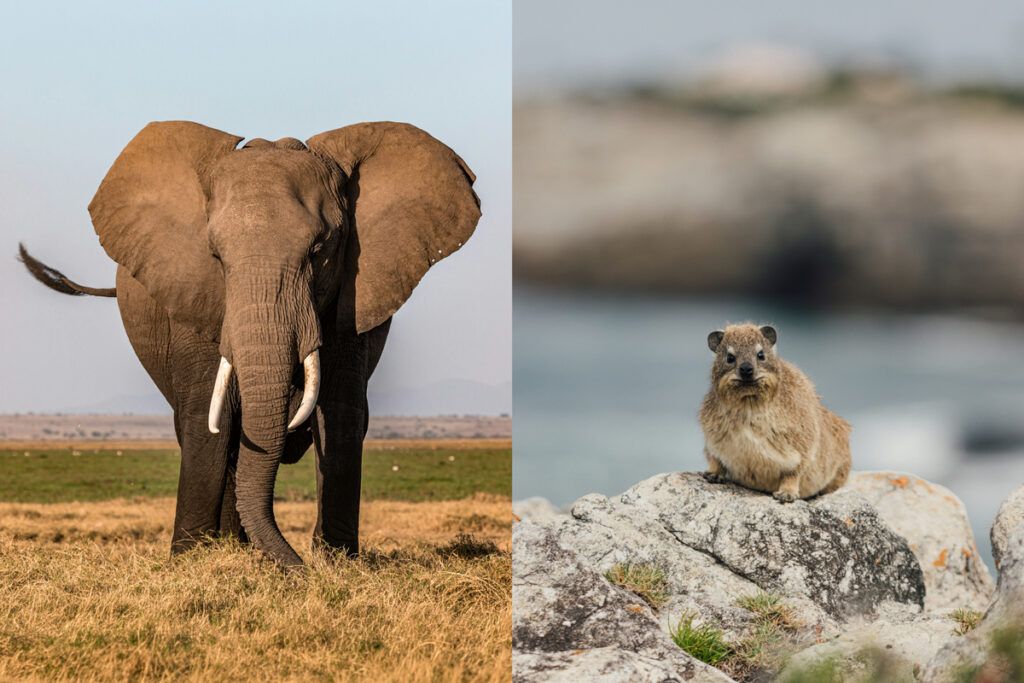
These two animals share a common ancestor that lived more than 50 million years ago. Hyraxes are small mammals that can be found climbing rocks and living in colonies in parts of Africa and the Middle East; they look something like an oversized guinea pig. Elephants, meanwhile, evolved into the largest land animals on Earth.
Their shared ancestry is revealed through details that aren’t apparent at first glance, including similarities in their pachyderm-like skulls, teeth, and feet. Both animals belong to a group called tethytheres, which also includes sea cows such as manatees and dugongs.
Hyenas and Mongooses
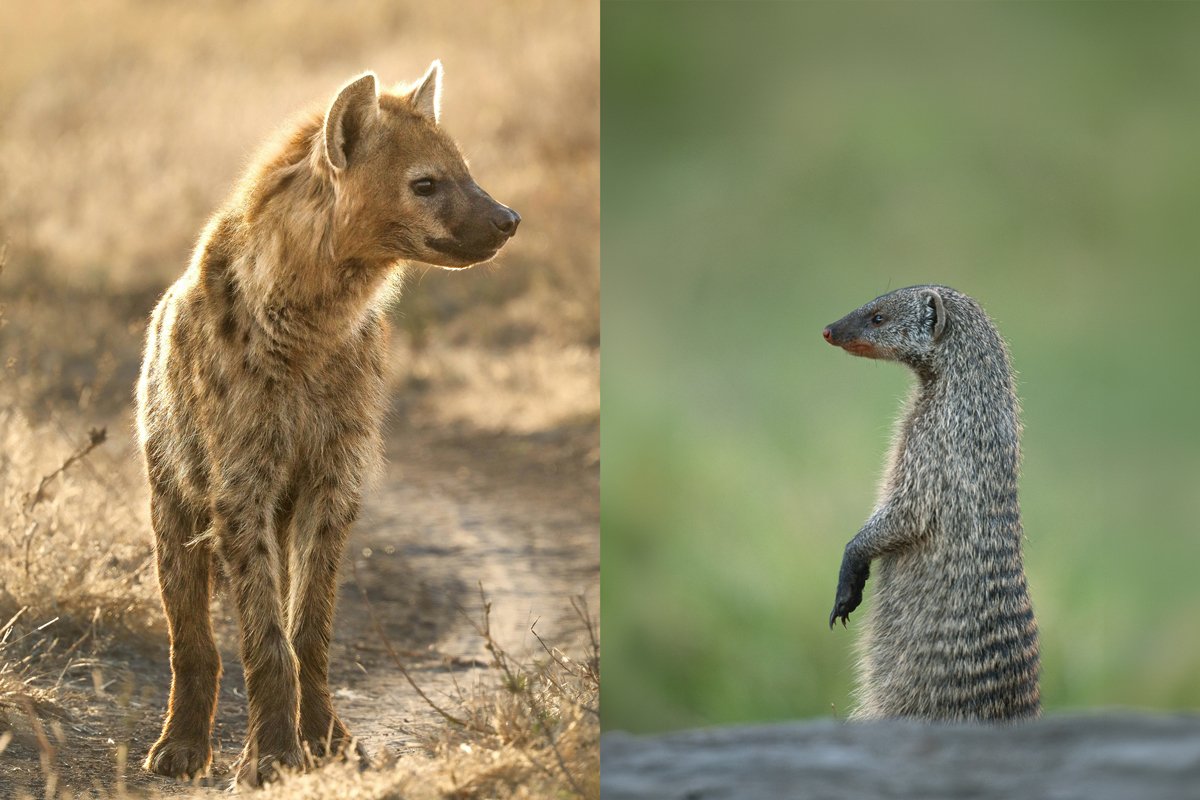
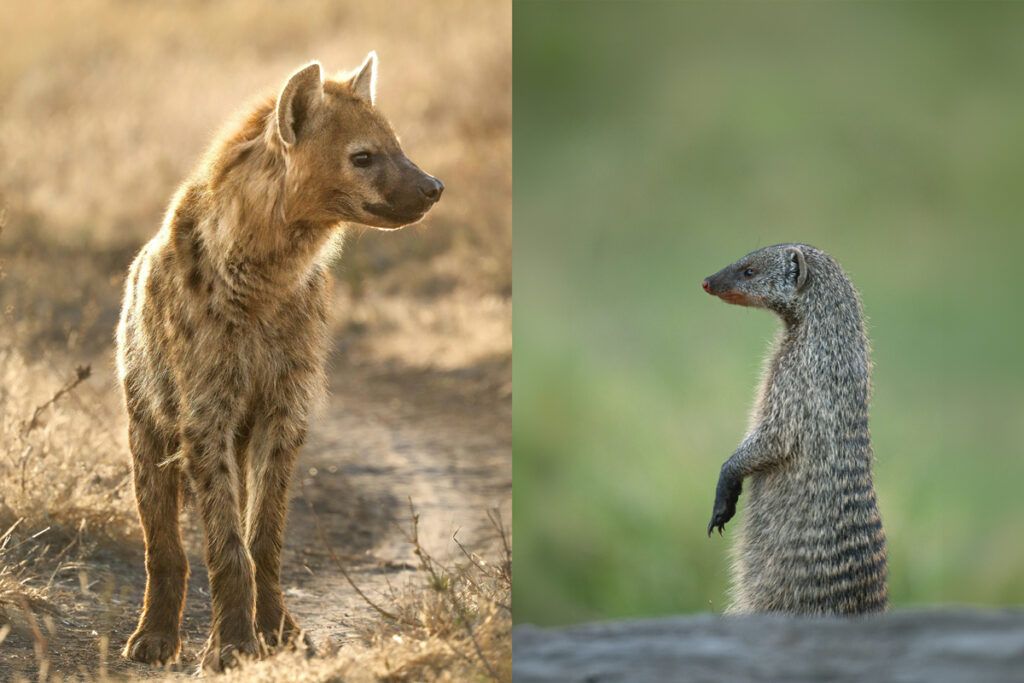
With their powerful jaws, sloping backs, and impressive hunting skills, hyenas are often mistaken for wild dogs, but their closest relative is actually the weasel-like mongoose. Hyenas and mongooses both belong to the suborder Feliformia, sharing a common ancestor with other cat-like carnivores. In fact, despite their appearance, hyenas are more closely related to cats than to dogs.
Hyenas’ shared family lineage with mongooses stretches back tens of millions of years, and today their relations also include meerkats, civets, and genets. Hyenas feed mostly on meat, and though they usually prefer bigger animals, they’ve been known to catch and eat their smaller relatives now and again.
Horses and Bats
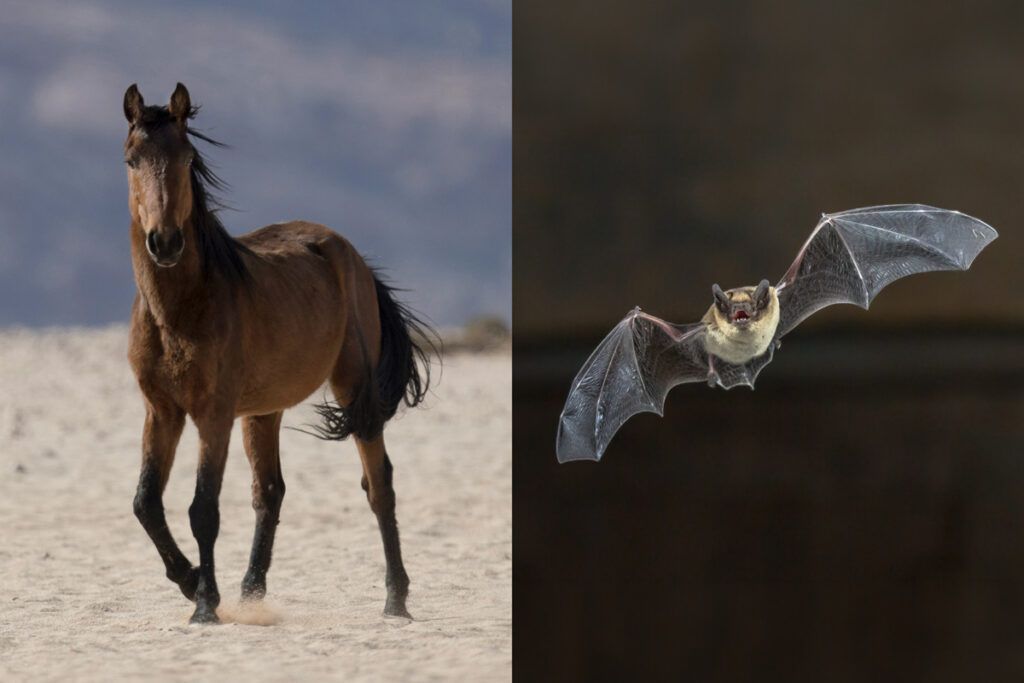
Though one is a massive hoofed herbivore and the other a tiny flying mammal, the family trees of horses and bats do eventually intertwine; they share a common ancestor that lived more than 80 million years ago. Both are placental mammals, meaning their young develop inside a womb and receive nutrients through a placenta. Horses actually share more DNA with bats than they do with cows, despite cows seeming like the more obvious relative.
The skeletons of horses and bats reveal another unexpected link: Many of the bones in a bat’s wing are modified versions of the same basic bones found in a horse’s foreleg, including the humerus, radius, and ulna. The same underlying limb pattern appears across many mammals, including humans.
Raccoons and Seals
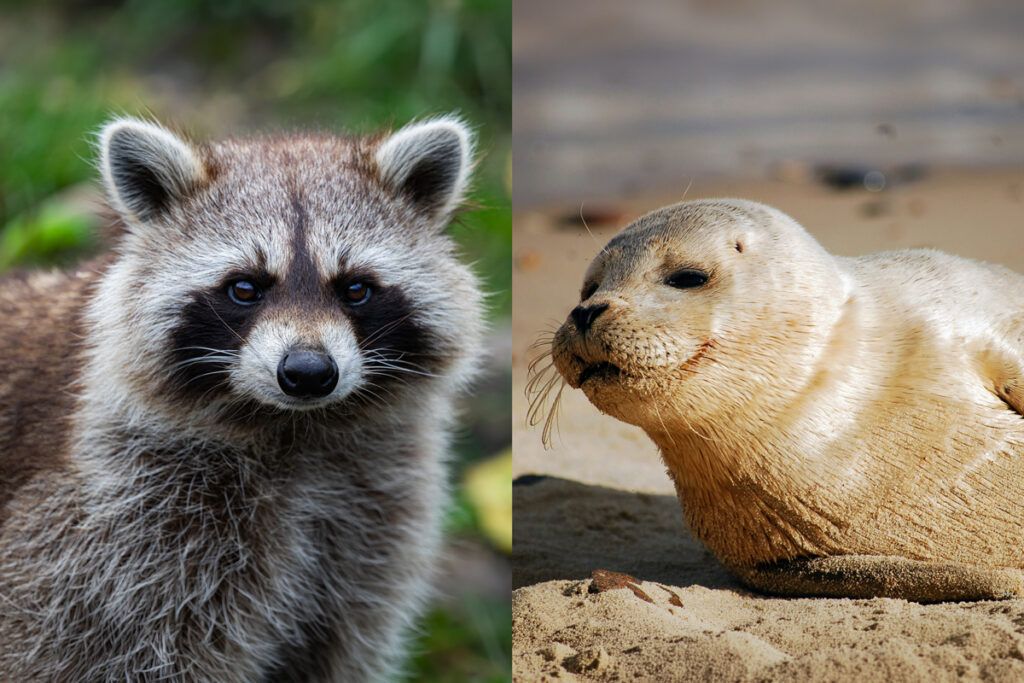
Raccoons and seals aren’t close cousins like whales and hippos, but both descended from early carnivorans, a group of small mammals that eventually split into different lineages. One branch produced animals such as raccoons, bears, and weasels, while another led to the pinniped group, which includes seals, sea lions, and walruses.
As pinnipeds adapted to life in the water, their bodies changed dramatically, with limbs becoming flippers, their bodies becoming more streamlined, and their senses more keenly adapting to underwater life. Seals are, of course, still able to move on land, even if their skeletons don’t quite resemble their fully land-dwelling ancestor.