Why Do Some Animals Have Stripes and Others Have Spots?

Animal coat patterns are some of nature’s most striking designs, whether it’s a tiger’s bold black stripes or a leopard’s intricate rosettes. These markings are so iconic that humans have even adapted them for high-end fashion, from Dolce & Gabbana’s signature leopard-print collections to Roberto Cavalli’s high-end silk dresses adorned with distinctive zebra patterns.
But as striking as they are — and ignoring the whims of the very human catwalks of London, Paris, and New York — an animal’s markings go well beyond aesthetics; these patterns have evolved through natural selection to aid in survival. But why do some animals have spots while others have stripes? Is there a functional difference, or is this just a quirk of evolutionary fate?
Here we take a look at the coats of some famously striped and spotted animals to find out how and why they’ve evolved such distinct markings.
The Advantage of Stripes
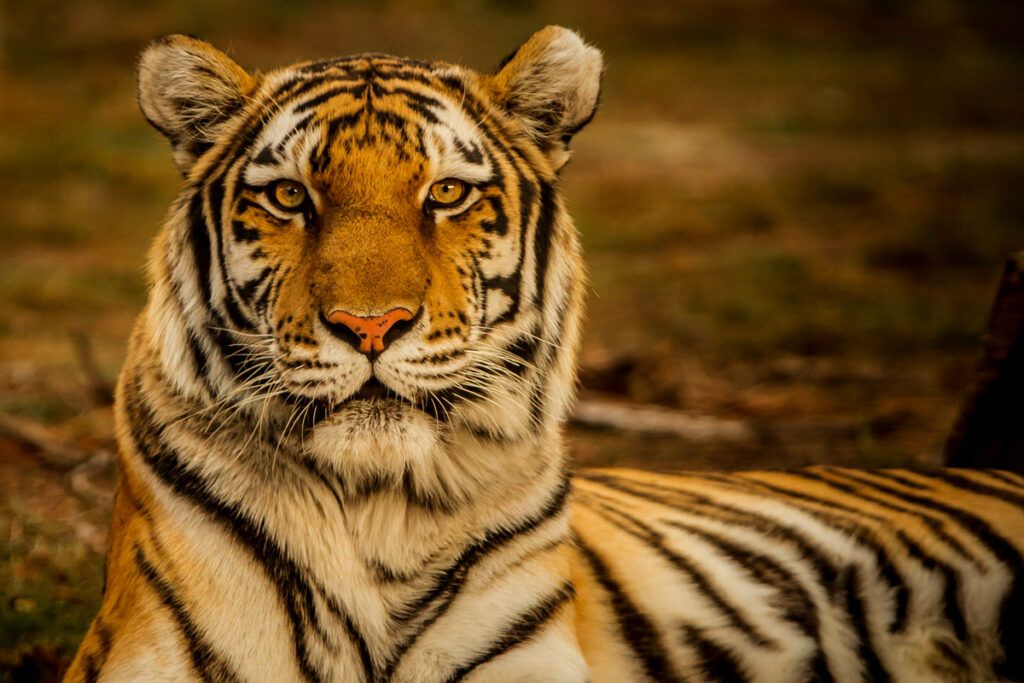
Stripes are particularly effective in habitats dominated by vertical elements such as tall grasses, reeds, and tree trunks. Tigers, the largest striped cats, use their vertical markings to break up their body outline when stalking prey in grasslands — something biologists call disruptive coloration.
The markings are particularly effective when sunlight filters through tall grass, in which case the stripes blend with the linear shadows and vegetation, making it difficult for deer or wild boar to detect the tiger’s shape while it waits motionless to strike. Stripe patterns differ among the handful of tiger subspecies: The stripes of a Sumatran tiger, for example, are narrower and more closely spaced than those of a Bengal tiger, providing better camouflage in the former’s dense jungle habitat.
Tigers aren’t the only animals whose stripes serve as camouflage. Striped hyenas, okapis, striped polecats, coral snakes, and bongos (not the drums, but rather a species of African antelope) are just some of the animals whose stripes help them blend into their environments. These stripes have evolved among species that need to break up a solid silhouette against relatively uniform, directional backgrounds. They work especially well for ambush predators moving slowly through cover as well as for fast-moving prey in open or semi-open terrain.
Zebras are another famously striped animal, but biologists have long debated what purpose their stripes actually serve. The vivid, highly contrasting black-and-white stripes may seem counterintuitive as a means of camouflage, especially in the beige savannas that zebras call home, but one long-standing theory posits that the stripes create disruptive patterns to confuse predators. When zebras stand together in a group, their stripes may create a visual illusion that makes it difficult for predators such as lions and hyenas to single out an individual.
More recent research suggests that zebra stripes may serve as protection from biting flies, confusing tsetse flies and horse flies and making them less likely to land on the zebras. Zebra stripes probably serve multiple purposes — possibly including thermoregulation, with the contrasting black and white hairs absorbing and reflecting solar radiation differently, creating micro-air currents to aid sweating and cooling. But it’s difficult to say which function, if any, is more important than another.
The Advantage of Spots (And Rosettes)
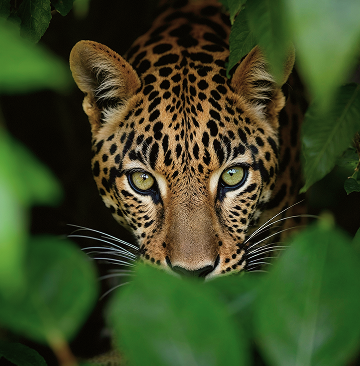
While stripes tend to offer better camouflage in environments with vertical elements, spots and rosettes (clusters of spots) are most common in animals that live in forests or habitats where light filters through foliage from above and creates irregular patches of shadow on the ground.
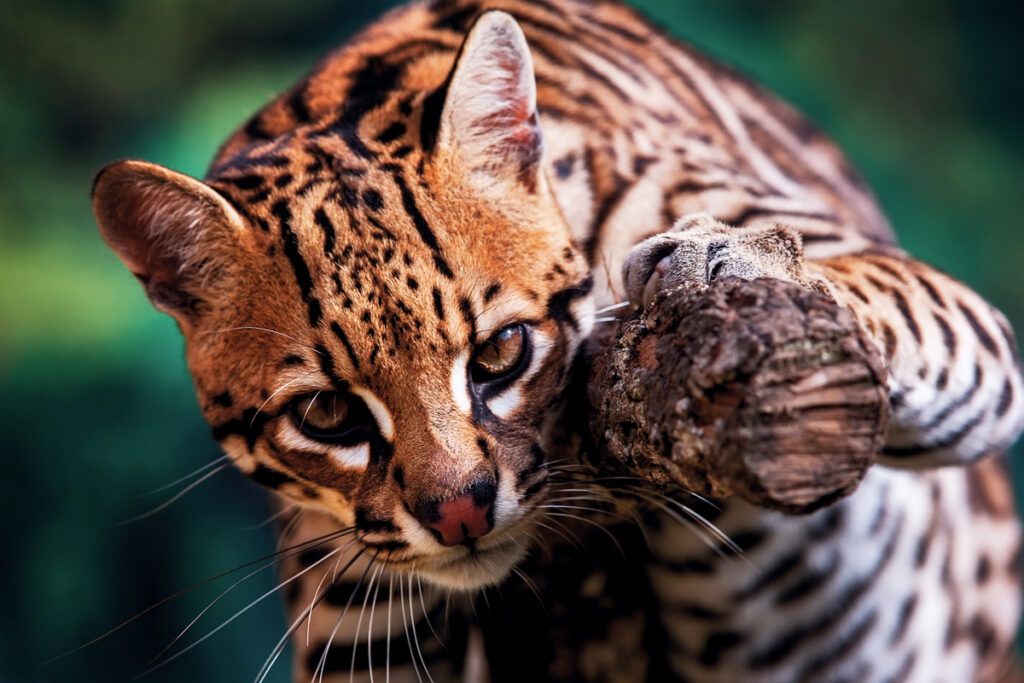
The rosettes of leopards and ocelots, for example, replicate that broken pattern of light through leaves. These markings work not by matching a uniform background but by matching the irregular, patchy quality of light in a woodland environment. Giraffes, meanwhile, sport spotted markings that often correspond to the branching patterns of the trees on which they feed (acacias, for example), helping them stay camouflaged while feeding.
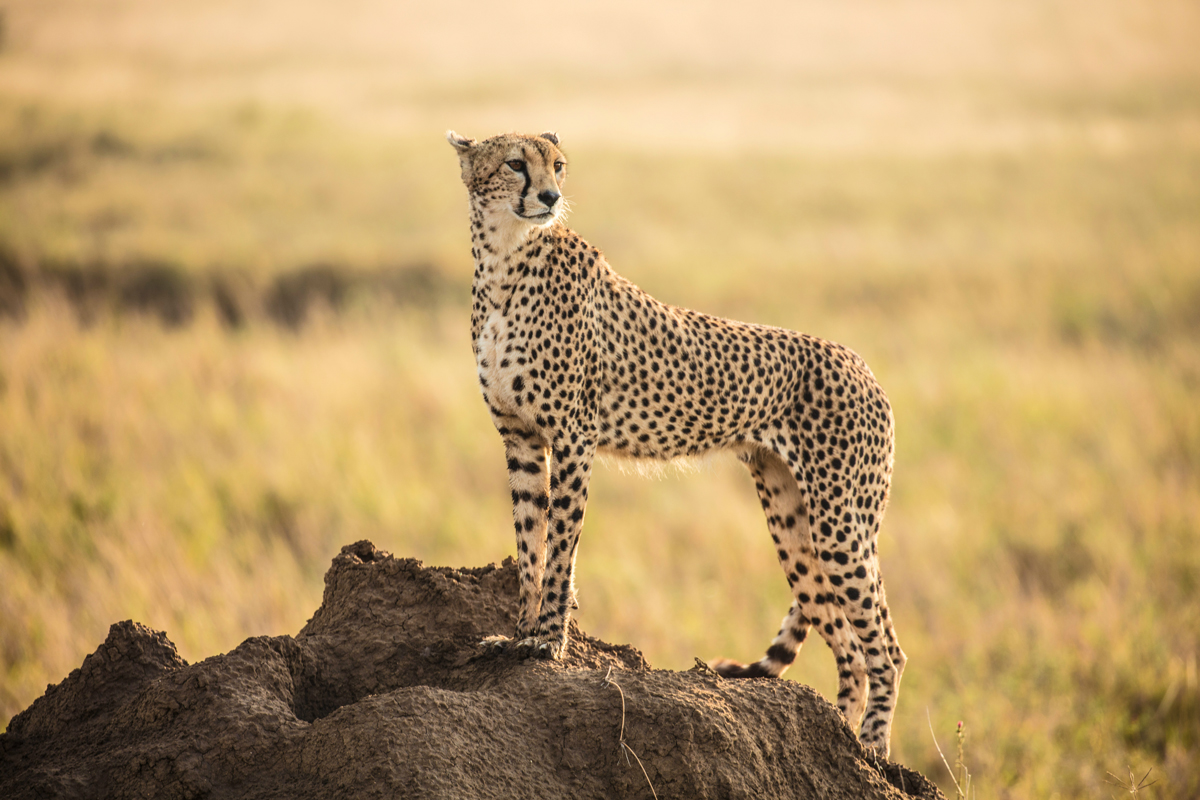
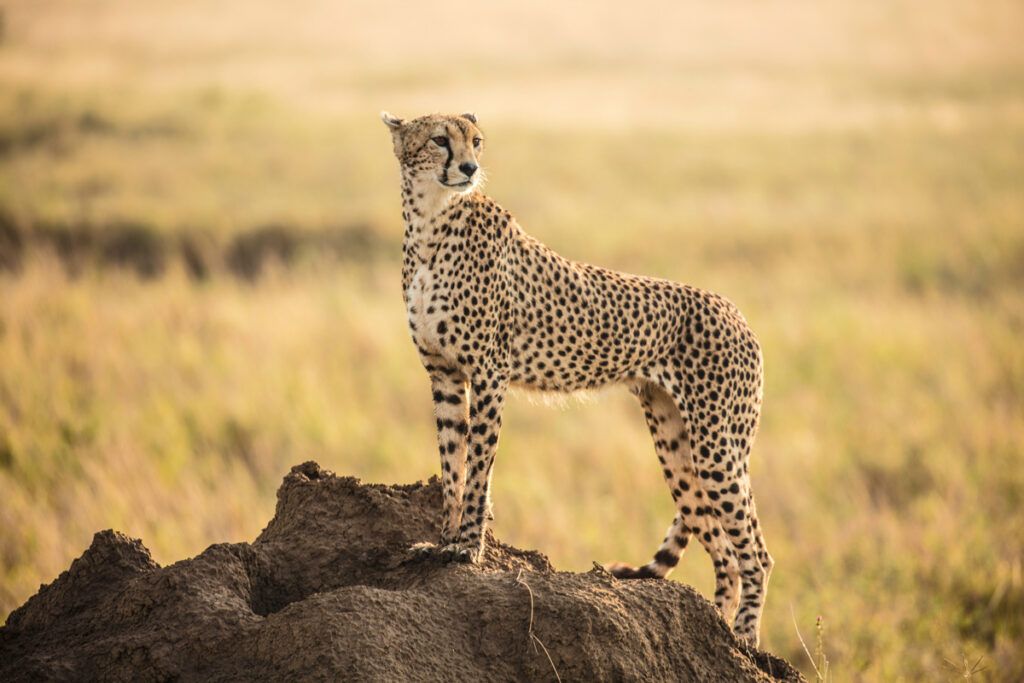
The cheetah, with its small, solid black spots, would appear to be an exception to the general rule. Cheetahs are spotted despite living on open African savanna and grassland with relatively little tree cover. Their markings, however, are different from the larger rosettes of leopards and jaguars.
Cheetahs have around 2,000 to 3,000 dark spots distributed evenly across their bodies, which may serve particularly well as camouflage in the gray-hued grasses they inhabit. Cheetahs also hunt differently than leopards, relying more on speed rather than stealth, so their need for camouflage may not be as critical as it is among other big cats.
Spots Versus Stripes
The cheetah’s spots are perhaps a reminder that evolutionary rules of thumb are approximations rather than laws. Other factors, such as hunting methods and social behaviors (e.g.,mate attraction or helping identify individuals in a herd) can influence animal markings. But when it comes to the determination of spots versus stripes, the most consistent and well-documented driving factor tends to be camouflage.
It’s also worth noting that not every marking fits neatly into the typical spots-or-stripes framework. Some animals split the difference — ocelots and margays, for example, have both spots and stripes — while the okapi’s stripes are peculiarly limited to their upper legs and hindquarters only.
And not every pattern is the product of natural selection: Dalmatians and calico cats owe their blotches to genetic quirks introduced or amplified through selective breeding — quirks that have nothing to do with camouflage and everything to do with how humans have shaped domestic animals for aesthetic purposes over time.