
Why Do Naked Mole-Rats Look Like That?
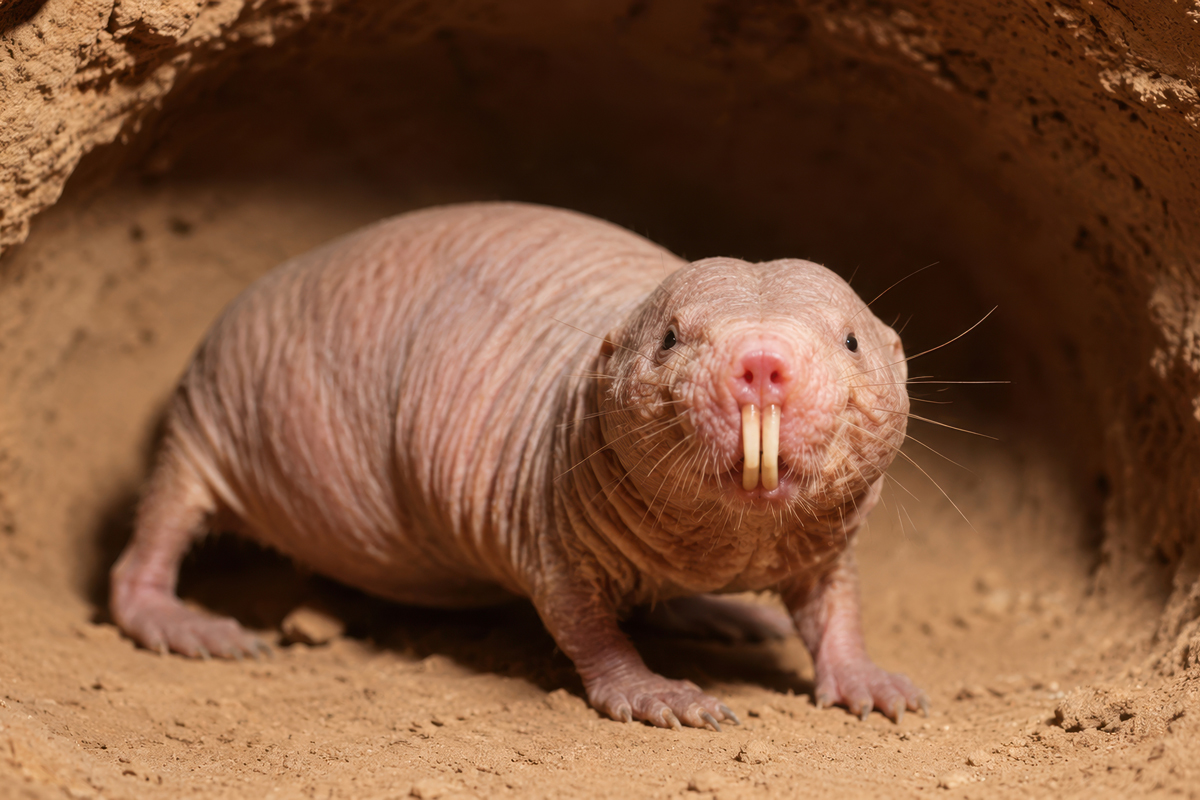

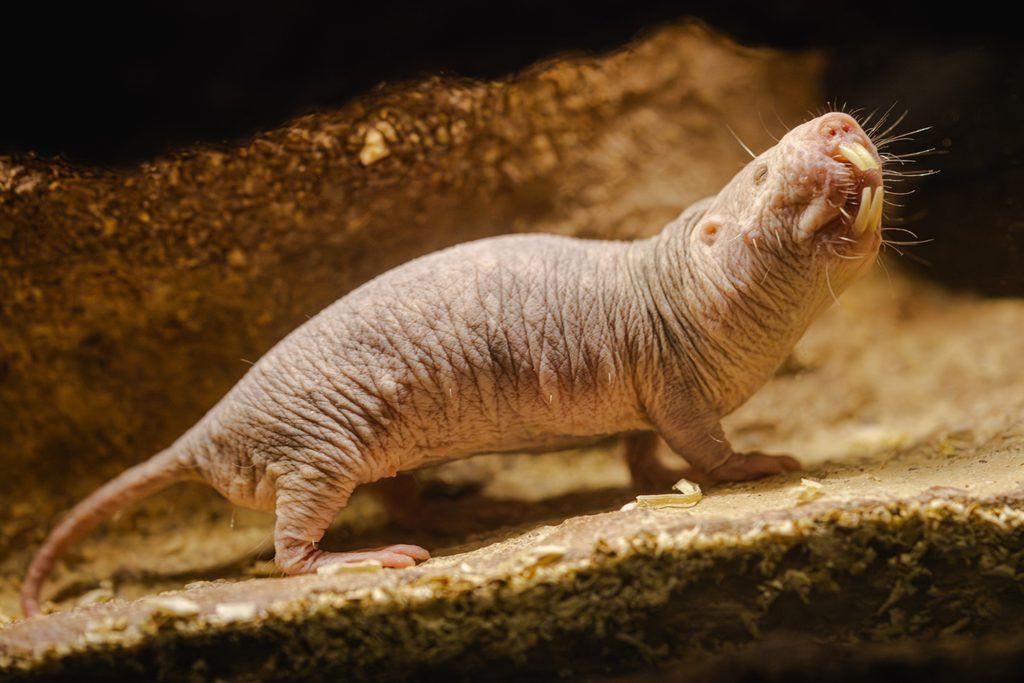
If you’ve ever seen a naked mole-rat, it likely made a lasting impression. Pink, wrinkled, nearly hairless, and equipped with a pair of enormous front teeth, it looks less like a typical mammal and more like a creature from a nightmare. Its tiny eyes and sparse coat of fine whisker-like hair only add to its startling appearance.
But there’s a good reason naked mole-rats look so unusual. Native to eastern Africa, these rodents spend virtually their entire lives in extensive underground tunnel systems, often living in colonies that can number in the hundreds. Life beneath the soil presents very different challenges from life above ground, and the naked mole-rat’s body reflects those unique demands.
Their Teeth Are Digging Tools
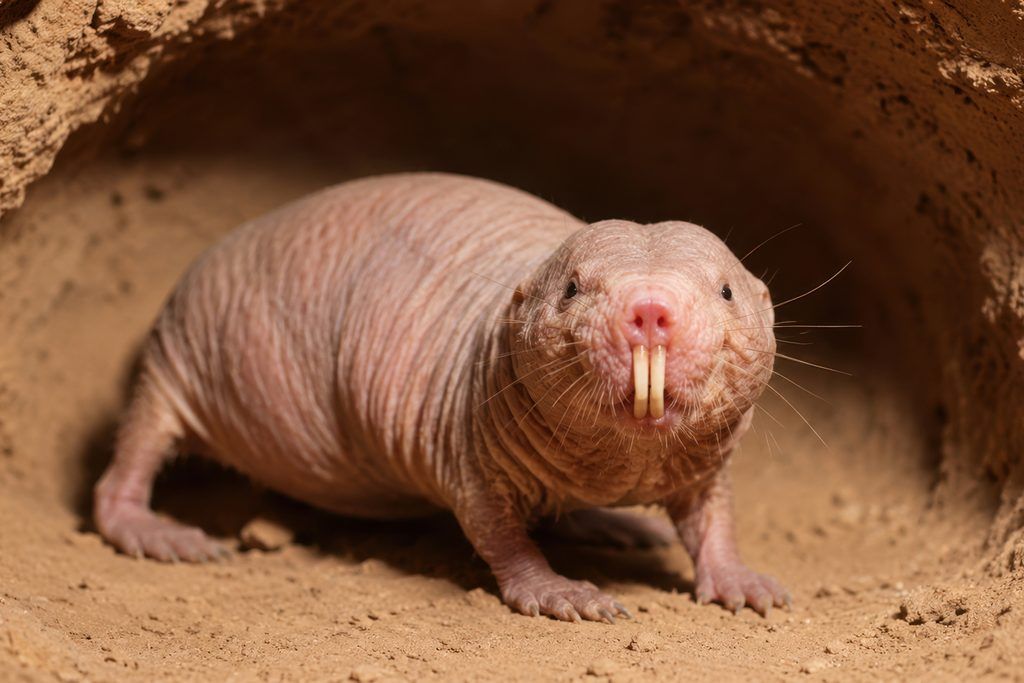
Among the naked mole-rat’s most noticeable features are its massive incisors. The teeth look almost comically large compared with the rest of the animal, but they serve a practical purpose underground.
Naked mole-rats are small, typically about 3 inches long and weighing roughly 1 to 1.5 ounces. Despite their compact size, they’re capable of excavating extensive tunnel systems, the largest of which reach up to 2.5 miles. Their incisors continue growing throughout their lives and serve as their primary digging tools. Unlike most rodents, they can move their lower incisors independently, allowing them to be precise when digging, manipulating objects, and handling food. About a quarter of their muscle mass lies in their jaws, giving them extra digging power.
Their lips are also specially suited to tunneling; they can close behind the incisors, keeping soil from filling the mouth while the animal digs. Naked mole rats can excavate through hard-packed soil with their teeth and work cooperatively to move the excess dirt through the colony’s tunnel network. Those tunnels house everything the animal needs, connecting feeding areas, nesting chambers, and other parts of the colony.
They Don’t Need Fur Like Most Mammals
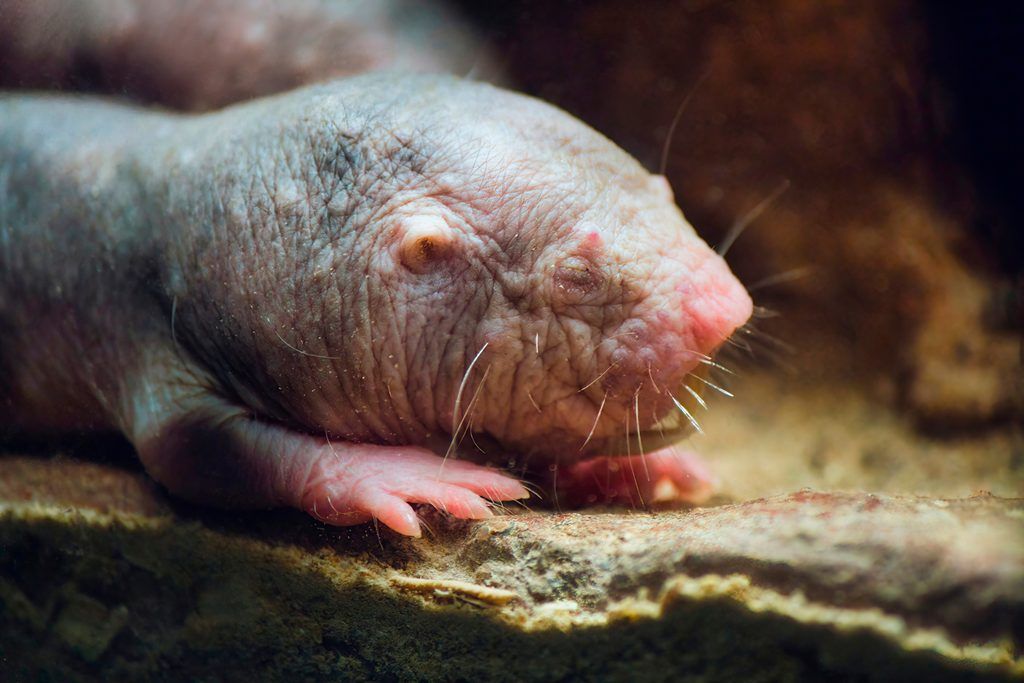
The lack of fur is one of the mole-rat’s most striking features, but it makes perfect sense underground. Insulation and sun protection is less important for them than it is for many above-ground mammals. Naked mole-rats are unusual among their class because they do not maintain a constant internal body temperature.
Instead, their temperature changes with their surroundings, and they move through different parts of the burrow or huddle with other colony members to regulate it. Their underground environment provides relatively stable conditions compared with the surface, while huddling helps conserve heat.
They’re not quite naked, though. Sparse sensory hairs cover the body and tail, while whiskers surround the face. These hairs are more useful for detecting the environment than for keeping the animal warm. In the darkness of a tunnel, touch is far more valuable than a thick coat or keen eyesight. The hairs help naked mole-rats orient themselves and move through tunnels, including when traveling backward.
They Don’t Need to See Well, Either
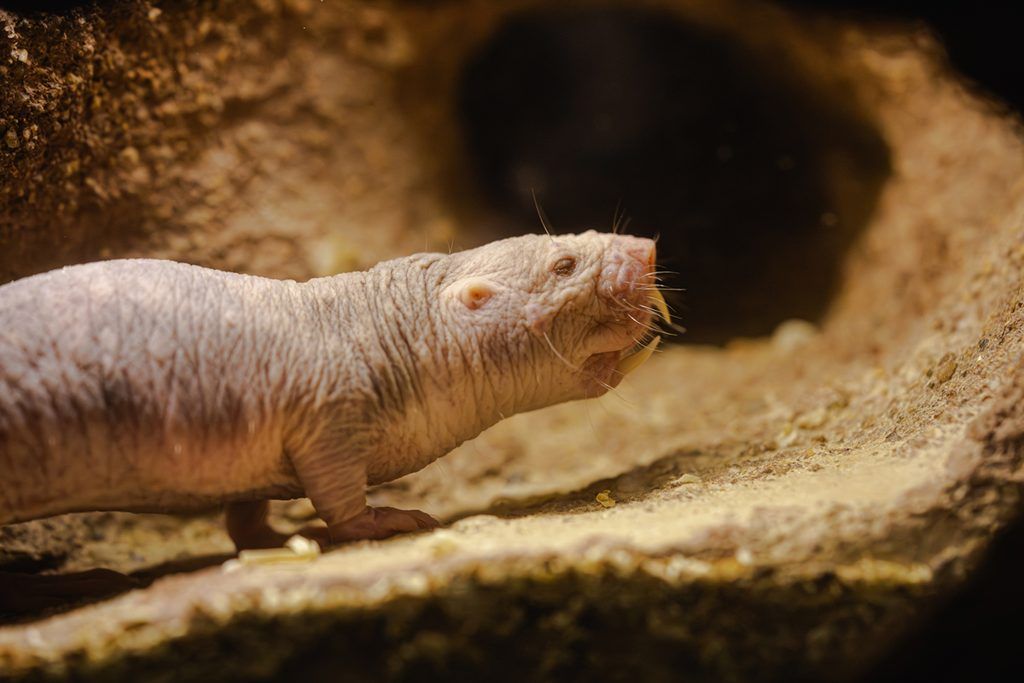
Naked mole rats have small eyes and poor vision, which isn’t particularly surprising for animals that spend virtually their entire lives underground. Instead of relying heavily on sight, they navigate using touch, hearing, smell, and other sensory information. Their bodies are essentially equipped with a tactile map: Sensory hairs detect contact with the tunnel walls, while their sensitive teeth provide information about what the animal encounters as it digs.
That reliance on touch is reflected in the brain. Researchers have found that nearly one-third of the naked mole rat’s primary somatosensory cortex — the region involved in processing touch — is devoted to its upper and lower incisors. Since their teeth serve as digging tools, food-handling equipment, and a way of interacting with the environment, knowing exactly what they’re touching is extremely useful.
They’re Unusual on the Inside, Too
Air quality is another unique challenge of underground life. Hundreds of animals living together in poorly ventilated tunnels consume oxygen and produce carbon dioxide. For most mammals, sufficiently low oxygen or high carbon dioxide can quickly become dangerous. Naked mole-rats, however, have evolved an unusual physiology that allows them to tolerate both conditions.
Their metabolism is exceptionally economical, and they can reduce their physiological activity when oxygen becomes scarce. Under extreme oxygen deprivation, they can even switch their metabolism from using glucose to fructose, allowing their cells to produce energy without oxygen in a way that most mammals cannot sustain. They are also unusually tolerant of high carbon dioxide levels. Unlike humans and many other mammals, they don’t experience the same pain response to the acidic conditions produced by elevated carbon dioxide.
The naked mole-rat’s strange appearance, then, is only part of its adaptation to an unusual way of life. Above ground, it may look peculiar, but underground, it’s well-equipped for the world it was built to inhabit.