Why Are Sloths So Slow?
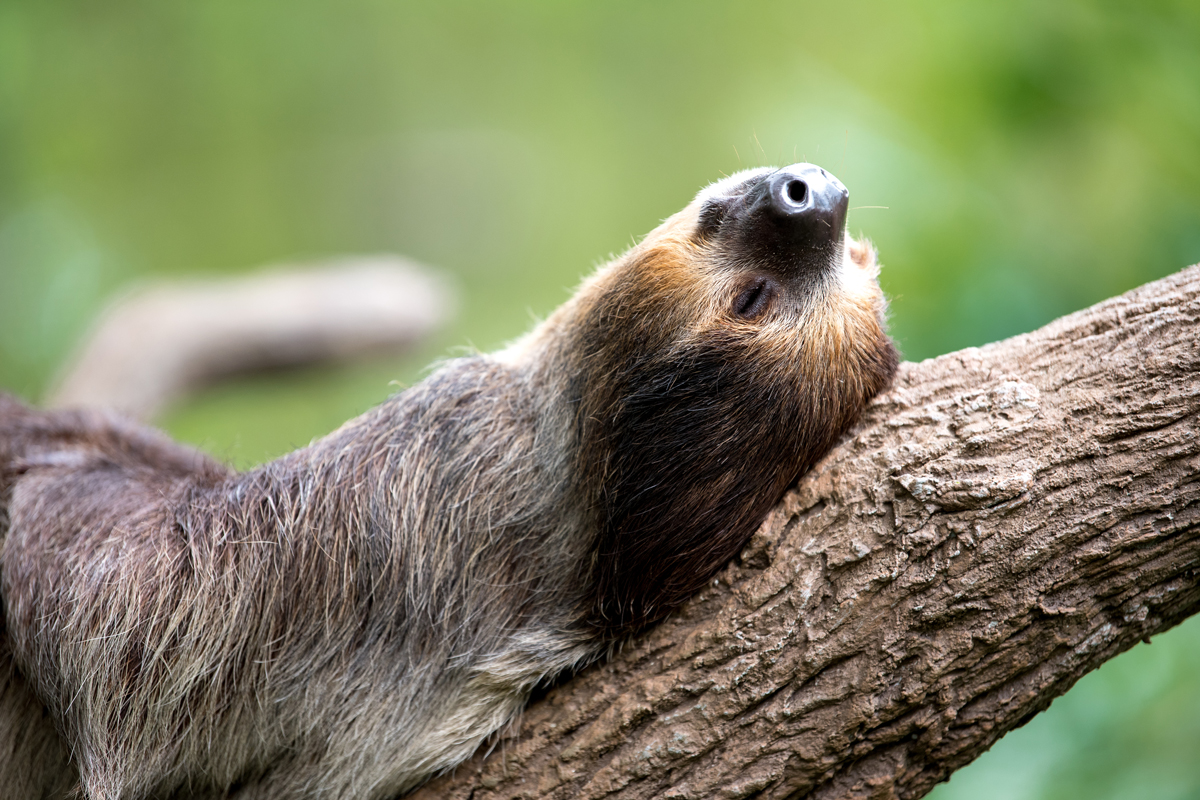

Sloths have made a lifestyle out of — and become modern cultural icons for — taking their time. They spend much of their lives hanging from tropical tree branches, creeping slowly through the canopy, and resting between meals. Their name, derived from the Old English word for “lazy,” couldn’t be more apt.
But their famously slow pace is more than just a personality trait; it happens to be a result of their economical physiology, designed specifically for doing almost everything very, very slowly. Let’s dive into the reasons sloths are so slow.
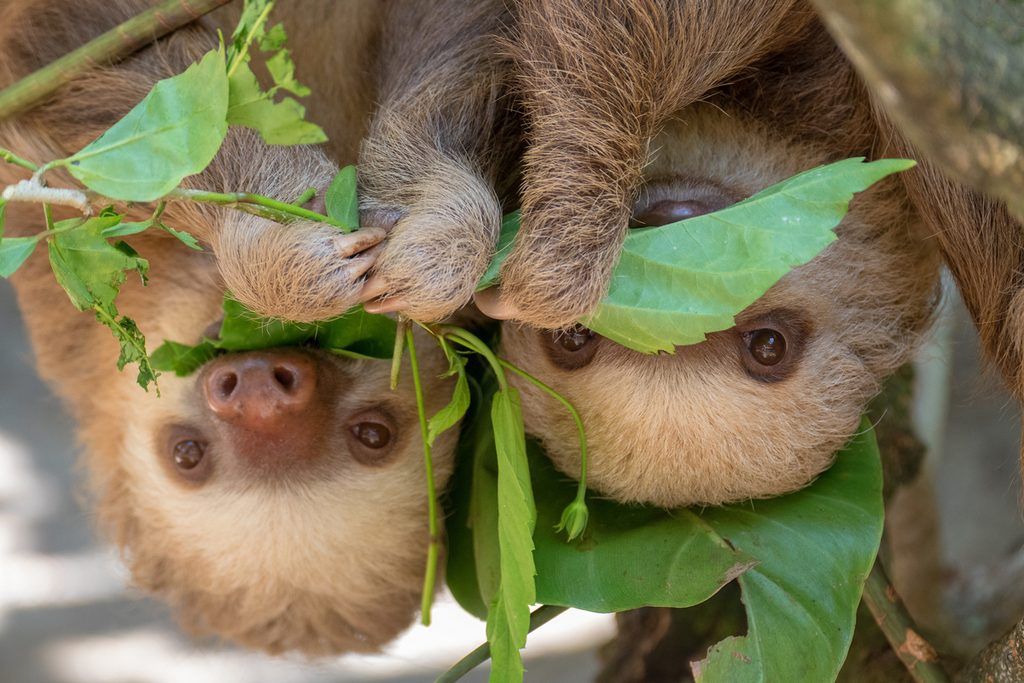
Their Diet Is Extremely Low in Calories
The first clue to a sloth’s leisurely lifestyle lies in its stomach: Sloths primarily eat leaves, which are plentiful in tropical forests but relatively low in calories. This means sloths have to make a little energy go a long way. Their metabolic rates are among the lowest recorded for mammals, with a daily energy expenditure of only about half of what would be expected for a similarly sized mammal.
Moving quickly takes a lot of energy, so there’s little advantage to burning through their limited supply just to get somewhere faster. Instead, a sloth spends most of its days hanging around treetops, eating when it needs to, and generally doing as little as possible to conserve the bit of energy it takes in each day.
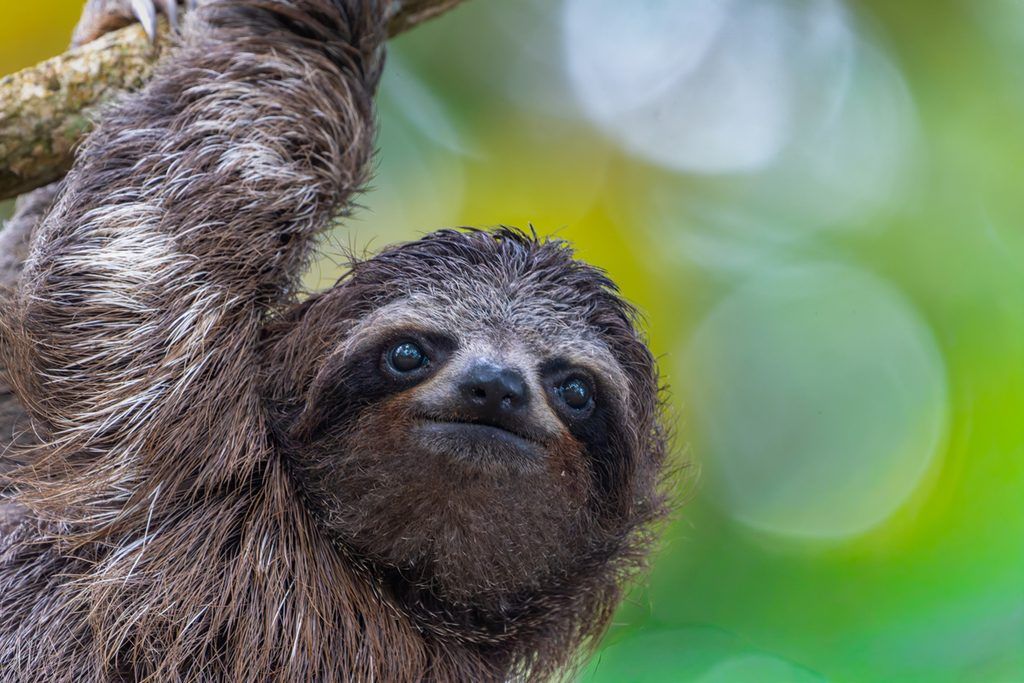
They Don’t Eat Much and They Digest It Slowly
A sloth’s low-calorie diet is limiting enough to its energy levels, but its stomach also takes its sweet time. Leaves are tough and fibrous, so sloths rely on fermentation to gradually break them down. The animal’s large, multi-chambered stomachs can remain almost constantly full as food slowly passes through and breaks down in the digestive system.
This means there’s a limit on how much a sloth can eat. Each day, a three-toed sloth eats an average of 73.5 grams (or 2.5 ounces) in dry weight of leaves — that’s roughly just a human handful or two of leaves. The contents of a sloth’s digestive system can account for up to 37% of its body weight and take days or even weeks to pass through, which is also why sloths typically only come down from the canopy to pass solid waste about once a week.
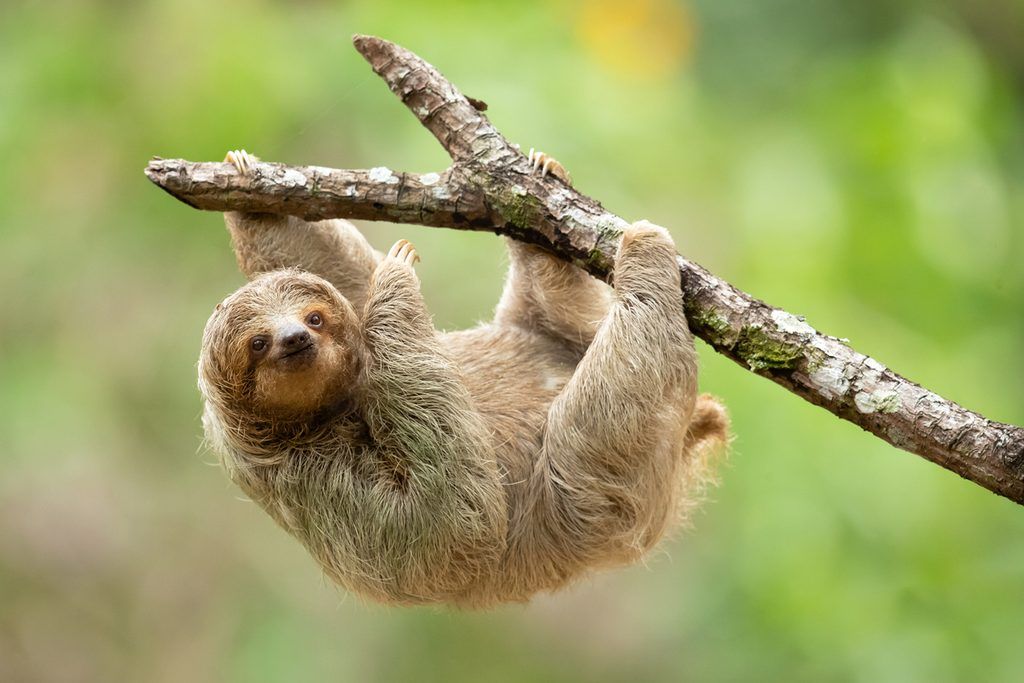
Their Muscles Are Made To Go Slow
Sloths spend much of their lives suspended from branches, so their limbs need to be able to support their bodies without wasting much energy. A high proportion of a three-toed sloth’s limb muscles contain slow-contracting muscle fibers — upward of 85% in some areas, such as elbow flexors. Those muscles exert force gradually and help maintain controlled movements rather than generating bursts of speed or strength.
Their slow pace also helps keep the branches they’re traveling on from getting too wobbly. Their hind limbs act as both a brake and a stabilizer; this slow suspensory walking helps limit sudden increases in force and helps sloths conserve their hard-won energy.
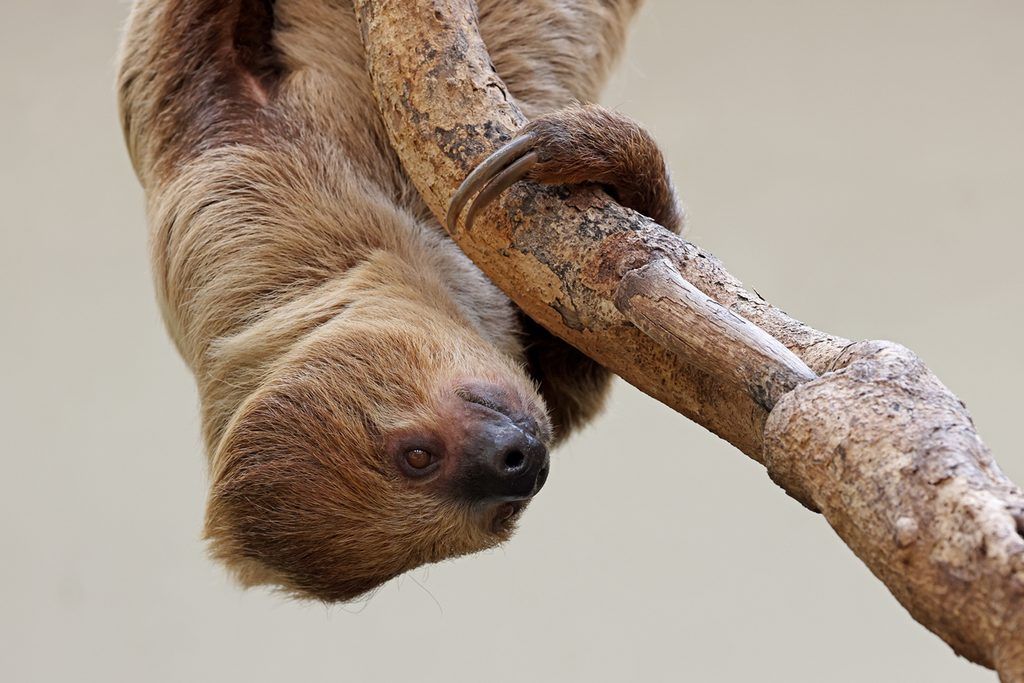
They Have Terrible Eyesight
Sloths don’t see particularly well. Genetic research has found they lack functional cone photoreceptors, the cells in the eye responsible for color vision and clear vision in daylight. Instead, their eyes are dominated by rod photoreceptors, which are minimally better at seeing in dim conditions but don’t provide the same level of detail or color vision that humans and many other mammals have.
Essentially, sloths are colorblind and don’t have great vision, especially in daylight. Fortunately, however, their world doesn’t require much long-distance vision.
They move slowly around their relatively predictable environment, where they don’t need to spot prey from a distance or track fast-moving predators. Instead, they rely on other senses, including smell and touch, to help navigate their surroundings.
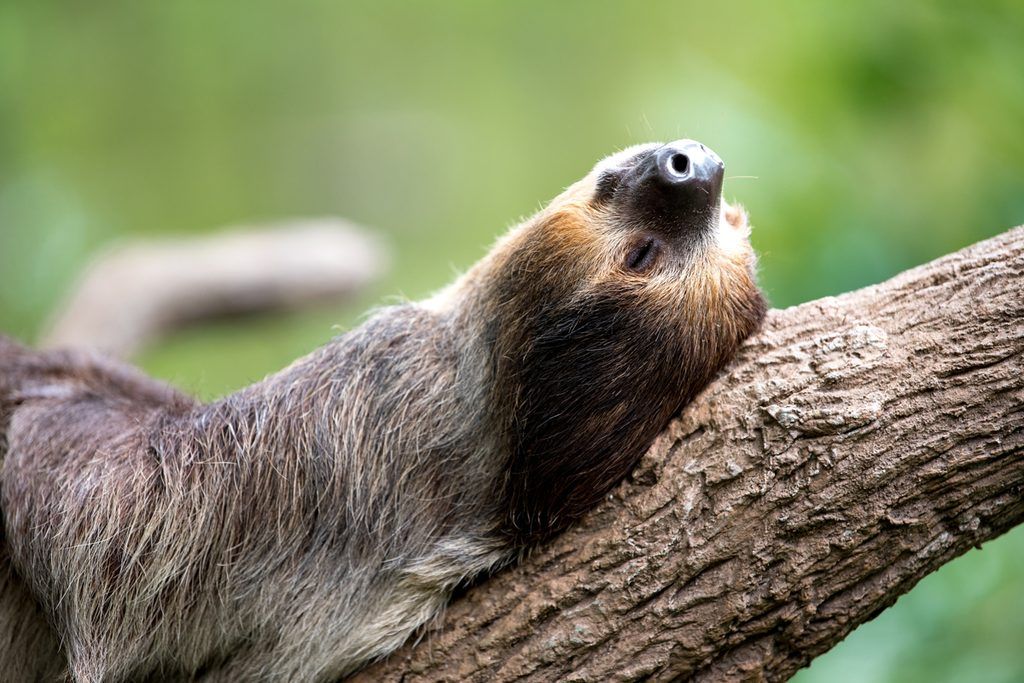
They Don’t Need To Run
Sloths may not be built to outrun predators (such as ocelots, jaguars, and harpy eagles), but they have another trick: not looking much like an animal in the first place. Algae and fungi growing in their fur often lends them a greenish tinge that helps them blend into the rainforest canopy, while their slow movements make them less noticeable to predators that hunt by sight.
Sloths also don’t produce body odor; instead, they have an earthy, organic smell thanks to the tiny ecosystem living in their fur, allowing them to blend even more seamlessly into their surroundings and keep living their slow, steady life.