Why Do Some Animals Hop Rather Than Walk?

Life is for living, so why stroll when you can bounce around like a living pogo stick? Across deserts, grasslands, forests, and wetlands, a number of animals do just that, abandoning the steady rhythm of walking in favor of hopping.
It may seem strange and ungainly to us, but this unusual way of moving has evolved in many species because it offers real advantages. Far from simply being a quirky alternative, hopping is a finely tuned solution to the challenges of speed, energy, terrain, and survival. Whether a small rabbit or a leaping kangaroo, these species might just have a leg up (literally) on the rest of us.
The Energy Advantage
As counterintuitive as it may sound to us humans, one of the main reasons animals hop is efficiency. At higher speeds, hopping — known scientifically as saltation — can cost far less energy than running on all fours.
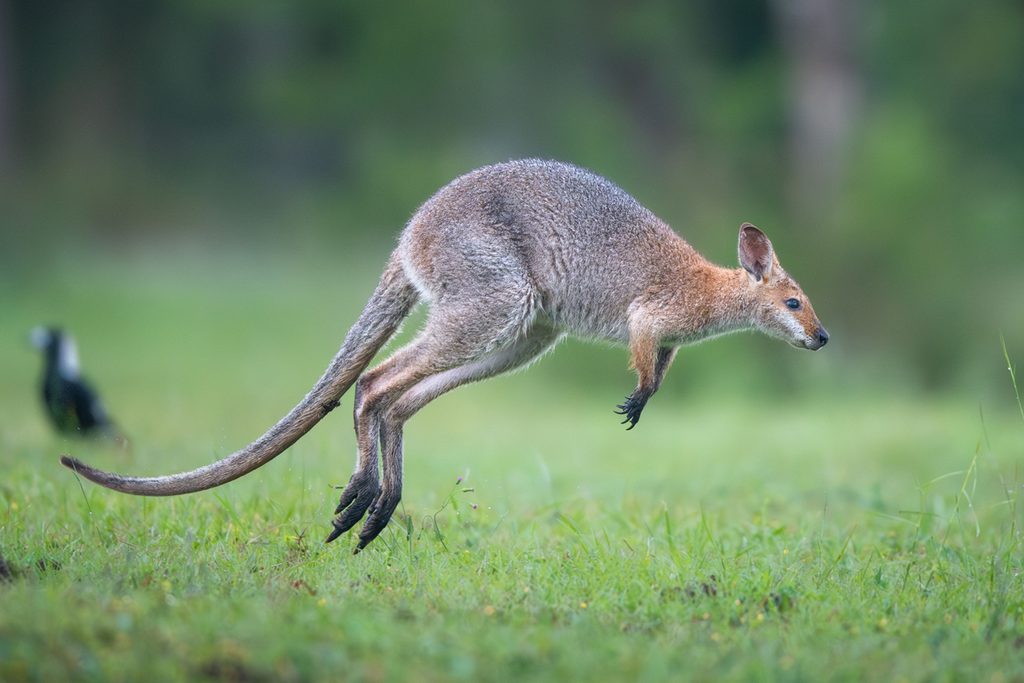
Kangaroos are a classic example: Their incredibly long, elastic Achilles tendons act like biological springs, stretching upon landing and then snapping back to help launch the next leap. This creates elastic energy storage, in which much of the energy from one hop is recycled into the next. Once a kangaroo reaches a steady bouncing pace, it can cover ground with remarkable economy.
Similar springlike mechanisms appear in other hoppers as well. Kangaroo rats also rely on elongated hind legs with strong, tough, elastic tendons, allowing them to move quickly across open ground while conserving precious energy.
Female tammar wallabies, meanwhile, have developed such an efficient hop that they can carry the added weight of an infant joey in their pouch with barely any increase in the cost of locomotion, with their tendons recycling up to 90% of the elastic strain energy from each landing. So what may look like casual and playful bouncing to us is, in reality, a highly efficient mode of travel.
Speed, Surprise, and Escape
Hopping is excellent for rapid acceleration and unpredictable movement — both vital for avoiding predators. Rabbits, for example, use hopping and erratic running patterns to evade sticky situations. They can explode from a crouch into a series of powerful leaps, reaching speeds of 35 mph while zigzagging through quick directional changes, outmaneuvering less agile predators.
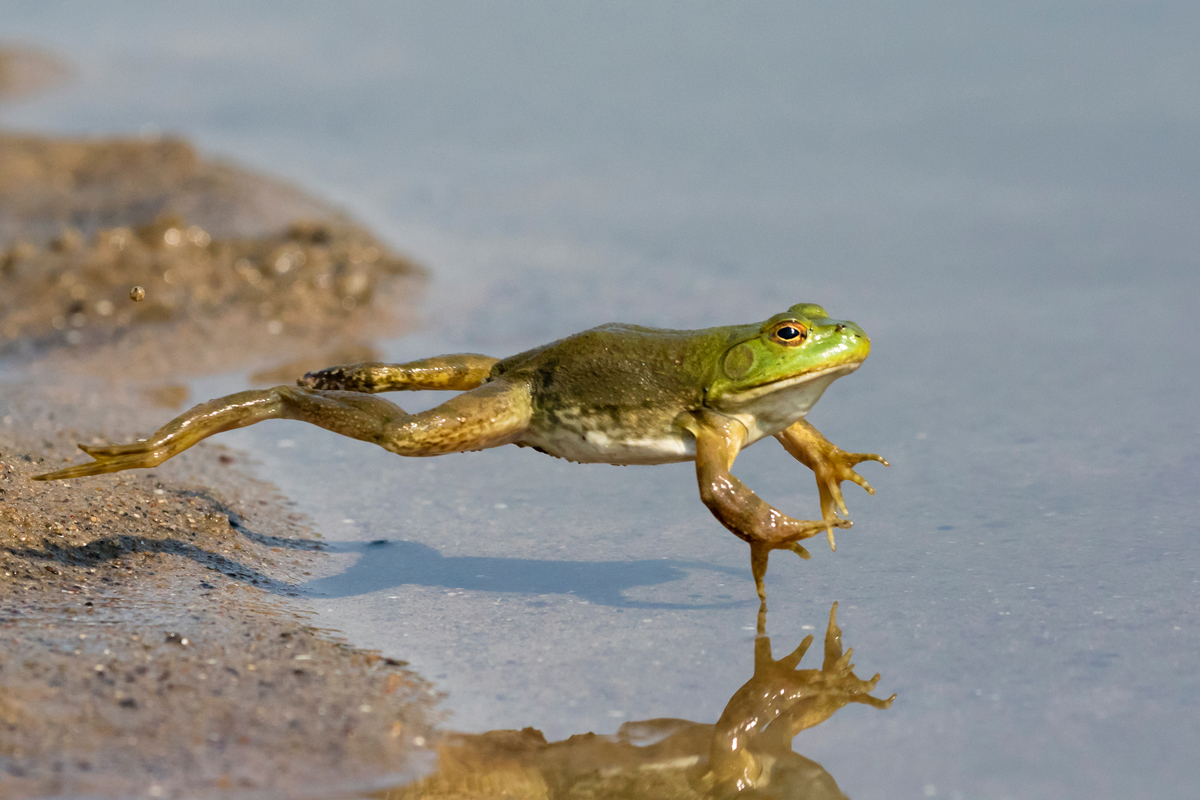
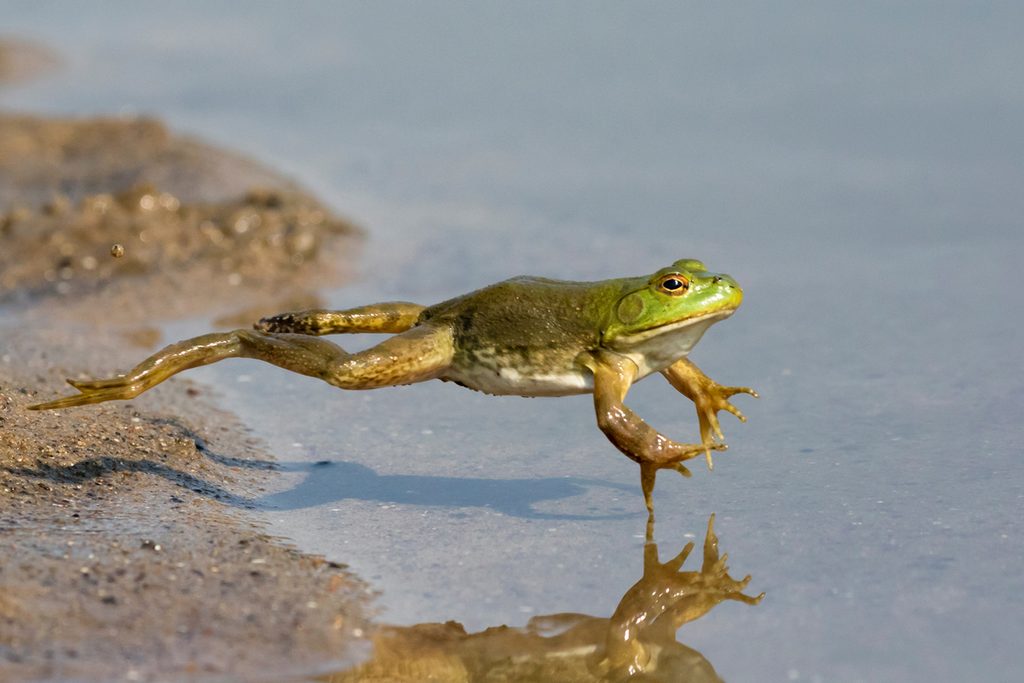
Frogs hop because their bodies are specially shaped for powerful jumping rather than walking, and they use their hops and leaps for purposes of both defense and attack. Their long, muscular hind legs deliver explosive jumps that can launch them many times their own body length in a single bound.
The South African sharp-nosed frog, for instance, holds the record for the longest leap by a frog relative to its body size at 17 feet 6 inches, or more than 90 times its own body length. This is an effective last-ditch method for evading predators as well as for closing the distance between themselves and their prey. As is the case with many saltatory (hopping) animals, rabbits and frogs have both traded the steady control offered by walking in favor of these bursts of speed and agility.
The Birds and the Trees
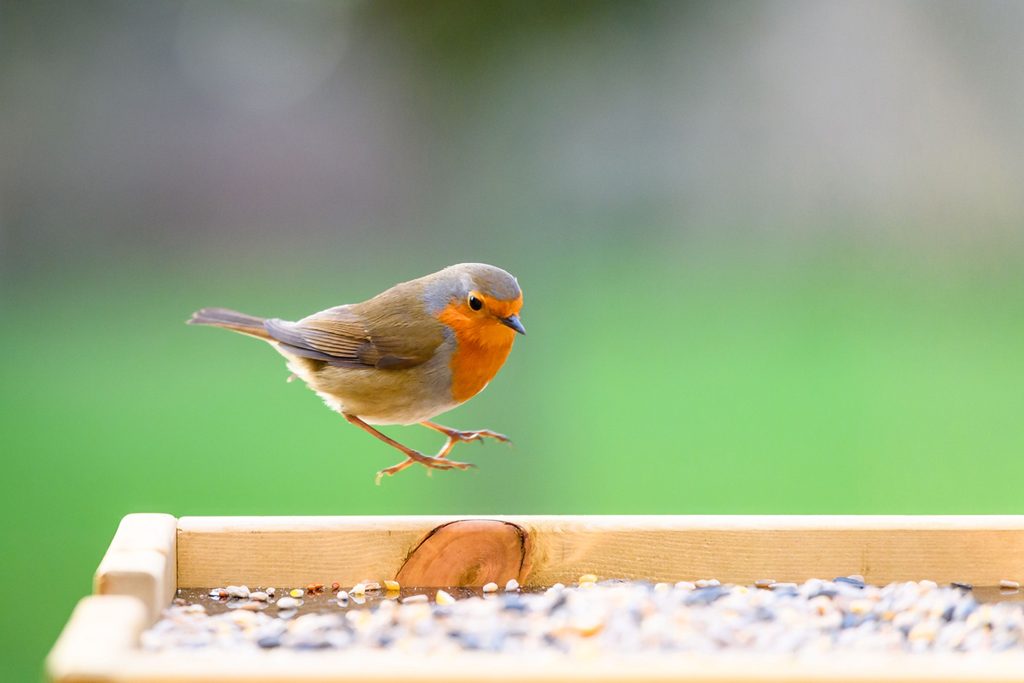
Birds, as a whole class, are not classified as saltatory animals because their primary mode of transport is typically flight. But many birds, especially smaller species that spend most of their time in trees, use hopping to get around on the ground. Branches and twigs rarely form neat walkways, making hopping an easier and faster way to navigate.
Hopping can also be a more efficient way of moving for small birds, just as it is for kangaroos; a short-legged bird can move further in a single hop than by taking several steps. Larger birds with longer legs don’t tend to be hoppers because it’s more economical for them to take longer strides, moving one leg at a time.
In general, birds tend to be quite adaptable when it comes to hopping and walking. Many species, including robins, magpies, ravens, and blackbirds, both hop and stride. Their choice of locomotion often depends on how much of a hurry they’re in — a casual hop may change to a run when speed is more important than efficiency — and whether they’re up in the trees or on a flat surface.