8 Animals Whose Babies Look Nothing Like Their Parents

In much of the animal kingdom, babies tend to resemble scaled-down, more adorable versions of their grownups. Lions have cubs that look like small lions, and deer fawns simply look like smaller deer. But in some species, development happens unexpectedly. Some offspring can start out looking quite different from their parents, and often this distinction serves as a tool for survival during vulnerable early stages. Here are eight animals whose babies begin life looking next to nothing like what they’ll grow up to become.
Ladybug
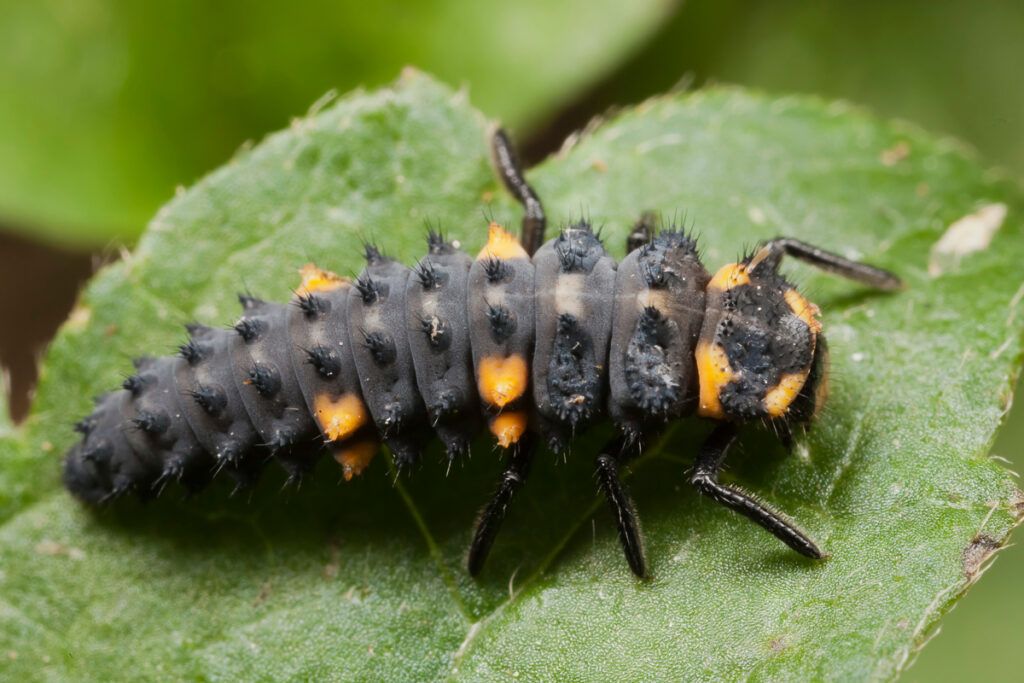
In its earliest days, a ladybug looks like a different insect entirely. The egg hatches into a larva that quickly develops into a long, dark, spiny form, moving across leaves more like a caterpillar than a beetle. Over the two weeks it takes to reach full size, the larvae consume around 400 aphids and shed their skin several times. At this point, they stop feeding and enter pupation, and about a week later, the adult ladybug emerges with the familiar domed shape and wing covers already in place. Though its exoskeleton remains soft and pale, it quickly hardens and darkens, reaching its final form over the next several hours.
Flamingo
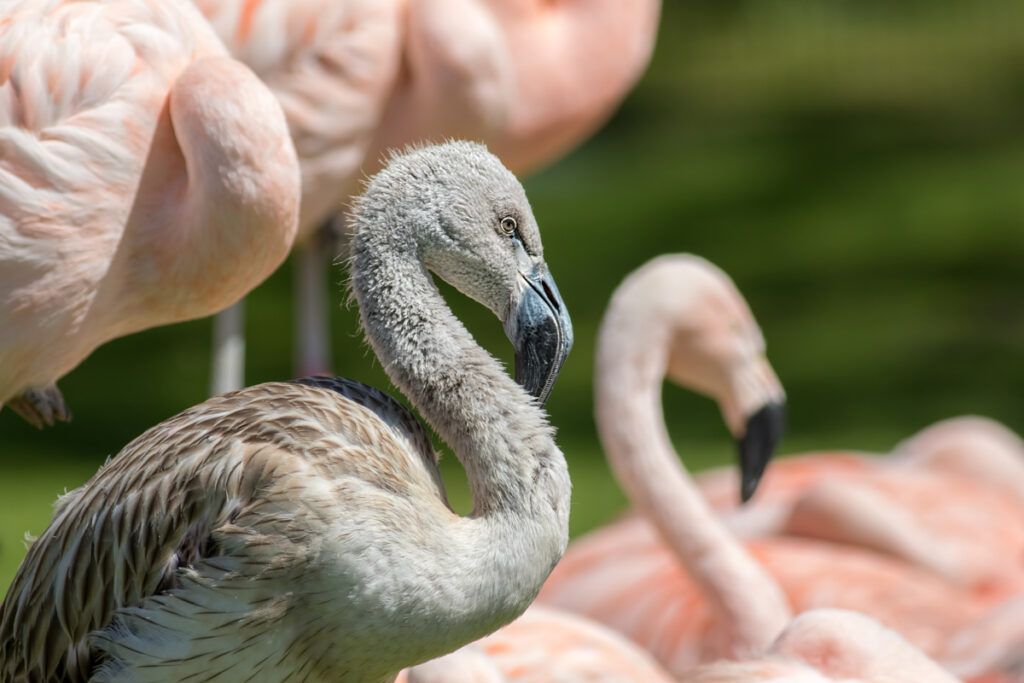
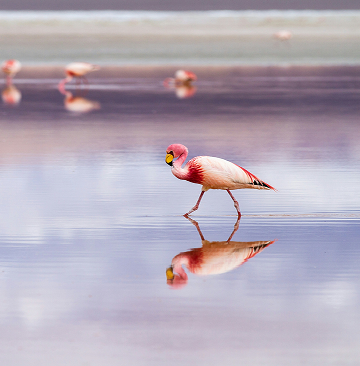
Flamingo chicks hatch covered in soft, grey down, with short, straight bills and compact proportions that bear little resemblance to the tall, flamboyant birds they will become. Within just 30 days, the chicks reach a height of about two feet tall; within three to six months, their size and beaks are almost on par with the adults. Their distinctive color comes a little more slowly: As they learn to fend for their own food, the carotenoids in the algae and small crustaceans from their diet will slowly tint their feathers pink within about two to three years.
Silvered Leaf Monkey
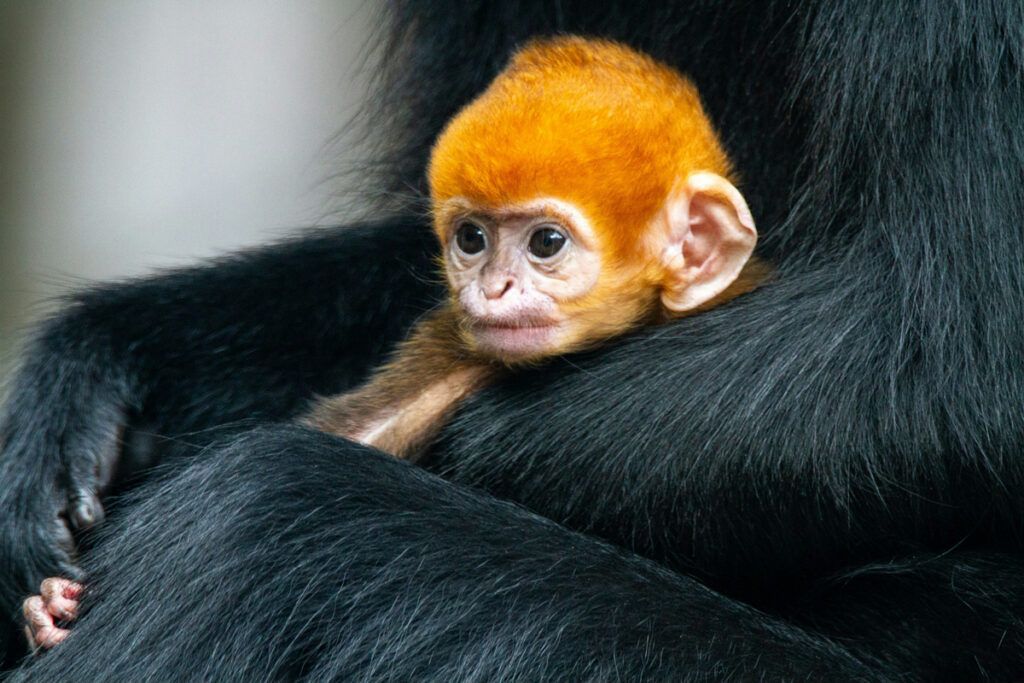
Silvered leaf monkey infants are born bright, golden orange, a stark contrast to the grey adults that take care of them. In their earliest weeks, they cling closely to their mothers; their high visibility ensures they don’t get lost in the dense forest canopy, as well as, surprisingly, shields them from predators, many of which are usually orange-green color blind. Within about six months, the orange coat gradually fades before settling into an adult’s grey.
Echidna
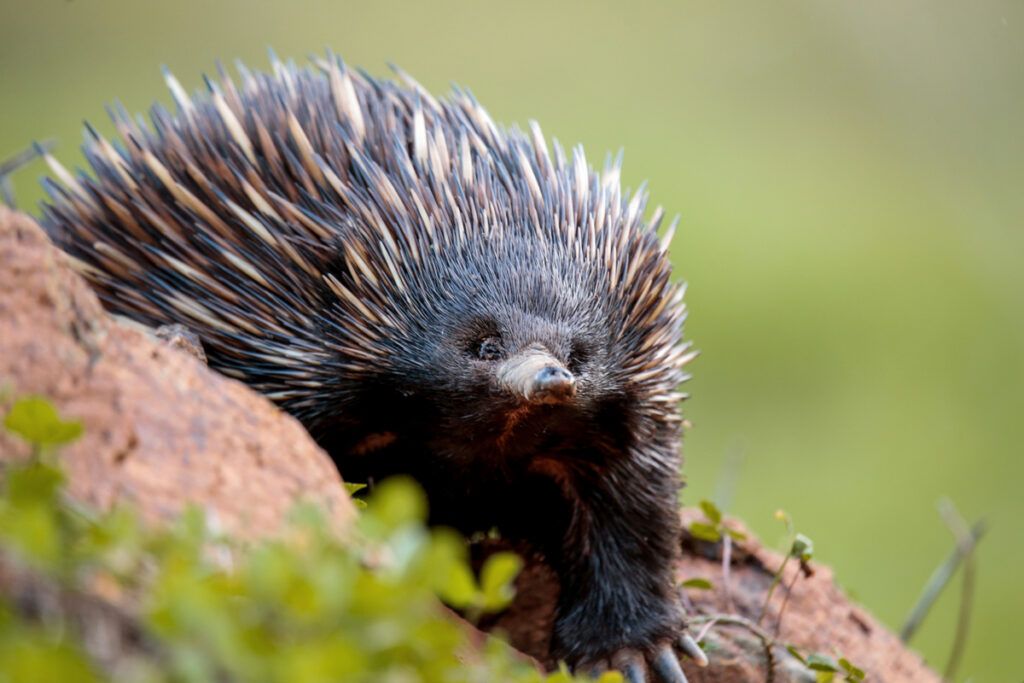
A baby echidna, known as a puggle, is born almost featureless, with none of the defensive mechanisms — its long hunting nose and coat of quills — that it will later need to survive. In fact, even a puggle’s eyes are barely developed, and its skin is hairless and almost translucent. Within about 100 days, puggles grow a generous coating of fur; at about five months, its distinctive nose lengthens and and small quills begin poking out of its fur, making good on its other name — spiny anteater.
Giant Panda
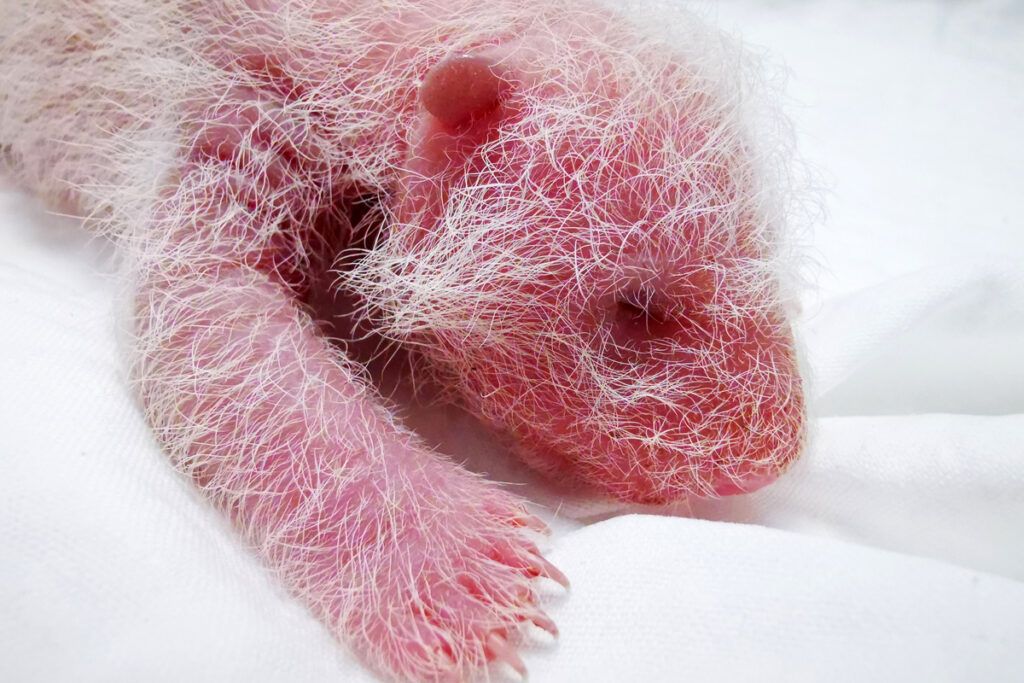
In the first weeks of life, a giant panda displays no sign of telltale black-and-white pattern. Instead the tiny cub is born pink, blind, and nearly hairless; at just three to five ounces in size, it could be any small animal to the untrained eye. For weeks, panda cubs are entirely dependent on their mothers for warmth, feeding, and protection. But changes happen quickly: Within the first 48 hours, fine white fur emerges, as black patches begin showing up on the body and around the eyes. By around three to four months, the fur is filled in completely, and the once-tiny cubs begin crawling and growing teeth.
Brazilian Tapir
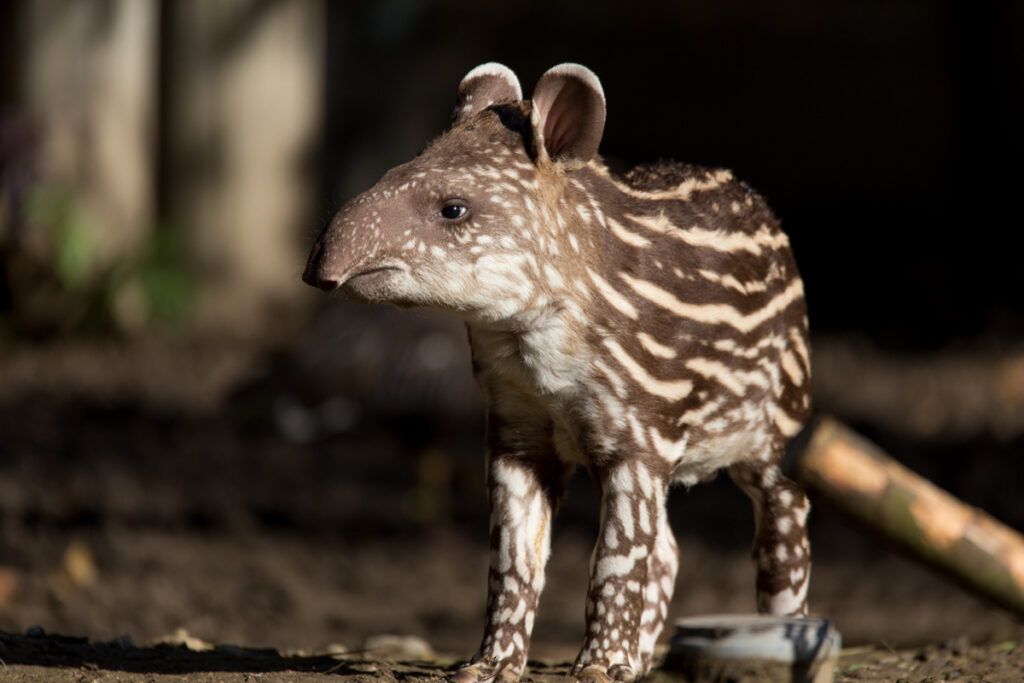
The early life of the Brazilian tapir is marked with a horizontal-striped coat, a busy look for an animal who grows up to have a plain, cropped fur coat. The calf’s white stripes and spots are meant to mimic dappled sunlight; this helps them blend in among the dense leafy shadows of its Southeast Asian forest home, protecting them from predators. Within about seven months, the pattern fades into a uniform dark coat suited to the wetlands and forest interiors it frequents.
Red Panda
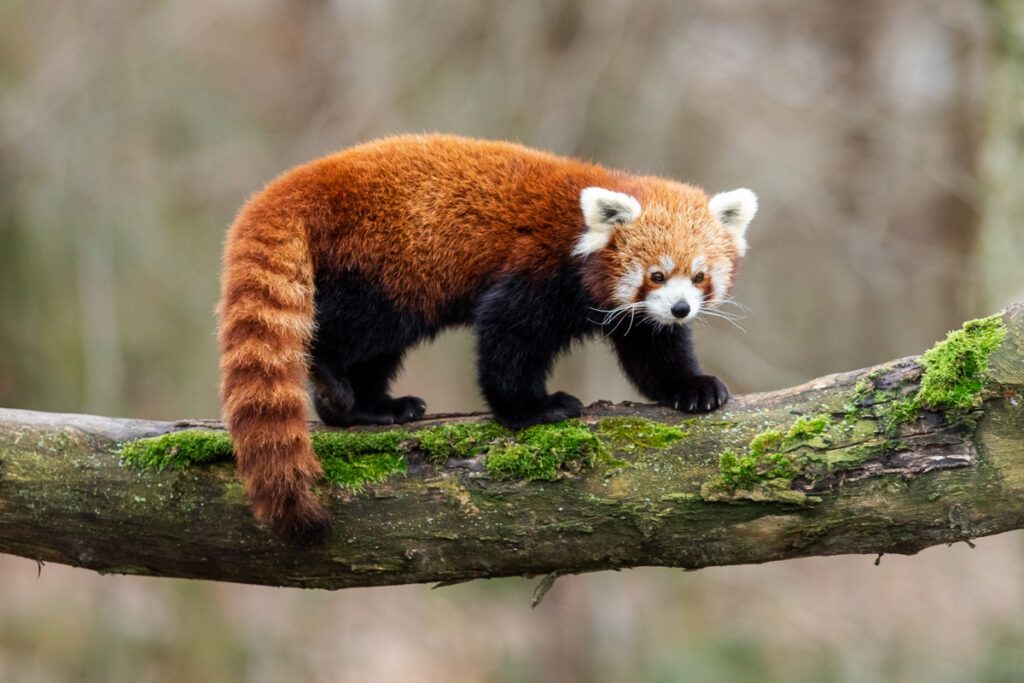
Red panda cubs are not born with their characteristic rust-colored coats. Instead, their early wooly fur is a pale grey, and their familiar facial markings are only faintly defined. The cubs remain hidden in nests of leaves and branches in Himalayan regions during their earliest weeks, relying on seclusion rather than camouflage for protection. But by about five months, as the cubs are able to venture out, their coat deepens in color and the red and white facial patterns solidify, helping them blend in with their habitat’s fir trees, where branches are coated in reddish-brown moss and white lichen.
Fennec Fox
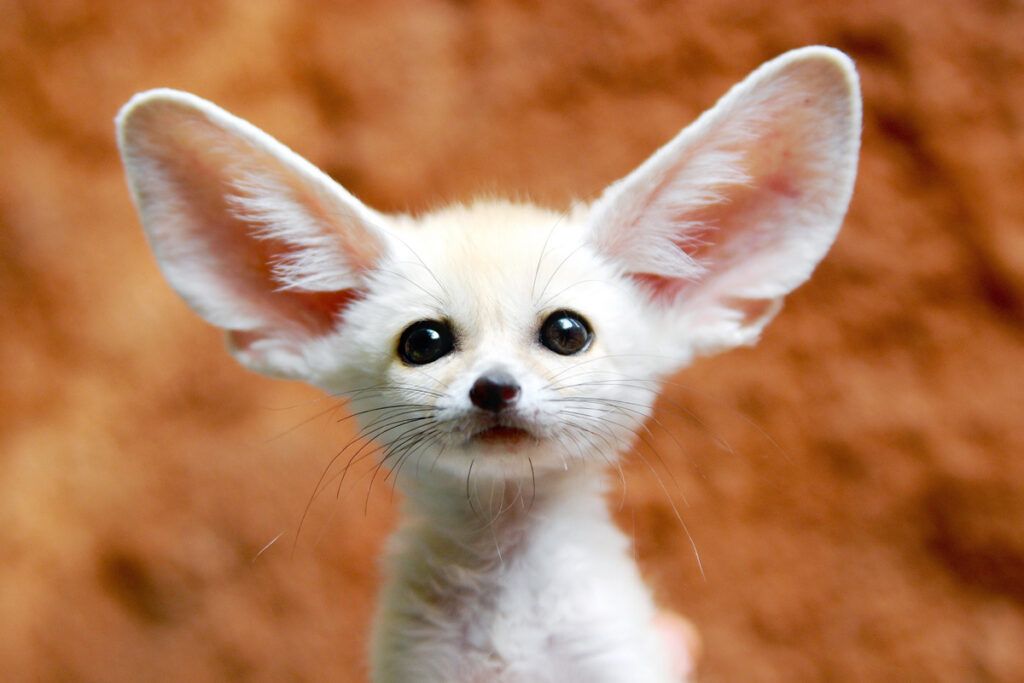
In the early stages of life, a fennec fox kit looks closer to a generic fox pup than a highly adapted desert native. The ears are folded and proportionally small compared to the adult’s unusually large set, and the coat begins much darker than the pale adult’s fur. As the kit grows, its ears expand to about twice their body size, helping not only to help hunt prey, but to dissipate heat. Its coat does the same, lightening in color to reflect the North African desert sun.