What Is a Starfish, Really?

Animal names aren’t always so straightforward — or accurate. A prairie dog isn’t a dog, a koala bear isn’t a bear, and a seahorse, of course, isn’t simply a horse that lives in the sea.
Starfish are also members of the misnomer club: Their name, while quite evocative, actually tells you surprisingly little about the animal itself. So is a starfish actually a fish?
What Is a Starfish?
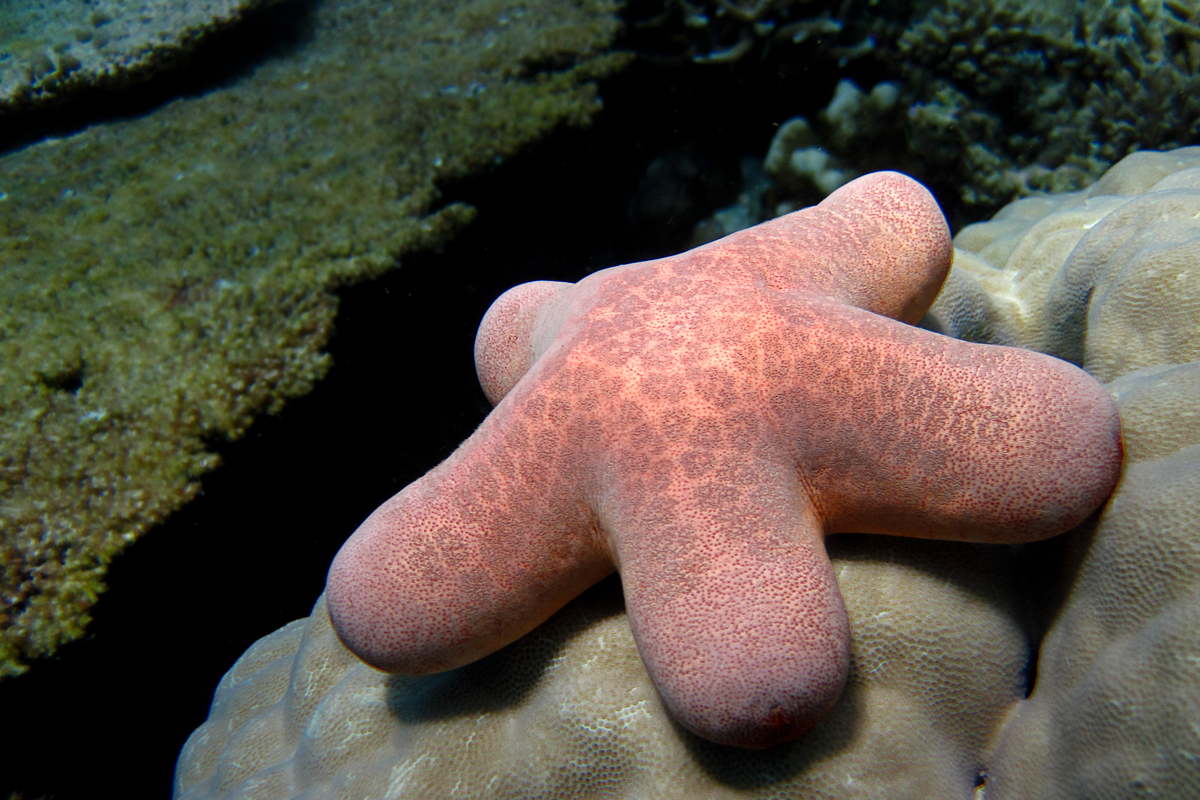
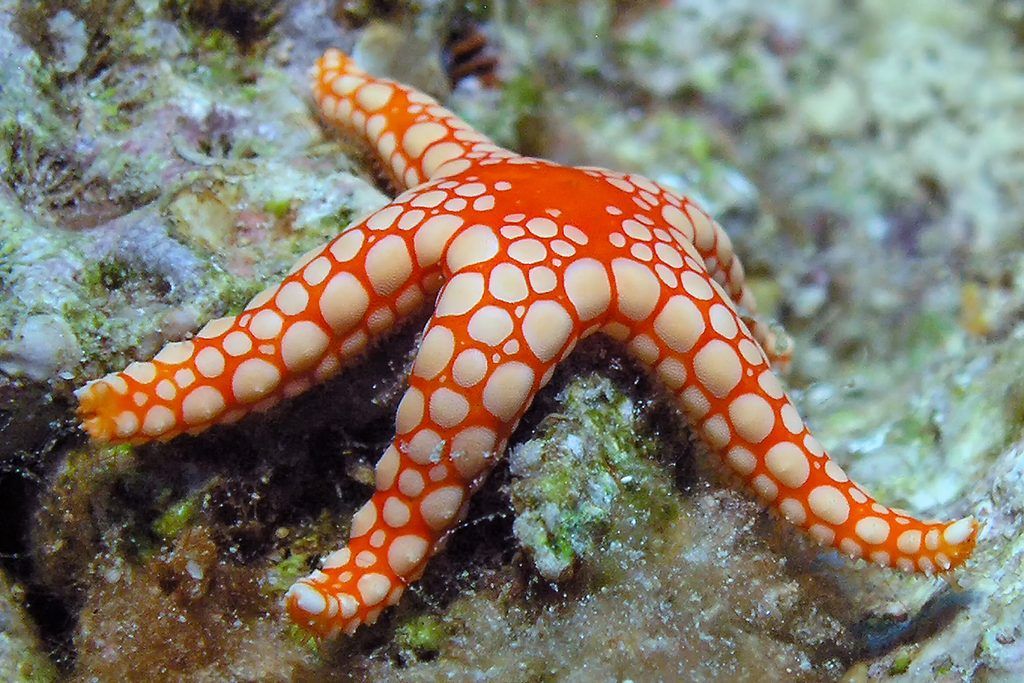
Starfish, also known as sea stars, are marine invertebrates belonging to a group of animals called echinoderms. Their name, apt at least for the star-shaped creature whose arms radiate from a central body, is more descriptive than scientific. They’re more closely related to sea urchins, sand dollars, and sea cucumbers than they are to actual fish.
These creatures don’t have backbones, fins, or gills like their marine namesake, nor do they have a brain or blood in the usual sense, and they move using hundreds of tiny tube feet powered by a water-filled system inside their bodies. And that’s just the beginning of what makes these familiar-looking animals surprisingly strange — and so different from fish.
How Do Their Tube Feet Work?
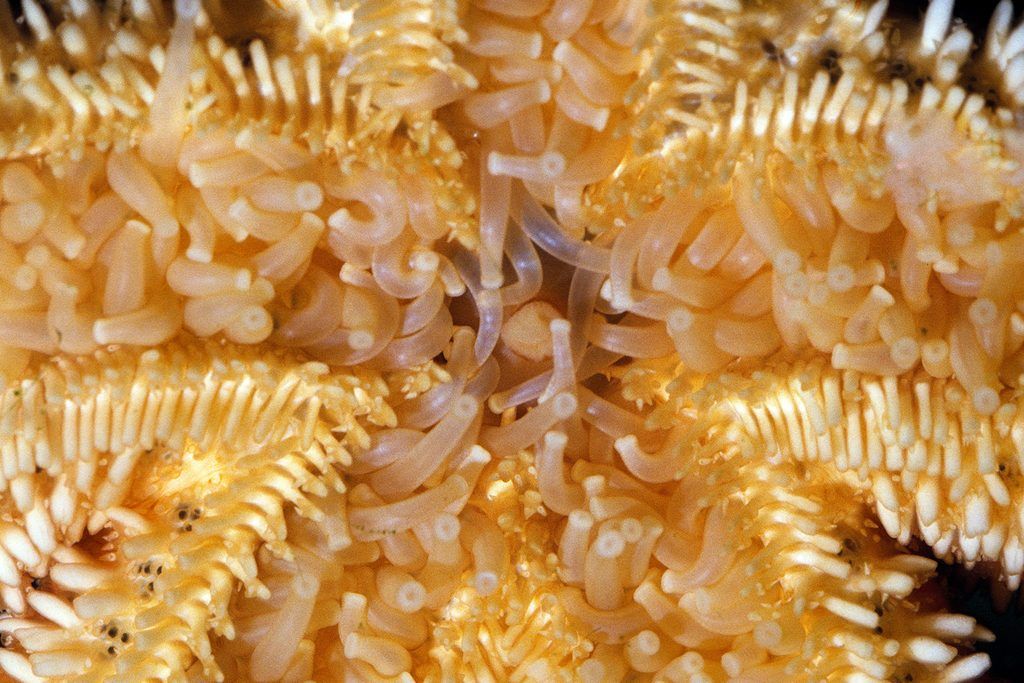
Most species of starfish have five arms, although some, such as the sunflower sea star, can have up to 24. The underside of those appendages are covered with hundreds, if not thousands, of tiny feet, each of which is a flexible tube connected to the animal’s water-vascular system.
Water enters that system through a porous sievelike area on the starfish’s body called a madreporite, and from there it moves through interior canals to the tube feet. The hydraulic pressure of water entering the body and being pumped into the tubes helps the tubes extend and contract, allowing the starfish to slowly crawl across rocks and sand. The tube feet do more than provide transportation: Starfish also use them to grip surfaces and to handle food, including prying open clam and mussel shells.
They Don’t Have Brains or Blood
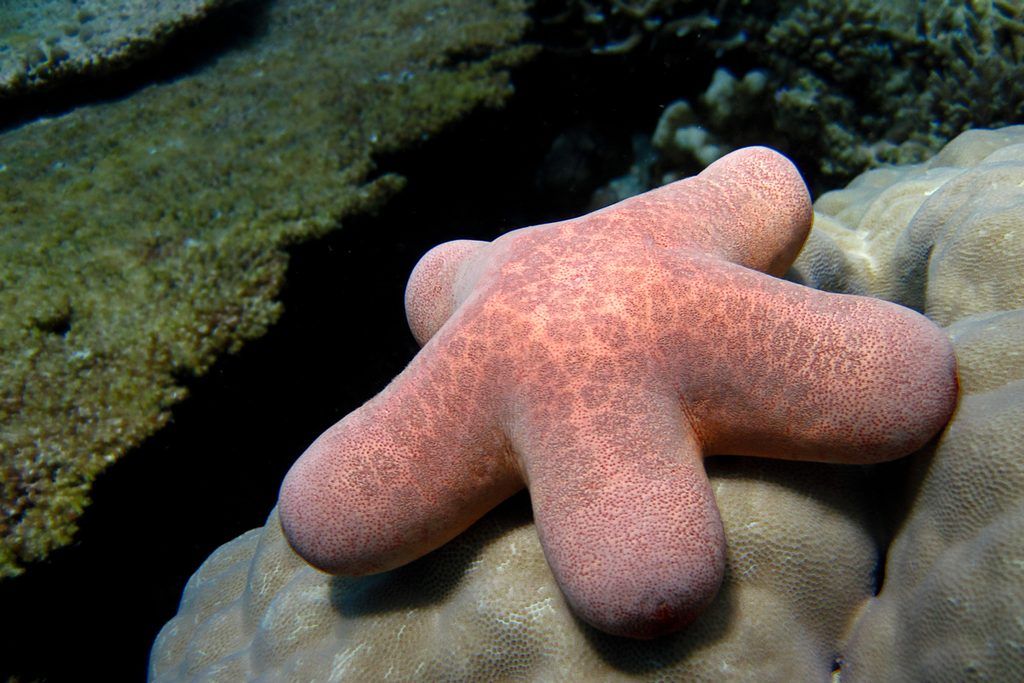
Starfish may not have a brain in the standard sense, but they’re certainly not without a nervous system. Instead of a centralized brain, they have a nerve ring around the mouth with cords that extend into each arm. This structure helps them detect touch, chemical cues, and even gravity.
Most starfish species also have simple eyespots on the tips of their arms. These eyes don’t produce anything like the detailed images of our human eyes; they can, however, help starfish perceive large stationary objects and distinguish them from the surrounding water, which sometimes also helps them find decent feeding grounds.
Starfish also don’t have blood. Instead, their water vascular system and coelomic fluid, which fills the main body cavity, help transport nutrients around the body. Oxygen can also diffuse directly through thin areas on their body’s surface and tube feet to allow the starfish to breathe.
Their Stomachs Eat Outside Their Bodies
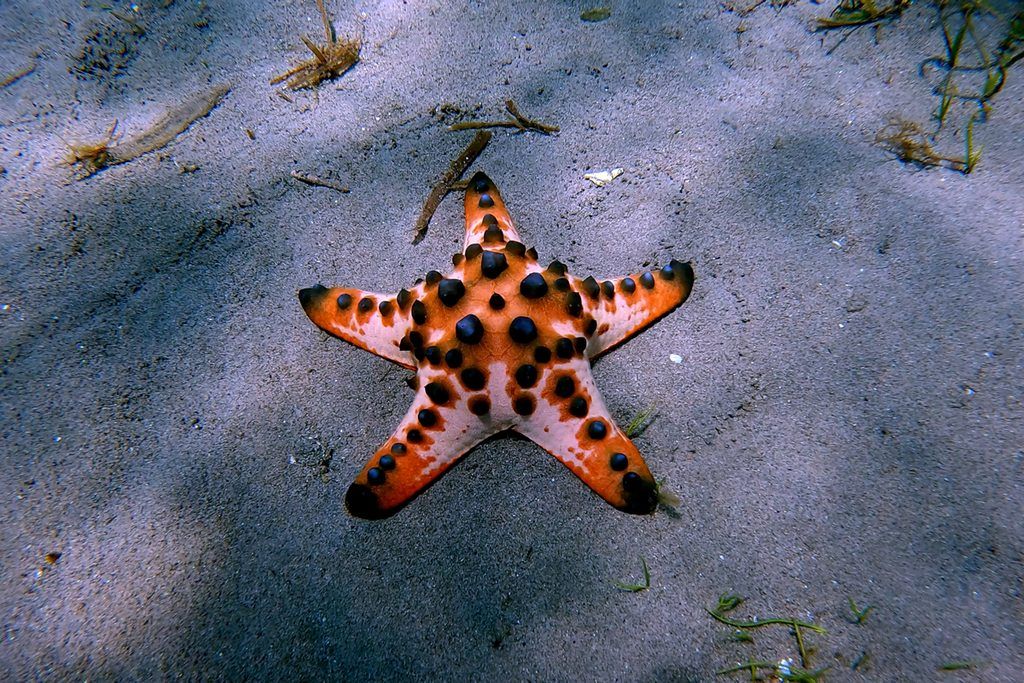
Starfish don’t have teeth or jaws, but they don’t necessarily need them. First, their tube feet help them pry two halves of a shellfish apart, then their stomach takes over: A starfish can push its stomach out of its mouth and into a small gap in the shellfish’s shell. There, digestive enzymes start breaking down the food and absorbing it on the spot, resulting in an empty shell — and a full belly.
They Can Regrow Body Parts
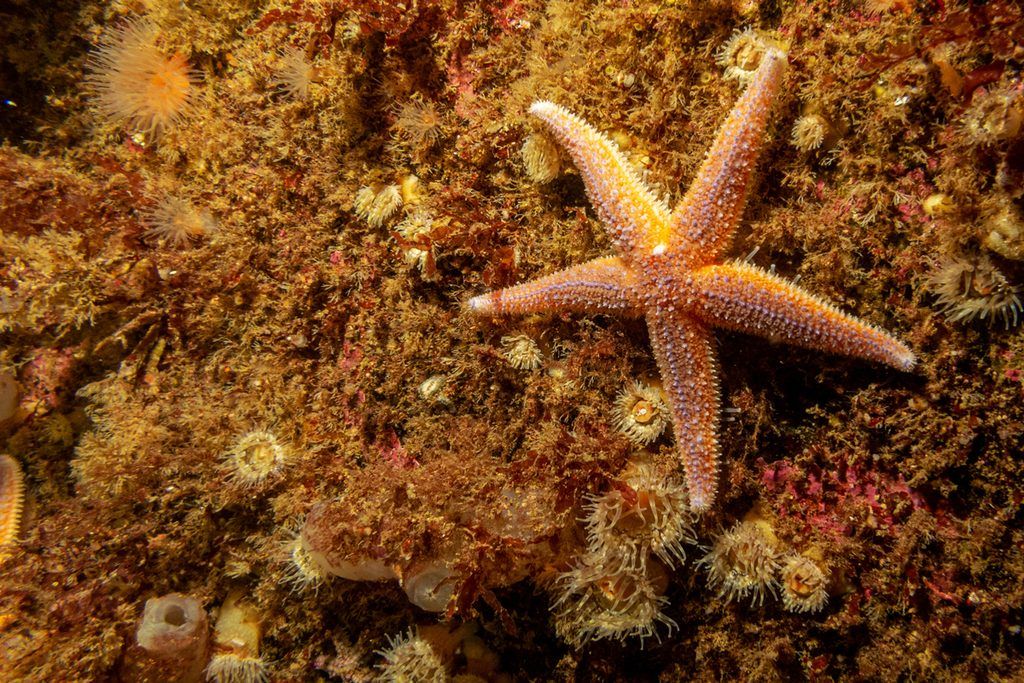
Starfish can pull off impressive feats of regeneration; if one loses an arm, it can gradually grow a replacement. This process can take months or even a year depending on conditions such as how much of the central body initially remained intact. But starfish hardly just patch over the injury: Research has found they can also regenerate their nervous system, producing new neurons after cells are damaged.
Some tropical starfish such as the Linckia, found in the Indian and West Pacific Oceans, are even capable of whole body regeneration from a single arm, while other species such as coscinasterias calamaria (aka the eleven-armed starfish) reproduce through fission, a process that sees the central disc splitting into two pieces and each half regenerating the missing parts into their own, alien-esque beings.