Which Animals Glow in the Dark?

Have you ever caught a blinking firefly on your finger or swum in the sea at night amidst a pale green glow? If so, you’ve witnessed nature’s greatest light show: bioluminescence.
Caused by a series of chemical reactions, this glowing phenomenon serves several purposes, from communication to predator deterrent. Light is a powerful tool that has evolved independently in many animals, proving that sometimes nature comes up with an idea so effective, it has to be shared.
What’s the Difference Between Bioluminescence and Biofluorescence?
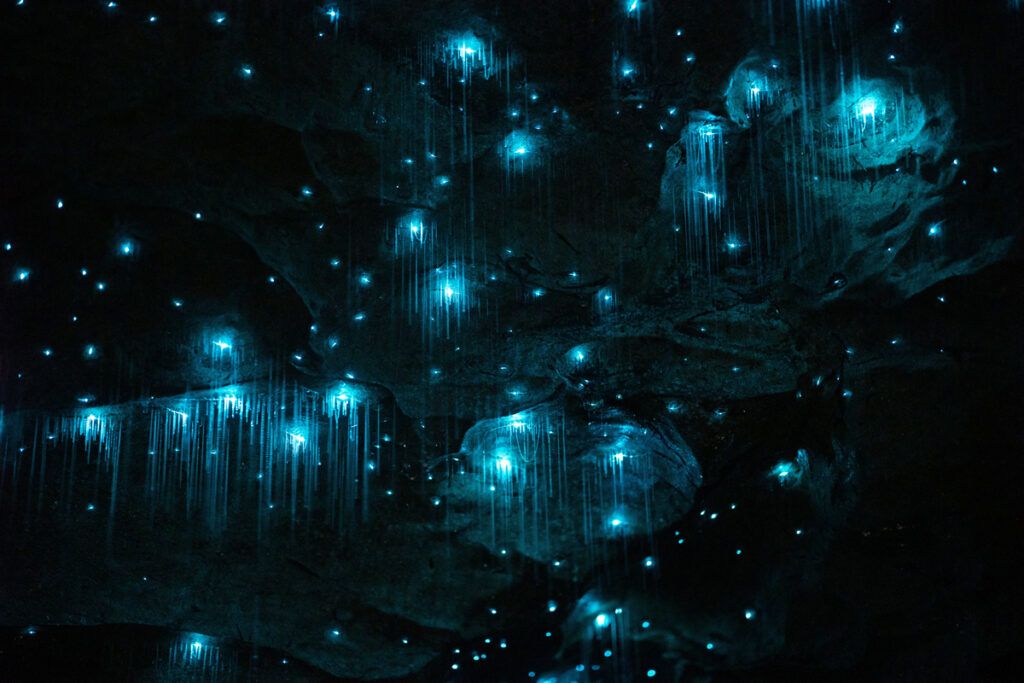
There’s more than one way for a creature to glow. Bioluminescence refers to the process of generating light from a chemical reaction that takes place inside the bodies of animals or plants. It occurs without the influence of any other light source, instead relying on a creature’s own biology. Biofluorescence, on the other hand, occurs when organisms absorb sunlight and transform it, emitting that light in a different color frequency.
Bioluminescence is typically found among insects and marine creatures. In fact, around 76% of all known sea creatures are bioluminescent, producing their own light in a watery world where it’s difficult for the sun’s rays to penetrate.
Meanwhile, biofluorescence is utilized by many sea creatures as well as several land animals. But just because a creature needs the sun to produce light, that doesn’t make the show any less impressive.
Here are six animals you may spot glowing through a dark night.
Fireflies
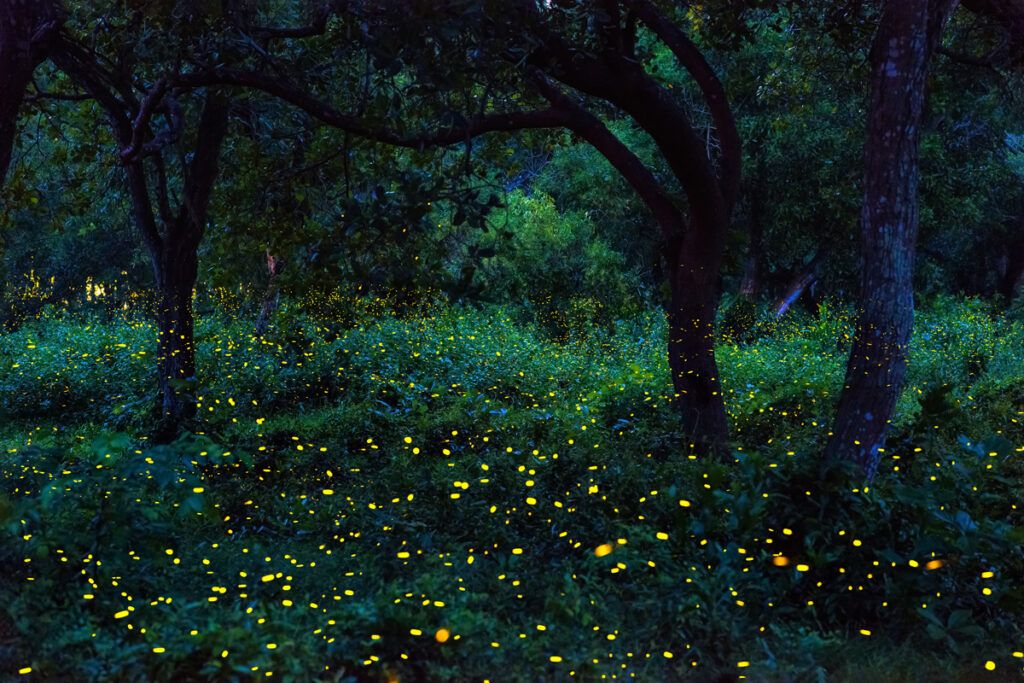
A classic glowing creature, and probably the first to come to mind when thinking about animals glowing in the dark, fireflies — also known as lightning bugs — have a fairly straightforward bioluminescence process. When oxygen combines with special cells in the firefly’s light-producing organ, it can produce a heatless light at will.
This light usually flashes in patterns distinct to each firefly species, helping the fireflies (which are technically beetles) signal potential mates. Even their larvae glow, using their light to deter hungry predators.
Platypuses
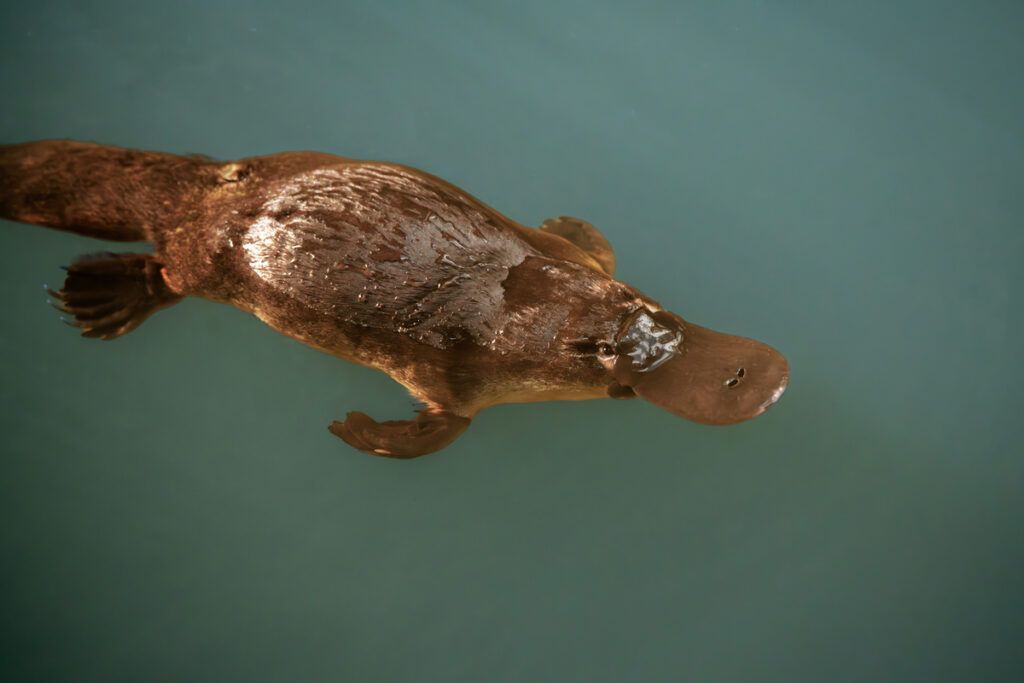
The platypus is an oddball among mammals. Found in eastern Australia and Tasmania, it has a bill, webbed feet, and a flat tail — features that rarely appear on the same animal. But one of its quirks only appears under ultraviolet (UV) light.
Quite by accident, researchers discovered that the fur of a platypus reflects a blue-green glow. This is an example of biofluorescence, as the animals absorb UV light into their drab brown fur and emit it in a different frequency — in this case, a bluish-green.
Why they do so isn’t entirely clear. One idea is that it may function as camouflage, making the platypus less visible to predators that use UV light to hunt. But it could also serve no purpose at all and instead be a byproduct of a platypus’ unique biology.
Jellyfish
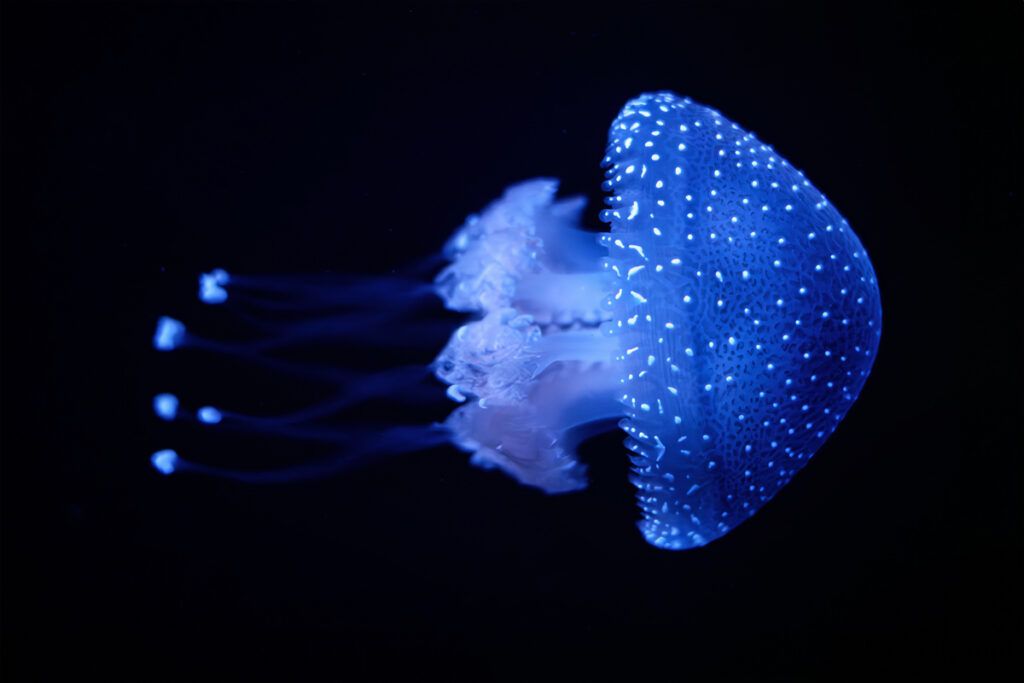
Deep in the ocean where all sunlight disappears, many creatures rely on their own bioluminescence to light their way, and jellyfish are one of the most common examples. Many species of jellyfish glow by using a chemical called luciferin, which, when combined with oxygen, creates light-producing photons.
The color varies depending on species, but most jellyfish glow an eerie blue or blue-green, which reaches farther in water than it would in air. For jellyfish in particular, bioluminescence serves as a deterrent to predators, often working to confuse them in the murky depths.
Virginia Opossums
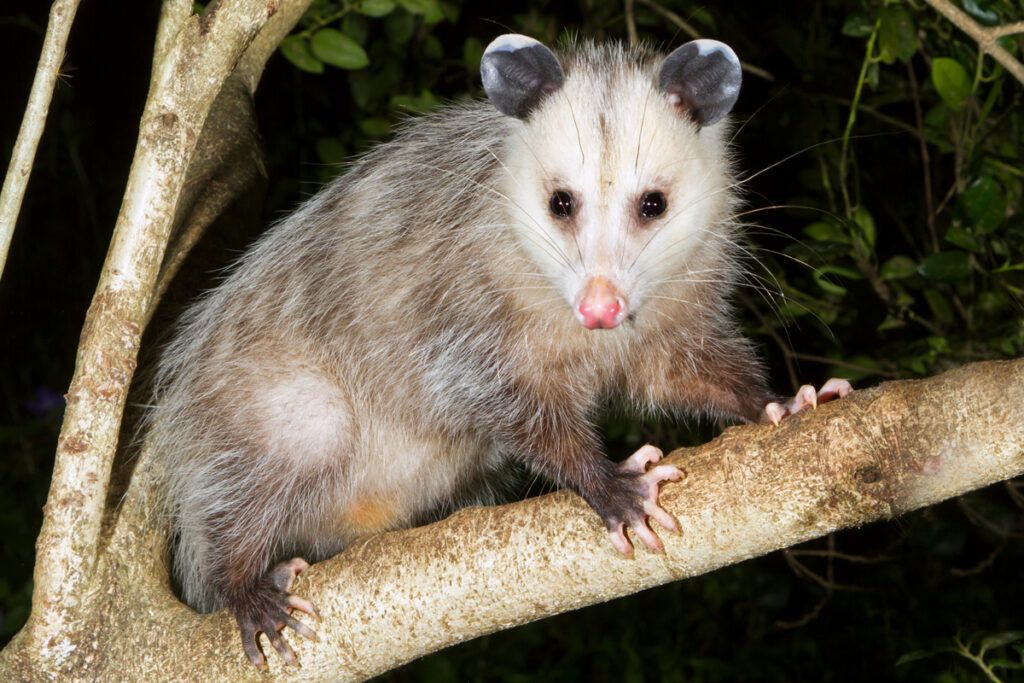
North America’s only marsupial is one of only a handful of mammals that utilizes biofluorescence — and it’s certainly one of the most fabulous glowing critters on this list. Shine a UV light on a Virginia opossum, and its fur will glow a brilliant hot pink.
As with platypuses, scientists still aren’t entirely sure why the opossum glows. It may help with communication or camouflage, or it could simply be an unexpected byproduct of the whiter parts of their fur.
Scorpions
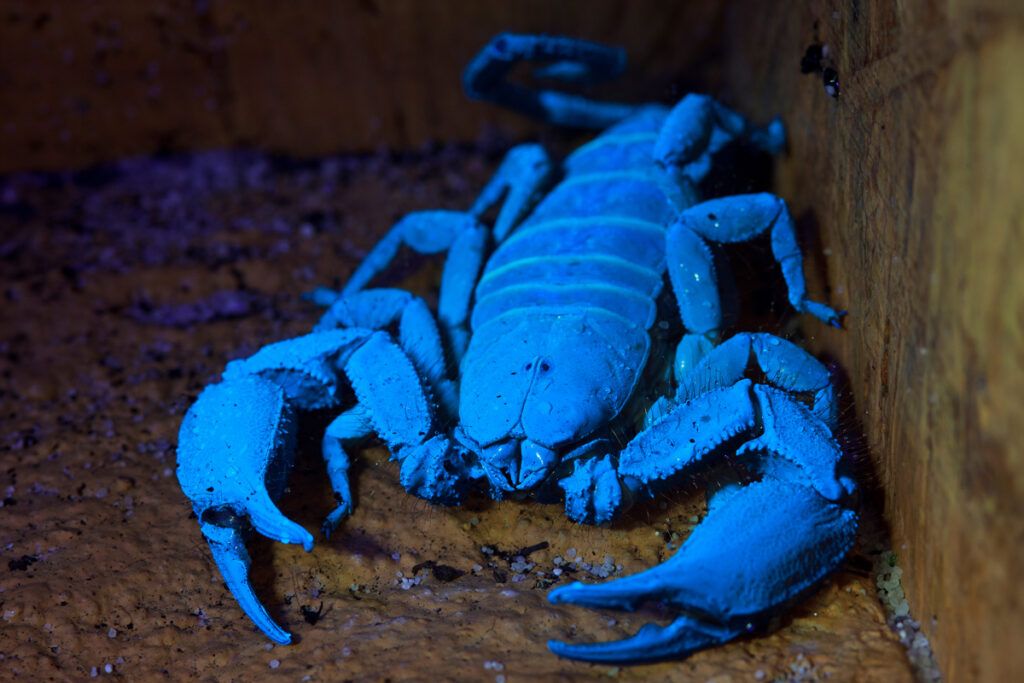
The scorpion, with its snapping claws and stinging tail, is creepy enough on its own, but under a full moon, the venomous arachnid achieves a whole new level of spookiness. Scorpions give off a fluorescent blue hue when the moon’s UV rays interact with a protein in their bodies.
The latest research indicates scorpions use their glow levels as a kind of built-in light meter to determine when it’s safe to come out of hiding and hunt. If they aren’t hungry and notice they’re glowing brightly due to an abundance of moonlight, they’ll stay hidden and save hunting for darker nights. If you’re searching your home, a UV light can also help you pick out these glowing arachnids.
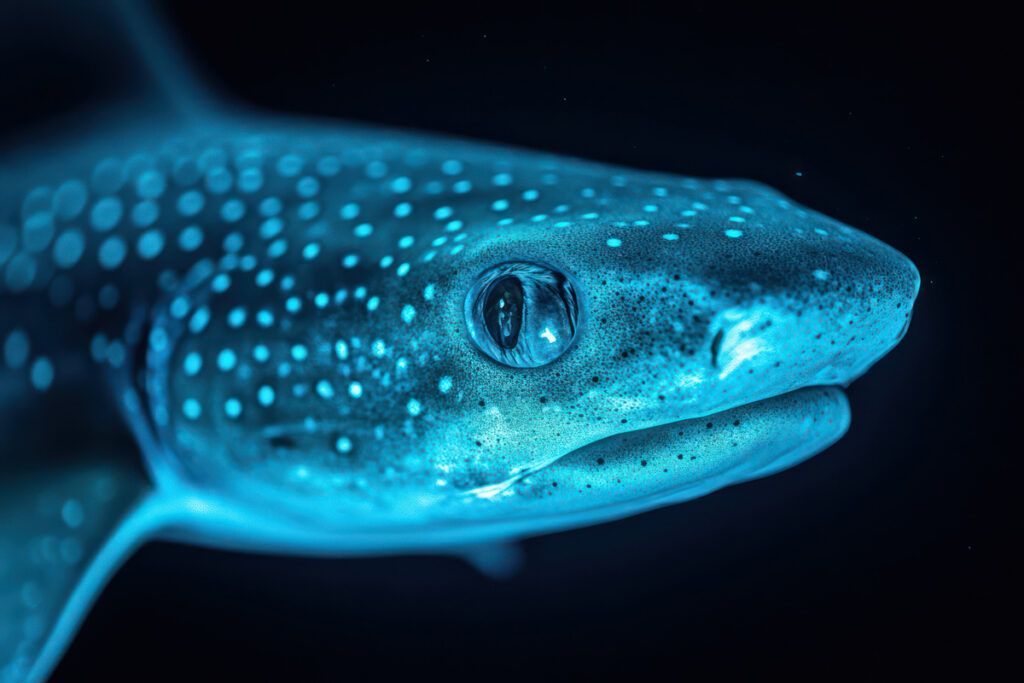
Lantern Sharks
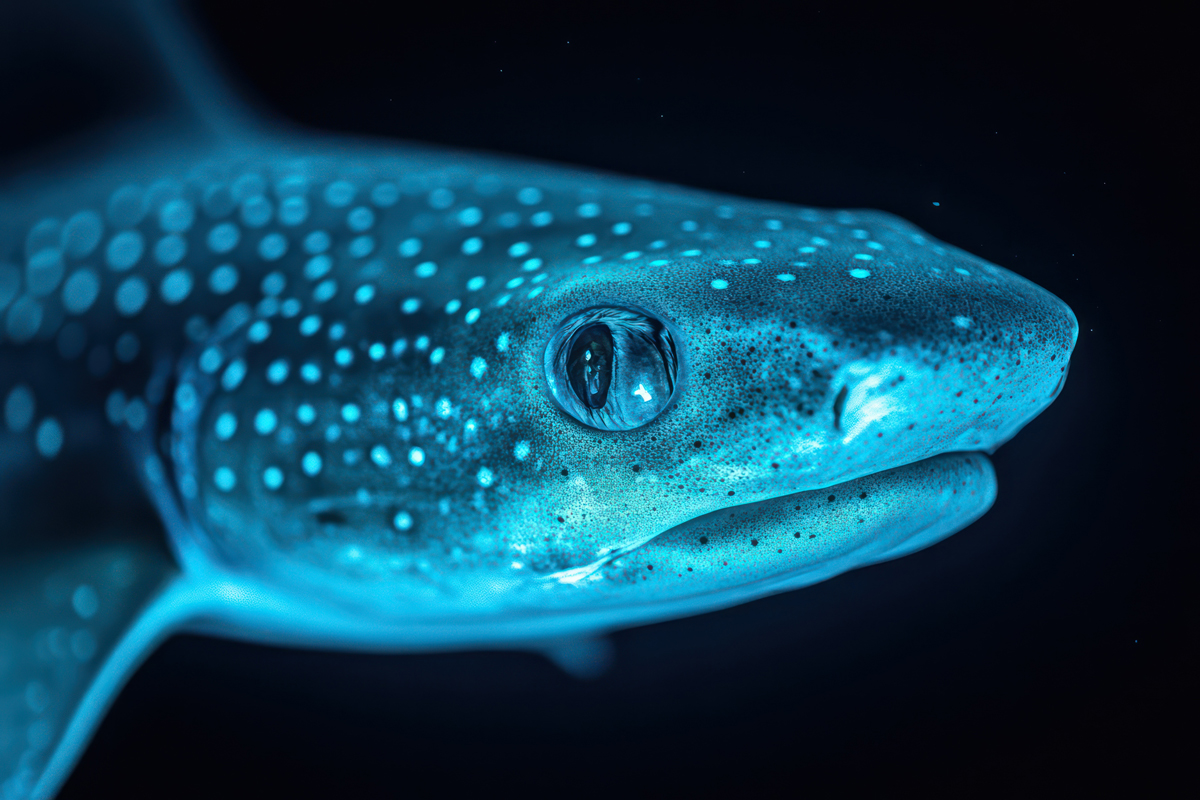
Lantern sharks prowl the deep ocean, and despite their ferocious name, they’re on the smaller end of the shark family tree. Stretching to around 50 centimeters in length, lantern sharks are a family of sharks and among the 12% of sharks that glow.
They give off a subtle blue glow that comes from many small organs called photophores that line their belly and flank. The positioning is important, because lantern sharks can be more effectively camouflaged with the light trickling in from above, hiding their outline from prey swimming below. Some species use the light to ward off predators, while others may even use it to communicate with one another.