Platypuses glow under UV light.
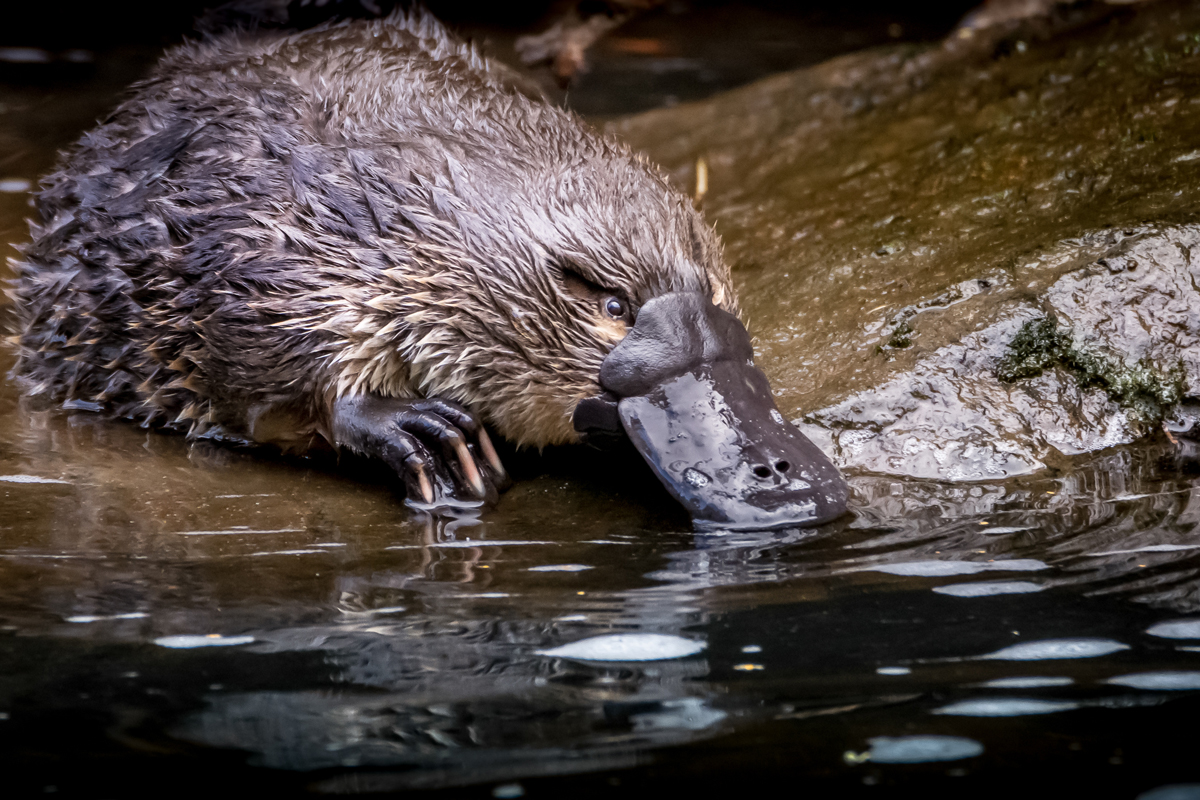

The platypus is already known for its many eccentricities, from its ducklike bill and beaverlike tail to its egg-laying habits and those venomous ankle spurs. In 2020, scientists added another peculiar feature to the list: Platypus fur glows blue and green under ultraviolet (UV) light. This phenomenon, known as biofluorescence, occurs when an organism absorbs UV light and recasts it at a visible wavelength.
Researchers aren’t entirely sure why platypuses glow, however. One possibility is that their fur absorbing the UV light makes them less visible to predators that see UV light, or it could simply be a byproduct of their fur. Scientists have since discovered that biofluorescence is more common in mammals than originally thought, with the phenomenon also documented in species ranging from flying squirrels to wombats, even if the biological function remains a mystery.