
Octopuses Have Three Hearts
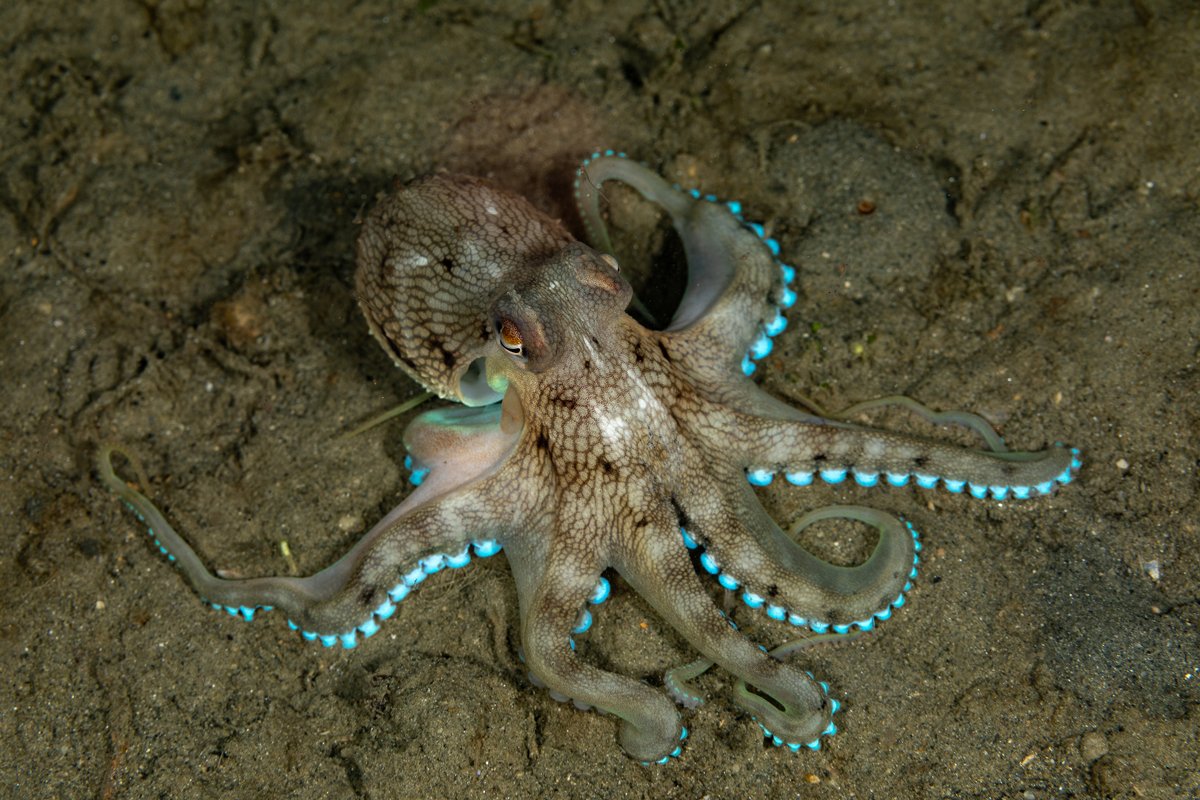

In addition to being exceptionally brainy, octopuses also have a lot going on in one of their other vital organs: the heart, or hearts, of which they have three. Two peripheral hearts pump blood to the gills, while the central heart pumps that oxygenated blood throughout the body. This unique arrangement also explains why the elusive creatures are known to prefer crawling along the seafloor rather than swimming: their third heart stops beating while they swim, which consumes more energy and tires them out faster than crawling. Work smart, not hard.
This isn’t the only oddity in octopuses. Octopus blood is blue, as it contains a copper-based oxygen carrier called hemocyanin that helps the cephalopods thrive at cold temperatures; human blood (and that of other vertebrates) is red because it contains hemoglobin, an iron-based oxygen carrier. Hemocyanin is a less efficient oxygen carrier than hemoglobin, leading some biologists to speculate that octopuses have three hearts to compensate for that deficiency.