What It Means for an Animal To “Play Dead”

Long ago, the ancient Greek god Thanatos once wandered the underworld with his brother, Hypnos, the god of sleep. The mythological personification of death itself, Thanatos was a peaceful deity, guiding the living to meet the end of their days with little trauma.
Today, dozens of animals rely on his namesake, not to die, but rather to avoid death, and live another day. Thanatosis, sometimes referred to as “tonic immobility,” or “apparent death,” is more widely known as “playing dead.” And this skill accomplishes much more than a dog earning a treat — in fact, it’s a key survival strategy for many species.
A Straightforward Survival Strategy
To put it simply, playing dead is the ultimate avoidance strategy. Animals typically play dead when they’re looking to avoid something, which could range from impending death to an unwanted mate. And each creature does it a little differently, some so effectively they deserve an Oscar nod.
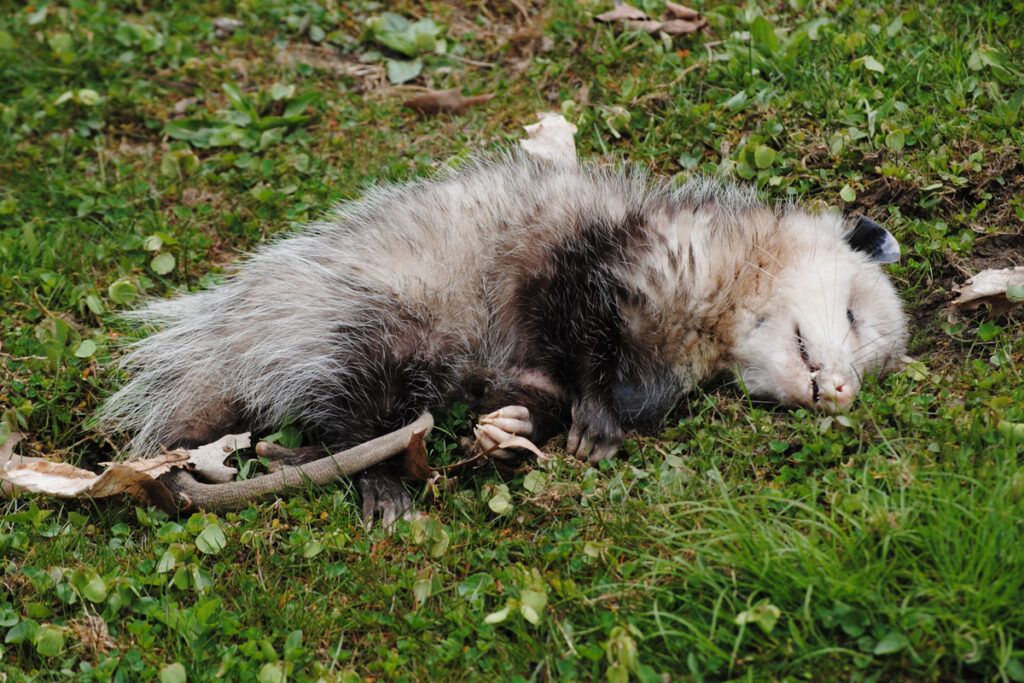
One of the most well-known animals to engage in this clever defensive strategy is the opossum, though the behavior is not always voluntary. Opossums will always try to defend themselves by baring their teeth and hissing when they’re frightened, but if they feel that they may not get out of the situation alive, their bodies essentially faint, causing them to go limp and appear lifeless — convincingly so. According to research published in Acta Physiol Scandinavia, the heart rates of studied opossums dropped from 222 to 120 beats per minute, their breathing reduced from around 27 to just two breaths per minute, and even their body temperature dropped by about half a degree.
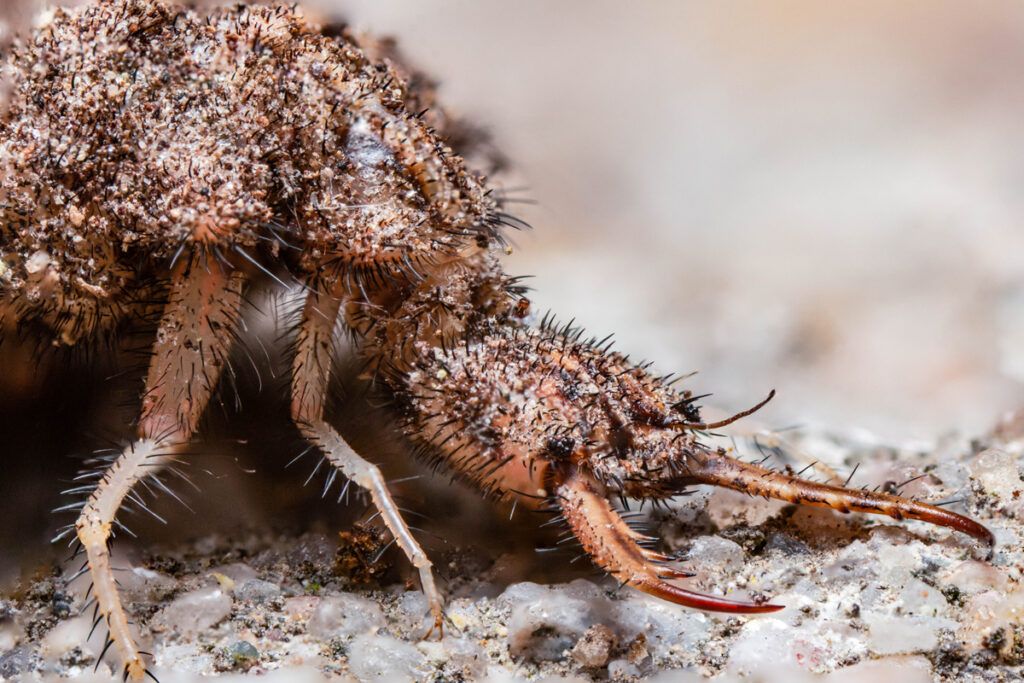
Bugs also get out of trouble by pretending they’re not alive. Antilion, commonly known as doodlebugs, start faking it straight from the larval stage, causing predatory birds like sparrows to drop them rather than swallow them. While many animals go limp to appear lifeless, Pygmy grasshoppers go the rigor mortis route and extend their legs to stick out stiff straight. This not only makes them appear dead, but also makes them physically hard to fit into the mouths of toads that try to eat them.
The Artificial Aroma of Death
Of course, death is not only represented by lifeless limbs and undetectable breathing. The smell of death can deter predators that are wired to avoid eating decaying flesh for self-preservation purposes. Opossums emit a green, foul-smelling mucus from their anal glands that mimics the exact chemicals that give rotting meat its telltale stench. These marsupials go even further to look the part by urinating and defecating during their catatonic state, and propping their mouths open to release saliva, foam, and even more bad smells.
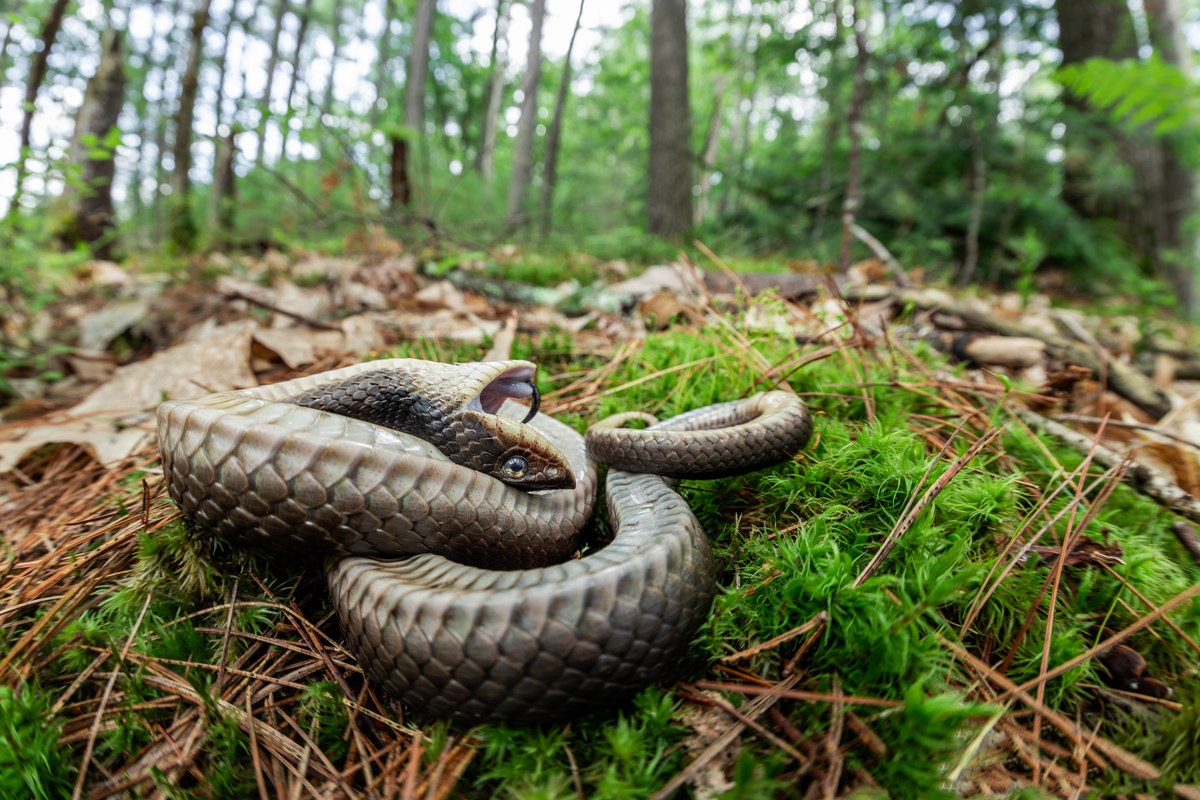
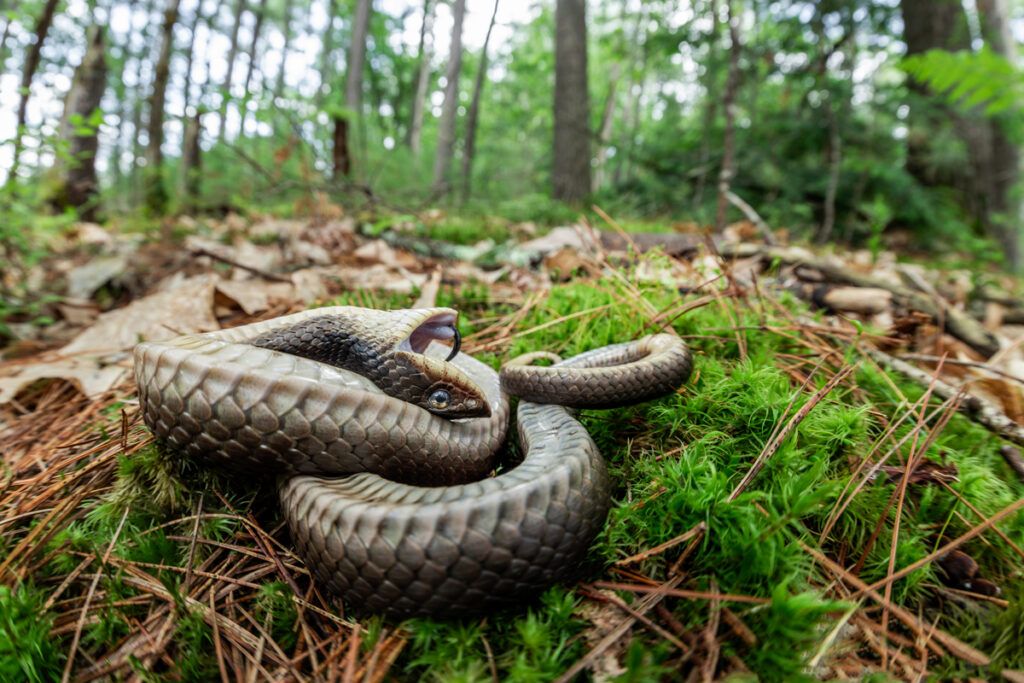
Some snakes can put on an impressive show of their own. The Eastern hognose snake resides in almost every region of the U.S., so it has its fair share of predators to avoid, including hawks, raccoons, and bigger snakes, like king snakes. They’re fitted with a mild venom for defense, but the tactic that seems to help the most is writhing around before rolling over on their backs, laying limp with their mouths wide open.
They, too, release a bad-smelling musk to deter their enemies, and may even bleed from their mouths for extra effect. Some researchers guess that this musky odor is caused by chemicals found in the poisonous toads that make up much of the hognose’s diet. Like all animals that play dead, they can stay this way for hours if need be, and only “wake up” when the threatening party has packed up and left.
The aptly albeit rudely-named stinkbirds, also known as Hoatzin, earned their nickname from this very behavior. As chicks born in the Amazon they have few defenses, so they’ve taken to dropping from their nests into river waters below at the sight of passing predators.
Before these birds can fly, they can swim, so they stay submerged until danger has passed. Never ones to be too safe, the birds later emit a foul smell once they’re back on land to ward off anyone else thinking of approaching.
Other Survival Strategies
Death isn’t the only thing some animals play dead to escape. Surely, everyone has wished they could just lie there, seemingly lifeless, until that annoying guy who can’t take a hint moves along at the bar, but some animals actually follow through on the theatrics.
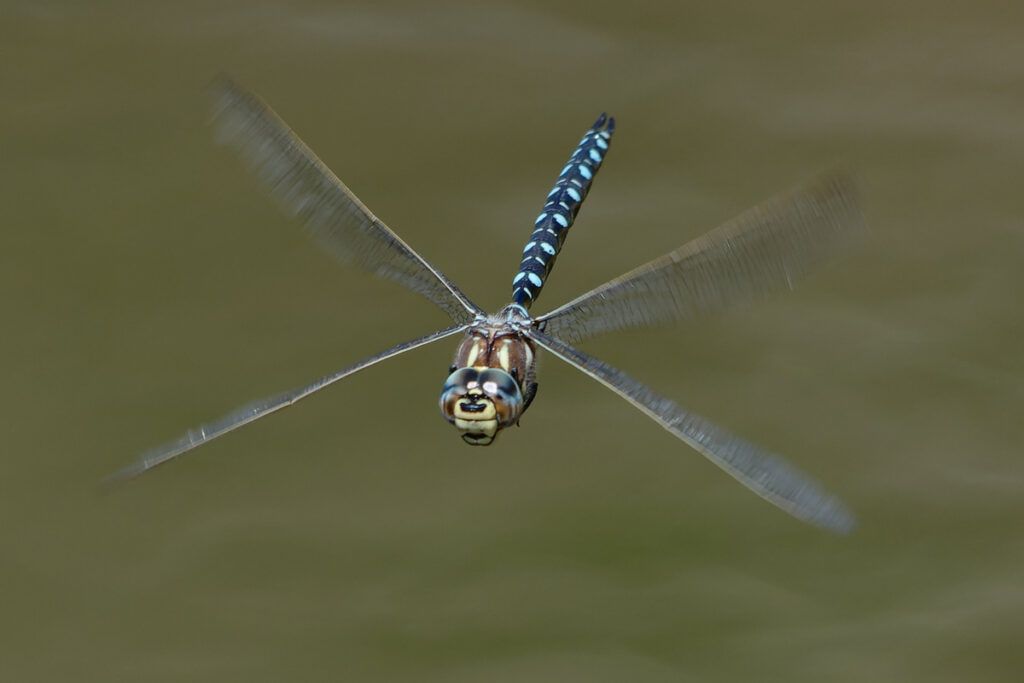
Certain female frog species play dead to avoid unwanted advances from males. This can commonly happen among animals where males outnumber females, leading to an unwanted onslaught of male attention. Moorland Hawker dragonflies dive into the water to avoid unwanted suitors.
Meanwhile, Livingston cichlids and Central American cichlids use the play-dead tactic to attract prey. Already adorned with mottled gray and white skin, these freshwater fish lay on their sides at the bottom of the lakes they call home and wait. Because their color pattern makes them appear dead and already decomposing, some smaller scavengers, like shrimp, may see if they can score a free meal, often to their detriment.
Male Golden orb-weaver spiders are smaller than their female counterparts, which makes them an easy meal if they get too close to their would-be mates. One way these arachnids have conned their queens is to roll up insects in small balls of food, then play dead beside the ball so that the female drags both of them back to her web. At this point, the male spider “wakes up” to mate with the female as she eats, often walking away unharmed.
Why Does it Work?
Tonic immobility doesn’t always work, which is why it’s often a last resort method for many animals. When it does do its job, however, it’s a great way to send predators packing and costs the performer essentially nothing.
Predatory brains are fitted with enhanced neural pathways that allow them to spot even the most camouflaged animal the second it, or something around it, moves. Even the common house cat possesses this mechanism. Animals use their senses of sight, hearing, and smell to clock movement, which is then signaled to the brain via these pathways to signal the animal to lock in on the area where the prey was detected. When animals play dead effectively, and don’t move for a long time, it works well enough to trick even the most astute predator.