What It’s Like to Be an Octopus
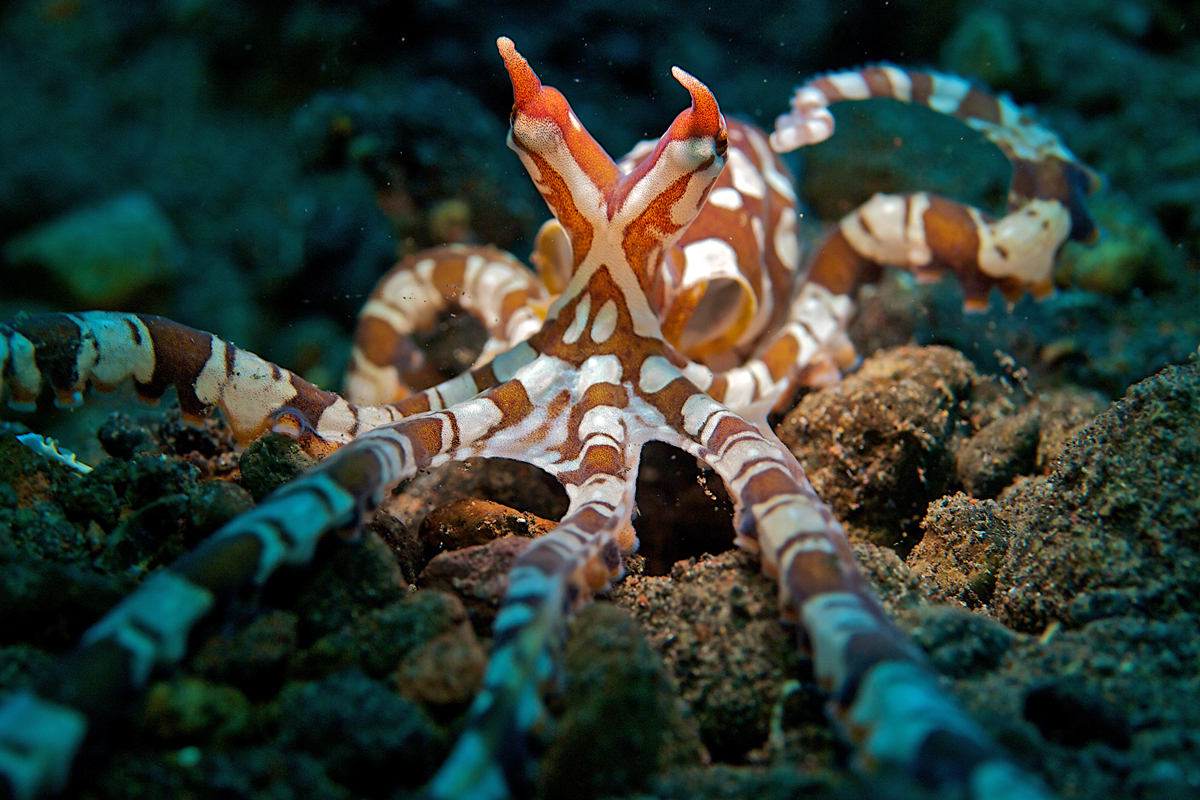

An octopus seems almost alien compared to most animals. It has three hearts, blue blood, and no bones. Then there are its arms, all eight of which can act on their own. Its skin can change color or even texture in an instant, and even its nervous system is organized differently than most animals.
These unique features are much more than just biological quirks. They help octopuses survive, be skilled hunters and escape artists, and are why scientists continue to study them with awe and admiration. The octopus indeed interacts with the world in ways few other animals can. Here are a few of the ways their adaptations help them experience a very different world from our own.
Their Arms Have Minds of Their Own
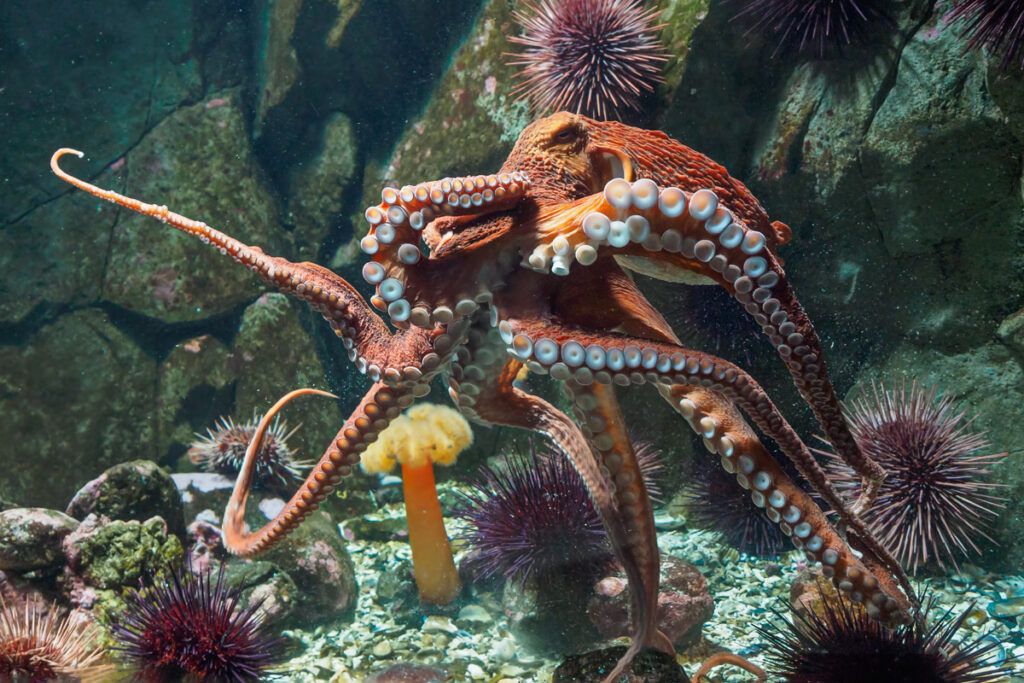
An octopus can think outside of its brain. Although the animal has a large central brain, shaped like a donut and located in its head, roughly two-thirds of its body’s neurons are located in its eight arms. This means that each arm can process information and carry out complex movements independently, responding to local information and coordinating actions on their own.
While the brain still provides overall coordination, much of the sensing, reaching, and handling of an octopus’ environment happens directly in the arms. Scientists have even observed octopus arms continuing to react to stimuli and perform simple movements even when separated from the body for over an hour, showing just how much control these flexible, stretchable limbs have.
They Touch and Taste Their Way Around
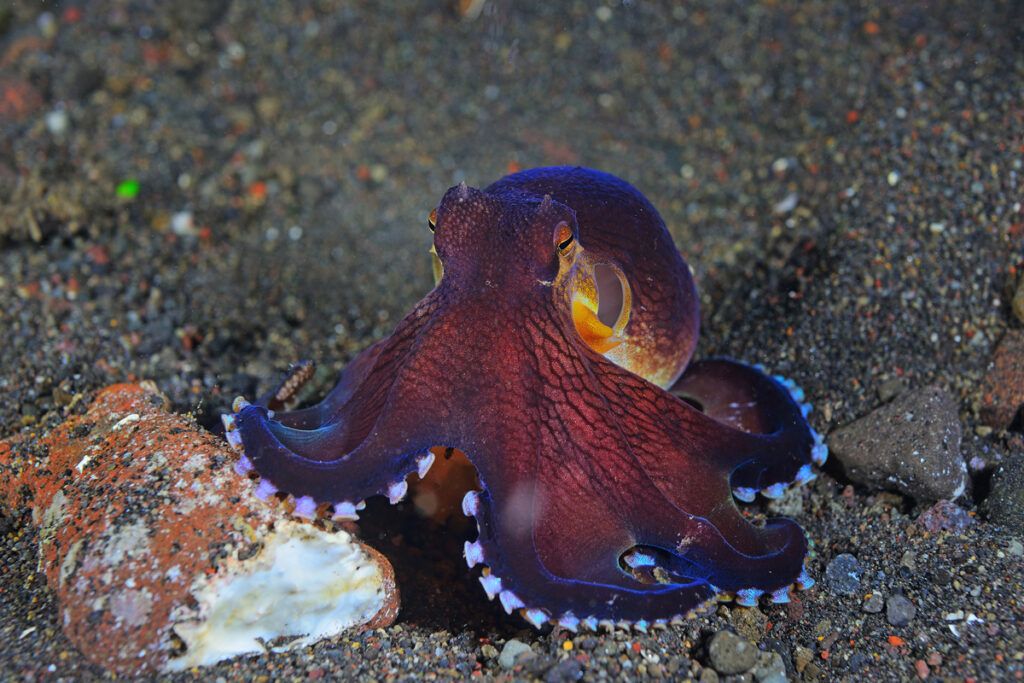
An octopus’ arm is also lined with rows of suckers. Don’t let their name fool you, though: Those suckers do far more than grip surfaces. Each one is packed with thousands of sensory receptors that allow it to both touch and taste objects at the same time. Scientists believe suckers can process some information independently, communicating with neighboring suckers to help an arm investigate its surroundings without waiting for instructions from the brain.
This is especially useful because many of the animals that octopuses eat spend their lives hidden. Crabs, clams, small fish, and other marine animals often shelter under rocks or are tucked inside of narrow nooks and crannies where they can’t be easily seen. Instead of relying solely on their (admittedly excellent) vision, an octopus can get a detailed picture of its surroundings by exploring them with their arms.
No Bones? No Problem
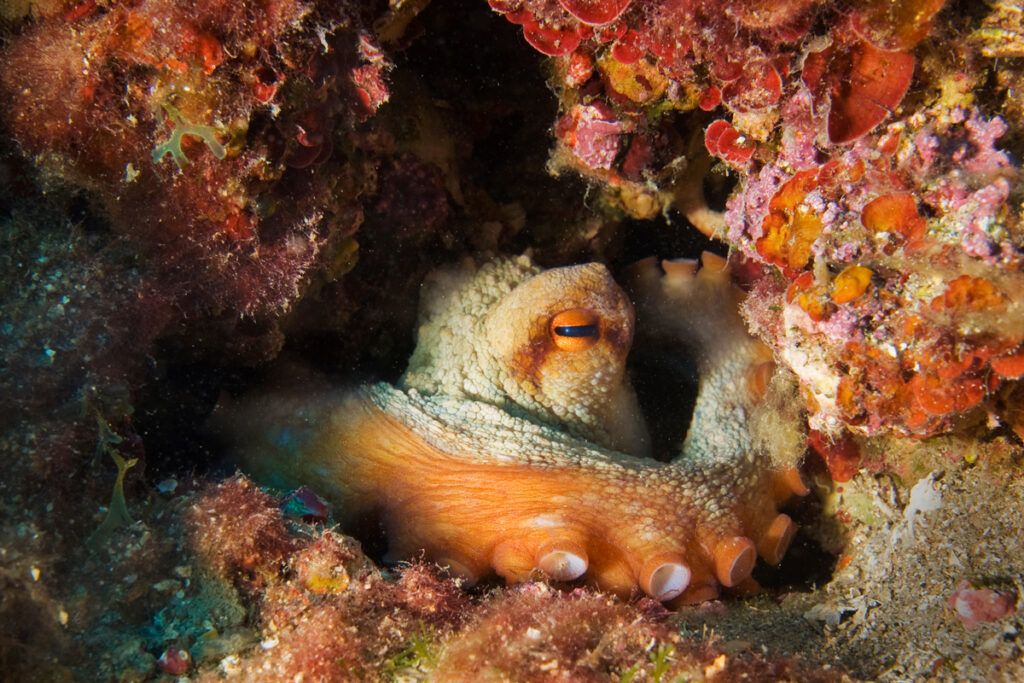
Unlike vertebrates, octopuses have no internal skeleton. The only hard part of their body is a sharp, parrot-like beak used to break apart the hard shells of its prey. Without bones to limit their movements, octopuses can stretch, twist, bend, and even squeeze through shockingly small spaces. If an opening is large enough for the beak to fit through, the rest of the body can usually fit too.
Though their soft body does leave octopuses vulnerable, it also helps them evade predators, slipping into places other hunters cannot reach. It also explains why octopuses have been known to escape from aquariums. Some species, such as the veined octopus, have even been observed collecting and carrying coconut shell halves, disappearing into them when threatened. This soft, highly adaptable body allows octopuses to move and behave in ways that would be impossible for more rigid animals, constantly reshaping itself to fit the situation.
Their Skin Can Put On a Dynamic Display
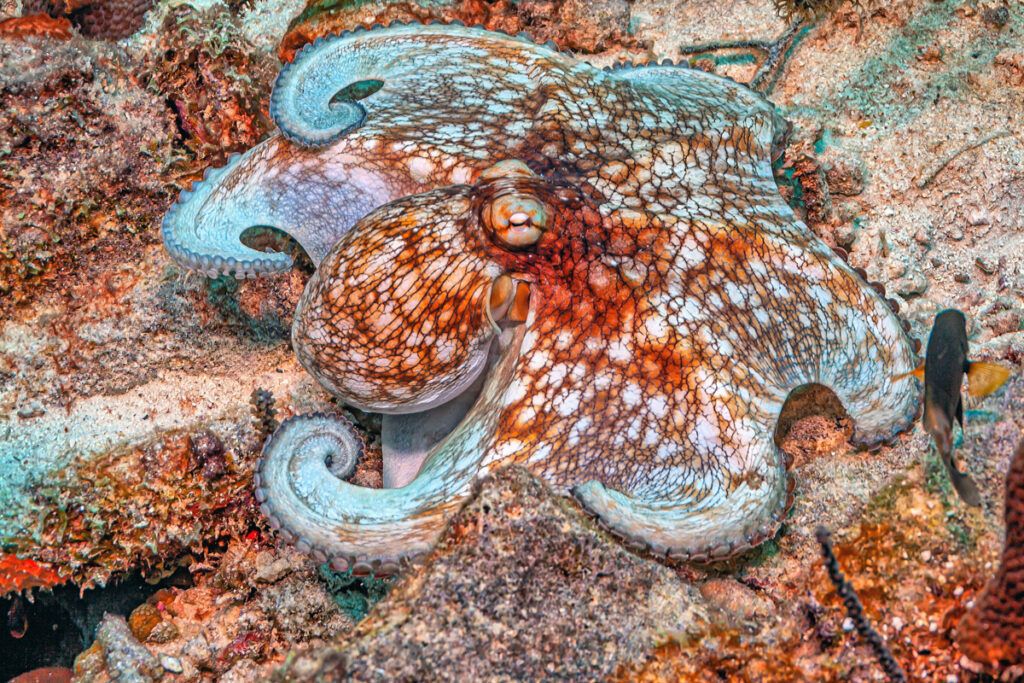
On octopuses’ skin is so much more than a protective covering. It’s also a dynamic display system that interacts with the world around it. Tiny pigment-filled cells called chromatophores allow an octopus to change color almost instantly. By expanding or shrinking these cells, they can blend into their surroundings or, thanks to additional organs such as iridophores and leucophores, even flash bold patterns across their skin in just fractions of a second.
Specialized muscles, meanwhile, also help them alter the texture of the skin, transforming a smooth surface into one that resembles rock, coral, or seaweed in fractions of a second. Camouflage helps octopuses avoid predators and sneak up on prey, of course, but it may also play a role in communication, with some species using color and patterns during encounters with rivals or potential mates.
Three Hearts and Blue Blood
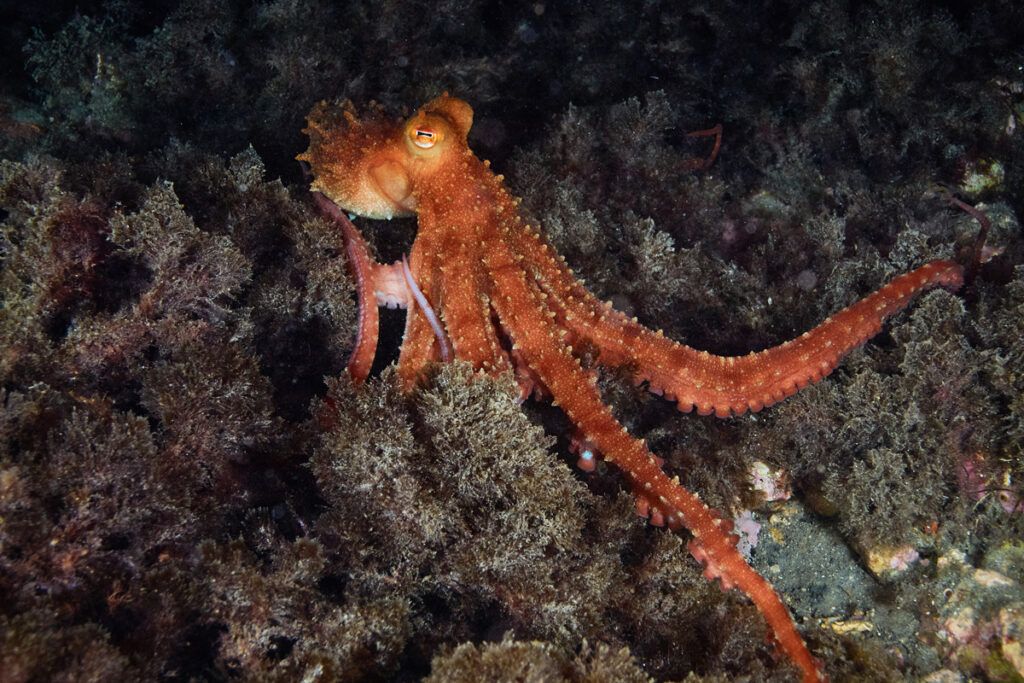
Many of the octopus’s unusual traits are hidden from view. Its circulatory system, for example, operates very differently from ours. Octopuses have three hearts: two pump blood to the gills, while a third circulates oxygen-rich, blue blood throughout the body. Why blue? That’s because the protein that transports oxygen in their blood, hemocyanin, contains copper instead of the iron-based hemoglobin found in humans and other vertebrates. This is particularly useful in the cold, low-oxygen, deep-sea environments where many octopus species live; hemocyanin transports oxygen efficiently under these conditions, helping them remain effective hunters.
This sophisticated circulation does have an interesting drawback. The heart responsible for supplying blood to the body actually stops beating while the animal swims. As a result, swimming can be exhausting, which is one reason octopuses often prefer to crawl along the seafloor instead.
An Intelligence Unlike Any Other
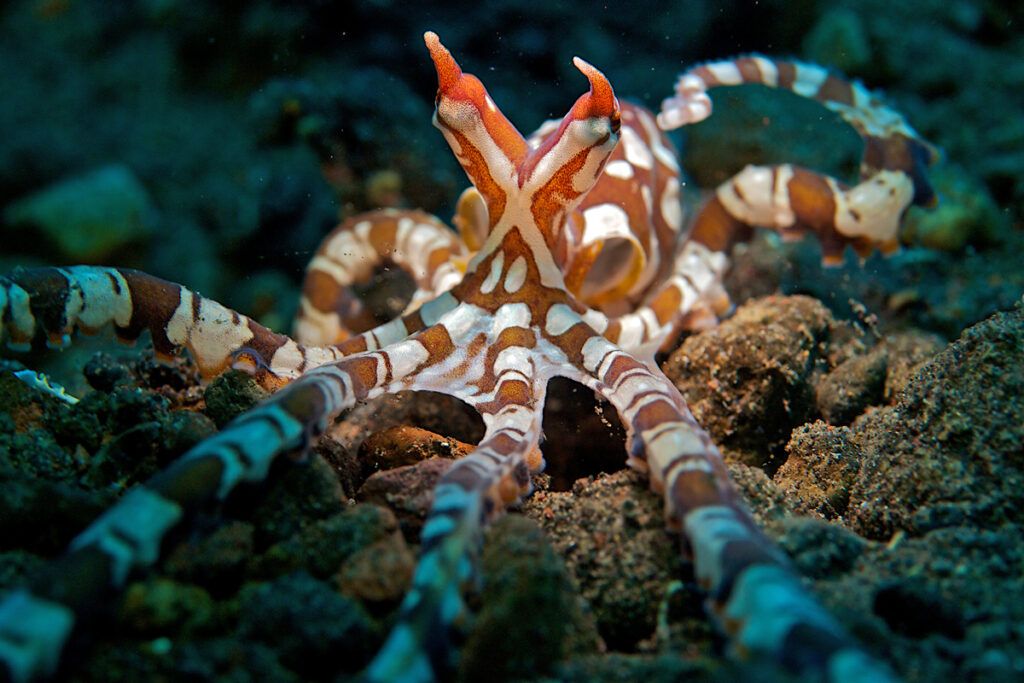
Octopuses are widely regarded as some of the smartest invertebrates on Earth. They can solve puzzles, use tools, navigate mazes, open containers, and learn through observation. Octopuses are extremely evolutionarily distant from humans — the last common ancestor shared by humans and octopuses lived over 700 million years ago — and yet they have independently developed complex intelligence.
Scientists are still working to understand exactly how octopuses perceive and process the world. What is already clear, however, is that nearly every aspect of their anatomy contributes to a unique way of experiencing life.