The Clever Ways Animals Avoid a Sunburn
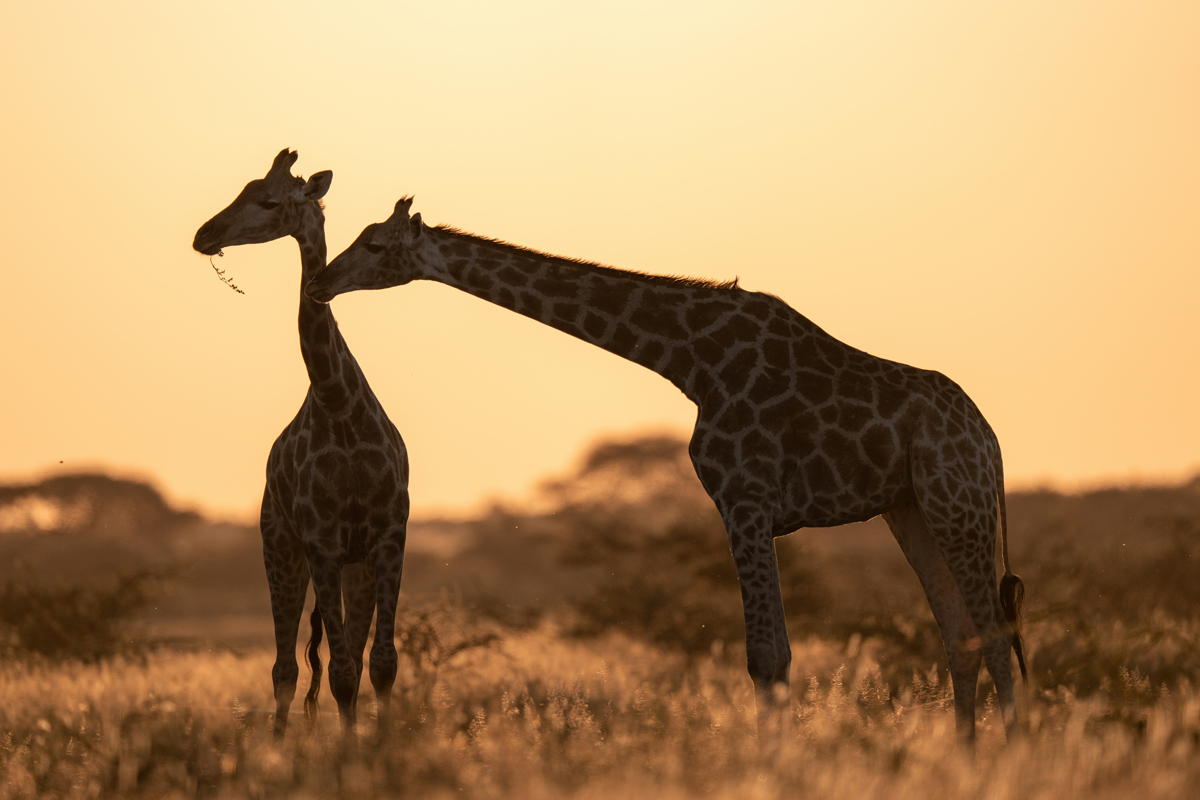
A shadowy silhouette of two giraffes at sunset on the savannah
Image Credit: Jaimy de Hon/Unsplash.com

Sunburns seem like a uniquely human trait, but the sun’s ultraviolet (UV) radiation affects almost all animals, including marine life. While humans have UV-resistant clothing, shade structures, and sunscreen to protect us from burning, most creatures have built-in protection in the form of fur, scales, or feathers.  But some creatures go above and beyond to cope with sun exposure, and have evolved defenses from chemical changes to behavioral adaptations.

Hippopotamus Blood Sweat
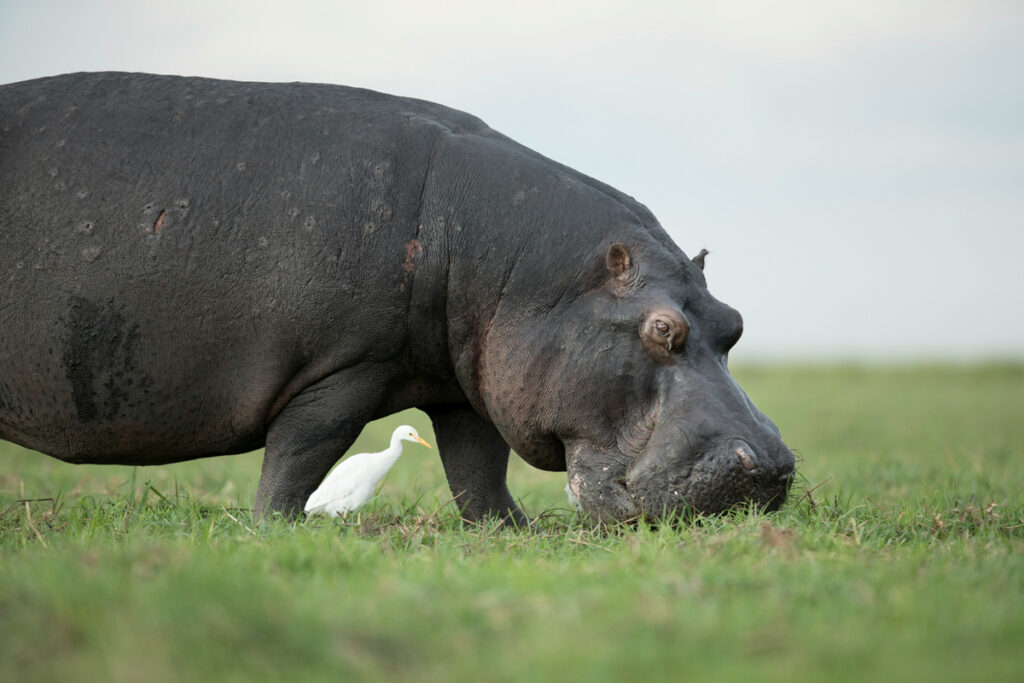
Image Credit: Getty Images/Unsplash.com

Widely considered the most dangerous animal in Africa, the hippopotamus is known for its massive jaws and temper. Impressive as they are, hippos have one weakness: extremely sensitive skin that is vulnerable to sunburns and drying. But they’ve evolved two methods of dealing with the harsh tropical sun. 

The first adaptation is behavioral – hippos spend up to 16 hours a day submerged in water to avoid the sun, only emerging at night to graze. Contrary to popular belief, hippos can’t actually swim, which means they mostly stick to the shallowest parts of rivers and lakes to keep their heads above the surface. So why don’t their exposed heads get sunburned? 

The first European explorers noticed that hippos secrete a reddish substance and called it “blood sweat.” The oily liquid isn’t sweat at all, but two distinct pigments. Hipposudoric acid is a red pigment that interacts with norhipposudoric acid, which is orange. Together, these fluids act as a natural ointment that simultaneously protects the hippo’s sensitive skin from UV rays and prevents waterlogging. 

Giraffe Tongues
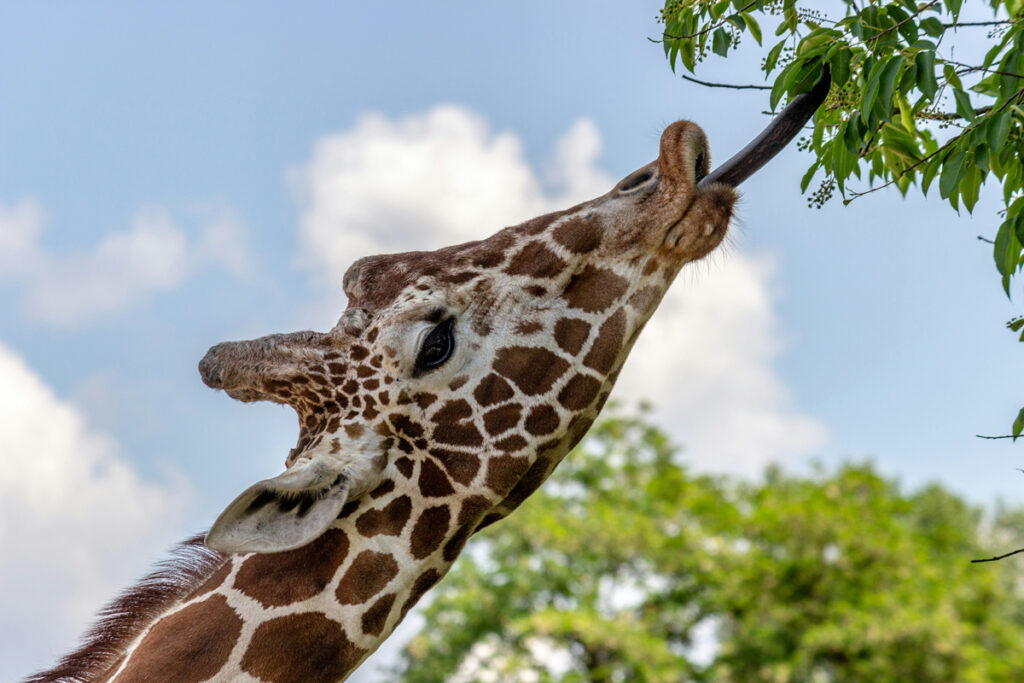
Image Credit: Slawek K/Unsplash.com

A giraffe’s long neck and reticulated pattern make them one of the most striking animals on the African savanna. They’re also known for their long, purple-black tongues, which can grow to 20 inches in length and evolved to reach the highest branches of acacia trees. Like many herbivores, giraffes spend most of their time feeding, exposing their tongues to the sun for 16 or more hours a day. But the extra melanin that gives a giraffe’s tongue its distinct purple color also drastically reduces the risk of sunburn. 

Zebrafish Cellular Sunscreen
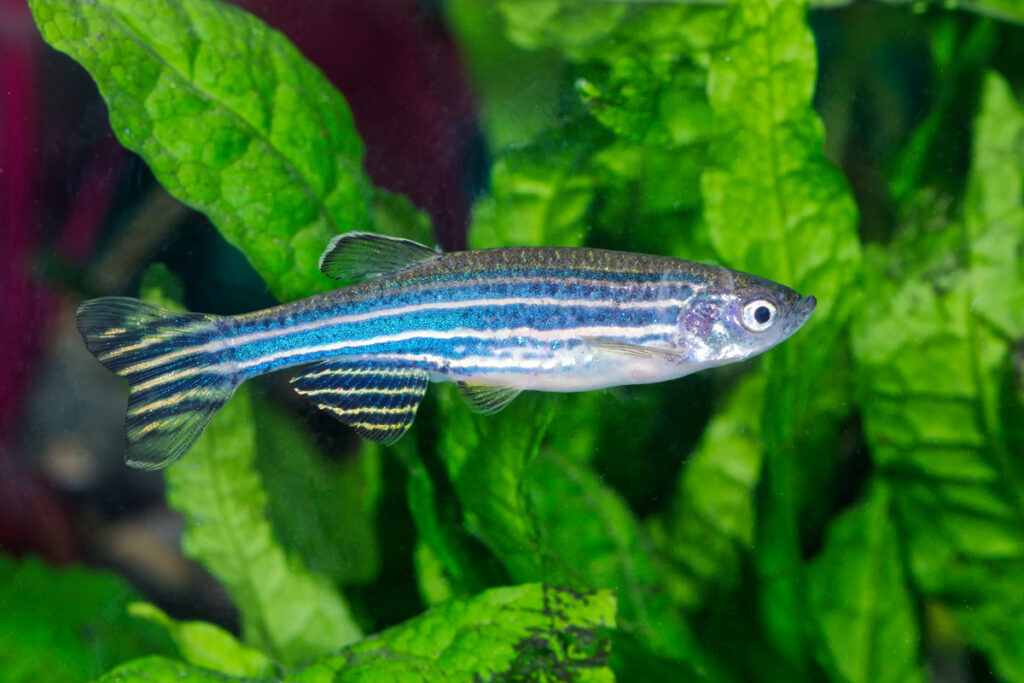
Image Credit: NERYX/Adobe Stock

Zebrafish originated in freshwater streams of South Asia and are now popular aquarium pets. Being shallow swimmers, wild zebrafish are almost always exposed to harsh UV rays, yet they never burn thanks to gadusol, a natural compound deposited by mothers into their eggs that absorbs UV radiation, acting as a natural sunscreen. 

Most vertebrates produce gadusol, including other fish, amphibians, reptiles, and birds. Unfortunately, mammals lack the gene, likely because our common ancestor was nocturnal. But researchers are studying gadusol in hopes of unlocking better modes of sun protection than standard chemical sunscreen.

Nature’s Sunscreen
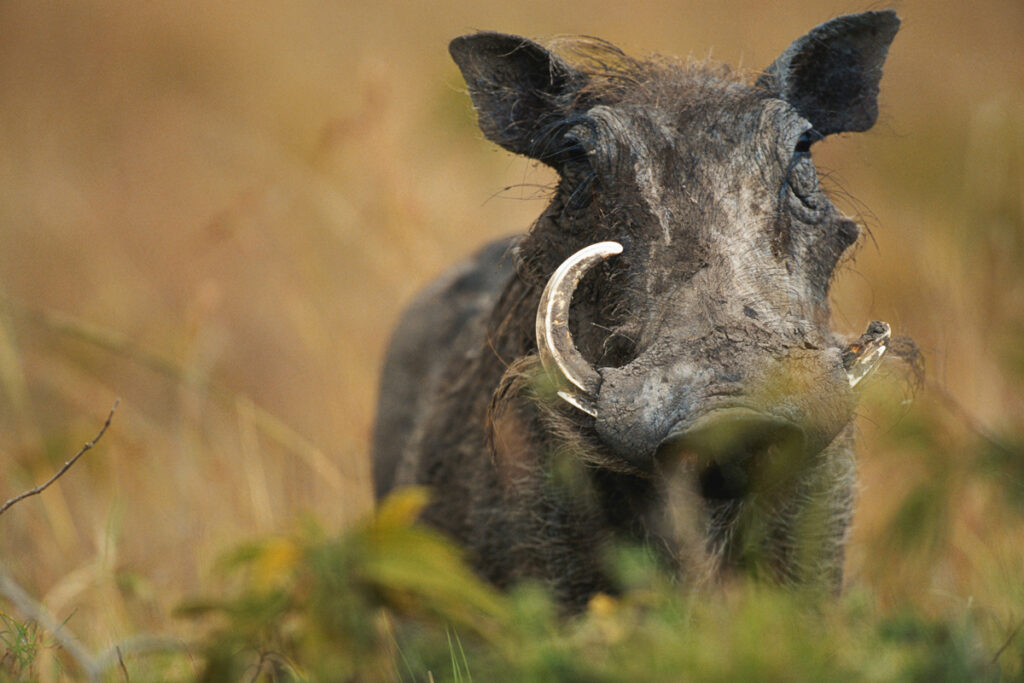
Image Credit: Getty Images/Unsplash.com

Like humans, domestic pigs and their wild boar cousins have marginal hair coverage, which means they are vulnerable to sunburns and heatstroke. Without physiological sun protection, they employ learned behaviors to combat harsh UV rays. A boar’s first line of defense is to simply avoid activity during the heat of the day. 

But if they can’t find a shady place to rest, boars dig wallows near streams or other bodies of water. They use these shallow pits to cover themselves with mud, which acts as a natural sunscreen (in addition to many other benefits).

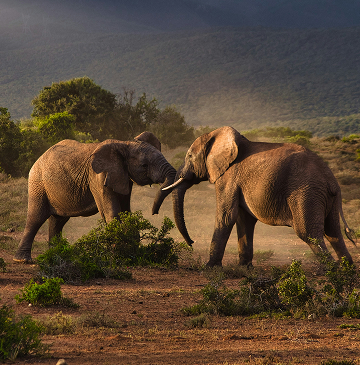
Boars aren’t the only animals to use dirt as sunscreen. Rhinoceroses also dig mud wallows, and elephants throw dirt on their backs for relief from the sun.

Tanning Whales
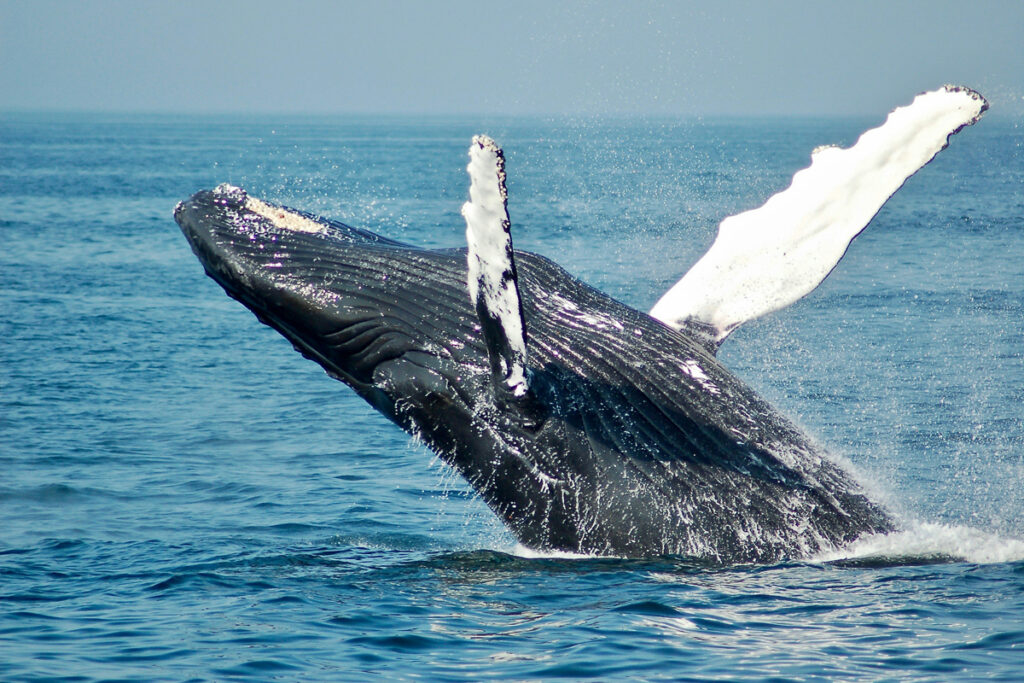
Image Credit: Todd Cravens/Unsplash.com

Humans share something big with the largest animal to ever live – we both tan. In a 2007 study in the Gulf of California, marine biologists discovered that blue whale skin darkens significantly during their months in the subtropics, before they migrate to the Arctic. Tanning in blue whales seems to work exactly as it does in humans, serving as a natural defense against UV rays. 

Unfortunately, whales are also vulnerable to blistering sunburns. Like humans, prolonged sun exposure damages mitochondrial DNA in whale tissue, which can lead to melanoma. 

Sharks and the Future of Sun Protection
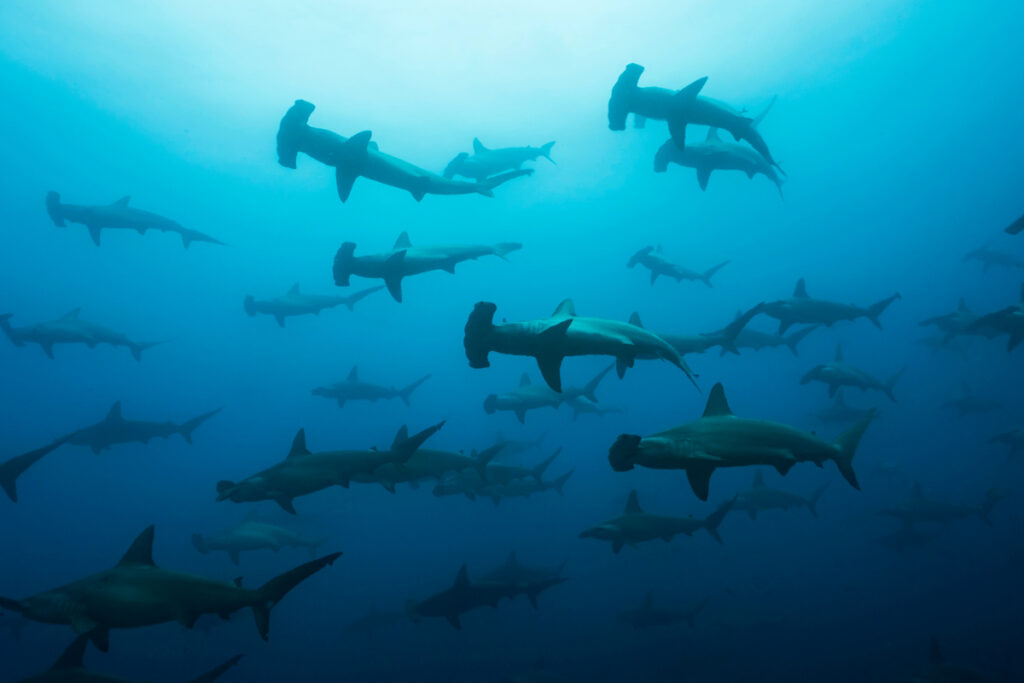
Image Credit: Janos/Adobe Stock

Whales aren’t the only sea creatures that tan – scalloped hammerhead sharks do, too. But unlike whales, these sharks don’t develop melanoma. Researchers have been studying shark skin’s resilience in hopes of one day finding a cure for skin cancer. 

Until then, remember to apply broad-spectrum sunscreen with an SPF rating of 30 or higher, every day.  
7 Animals That Migrate Much Farther Than You Think

A close-up image of an orange dragonfly in flight against green leaves
Image Credit: Narupon/Adobe Stock

Migration is a familiar part of the animal experience, and it seems fairly straightforward: leave when conditions become untenable and return when they improve. But migration requires precise timing, major physical endurance, and navigational know-how that scientists are still working to understand. For some animals, the journey spans oceans, hemispheres, and even multiple generations. Here are seven animals with migration journeys that are farther than you may have expected.

Monarch Butterfly

Image Credit: Amy Hepworth/Unsplash.com

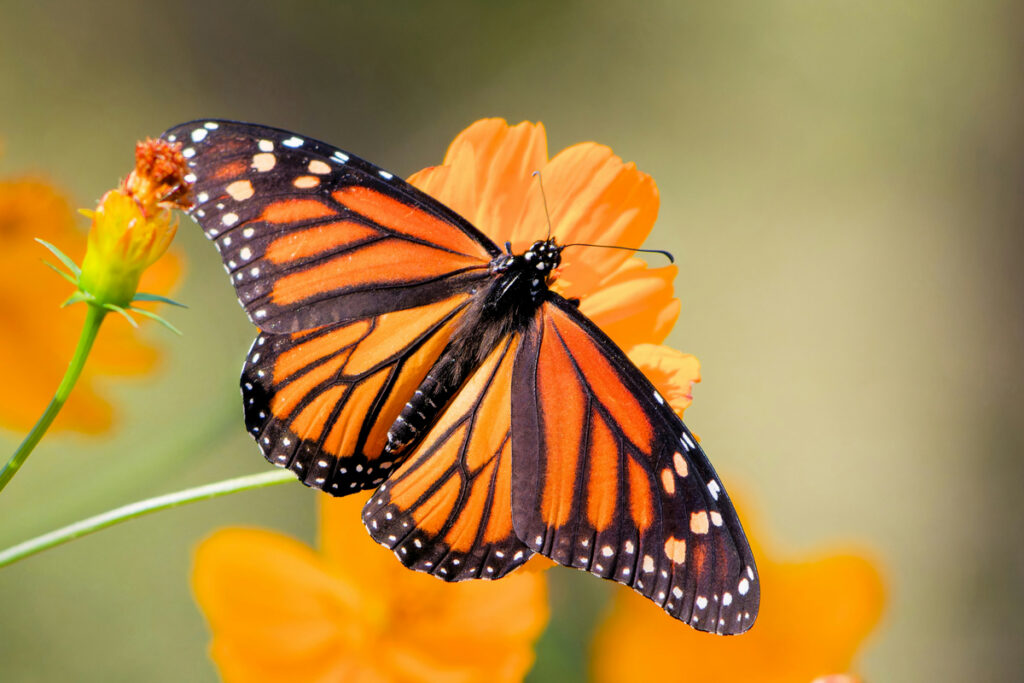
Every fall, millions of monarch butterflies leave Canada and the northern United States to overwinter in the mountains of central Mexico, a journey that can exceed 3,000 miles. When spring arrives, the monarchs move north again, reproducing along the way so that each generation advances the journey a little farther. By summer, the butterflies in northern breeding grounds are several generations removed from those that left Mexico months earlier. Most live only two to six weeks, but the final late-season generation can survive up to nine months, long enough to travel south, overwinter, and restart the cycle the following year.

Arctic Tern

Image Credit: Christoph Nolte/Unsplash.com

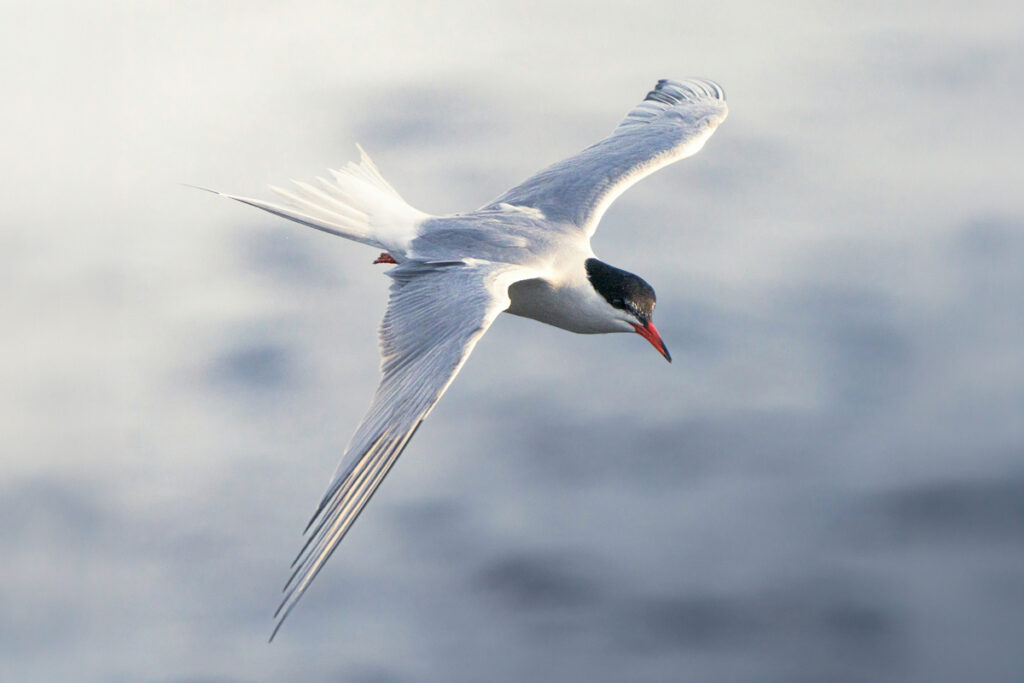
Each year, Arctic terns travel roughly 44,000 miles as they zig-zag between their Arctic breeding grounds and Antarctic waters. The small, gull-like sea birds breed in the far north during the brief Arctic summer, then set off down the Atlantic. In 2016, one tracked arctic tern logged a total of just under 60,000 miles on its journey. These sunchasers might just see more daylight than any other animal, effectively following summer from pole to pole.

Globe Skimmer Dragonfly

Image Credit: Narupon/Adobe Stock

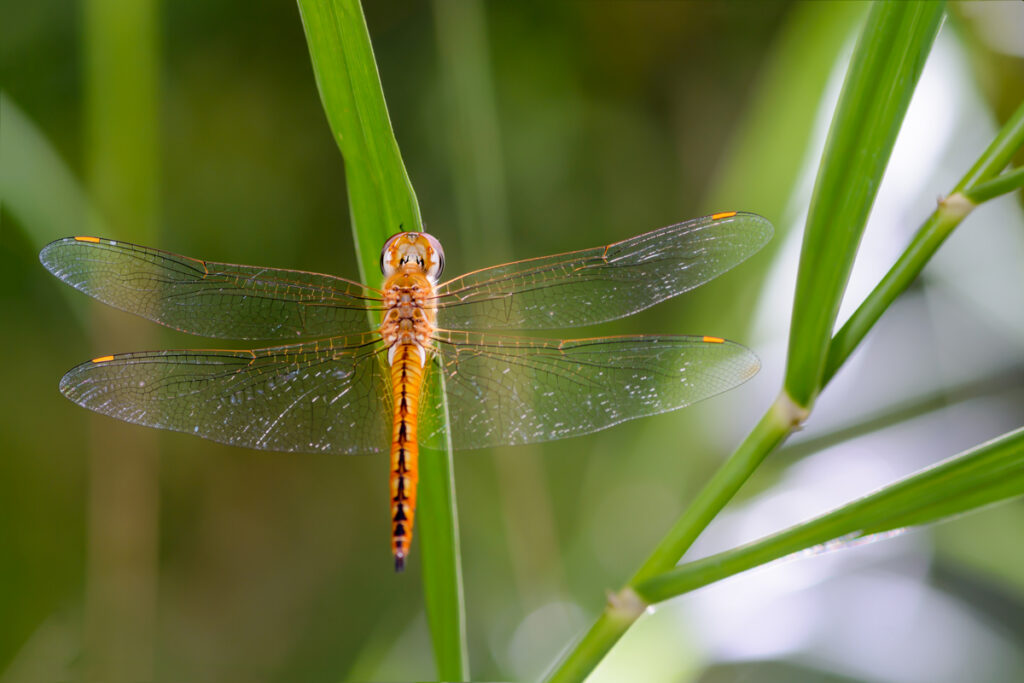
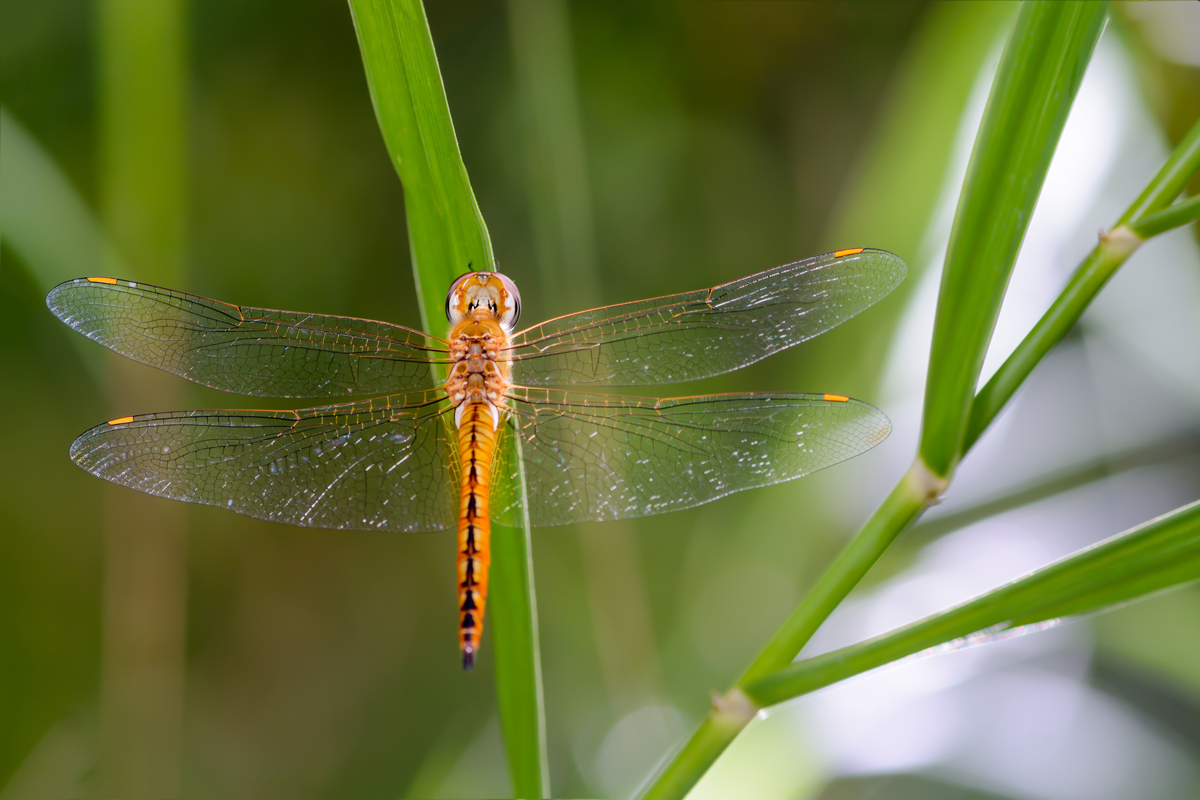
One of the longest-known migrations in the insect world belongs to the globe skimmer dragonfly. Their journey traverses about 11,000 miles between India and East Africa, primarily across the Indian Ocean. Parts of the route are done in lengthy sustained flight; individual legs of the trip by this two-inch-long insect are thought to stretch more than 3,000 miles without any stops. The full circuit is only possible with strong seasonal tailwinds and is completed across multiple generations rather than by a single individual dragonfly.

American Eel

Image Credit: Simon/Adobe Stock

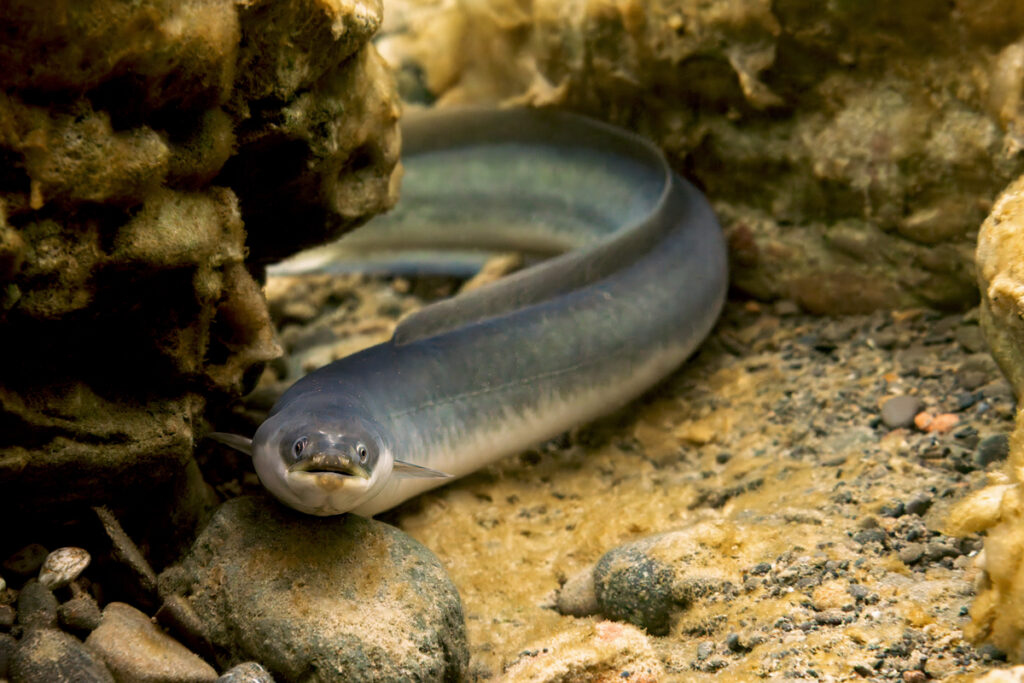
American eels begin life far from the freshwater rivers they end up in, in the Sargasso Sea in the North Atlantic. After hatching, their larvae drift for months on the Gulf Stream toward North America, where they grow for decades. When fully mature, they undergo a transformation known as silvering, reaching reproductive maturity and increasing fat stores to begin a return migration of up to 4,000 miles back to the Sargasso Sea to spawn.

Caribou

Image Credit: Sébastien Goldberg/Unsplash.com

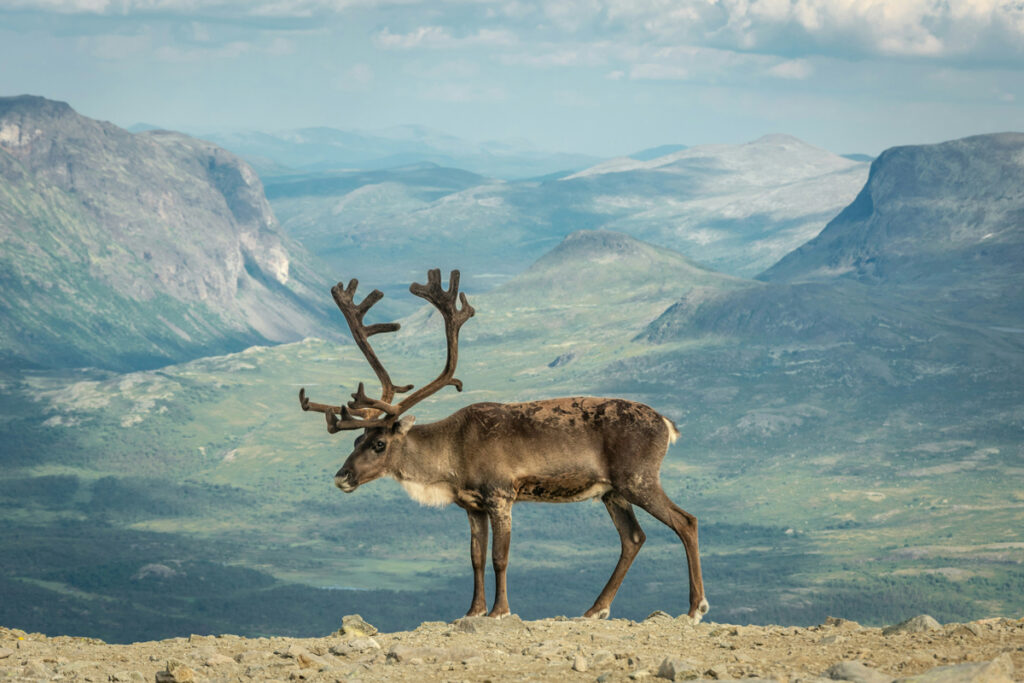
Caribou undertake some of the longest terrestrial migrations on Earth, with herds in Alaska and Canada traveling around 800 miles each year between seasonal locations. Some populations, like the barren-ground caribou, move in herds of hundreds of thousands between winter forests and northern tundra calving grounds. In certain herds, annual travel can exceed 1,000 miles as they follow plant growth and avoid deep snow and biting insects, even though recent data suggests not only thinning herds, but shrinking migration paths as well.

Bar-tailed Godwit

Image Credit: Dhaval Vargiya/ Unsplash.com

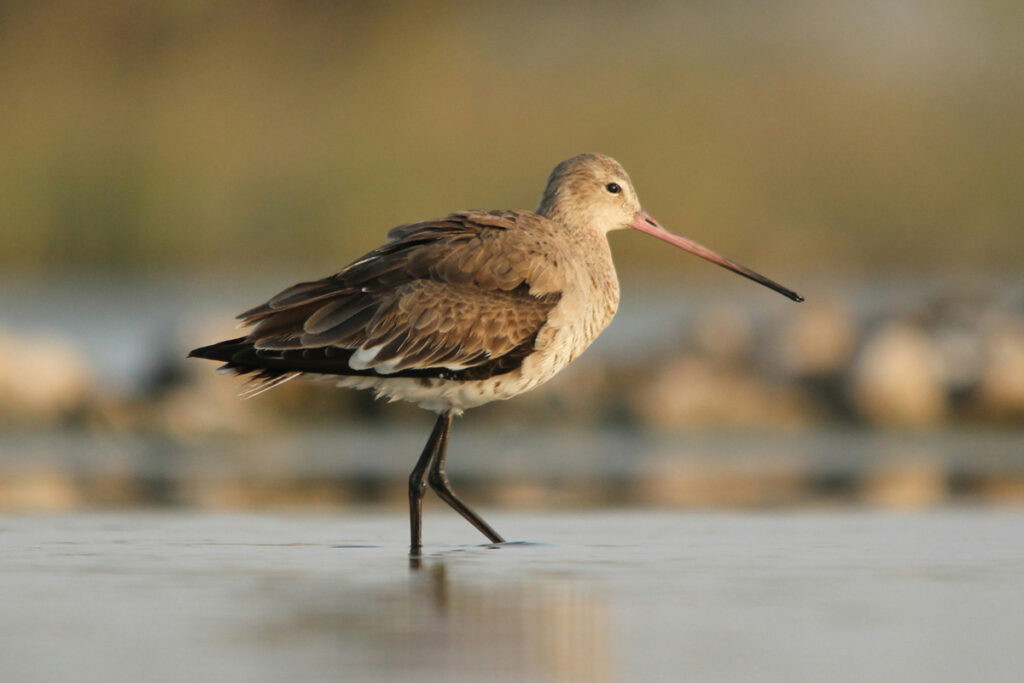
The bar-tailed godwit holds one of the most impressive records in migration: a more than 8,000-mile nonstop flight from Alaska to New Zealand, completed in just 11 days. The Arctic-breeding bird’s journey across the open Pacific offers no chance for rest, food, or shelter; before departure, it prepares for the flight by doubling its body weight in fat reserves and undergoes a temporary reduction of non-essential organs such as the digestive system, absorbing parts that it can later rebuild. Once airborne, they rely on stored energy and favorable wind systems to carry them across thousands of miles of uninterrupted ocean.

Humpback Whale

Image Credit: Jonathan Hsu/Unsplash.com

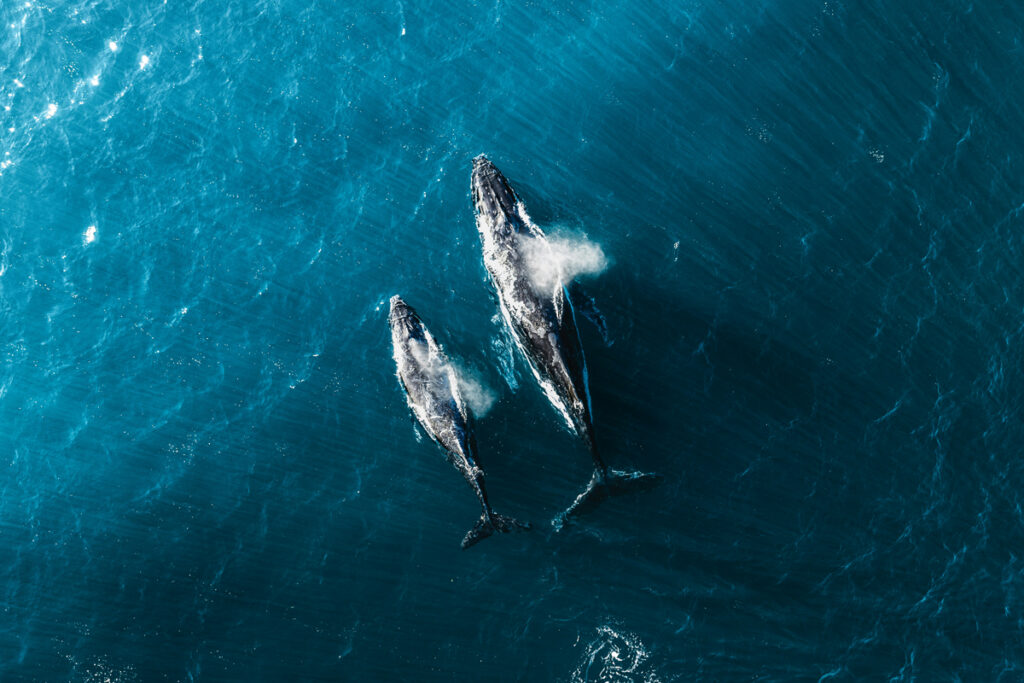
Humpback whales move across entire ocean basins each year, travelling roughly 5,000 miles between polar feeding grounds and tropical breeding waters. In summer, they feed abundantly in cold, nutrient-rich regions such as the North Atlantic or North Pacific, where vast krill and fish populations allow them to build the energy reserves needed for migration. When conditions get colder, they head for warmer waters near the equator; food is scarce here, and so whales begin fasting, using their built-up fat reserves to fuel reproduction and nursing as well as the rest of their migration journey. But that’s just the average, and it’s actually on the low end of humpback migration numbers: Recent tracking revealed that individual whales traveled distances exceeding 14,000 kilometers between breeding grounds in Australia and Brazil, including a record movement of just over 15,000 kilometers, the longest confirmed migration documented for the species.

How Similar Is Dolphin Language to Human Language?

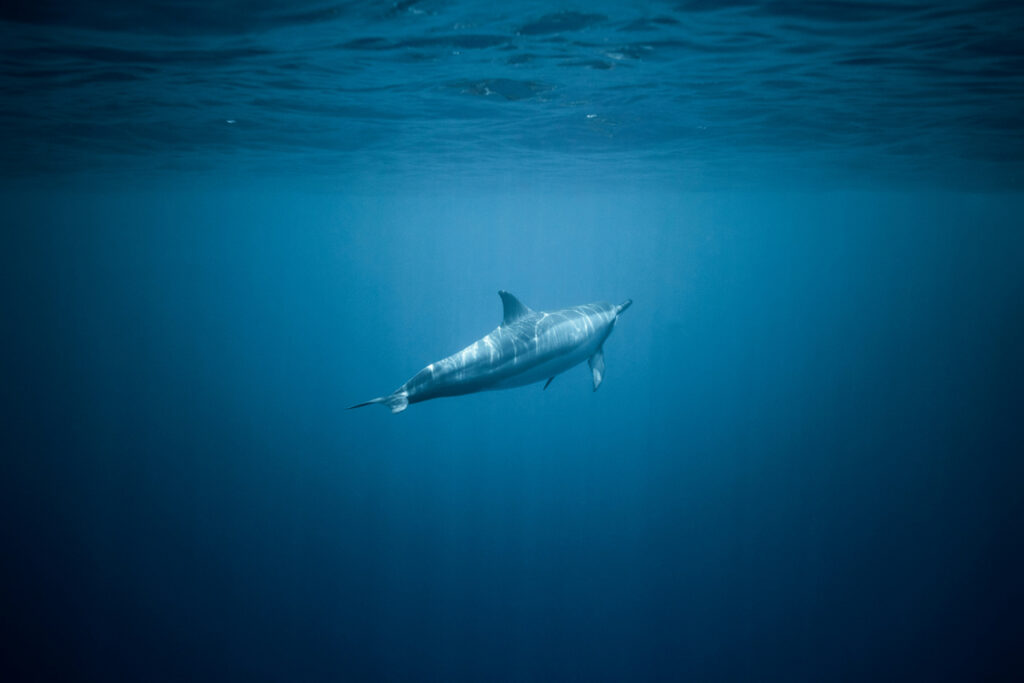
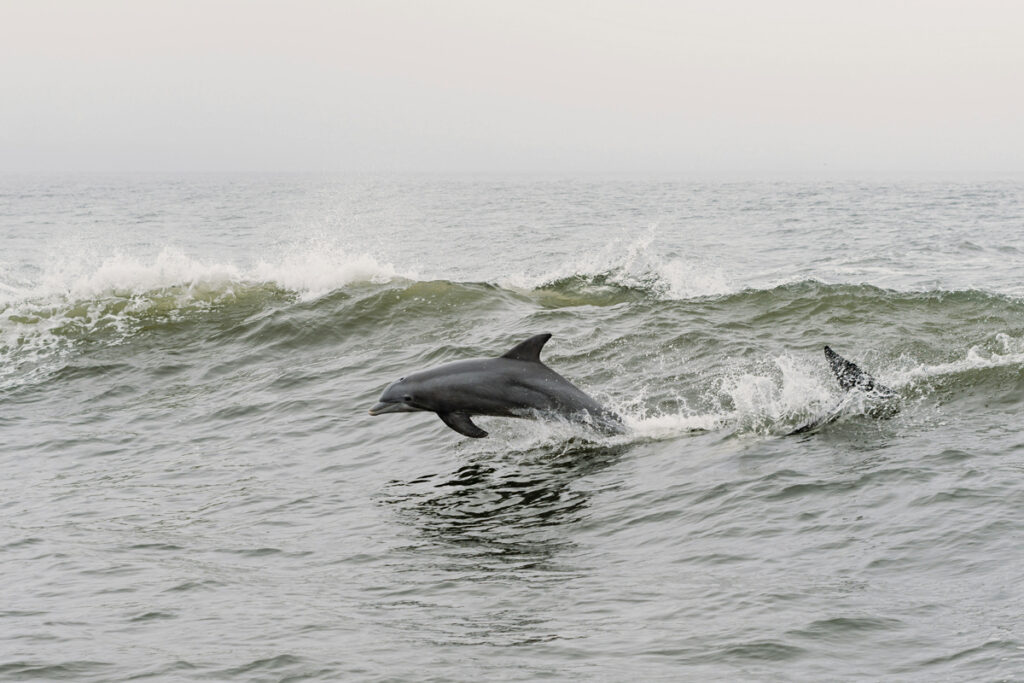
Two bottlenose dolphins skimming the surface of the ocean
Image Credit: Jonas Von Werne/Unsplash.com

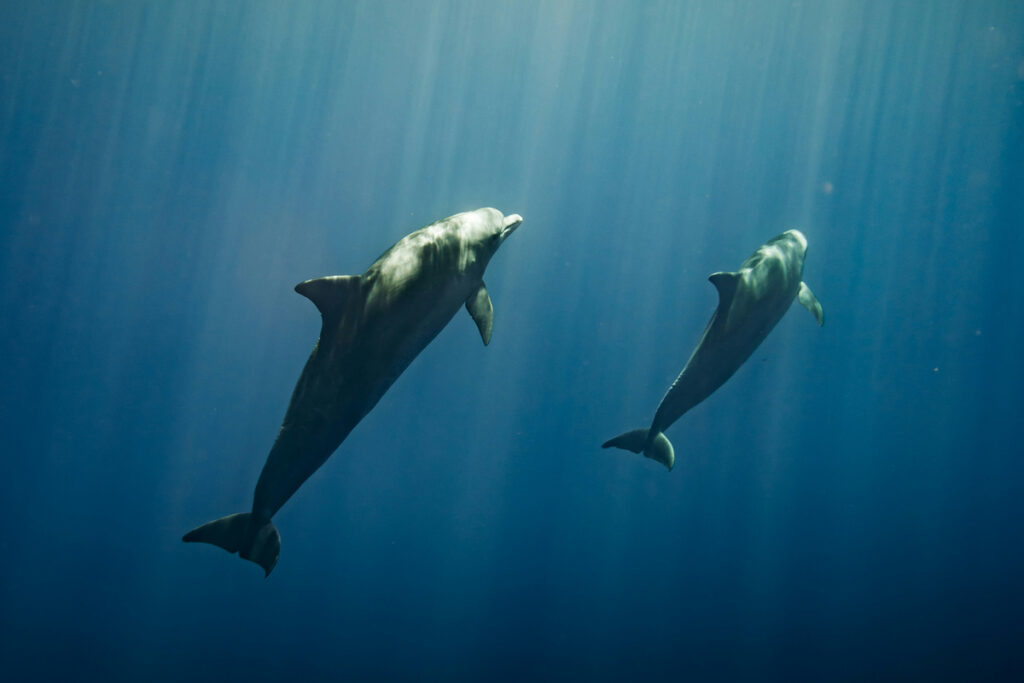
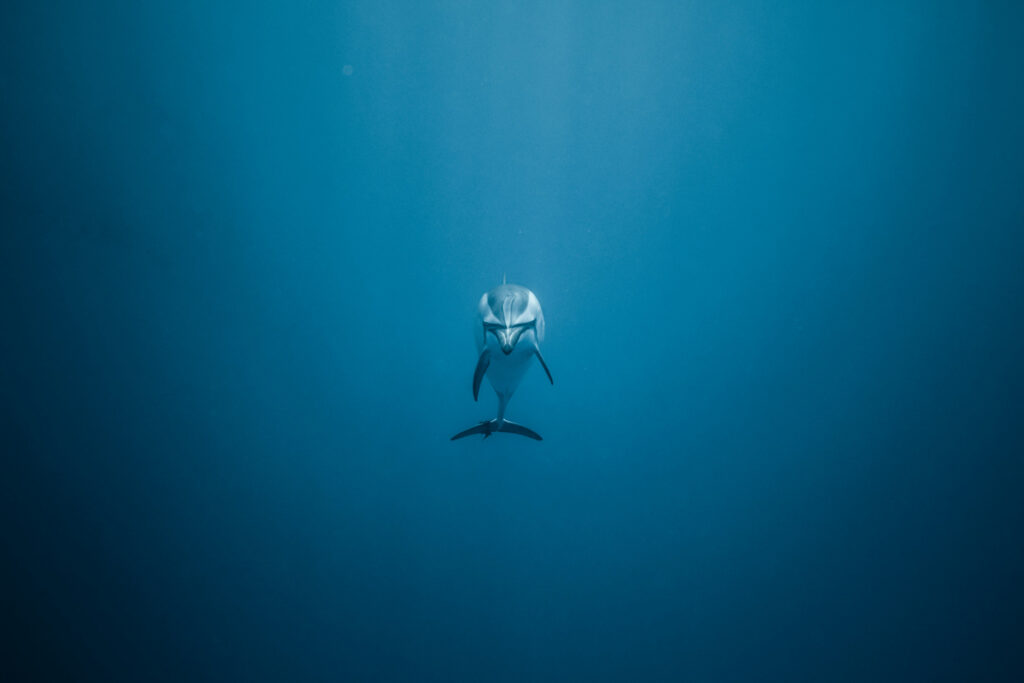
Dolphins capture the human imagination in a unique way. Playful and curious, these aquatic mammals have forged fascinating relationships with humans over the years, whether they’re approaching divers in the wild, surfing in the waves, or fishing cooperatively with local fishermen. These playful animals seem just as interested in us as we are in them. 

Given the mutual curiosity, it seems possible that we might one day learn to communicate with our marine friends directly. Dolphins utilize a complex system of vocalizations to “speak” with each other. But is this system comparable to human language? And if so, how far off are we from true inter-species communication?

What Is Language?

Image Credit: Jeremy Bishop/Unsplash.com

Let’s start with the fundamentals. There are several design features that separate language from other communication systems like kinesics (body language) or artifacts (clothing). True languages are composed of individual, repeatable units – words – that can be arranged into infinite patterns – sentences. And each pattern needs to mean something, representing a specific thought that either corresponds to something happening in real time, or to an abstract idea (i.e., past or future events). 

This means that your dog’s barks and growls do not technically count as language, even when they’re whimpering to get more treats. It’s not that animals don’t think – there are many examples of animals using human language to communicate with us. Koko the gorilla is one of the more famous examples who captivated the world with her advanced understanding of sign language. Then there’s Alex, the African grey parrot who seemed to understand the meaning of 100 English words. And captive dolphins have been trained to use computer-generated whistles to communicate with humans.  

But what’s going on in the wild? Scientists have been debating whether dolphin vocalizations are a true language for decades. Are dolphins gossiping with each other through those clicks and whistles?

Translating “Dolphinese”

Image Credit: Steven Van Elk/ Unsplash.com

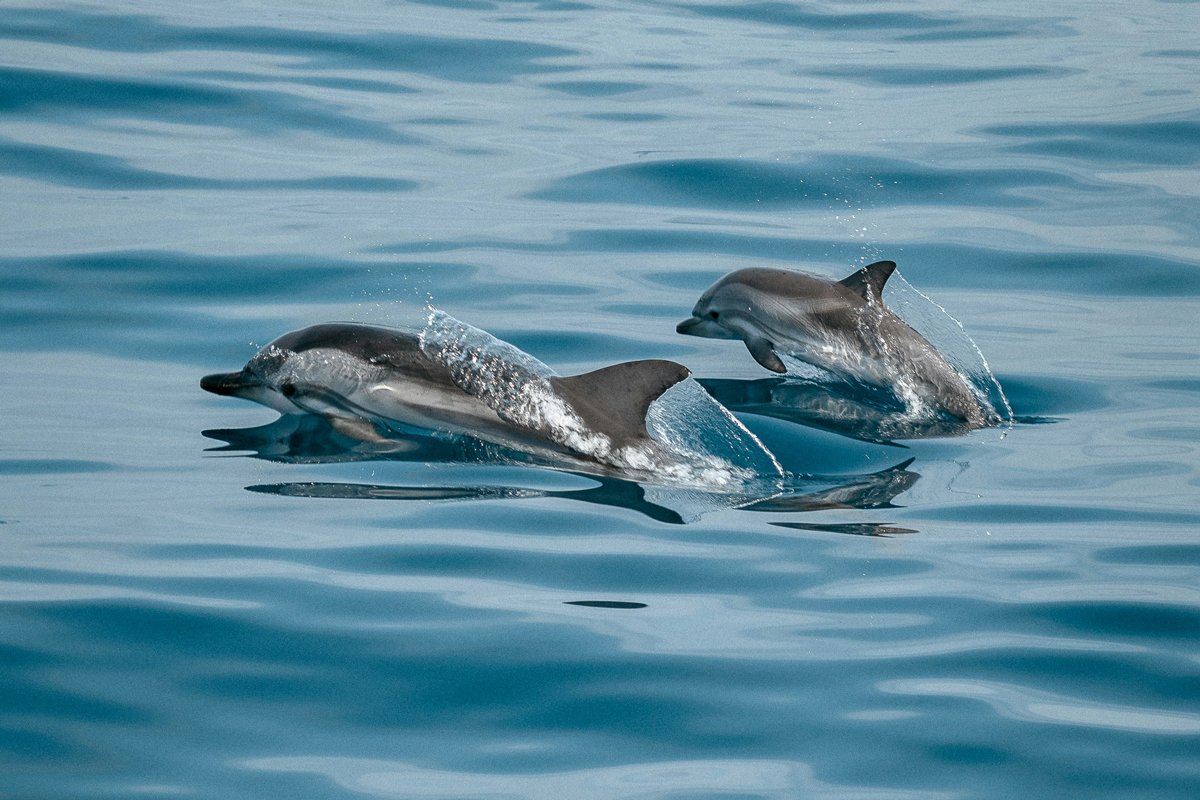
Marine biologists from the University of Sassari have discovered that dolphin vocalizations change from region to region, likely due to environmental factors. One pod of bottlenose dolphins living in a seagrass ecosystem had a different “accent” than another population of the same species where the ocean floor was muddy.

If that’s not enough to convince you of their language, consider that every individual dolphin has its own unique signature whistle, which essentially functions as a name they use to announce themselves. These signature whistles have been studied for decades, because they may be the greatest evidence for dolphin language. Each whistle is a distinct unit of sound – the equivalent of a word – that has a specific meaning, corresponding to an individual animal. 

Needless to say, scientists have been racing to prove the existence of “dolphinese” for decades. In 2016, Dr. Vyacheslav Ryabov, a Russian marine biologist, published a paper about two dolphins chattering in a distinctive pattern. One animal would vocalize, while the other waited patiently, without interrupting, before responding. The exchange was very similar to the cadence of human speech.

More recently, a research team from the Woods Hole Oceanographic Institute has been making waves after identifying a unique alarm phoneme, or word, used by a pod of dolphins in Florida. Each time a dolphin used the “word” for alarm, other members of its pod responded with a query call. It was as if one dolphin said, “Danger!” and others replied, “Where?” If the researchers are decoding these exchanges correctly, it is a strong case for classifying dolphinese as a true language. 

An Ongoing Conversation

Image Credit: Maria Bourgali/Unsplash.com

After years of research, scientists still don’t have a definitive answer as to whether or not dolphins use true language in the wild. Dr. Denise Herzing, founder of the Wild Dolphin Project, is using artificial intelligence to analyze 30 years of recorded dolphin vocalizations in hopes of decoding dolphinese to finally understand what they’re chattering about under the waves. If she can verify that dolphins do in fact talk to one another, it will be one of the greatest zoological discoveries of all time, because it will mean that language is not uniquely human. 

Either way, dolphins are still complex, emotional creatures that have captivated us for millennia. We have plenty in common with our oceanic friends, without ever sharing a word.

The Animals That Spend Most of Their Lives Sleeping

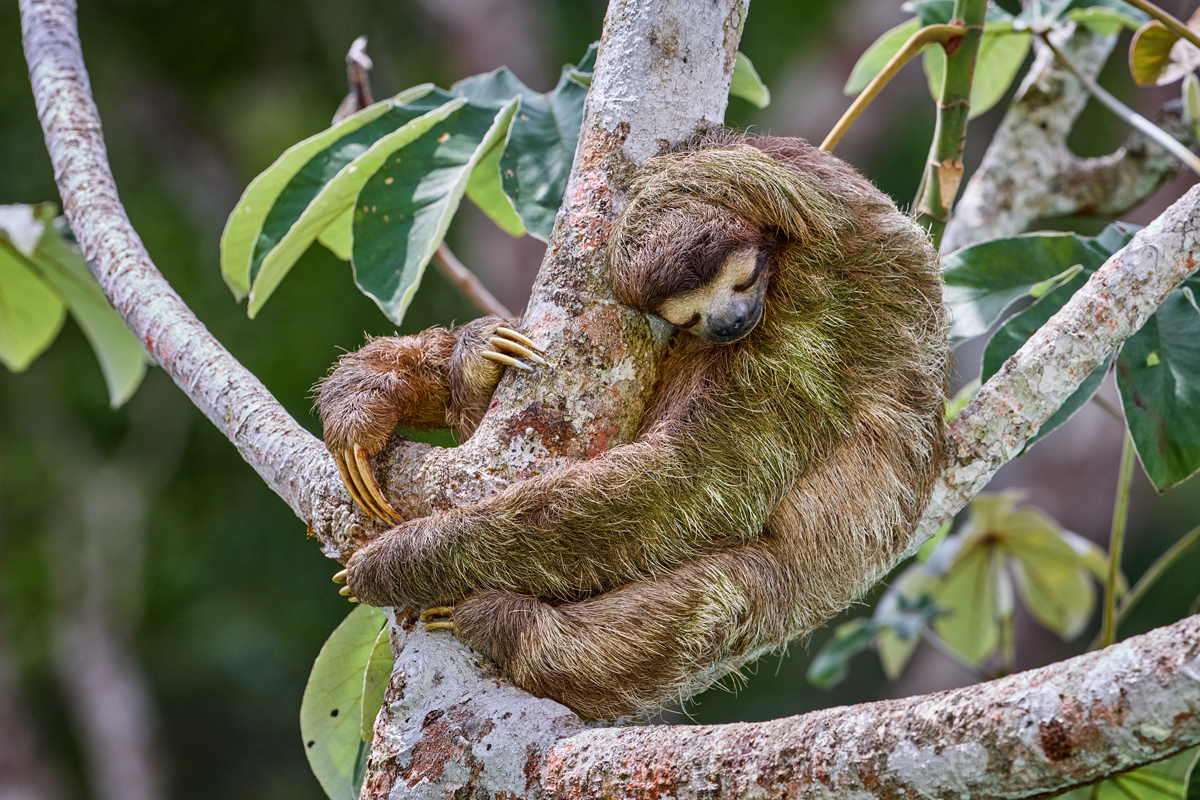
A picture of a sleeping sloth curled around a tree branch
Image Credit: Zdeněk Macháček/Unsplash.com

Everyone feels better after waking up from a good night’s sleep, and animals are no different. Some animals would consider anything less than 20 hours of sleep insufficient, but you can’t chalk their long nights up to laziness. So, why do some animals sleep so much? And how do they stay safe while sleeping in the great outdoors? In short, they sleep for many of the same reasons we do, although some are known to indulge for more than double the duration.

These Cells Are a Mess

Image Credit: Ganapathy Kumar/Unsplash.com

Animals’ sleep patterns vary for different reasons, but overall, the function of sleep is generally the same for every animal on Earth, including humans. During sleep, our bodies are actually working on a number of things, perhaps most importantly, cleaning up the cellular mess that it’s made throughout the day. Mammalian brains and bodies essentially wash themselves while we are unconscious. Brain cells shrink, making room for cerebral spinal fluid to pass, and neurons release electrical signals to flush that fluid out, along with neurotoxins and other useless buildup. Then, those cells repair and replace what was just washed away, and we wake up restored and ready to face another day. Humans need around seven to nine hours to repair their cells, while lions require up to 20, and elephants get by on just two. 
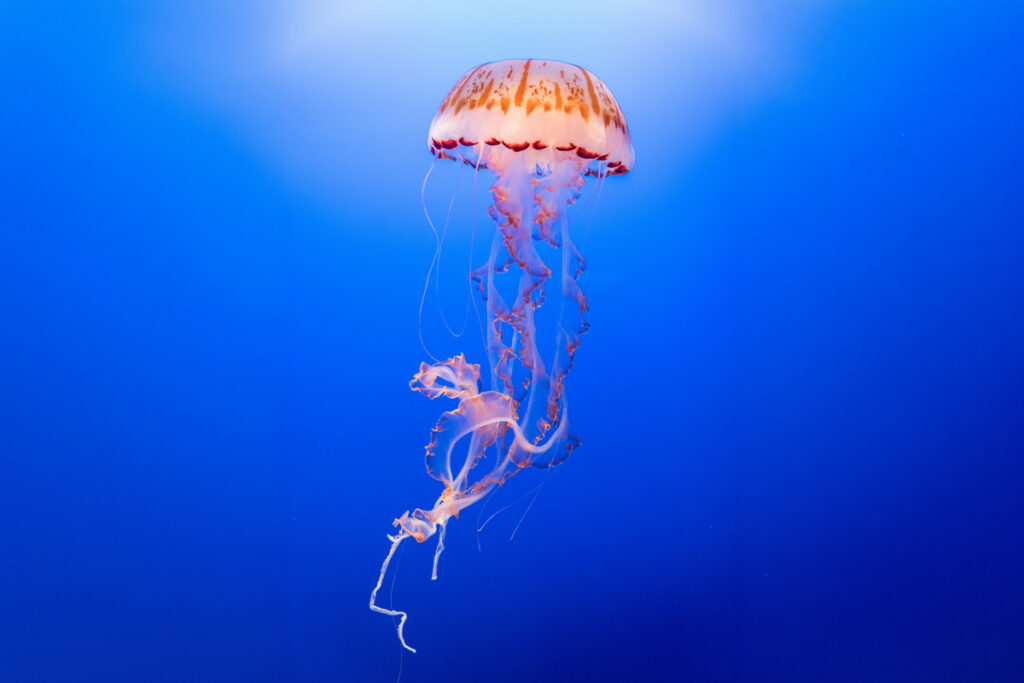
While sleeping involves much more than just relaxation and rest, that’s still a big part of its function. Rest allows muscles to repair themselves, balances our moods and hormones, lowers stress levels, and even allows our brains to move information from the hippocampus to the neocortex, where it can live as a long-term memory. This is important important for animals, especially young ones, who may just be learning about which plants are poisonous, where to find a reliable watering hole, and for some, how to find their way back home. Jellyfish, who don’t even technically have a brain or central nervous system, have been discovered sleeping in an effort to repair DNA that may have been damaged by factors like UV light exposure.

The Metabolism Piece

Image Credit: Getty Images/Unsplash.com

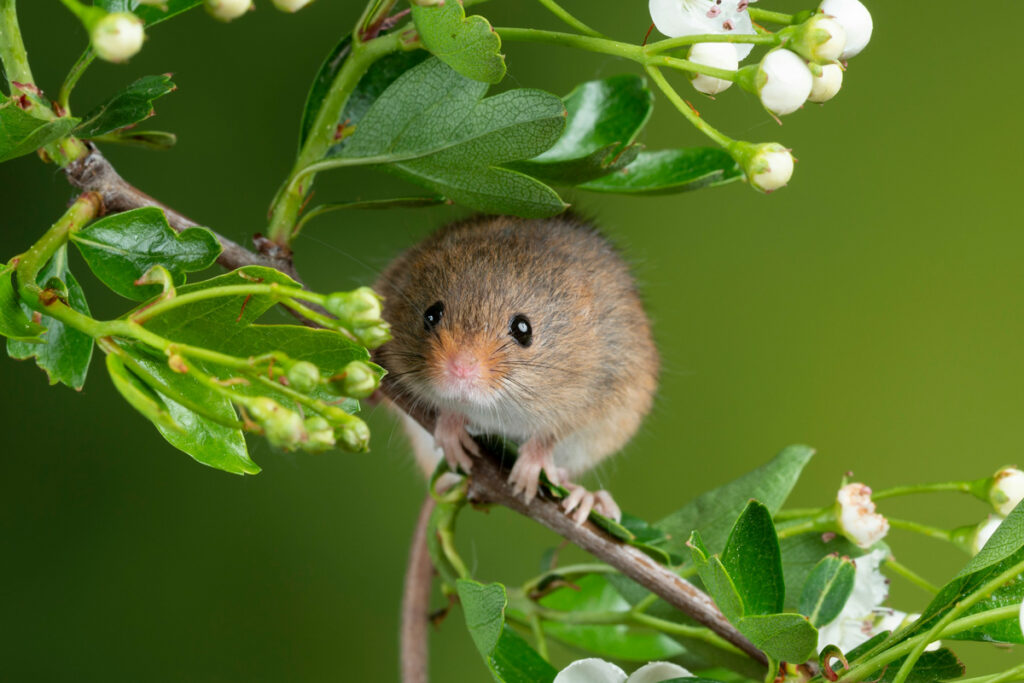
One study shows that animals with higher metabolisms create more of this cellular waste, and could be why some creatures sleep somewhere between 12 to 15 hours per day, albeit rarely all at once. Rats, mice, hamsters, and gerbils are what’s known as polyphasic sleepers. This means that they rest in several short stretches throughout the day, rather than spending an entire 13-hour stretch in bed. Dogs and cats also sleep in this style, which is where we get the term “cat nap” from. These smaller animals with faster metabolisms aren’t lazy, they just create more brain waste than their larger counterparts and need to replenish those dead cells more often throughout the day. 
The Poor Diet Problem

Image Credit: Joshua Earle/Unsplash.com

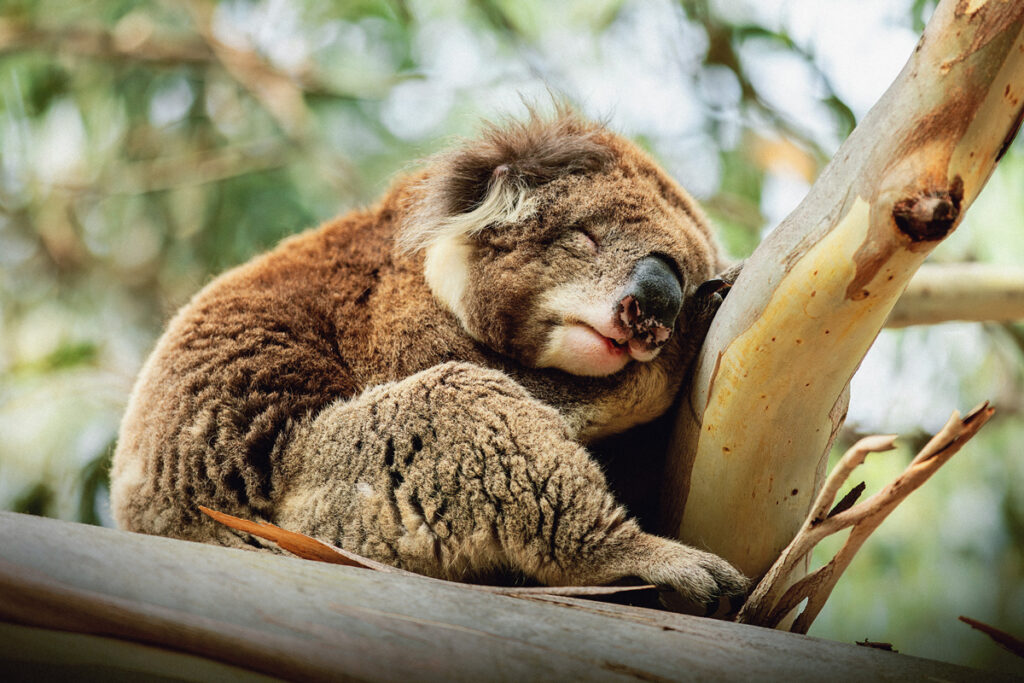
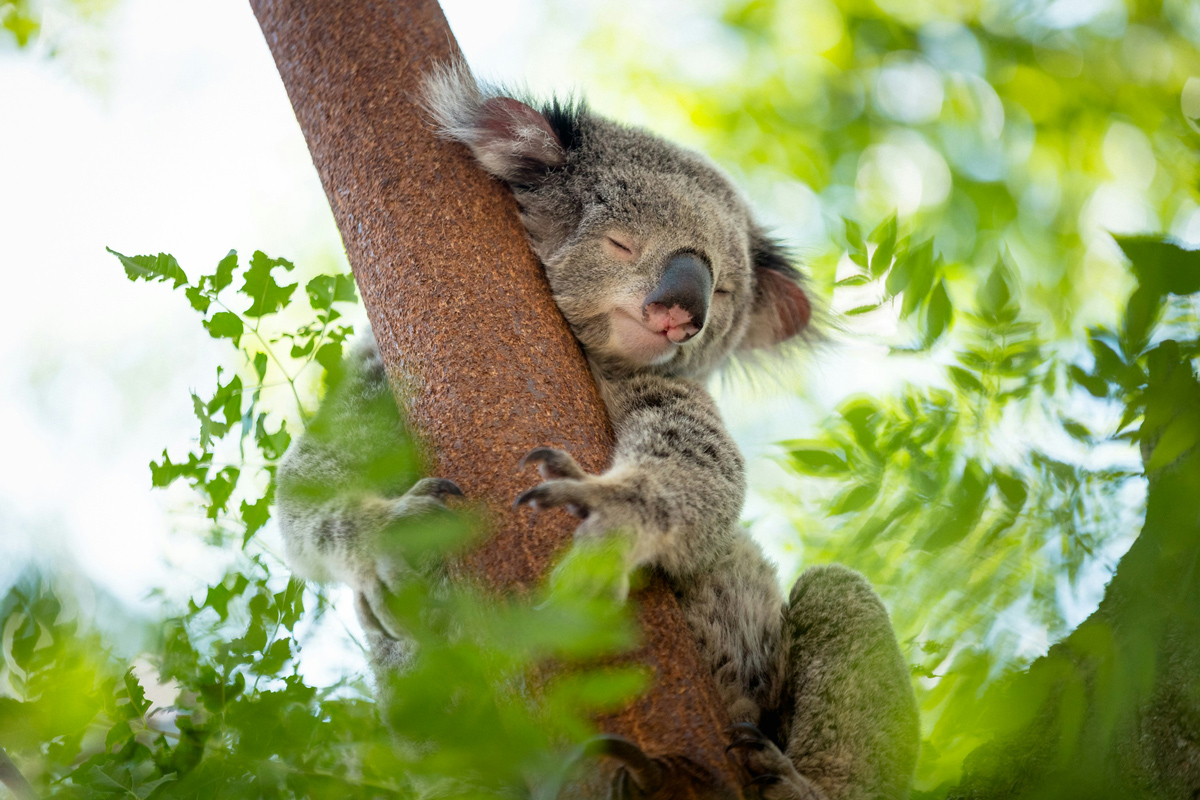
Not all animals sleep because of their fast metabolisms, however. In fact, the animal with one of the slowest metabolic rates is actually known to be the longest sleeper of them all: the koala. Koalas can sleep up to 22 hours per day, which seems impossible, until you understand why. Koala diets consist almost entirely of eucalyptus leaves, which are toxic due to their high levels of eucalyptol. This oil can become a neurotoxin when it’s ingested, leading to vomiting and diarrhea, seizures, and even chemical pneumonia. These marsupials have developed a digestive system that works hard to detox and digest the fibrous leaves found on eucalyptus trees, which requires lots of rest to upkeep. Their systems are equipped with caecum that break down the toxic fibers to make them digestible. The energy it takes for the caecum to perform this function largely uses up what a koala has managed to accumulate in a day, so those long stretches of sleep are used to conserve what energy they do have.
Not only is eucalyptus toxic, but it also provides very few nutrients. This means that koalas simply don’t have the extra energy to expend during their waking hours, and instead use most of their stamina to (what else?) eat more eucalyptus. 

Sloths are also notoriously sleepy, and rest for around 20 hours per day, thanks to this same, low-nutrient, high-fiber, all-leaf diet. Pandas are the same, thanks to their meal of choice, bamboo. Giant armadillos get around 18 hours of sleep thanks to their diet of mostly small insects, and the American opossum can sleep for up to 19 hours when food sources are scarce, or cold temperatures creep in.

So How Does Hibernation Work?

Image Credit: BGSmith/Adobe Stock

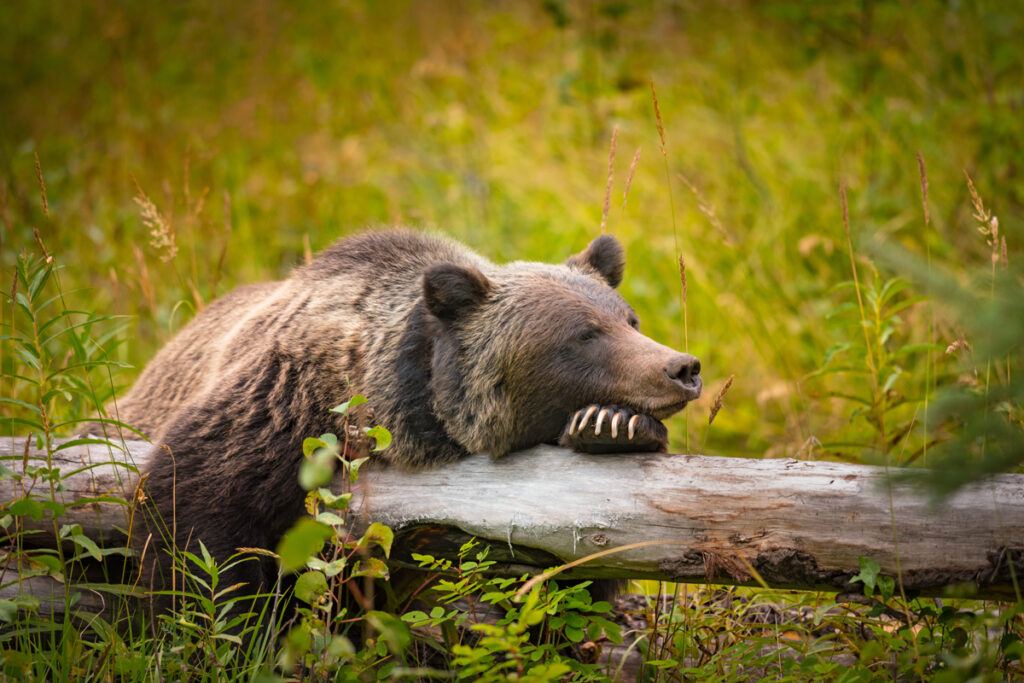
Some animals sleep because they don’t have much energy to spend, while others sleep to conserve the energy they do have. Bears are probably the most well-known hibernators, but plenty of other creatures, including groundhogs, skunks, toads, salamanders, and butterflies, use this tool to survive. Hibernation is a state of torpor during which animals’ metabolic rate, heart rate, and rate of activity slows down dramatically. Most people associate hibernation with cold weather, and while some animals do hunker down to avoid expending energy when food sources are generally scarce, other animals hibernate regardless of the weather if calories or water are harder to come by. 

Hibernation also keeps animals safe while they rest. Some hibernation periods can last for over 6 months, which is common for bears, while smaller animals like marmots may only hibernate for a few weeks. Many hibernating animals seek out caves and dens to hide out in until it’s wise to reemerge. Regardless of the length of the slumber, sleep safety is important for all animals. Tree-dwelling species, like koalas and sloths, wedge themselves between forks in branches, and use their large, tough claws to grip onto trees tight, even during deep sleep. Shorter naps also help animals, like pythons, stay somewhat alert to dangers, even while their eyes are closed. 

Animals That Never Seem to Sleep

Image Credit: Jeremy Bishop/Unsplash.com

On the other hand, there are some animals that seem to get no sleep at all. Take the common swift. With legs so thin they can barely support their bodies to rest, these birds are in near-constant flight, but they do, indeed sleep, even while they’re in the air. Swifts and other migratory birds like swallows can do this thanks to an evolutionary function called unihemispheric sleep. This type of sleep allows just one half of the brain to sleep while the other stays awake and helps the animal perform essential tasks, like eating, and even flying. Bottlenose dolphins, beluga whales, saltwater crocodiles, and mallards are some other animals that use this handy trick to sleep and work, simultaneously.

Koalas Sleep Up to 22 Hours a Day

A close up of a sleeping koala hugging a tree limb
Credit: Michael Williams II/Unsplash.com

Koalas are the champion sleepers, sometimes clocking out for up to 22 hours a day. The culprit behind their sleepiness? Their exclusive diet of eucalyptus leaves. The leaves of the eucalyptus plant are toxic to all creatures, including koalas, but these marsupials have developed a defense against the toxins that allows them to digest these fibrous leaves. That digestive system, however, takes up a lot of energy, meaning koalas need plenty of rest in between meals. When they are awake, koalas use their scant stamina to, what else, eat more eucalyptus leaves.

The perk about a diet of eucalyptus leaves is that the plant is full of water, meaning koalas don’t need to spend extra time searching for a water source. The downside? Those microbes in their digestive system that allow them to digest the leaves come from their mothers’….excrement. Babies will eat their mothers’ feces to acquire the defensive microbes that allow them to eat eucalyptus.

5 Animals With Extreme Defense Mechanisms

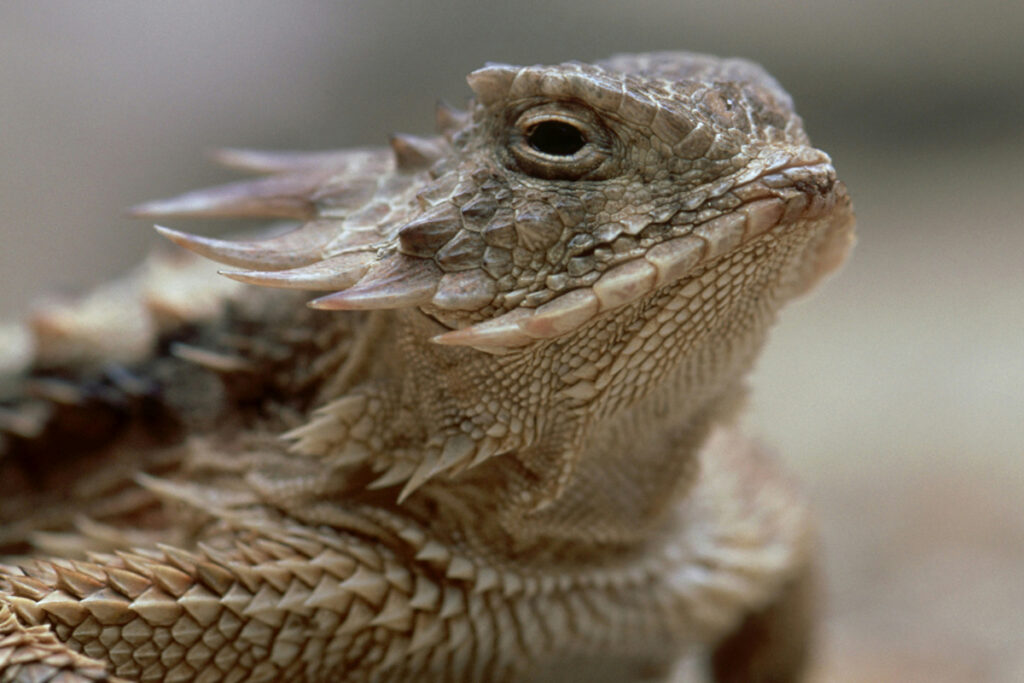
A close up image of a brown Texas Horned Lizard
Image Credit: Duncan Sanchez/Unsplash.com

A horned creature propelling blood out of its eyes. A six-legged monster shooting scalding-hot acid toward its victims. These sound like something you’d see in a horror flick, but they’re real defense mechanisms from some of the animal kingdom’s most unassuming residents. We’re not talking about the same old claws and camouflage that many animals rely upon to protect themselves, but rather survival tactics are extreme and extremely effective. Here are five feisty animals in particular that deploy intense defense mechanisms.

Exploding Ants

Image Credit: Minsoo Dong/Alamy

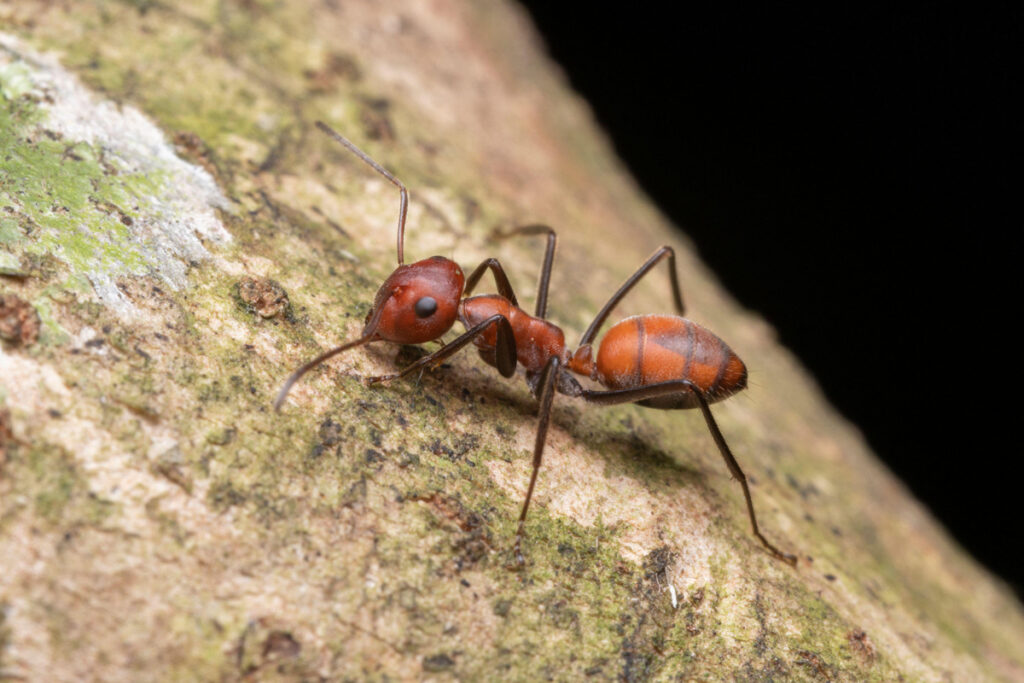
What do fireworks, airbags, and ants have in common? The answer — as shocking as it may be — is they can all explode. Native to Southeast Asia, the ant species Colobopsis explodens has a name that hints at one of the more extreme defense mechanisms in the animal kingdom. To the naked eye, the insects look like any standard ant; they have a brownish-red color and no large claws or pincers, which makes them an appealing target for predators (typically larger ants). But when attacked, these ants will explode in order to protect fellow members of their colony.

In perilous situations, these ants angle their backsides toward the attacker and flex them to the point that their abdomens burst. In doing so, they release an acrid, yellow goo to kill the attacker. The explosion results in the death of the ant being threatened, though it’s an admirable sacrifice to protect other ants from the same fate.

Horned Lizard

Image Credit: Getty Images/Unsplash.com

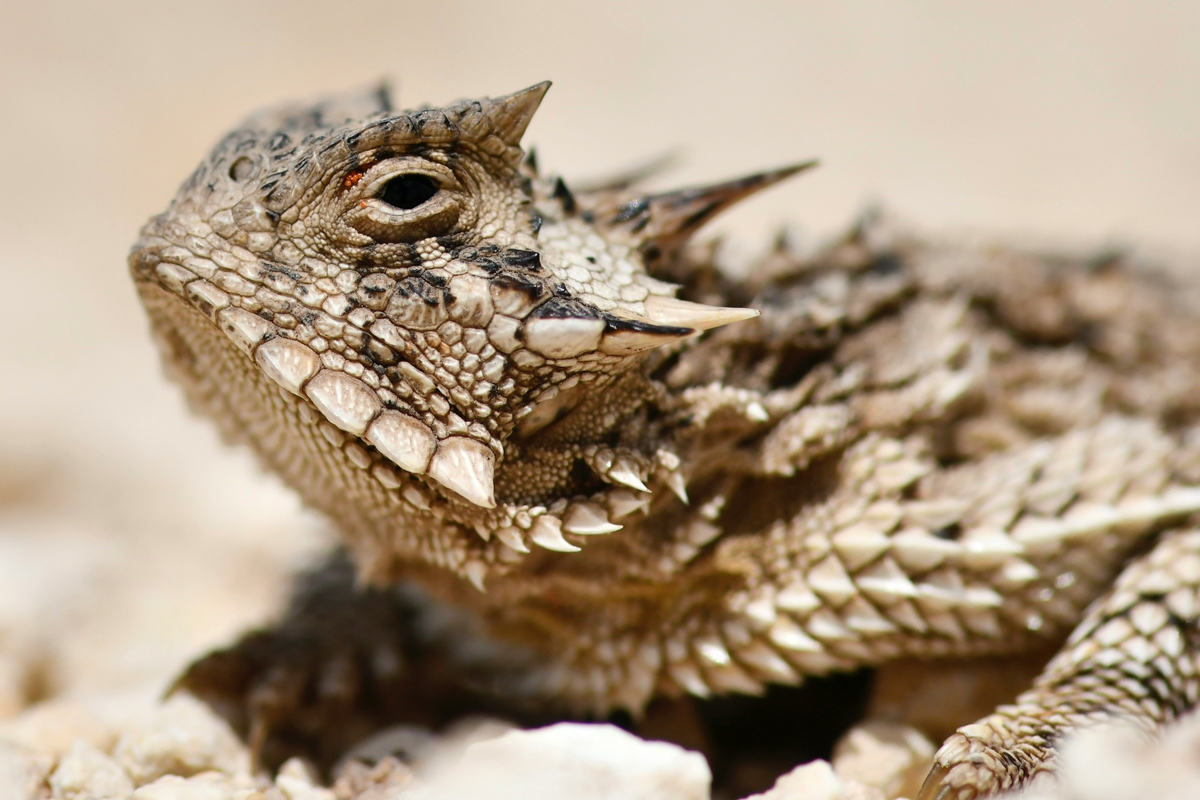
To humans, making your eyes bleed is usually a figure of speech, reserved for terrible movies, awkward situations, and other things we’d rather not see. But that’s not the case when it comes to the genus Phrynosoma, which includes several North American species of lizards known more commonly as horned lizards or horny toads. At least eight species within the genus have the ability to squirt blood from their eye sockets when they feel threatened. This blood is mixed with toxic chemicals that are derived from the lizard’s ant-based diet, resulting in a liquid concoction that isn’t exactly poisonous, but still has a deeply unpleasant taste.

The lizards squirt blood by restricting the blood flow from leaving their heads, which in turn increases blood pressure and causes blood vessels to burst around the eyes. These small creatures can then shoot out a stream of blood at a distance of up to five feet. While birds aren’t so turned off by this defense mechanism — given they lack taste buds — the tactic is highly effective at deterring canine predators such as coyotes, dogs, or foxes. It’s also admired by football players at Texas Christian University, where the mighty horned frog serves as the school mascot and its telltale blood makes an appearance on helmets and jerseys alike.

Northern Fulmars

Image Credit: Barnabas Davoti/Unsplash.com

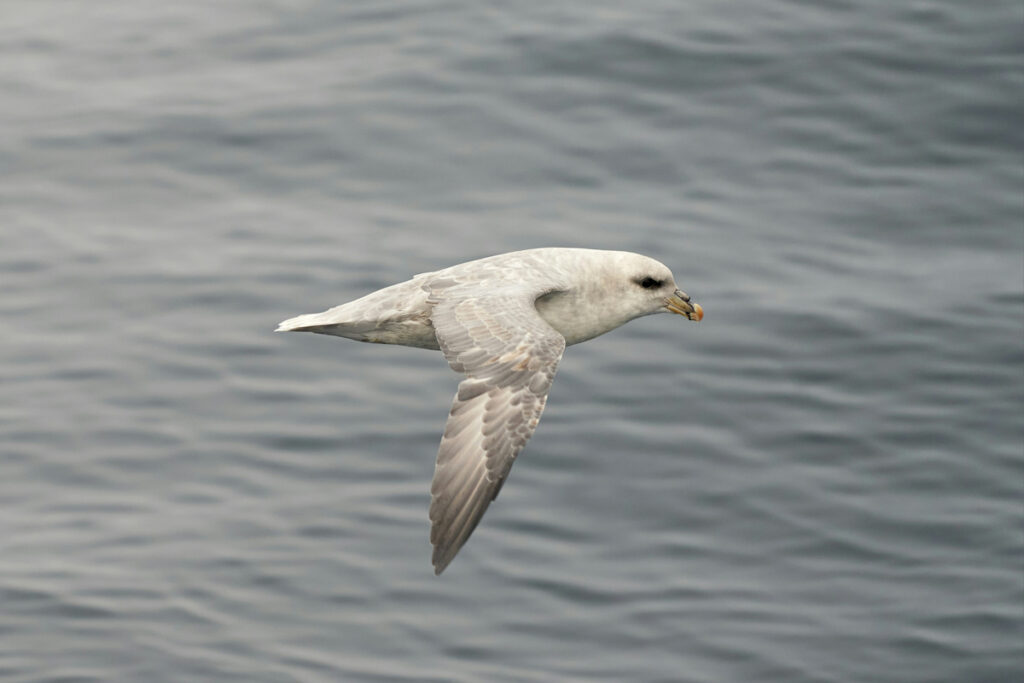
While many birds simply take to the skies and flee to safety, the northern fulmar isn’t like other birds. This seabird typically resides in the North Atlantic and North Pacific, where it feasts on a diet of oil-rich sea creatures — similar to a nice fish fry from Long John Silver’s. After being consumed, those fatty oils are stored in a special chamber called the proventriculus, where they thicken into a sludgy goop. When threatened, the northern fulmar projectile vomits the mixture out toward any oncoming predator.

Given its thickness, the toxic vomit is extremely adhesive in nature. So much so that it sticks to that predatory bird’s feathers and weighs it down to the point that it can sink and drown in the water. Northern fulmar chicks are able to produce projectile vomit, even without a parent present, in the event their nest is attacked.

Hairy Frogs

Image Credit: Paul Starosta/Getty Images

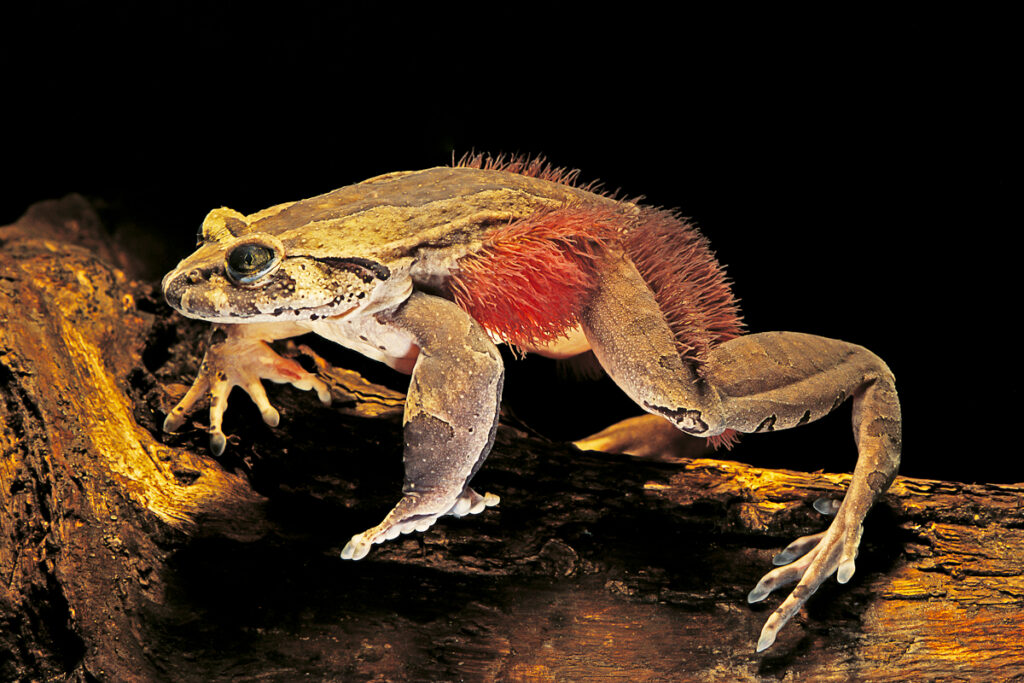
The species Trichobatrachus robustus is known to many as the hairy frog, but also by the names horror frog and wolverine frog. That latter moniker comes from the animal’s similarities to the X-Men hero Wolverine, who has retractable claws made of the fictional element Adamantium. The hairy frog’s retractable claws are made of bone that can tear straight through its skin to defend itself — a nightmarish idea for anyone who’s ever suffered a compound fracture.

When threatened, the hairy frog will flex its foot muscle, causing its sharp claws to break through the fleshy nodules at the tips of its toes. It’s like how a cat protrudes its claws, only with an added element of gore. The frog will then use its newly exposed claws to lacerate its attacker until the situation is secure. Once safe, this frog pulls its claws back into its toes, though it requires time thereafter for its skin to heal over.

Bombardier Beetle

Image Credit: Roman Milert/Adobe Stock

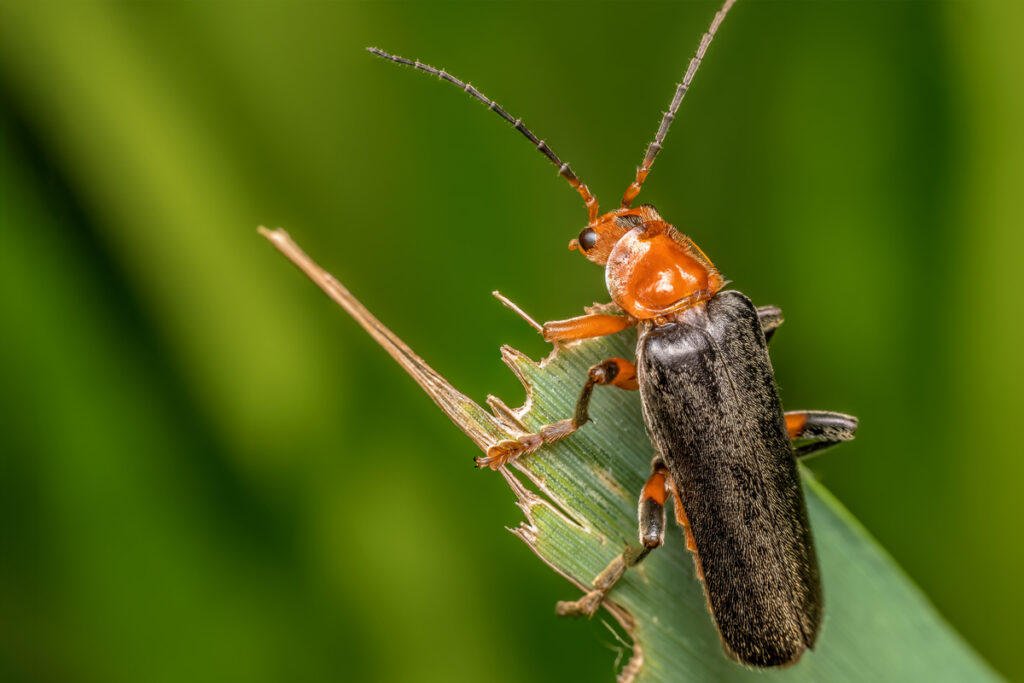
In an 1846 letter, Charles Darwin described being on the receiving end of a threatened beetle that shot acid down his throat. This was an early recorded example of beetles that shoot chemicals — as if from a cannon — at would-be predators. Among the many beetles that do this, few have perfected it to the degree of the aptly named Bombardier beetle, which gives the concept of chemical warfare a whole new meaning.

The Bombardier beetle launches a foamy secretion out of its abdomen at up to 22 miles per hour and at temperatures of up to 212° Fahrenheit — the boiling point of water. If you’ve ever burnt yourself while making pasta, you know how unpleasant this can feel. The beetle can also fire this scalding secretion as if it were coming out of a machine gun, generating between 368 to 735 pulses per second. This spray combines hydrogen peroxide and hydroquinone, which are stored in separate sacs within the beetle’s body. The chemicals are then mixed together inside an abdominal chamber, and propelled if needed.

What’s the Difference Between Crocodiles and Alligators?

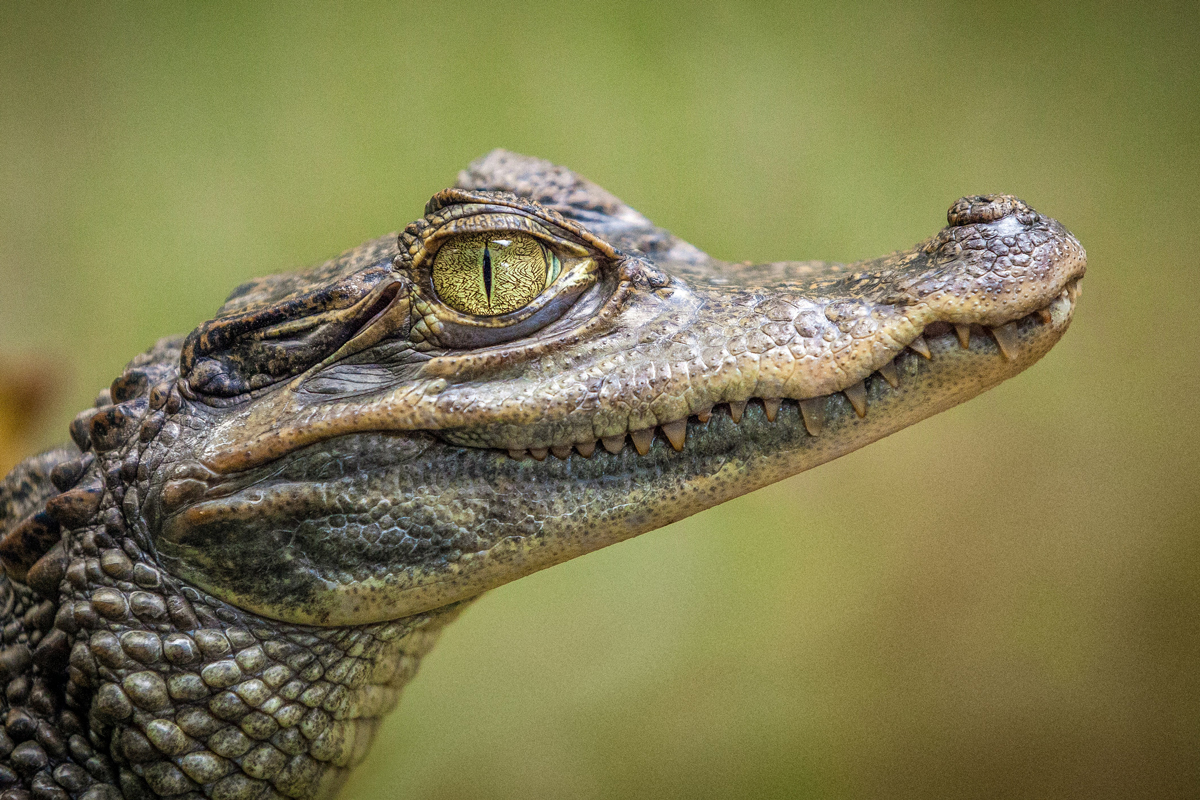
A close up of a small crocodile with a yellow eye
Credit: Gaetano Cessati/Unsplash.com

If you’re kayaking down a river and see a scaly creature with giant teeth pop up from the murky depths feet from your boat, you’d probably be more focused on paddling out of there than wondering if the creature is a crocodile or an alligator. Funnily enough, examining the jaw is one of the simplest ways to tell these similar reptiles apart. Their many similarities stem from the fact they both belong to the same reptilian order Crocodylia, and evolved from a common ancestor tens of millions of years ago. But they belong to disparate taxonomic families, and each took on unique characteristics during the evolutionary process. Here’s a closer look at how crocodiles and alligators differ.

Where in the World Is Caiman Sandiego?

Image Credit: Matthew Muth/Unsplash.com

Despite their common origins, crocodiles and alligators wouldn’t make particularly compatible roommates, as they primarily live in starkly different habitats. Crocodiles typically prefer brackish (slightly salty) aquatic environments, whereas alligators require freshwater environments, as they can only tolerate saltwater for a few hours or days. The reason for this is that crocs have special tongue glands to remove excess salt, whereas alligators lack those same glands.

There’s only one place on the planet where crocodiles and alligators naturally co-exist. Much like many snowbird retirees, they live together around the Florida Everglades. The reason for this is a geographical coincidence, as the Everglades is made up of saltwater from the ocean and fresh water from nearby Lake Okeechobee, resulting in a suitable environment that fulfills the needs of both animals. This also happens to be the only location in the U.S. where you can see crocodiles in the wild, though you’ll find alligators in several other Southern states such as Louisiana, Texas, and Georgia. 

Elsewhere around the globe, crocodiles have a far more expansive reach than alligators. With their ability to tolerate saltwater, crocodiles could traverse a greater number of interconnected waterways and spread out, while alligators were limited geographically to freshwater connections. 

This map shows that various crocodile species are found in Central America, Northern South America, the Caribbean, Africa, South Asia, Southeast Asia, and the northern part of Australia. Alligators, on the other hand, are only found in the Southeastern U.S., Southern Central America, South America, and a small section of Eastern China.

A Dental Distinction 

Image Credit: Matthew Muth/Unsplash.com

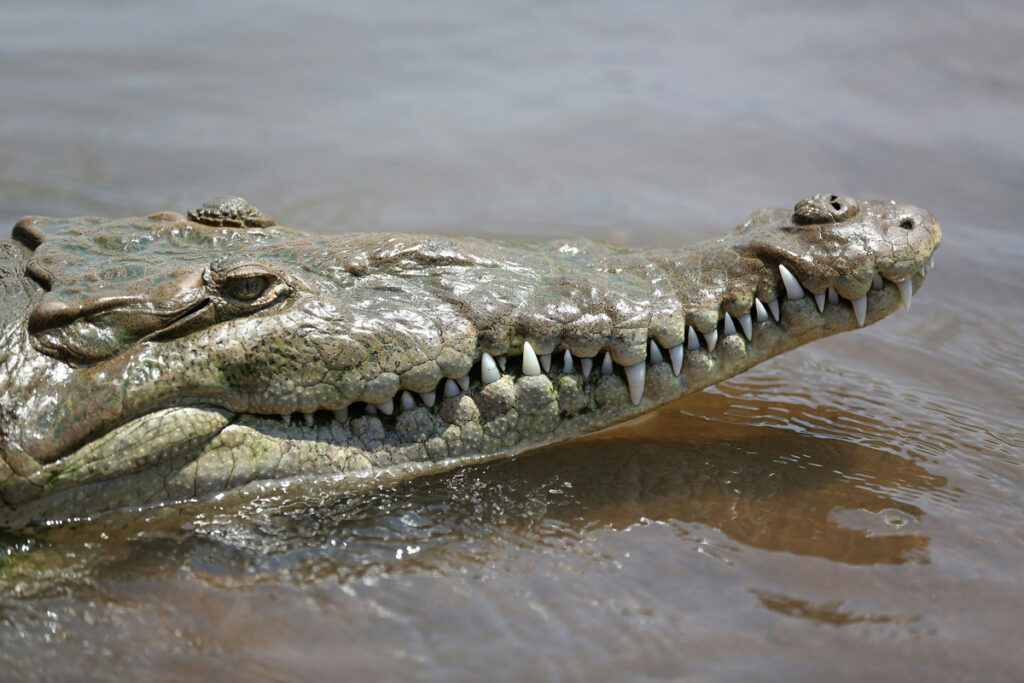
While on the surface, these large reptiles might appear similar, they have many key physical differences. One of the most overt differences is their snout shape. Crocodiles typically have a narrower snout that looks more like a pointed-V, while gators have a broader snout that looks akin to a rounded-U. There’s also a critically endangered crocodilian species known as the gharial, which boasts an exceptionally long and slender snout.

Another major distinction is the total number of teeth that crocodiles and alligators have. While us humans typically have 28 to 32 — perhaps less if you forgot to brush twice daily when you were younger — most crocodile species have 60 to 70 teeth while alligators have between 74 to 80. 

But you can also tell them apart by how visible those teeth are when the animal’s jaw is shut. When a crocodile shuts its mouth, you’ll be able to see teeth coming from both its upper and lower jaws — especially the large fourth tooth on each side of the bottom jaw. When a gator shuts its jaw, however, you’ll be able to see its upper teeth but not its lower ones. Whether the jaw is open or not, if you’re up close and personal with a scaly reptile, you might not want to spend too much time counting teeth.

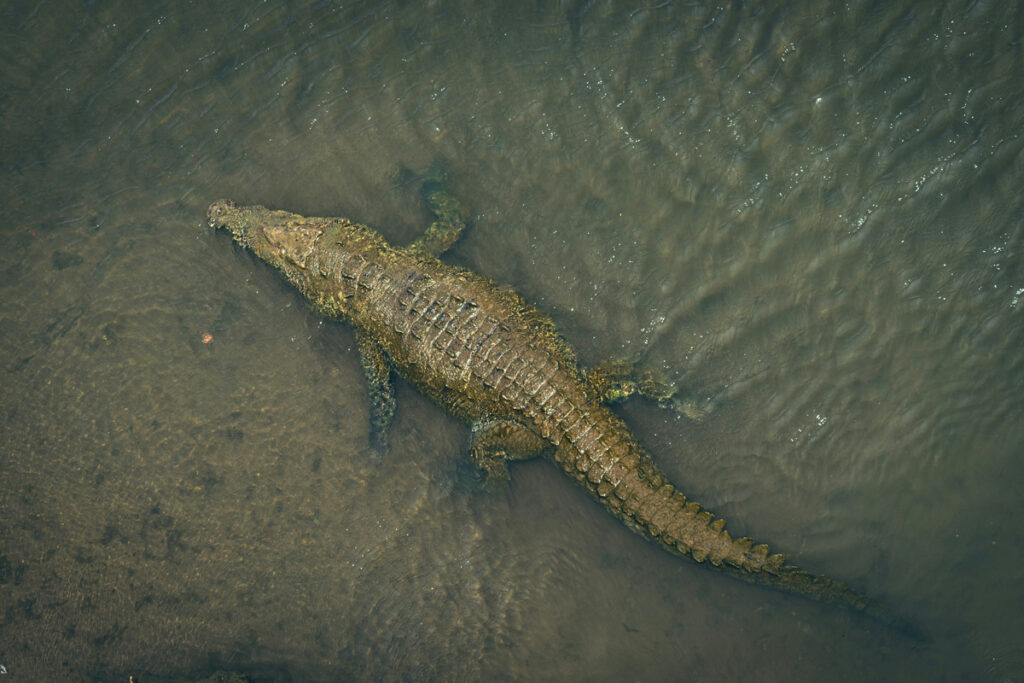
Size-wise, crocodiles are longer and heavier than alligators. The average male American crocodile tends to measure 14 to 20 feet in length while females measure eight to 12 feet, and they can weigh over one ton. But male American alligators typically measure around 11.2-feet-long while females measure around 8.2-feet-long, and they only weigh between 500 to 1,000 pounds. The average Chinese alligator is even smaller, at just five-feet-long and 50 pounds. No matter the size, you probably don’t want to encounter any of the above while swimming.

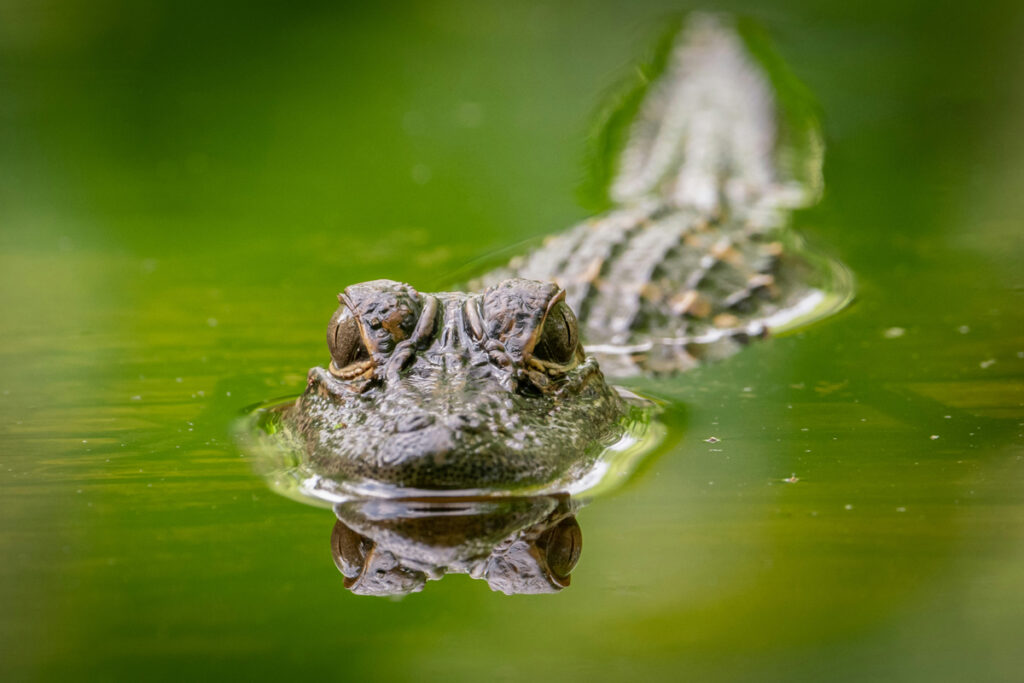
Lastly, there’s a difference in skin tone between the two creatures. Let’s take species that are native to the Americas; mature American crocodiles have skin that ranges in its color from greenish-gray to greenish-brown, with a pale underbelly to boot, and juvenile ones are lightly colored with dark stripes. The American alligator has skin that’s more akin to a darker grey or black color, while young gators appear to be dark with yellow stripes — kind of like a bumblebee or someone wearing a Pittsburgh Steelers jersey.

Don’t Poke the Reptile

Image Credit: Unsplash+ Community/Unsplash.com

There tends to be a stark difference in the behavior and temperament of crocodiles and alligators. While they share many similar tendencies such as basking in the sun, hunting for prey, and performing signature “death rolls” upon catching something, the creatures are a bit dissimilar in terms of their aggression, especially toward humans.

Crocodiles are much more aggressive and territorial, similar to a friend who takes the board game Risk too seriously. This is especially true when it comes to certain species such as the African-based Nile crocodile and Asian saltwater crocodile. These are among the species known to approach human beings, posing a serious risk of danger.

Alligators, however, are comparably docile and reclusive, and are far less aggressive in the presence of humans. That said, it’s still worth keeping your distance if trying to snap a selfie with one. Alligators tend to only become antagonistic if they feel threatened or are protecting their nests, but will otherwise typically keep their distance.

The Surprisingly Complicated Lives of Shrimp

Image Credit: Máté Molnár/Unsplash.com

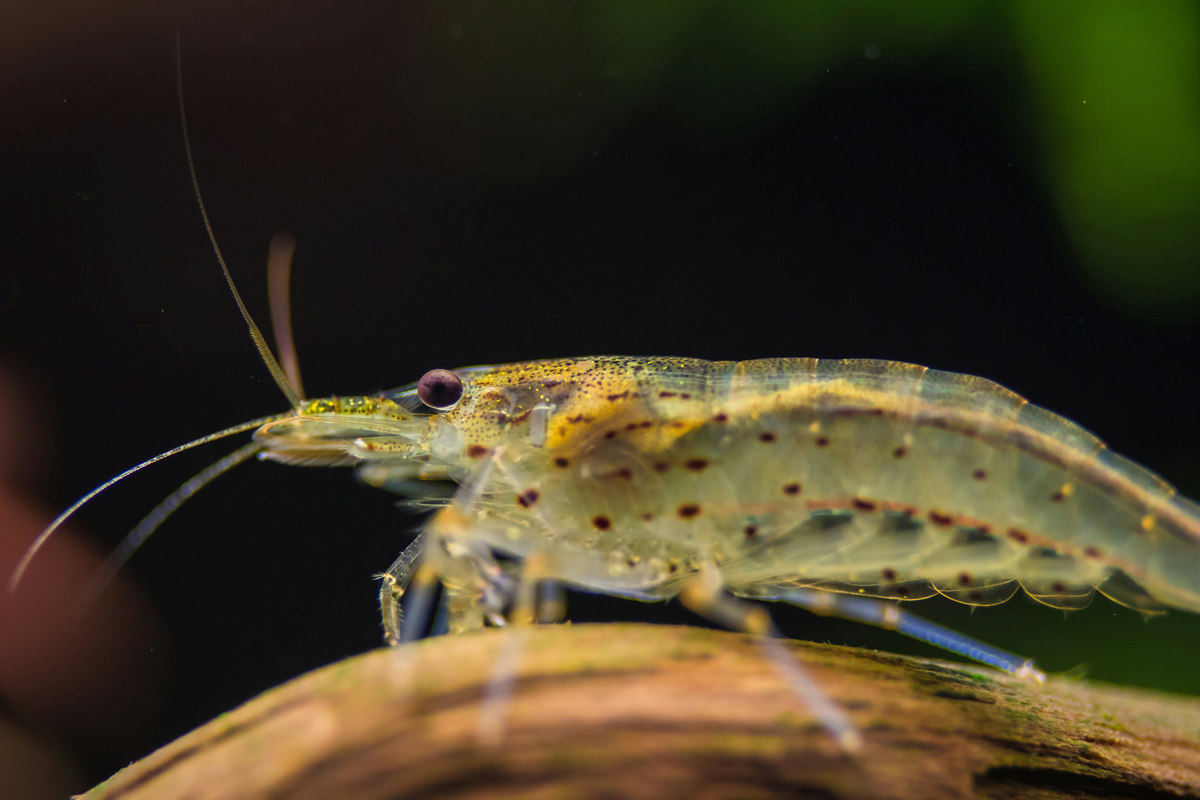
Shrimp may be small, but the lives they live aren’t so little. With more than 2,000 known species inhabiting nearly every marine and freshwater environment on Earth, shrimp are indeed abundant and widespread. As scavengers, predators, and prey, they also play a major role in aquatic ecosystems around the world.

But even with all the abundance and diversity of shrimp, most happen to share a specific life challenge: staying alive in environments where they’re a likely meal for many, much larger, predators. As a result, shrimp have some surprisingly complex survival adaptations. Without the advantages of the size, speed, or strength of many of their underwater counterparts, shrimp have evolved specialized ways to dodge danger, find food, and reproduce. Here are some of the most fascinating ways these tiny crustaceans live their complicated lives.

Image Credit: Máté Molnár/Unsplash.com

Tiny Workers In Major Waterways

Shrimp are constantly contributing to the health of their habitat’s ecosystem by connecting different parts of the food chain: Breaking down what one animal leaves behind and becoming fuel for another. Some species, including ghost shrimp and mud shrimp, burrow through seafloor sediment and help recycle organic material trapped in the mud. Others, such as grass shrimp, feed on algae and tiny organisms while serving as an important food source for fish and seabirds. The shallow reefs, deep oceans, and flowing rivers that shrimp call home would look very different without them.

Image Credit: Ozcan Sisman/Unsplash.com

Temporary Truce Between Predator and Prey

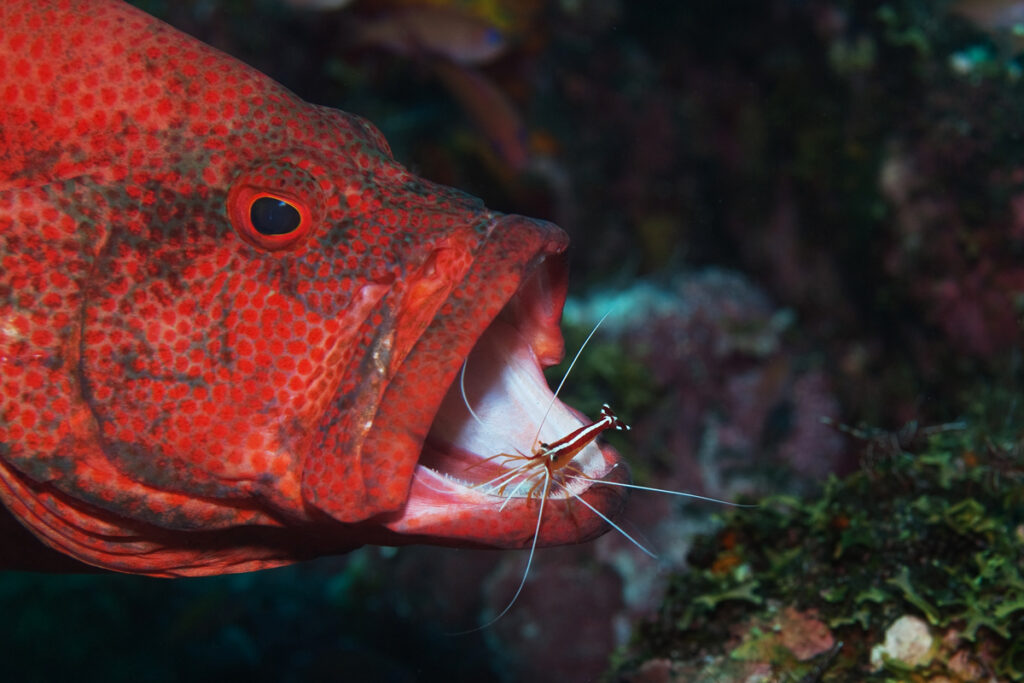
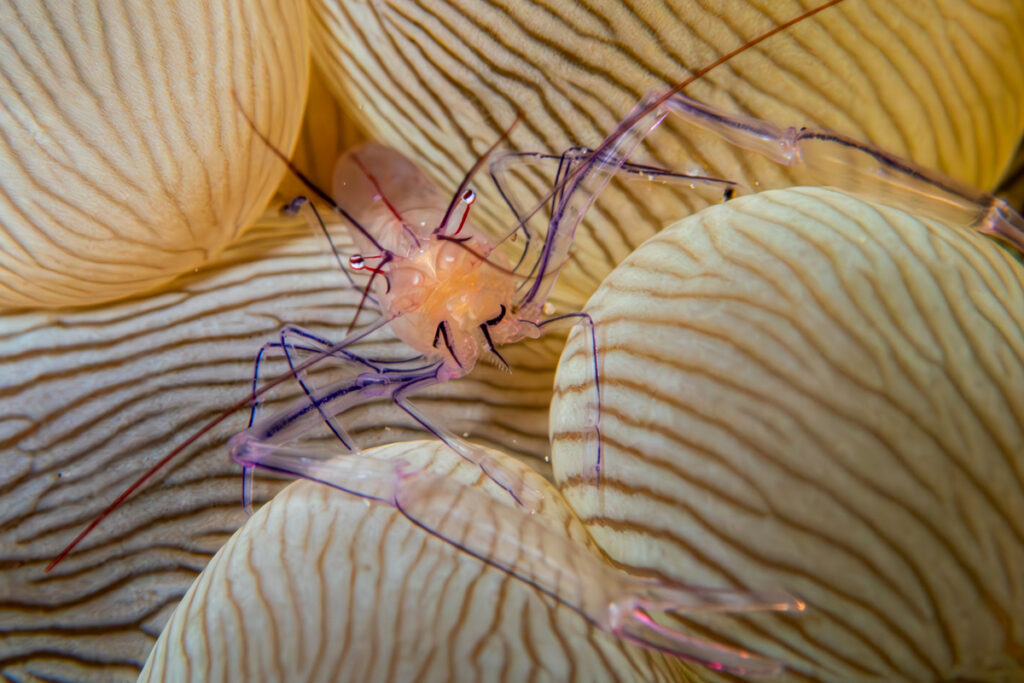
Certain species of shrimp have evolved an unusual way of avoiding predators: they make themselves useful to animals that may otherwise eat them. Cleaner shrimp operate grooming stations on the Caribbean’s coral reefs, where fish visit to have parasites, dead skin, and damaged tissue removed from their bodies. The shrimp crawl across the fish’s scales, into their gill chambers, and even into their mouths, where this detritus often collects.

Cleaner shrimp signal that their services are available by waving their long antennae at passing fish. Even large predatory fish that could and would easily consume these shrimp typically allow the cleaners to work undisturbed. It benefits them both: The fish get a good cleaning, while the shrimp gets a hearty, and non-threatening, meal. 

Image Credit: scubaluna/Adobe Stock

Small But Mighty

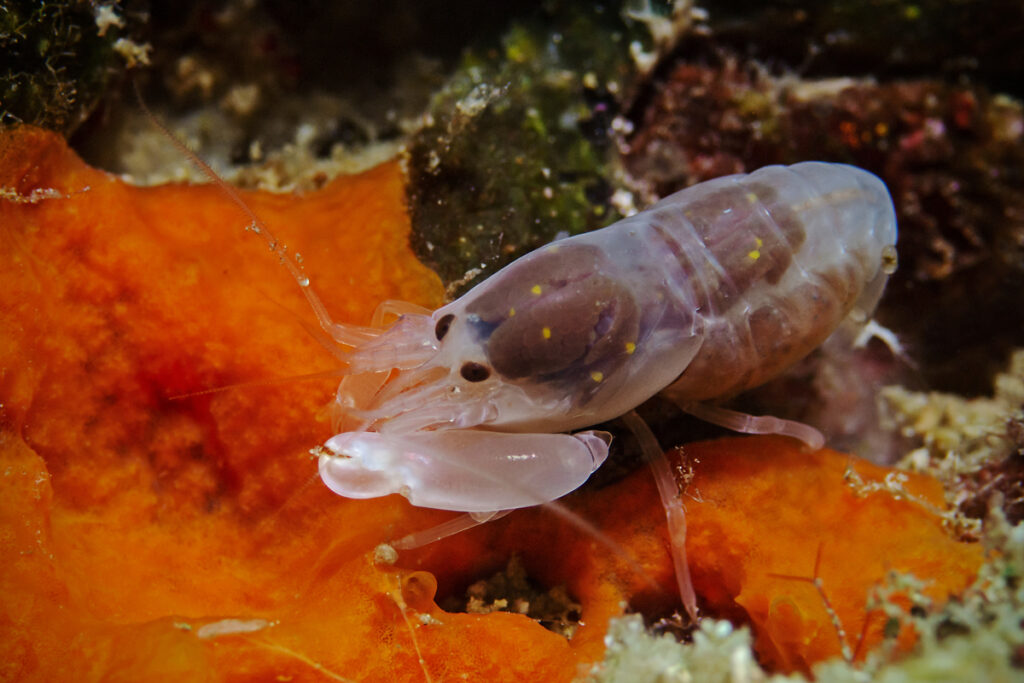
Not all shrimp survive through cooperation — some get a bit more aggressive. Pistol shrimp, for instance, have an enlarged claw that can snap shut so quickly it creates a phenomenon known as cavitation (a tiny-but-powerful bubble explosion caused by forceful water). The snap is no joke: It can happen at a speed of about 60 miles per hour, creating a powerful shockwave that generates a brief blast of extreme heat, a flash of light, and a sound louder than a gunshot — one of the loudest sounds made by an animal — stunning or even killing their prey.

In some habitats, pistol shrimp colonies are so numerous that their constant snapping creates significant noise in the ocean. The U.S. military has even conducted research on the snapping sounds to see whether the echoes created by their powerful snaps can reveal the location of nearby objects, with the aim of possibly using it as a natural sonar.

Image Credit: Zack’s Scuba Diary/Adobe Stock

Molting Makes Them Vulnerable, But Is Valuable

Like other crustaceans, shrimp have an exoskeleton instead of an internal skeleton. This hard outer shell protects them, but it also creates a challenge: The exterior cannot grow with the animal. That means a shrimp must shed its old exoskeleton through a process called molting. First, a new shell is formed underneath the old one before breaking free. But the new shell, unlike the old, is soft and flexible, leaving the animal vulnerable until it hardens within a few days.

Despite leaving the shrimp exposed to predators, molting actually has quite a remarkable advantage: Because shrimp regrow parts of their bodies during each molt, lost legs or claws can gradually return across several of a shrimp’s growth cycles.

Image Credit: Andrej/Adobe Stock

It Takes Proactive Parenting

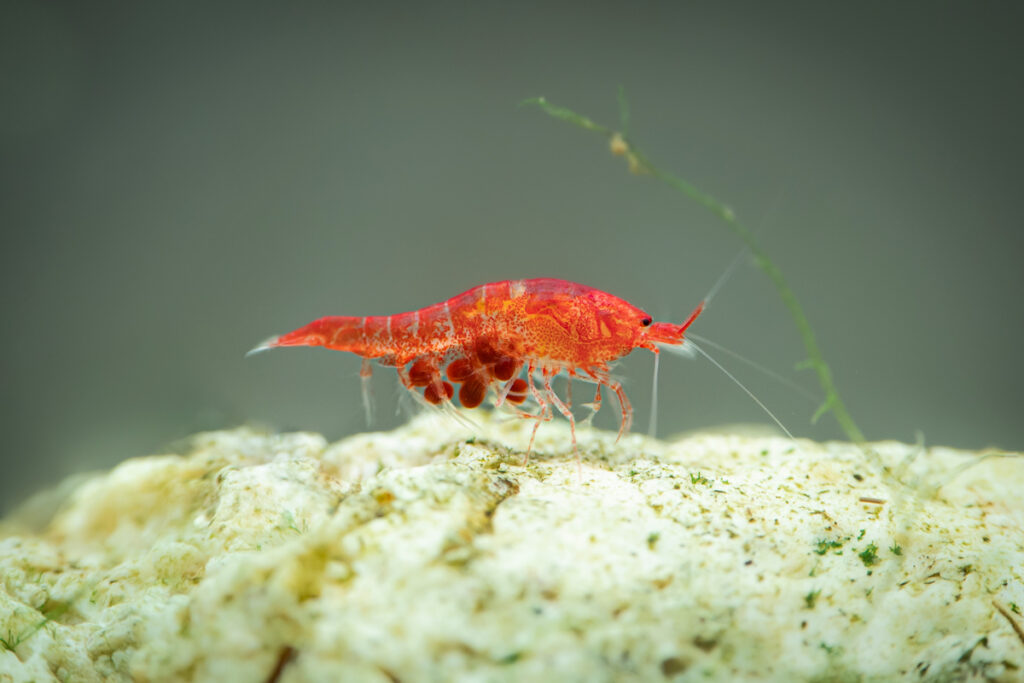
Shrimp survival requires very careful parenting. Unlike many fish, amphibians, or reptile species, female shrimp carry their fertilized eggs beneath their bodies, attached to specialized swimming appendages called swimmerets. The eggs take constant work to develop; mother must constantly fan them with water to provide oxygen, remove debris, and prevent any unwanted bacteria from growing.

Some shrimp species have even evolved advanced reproductive strategies, including the ability to change sex during their lifetime. Peppermint shrimp, for example, begin life functioning as males before later developing the ability to carry eggs. This allows reproduction to continue, even if mates are limited.

Nearly every part of a shrimp’s life reflects the challenges of their size, but these crafty crustaceans seemingly have no problem adapting to stay one step ahead.