Kellie is a writer and editorial strategist covering topics in travel, trivia, nature, and more. When she's not writing you can find her drinking Diet Coke.
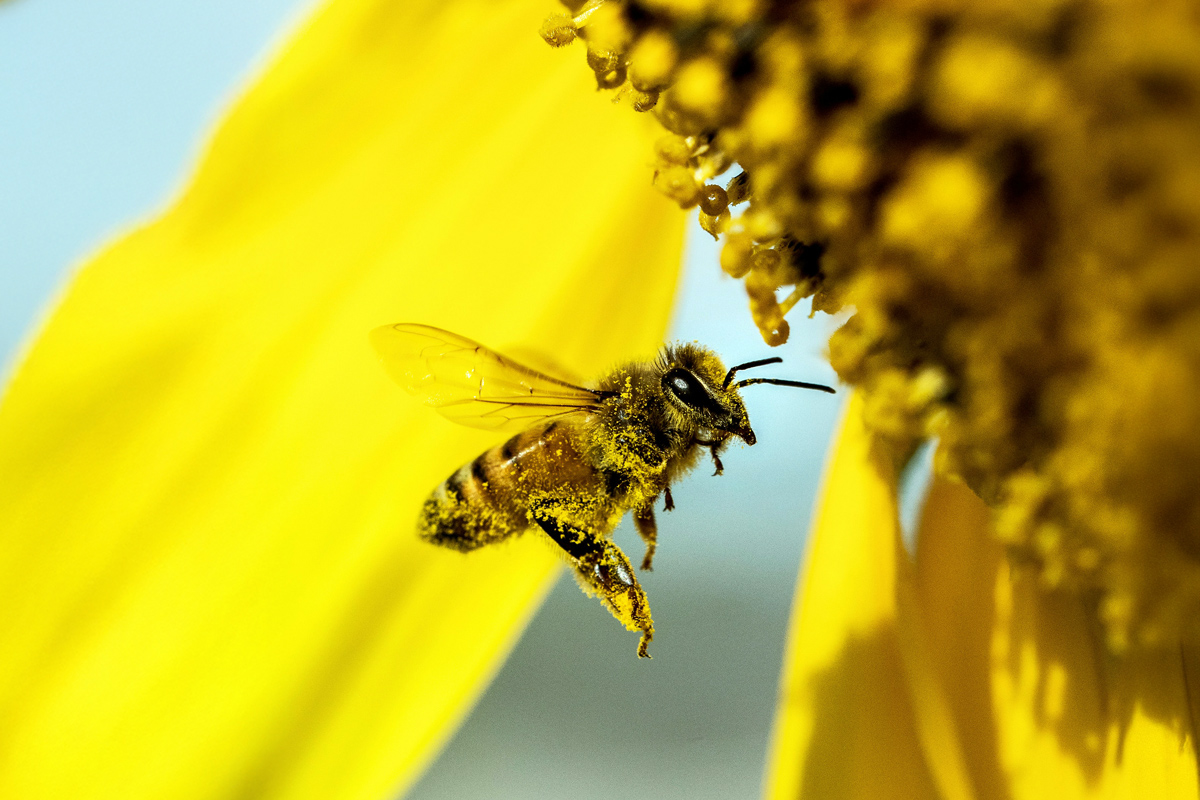
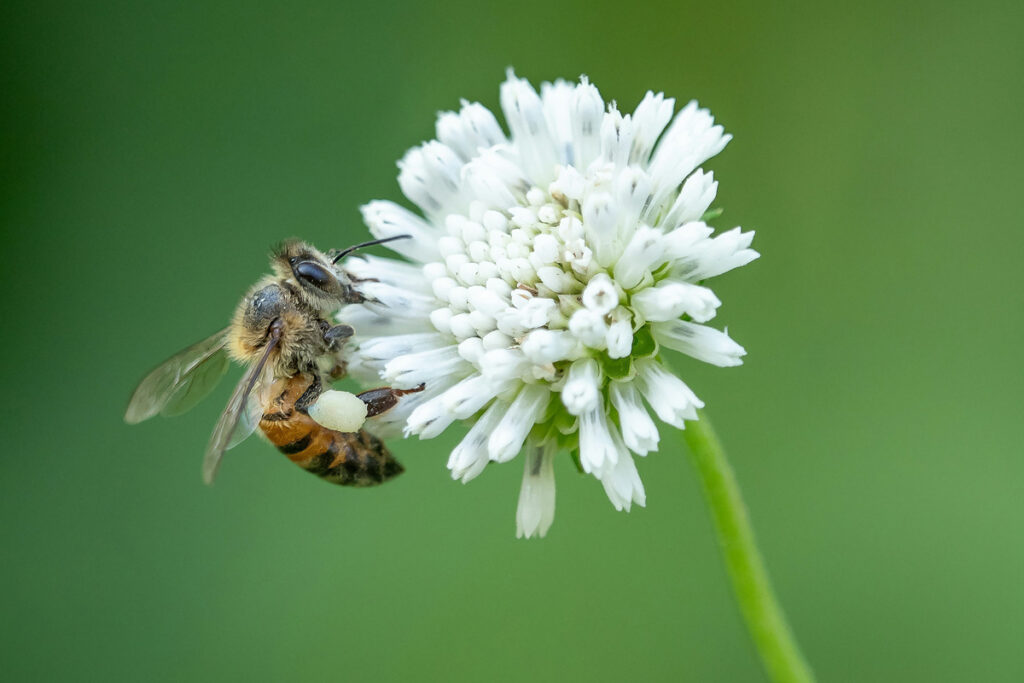
Flowers work hard to attract pollinators. They dress up in their best colors, give off sweet aromas, and produce gobs of bright pollen. But there’s even more going on beneath the surface. Flowers give off an electric charge, allowing bees to locate the ripest flowers.
As they fly through the air, bees build up a small positive electric charge, while flowers tend to carry a slight negative charge. It’s similar to the charge you accrue when shuffling across the carpet in socks. That difference creates a tiny electrical attraction between them, helping guide bees toward blooms that are rich in nectar and pollen. Scientists have even found that bees can detect subtle changes in a flower’s electric field, allowing them to tell whether another bee has recently visited and drained its nectar.
Advertisement
Orangutans Have the Longest Childhoods After Humans
Kellie is a writer and editorial strategist covering topics in travel, trivia, nature, and more. When she's not writing you can find her drinking Diet Coke.
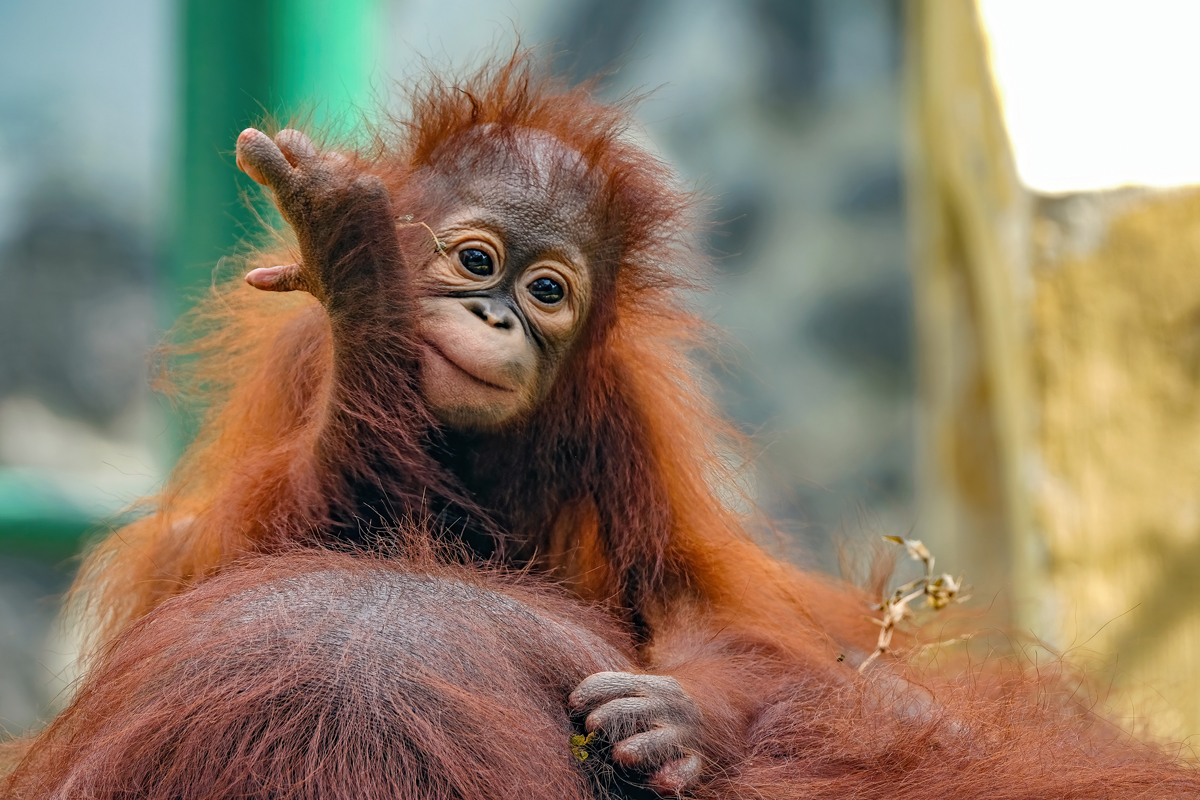
Many animals enter the world ready to walk, run, or forage for food almost immediately. Some spend only a few weeks (if that) with their mothers before venturing off on their own. Orangutans, however, have the second-longest period of infant dependency after humans. Young orangutans stay close to their mothers, even continuing to nurse, for up to 8-10 years.
That’s a long time in the animal kingdom, even among other primates. Found in the rainforests of Borneo and Sumatra, orangutans spend most of their adult lives alone, making those first years essential. They learn everything from where to find food and how to build a nest to navigating the forest canopy and avoiding danger. There’s a lot for a young orangutan to master. Fortunately, their mothers don’t seem to be in much of a hurry to kick them out of the nest.
Advertisement
5 Animals That Survived the Dinosaur Extinction
Across Species 29/06/26Jun. 29, 2026
Updated 29/06/26Jun. 29, 2026
Image Credit: JAKLZDENEK/Adobe Stock
Krissy Howard
Author
Krissy Howard is a writer with a background in comedy, and a love for researching and writing about animal behavior. You can read some of her work at Cuteness, Byrdie, and The Hard Times. When she's not writing, she's growing food in the community garden, feeding stray cats, and learning Greek.
We all know the story. A big asteroid made the Earth go BOOM! and all the dinosaurs died out. Well, not quite. Dinosaurs actually underwent two different extinctions, many years apart. The first was the Triassic-Jurassic extinction about 200 million years ago, which was caused by volcanic eruptions that heated the air, acidified the oceans, and lowered the level of oxygen to nearly half of what it is today. Approximately 70% to 76% of all marine and terrestrial species died, but the dinosaurs as a whole weren’t among them. They went on to experience a second extinction, the Cretaceous-Paleogene, or K-Pg, which occurred 66 million years ago, when the Chicxulub asteroid hit the Yucatán peninsula. This effectively set off volcanic activity and blocked the sun with soot and debris, leading to a two-year global winter that 80% of all animals on Earth couldn’t survive. Not everything perished, however.
Dinosaurs may have dominated the planet, but they weren’t the only creatures who called it home. Now that the vegetation-stomping, voracious eaters were no longer around to rule the world, the rest of them had their chance to shine, and some have even stuck around until today.
Frogs
Image Credit: JAKLZDENEK/Adobe Stock
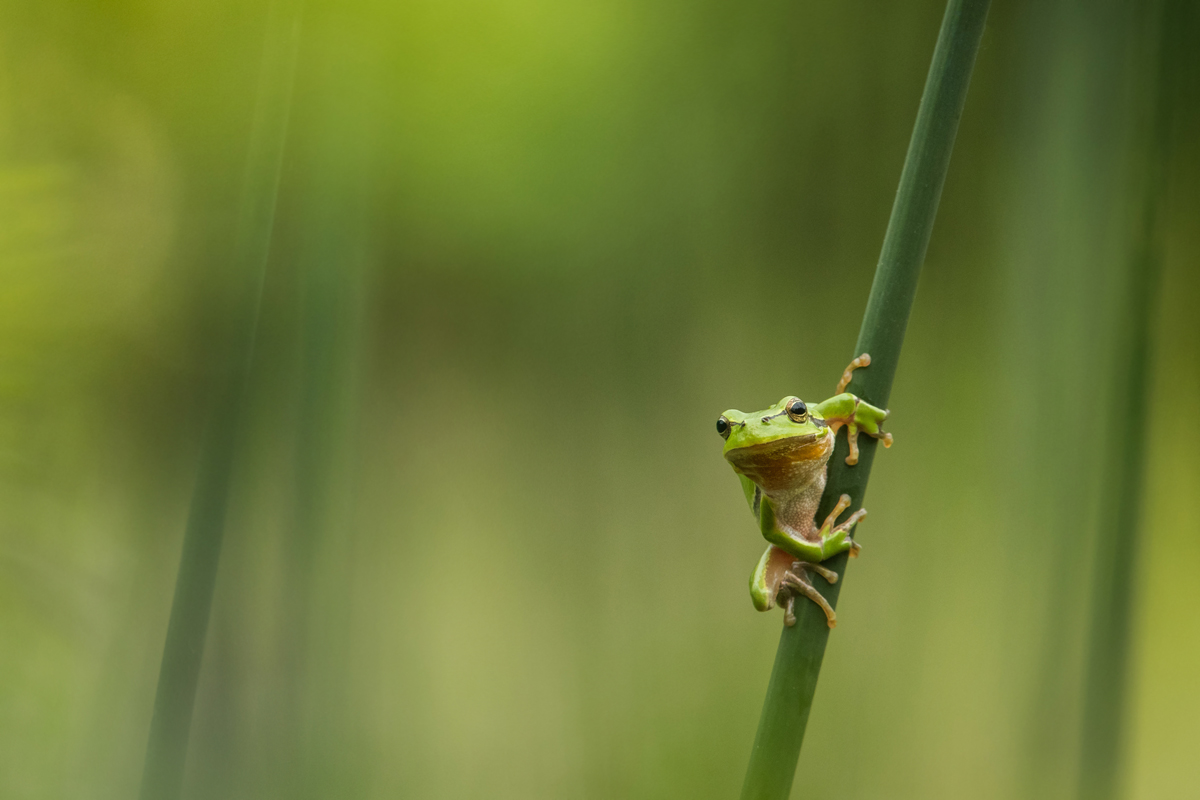
Out of over 8,000 frog species that exist today, most can be traced back to just three lineages from the time of the dinosaurs: Hyloidia in the Americas, Natatanura across Europe and Asia, and Mycrohyhylidae, which are widespread. These tenacious amphibians not only made it out of extinction by adapting to their new circumstances successfully, but thrived to the current day. Their biggest advantage was the rise of seed and fruit-bearing plants that weren’t widely available before the extinction, thanks to the weight of heavy herbivorous sauropods like Brontosaurus eating and trampling over leafy foliage. Now that the forest floor was no longer bare, seeds competed to sprout into taller trees, providing the perfect home for these webbed amphibians.
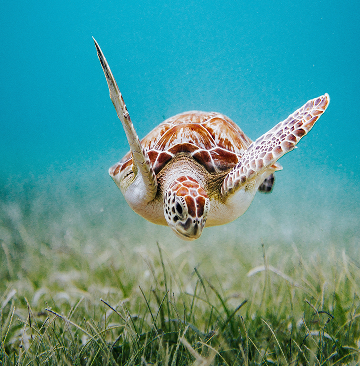
Turtles
Image Credit: Wexor Tmg/Unsplash.com
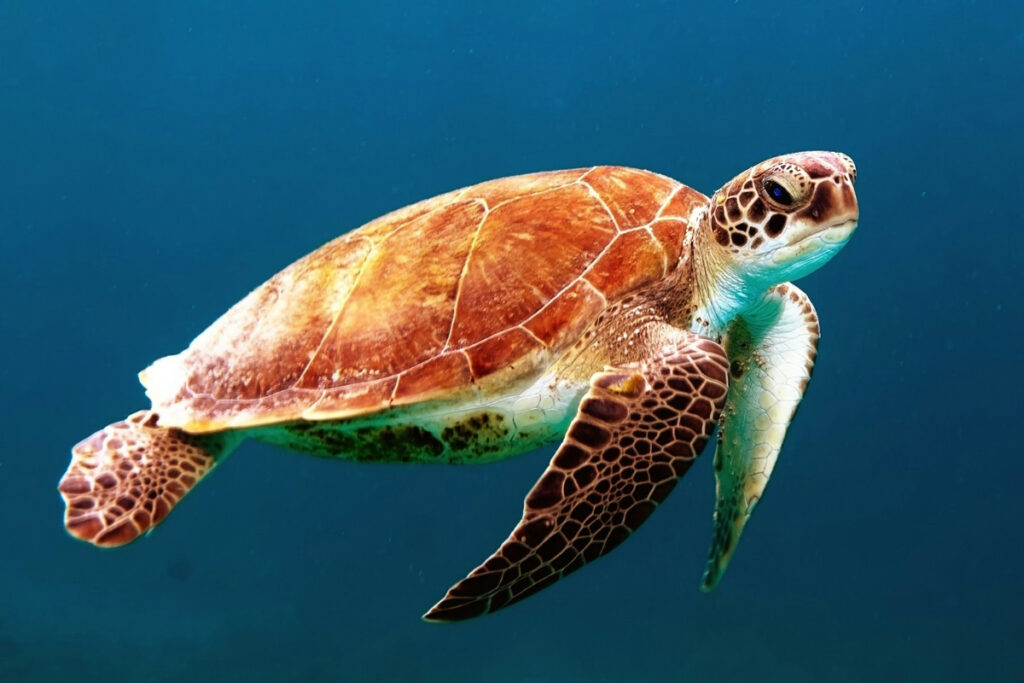
Almost 80% of all turtle species lived through the K-Pg extinction, making them one of the most successful survivors. These turtles were either aquatic dwellers, or burrowed into the soft land that surrounded small bodies of water, like lakes, to stay warm during the global winter. Cold-blooded animals that they are, turtles used these hideouts to regulate their internal body temperatures, and avoid acid rain and firestorms above ground. Their low metabolic rate allowed them to stay put and conserve what energy they did have without needing to consume much more, which was a literal lifesaver when most of the world’s food had vanished. When it was time to eat, they were able to consume the smaller organisms that also survived the asteroid impact thanks to their shell-cracking beaks, including gastropods like screw shells and slit snails.
Sharks
Image Credit: Anion/Adobe Stock
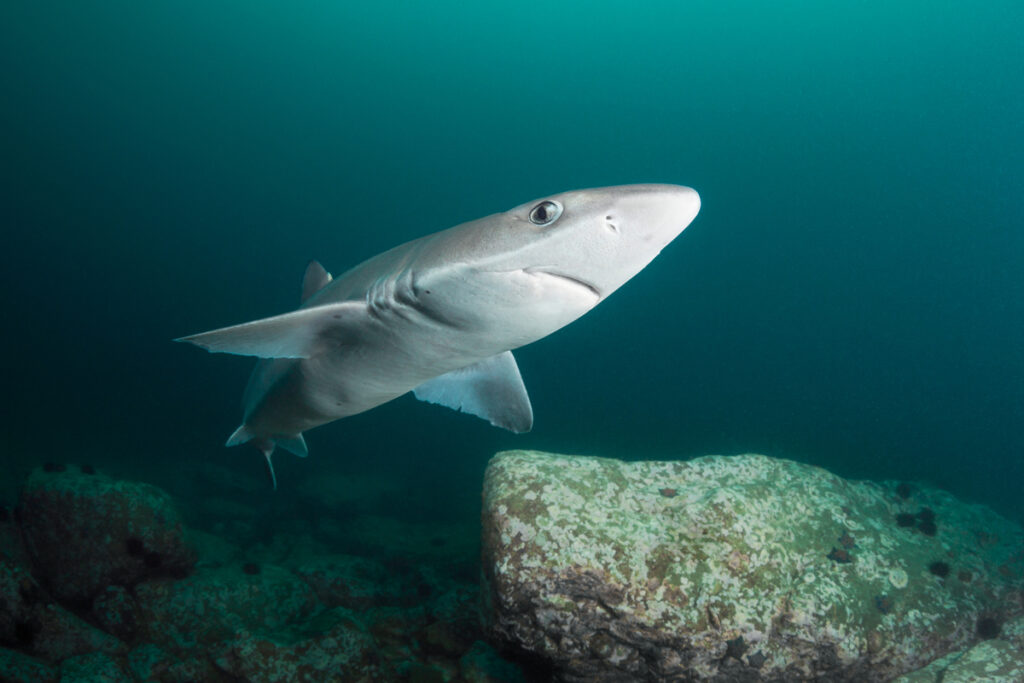
It wasn’t just the biospheres on land that were disrupted by the asteroid’s impact; the Earth’s oceans were also majorly disrupted. Tsunamis surged immediately after the crash, and the lack of sunlight that followed resulted in very slow photosynthesis, leading to a cataclysmic decline in algae and plankton which disrupted the food chain. That said, living in the deepest depths of the ocean came with a number of benefits, including surviving the apocalypse. Or five, for that matter. Sharks have been roaming the seas for the last 450 million years, and many species have survived four other extinctions before K-Pg. Smaller shark varieties, like houndskarks and dogfish sharks, fared much better than their larger counterparts, like Ginsu and crow sharks, thanks to their diet of smaller fish and marine life. Many dogfish species were already adapted to living in deep waters and eating foods that don’t require sunlight to produce, protecting them from the problems facing surface-level inhabitants.
Tree Shrews
Image Credit: sittitap/Adobe Stock
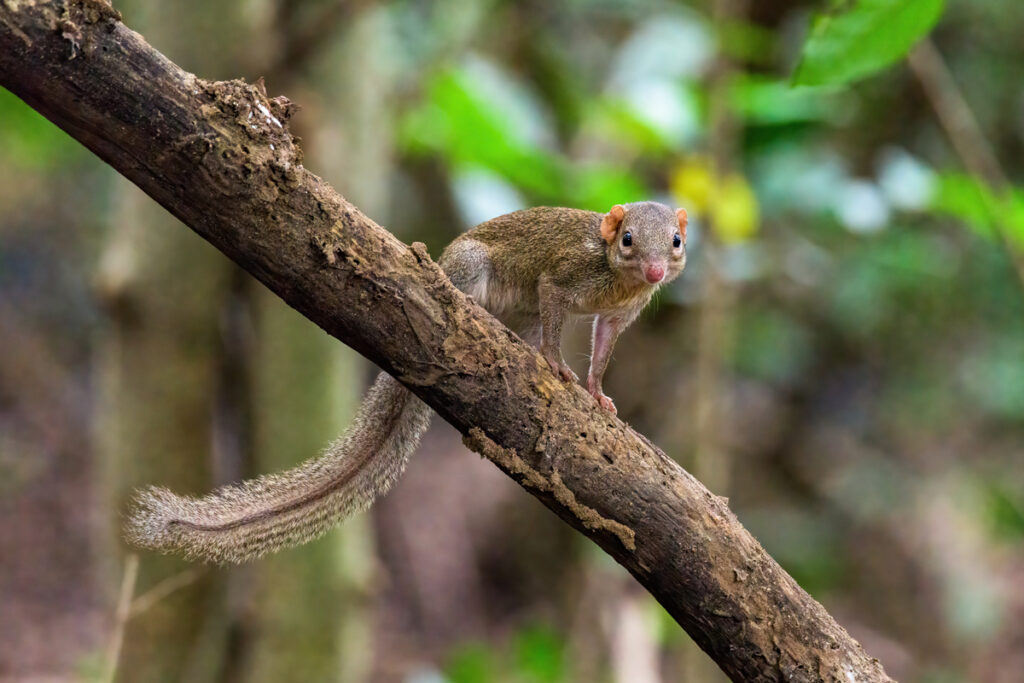
The tree shrews that we know today are not directly from the age of the dinosaurs, but their direct relatives are. Their small size, low caloric needs, and flexible dietary preferences, Purgatorius, a relative of the modern-day tree shrew, were perfectly poised to survive where others fell. These mammals ate insects and dead matter, which was plentiful when nearly every animal in the world was dying and left to decompose. Expert burrowers, they could live in soft dirt or sharp rock, depending on what was available, allowing them to stay hidden, regulate their temperatures, and reproduce safely.
Birds
Image Credit: Christoph Nolte/Unsplash.com
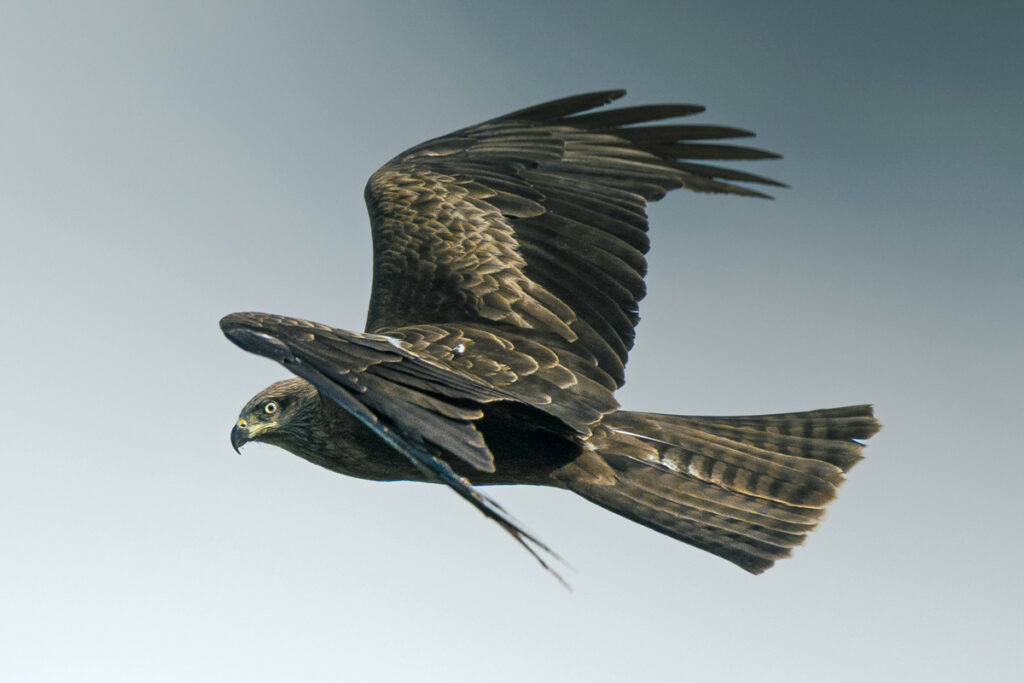
You may not realize it, but not all dinosaurs went extinct during the last mass extinction 66 million years ago. In fact, if you looked out your window, you might see one right now. Avian dinosaurs are the only types of dinosaurs to survive the K-Pg extinction. Today, we know them as birds. Some researchers believe that beaks may have played a big part in their survival. Early avian dinosaurs were largely fitted with teeth to help them crunch insects and other small animals. As time went on and their former food sources disappeared, so did those teeth, leaving only strong, pointed beaks. These were perfectly constructed to crack open hard shells on things like nuts and large seeds, which were now in abundance. Pair this unique trait with their seed-crushing gizzard, and you’ve got a living machine capable of digesting what was left after the asteroid wiped out just about everything else.
Advertisement
Jellyfish Have Existed Longer Than Dinosaurs
Fish 29/06/26Jun. 29, 2026
Updated 29/06/26Jun. 29, 2026
Credit: Nattipat Vesvarute/Unsplash.com
Michael Nordine
Author
Michael Nordine is a Senior Staff Writer at Britannica, where he writes the newsletter Movie Brief. He grew up with eight cats and would like to see a Komodo dragon in the wild one day.
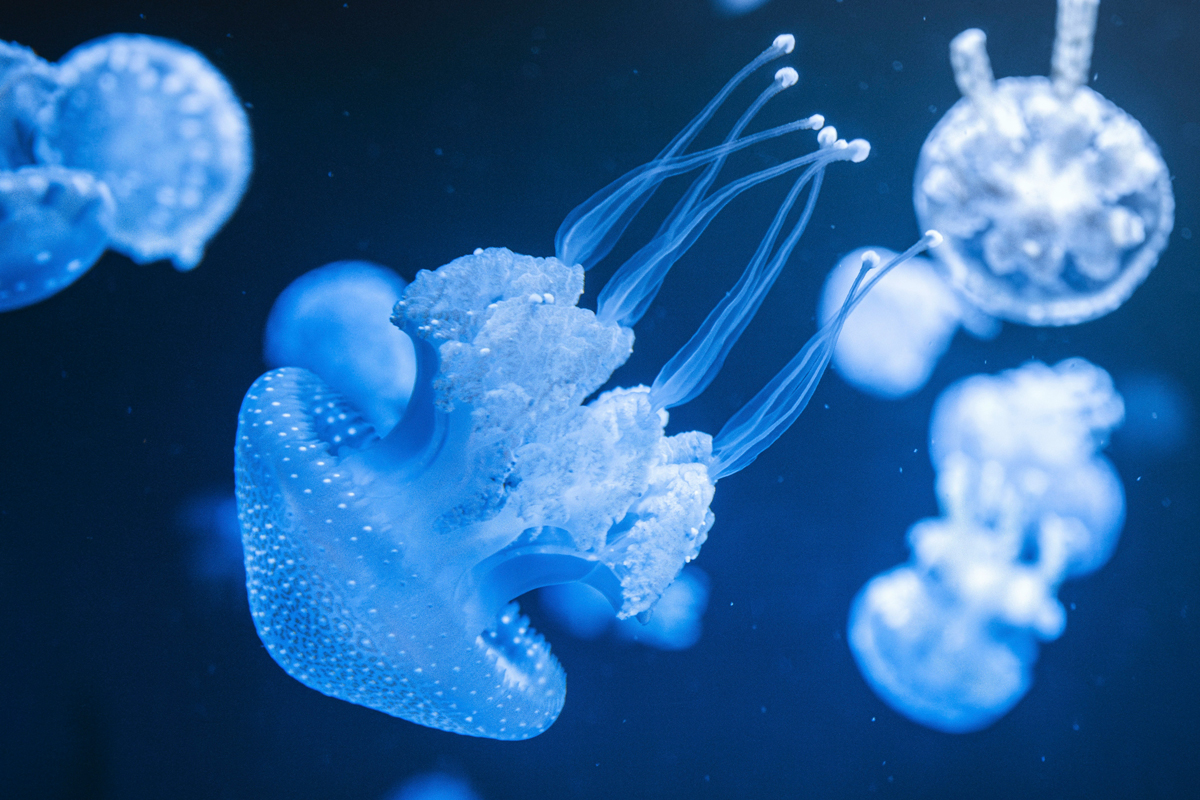
Jellyfish have been stinging people for thousands of years, but their time spent unsettling humans represents just a fraction of a fraction of how long they’ve actually been around. The aquatic invertebrates first appeared more than 500 million years ago, making them older than dinosaurs — about 250 million years older, in fact. They’ve also outlasted their prehistoric counterparts by about 65 million years, and one assumes they’ve spent much of that time gloating about being more adaptable than the fiercest creatures to ever roam the earth.
One species, the 4.5-millimeter Turritopsis dohrnii, can even reverse its life cycle and is therefore known as the immortal jellyfish because it could potentially never die of old age under perfect conditions. Because they’re invertebrates — and, despite their name, not actually fish — jellyfish fossils are incredibly rare. They do exist, though, and the oldest one on record was found in an area of Utah that used to be underwater and dates back some 500 million years.
Kellie is a writer and editorial strategist covering topics in travel, trivia, nature, and more. When she's not writing you can find her drinking Diet Coke.
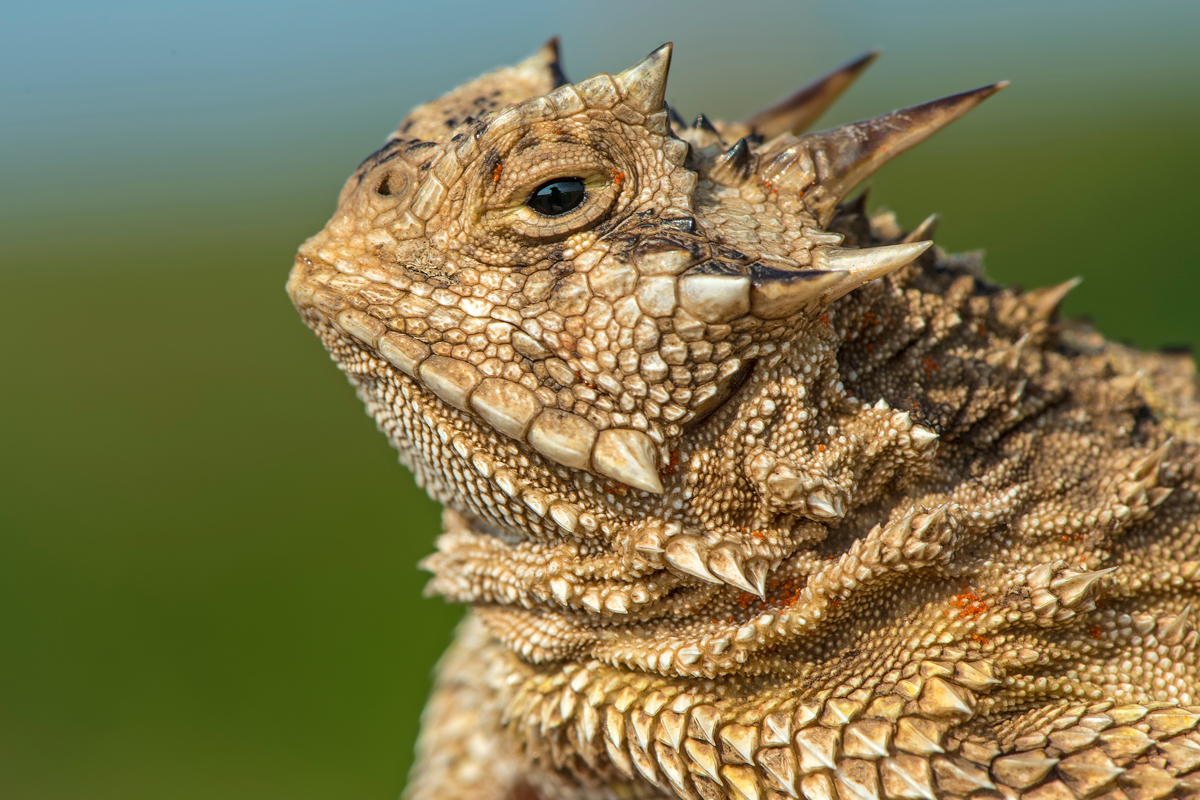
Ever wished you could shoot lasers from your eyes? Horned lizards settled for the next best thing: blood. Also known as horny toads, these quirky little reptiles have one of the animal kingdom’s strangest defense mechanisms. When threatened, they can squirt blood from their eye sockets — a foul-tasting concoction infused with chemicals from their ant-heavy diet that’s enough to make predators think twice.
The lizards pull off this bizarre trick by restricting blood from leaving their heads, which raises blood pressure until tiny blood vessels around their eyes burst. The resulting stream of blood can travel up to five feet and is especially effective at deterring canine predators like coyotes, foxes, and even curious dogs.
Kellie is a writer and editorial strategist covering topics in travel, trivia, nature, and more. When she's not writing you can find her drinking Diet Coke.
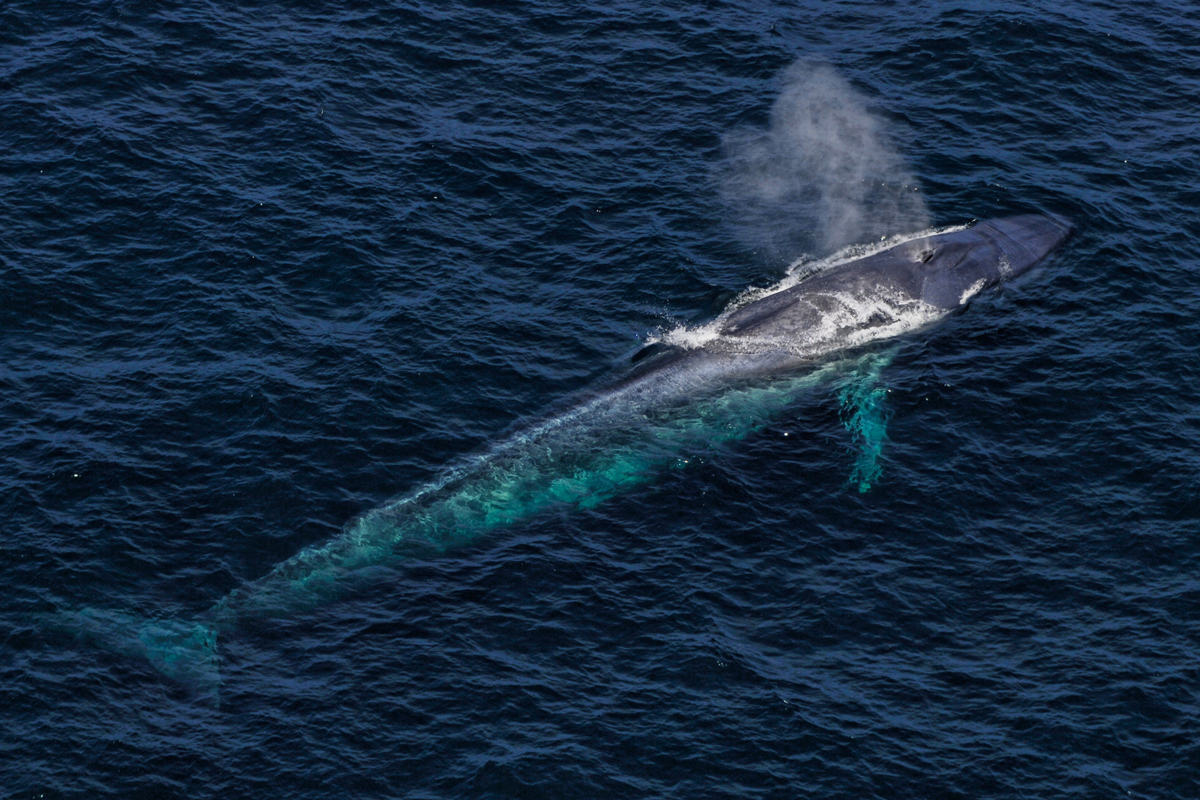
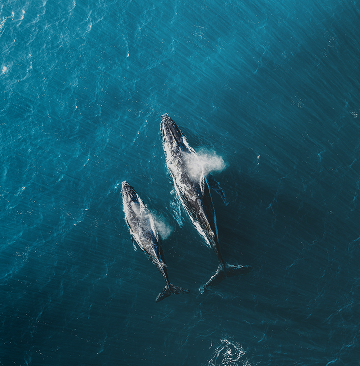
The blue whale claims the title for having the largest babies in the world, with most newborn calves weighing in around 5,000 to 6,000 pounds at birth. But they don’t stop there. After a year of gestation, these calves are born hungry, and consume up to 50 gallons of their mother’s milk every day.
This nutrient-rich diet helps calves put on weight fast, and baby blue whales pack on 8-10 pounds every hour. Doing the math, that’s roughly 200+ pounds a day. By the time they’re fully grown, blue whales will weigh around 400,000 pounds. Their appetite doesn’t slow down with age, however, and adult blue whales will consume around 4 tons of krill every day. They need all that food to fuel them for their long migration south from arctic waters every year.
Advertisement
Alligators Go Through 2,000 Teeth in Their Lifetime
Kellie is a writer and editorial strategist covering topics in travel, trivia, nature, and more. When she's not writing you can find her drinking Diet Coke.
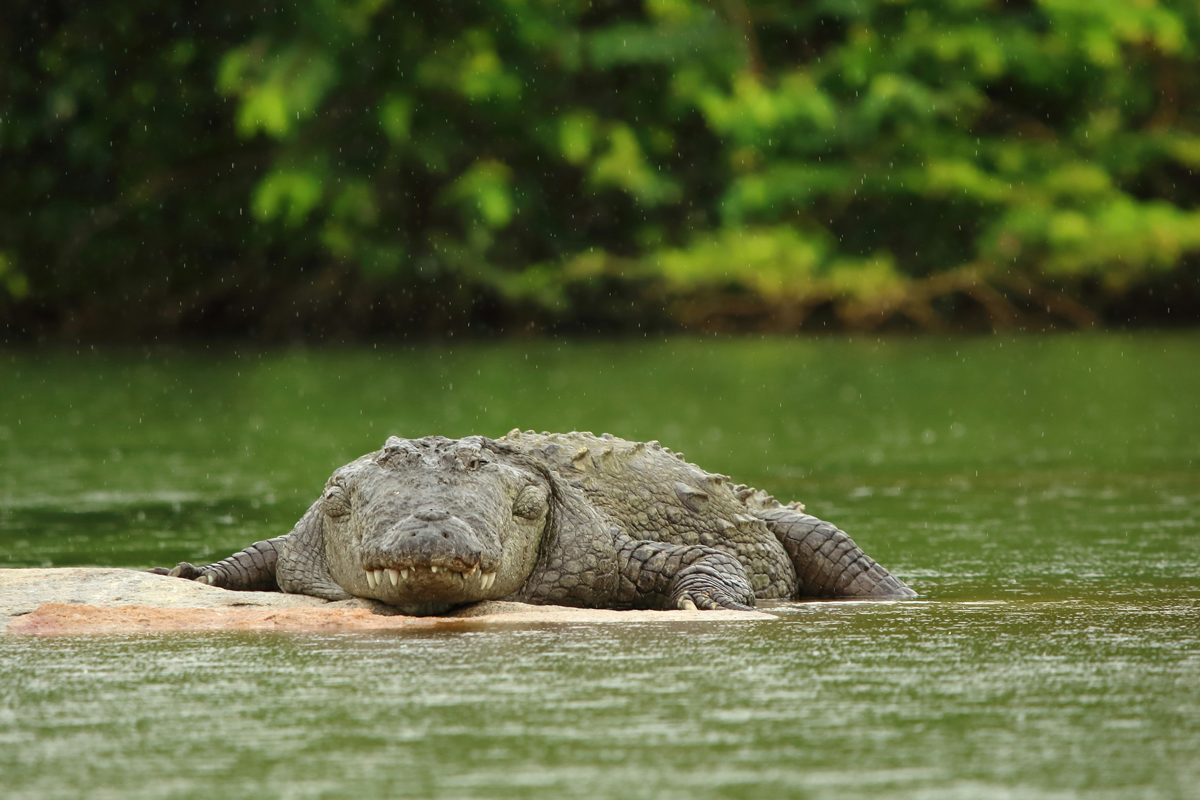
The scaly alligator is recognizable by its wide jaw and toothy grin, which, at any given time, is home to roughly 80 teeth. But just like humans, alligators shed those teeth and grow new ones — only they do it much more frequently than the average human. In fact, the average alligator can go through more than 2,000 teeth in its lifetime.
Alligators primarily use those teeth to chomp on prey, like fish, turtles, birds, and even small mammals. And, despite their many chompers, alligators don’t use their teeth to chew. Instead, they rip up their food and swallow in large chunks. Not the best table manners, but it gets the job done.
Advertisement
9 Animals That Navigate Without Sight
Across Species 25/06/26Jun. 25, 2026
Updated 25/06/26Jun. 25, 2026
Image Credit: William Warby/Unsplash.com
Krissy Howard
Author
Krissy Howard is a writer with a background in comedy, and a love for researching and writing about animal behavior. You can read some of her work at Cuteness, Byrdie, and The Hard Times. When she's not writing, she's growing food in the community garden, feeding stray cats, and learning Greek.
Many animals, including humans, rely on the five senses to get around. Touch, taste, smell, sound, and sight can all be used to navigate the world around us, but some animals either cannot or do not need to use their eyes to see exactly where they’re going. After all, how would one be expected to navigate the dark waters of the Mariana Trench, or the lightless corners of a packed honeycomb? Internal magnet receptors, extra-sensitive hairs, and huge nostrils are just some of the things these animals rely on to get around without their eyes.
Texas Blind Salamander
Image Credit: Brandy McKnight/Adobe Stock
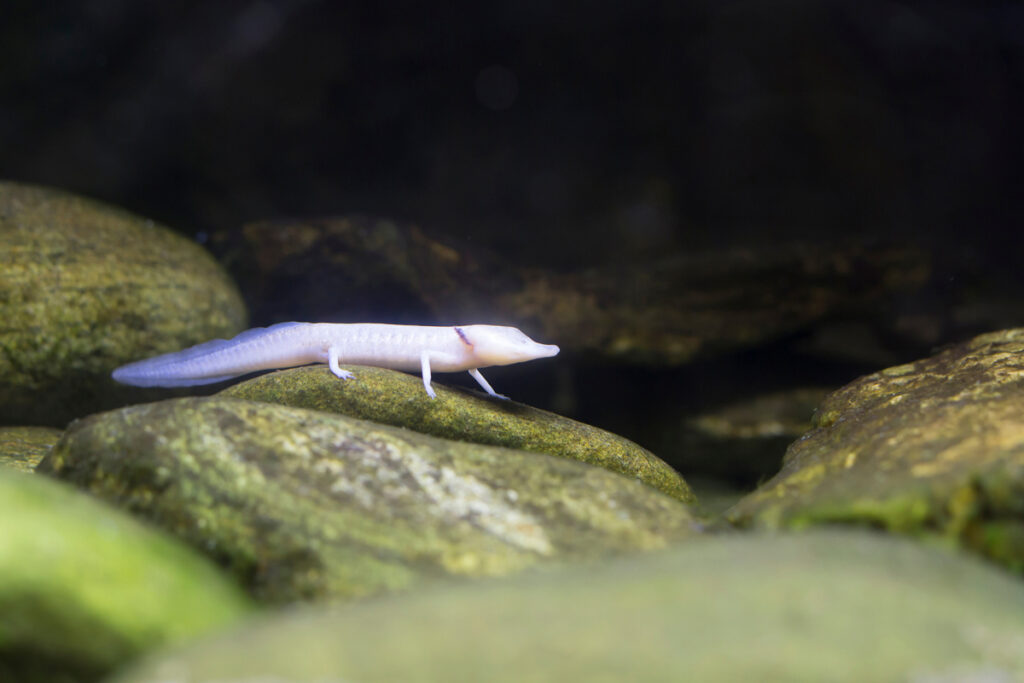
Found only in a small area in San Marcos, Texas, this aptly-named amphibian navigates the waters of the Edwards Aquifer without seeing a thing. While they do technically have eyes, they don’t use them at all, and couldn’t even if they wanted to. Resting under layers of skin and a vestigial optic nerve, two tiny black dots are barely visible to us, but don’t help these creatures get around or hunt, which they actually do quite well despite their lack of sight. Instead, they stay entirely submerged in water, shifting their heads from side to side to sense water pressure waves created by smaller animals that they prey upon.
Star-Nosed Mole
Image Credit: Stan/Adobe Stock
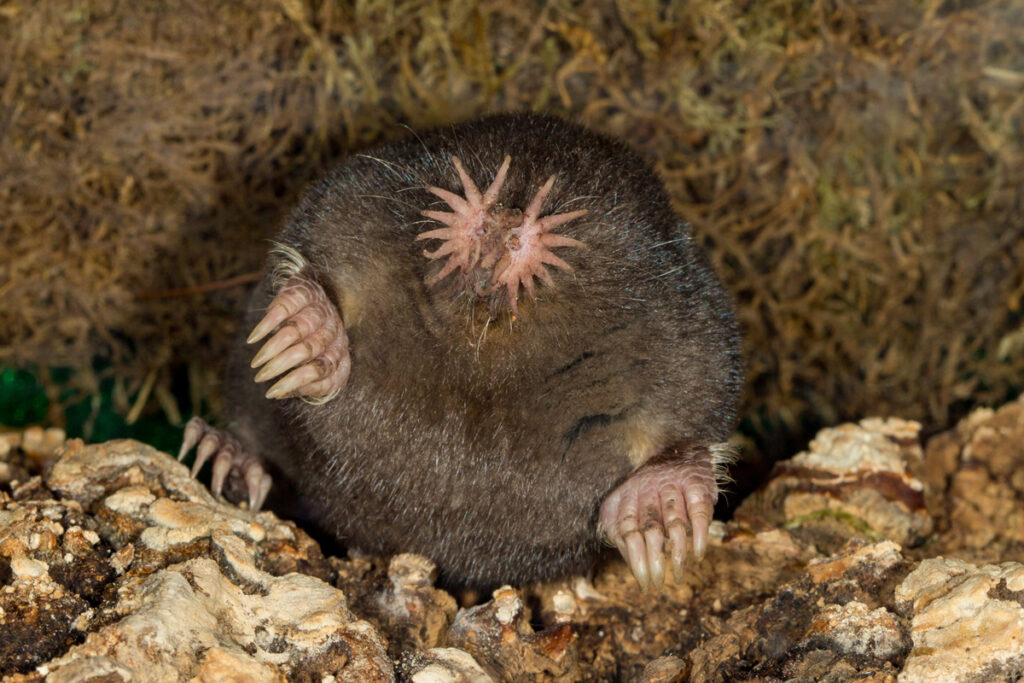
Practically blind but not totally, star-nosed moles rely on an unusual organ to help them get around: their noses. But these noses work differently than other animals. Unlike, say, dogs, who have around 300 million olfactory receptors to help them sniff out the world around them, the star-nosed mole’s nose is equipped with more nerve receptors than scent receptors. The 22 appendages on the end of their nose hold around 100,000 microscopic nerve fibers to help them feel the world around them, rather than see or smell.
Giant Blind Mole Rat
Image Credit: Nature Picture Library/Alamy
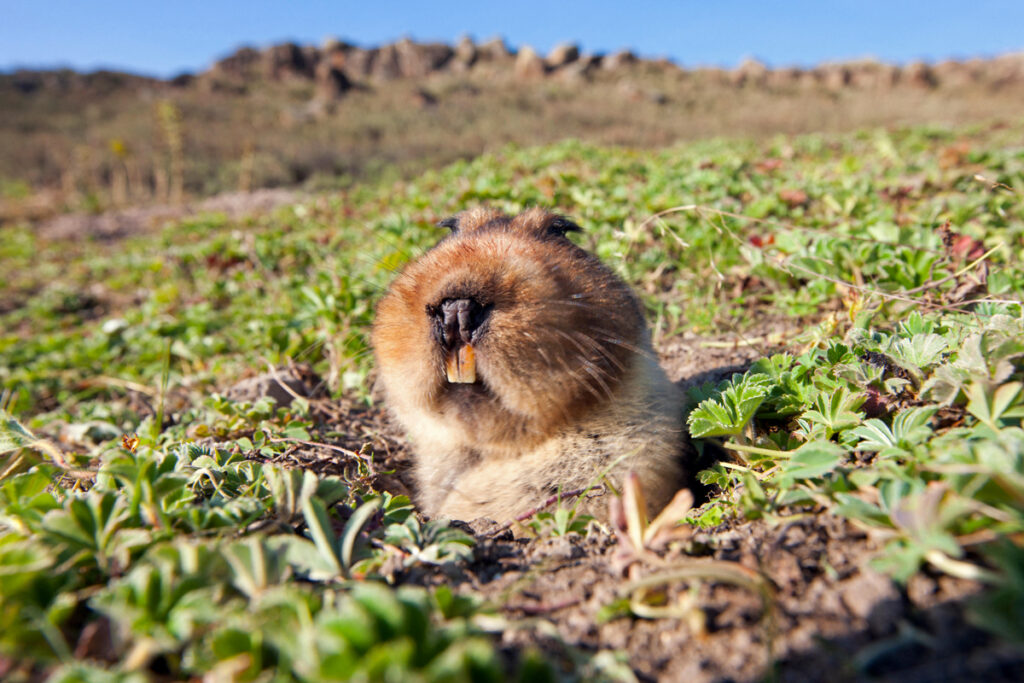
Unlike the star-nosed mole, which does have small but largely non-functioning eyes, the giant blind mole rat has no external eyes to speak of. Not only that, but their lack of external ears dampens another sense that could help them get around. Instead, these subterranean dwellers experience the world through vibrations and air currents, which are more easily picked up in underground tunnels than they would be in the above-ground world. Their paws and whiskers allow them to sense even the slightest movements, and their teeth are used to eat, dig, and feel everything around them. What makes these moles extra-special are their jaw bones, which use bone conduction to send vibrational signals to the brain, allowing the rodent to “hear” without the use of ears.
Kaua’i Cave Wolf Spider
Image Credit: MixPix/Alamy
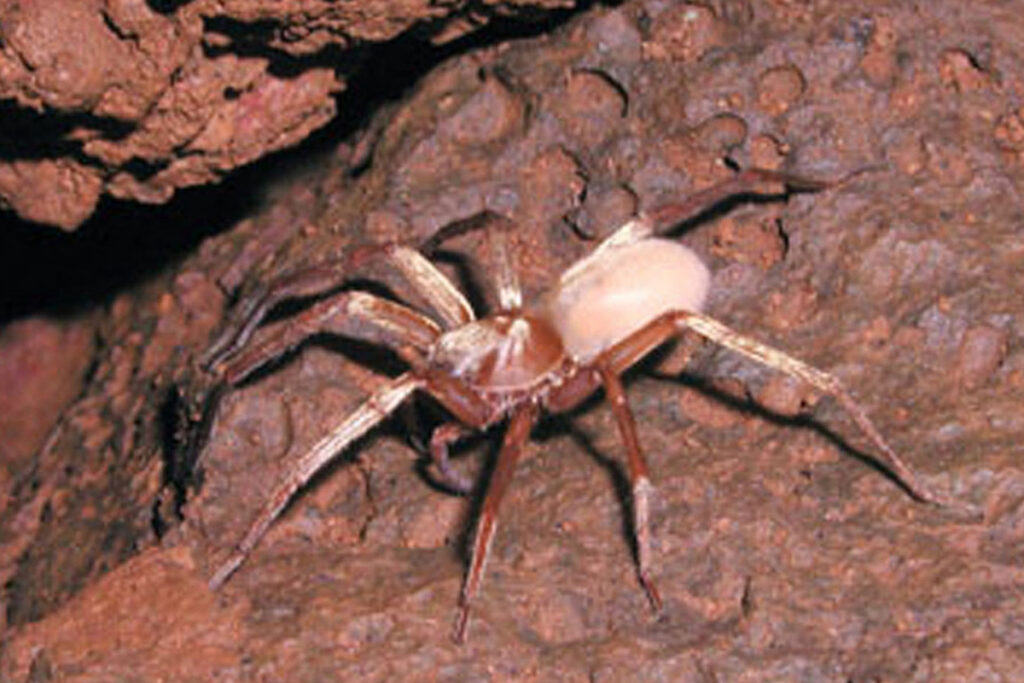
Found only in the Koloa Basin caves of Kauai, Hawaii, these sightless spiders are the only types of wolf spiders with no developed eyes at all. In order to seek safety, and meals, these spiders use their sense of touch and chemoreceptors to “see” what they seek. We all have chemoreceptors in our bodies, like the taste buds in our mouths and olfactory receptors in our noses. Kaua’i cave wolf spiders’ chemoreceptors take on the form of hairs on their legs and bodies, which touch the things around them, then send those signals to the brain where they’re converted into useful information, like “food over here” or “danger headed this way.”
Sinopoda Scurion
Image Credit: Xinhua/Alamy
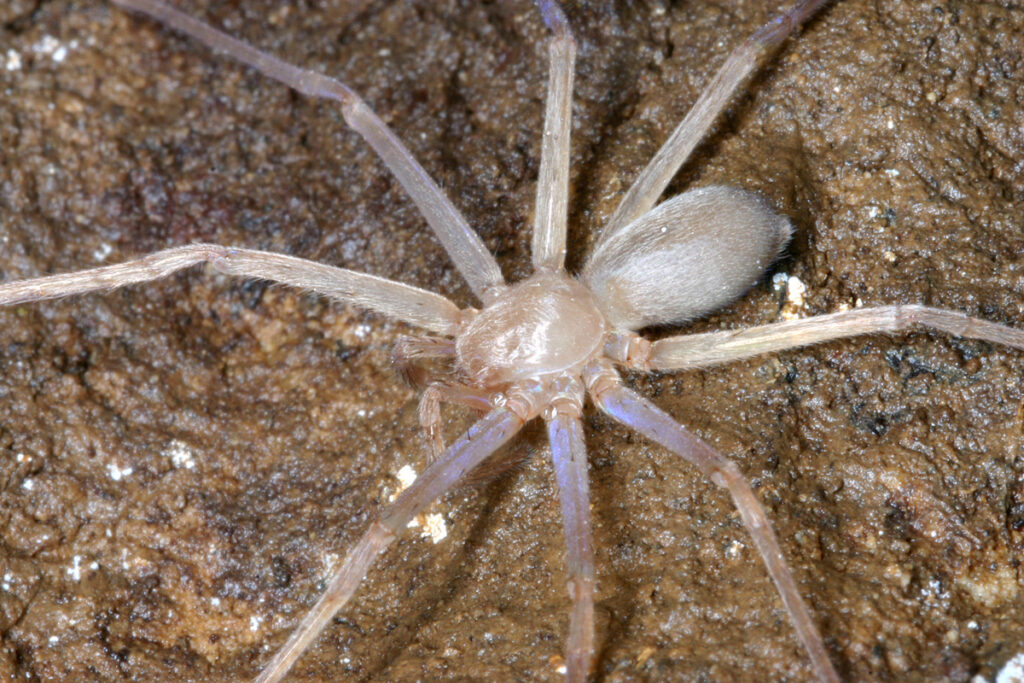
Another cave-dwelling spider, the Sinopoda scurion is of the Huntsman variety and can be found in the caves of Lao. Huntsman spiders are usually equipped with eight eyes, so this eyeless anomaly was a huge discovery back in 2012. But their dark, cavernous dwellings explain why this variety of spiders doesn’t have eyes: they simply don’t need them. The caves that they call home are devoid of sunlight 24/7, so rather than use ocular senses to get around, the Sinopoda scurion rely on vibrations, air flow, and thin chemoreceptive hairs on their bodies to find their way.
Brahminy Blind Snake
Image Credit: Ethan Ramirez/Adobe Stock
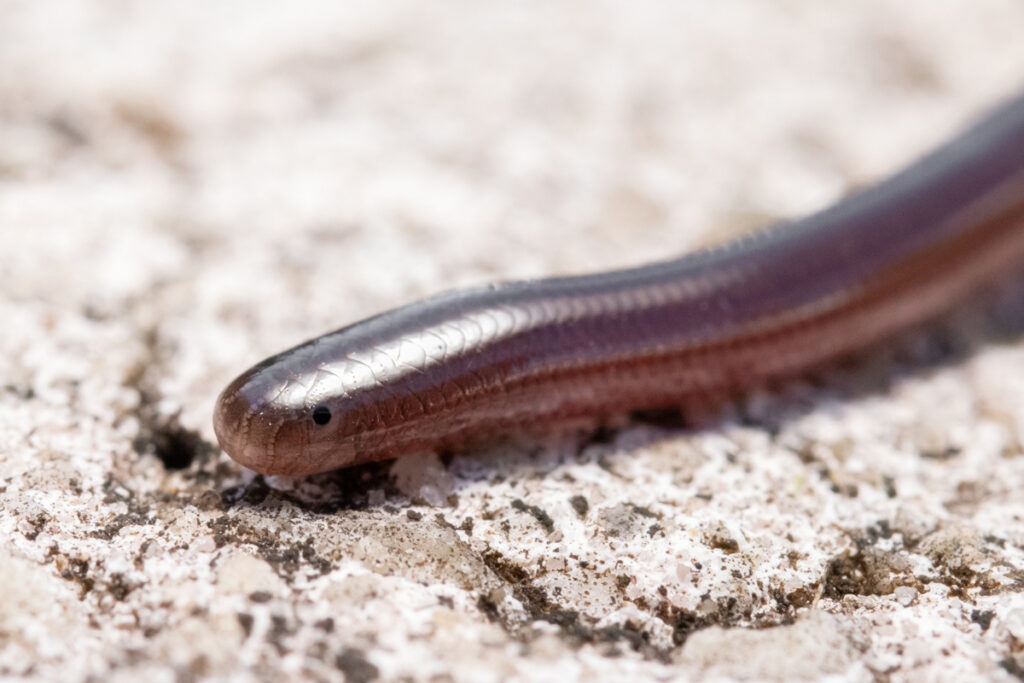
Native to Southeast Asia and recently discovered in Florida, these non-venomous, sightless serpents are often mistaken for earthworms, and for good reason. Their small size of, at most, six-and-a-half inches, their grey/brown color, and their total lack of eyes make them easy to mistake for a worm, but unlike worms, they do flick their tongues to get a sense of the world around them. Like all snakes, Brahminy blind snakes use vibration, touch, and smell via their forked tongues to find prey and safe spots to burrow. While they don’t have eyes in the typical sense, they do use two small black eye-like dots, or vestigial organs, to sense light, which helps them stay underground where they are safer.
Faceless Fish
Image Credit: Ocean Exploration Trust, DeepSea
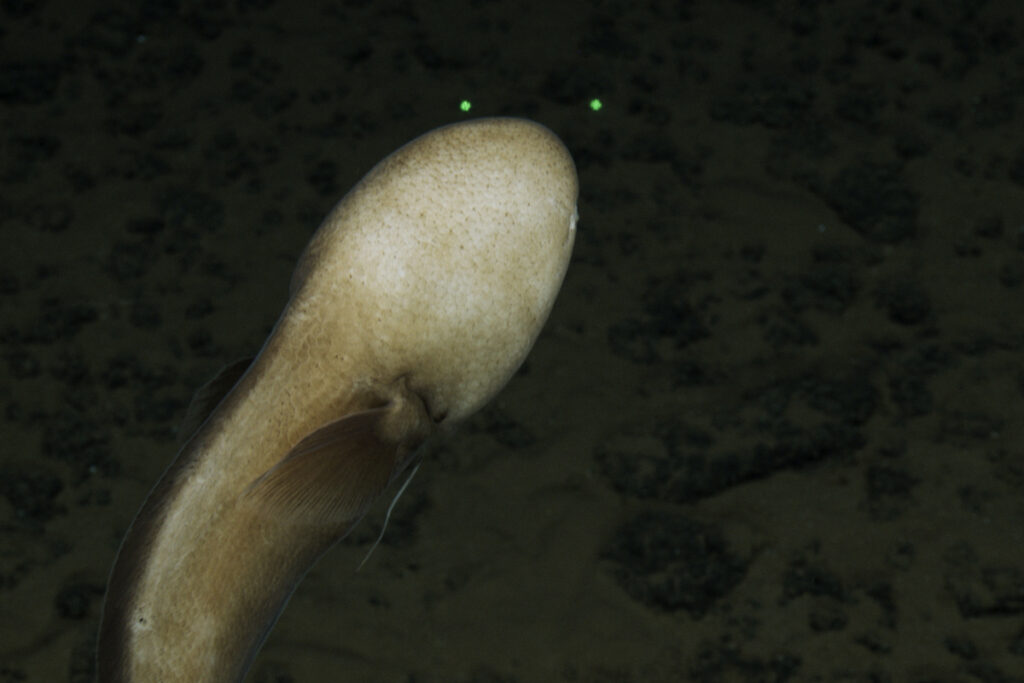
If there’s one place in the world where you’ll find animals who’ve had to adapt to low-light surroundings, it’s the deepest, darkest waters of the ocean. Sometimes called a Faceless cusk, or a Cusk eel, the Faceless fish has been found across the seas from the Arabian Sea to the Mariana Trench and waters surrounding Australia and Indonesia. Living up to five kilometers below sea level, Faceless fish are forced to adapt to freezing temperatures, intense water pressure, limited food sources, and lack of sunlight. To get by, these fish have developed large nostrils called nares, which help them pick up even the slightest chemical odors emitted by other sea creatures. Not only that, this cusk, like many fish, is also equipped with what’s called a “Lateral Line.” This is a sophisticated system made up of sensory organs, including neuromasts, which contain hair cells that help fish detect movement and vibrations in the water. This “sixth sense” allows them to locate potential prey nearby.
Bats
Image Credit: RAHUL DESHMUKH/Unsplash.com
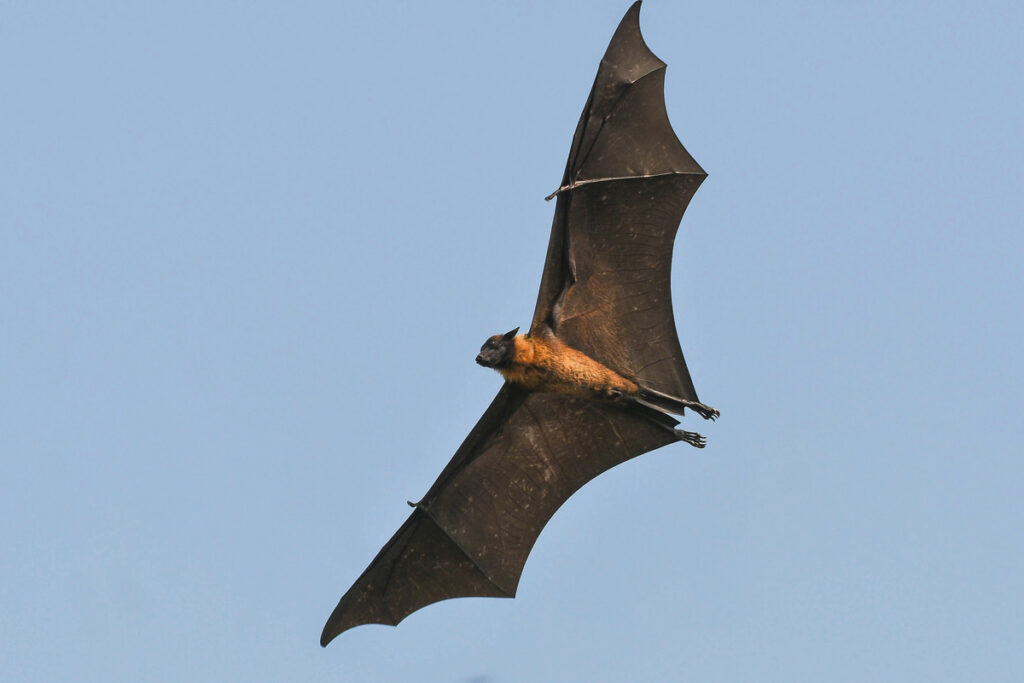
Unlike some of the other animals on this list, bats do have eyes, and they definitely use them. They are still able to navigate without them, however, thanks to their built-in biological sonar, which helps them roam through dark caves and through the darkness of night. Called “echolocation,” bats use high-pitched squeaks from their mouths and noses to bounce ultrasound waves off of their surroundings. This creates a sort of invisible map, helping them fly without bumping into things, and spot food like mosquitos and mice.
Bees
Image Credit: William Warby/Unsplash.com
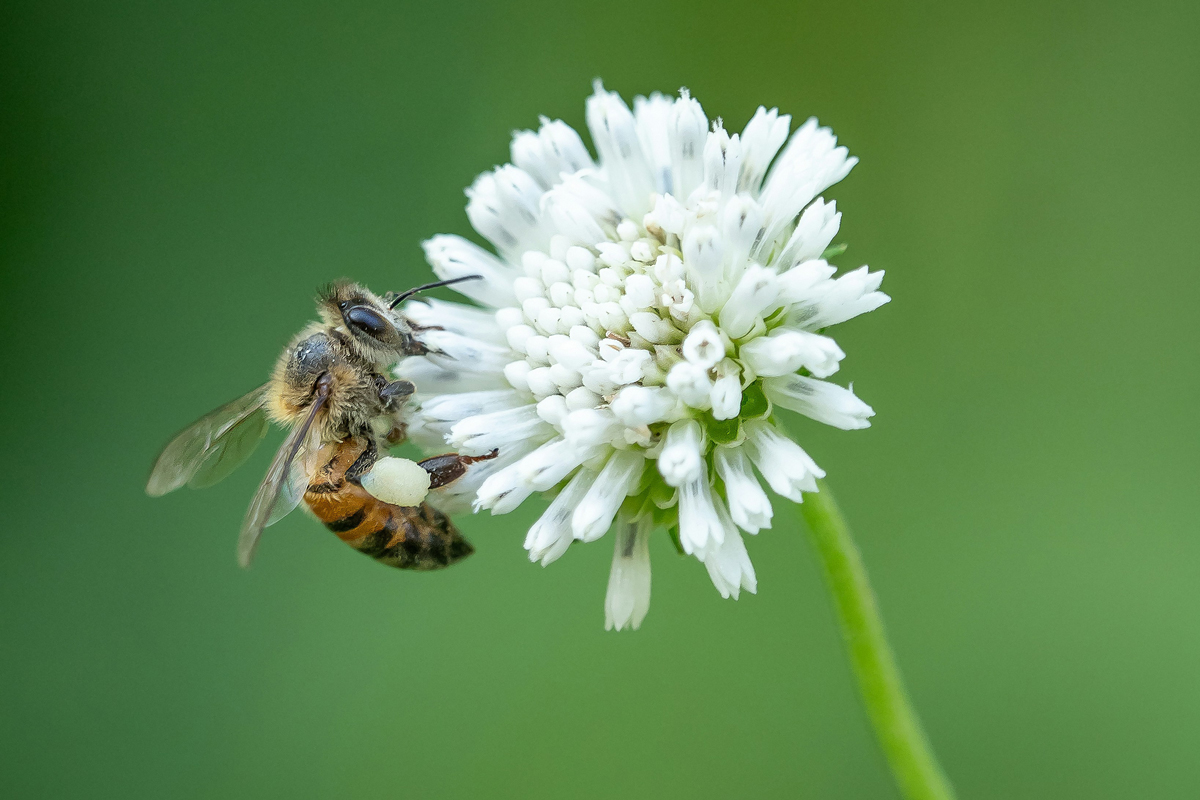
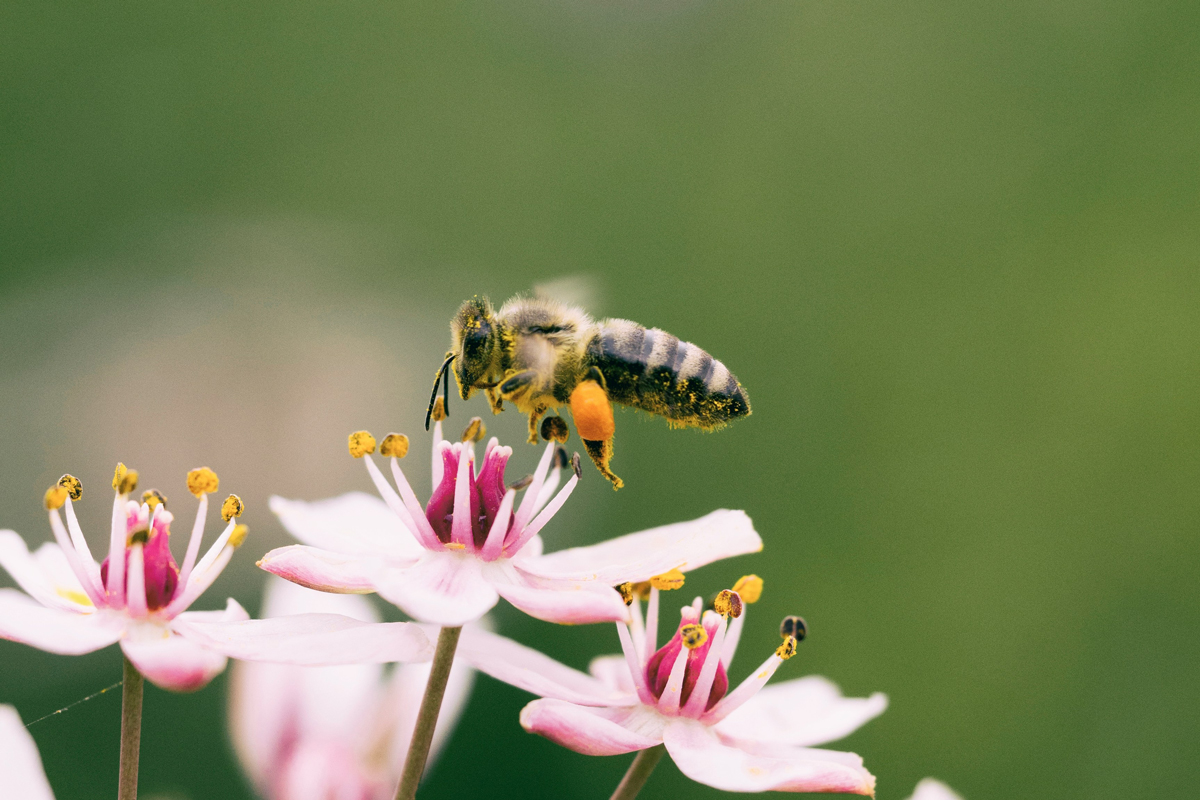
Another animal with perfectly functional eyes, bees rely on much more than just sight to complete all of that demanding work in front of them. Bees use magnet-based sensors containing tiny bits of iron to follow the magnetic fields of the Earth, and they’re far from the only ones that do it. Birds, butterflies, fish, sea turtles, all use magnetoreception to migrate. Green Sea turtles and salmon use this to reach the perfect place to lay their eggs, homing pigeons use it to build mental maps so they can return to their roost at the end of the day, and butterflies rely on the Earth’s magnets to fly south, where they can overwinter safely. Even dogs use magnetoreception to find the perfect spot to relieve themselves. If you’ve ever seen your dog circling to find the perfect spot to call a bathroom. Studies have shown that dogs circle to align themselves with the Earth’s magnetic field because, for some reason, they prefer positioning along the north/south axis to relieve themselves. Honeybees also prefer this north/south orientation to build their combs. Thanks to magnetic receptors in their abdomens, bees not only use the Earth’s poles to find their way back to the comb from a field of flowers, but they also use it to orient and work together to build honeycombs in pitch darkness. For an animal that does have, and needs, its eyes to navigate, this extrasensory method of perception helps them get around without only relying on their vision.
Advertisement
The Difference Between Flying and Gliding in Animals
Across Species 24/06/26Jun. 24, 2026
Updated 26/06/26Jun. 26, 2026
Image Credit: Aaron Burden/Unsplash.com
Nicole Villeneuve
Author
Nicole is a writer, editor, and researcher with over 15 years experience covering arts and culture, lifestyle, and media. Her work has also appeared in PureWow, Brit + Co, Exclaim, AUX TV, and CBC. She lives in Ontario, Canada.
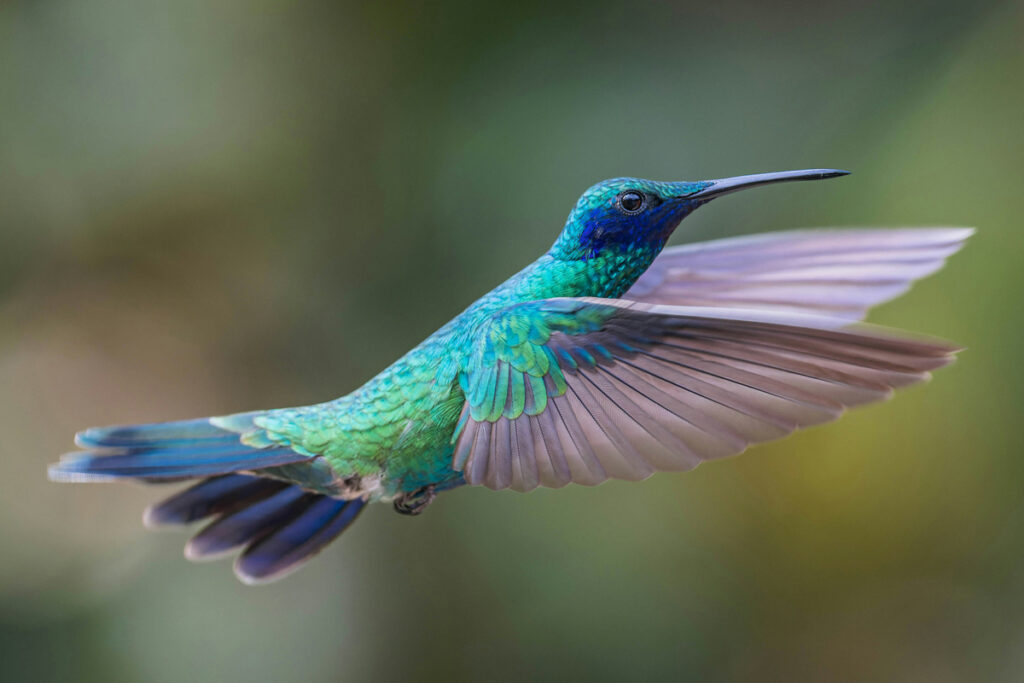
On any given day we can look up and all around to see birds and insects moving through the air. Bees buzz from flower to flower, hawks soar casting shadows from above, and hummingbirds flit around impossibly fast. But not every airborne animal technically flies — sometimes, they glide.
The distinction isn’t always obvious at first glance. For instance, a flying squirrel and a bird can both travel similar distances between trees, and a flying fish and a seabird can both take to the air from the water. But only one of these in each pair of animals is truly flying. So what is the difference between flying and gliding in animals?
Taking True Flight
Image Credit: Zdeněk Macháček/Unsplash.com
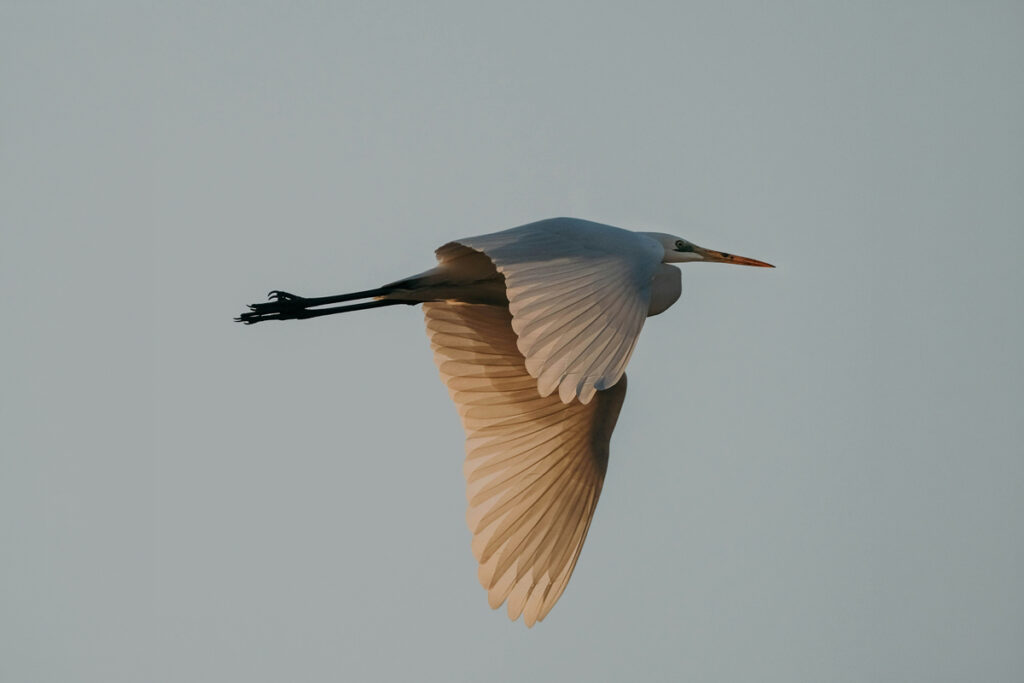
True flight is defined by one key feature: when an animal produces lift and thrust (or upward force and forward force) through continuous effort. Birds that fly are the most familiar example. Their flight is powered by powerful chest muscles — the pectoralis for the downstroke and the supracoracoideus for the upstroke. These muscles alone can make up to about 20 percent of a bird’s body weight. With every wingbeat, the muscles generate the lift and thrust needed to keep the animal airborne; even when a bird appears to be cruising effortlessly, that seemingly peaceful moment took a major amount of energy.
Bats are the only mammals capable of true flight, and they accomplish it much the same way as birds. Strong chest muscles largely power their movements, but they have a different wing structure than birds. Where birds have lightweight, fused bones and stiff, overlapping feathers that form streamlined wings, bats have thin membranes that stretch across elongated finger bones, allowing for finer control in flight.
Insects are also capable of true flight, but instead of a single pair of wings powered by large chest muscles, they use one or two pairs of wings. These are driven by muscles inside the thorax which then drive a complex marionette-like system at a hinge where the wing meets the body. The system works very well: the teensy midge, which has the fastest wingbeat in the insect world, flaps its wings at an astonishing rate of about 63,000 beats per minute. For many insects, flight happens in controlled bursts of movement rather than steady movements through the air.
In all cases, flight demands a lot of energy and requires a skeletal system capable of handling the stress of flying. The payoff, however, is a lovely coordinated control: True fliers can gain altitude, change direction, and remain airborne for a long time without needing outside forces such as wind or gravity.
Gliding and Gravity
Image Credit: Stan Tekiela Author/Naturalist—Wildlife Photographer/Getty Images
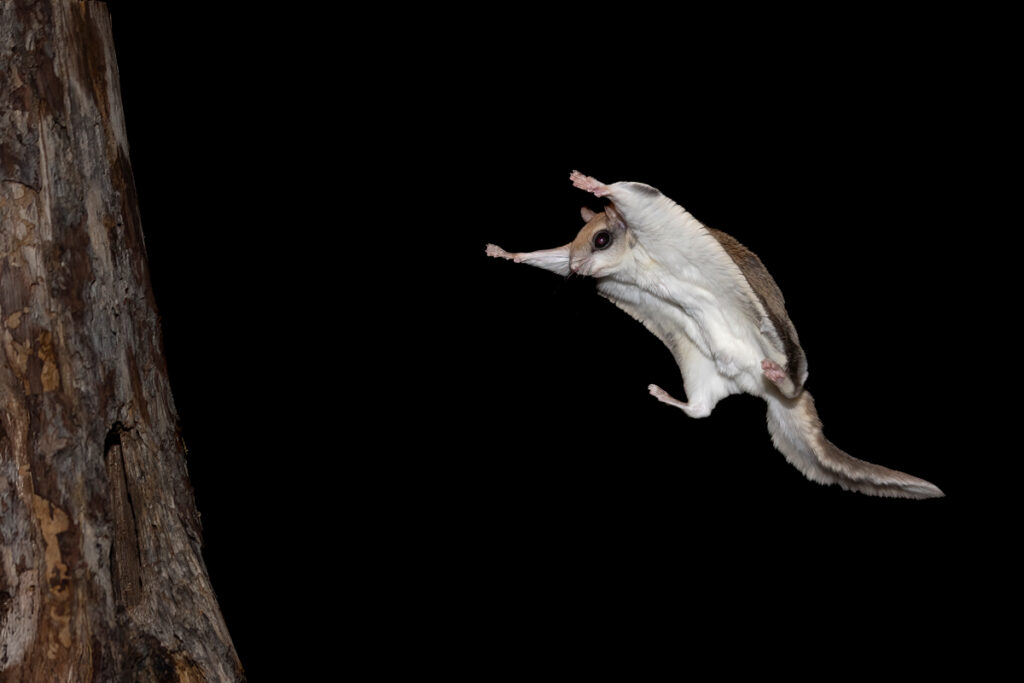
Powered flight is not the only way animals travel through the air. Gliding also allows animals to soar through the air, but it primarily relies on an initial leap from a height. From there on down, the animal is no longer able to gain altitude, so instead, it skillfully manages its descent.
Flying squirrels — one of the few ironically named animals who don’t technically fly at all — are a well-known example. When they leap from a tree, a membrane that’s stretched between their limbs expands. The increased surface area helps them slow their fall and steer toward another tree trunk. Some reptiles, such as Draco lizards (also known as flying dragons) also use membranes to glide between trees in Southeast Asian forests. Even certain frogs and ants have evolved some gliding skills, using enlarged webbing or flattened limbs to create limited airborne travel time.
And what about aerial movements that don’t quite fit neatly into either category? Take flying fish, for example. These long, lean marine creatures generate enough speed underwater to launch themselves up into the air. Once out of water — sometimes reaching as high as four feet — they spread their large pectoral fins and can glide approximately 655 feet across the water. They won’t flap their fins while gliding, but they will use their tail to help propel them forward and extend their airborne journey. It’s different than a glide from up high, but ultimately, is not true flight either.
Fundamentals of Flight
Image Credit: insung yoon/Unsplash.com
Animal flight evolved slowly over time. One leading idea is that it may have begun in tree-dwelling animals that first glided between branches; other ideas suggest flight started from the ground up, evolving from leaping and running. Evolution rarely does, of course, happen in clean lines; many species, whether they can truly fly or just glide, still use hybrid strategies shaped by their needs or environment (birds, of course, both fly and glide). The split between flying and gliding reflects different evolutionary solutions to the same problem: how to move efficiently through the spaces around us.
Advertisement
8 Animals Whose Babies Look Nothing Like Their Parents
Across Species 24/06/26Jun. 24, 2026
Updated 26/06/26Jun. 26, 2026
Image Credit: Ian Dyball/Adobe Stock
Nicole Villeneuve
Author
Nicole is a writer, editor, and researcher with over 15 years experience covering arts and culture, lifestyle, and media. Her work has also appeared in PureWow, Brit + Co, Exclaim, AUX TV, and CBC. She lives in Ontario, Canada.
In much of the animal kingdom, babies tend to resemble scaled-down, more adorable versions of their grownups. Lions have cubs that look like small lions, and deer fawns simply look like smaller deer. But in some species, development happens unexpectedly. Some offspring can start out looking quite different from their parents, and often this distinction serves as a tool for survival during vulnerable early stages. Here are eight animals whose babies begin life looking next to nothing like what they’ll grow up to become.
Ladybug
Image Credit: Arnaud Durrieu/Adobe Stock
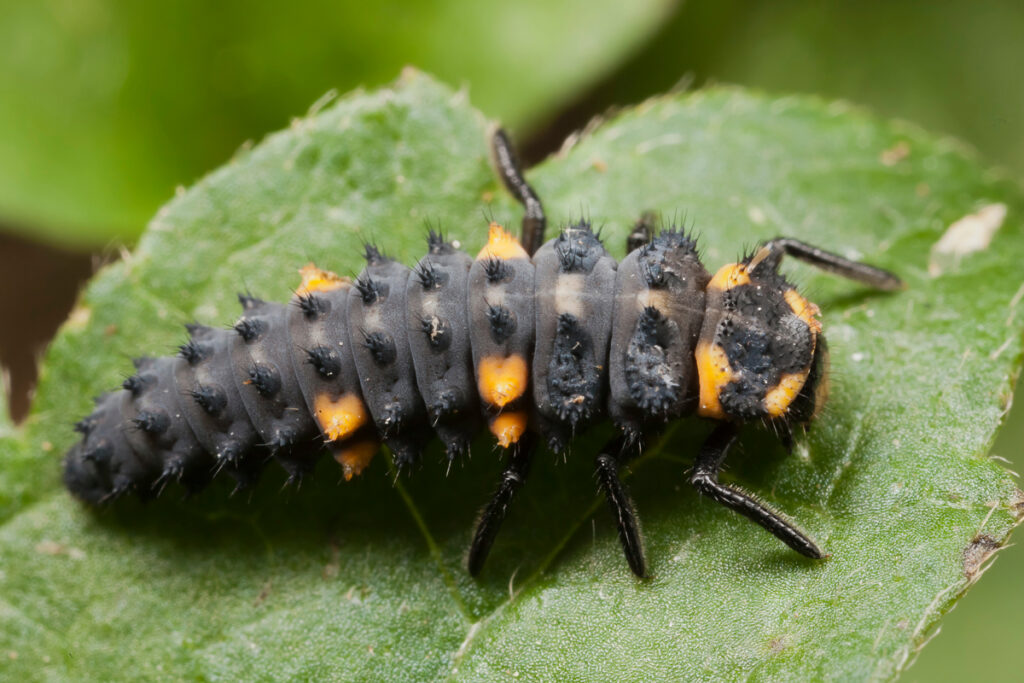
In its earliest days, a ladybug looks like a different insect entirely. The egg hatches into a larva that quickly develops into a long, dark, spiny form, moving across leaves more like a caterpillar than a beetle. Over the two weeks it takes to reach full size, the larvae consume around 400 aphids and shed their skin several times. At this point, they stop feeding and enter pupation, and about a week later, the adult ladybug emerges with the familiar domed shape and wing covers already in place. Though its exoskeleton remains soft and pale, it quickly hardens and darkens, reaching its final form over the next several hours.
Flamingo
Image Credit: Ian Dyball/Adobe Stock
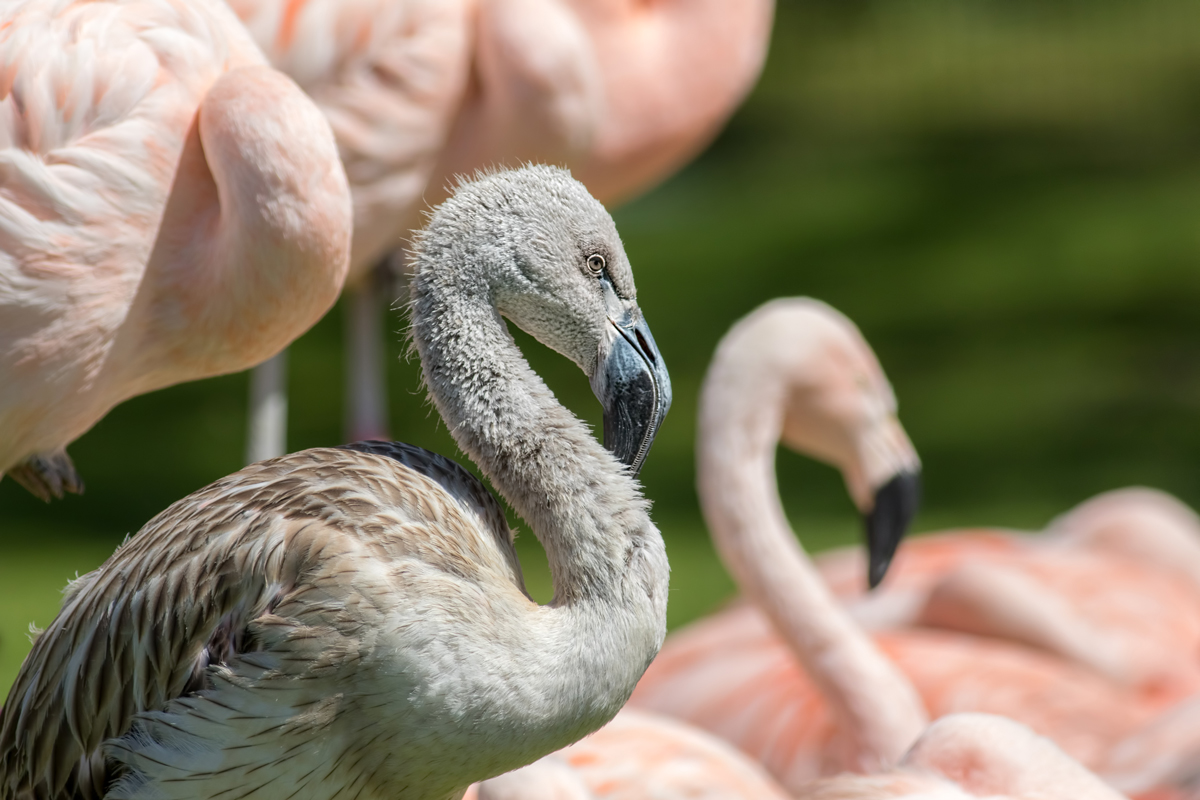
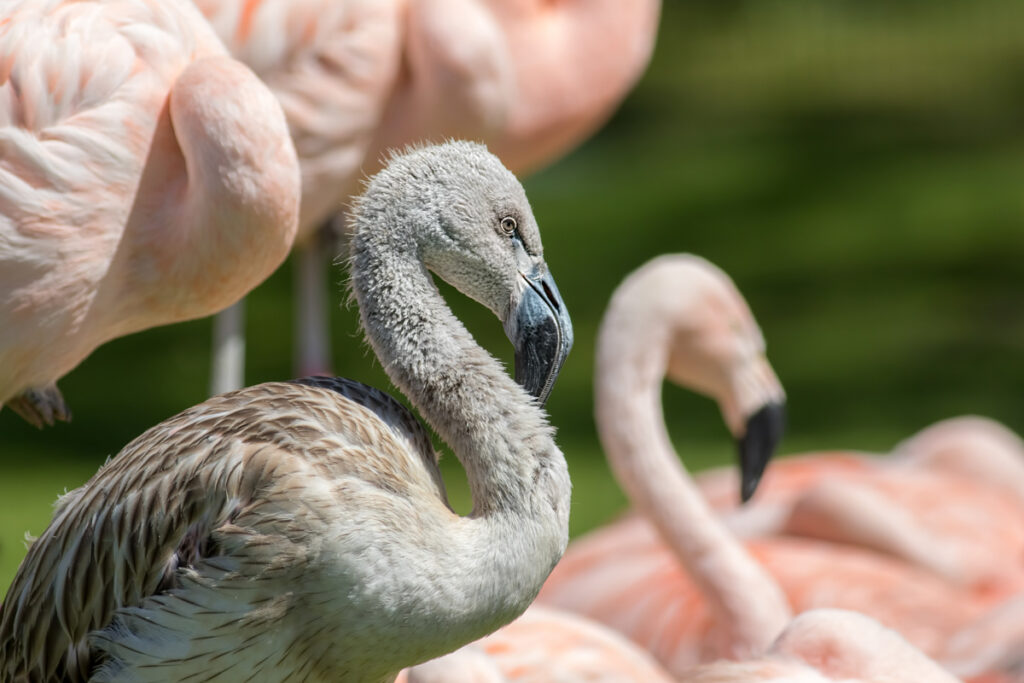
Flamingo chicks hatch covered in soft, grey down, with short, straight bills and compact proportions that bear little resemblance to the tall, flamboyant birds they will become. Within just 30 days, the chicks reach a height of about two feet tall; within three to six months, their size and beaks are almost on par with the adults. Their distinctive color comes a little more slowly: As they learn to fend for their own food, the carotenoids in the algae and small crustaceans from their diet will slowly tint their feathers pink within about two to three years.
Silvered Leaf Monkey
Image Credit: Joshua J. Cotten/ Unsplash.com
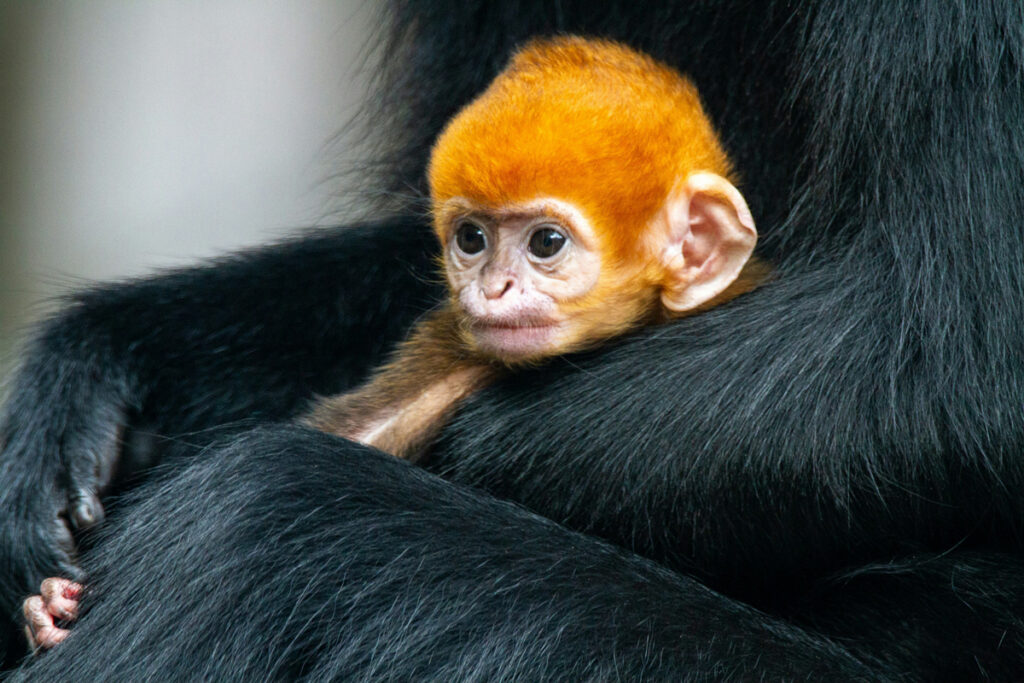
Silvered leaf monkey infants are born bright, golden orange, a stark contrast to the grey adults that take care of them. In their earliest weeks, they cling closely to their mothers; their high visibility ensures they don’t get lost in the dense forest canopy, as well as, surprisingly, shields them from predators, many of which are usually orange-green color blind. Within about six months, the orange coat gradually fades before settling into an adult’s grey.
Echidna
Image Credit: fieldofvision/Adobe Stock
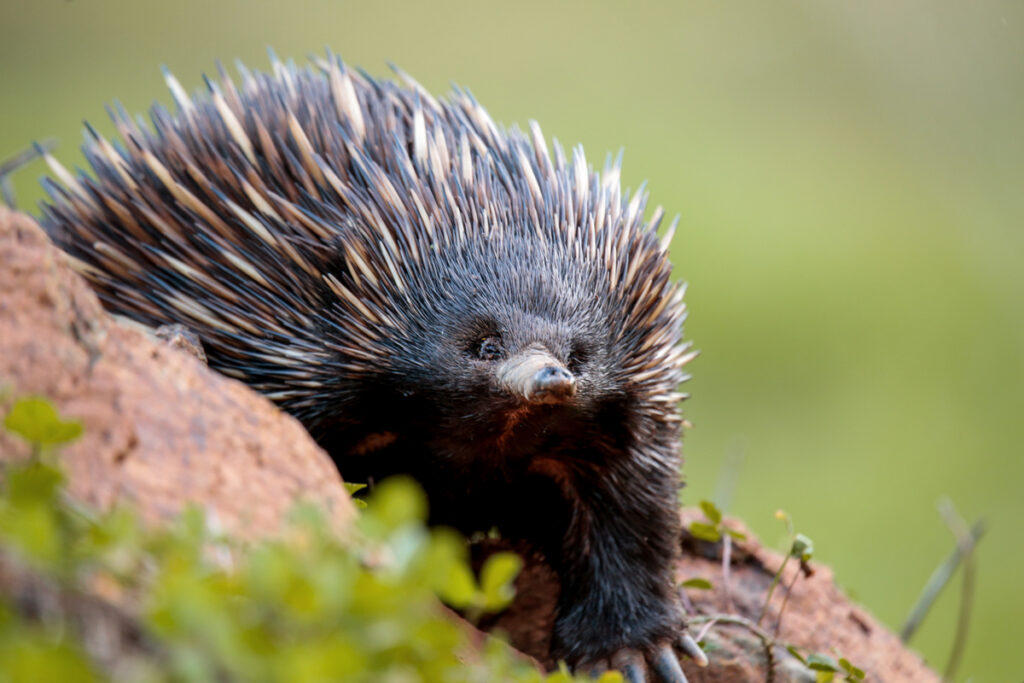
A baby echidna, known as a puggle, is born almost featureless, with none of the defensive mechanisms — its long hunting nose and coat of quills — that it will later need to survive. In fact, even a puggle’s eyes are barely developed, and its skin is hairless and almost translucent. Within about 100 days, puggles grow a generous coating of fur; at about five months, its distinctive nose lengthens and and small quills begin poking out of its fur, making good on its other name — spiny anteater.
Giant Panda
Image Credit: Xinhua News Agency/Getty Images
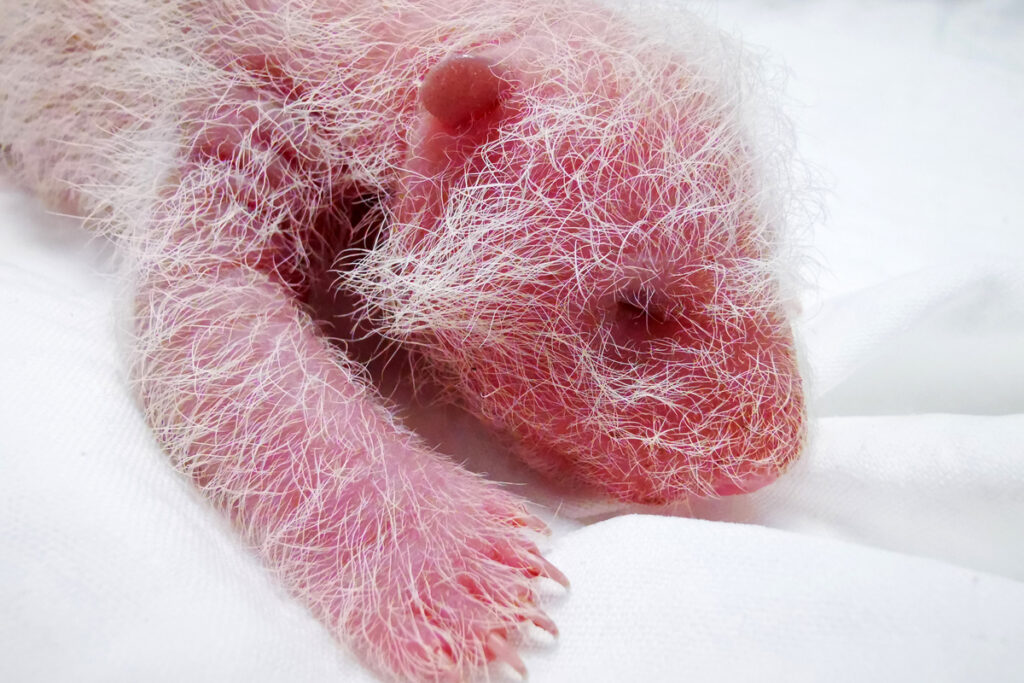
In the first weeks of life, a giant panda displays no sign of telltale black-and-white pattern. Instead the tiny cub is born pink, blind, and nearly hairless; at just three to five ounces in size, it could be any small animal to the untrained eye. For weeks, panda cubs are entirely dependent on their mothers for warmth, feeding, and protection. But changes happen quickly: Within the first 48 hours, fine white fur emerges, as black patches begin showing up on the body and around the eyes. By around three to four months, the fur is filled in completely, and the once-tiny cubs begin crawling and growing teeth.
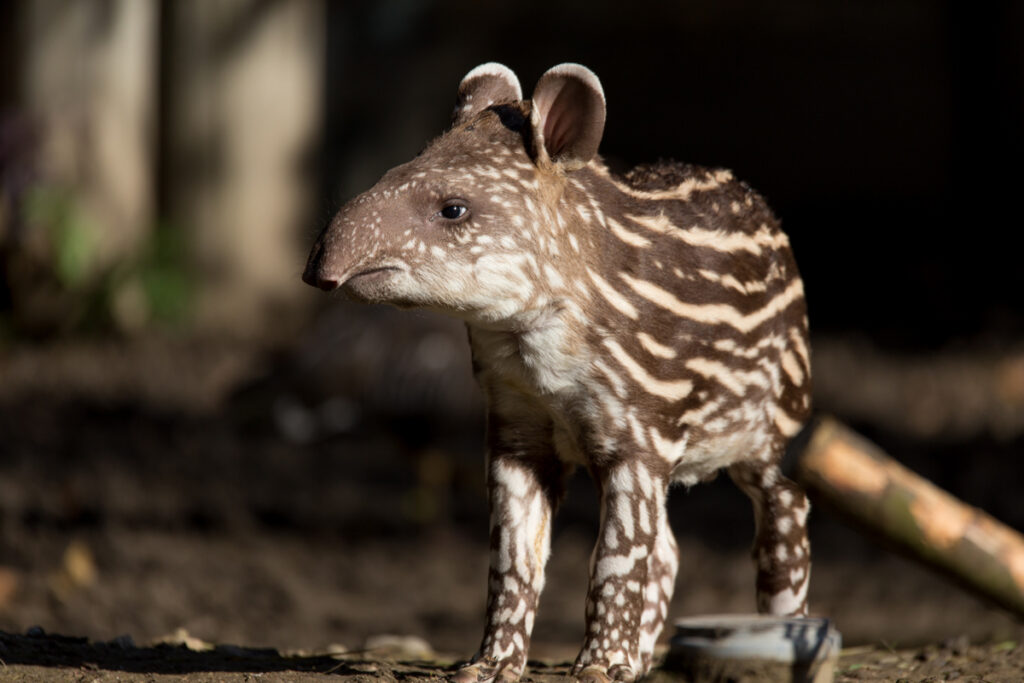
Brazilian Tapir
Image Credit: ArtushFoto/Adobe Stock
The early life of the Brazilian tapir is marked with a horizontal-striped coat, a busy look for an animal who grows up to have a plain, cropped fur coat. The calf’s white stripes and spots are meant to mimic dappled sunlight; this helps them blend in among the dense leafy shadows of its Southeast Asian forest home, protecting them from predators. Within about seven months, the pattern fades into a uniform dark coat suited to the wetlands and forest interiors it frequents.
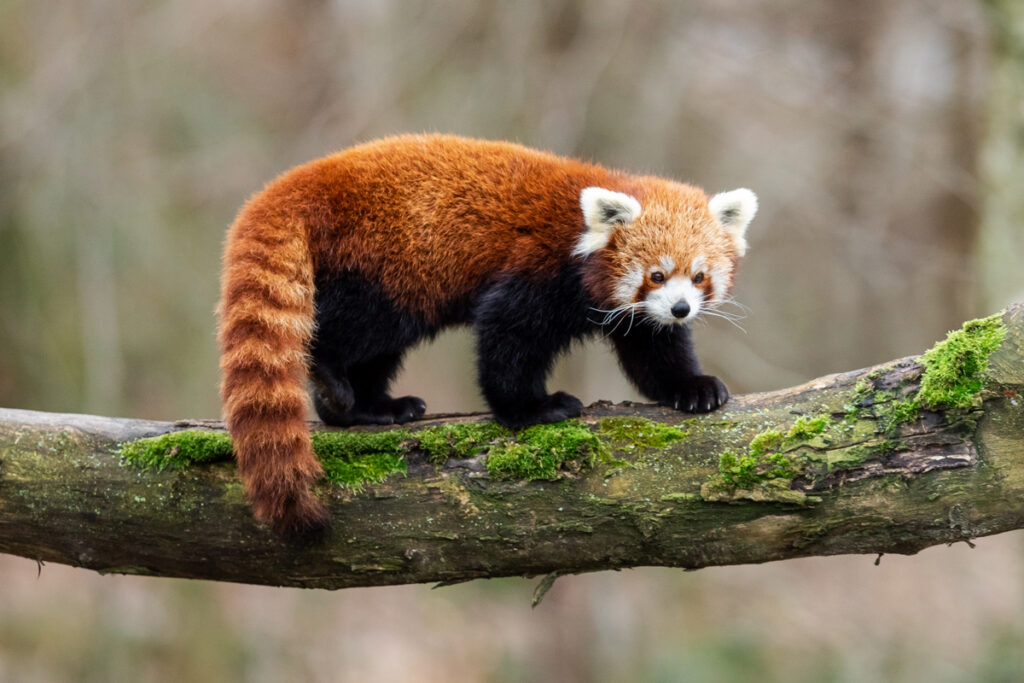
Red Panda
Image Credit: AB Photography/Adobe Stock
Red panda cubs are not born with their characteristic rust-colored coats. Instead, their early wooly fur is a pale grey, and their familiar facial markings are only faintly defined. The cubs remain hidden in nests of leaves and branches in Himalayan regions during their earliest weeks, relying on seclusion rather than camouflage for protection. But by about five months, as the cubs are able to venture out, their coat deepens in color and the red and white facial patterns solidify, helping them blend in with their habitat’s fir trees, where branches are coated in reddish-brown moss and white lichen.
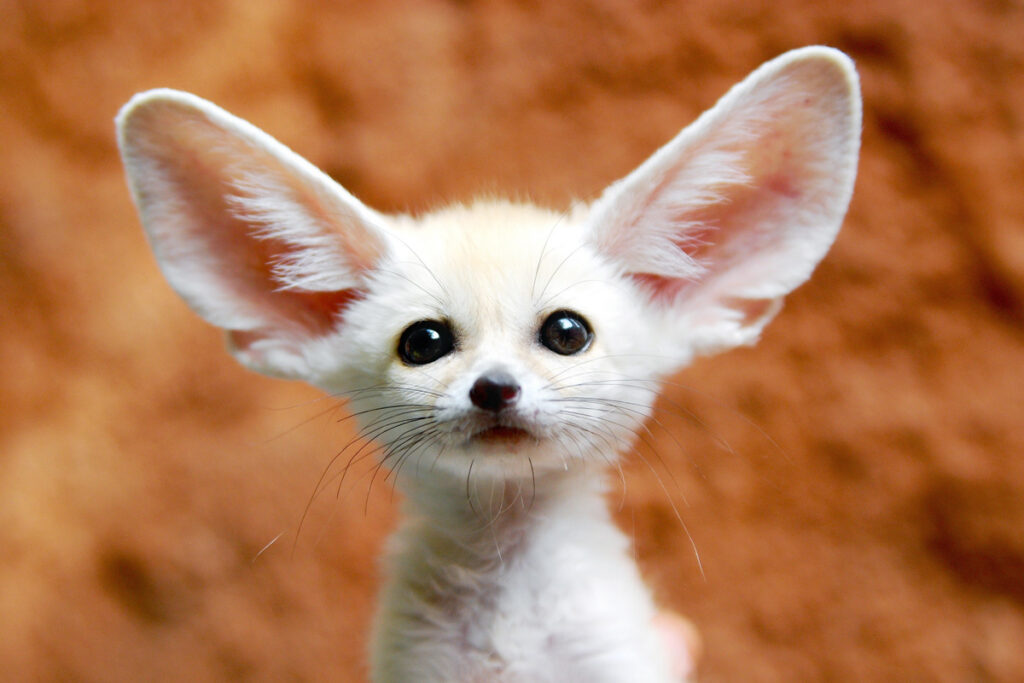
Fennec Fox
Image Credit: Wirestock/Adobe Stock
In the early stages of life, a fennec fox kit looks closer to a generic fox pup than a highly adapted desert native. The ears are folded and proportionally small compared to the adult’s unusually large set, and the coat begins much darker than the pale adult’s fur. As the kit grows, its ears expand to about twice their body size, helping not only to help hunt prey, but to dissipate heat. Its coat does the same, lightening in color to reflect the North African desert sun.
Advertisement
Your Daily Guide to the Animal Kingdom
Get to know the animals that share our planet with this daily newsletter.
Success! Welcome to Animal Facts.
Check your inbox for your daily email.
Sorry, your email address is not valid. Please try again.