Tony is an English writer of nonfiction and fiction living on the edge of the Amazon jungle.
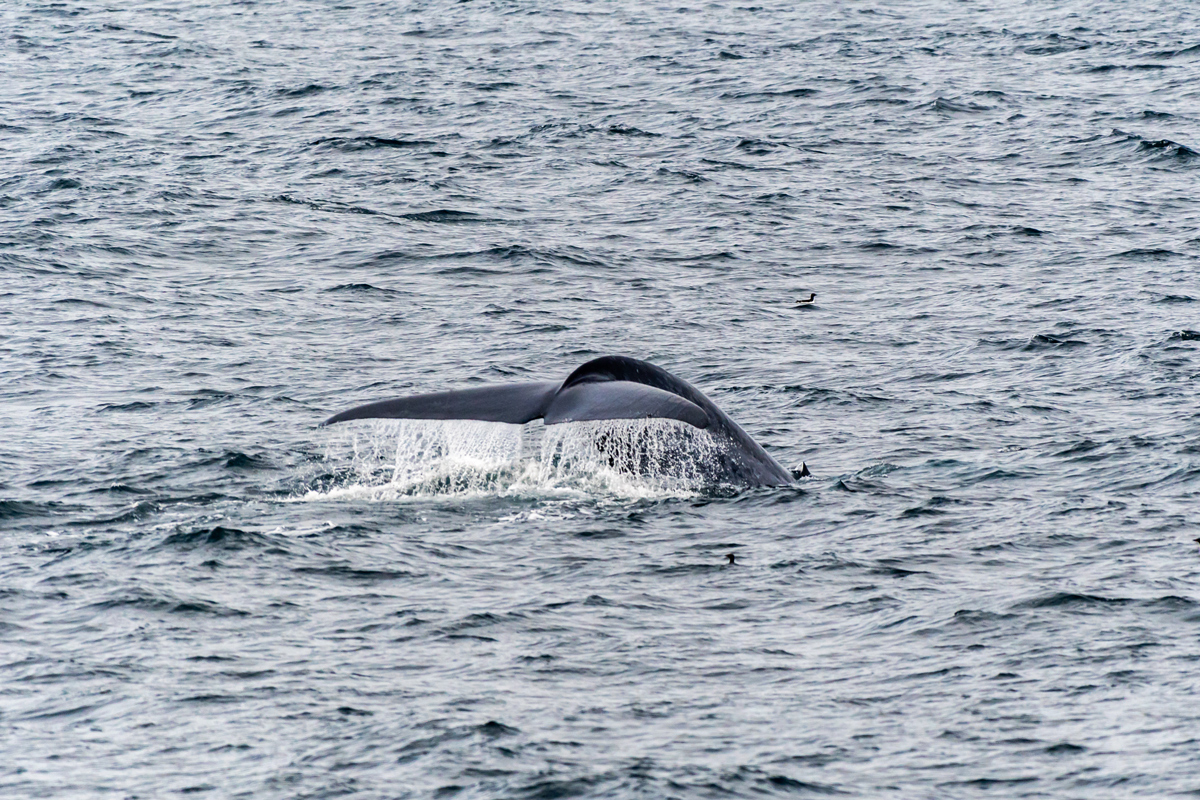
The blue whale — the largest animal that’s ever lived — has a heart befitting its monumental size. Weighing around 400 pounds and measuring roughly the size of a golf cart, it’s the largest heart of any animal on Earth.
When a blue whale dives in search of food, this mighty organ slows its rhythm to just two beats per minute. This extremely low heart rate is a remarkable physiological adaptation that helps the whale conserve oxygen, allowing the massive creature to reach depths of more than 1,000 feet and remain underwater for around 30 minutes. When it returns to the surface, its heart rate surges back up to around 25 to 37 beats per minute as the whale takes on fresh oxygen.
Kristina is a coffee-fueled writer living happily ever after with her family in the suburbs of Richmond, Virginia.
In the ocean, light fades quickly, but sound travels nearly five times faster in water than it does in air and can also travel much farther. Deep beneath the ocean’s surface, whales are communicating. They may not speak with words as humans do, but they have nonetheless developed some of the most sophisticated communication systems in the animal kingdom.
Over millions of years, whales evolved to rely on sound as their primary way of navigating, hunting, finding family members, and maintaining social bonds. Through songs, clicks, whistles, and body movements, they exchange information across vast underwater distances, sometimes reaching companions many miles away. Scientists have spent decades studying this hidden world, yet they’re still untangling its complexity.
Credit: gudkovandrey/Adobe Stock
Whale Songs
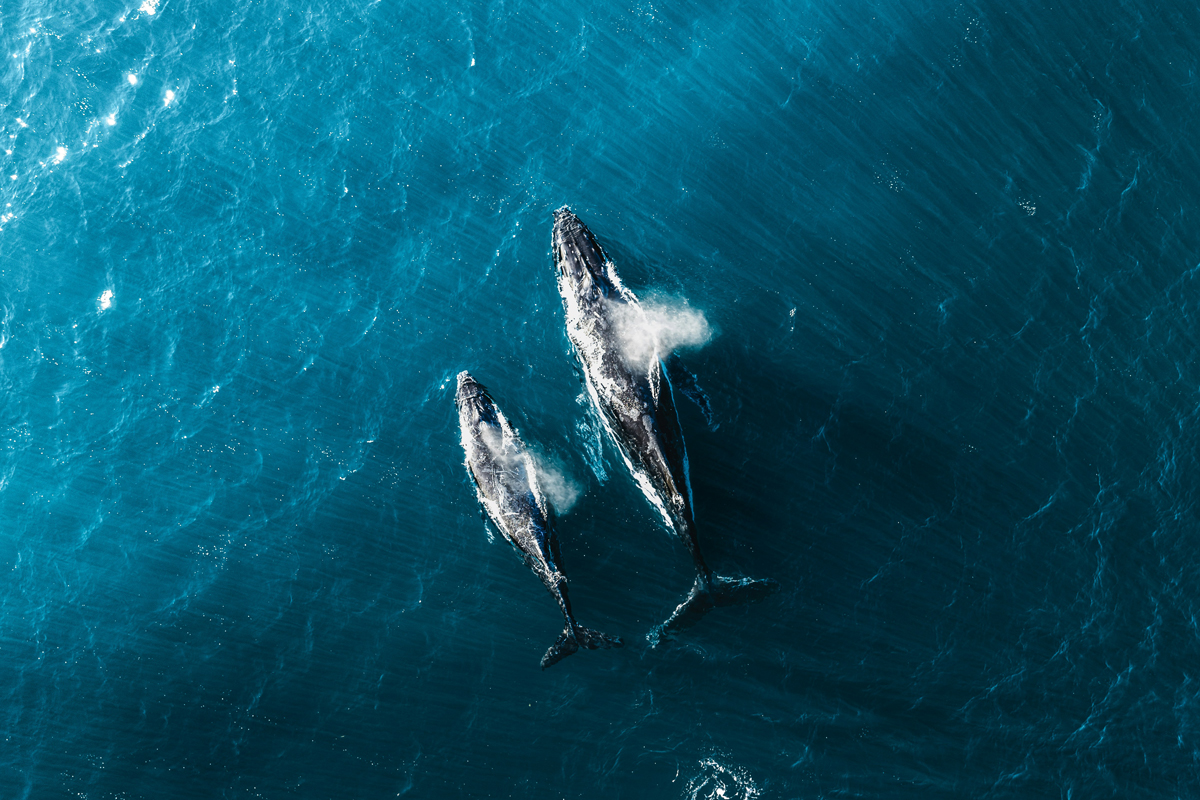
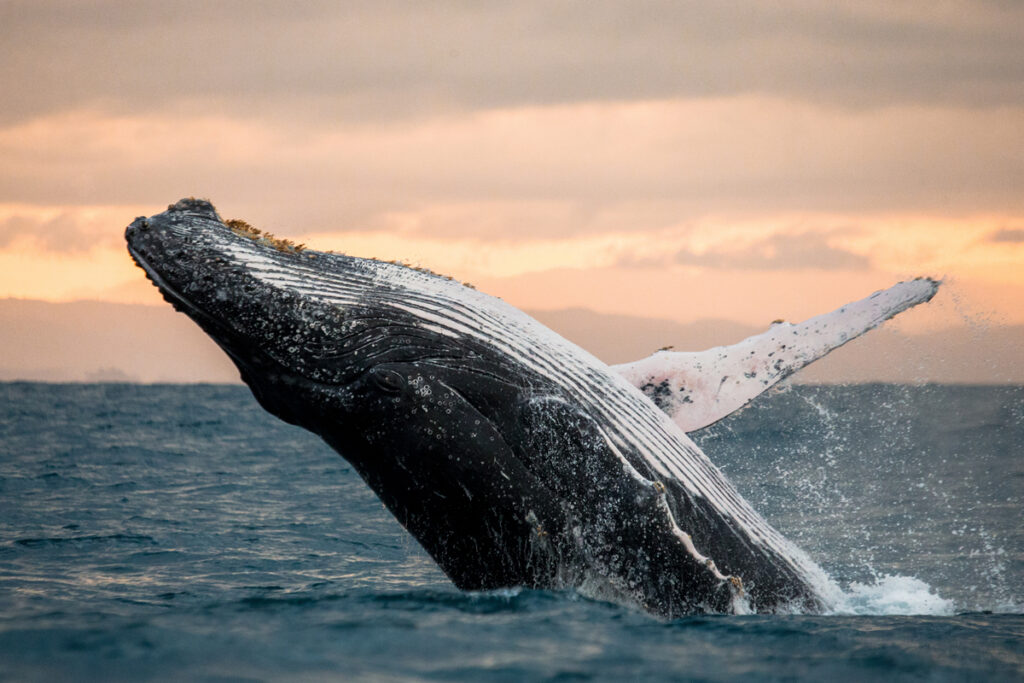
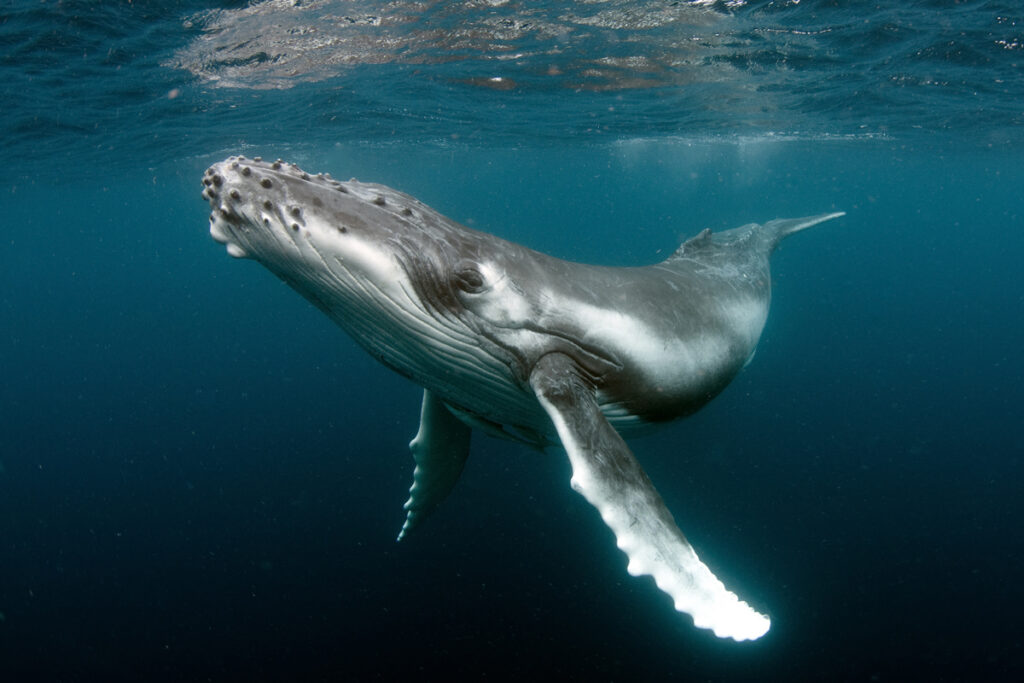
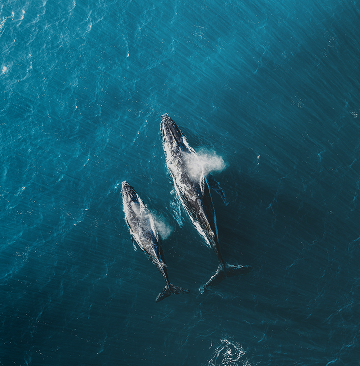
Perhaps the best-known example of whale communication is the haunting song of the humpback whale. These long, complex sequences of cries, moans, and whistles can continue for hours. During the breeding season, males often sing nearly nonstop, and whales in the same region tend to emit variations on the same song.
What makes humpback songs especially remarkable is that they change over time. New sounds are introduced, old ones disappear, and entire populations gradually adopt the latest version. Researchers believe the songs themselves play a role in reproduction, with males likely using them to attract mates or compete with other males, although the exact purpose is still being studied.
New song patterns have even spread from one whale population to another across the Pacific, suggesting humpbacks learn from one another rather than relying solely on instinct. This is one of the clearest examples of cultural transmission documented in a nonhuman animal.
Credit: Tomáš Malík/Unsplash.com
Different Sounds for Different Purposes
Not all whale communication sounds like a song. Different species have developed different ways of exchanging information depending on their environment and lifestyle.
Large baleen whales — including humpbacks, blue whales, and fin whales — don’t have teeth. Instead, they use comb-like plates of baleen to filter tiny prey such as krill and small fish from seawater. These whales often produce deep, low-frequency calls that can travel hundreds of miles through the ocean and that may help the whales stay in contact during migration, locate potential mates, or maintain connections across vast feeding grounds.
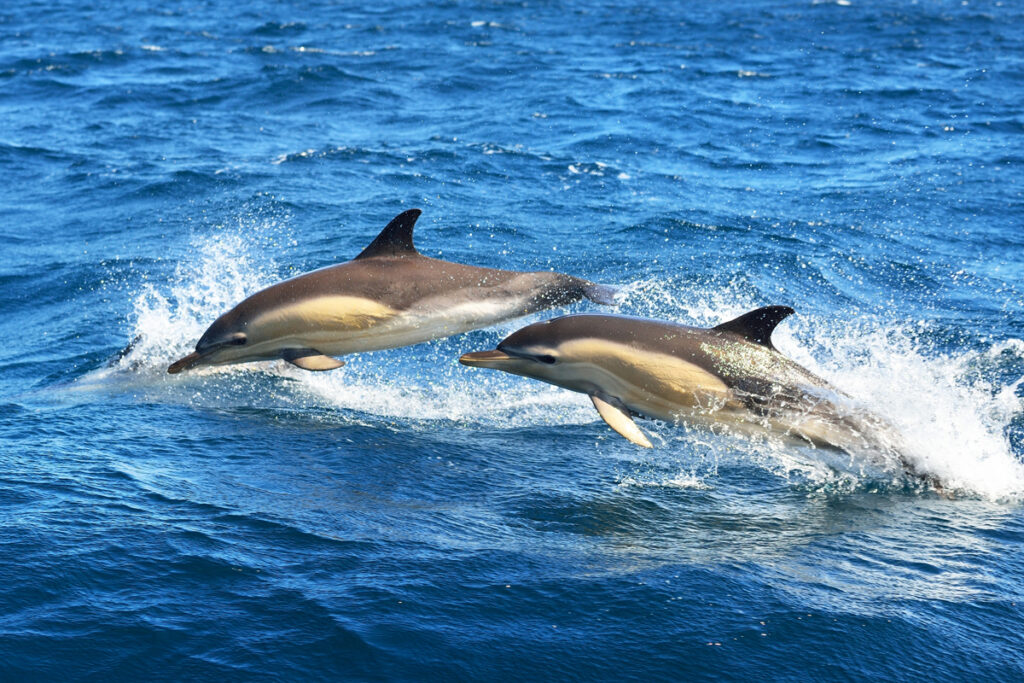
Toothed whales — including dolphins, orcas, and sperm whales — rely on a different system built around clicks and whistles. Rapid clicks provide echolocation, a natural sonar system that enables the animals to hunt and navigate in complete darkness, while whistles and other calls help them stay together, coordinate hunts, and maintain the complex social relationships that define their pods.
Credit: Alex Stemmer/Adobe Stock
Voices and Dialects
One of the most intriguing discoveries involves bottlenose dolphins, a species of toothed whale, each of which develops a unique “signature whistle” early in life. Other dolphins can imitate those whistles to call a particular individual, meaning they function much like human names. Rather than simply recognizing a familiar voice, dolphins appear able to “call” specific individuals using learned vocal signals.
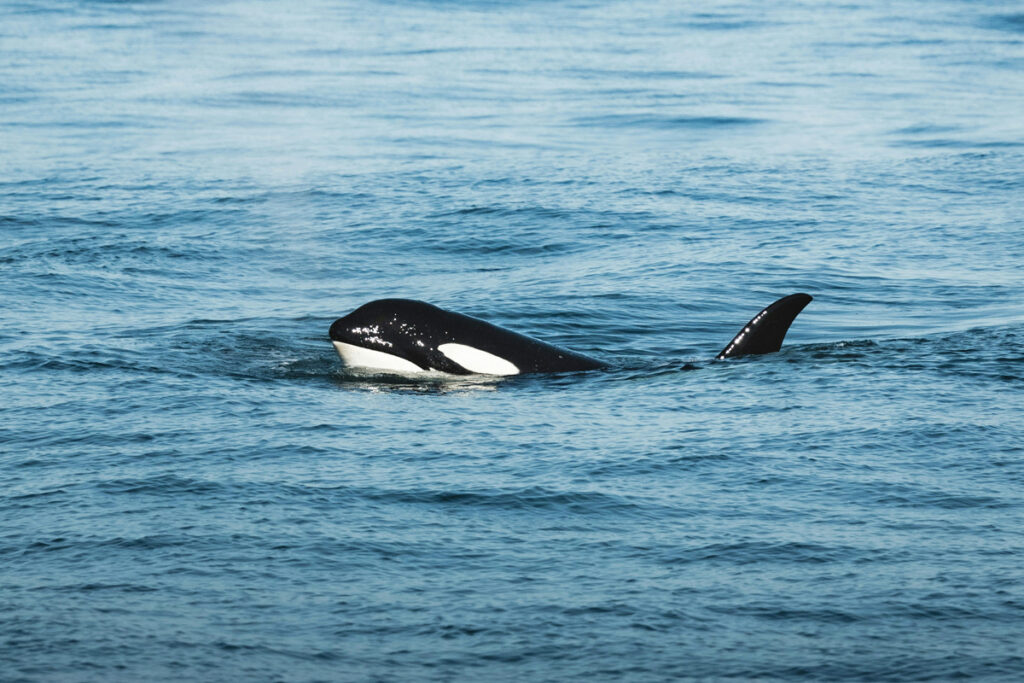
Orcas reveal another aspect of whale communication. Each pod has its own distinctive dialect, a kind of vocal “accent” made up of shared calls and patterns that group members learn from one another. Those shared vocal traditions are passed down through generations within the pod rather than inherited genetically, helping identify family groups and strengthen social bonds.
Sperm whales communicate using rhythmic click patterns known as codas. Different family groups and larger social “clans” use distinct codas that are learned and passed from one generation to the next. This variety of signature whistles, pod dialects, and clan-specific codas suggests that many whales and dolphins do more than make sounds — they learn and share communication traditions within their societies.
Credit: Tomas/Adobe Stock
Decoding the Language of Whales
Much of what scientists know about whale communication has come from decades of underwater listening. Beginning in the mid-20th century, researchers lowered sensitive microphones called hydrophonesinto the ocean and discovered that what seemed like a silent world was actually bursting with sound.
Today, networks of hydrophones allow scientists to monitor whale populations across vast distances. By comparing recordings collected over many years, researchers can identify different species, track migration patterns, recognize call patterns, and study how whale songs have changed over time.
Advances in artificial intelligence are now helping scientists analyze millions of recordings that would have taken decades to study manually. As researchers continue working to understand these complex communication systems, each new discovery reveals just how much there is left to learn.
Advertisement
A Tiger’s Territory Can Be Bigger Than the Entire State of Rhode Island
Bennett Kleinman is a New York City-based staff writer for Inbox Studio. He is also a freelance comedy writer, devoted New York Yankees and New Jersey Devils fan, and thinks plain seltzer is the best drink ever invented.
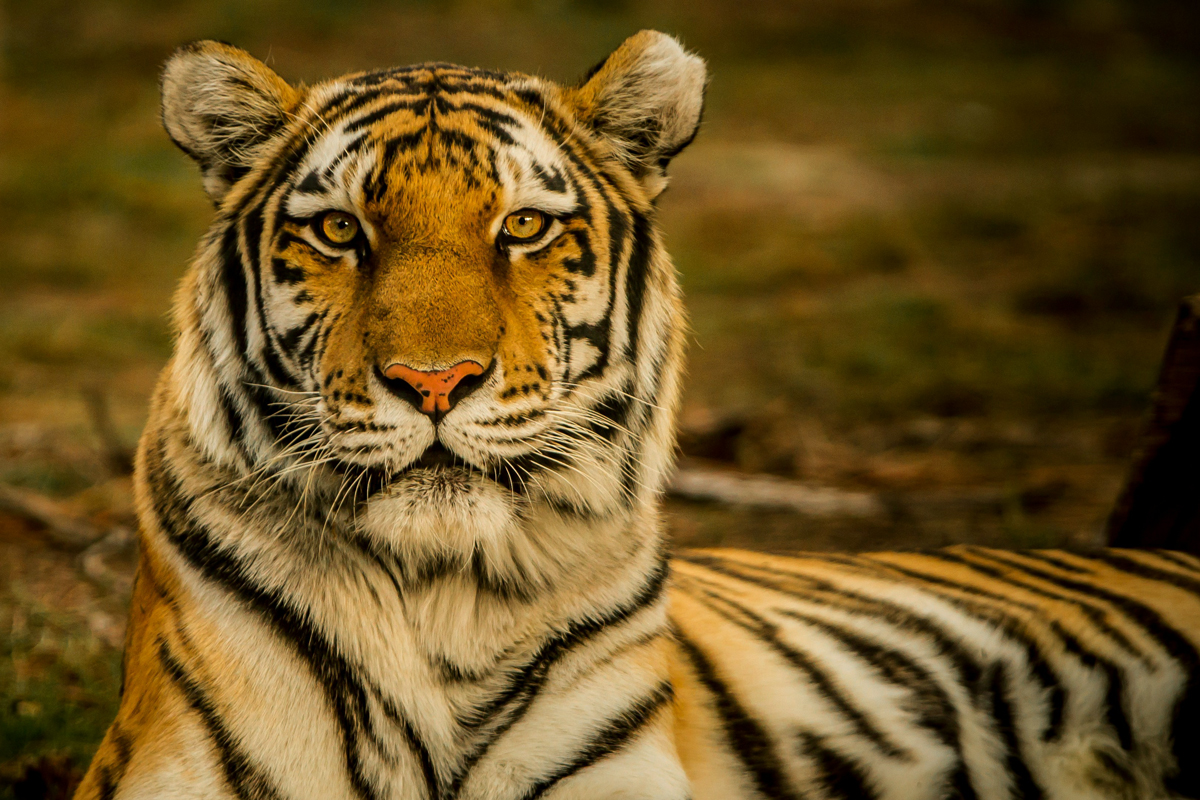
You aren’t likely to see a wild tiger roaming through Providence or sauntering down I-95, but if tigers were native to the Ocean State, their territory could potentially encompass the entire state and then some. That’s because Rhode Island has a total area of 1,545 square miles, while the territory of an Amur tiger can be as large as 1,600 square miles.
Amur tigers are native to Siberia (you may better know them as Siberian tigers). While females with cubs typically stay within an area of roughly 6 square miles, males and some females without cubs are known to venture for hundreds of miles. The primary reason is to track down food: Siberia is a barren region with low prey density, so an Amur tiger may expand its range simply to survive.
Advertisement
Glass Frogs Are So Transparent You Can See Their Hearts Beating
Tony is an English writer of nonfiction and fiction living on the edge of the Amazon jungle.
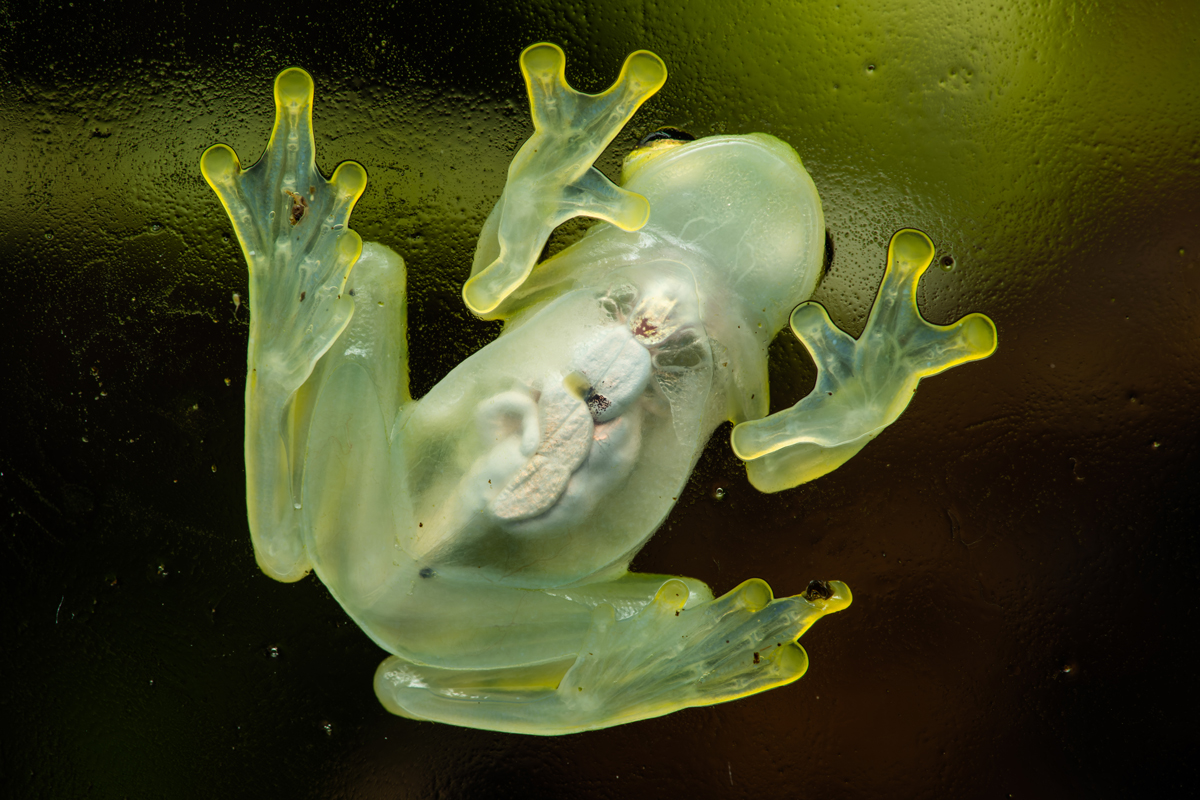
The small, lime-green glass frogs of Central and South America have one very peculiar characteristic: Their undersides are so completely transparent that their internal organs are fully visible through the skin. You can see the liver, intestines, and most remarkably of all, the heart — a small, red, rhythmically pulsing structure visible to the naked eye through living tissue.
In 2022, a study by researchers at Duke University revealed the mechanism behind this transparency: When glass frogs sleep, they pump almost all of their red blood cells into the liver. This reduces the blood’s visibility, the primary obstacle to the frog’s transparency, by around 89%. In effect, the creatures hide their own blood while they sleep, which lends them an incredible degree of transparency, allowing them to blend in with the surrounding environment.
Advertisement
Sailfish Can Swim as Fast as Cheetahs Can Run
Fish 22/07/26Jul. 22, 2026
Updated 23/07/26Jul. 23, 2026
Credit: Connect Images/Adobe Stock
Bennett Kleinman
Author
Bennett Kleinman is a New York City-based staff writer for Inbox Studio. He is also a freelance comedy writer, devoted New York Yankees and New Jersey Devils fan, and thinks plain seltzer is the best drink ever invented.
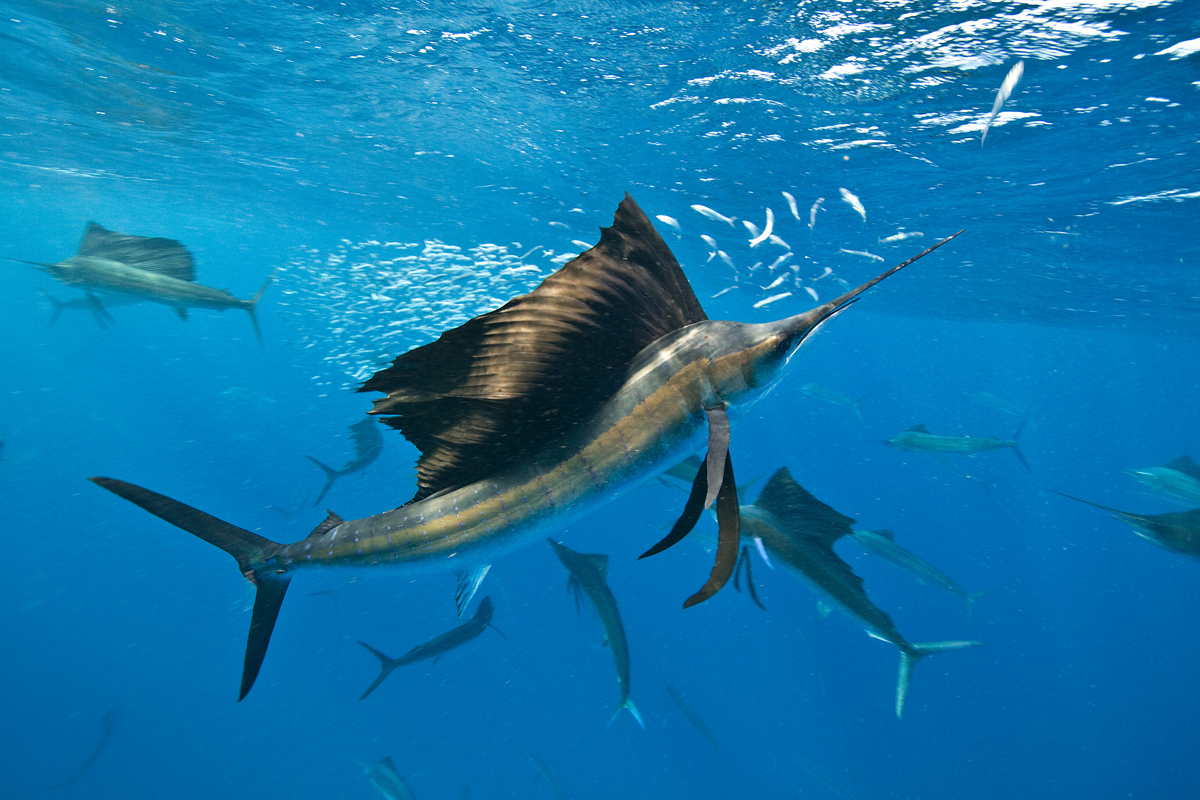
Cheetahs are known for being fleet-footed, reaching top speeds of 65 to 75 miles per hour. But there’s one type of fish that can be aptly described as fleet-finned, giving cheetahs a run (forgive the pun) for their money. Sailfish — specifically the Indo-Pacific sailfish (Istiophorus platypterus) and Atlantic sailfish (Istiophorus albicans), the two primary species of sailfish — can zoom around at up to 68 miles per hour.
While sailfish typically swim at a speed between 20 and 35 miles per hour, they can achieve double that in short bursts, typically when chasing prey. This is despite the fish’s immense size, as the average adult sailfish measures 11 feet long and weighs 211 pounds. But their sleek bodies allow them to glide through water with ease, and their powerful crescent-shaped caudal fins (or tails, in layman’s terms) propel the fish forward with incredible strength at lightning-fast speed.
Advertisement
5 Animals That Are Essentially Invisible
Across Species 22/07/26Jul. 22, 2026
Updated 22/07/26Jul. 22, 2026
Credit: chomphunuts/Adobe Stock
Tony Dunnell
Author
Tony is an English writer of nonfiction and fiction living on the edge of the Amazon jungle.
Evolution is an endlessly innovative process. While predators develop sharper senses and more effective ways to detect their targets, their prey develop better ways to hide. Over millions of years, this back-and-forth has produced some of the most extraordinary adaptations in the natural world — including animals seemingly capable of vanishing in plain sight, outwitting eyes far keener than our own.
Scientists call this ability crypsis, or the ability to deploy camouflage using strategies such as background matching, disruptive coloration, and masquerading as inedible objects. The most accomplished masters of disguise are so adept at disappearing that, in some cases, they not only fool their predators, but trained biologists as well. Here are five creatures so good at hiding that they’re essentially invisible.
Credit: mgkuijpers/Adobe Stock
Leaf-Tailed Geckos
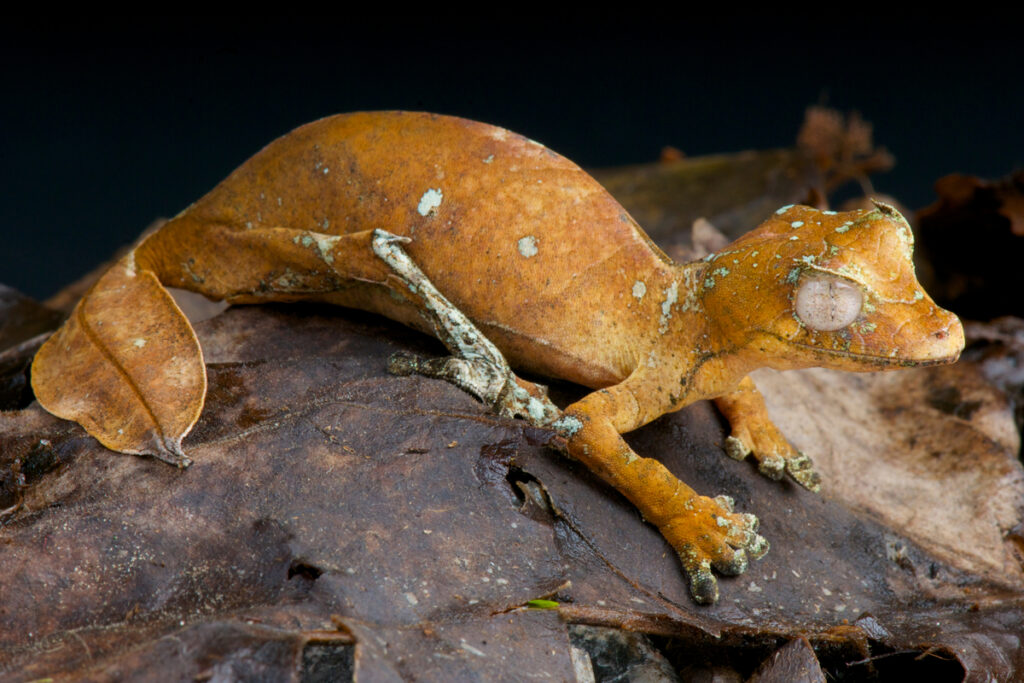
Found in the rainforests of Madagascar, leaf-tailed geckos are widely regarded as some of the most perfectly camouflaged animals ever documented. In 1989, only six species of leaf-tailed geckos were known to exist, but 22 have been recorded as of 2026, with more yet to be discovered — a testament to how tricky it is to actually spot these crafty nocturnal lizards.
These geckos have bark-like skin, flattened tails, and skin flaps surrounding their whole body and head — the edges fringed with dermal flaps that eliminate shadows — all of which combine to give the animals no visible silhouette at all. During the day, they press themselves flat against bark or among leaf litter and remain still, perfectly blending into their environment. Even experienced naturalists struggle to detect them when standing mere feet away.
Credit: chomphunuts/Adobe Stock
Pygmy Seahorses
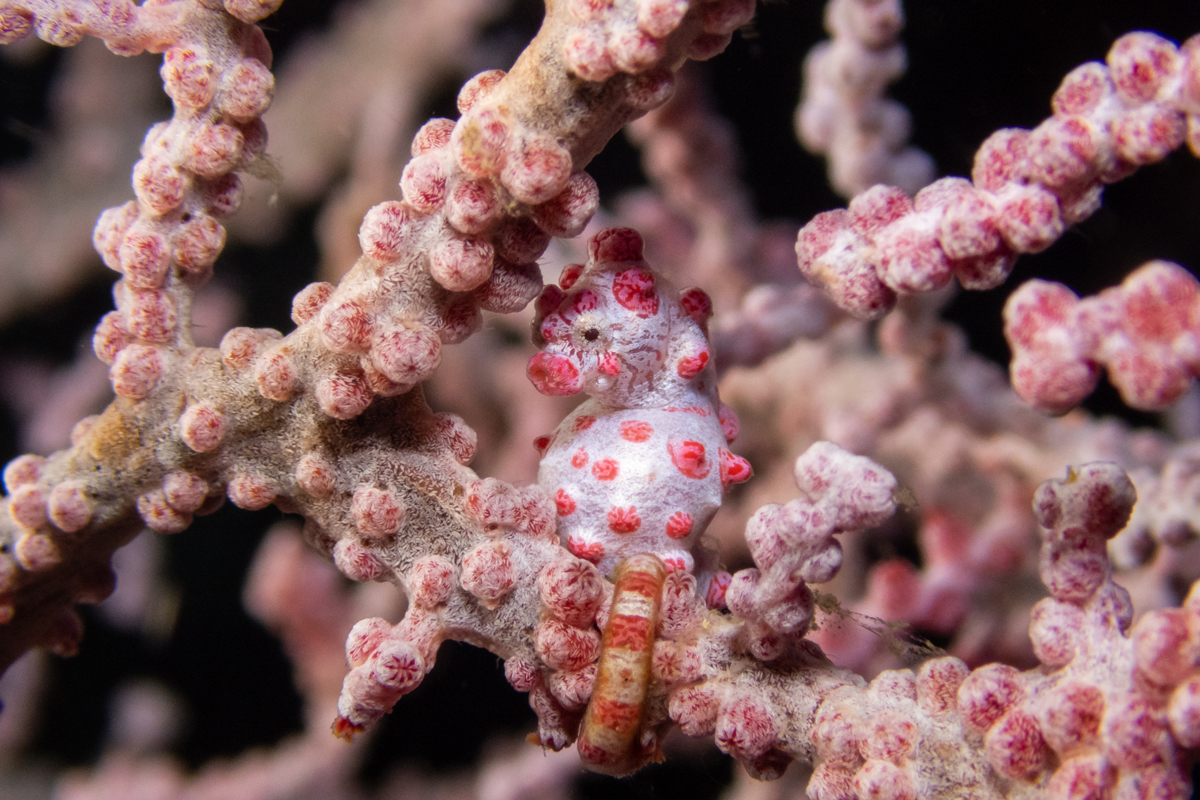
Pygmy seahorses exclusively inhabit specific species of fan coral in the Western Pacific Ocean. As the smallest seahorse species in the world, measuring less than the length of a thumbnail, they’re already hard to spot — but they also have an uncanny ability to blend in with the coral they call home.
Their bodies are covered in rounded tubercles that replicate the exact texture and color of said coral. When they attach themselves to the coral with their tails, they look just like extensions of the branching fans. The match is so precise that the species was only discovered by accident in 1969 when a coral sample was brought into a laboratory and examined under magnification — at which point a scientist noticed the attached seahorse.
Credit: michaelfitz/Adobe Stock
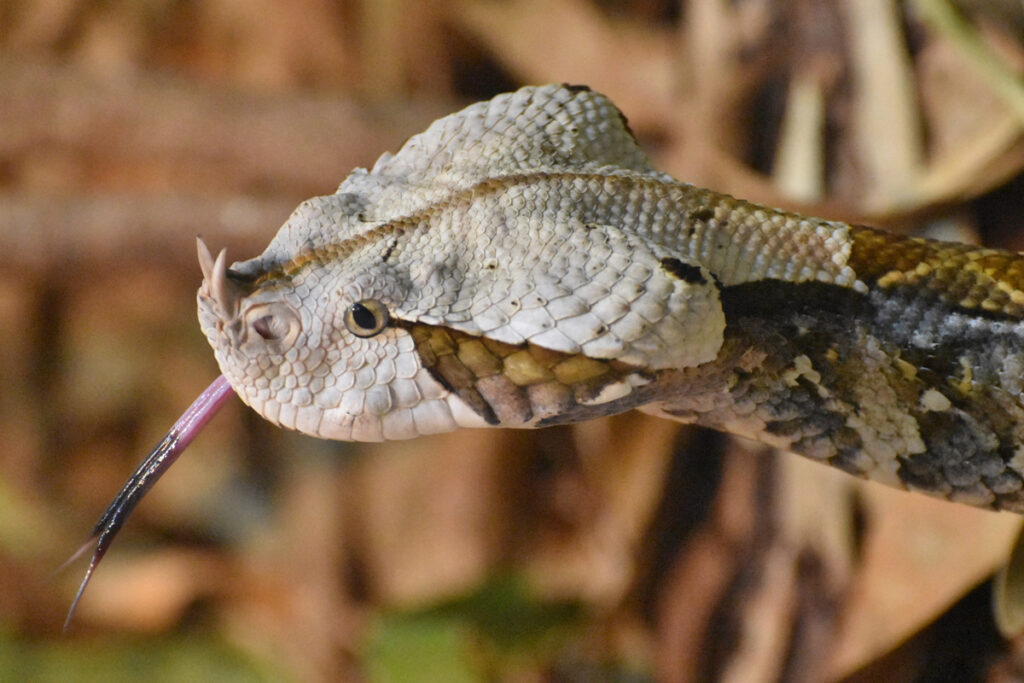
Gaboon Vipers
If you’re scared of snakes, brace yourself: The Gaboon viper possesses the longest fangs of any venomous snake, has the highest venom yield per bite, and is the heaviest venomous snake in Africa. As if that wasn’t enough, it’s also adorned with a strikingly elaborate geometric pattern of diamonds and stripes that — while dramatic and ornamental in the open — renders it basically invisible when resting motionless among dry leaves on the forest floors of sub-Saharan Africa.
The pattern is one of the most sophisticated examples of disruptive camouflage in the animal kingdom, breaking up the snake’s outline so completely that it ceases to look like a living thing.
Credit: David Clode/Unsplash.com
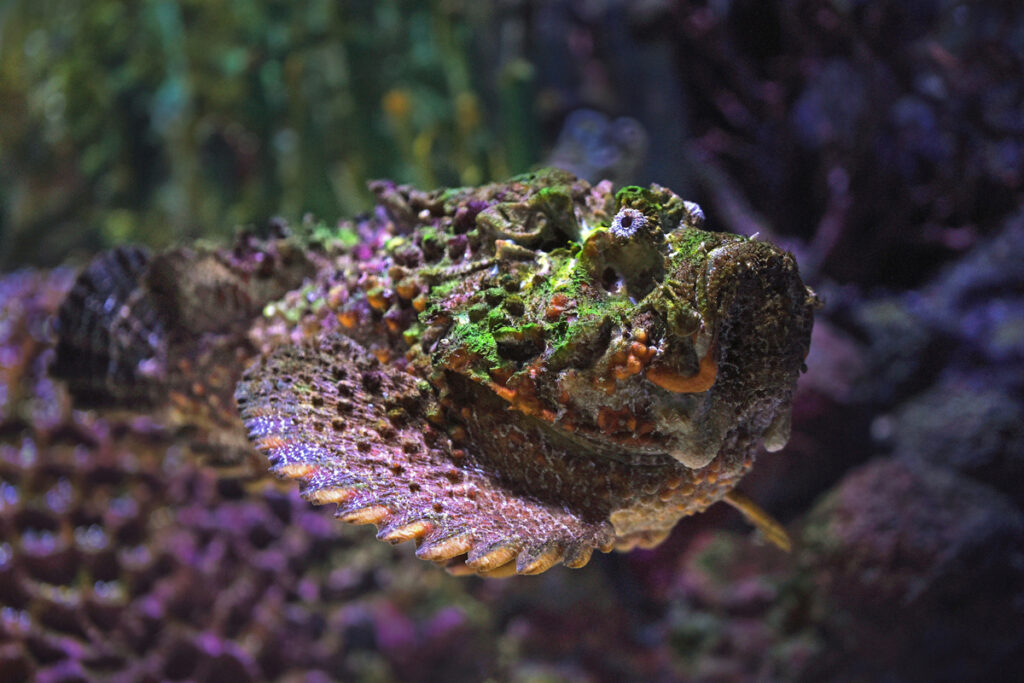
Stonefish
The stonefish is both the world’s most venomous fish and one of its most perfectly camouflaged — a chilling combination. These ambush predators rest motionless on the seafloor or among rocks and coral, where they become practically indistinguishable from the surrounding environment.
The stonefish’s warty, irregular skin matches the encrusted rock so precisely that it can sit in shallow water just inches from potential prey or predators — or a swimmer’s foot — without detection. They possess up to 15 dorsal spines, capable of delivering venom that causes excruciating pain. Stonefish venom can be deadly to humans, but fatalities are rare.
Credit:Tom Goaz/Adobe Stock
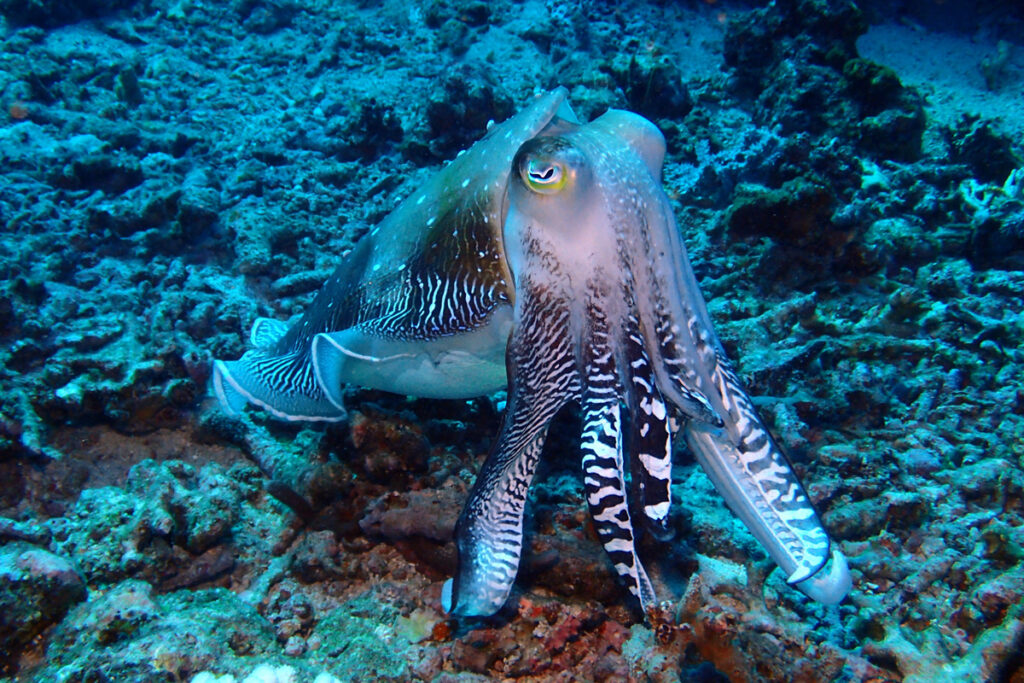
Cuttlefish
The cuttlefish is one of the most intelligent invertebrates in the world, with levels of self-control comparable to that of primates. It also has one of the most sophisticated camouflage systems in the known animal kingdom.
Like its close relation the octopus, the cuttlefish gets its incredible camouflage abilities from cells called chromatophores that extend all across its skin. It controls up to 10 million of these pigment-containing cells, allowing it to change its color and surface texture in less than a second. These amazing cephalopods can also change the physical texture of their skin to match the surrounding rocks, coral, or seaweed, enhancing one of the most effective invisibility cloaks in nature.
Advertisement
6 Animals That Live Almost Entirely Alone
Across Species 22/07/26Jul. 22, 2026
Updated 22/07/26Jul. 22, 2026
Credit: Getty Images/Unsplash.com
Kristina Wright
Author
Kristina is a coffee-fueled writer living happily ever after with her family in the suburbs of Richmond, Virginia.
For many animal species, cooperation is key to survival. Wolves, elephants, and dolphins live and travel together in social groups that provide protection, help secure food, and support the raising of their young. But not all animals rely on a group — some species have evolved to live mostly solitary lives, with individuals spending much of their time alone and interacting with others mainly for breeding or raising offspring.
Relying on no one but themselves, solitary animal species have adapted unique strategies that allow them to find food, avoid competition, and succeed independently in their environments. From powerful predators to intelligent ocean hunters, here are six animals that thrive on living alone.
Credit: Frida Lannerström/Unsplash.com
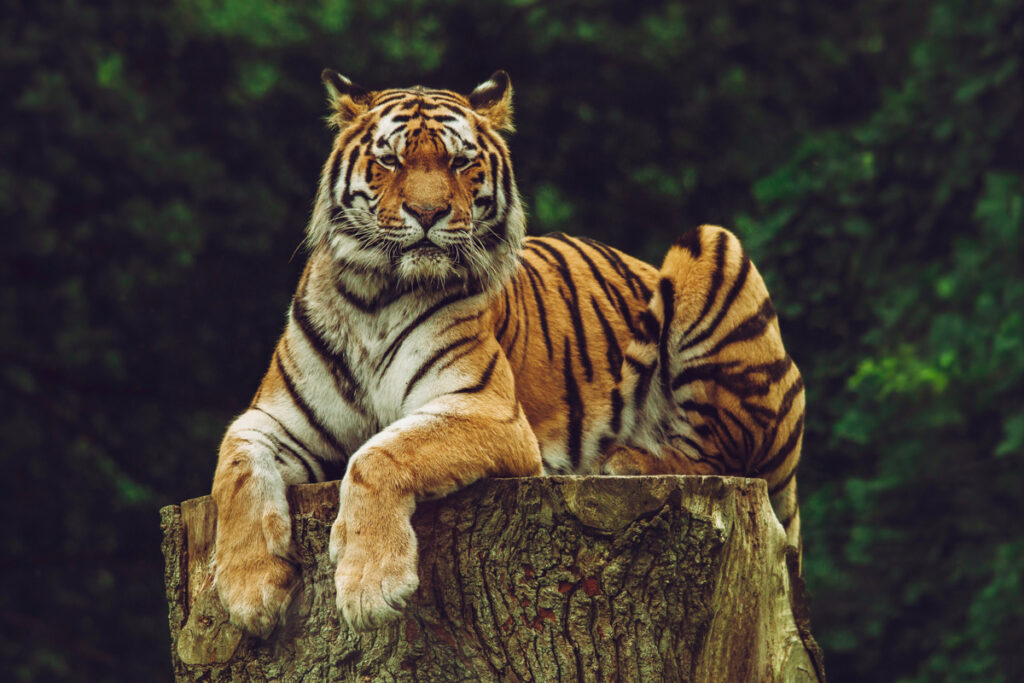
Tigers
Found across parts of Asia, including the forests, grasslands, and wetlands of India, Russia, and Indonesia, tigers are among the most famous solitary animals on Earth. Unlike lions, which live in prides, tigers usually spend their lives alone, with each adult maintaining its own territory and avoiding unnecessary encounters with others.
This lifestyle fits their hunting strategy: As ambush predators, they rely on patience, stealth, and strength rather than teamwork. A lone tiger can stalk prey through dense vegetation and protect its meal without competition from a group. The primary exception is a mother raising cubs, which remain with her until they’re old enough to survive independently.
Credit: Shivam Kumar/Unsplash.com
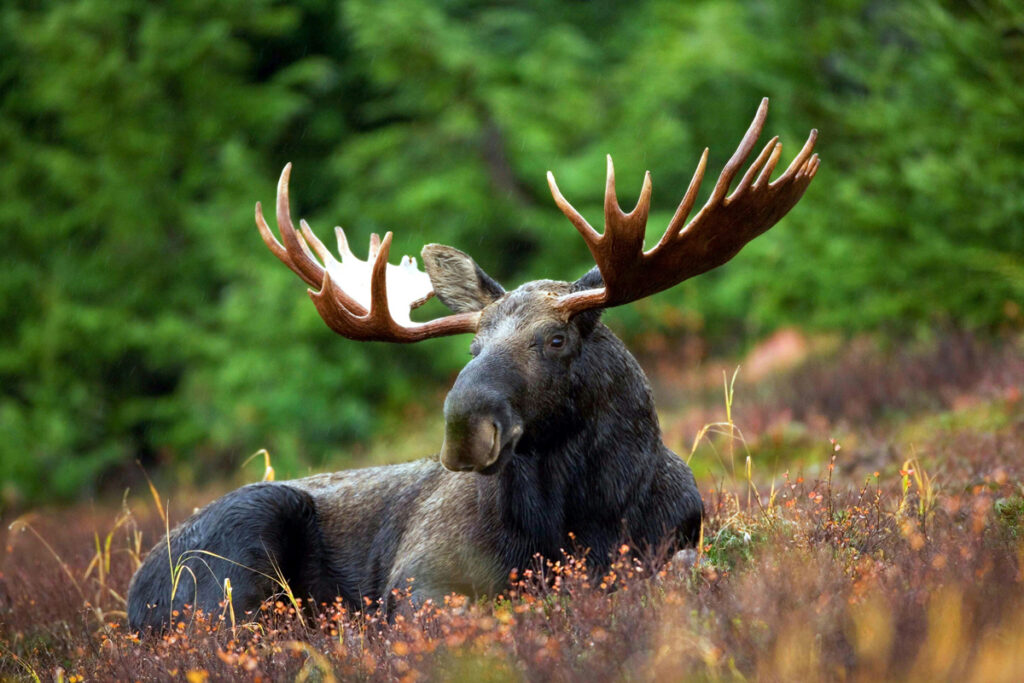
Moose
Across the forests and wetlands of North America, Europe, and Asia, moose live largely solitary lives. These massive members of the deer family roam territories in Canada, Alaska, Scandinavia, and Russia, browsing on leaves, twigs, aquatic plants, and seasonal vegetation. Their plant-based diet allows them to survive without relying on a group to find food or defend shared feeding areas.
Unlike deer that often gather in herds, moose typically travel alone. Their enormous size means healthy adults have few natural predators, and spreading out helps reduce competition for limited vegetation. The main exception to their solitary lifestyle is during mating season and the months when cows raise their young.
Credit: Getty Images/Unsplash.com
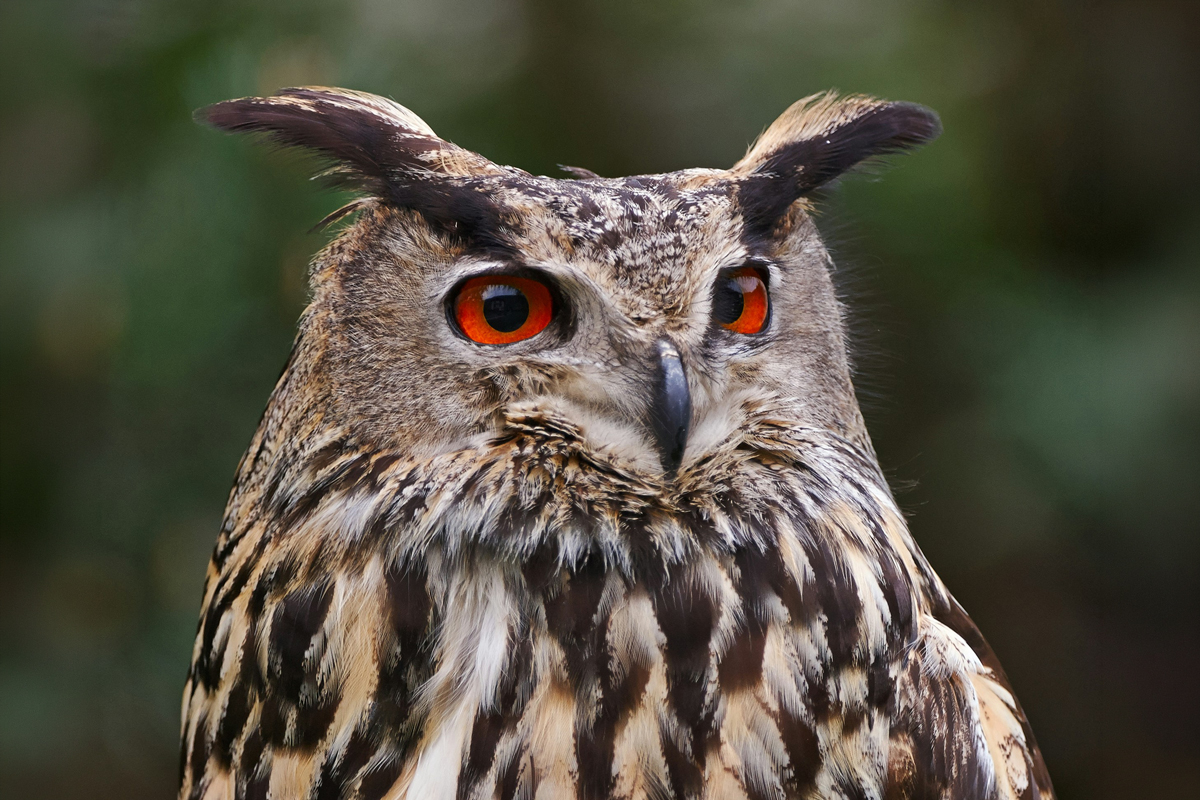
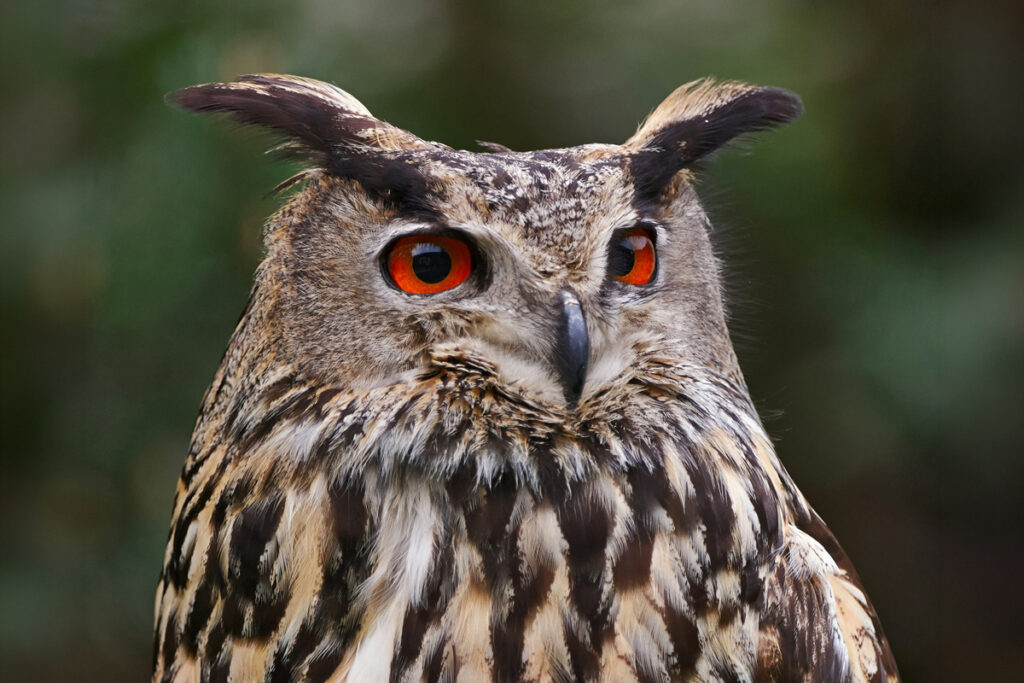
Great Horned Owls
Many bird species gather in flocks, but the great horned owl is a true loner. Found throughout North and South America, these powerful nocturnal hunters live in forests, deserts, wetlands, and even suburban areas, where they establish territories and hunt after dark.
Rather than relying on a group dynamic like Harris’s hawks, great horned owls hunt alone, using their exceptional vision, hearing, and strength to capture prey such as rodents, rabbits, and other birds. Their ability to thrive independently allows them to maintain their own hunting grounds. Mated pairs may raise young together, but outside of breeding season, these owls usually keep their distance from one another.
Credit: Zdeněk Macháček/Unsplash.com
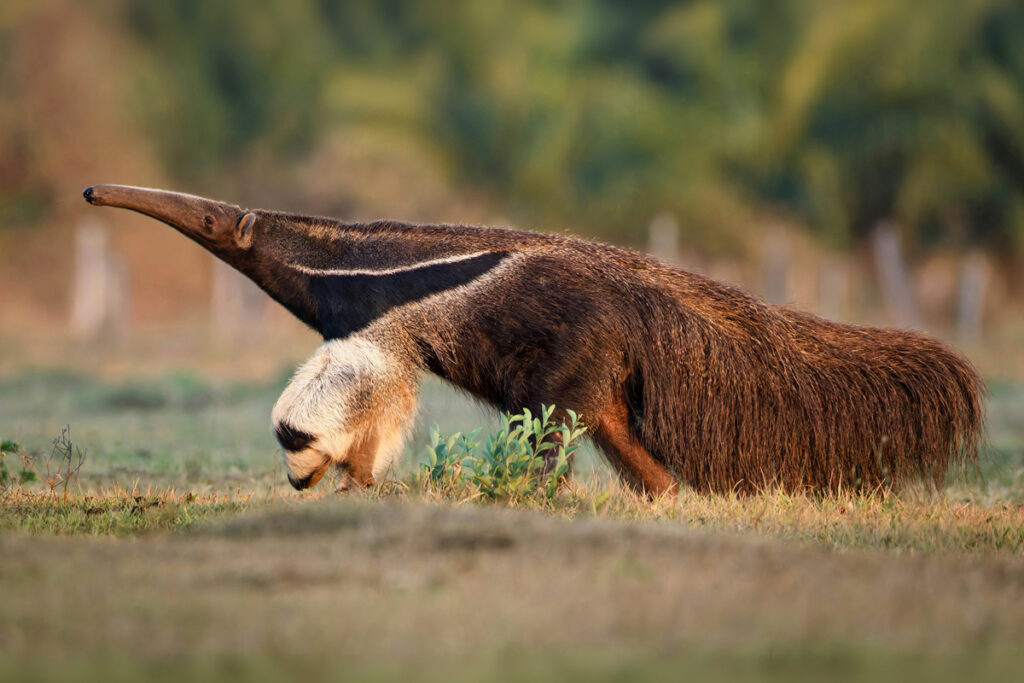
Giant Anteaters
Across the grasslands, forests, and wetlands of Central and South America, giant anteaters spend most of their lives alone. These unusual mammals roam countries such as Brazil, Venezuela, and Argentina, searching for ant and termite colonies using their powerful sense of smell and long, specialized snouts.
Their solitary lifestyle is closely tied to their feeding habits. A single giant anteater can spend hours moving through its territory, using its claws to break open nests and its 2-foot-long tongue to collect insects.
Because their food sources are spread out and provide limited nutrition, there’s little advantage to traveling in groups. Adults usually avoid one another except during mating, while mothers raise their young until they’re ready to become independent.
Credit: Robert Sachowski/Unsplash.com
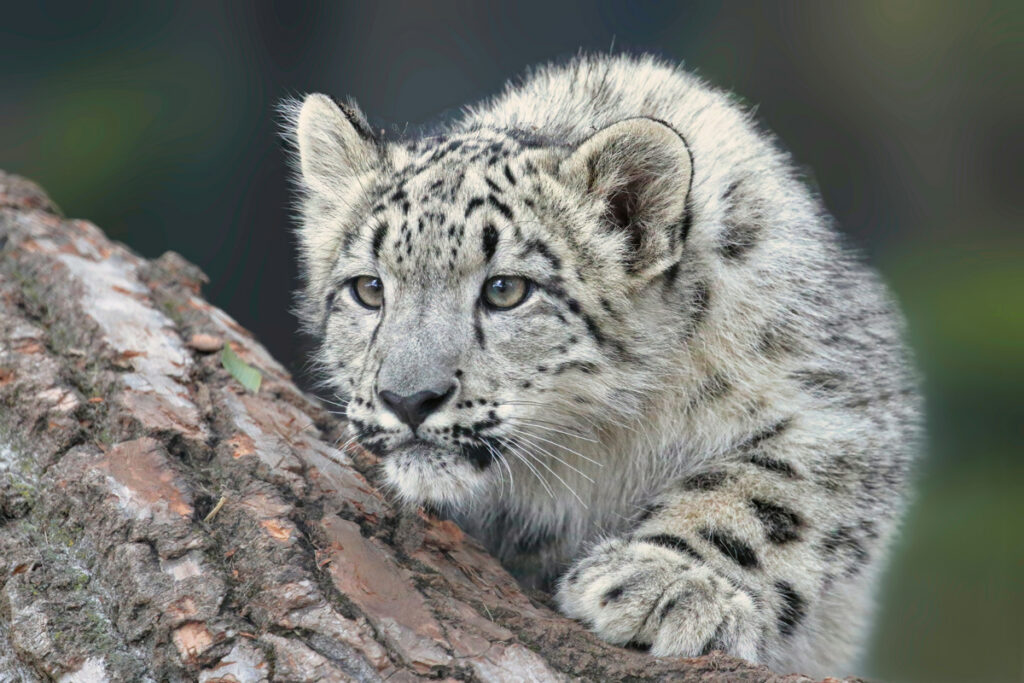
Snow Leopards
High in the mountains of Central and South Asia, snow leopards live one of the most isolated lives of any big cat. They inhabit the Himalayas, Tibetan Plateau, and mountain ranges of countries such as Nepal, India, Mongolia, and China, where they navigate steep cliffs and harsh climates.
Snow leopards survive by covering large territories alone and hunting mountain animals such as wild sheep and goats. Their solitary lifestyle helps reduce competition in an environment where food is already scarce. Other than mothers caring for cubs and brief encounters during mating season, these elusive cats prefer to remain alone.
Credit: CrazyForAnimeArt/Adobe Stock
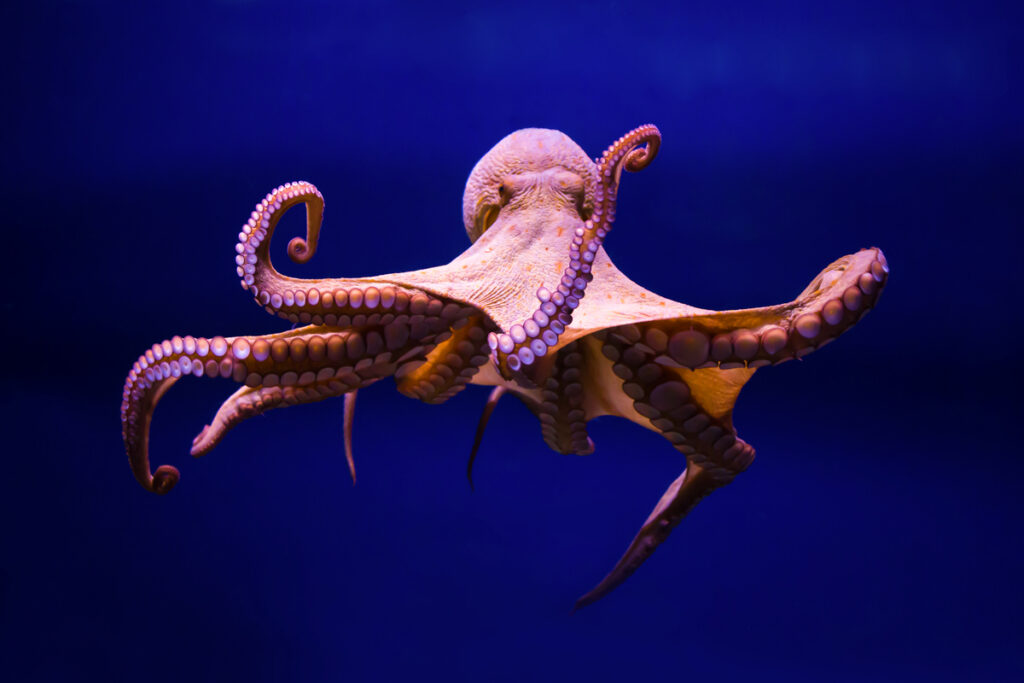
Octopuses
Found in oceans around the world, from coral reefs to the deep sea, most octopus species spend their time hiding in dens, exploring their surroundings, and hunting alone. Despite their reputation for intelligence and adaptability, octopuses are largely solitary creatures that rarely seek out the company of others.
Their intelligence makes them highly effective solo hunters. Octopuses use camouflage and problem-solving along with their flexible arms to capture prey such as crabs, shellfish, and fish, often relying on strategy and stealth rather than speed or strength. Since they compete for food and shelter, they typically avoid one another except during mating, spending much of their short lives alone.
Advertisement
6 Animals as Fast as Cheetahs
Across Species 22/07/26Jul. 22, 2026
Updated 22/07/26Jul. 22, 2026
Credit: Wonders of Europe/Adobe Stock
Tony Dunnell
Author
Tony is an English writer of nonfiction and fiction living on the edge of the Amazon jungle.
The cheetah’s position as the fastest animal on Earth is one of the most widely known facts of the natural world. But, strictly speaking, it’s only partially true.
While cheetahs are undisputedly the fastest animals on land — capable of reaching speeds in excess of 70 miles per hour — the picture changes when we open up the competition to the seas and especially the skies. Here we take a look at some impressively swift animals that come close to the cheetah’s speed — and, in some cases, outperform it entirely.
Credit: NaturePL/Adobe Stock
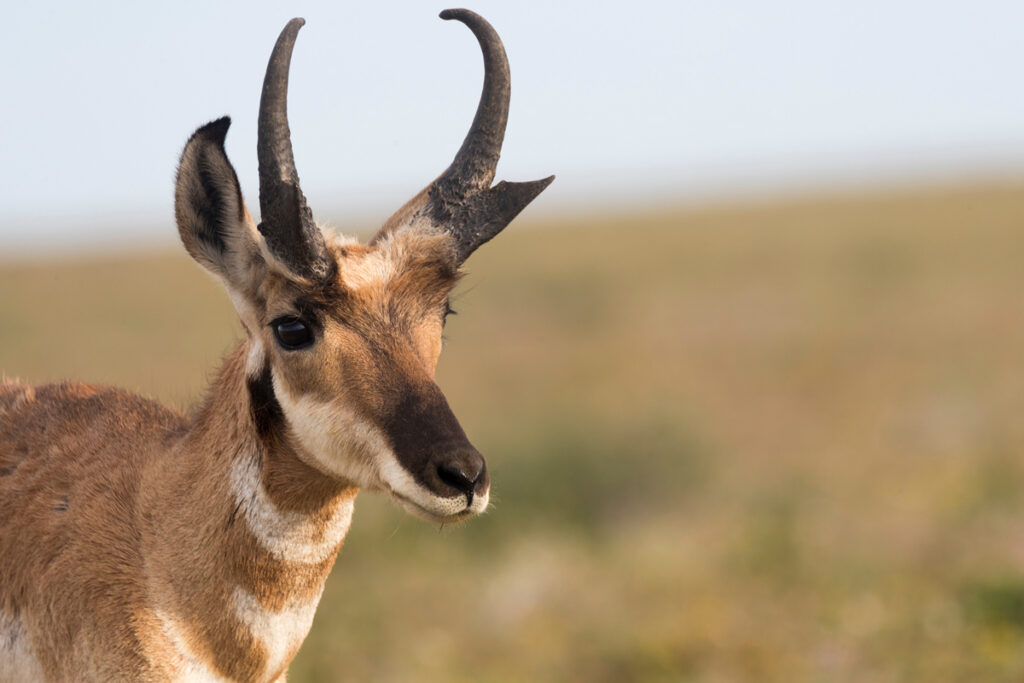
Pronghorns (60 mph)
The pronghorn is a species of artiodactyl (an even-toed, hoofed mammal similar to an antelope) native to North America. With top speeds close to 60 mph, it’s the cheetah’s closest rival on land — and, in some respects, its superior.
While it falls marginally short of a cheetah at full sprint, the pronghorn can sustain speeds of around 35 mph for as far as 4.1 miles — a feat that, according to Guinness World Records, makes the pronghorn the fastest land animal over long distances. Zoologists believe its extraordinary speed was developed as an evolutionary defence mechanism against now-extinct predators, including the North American cheetah and American lion. Today, the pronghorn is actually faster than it needs to be, exceeding the top speeds of all its living North American predators.
Credit: Cavan Images/Adobe Stock
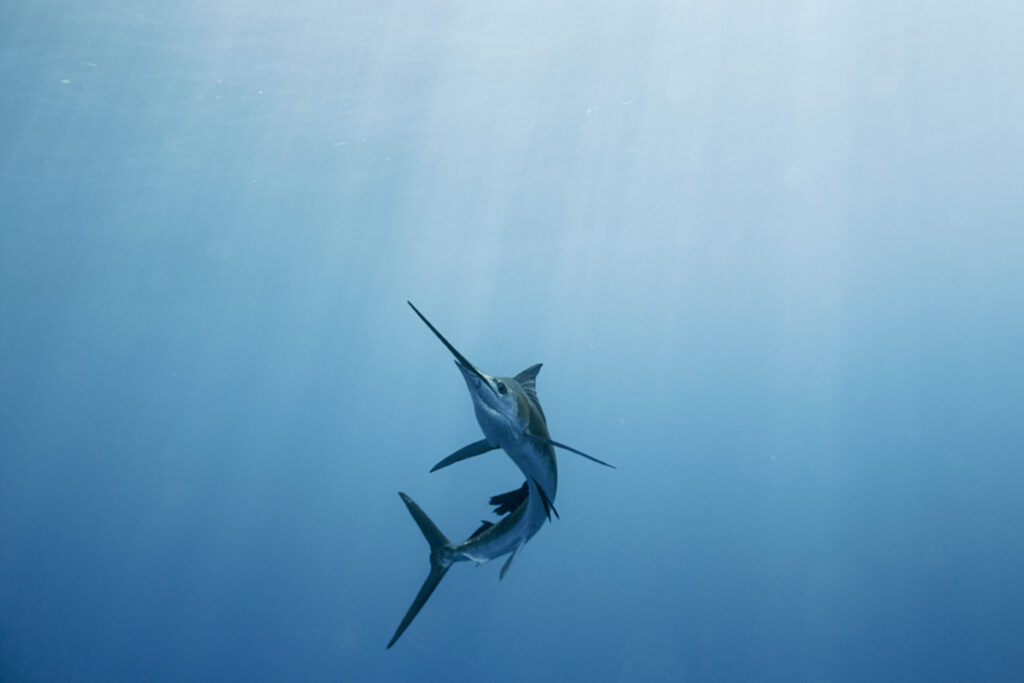
Sailfish (78 mph)
In 2015, scientists were astounded when they recorded a tagged sailfish accelerating at 1.79 g, more than 1.5 times the force of gravity, while in the process of reaching a theoretical top speed of 78 mph. That’s potentially faster than a cheetah, albeit in very short bursts. But it’s not easy to get accurate speed measurements for fish, so there’s some debate as to who, exactly, is the fastest fish in the ocean.
Guinness World Records lists the sailfish and the bluefin tuna as the fastest fish, with the bluefin once recorded as accelerating at 3.27 g, which, if maintained for just two seconds, would equate to a staggering (but again, theoretical) 144 mph. Different sources argue about which fish is the ocean’s true speedster, but generally speaking, the sailfish and bluefin are the top two competitors.
Credit: Joshua Bergmark/Unsplash.com
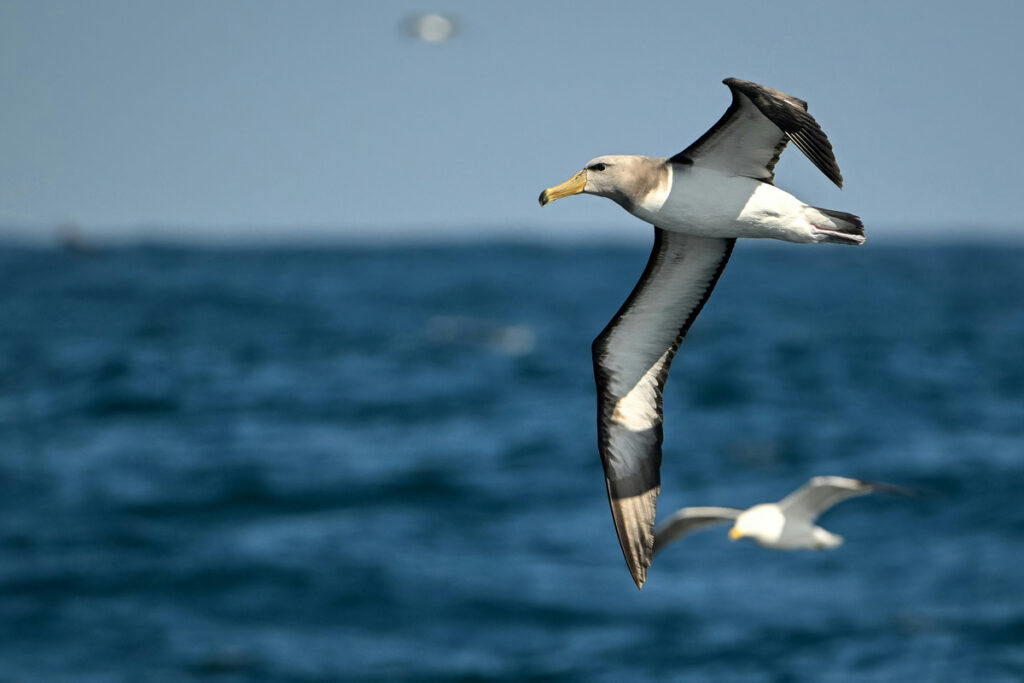
Grey-Headed Albatross (78.9 mph)
The grey-headed albatross holds the Guinness World Record for the fastest confirmed speed in level flight for any bird. In 2004, one satellite-tagged specimen recorded an average speed of 78.9 mph, which it sustained for about eight hours.
This took place during an Antarctic storm, so the albatross had a powerful tailwind and was, in athletic terminology, very much wind-assisted, but it remains an impressive feat nonetheless. Perhaps even more impressive, the grey-headed albatross — aided by its enormous 7-foot wingspan — can circumnavigate the entire globe in as few as 46 days.
Credit: MalcolmB2/Getty Images
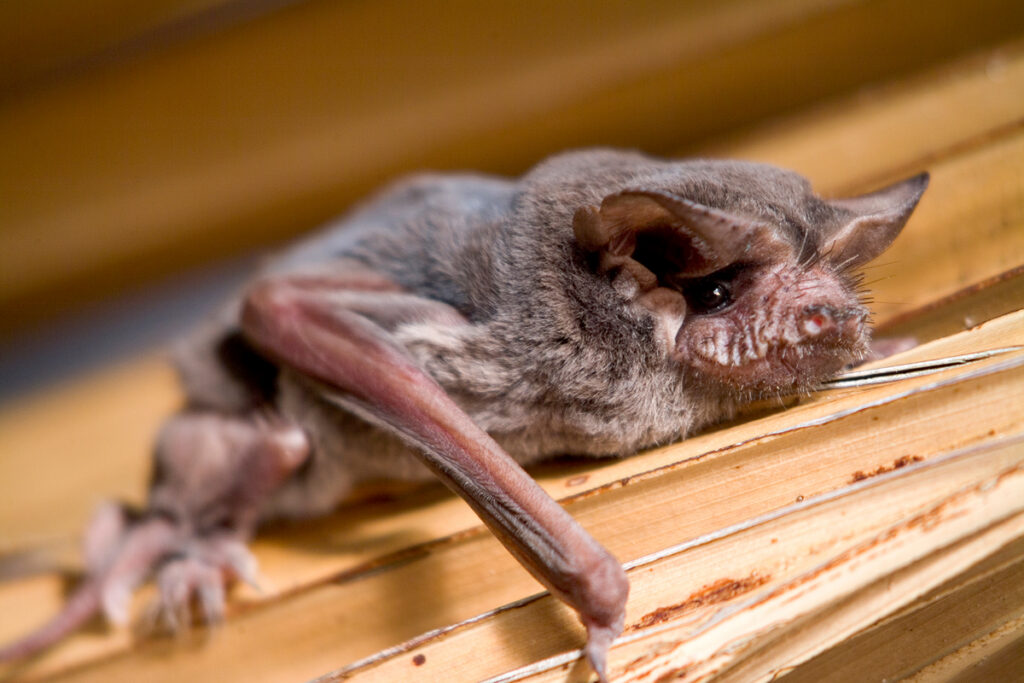
Brazilian Free-Tailed Bats (99.5 mph)
Brazilian free-tailed bats — native to the Southern U.S., Mexico, Central America, and most of South America — are slight but nimble mammals that weigh about the same as a walnut. In 2009, individual bats in Texas were recorded flying at 99.5 mph, potentially making them not only the fastest bats in the world, but also the animal with the fastest horizontal speed overall.
But there are some caveats to those measurements: Fluctuating wind gusts and the effects of gravity (most importantly during diving) could have skewed the results. So there’s a degree of scepticism among scientists, who have recommended the data be treated with caution and that further study is required in order to establish precisely where they rank among rapid animals.
Credit: AGAMI Photo Agency/Alamy
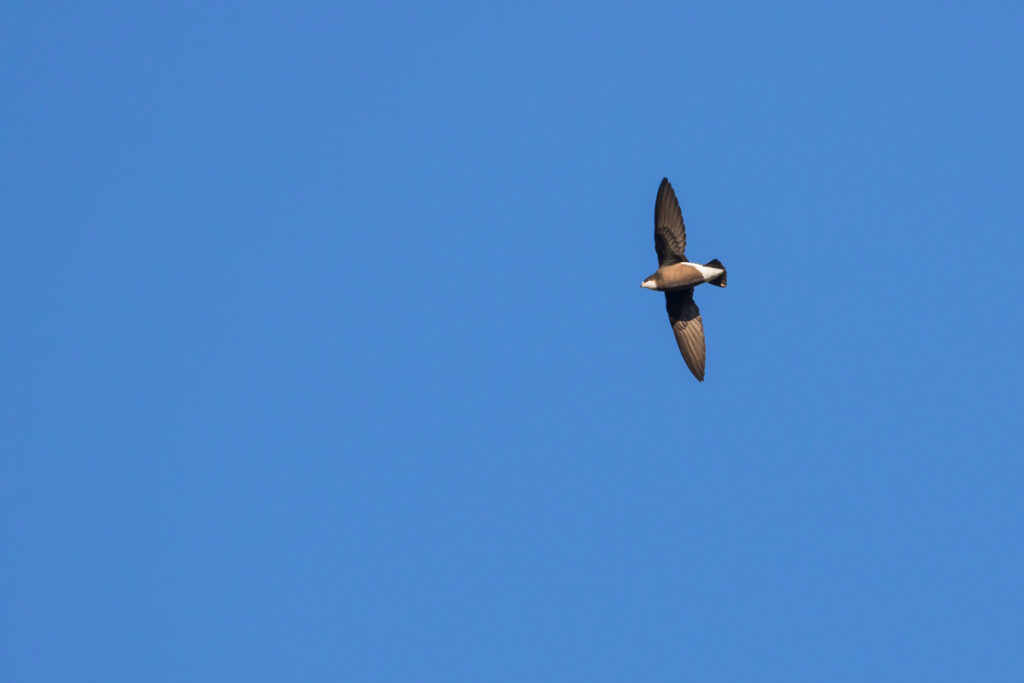
White-Throated Needletails (105 mph, unverified)
The white-throated needletail is a potential challenger for the grey-headed albatross’ title of fastest bird in level flight. The large swift has a cigar-shaped body, barrel-like chest, and long scythe-like wings — all purpose-built for sustained horizontal velocity. It’s often cited as one of the fastest-flying birds in flapping flight, with confirmed speeds of up to 69.3 mph — but it’s also been frequently claimed that this brisk bird can reach a top speed of 105 mph.
This, however, hasn’t been scientifically verified. According to avian flight specialist Per Henningsson, the methods used to measure the bird’s speed have never been published. So, while the white-throated needletail can undoubtedly match the cheetah, its exact top speed remains unknown.
Credit: Wonders of Europe/Adobe Stock
Birds of Prey (200+ mph)
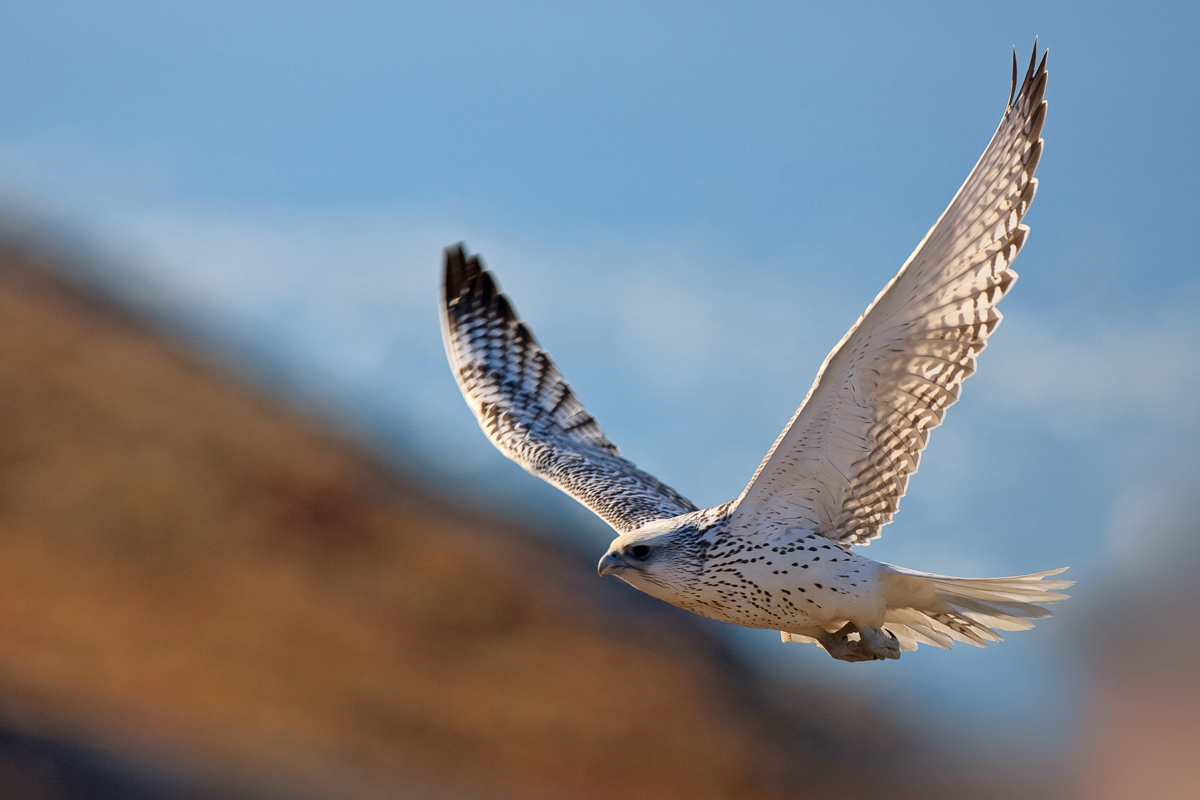
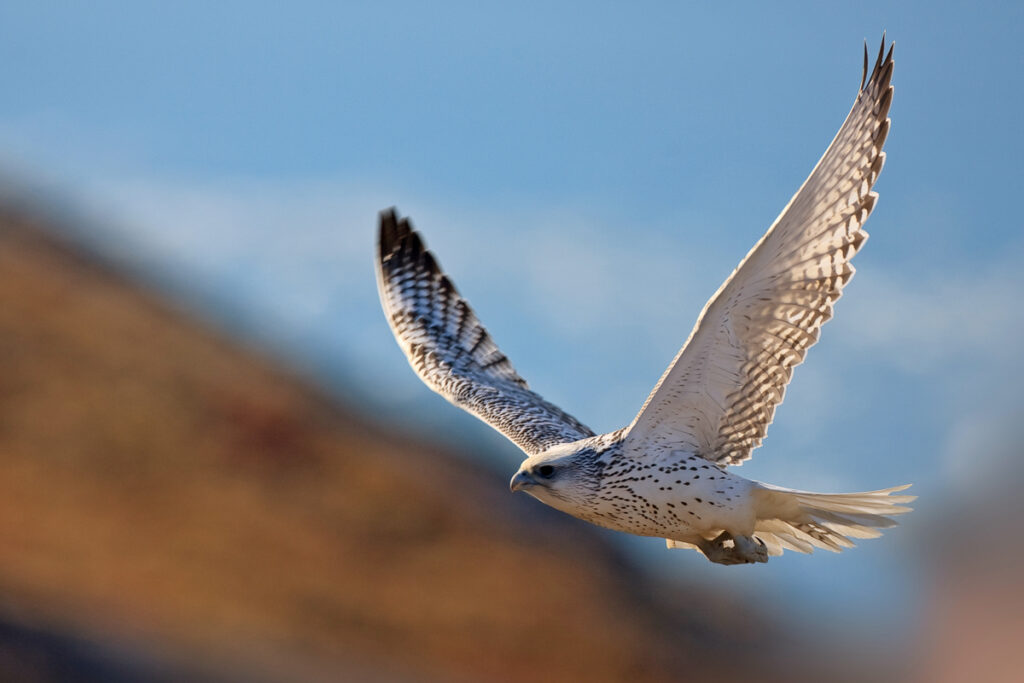
No animals on Earth can match the speed of diving birds of prey, and three species stand above all others. The gyrfalcon — the largest falcon in the world — ranks among the fastest birds in level flight, but can reach top speeds of around 130 mph when in a hunting stoop (a near-vertical dive with its wings folded tightly against its body).
The golden eagle, meanwhile, which has an average soaring speed of around 28 mph to 32 mph in level flight, can dive at speeds approaching 200 mph. But both are surpassed by the peregrine falcon, the fastest diving bird in the world, and therefore the fastest member of the animal kingdom overall.
In its hunting stoop, the peregrine falcon regularly reaches speeds of 200 mph or more. Scientists estimate that even higher speeds may be possible, perhaps topping out at a truly astonishing 242 mph.
If there was an animal Olympics, these gravity-assisted dives would probably have a category all their own, leaving the cheetah to claim its place as the fastest land animal. But in terms of pure speed, the peregrine falcon is undeniably the fastest animal in the world.
Advertisement
5 Animals With Senses Humans Don’t Have
Across Species 08/07/26Jul. 8, 2026
Updated 08/07/26Jul. 8, 2026
Credit: Sonia Nadales/Unsplash.com
Bennett Kleinman
Author
Bennett Kleinman is a New York City-based staff writer for Inbox Studio. He is also a freelance comedy writer, devoted New York Yankees and New Jersey Devils fan, and thinks plain seltzer is the best drink ever invented.
Unless you’re like Haley Joel Osment’s character in The Sixth Sense, most humans are born with just the five basic senses: vision, hearing, touch, taste, and smell. The same goes for other animals, though you may be surprised to learn about all the “sixth” senses that exist in the animal kingdom.
Some creatures can sense electrostatic fields, others can visualize heat, and various animals use sound waves to navigate their surroundings. Here are several examples of animals with senses that we humans lack.
Credit: David Courbit/Unsplash.com
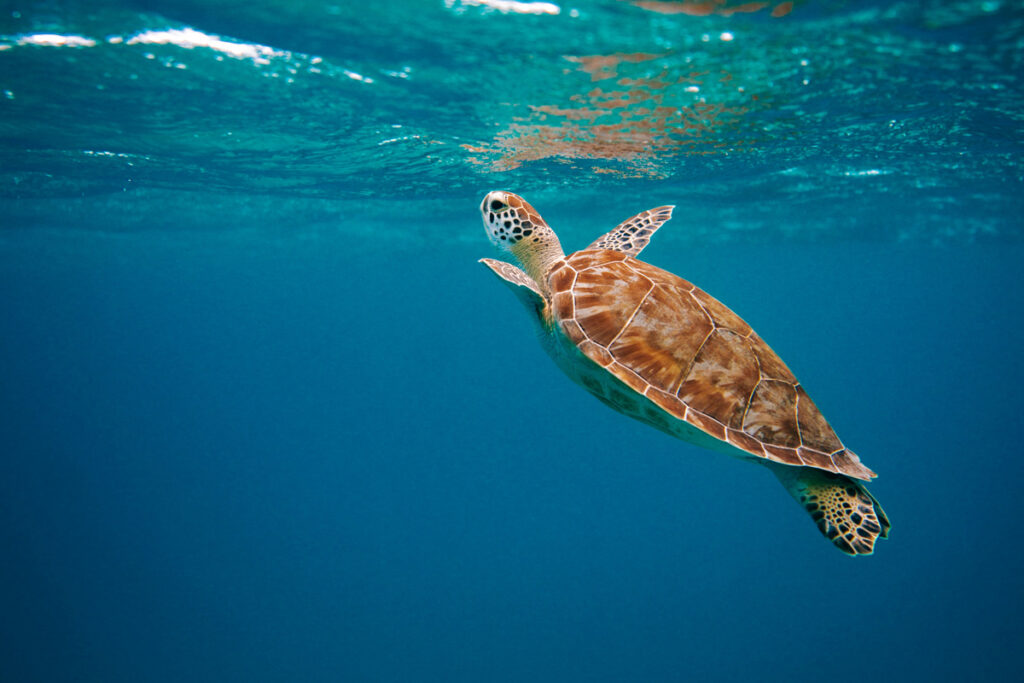
Sea Turtles: Magnetoreception
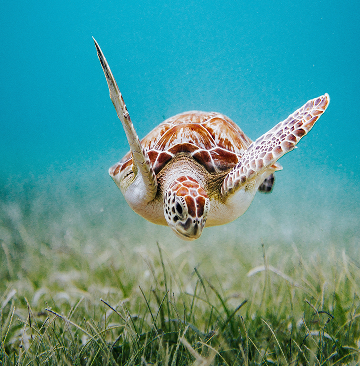
Imagine having the ability to navigate long distances without having to consult Google Maps even once. Sea turtles have just that, specifically in the form of magnetoreception, which essentially acts as a built-in compass that gleans information from the planet’s natural magnetic field. Turtles can also sense waves emanating from human-made structures such as offshore wind farms and power lines.
Whatever the source may be, studies show the turtles essentially create maps in their brains using the information provided by Earth’s magnetic fields. They can use those “maps” to travel to specific destinations, even ones located thousands of miles away. This comes in handy especially during migratory periods, allowing them to return to the precise spot they originally migrated from.
Magnetoreception is also present in a number of migratory animals besides turtles, such as salmon, birds, and insects. Perhaps one day scientists will devise a way for human snowbirds to use magnetoreception when traveling to Florida for the winter, but that day has not yet arrived.
Credit: NARONG/Adobe Stock
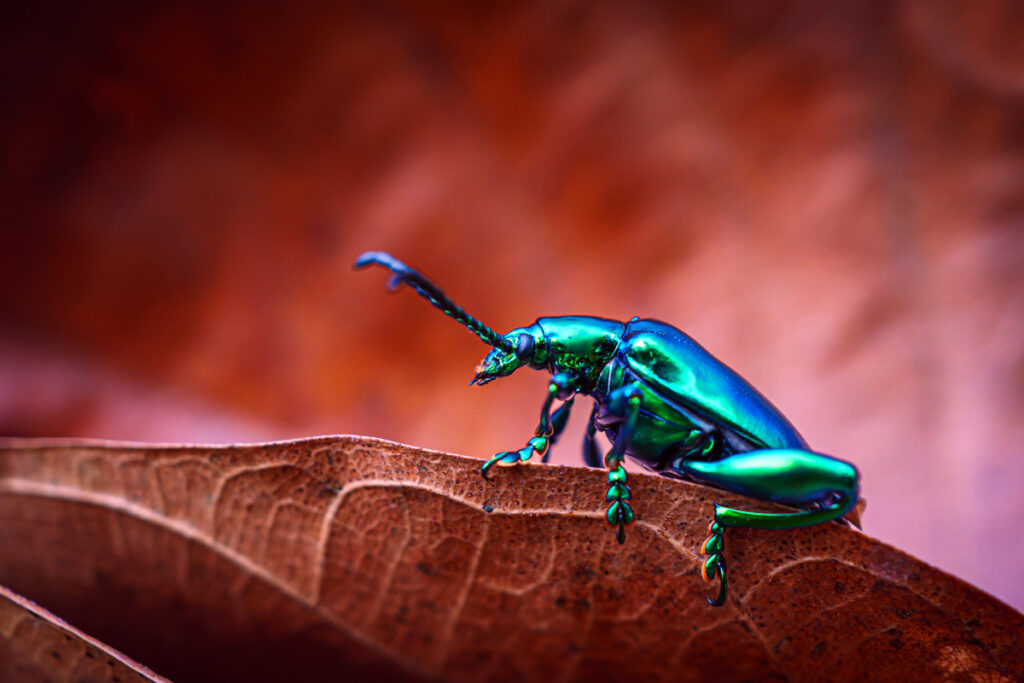
Jewel Beetles: Infrared Detection
Much like expectant parents searching for the right hospital, the jewel beetle is rather particular when it comes to where it gives birth. But unlike human parents, this beetle prefers to do so inside the charred husks of trees that have been damaged by forest fires.
You may wonder how jewel beetles can track down forest fires without access to news or social media. The answer lies in the creature’s genetic ability to detect infrared radiation from up to 50 miles away: Jewel beetles possess a pair of infrared-detecting organs that are used to sense heat.
Those organs are located under their wings and absorb radiation at the precise dominant wavelength (3 micrometers) emitted by wildfires. After absorbing the heat radiation, the organs expand, providing the beetle with a sense of which direction it must go to find the charred arboreal remains.
Credit: Mike Workman
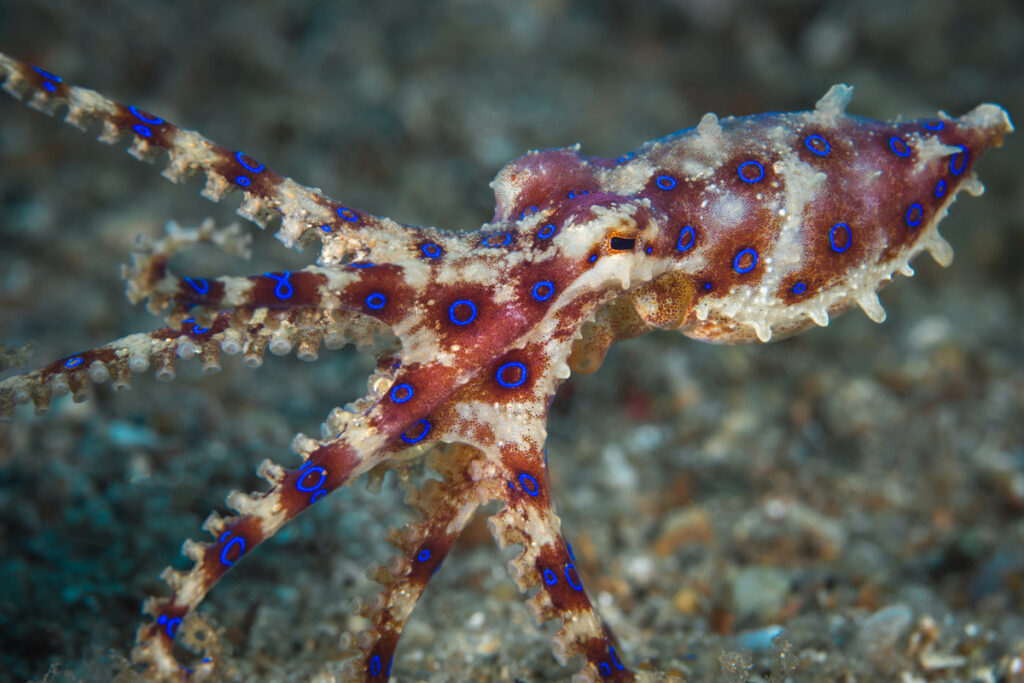
Octopuses: Polarized Vision
If you’ve ever worn a pair of polarized sunglasses, you know they’re ideal for eliminating intense glare. But under the sea, octopuses, along with other cephalopods including cuttlefish, also rely on polarized vision. Obviously those creatures don’t have access to Sunglass Hut or Warby Parker, but thankfully that helpful trait is built into their genetic makeup.
Octopuses are colorblind, and rely on polarized vision for protection and to navigate their surroundings. In many other creatures, the ability to process polarized light is impacted by spatial distortion — e.g., how the density of water causes light to refract and bend in a way that causes objects to appear blurry, closer/farther, or shaped differently than their actual form.
But an octopus’s photoreceptor cells are able to process the polarized light directly without distortion. This allows octopuses to clearly see the polarized light that reflects off predators and prey, and to camouflage their bodies to match the polarization of their environment.
There’s also a theory that octopuses may rely on this ability for hidden communication. In other words, they could potentially reflect polarized light off their own bodies to communicate with other octopuses, knowing that the reflections are imperceptible to other sea creatures.
Credit: Sonia Nadales/Unsplash.com
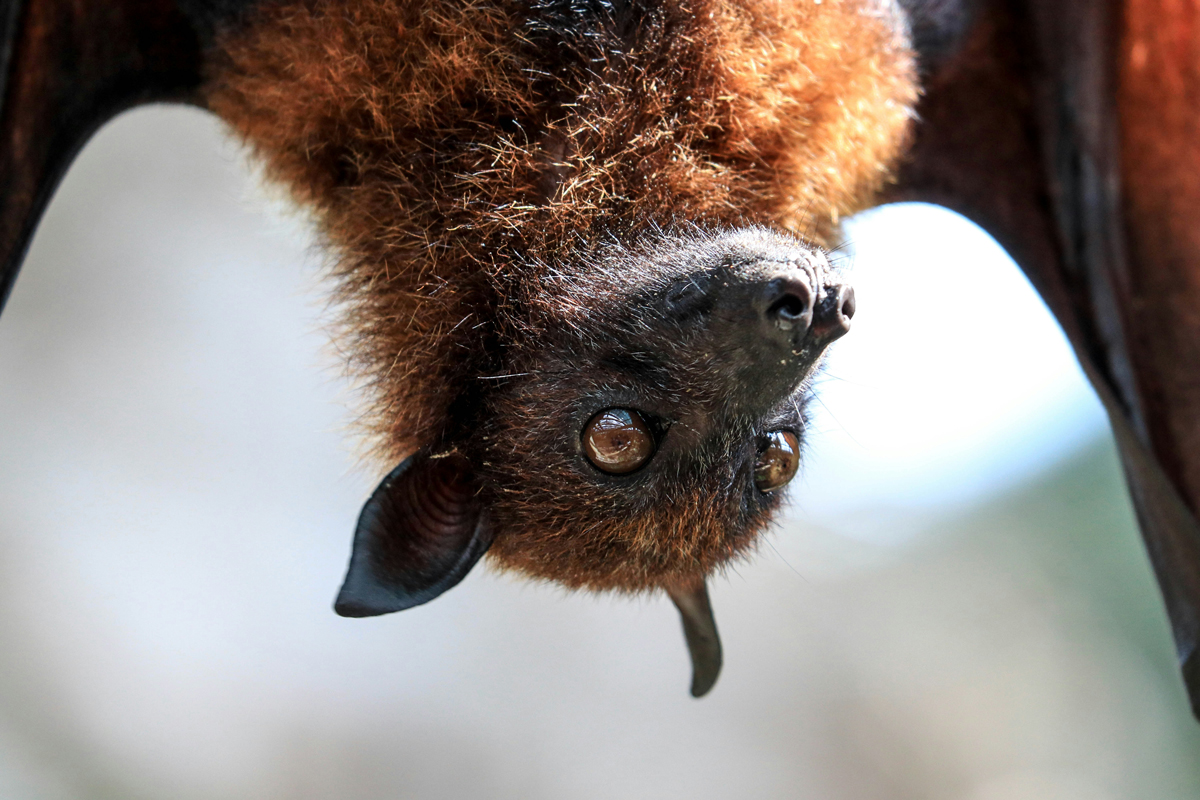
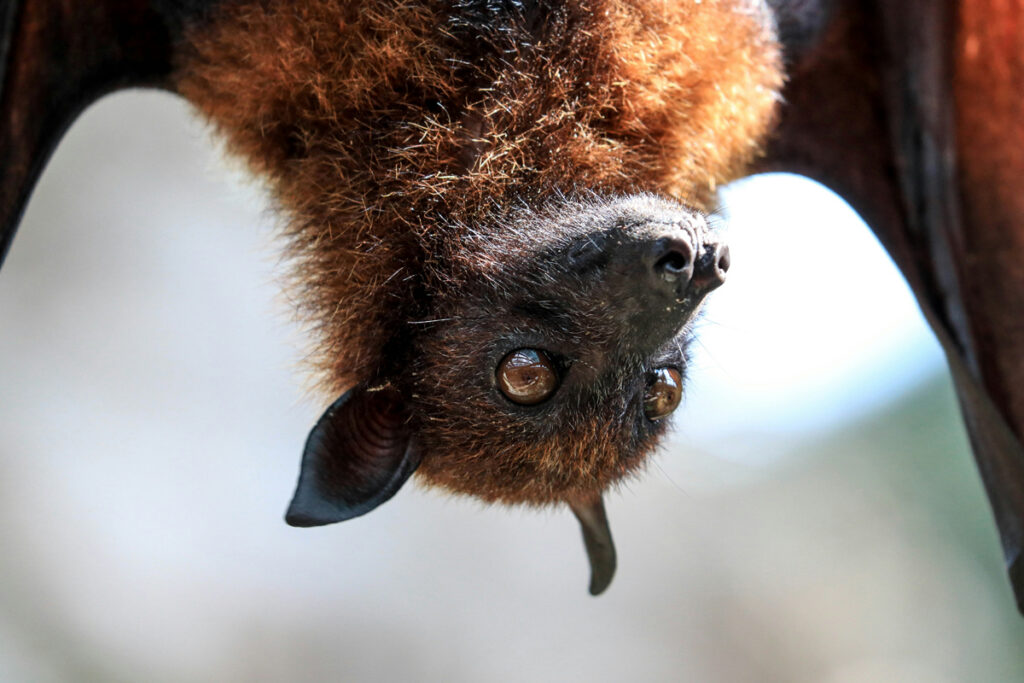
Bats: Echolocation
It’s a common misconception that bats are blind; if anything, they probably have better vision than most humans taking eye tests at the DMV. But despite the ability to see, bats largely rely on what’s known as echolocation to navigate and communicate.
Echolocation works by bats producing high-pitched sound waves that are imperceptible to the human ear. Those waves bounce off the surrounding environment and return to the source — the bat itself — to provide it with essential information.
For instance, besides communication and navigation, bats also use echolocation for hunting, producing sound waves that bounce off an insect to reveal its location. This tells the bat where it needs to swoop for a nice five-star dinner.
Credit: Stephan Bechert/Unsplash.com
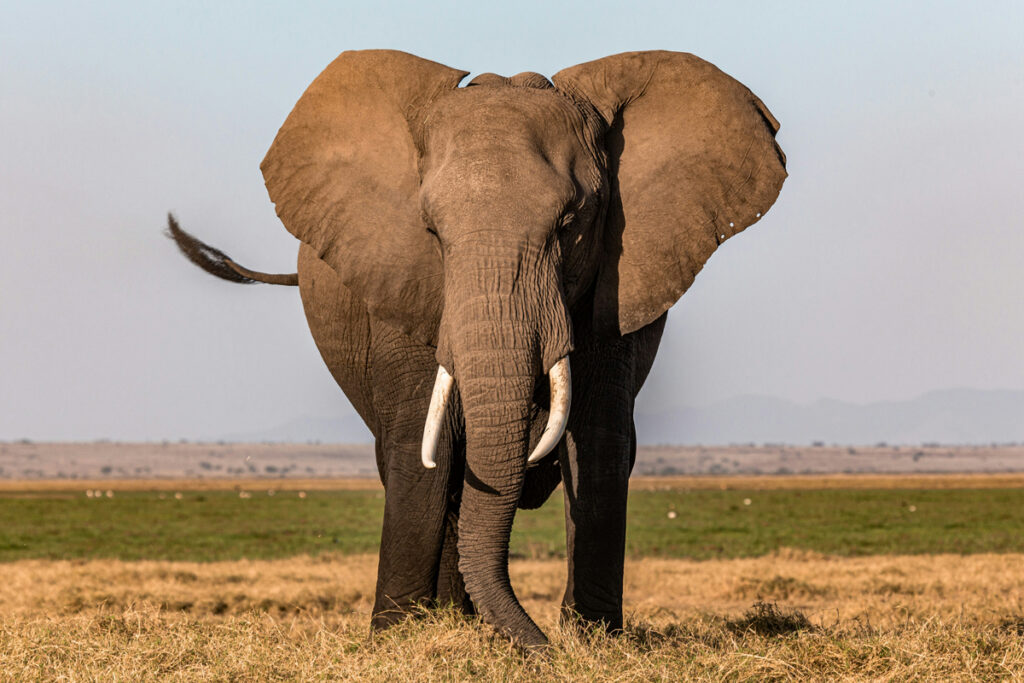
Elephants: Seismic Communication
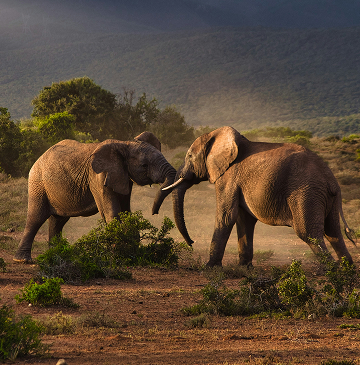
Elephants seem to enjoy music, and if we had to guess their favorite tune, it may be “Good Vibrations” by the Beach Boys. While human beings are able to feel vibrations in their immediate vicinity, elephants are notably skilled at detecting seismic activity.
Elephants are able to detect those low-frequency rumbles in one of two ways: One theory is that it happens through bone conduction, specifically the huge bones located in their equally massive ears. Other researchers believe elephants have highly attuned mechanoreceptors located in their toes, feet, and trunks, which are sensitive to even the slightest vibrations.
There’s evidence of elephants sensing vibrations from thunderstorms as far as 100 miles away. Elephants in Angola were spotted heading north toward storms in search of water. Elephants themselves can also generate vibrations for communication that can travel as far as 20 miles, alerting other elephants within that range to their presence.
Advertisement
What It Means for an Animal To “Play Dead”
08/07/26Jul. 8, 2026
Updated 08/07/26Jul. 8, 2026
Credit: Mark Lotterhand/Adobe Stock
Krissy Howard
Author
Krissy Howard is a writer with a background in comedy, and a love for researching and writing about animal behavior. You can read some of her work at Cuteness, Byrdie, and The Hard Times. When she's not writing, she's growing food in the community garden, feeding stray cats, and learning Greek.
Long ago, the ancient Greek god Thanatos once wandered the underworld with his brother, Hypnos, the god of sleep. The mythological personification of death itself, Thanatos was a peaceful deity, guiding the living to meet the end of their days with little trauma.
Today, dozens of animals rely on his namesake, not to die, but rather to avoid death, and live another day. Thanatosis, sometimes referred to as “tonic immobility,” or “apparent death,” is more widely known as “playing dead.” And this skill accomplishes much more than a dog earning a treat — in fact, it’s a key survival strategy for many species.
Credit: Michael/Adobe Stock
A Straightforward Survival Strategy
To put it simply, playing dead is the ultimate avoidance strategy. Animals typically play dead when they’re looking to avoid something, which could range from impending death to an unwanted mate. And each creature does it a little differently, some so effectively they deserve an Oscar nod.
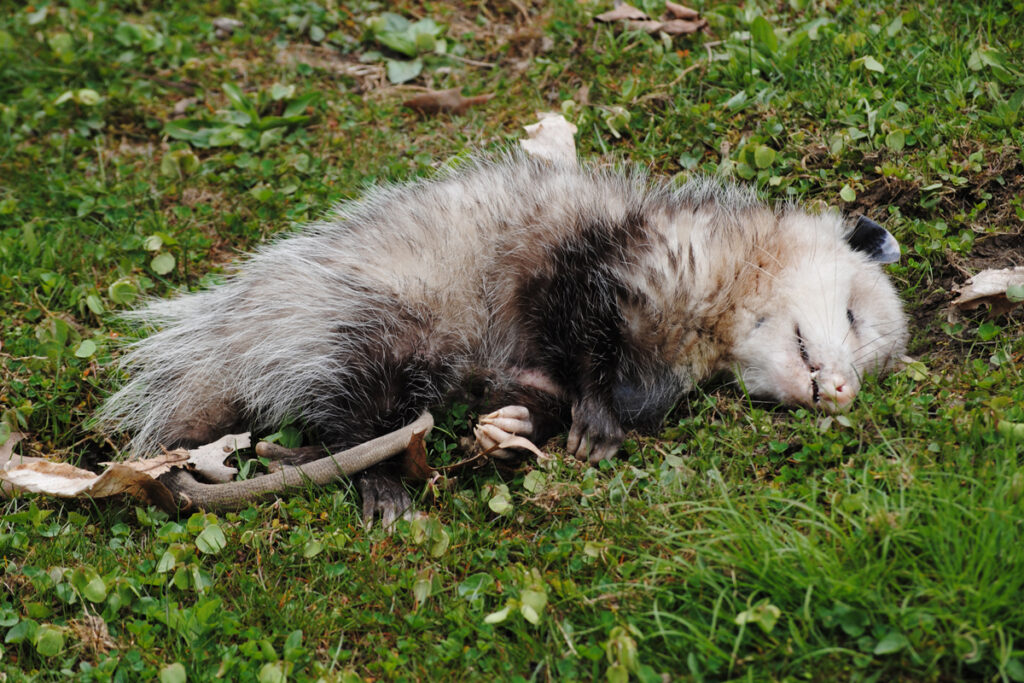
One of the most well-known animals to engage in this clever defensive strategy is the opossum, though the behavior is not always voluntary. Opossums will always try to defend themselves by baring their teeth and hissing when they’re frightened, but if they feel that they may not get out of the situation alive, their bodies essentially faint, causing them to go limp and appear lifeless — convincingly so. According to research published in Acta Physiol Scandinavia, the heart rates of studied opossums dropped from 222 to 120 beats per minute, their breathing reduced from around 27 to just two breaths per minute, and even their body temperature dropped by about half a degree.
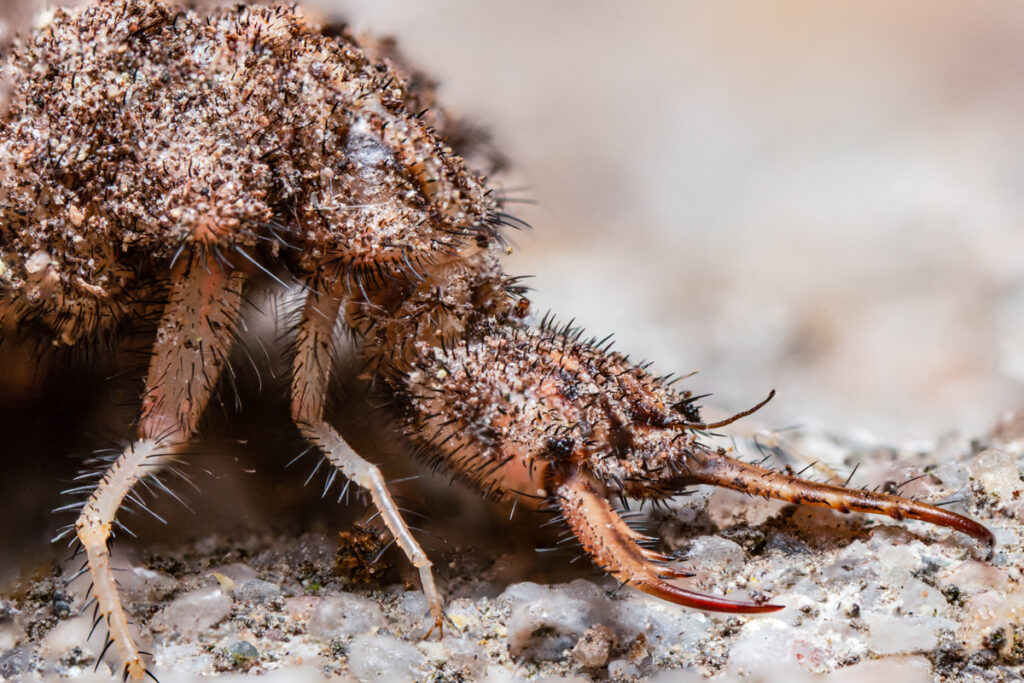
Bugs also get out of trouble by pretending they’re not alive. Antilion, commonly known as doodlebugs, start faking it straight from the larval stage, causing predatory birds like sparrows to drop them rather than swallow them. While many animals go limp to appear lifeless, Pygmy grasshoppers go the rigor mortis route and extend their legs to stick out stiff straight. This not only makes them appear dead, but also makes them physically hard to fit into the mouths of toads that try to eat them.
Credit: Bill/Adobe Stock
The Artificial Aroma of Death
Of course, death is not only represented by lifeless limbs and undetectable breathing. The smell of death can deter predators that are wired to avoid eating decaying flesh for self-preservation purposes. Opossums emit a green, foul-smelling mucus from their anal glands that mimics the exact chemicals that give rotting meat its telltale stench. These marsupials go even further to look the part by urinating and defecating during their catatonic state, and propping their mouths open to release saliva, foam, and even more bad smells.
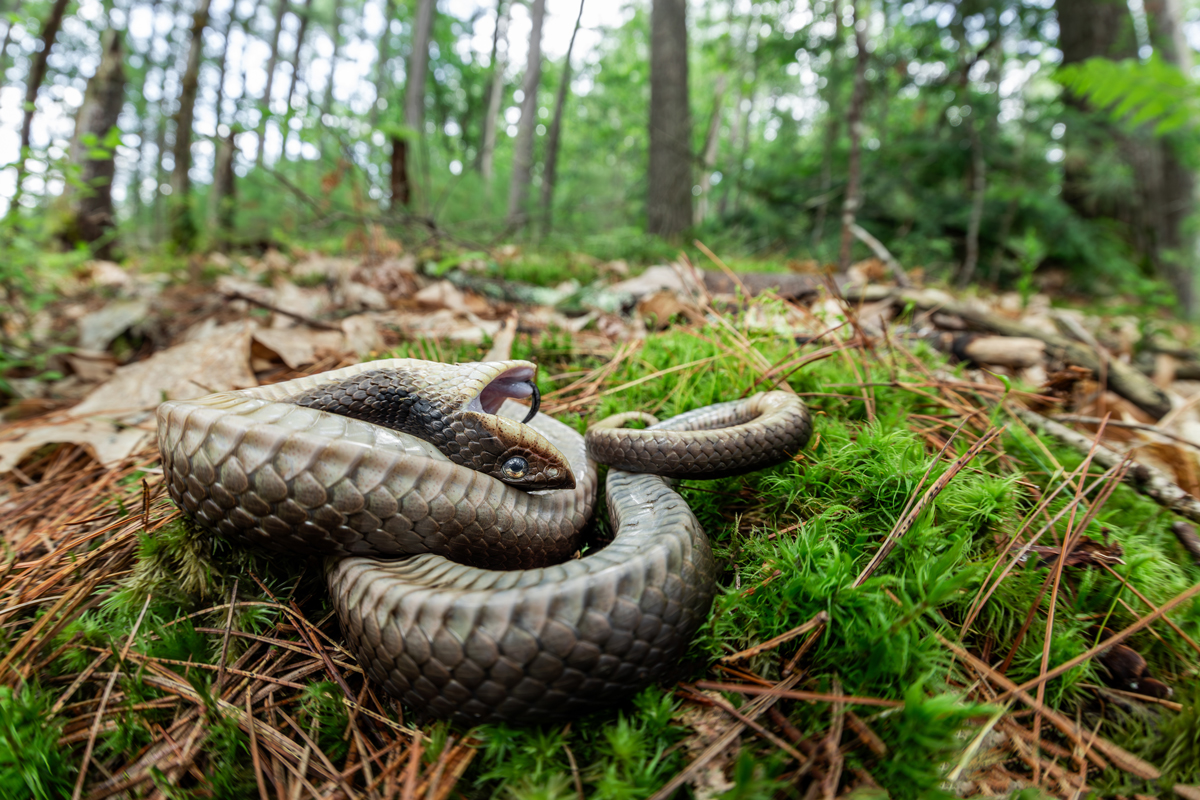
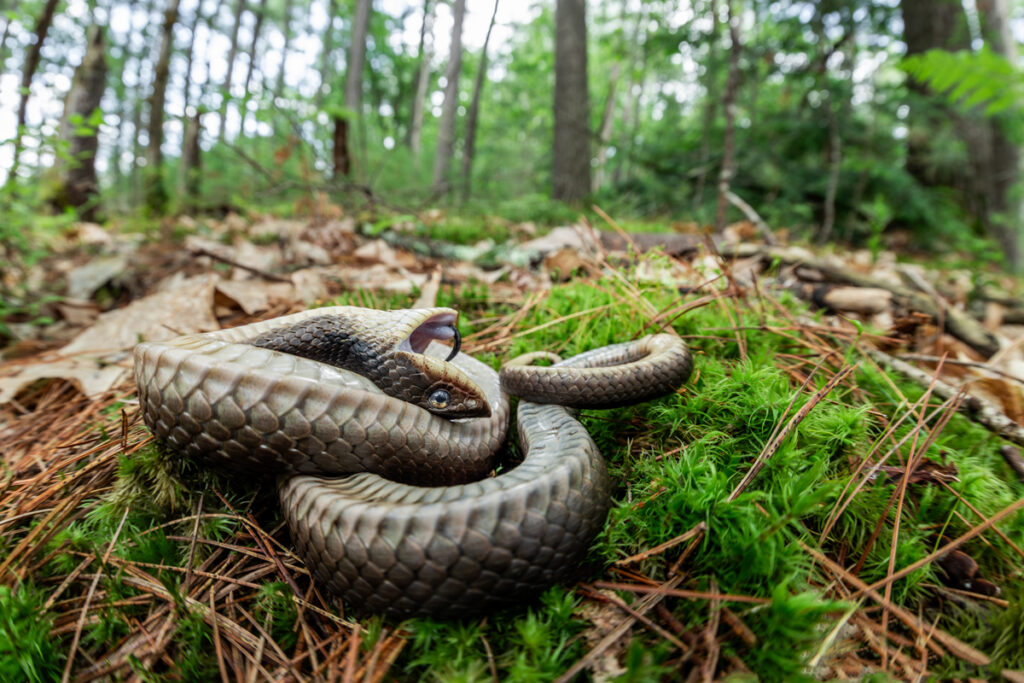
Some snakes can put on an impressive show of their own. The Eastern hognose snake resides in almost every region of the U.S., so it has its fair share of predators to avoid, including hawks, raccoons, and bigger snakes, like king snakes. They’re fitted with a mild venom for defense, but the tactic that seems to help the most is writhing around before rolling over on their backs, laying limp with their mouths wide open.
They, too, release a bad-smelling musk to deter their enemies, and may even bleed from their mouths for extra effect. Some researchers guess that this musky odor is caused by chemicals found in the poisonous toads that make up much of the hognose’s diet. Like all animals that play dead, they can stay this way for hours if need be, and only “wake up” when the threatening party has packed up and left.
The aptly albeit rudely-named stinkbirds, also known as Hoatzin, earned their nickname from this very behavior. As chicks born in the Amazon they have few defenses, so they’ve taken to dropping from their nests into river waters below at the sight of passing predators.
Before these birds can fly, they can swim, so they stay submerged until danger has passed. Never ones to be too safe, the birds later emit a foul smell once they’re back on land to ward off anyone else thinking of approaching.
Credit: André LABETAA/Adobe Stock
Other Survival Strategies
Death isn’t the only thing some animals play dead to escape. Surely, everyone has wished they could just lie there, seemingly lifeless, until that annoying guy who can’t take a hint moves along at the bar, but some animals actually follow through on the theatrics.
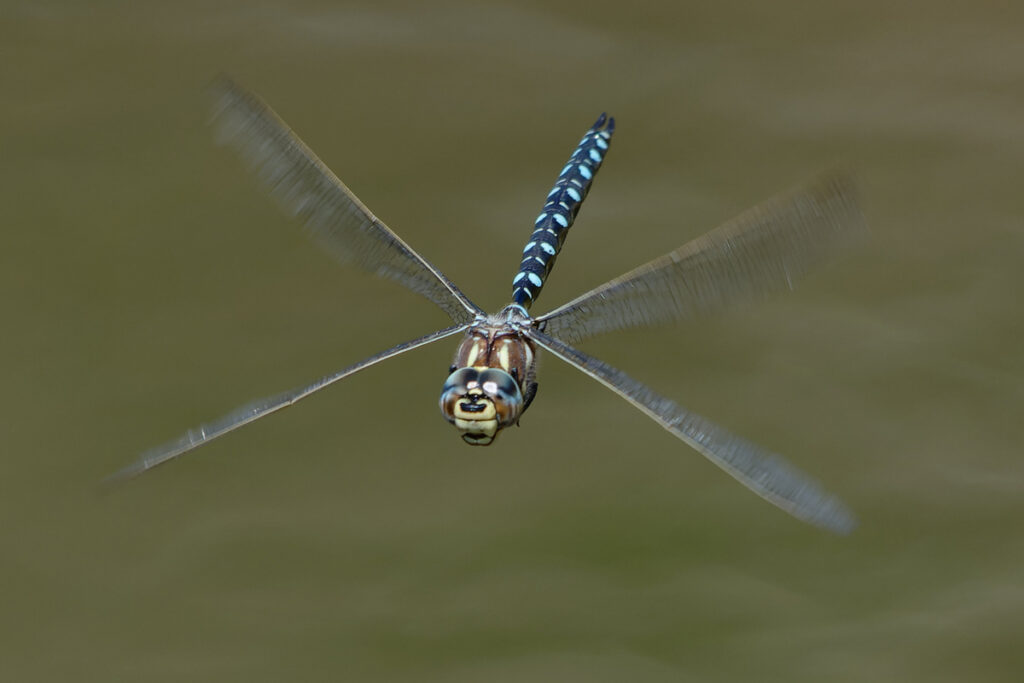
Certain female frog species play dead to avoid unwanted advances from males. This can commonly happen among animals where males outnumber females, leading to an unwanted onslaught of male attention. Moorland Hawker dragonflies dive into the water to avoid unwanted suitors.
Meanwhile, Livingston cichlids and Central American cichlids use the play-dead tactic to attract prey. Already adorned with mottled gray and white skin, these freshwater fish lay on their sides at the bottom of the lakes they call home and wait. Because their color pattern makes them appear dead and already decomposing, some smaller scavengers, like shrimp, may see if they can score a free meal, often to their detriment.
Male Golden orb-weaver spiders are smaller than their female counterparts, which makes them an easy meal if they get too close to their would-be mates. One way these arachnids have conned their queens is to roll up insects in small balls of food, then play dead beside the ball so that the female drags both of them back to her web. At this point, the male spider “wakes up” to mate with the female as she eats, often walking away unharmed.
Credit: Mark Lotterhand/Adobe Stock
Why Does it Work?
Tonic immobility doesn’t always work, which is why it’s often a last resort method for many animals. When it does do its job, however, it’s a great way to send predators packing and costs the performer essentially nothing.
Predatory brains are fitted with enhanced neural pathways that allow them to spot even the most camouflaged animal the second it, or something around it, moves. Even the common house cat possesses this mechanism. Animals use their senses of sight, hearing, and smell to clock movement, which is then signaled to the brain via these pathways to signal the animal to lock in on the area where the prey was detected. When animals play dead effectively, and don’t move for a long time, it works well enough to trick even the most astute predator.
Advertisement
Your Daily Guide to the Animal Kingdom
Get to know the animals that share our planet with this daily newsletter.
Success! Welcome to Animal Facts.
Check your inbox for your daily email.
Sorry, your email address is not valid. Please try again.