Your email has been confirmed, welcome to Animal Facts!
Author: brobinson
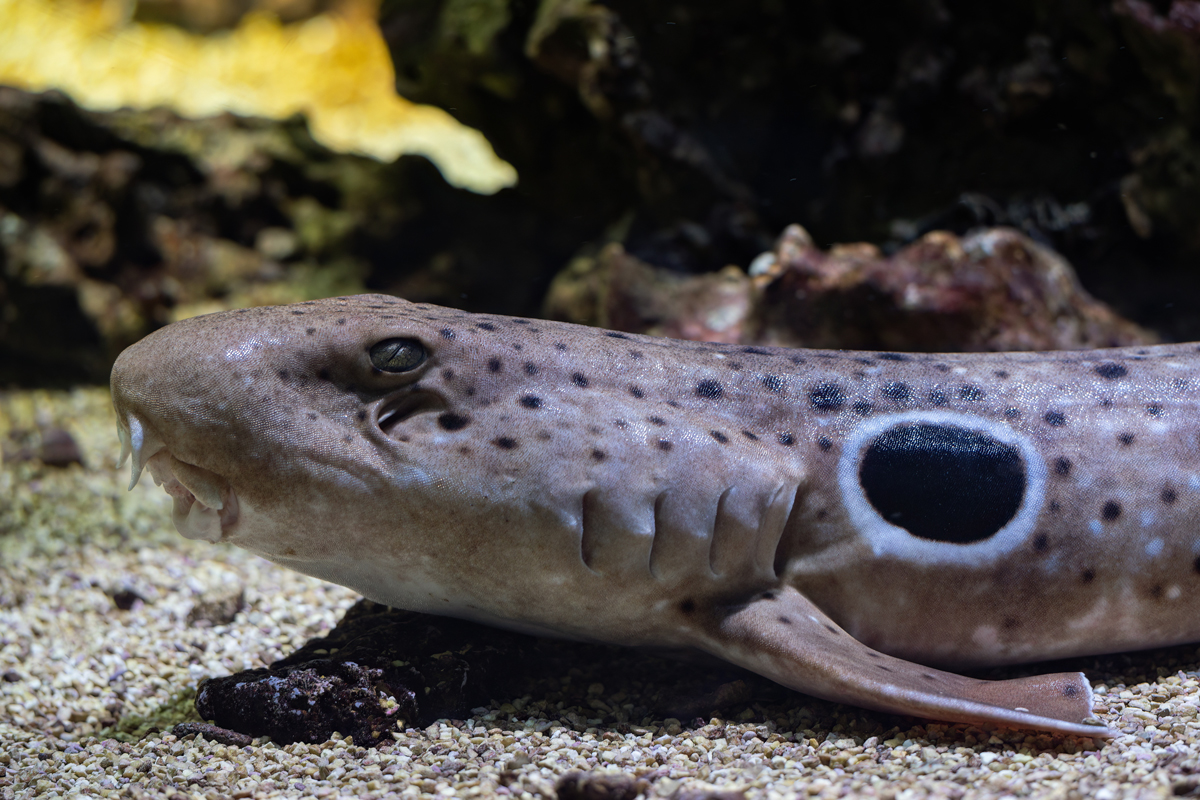
One type of shark can walk on land.
Fish 18/09/26Sep. 18, 2026
Updated 18/09/26Sep. 18, 2026
Credit: lapis2380/stock.adobe.com
Michael Nordine
Author
Michael Nordine is a Senior Staff Writer at Britannica, where he writes the newsletter Movie Brief. He grew up with eight cats and would like to see a Komodo dragon in the wild one day.
Because normal sharks apparently aren’t terrifying enough, one species, the epaulette shark, can walk on land. Thankfully quite small — typically less than 3 feet long — and largely found in shallow, tropical water near Australia (because of course) and New Guinea, these sharks are best known for their ability to “walk” across the seafloor using their paddle-shaped fins.
Because they tend to live among coral reefs with a variety of obstacles to navigate, these creatures evolved the ability to crawl over them rather than merely swim. They can also survive out of water for up to two or three hours, hence why they can also walk on land — something they do in pursuit of prey or merely to escape the low-oxygen tide pools in which they often find themselves.
Nicole is a writer, editor, and researcher with over 15 years experience covering arts and culture, lifestyle, and media. Her work has also appeared in PureWow, Brit + Co, Exclaim, AUX TV, and CBC. She lives in Ontario, Canada.
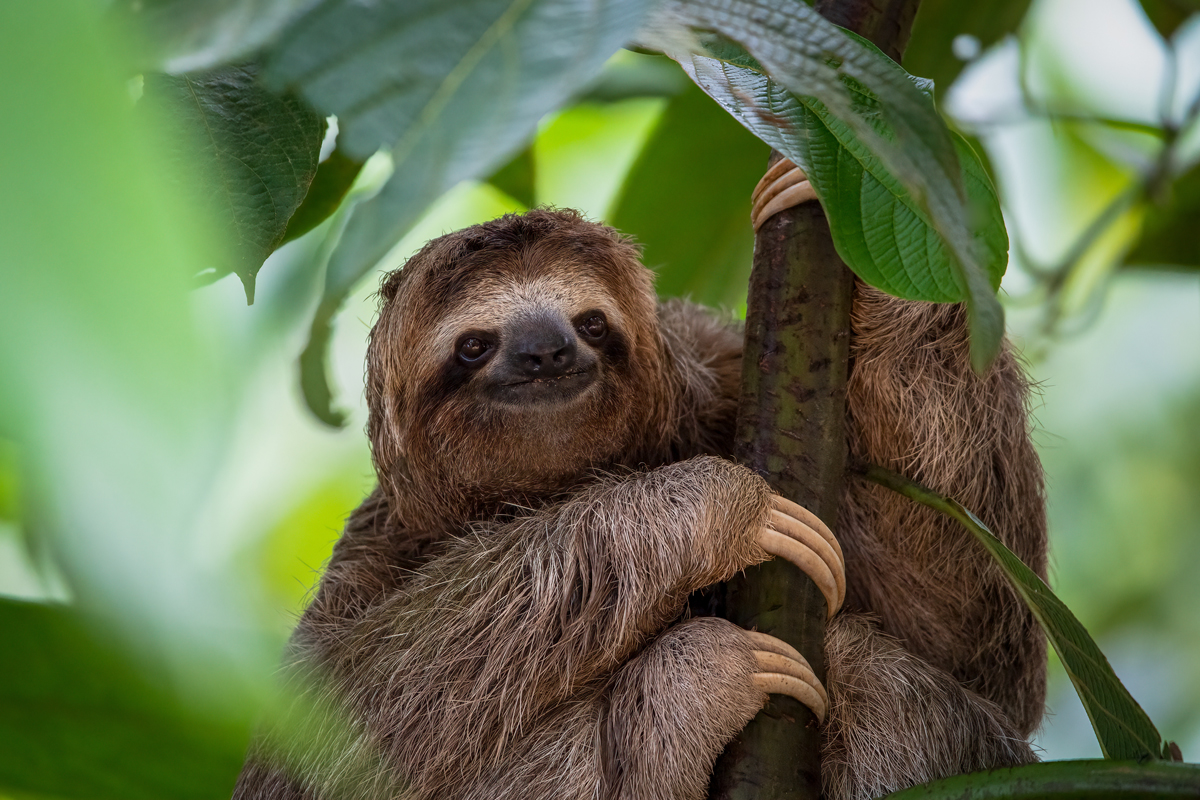
In a relaxed state, human hands are most likely to have uncurled fingers, while a clenched fist usually signals tension. But it’s the opposite for sloths: Their hands naturally curl into a hooklike grip, a useful adaptation for an animal that spends about 90% of its life hanging upside down from branches.
Sloth hands are built to grab hold, with long, curved claws and specialized flexor tendons that help keep their unique digits curled around branches without much muscular effort. To let go, however, a sloth has to actively extend its fingers, using muscle energy to stretch through the natural pull of the flexors.
Nicole is a writer, editor, and researcher with over 15 years experience covering arts and culture, lifestyle, and media. Her work has also appeared in PureWow, Brit + Co, Exclaim, AUX TV, and CBC. She lives in Ontario, Canada.
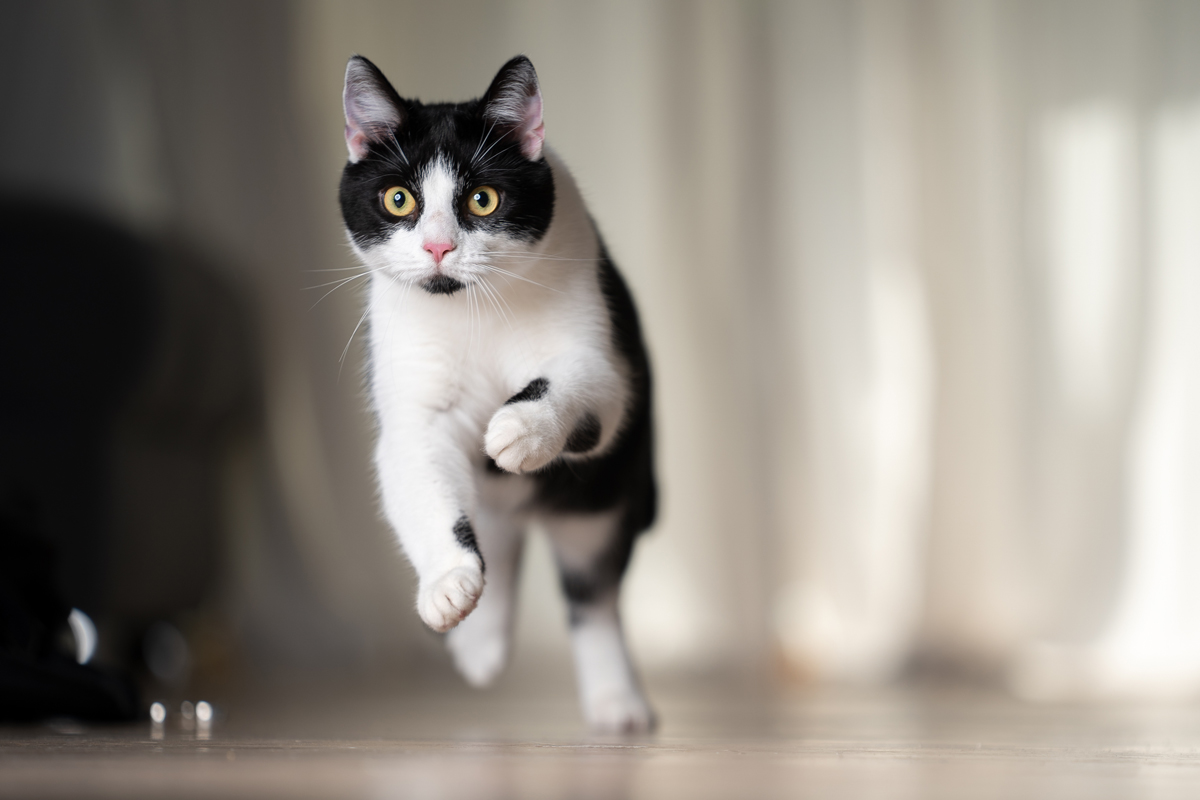
House cats may spend most of their days lounging in sunbeams or waiting for their food to be served up in a saucer, but domestication hasn’t entirely erased their wild side. Our modern feline friends are actually quite similar to their ancestors, retaining much of the same anatomy, and even some of the same behaviors, as their predecessors.
Today, those ancient instincts can show up in familiar ways: The way they play, the scratches on your furniture, and even the places they like to hide are rooted in their past. Here are five wild behaviors that house cats never quite left behind.
Credit: rhoenes/stock.adobe.com
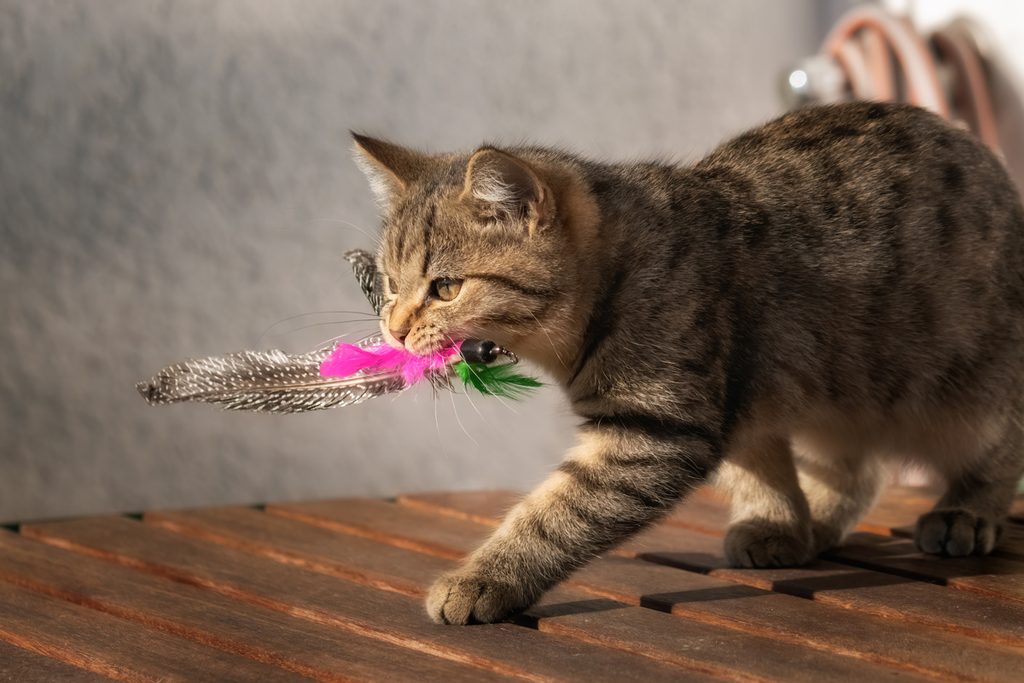
They Treat Their Toys Like Prey
You may have noticed that when a cat plays with a toy, it can also look like they’re hunting. An innocent toy mouse will probably find itself being stalked, chased, pounced on, or bitten over and over, especially by a rambunctious kitten. That’s because these are hunting behaviors, and they’re still ingrained even in pampered house cats who have no need to hunt.
Research has found that domestic cats don’t even need to be hungry to engage in this predatory behavior. They may also catch prey and bat it around, release it, and catch it again before killing it — even if they have no intention of eating it. This technique may help tire out prey that could otherwise fight back in the wild, but cats don’t always kill solely for an immediate meal; they may be acting on a primal instinct to secure food stores for later.
Credit: Alexandra King/stock.adobe.com
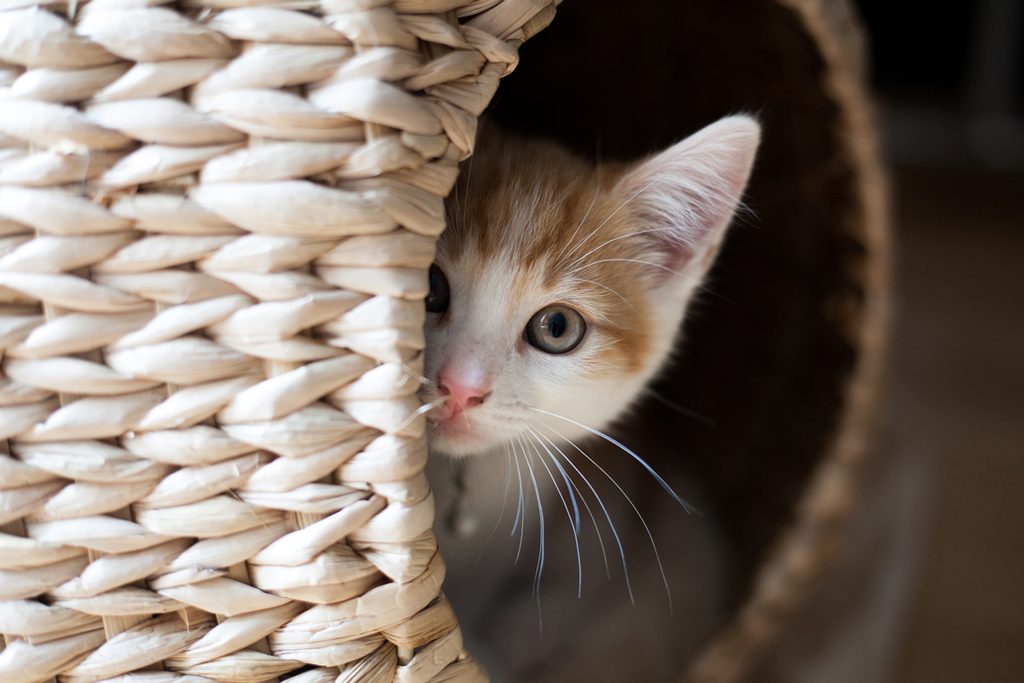
They Hide in Small Spaces
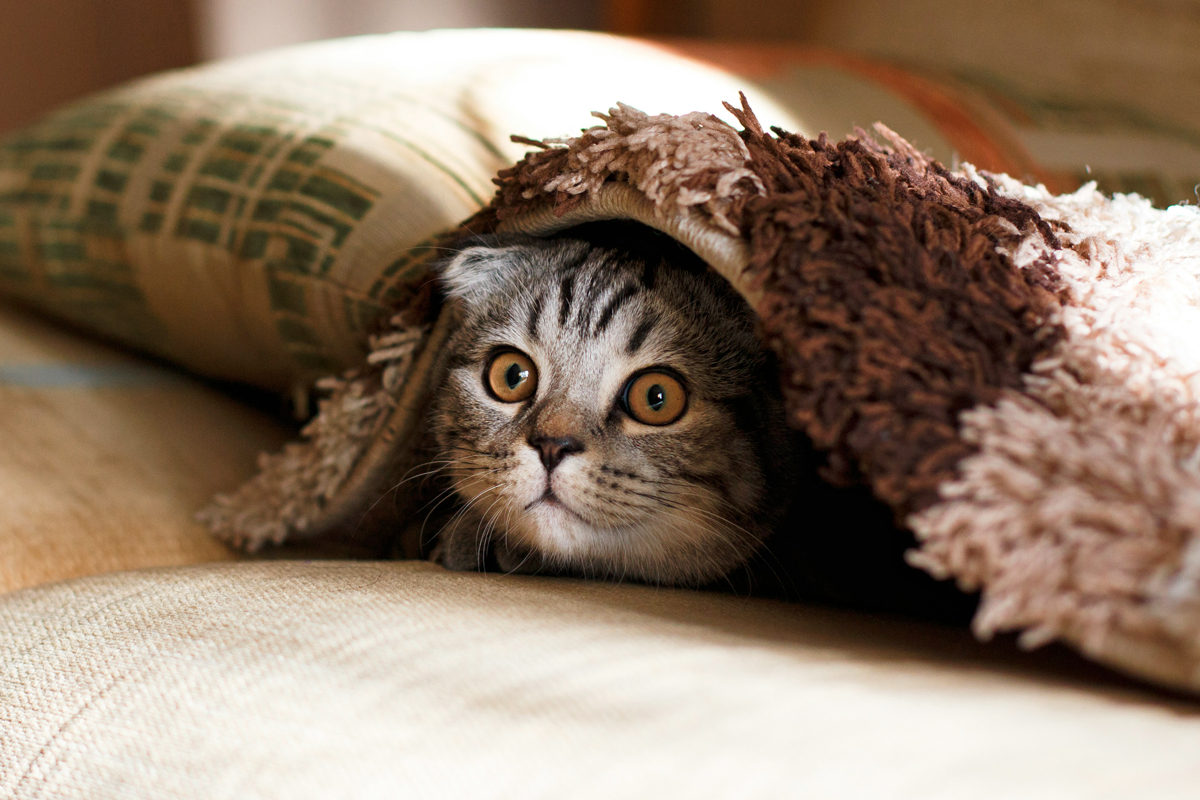
Give a cat an empty cardboard box and there’s a good chance it’ll become their newest lair. Cats often seem to enjoy small, enclosed spaces, something you’ll be familiar with if your pet has ever accidentally scared you while hiding in a closet or under a bed.
This instinct goes back to the cat’s undomesticated years when it was both predator and prey: Being hidden helped the animal discreetly watch for prey while also protecting them from larger animals hunting for their own dinner. Modern research has found that hiding places can indeed make domestic cats feel more secure, particularly in unfamiliar settings.
Credit: furryfritz/stock.adobe.com
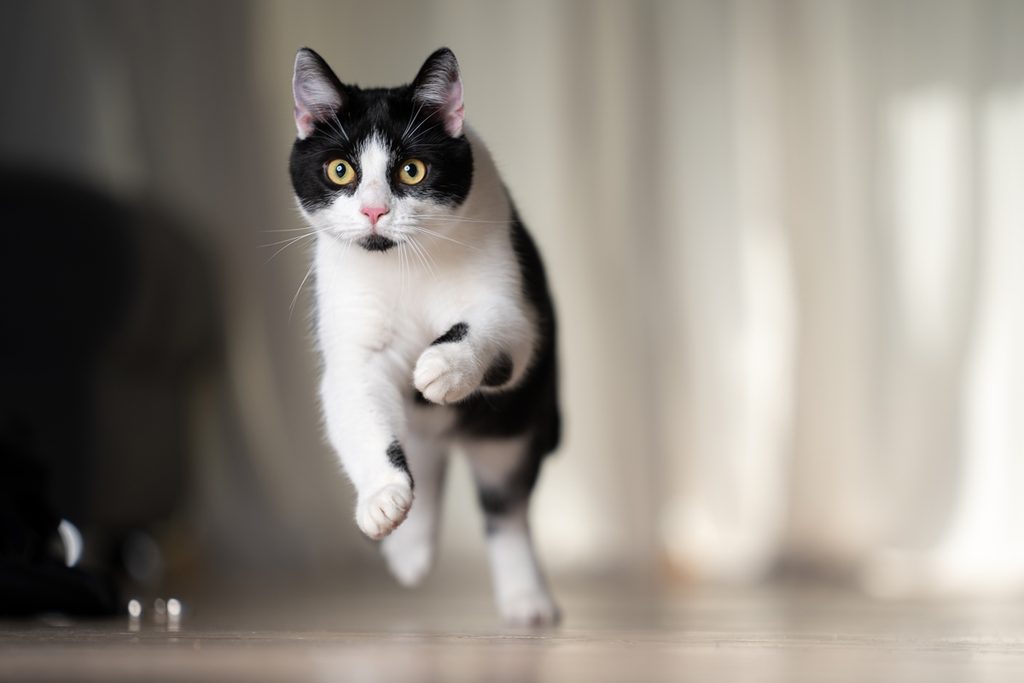
They’re Most Active at Dawn and Dusk
If your cat suddenly gets the zoomies at sunrise or races around the house overnight, it isn’t necessarily being a nuisance on purpose. Many cats have spurts of activity around dawn and dusk, a pattern adapted from their wild ancestors that were crepuscular, meaning they were most active at twilight. Research suggests this bimodal rhythm may have been inherited from their wild ancestors, when being active around dawn and dusk would have meant better hunting opportunities with fewer competitors.
Credit: virgonira/stock.adobe.com
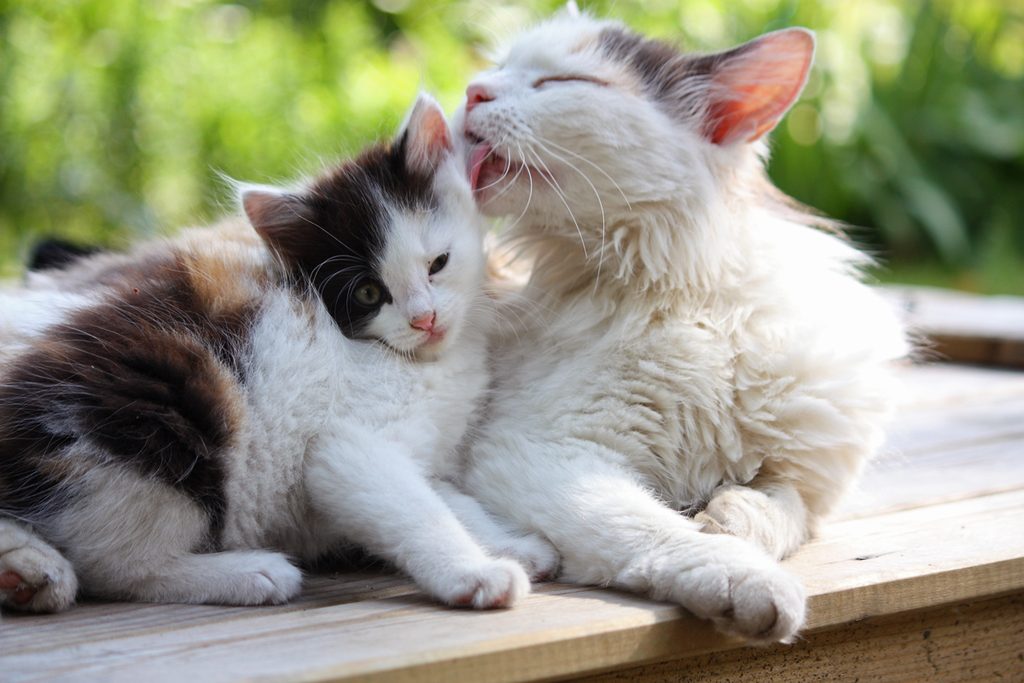
They Care for Their Kittens
Mother cats spend a lot of time grooming, nursing, and keeping their kittens close. Domestic cats didn’t learn these behaviors from living with people; they’re part of the ingrained maternal behavior cats use to keep their young fed, clean, and protected.
Research has found that domestic cats also often use hiding spots to raise their kittens, much like their wild relatives do, and they’ll sometimes move their kittens from place to place, carrying them to a new hiding spot when they’re still very young. Although the instinct to relocate their kittens and keep them hidden from potential threats is more useful in the wild, it’s still very much part of the maternal behavior we see in our beloved house cats.
Credit: New Africa/stock.adobe.com
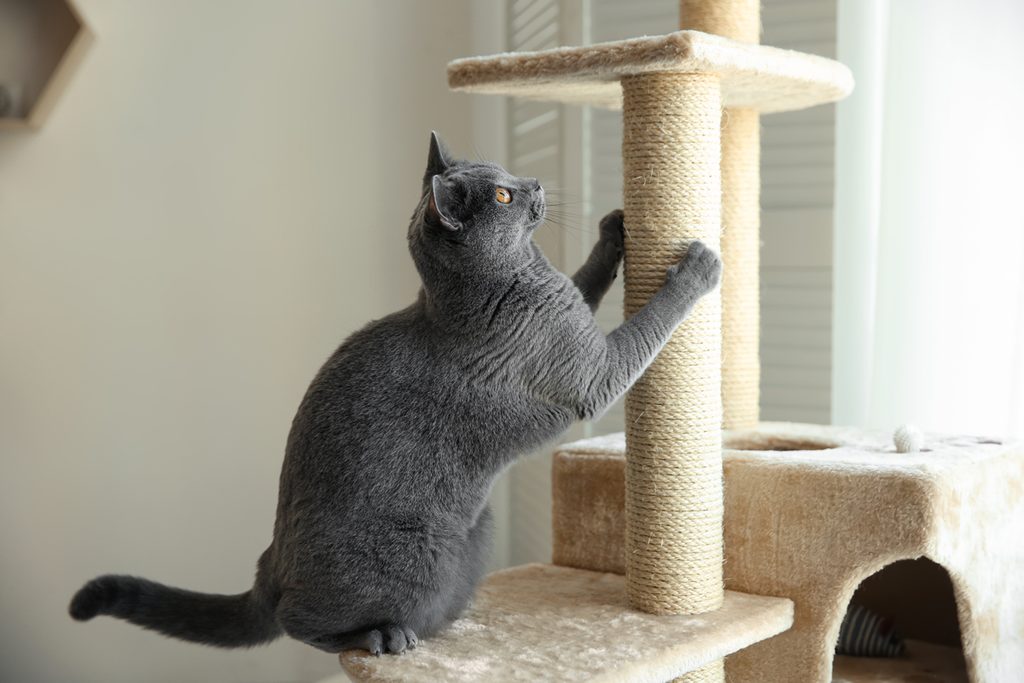
They Leave Scratch Marks
Your couch may not be a fan, but scratching is an important part of a cat’s life. Not only does it help maintain their claws and stretch and strengthen their limbs and muscles, but it also serves as a form of communication. Domestic cats belong to the family Felidae, the cat family that also includes everything from lions and tigers to lynxes and wildcats.
House cats, like those wild relatives, have scent glands on their paws that — along with the visible scratches from their claws — can leave chemical signals that are useful out in the wild. If you’re hoping your cat will leave its mark anywhere but your furniture, consider investing in a scratching post. After all, you may be able to take the cat out of the wild, but there’s no taking the wild out of your cat.
Advertisement
This bird teaches its babies a secret password for food.
Nicole is a writer, editor, and researcher with over 15 years experience covering arts and culture, lifestyle, and media. Her work has also appeared in PureWow, Brit + Co, Exclaim, AUX TV, and CBC. She lives in Ontario, Canada.
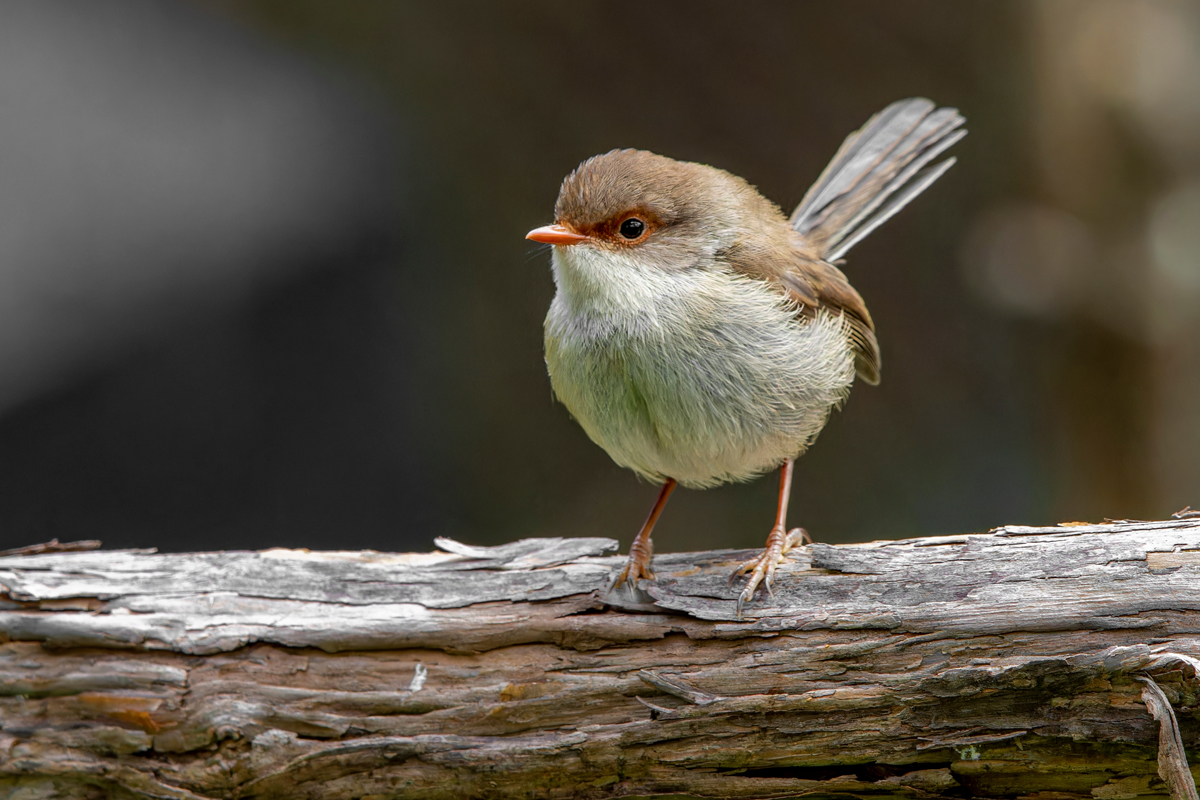
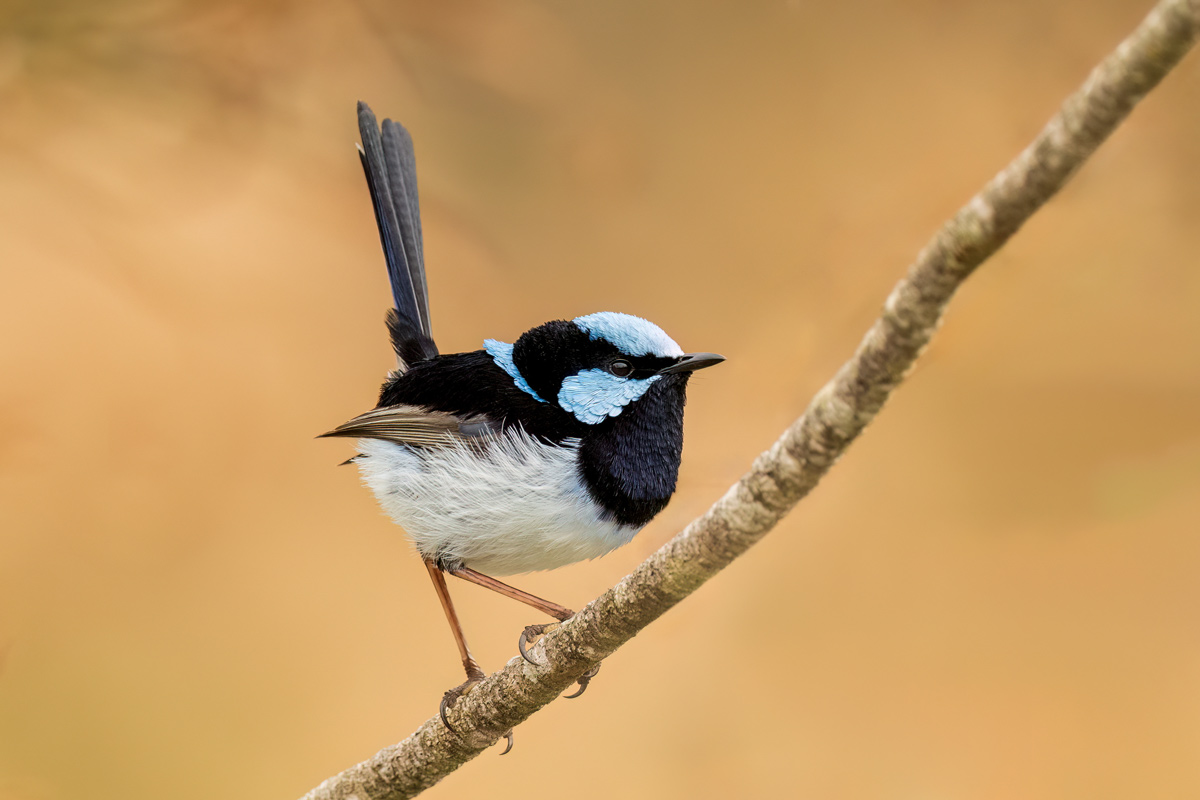
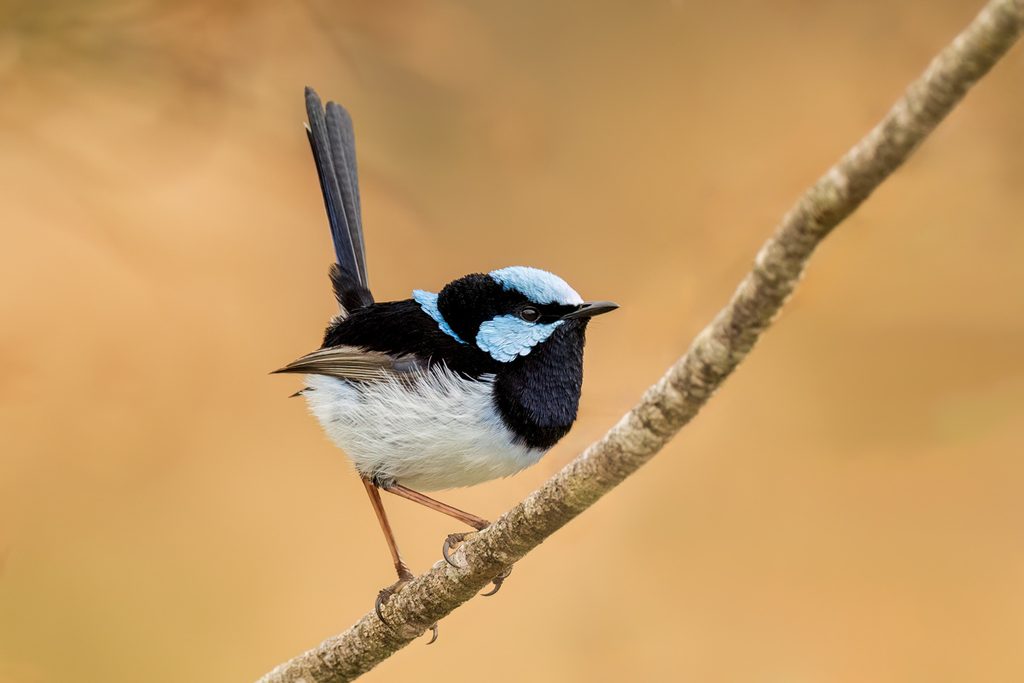
Australian superb fairywrens may have a whimsical name, but communicating with their unborn chicks isn’t magic. While incubating the eggs, mothers sing a particular note to their developing embryos. Once hatched, the chicks incorporate that same note into their begging calls.
This “secret password” is especially useful because fairywrens are frequent victims of parasitic cuckoos, birds that sneak their eggs into other birds’ nests in the hopes their babies will be fed along with the other brood. Research has shown that cuckoo chicks don’t seem to learn the password before hatching, giving the fairywrens a way to identify their own offspring — and keep their food in the family.
Advertisement
These Animals Can Communicate Before They’re Even Born
Across Species 16/09/26Sep. 16, 2026
Updated 16/09/26Sep. 16, 2026
Credit: alec/stock.adobe.com
Tony Dunnell
Author
Tony is an English writer of nonfiction and fiction living on the edge of the Amazon jungle.
If you thought your family group chat was noisy, try eavesdropping on a nest of unhatched eggs. Life inside an eggshell isn’t always as quiet as you’d expect. But why? Making any kind of noise at such a vulnerable stage seems risky, and yet the unborn chicks of many bird species have adapted to do just that.
And they’re not alone; research shows that this type of prenatal chatter is quite common, especially — but not only — in birds. Here we look at five species whose earliest conversations start before birth.
Credit: stevew_photo/stock.adobe.com
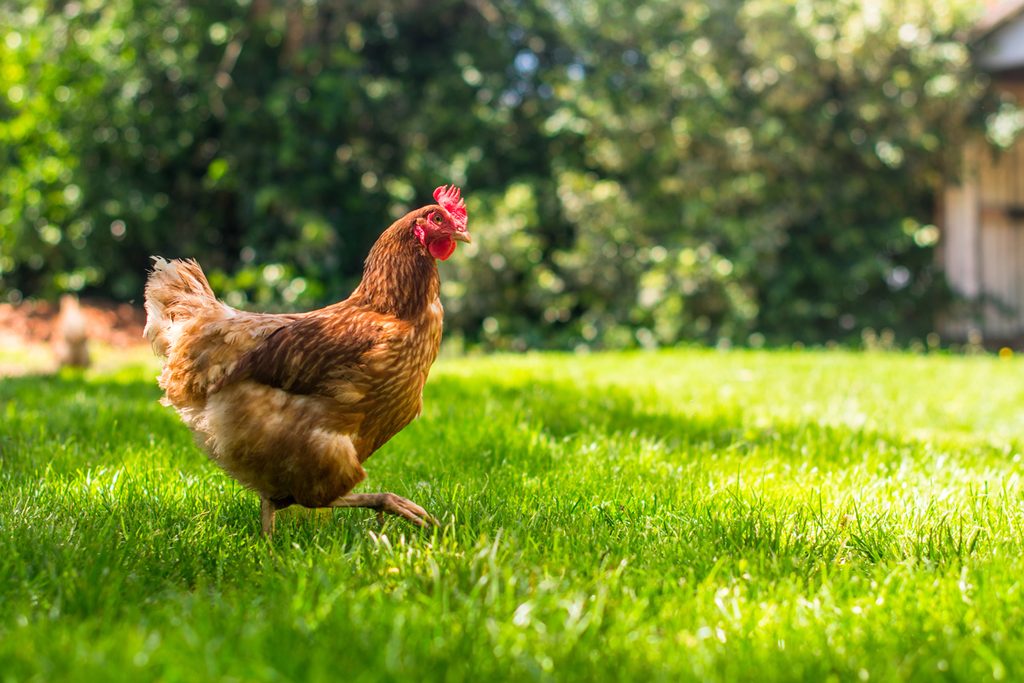
Chickens
Chicken embryos and their mothers begin to communicate the day before hatching and gradually increase their interactions as the moment approaches. The chicks start peeping to notify both their mother and their siblings that they are ready to emerge from the shell. This clicking, as it’s described, helps to synchronize the hatching of the baby chicks.
Unborn chicks also make distress calls, which often prompt the mother to call back or even return to sit on the nest — at which point the embryo quiets down or emits pleasure calls. These interactions resemble those that happen after hatching, indicating that the needy chicks have already learned how to manipulate their moms before they’re even born.
Credit: Stephen/stock.adobe.com
Yellow-legged Gulls
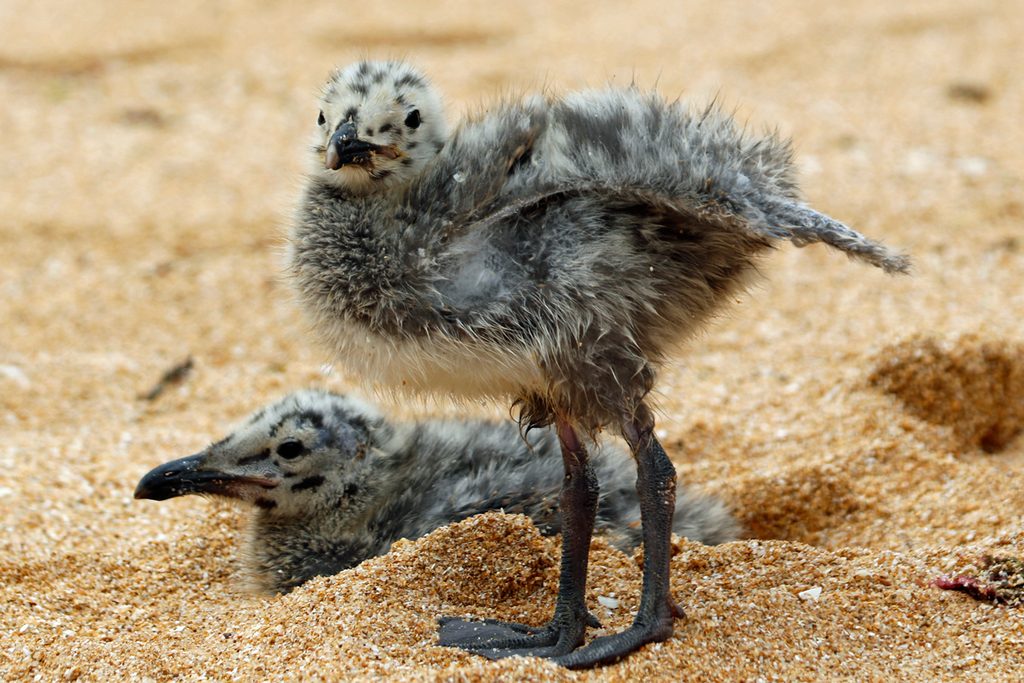
When adult yellow-legged gulls call out to warn each other of predators, their unhatched chicks also respond. The mature embryos vibrate their eggs, transmitting the danger signal to their quieter, less-developed siblings.
While there’s nothing the unborn chicks can do about potential threats, research shows that they benefit from the communication after hatching. The informed chicks — and the siblings they passed the information onto — show heightened vigilance, altered stress hormones, and developmental changes that better prepare them for danger when they step out into the wider world.
Credit: Julio/stock.adobe.com
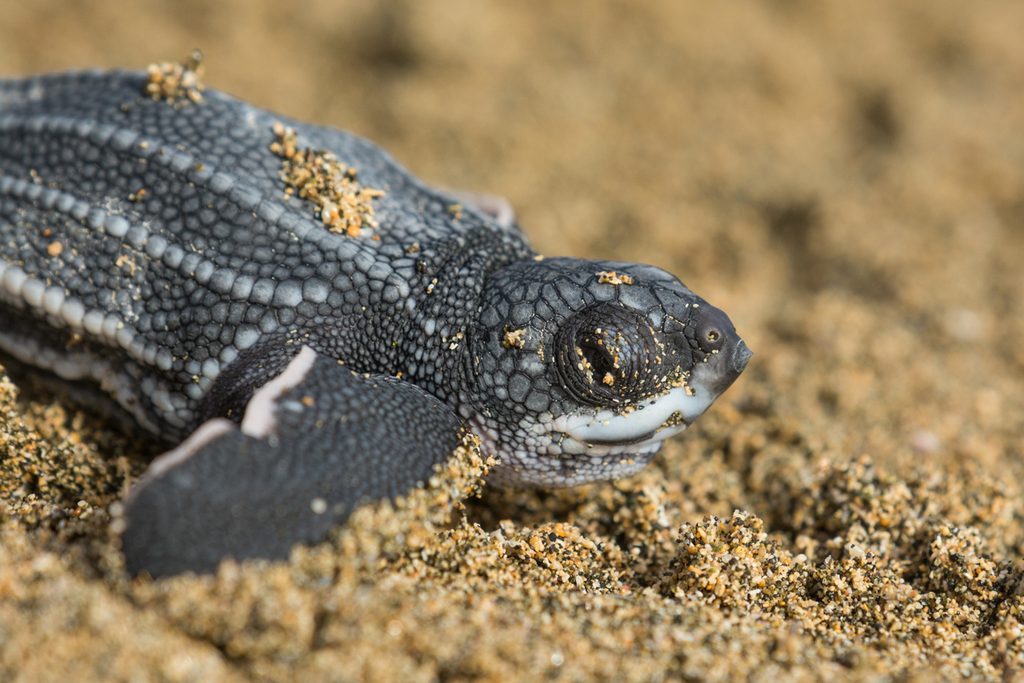
Leatherback Sea Turtles
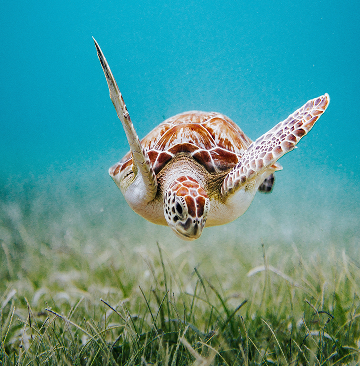
Turtles are normally quiet creatures, so it may be surprising to learn how much chatter goes on between leatherback sea turtles before they’re born. Baby sea turtles emerge from the sand simultaneously to overwhelm predators and increase their chances of making it to the water unscathed.
To pull off this trick, unhatched leatherbacks talk to each other from inside their eggs. Once their ears develop after about 51 days of incubation, the embryos start emitting a complex series of chirps and grunts. By communicating back and forth, the clutch synchronizes its development, ensuring that hundreds of tiny flippers hit the sand in a coordinated dash to the ocean.
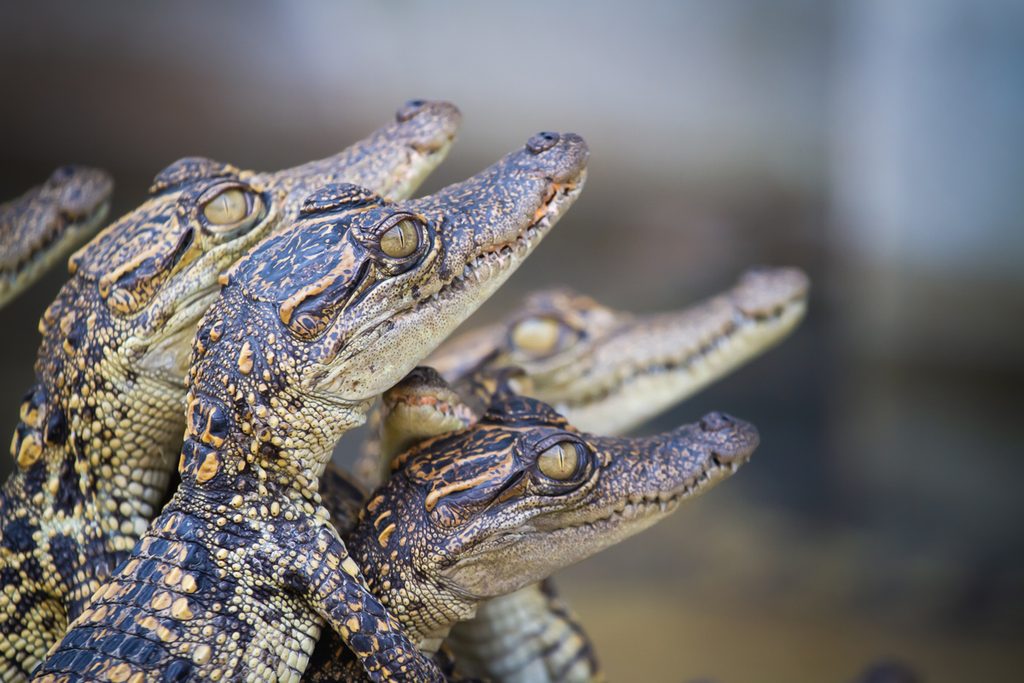
Most unborn crocodilians make a noise — often an “umph! umph! umph!” sound — in the days before hatching. Research into Nile crocodiles shows that this serves a very specific purpose: The vocalizations alert the mother, who previously buried her eggs in the sand, that it’s time to dig open the nest and let her babies out. The unborn siblings are also communicating with each other to synchronize their emergence, improving survival odds by reducing the time individual hatchlings spend exposed and vulnerable.
Credit: alec/stock.adobe.com
Superb Fairywrens
In the Australian outback, superb fairywren mothers face an unusual and very sneaky threat: cuckoos that sneak an egg or two into the wren’s nest in the hope that they’ll feed and care for them. To outsmart these brood parasites, as they’re known, the mother wren sings a secret password to her unhatched eggs (and also teaches it to her mate).
By the time her biological chicks hatch, they have memorized this unique tune and use it to beg for food. Any cuckoo chick imposters are ignored by the vigilant mother wren. For some as-yet unknown reason, the interlopers never learn the password, possibly because they hatch before the wrens. While sad for the cuckoo chick, it’s still an incredible example of two-factor authentication in nature, taught entirely inside the egg.
Advertisement
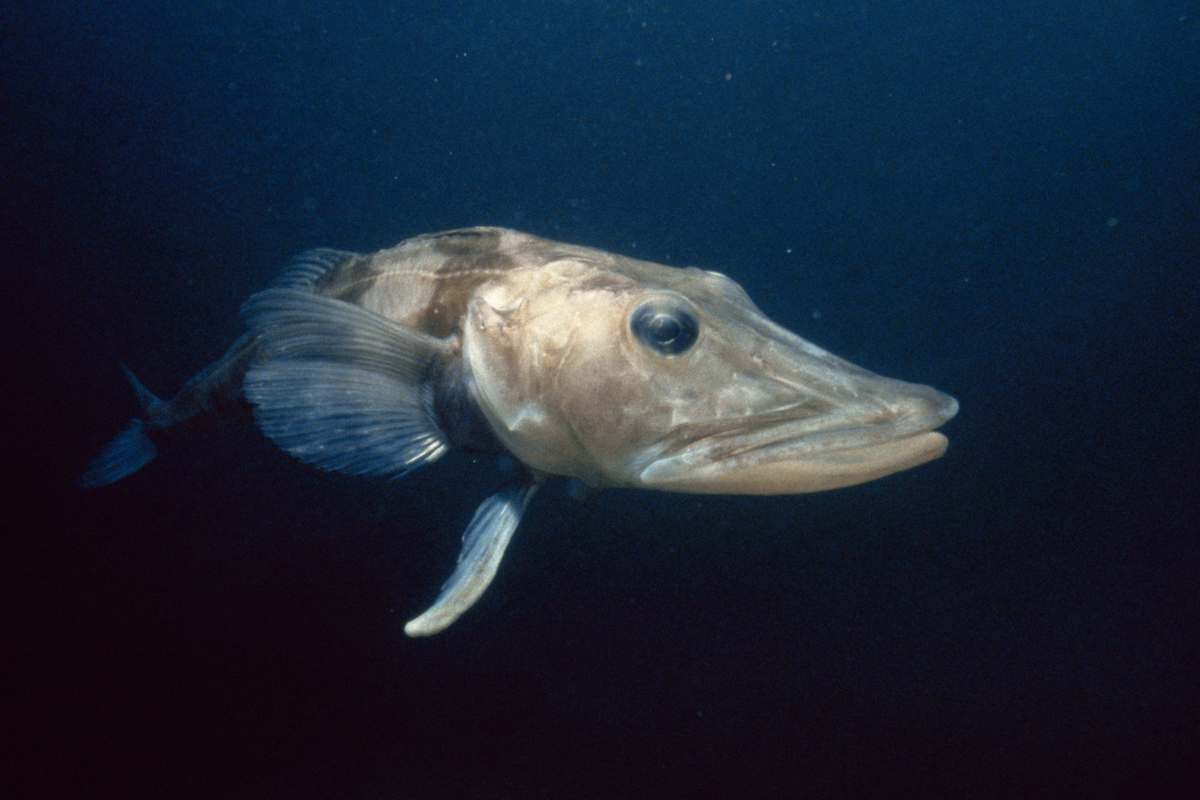
This fish has colorless blood.
Fish 16/09/26Sep. 16, 2026
Updated 16/09/26Sep. 16, 2026
Credit: Doug Allen—Nature Picture Library/Alamy
Bennett Kleinman
Author
Bennett Kleinman is a New York City-based staff writer for Inbox Studio. He is also a freelance comedy writer, devoted New York Yankees and New Jersey Devils fan, and thinks plain seltzer is the best drink ever invented.
While diehard sports fans may claim to bleed blue, orange, or whatever color adorns their favorite team, the actual blood found in humans and other vertebrates tends to be red. But the Antarctic icefish is an exception to that rule, as they’re the only known adult vertebrates to lack hemoglobin — a red-colored protein essential for transporting oxygen — in their bloodstreams. Because of that hemoglobin deficiency, an icefish’s blood is completely transparent.
When this physical oddity was first discovered in the 1950s, it was believed to be an adaptation to the frigid Antarctic water. But upon further research, it was determined to in fact be a potentially fatal mutation that icefish were lucky to survive. Despite lacking hemoglobin, icefish are still able to absorb sufficient oxygen into their system thanks to the fact that colder Antarctic waters possess higher levels of dissolved oxygen than warmer waters.
Advertisement
Can Fish Drown?
Fish 16/09/26Sep. 16, 2026
Updated 16/09/26Sep. 16, 2026
Credit: Milos Prelevic/Unsplash.com
Kristina Wright
Author
Kristina is a coffee-fueled writer living happily ever after with her family in the suburbs of Richmond, Virginia.
Breathing is something most of us rarely think about; we inhale air and our lungs take what they need before we exhale. But underwater, the rules are very different. Fish need oxygen to survive just like humans, and staying alive means capturing that oxygen without ever taking a breath of air.
Fish have evolved their own specialized ways of breathing, but those systems can also be surprisingly vulnerable. And while fish can’t technically drown underwater, there are many other ways their fragile anatomy can struggle in their natural environment. To understand what happens when things go wrong, we need to take a closer look at how fish breathe in the first place — and what happens when that process is disrupted.
Credit: Rijk van de Kaa/Unsplash.com
How Do Fish Breathe?
Fish don’t breathe water itself — instead, they extract the oxygen dissolved in it. Most fish do this with gills, which contain thin filaments covered in tiny structures called lamellae. Together, the gills and lamellae provide a large surface area wherein oxygen moves from the water into the bloodstream while carbon dioxide moves out.
Water continually moves across the fish’s gills, with many species opening and closing their mouths and gill covers to create a current. Some species, such as sharks, also depend on swimming to keep water flowing across their gills.
This system works because water contains dissolved oxygen, but the available amount can vary considerably. Temperature, water movement, biological activity, and decomposition can all affect oxygen levels.
Warm water generally holds less dissolved oxygen than cold water, while excess nutrients can fuel algae blooms. When algae and other organisms die and decompose, microorganisms consume oxygen, sometimes reducing levels dramatically. And limited mixing can worsen the problem by preventing oxygen-rich surface water from reaching deeper water.
Credit: Milos Prelevic/Unsplash.com
What Happens When the Water Runs Out of Oxygen?
When dissolved oxygen levels fall too low, fish can no longer extract enough through their gills to meet their bodies’ needs. This condition is called hypoxia.
Fish may respond by moving toward areas with more oxygen, including shallower water or closer to the surface. They may also increase the rate at which they move water over their gills. If oxygen levels continue to fall and the fish can’t escape, however, those responses may no longer suffice.
Severe oxygen depletion can create aquatic “dead zones,” in which oxygen concentrations are too low for many fish and other animals to survive. Fish that cannot escape may become stressed, disoriented, and eventually die from oxygen deprivation.
Dead zones can occur naturally, but human activity can make them more frequent and severe, particularly when nutrient pollution causes excessive algae growth and the decomposition of that organic matter consumes oxygen. In other words, a fish doesn’t have to leave the water to face a potentially fatal lack of oxygen. If its gills can’t extract enough oxygen to meet its body’s needs, it will eventually suffocate.
Credit: Zdeněk Macháček/Unsplash.com
Why Being Out of Water Is So Dangerous
Fish need water not only because it contains oxygen, but because their gills are designed to operate in it. When a typical fish is removed from the water, the delicate structures that make up its gills can collapse or stick together, reducing the surface area available for gas exchange, while also losing the steady flow of water carrying dissolved oxygen across the gills. Although air contains much more oxygen than water, most fish can’t simply use their gills to breathe it effectively.
This is why a fish pulled from the water may continue opening and closing its mouth. Those movements are part of its normal respiratory process, but without water flowing over the gills, the system no longer works properly. How long a fish can survive out of water varies enormously by species: Some tolerate exposure to air for only a few minutes, while others can survive for hours, days, or even longer under the right conditions.
Credit: Sebastian Pena Lambarri/Unsplash.com
The Fish That Don’t Need To Stay Underwater
Although most fish rely primarily on their gills, several species have evolved adaptations that allow them to obtain oxygen directly from the air. These air-breathing adaptations are particularly useful for species that live in warm, stagnant, or periodically oxygen-poor water. Some species regularly surface to gulp air, while others use air breathing primarily as a backup when dissolved oxygen levels become dangerously low.
Other fish take this a step further, with adaptations that allow them to spend time in water and on land. These are known as amphibious fish, and their ability to function outside water gives them an advantage when aquatic conditions become difficult or even impossible to survive in.
West African lungfish and certain labyrinth fish have specialized respiratory structures that allow them to supplement or replace gill breathing with atmospheric oxygen. For most fish, however, survival still comes down to gleaning enough oxygen from the water. They may not drown the way humans do, but without enough oxygen, they’ll suffocate just the same.
Michael Nordine is a Senior Staff Writer at Britannica, where he writes the newsletter Movie Brief. He grew up with eight cats and would like to see a Komodo dragon in the wild one day.
In news that may surprise cat owners but certainly won’t be unexpected to cats themselves, who hold justifiably high opinions of themselves, our feline friends share 95.6% of their DNA with tigers. This discovery was first made in 2013, when geneticists sequenced the genomes of tigers, lions, and snow leopards.
Their research also found that tigers and what are now house cats first diverged some 10.8 million years ago, which isn’t especially long in evolutionary terms. The amount of shared DNA is the same percentage across all breeds, meaning your orange boy isn’t any more tiger than the calico down the street.
Advertisement
Female blue-footed boobies prefer males with the bluest feet.
Nicole is a writer, editor, and researcher with over 15 years experience covering arts and culture, lifestyle, and media. Her work has also appeared in PureWow, Brit + Co, Exclaim, AUX TV, and CBC. She lives in Ontario, Canada.
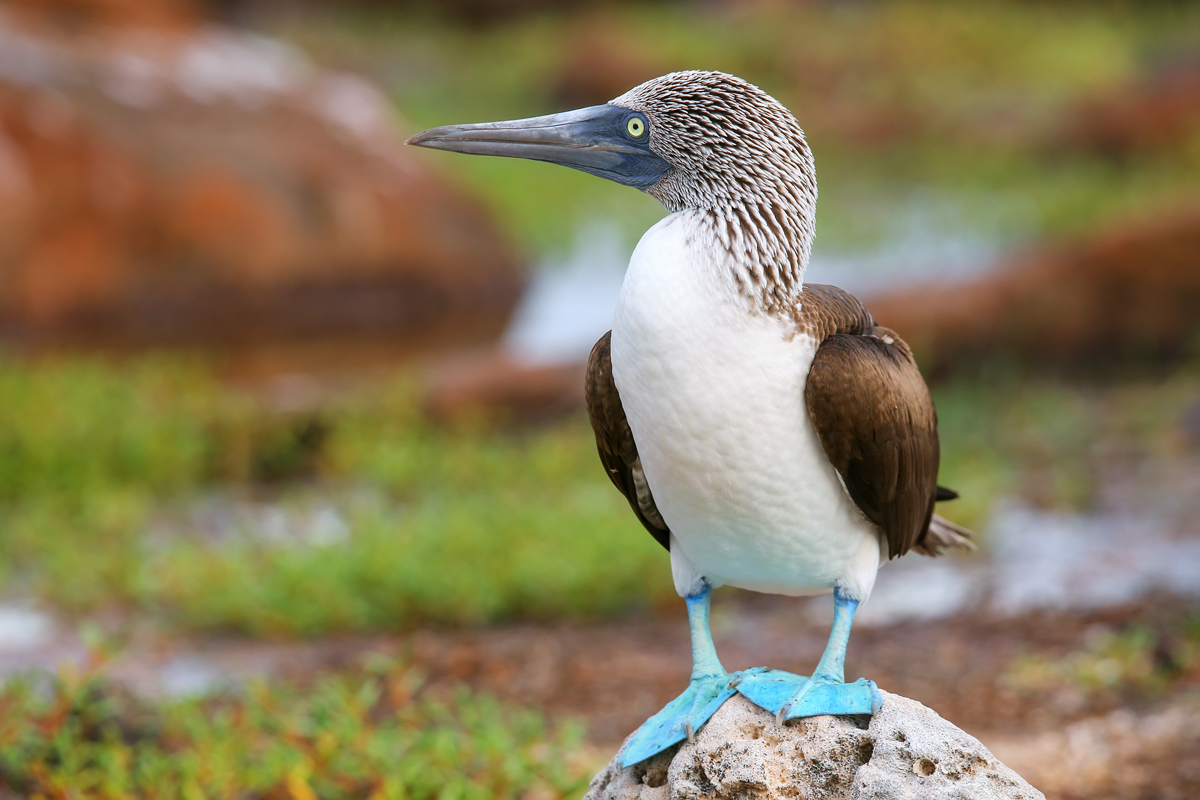
Found along the coasts of the Galápagos Islands, Peru, and Mexico, blue-footed boobies are famous for their vividly colored feet. During their summer breeding season, the male birds make sure those feet are on full display with an elaborate courtship dance: They slowly lift one foot, then the other, stepping and strutting around in an effort to impress potential mates.
The brighter the blue, it seems, the better his chances; the pigments that give the feet their vivid color come from the male’s diet, and those pigments also tend to fade with age, so the intensity of the blue is thought to demonstrate his health and vitality and thus make him more attractive to females.
Advertisement
5 Mating Rituals That Look Totally Absurd
Across Species 16/09/26Sep. 16, 2026
Updated 16/09/26Sep. 16, 2026
Credit: henk bogaard/stock.adobe.com
Tony Dunnell
Author
Tony is an English writer of nonfiction and fiction living on the edge of the Amazon jungle.
Humans don’t always excel when it comes to impressing our potential mates — after all, dating can be a turbulent affair full of awkward small talk, swiping on dating apps, narrowing down our likes and dislikes, and wondering who’s going to pick up the bill.
But we have it pretty easy compared to some of the more intricate courtship rituals creatures have to endure in the wild. Across the animal kingdom, evolution has culminated in some truly dramatic, bizarre, and downright hilarious romantic strategies. Here we take a look at five of them, including ostentatious dances and impressive balls of dung.
Credit: Wildiaries/stock.adobe.com
The Peacock Spider’s Funky Dance
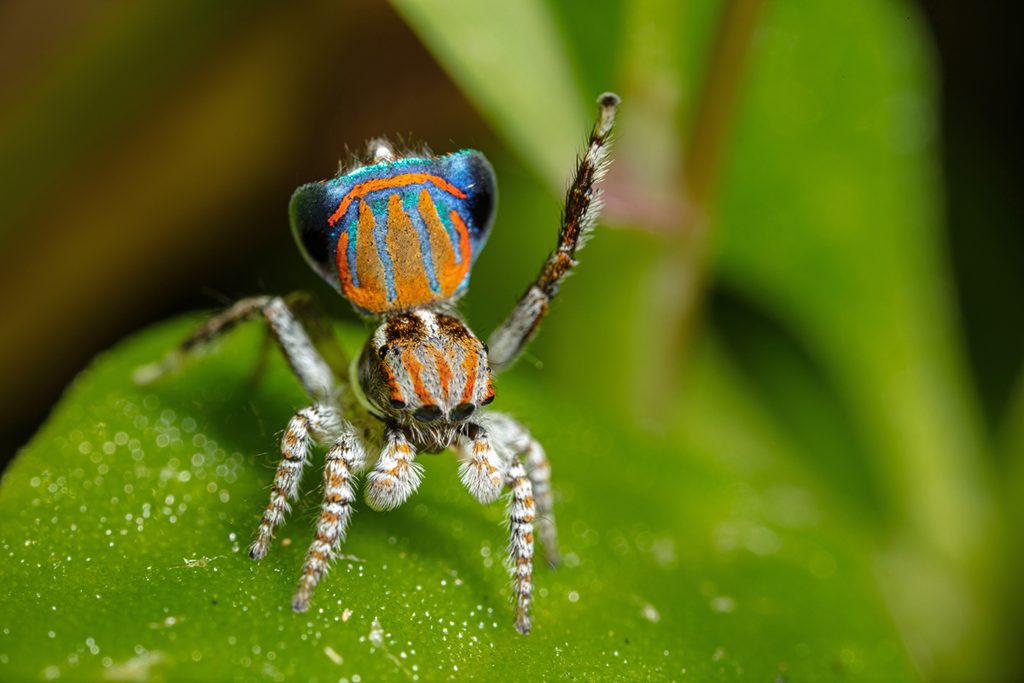
Australia’s peacock spider is tiny — barely the size of a grain of rice — but its courtship energy is something to behold. To charm a female, the male raises a brilliantly colorful, fanlike abdominal flap and begins an intricate dance routine.
He starts by vibrating at specific frequencies, known scientifically — and amusingly — as rumble-rumps — to attract the female’s attention. If she’s interested, he then raises two legs in the air and begins a funky dance routine complete with hot-stepping and jazz hands. It’s all good fun when things go well, but for the male, the stakes couldn’t be higher: If the female dislikes his choreography, there’s a chance she’ll attack him and eat him for dinner.
Credit: Grantat/stock.adobe.com
The Blue-Footed Booby’s High-Stepping Show
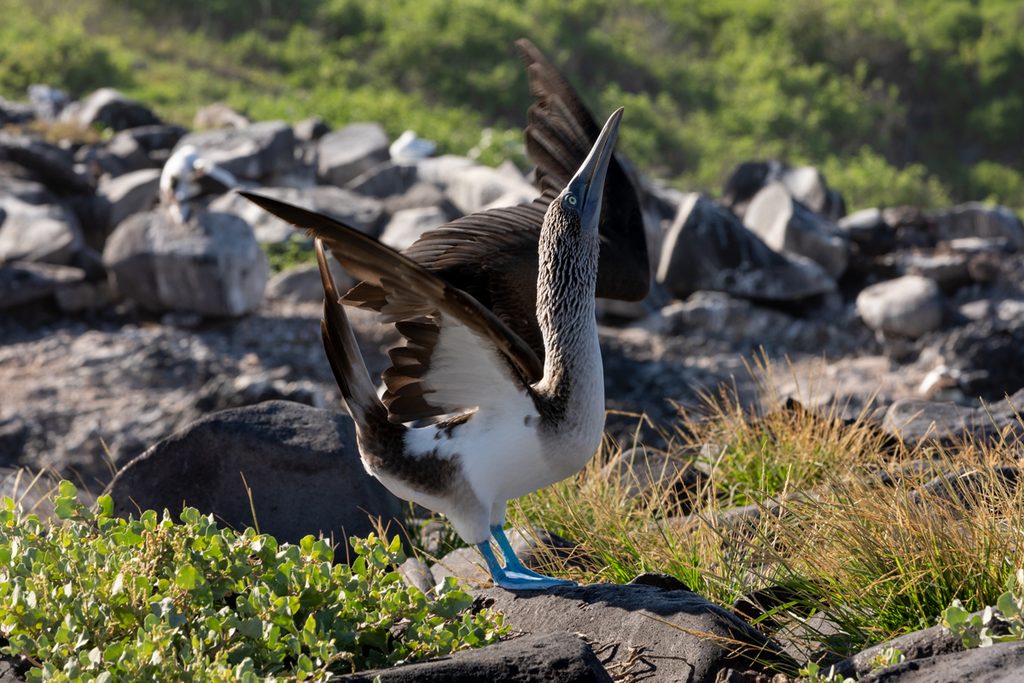
Blue-footed boobies have a marvelous mating ritual that’s all about the feet. To attract a mate, the male first presents the female with a small stick or stone. He then begins to strut about, stretching out his wings and raising his beak to the sky while emitting a plaintive whistle, before lifting his bright blue feet one by one in a slow-motion high-stepping parade.
It’s his vibrant blue feet that can potentially seal the deal — brighter, bluer feet indicate more youthfulness and better health, meaning his goofy strutting is a vital part of the courtship process.
Credit: Yurii Zushchyk/stock.adobe.com
The Nursery Web Spider’s High-Risk Gift
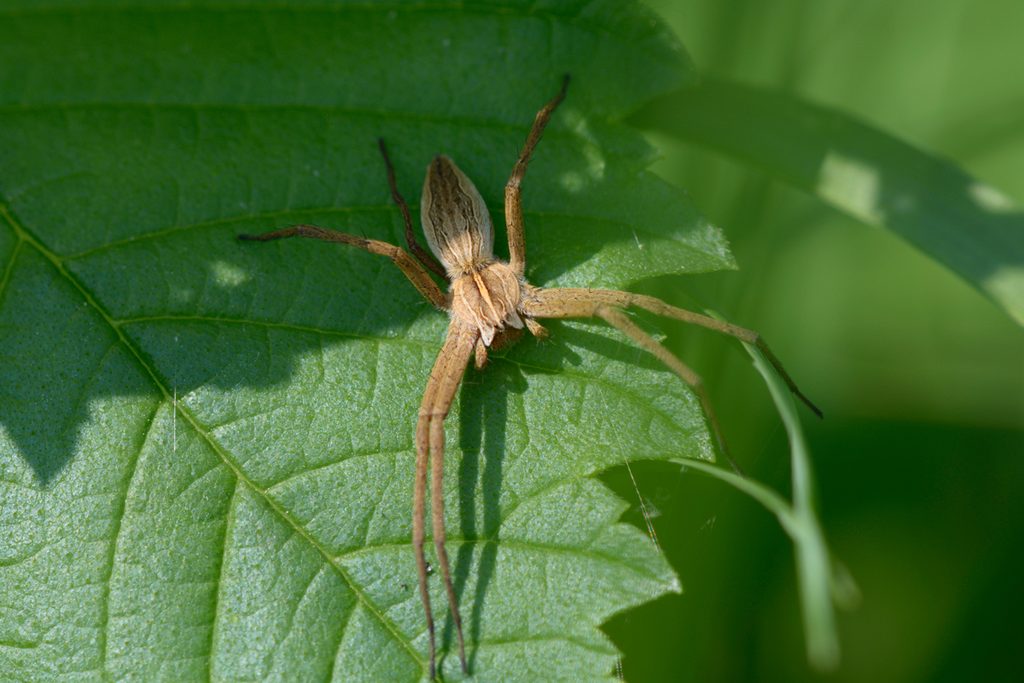
Nursery web spiders make Tinder look like a dating utopia. The males know that females are prone to eating them, so they bring an offering (usually a dead insect) wrapped neatly in silk. Apart from the whole potentially-being-devoured-alive thing, it’s quite a romantic gesture.
But males aren’t always the considerate Romeos they may appear; indeed, some are cheap tricksters. Rather than bringing tasty morsels, they sometimes wrap up an empty seed husk, pebble, or twig instead. While the female is busy unwrapping her “gift” — if, of course, she likes the look of it and doesn’t eat the male — the sneaky male mates with her and then tries to scurry away before she realizes the ruse.
Credit: henk bogaard/stock.adobe.com
The Dung Beetle’s Rolling Ball of Love
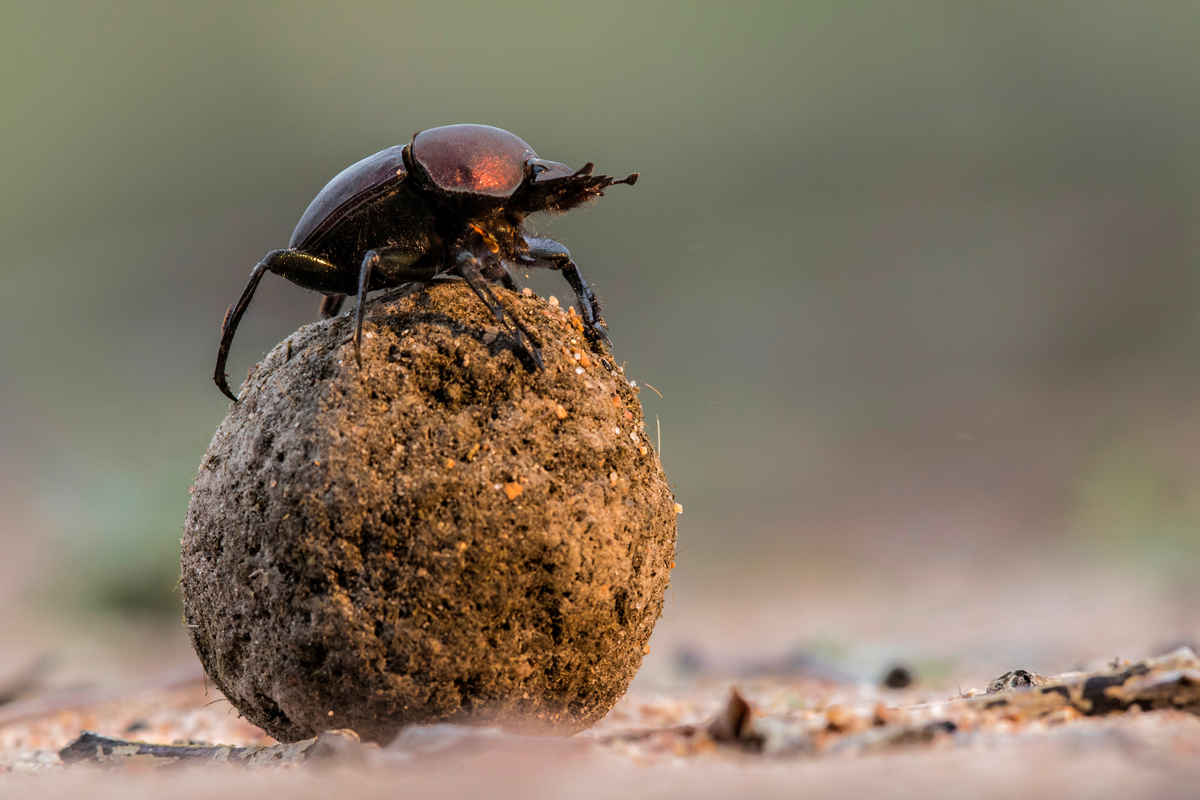
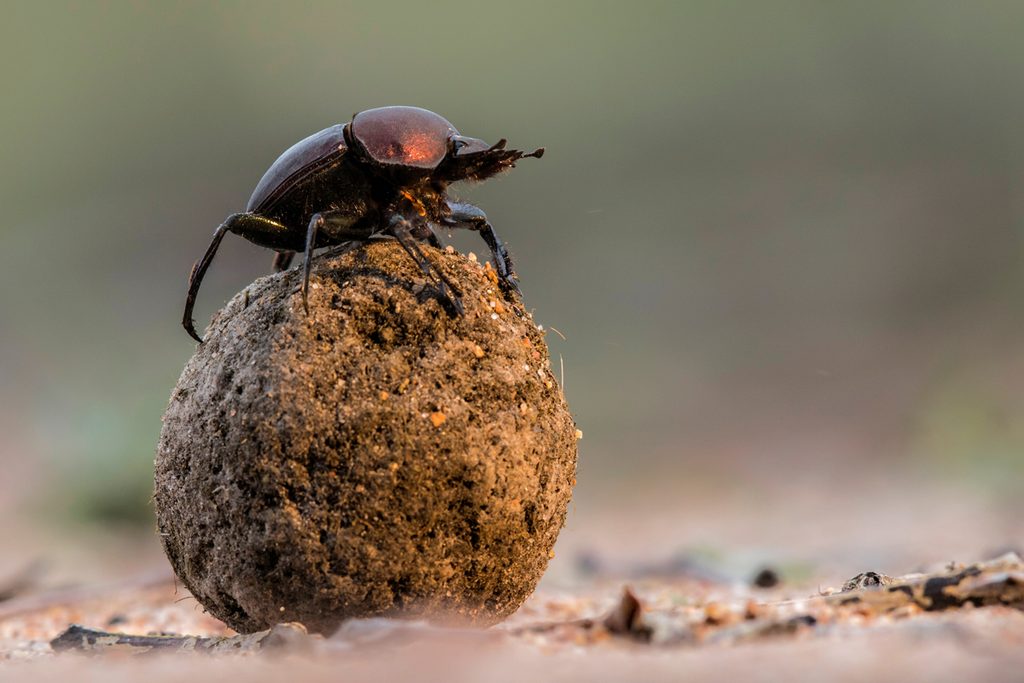
Nothing says romance quite like a giant ball of dung, right? Dung beetles think so, anyway.
To impress a potential mate, the male constructs a large sphere of manure and rolls it across the terrain using its hind legs. If a watching female is impressed by the size of the ball and the smoothness of the rolling, she may hop onto the dung ball and go for a ride. If all goes well, and the male successfully fends off any rival beetles, the new pair will roll off into the sunset and bury their ball of dung for their future offspring.
Credit: Gunter/stock.adobe.com
The Ostrich’s Fabulous Flirtations
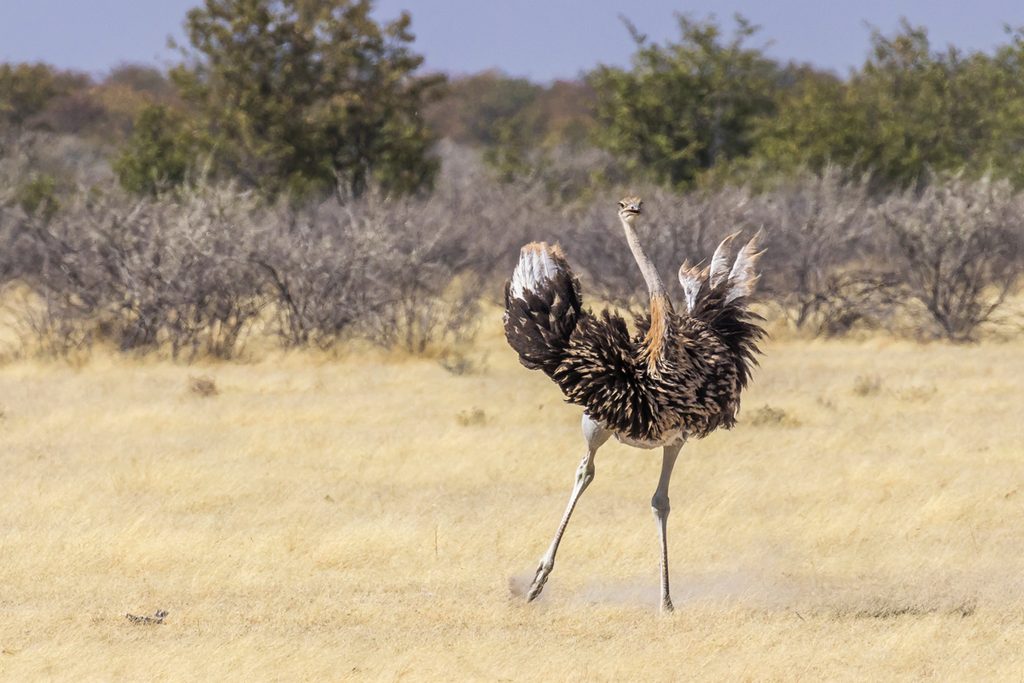
Male ostriches don’t have it easy: Before mating, a female first leads the male on a lengthy, high-speed chase to test his stamina. Tired, and with the female still not fully swept off her feet, he then has to engage in a dramatic, full-body performance known as kantling.
He drops to his knees, sways his body from side to side, and rhythmically flaps his enormous, feathery wings. It’s all very showy, but if the female likes his enthusiastic floor routine, she responds by shivering her wings and pecking low to the ground before accepting his courtship.
This doesn’t only happen in the wild — and it isn’t even necessarily restricted to their own species. On farms and in zoos, male ostriches have been known to fall for their human keepers, who they sometimes attempt to woo in the same flirtatious manner.
Advertisement
Your Daily Guide to the Animal Kingdom
Get to know the animals that share our planet with this daily newsletter.
Success! Welcome to Animal Facts.
Check your inbox for your daily email.
Sorry, your email address is not valid. Please try again.