Your email has been confirmed, welcome to Animal Facts!
Author: brobinson
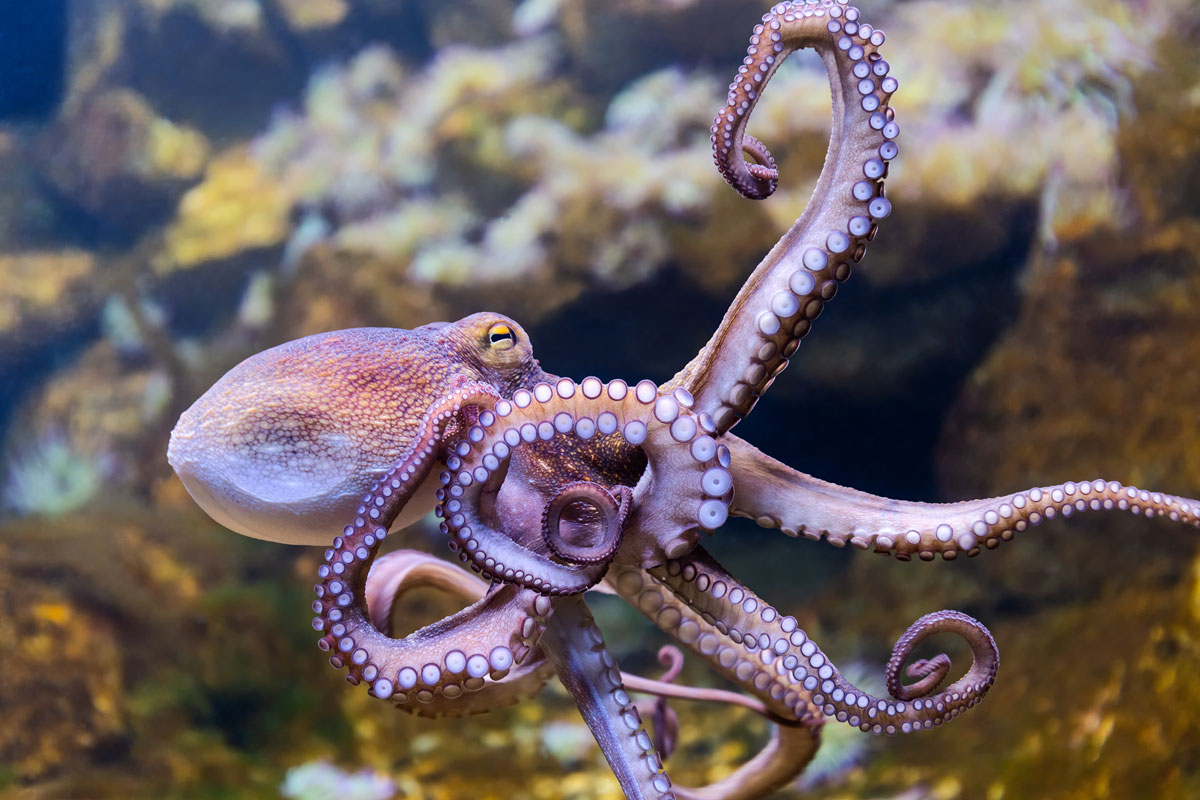
Sleeping octopuses rapidly flash through camouflage patterns.
Across Species 20/11/26Nov. 20, 2026
Updated 20/11/26Nov. 20, 2026
Credit: Henner Damke/stock.adobe.com
Michael Nordine
Author
Michael Nordine is a Senior Staff Writer at Britannica, where he writes the newsletter Movie Brief. He grew up with eight cats and would like to see a Komodo dragon in the wild one day.
Octopuses sleep in two stages, one of which is more colorful than the other. During quiet sleep, their bodies are fully at rest and their skin becomes pale. But during active sleep, which is similar to REM (rapid eye movement) sleep in humans, they flash through camouflage patterns in addition to involuntarily twitching.
The creatures cycle through those two stages every hour or so. Some scientists believe they dream during active sleep, while others propose they’re merely fine-tuning their camouflage patterns. Their skin color changes roughly once a minute during active sleep, which also triggers changes in their breathing rate.
Advertisement
Can You Spot These Camouflaged Animals?
Across Species 20/11/26Nov. 20, 2026
Updated 20/11/26Nov. 20, 2026
Credit: Shofi/Getty Images
Tony Dunnell
Author
Tony is an English writer of nonfiction and fiction living on the edge of the Amazon jungle.
Camouflage is one of nature’s most impressive feats — if you know where to look, that is. Some animals can blend in so well with their environment that even when you know they’re right in front of you, they’re still hard to spot. From leaf impersonators to fake flowers, here are eight masters of disguise who are hard enough to see clearly in photos, let alone in the wild.
Credit: Shofi/Getty Images
Common Baron Caterpillar
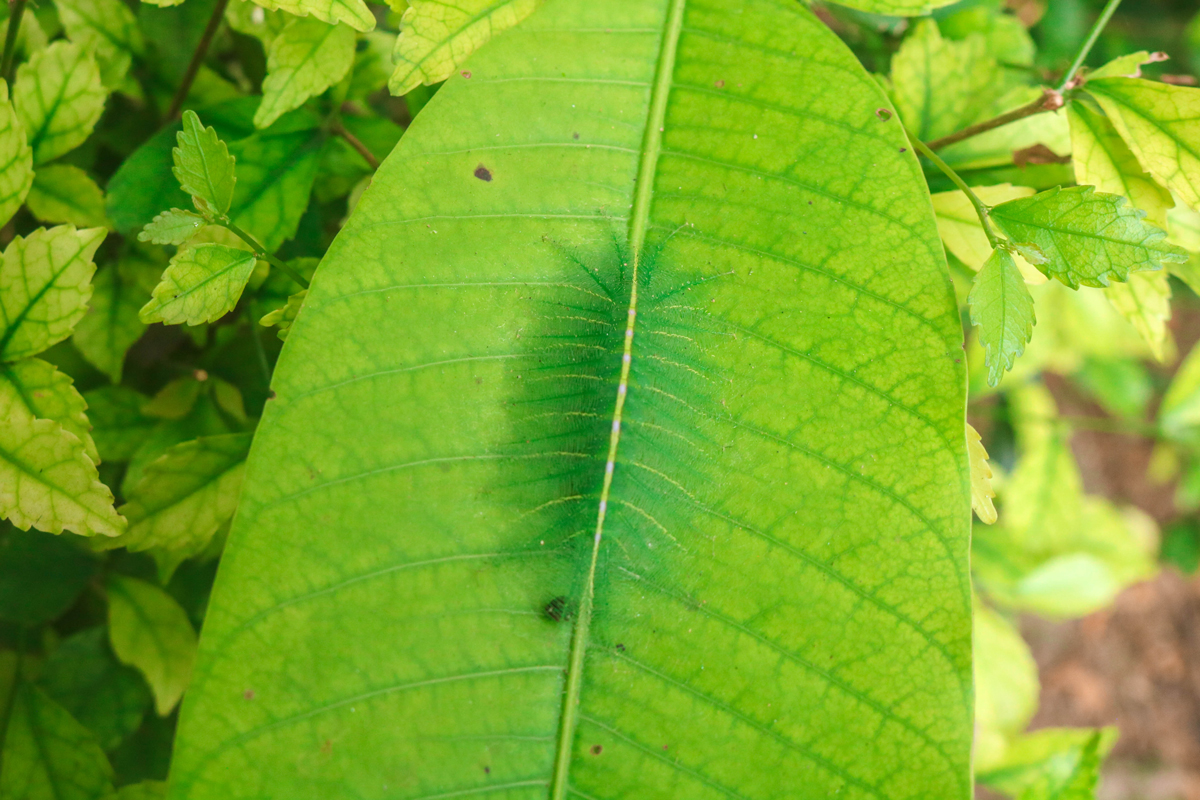
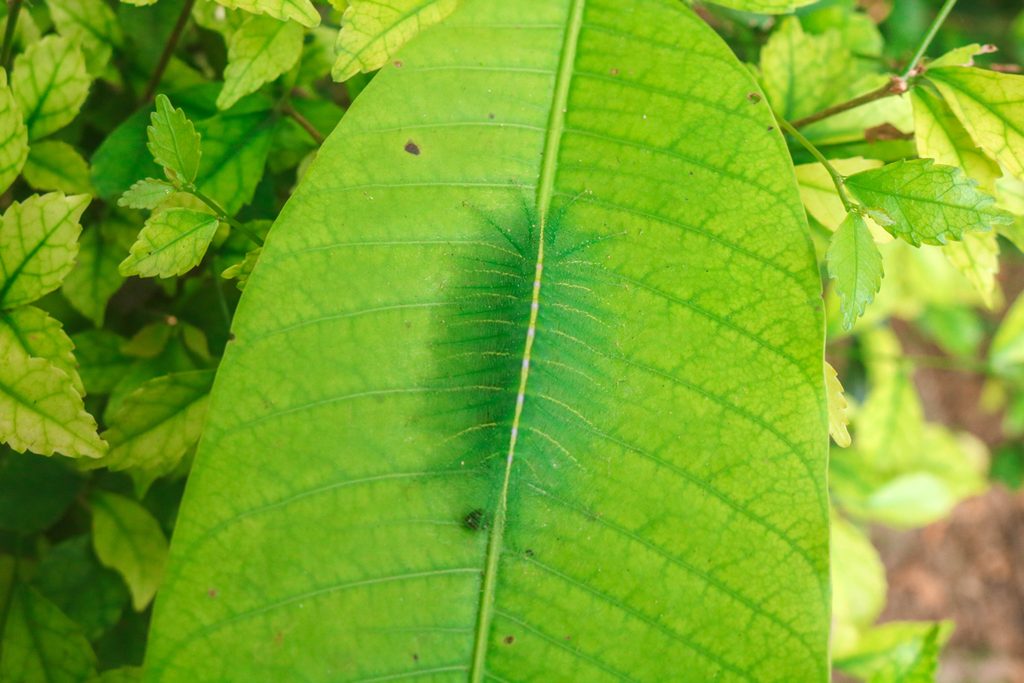
The caterpillar of the common baron butterfly, found across India and Southeast Asia, feeds on mango leaves — and it’s very good at mimicking its favorite snack. Its green body is the same color as a mango leaf, while a pale yellow stripe along its length and feathery spines along its sides look exactly like the leaf’s midrib and veins. To a hungry bird, it simply looks like part of the leaf, as it does in this photo.
Credit: ArtushFoto/stock.adobe.com
Mossy Leaf-Tailed Gecko
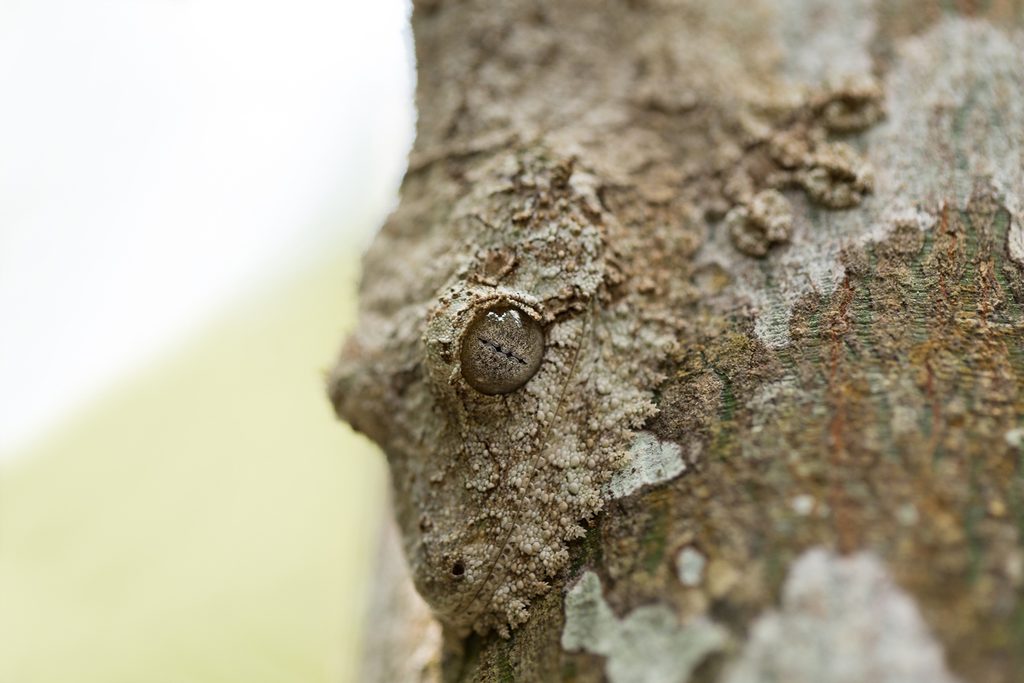
This Madagascan gecko spends most of its day hanging head-down on tree trunks doing its best not to be seen. Its mottled grays and browns match a tree’s bark, moss, and lichen, while a fringe of skin along its body, head, and limbs helps hide its silhouette.
When it presses flat against a tree trunk, it all but disappears. The only thing giving away the mossy leaf-tailed gecko in this photo is its open eye.
Credit: chomphunuts/stock.adobe.com
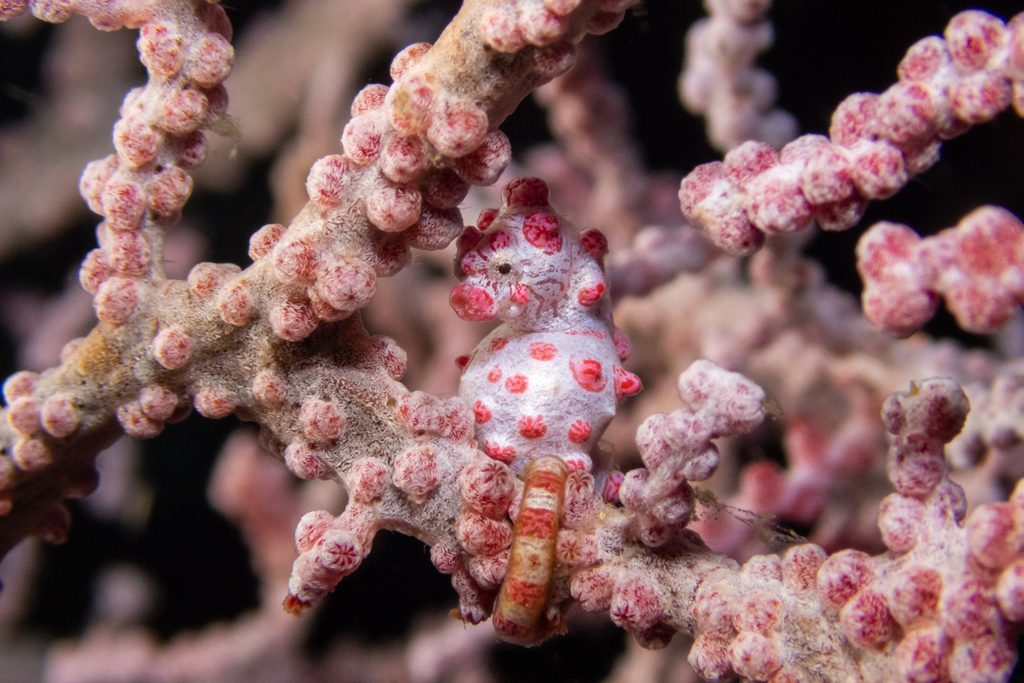
Bargibant’s Pygmy Seahorse
This tiny pygmy seahorse is less than an inch long and lives exclusively on gorgonian corals, whose color and texture it copies with uncanny precision. It’s covered in knobby skin growths that match the coral’s polyps, and its texture and coloration are the same as the branch.
It’s so well hidden that scientists didn’t even find the species until 1969, when a researcher noticed the miniscule seahorse on a sea fan he was examining in the lab. If you didn’t know what you were supposed to be looking for, the one in the center of this photo would be very easy to miss.
Credit: Christof Muller/stock.adobe.com
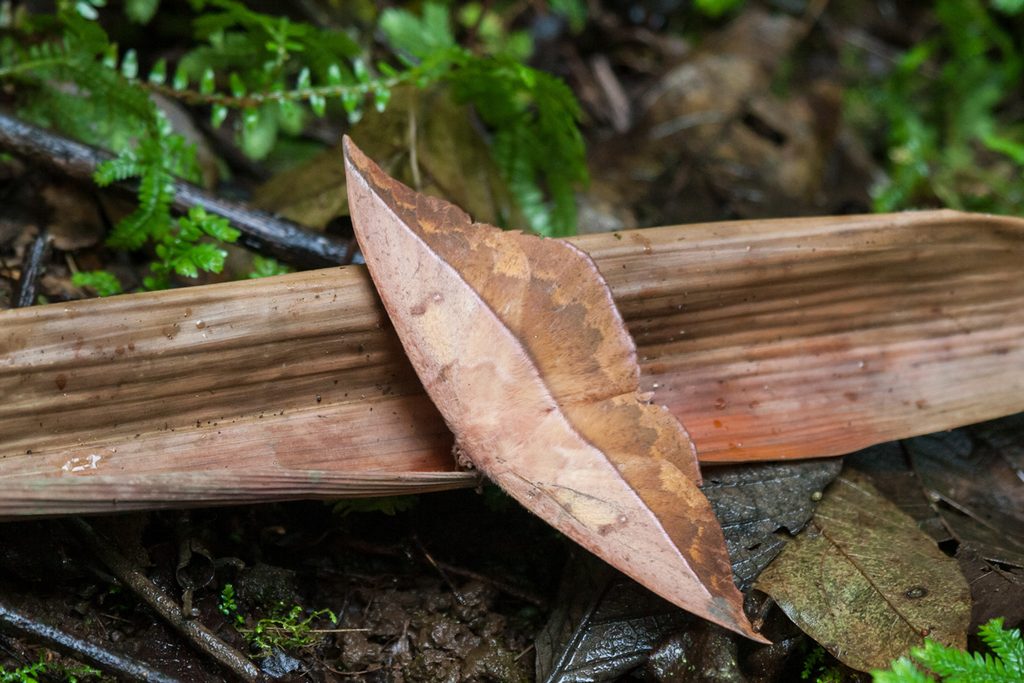
Dead-Leaf Moth
When Oxytenis modestia, also known as the dead-leaf moth, folds its wings shut, it becomes almost indistinguishable from a crumpled brown leaf — complete with a dark line to match the leaf’s midrib and fainter lines for the veins. When it needs to hide from a potential threat, it closes its wings and settles among the leaf litter, becoming essentially undetectable. Ask most people what’s in this photo and they’ll likely say, “a leaf,” despite the moth being front and center.
Credit: davemhuntphoto/stock.adobe.com
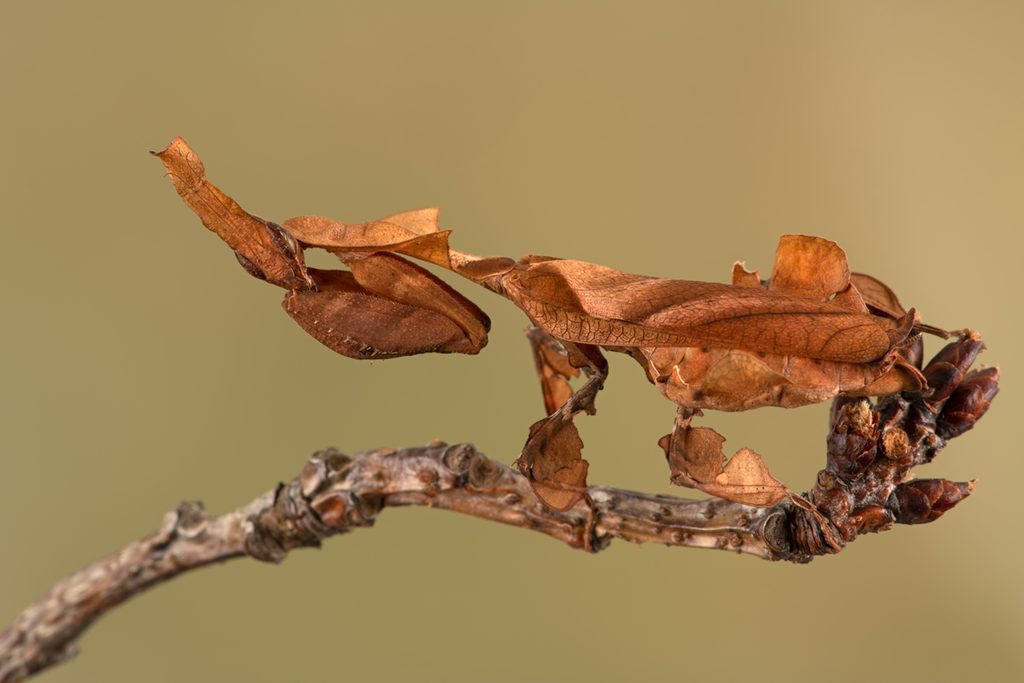
Ghost Mantis
This African mantis more than deserves its ghostly name. Its flattened, veined body, combined with leaflike flaps on its legs and abdomen and a head crest that resembles a curled piece of leaf matter, make it look just like any other leaf on a tree.
To complete the illusion, it even rocks back and forth to mimic the motion of a leaf rustled by a breeze. As you can tell from this photo, it would be almost impossible to spot in the wild.
Credit: Gabriel Bonfa/stock.adobe.com
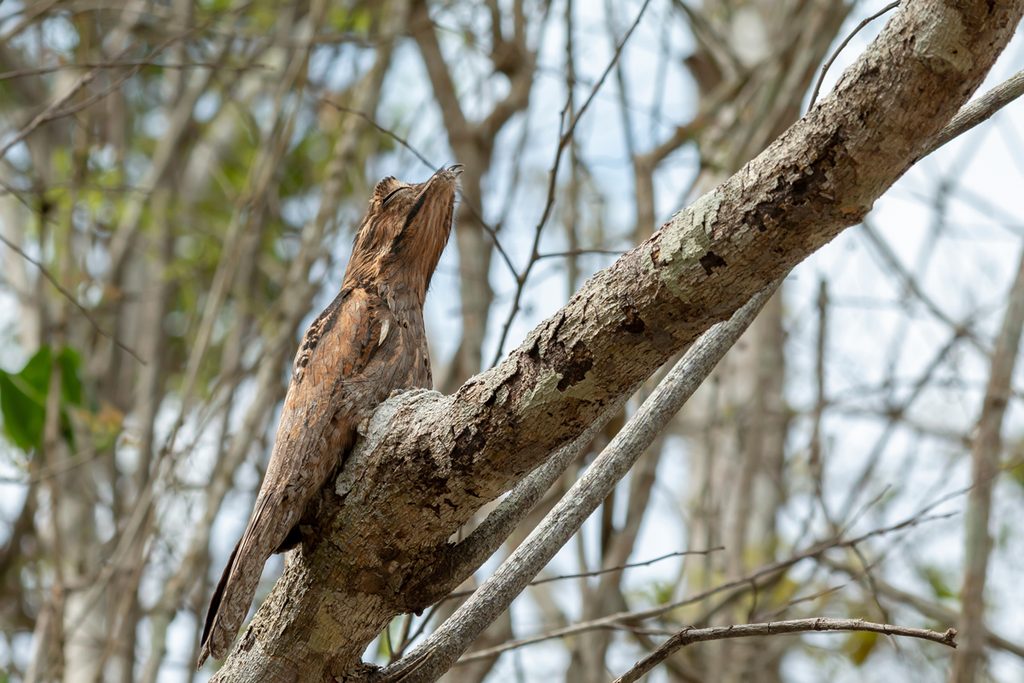
Potoo
By day, the nocturnal potoo of Central and South America perches upright and adjusts its angle to look exactly like a broken branch stub. It points its beak skyward, shuts its eyes and freezes, blending seamlessly into the tree.
This pose is learned by adorable baby potoos as well; with their fuzzy white feathers, they appear to be covered in tree fungus. Here you can see an adult potoo at the center left of the photo, frozen at just the right angle with its eyes shut tight.
Credit: breakingthewalls/adobe.stock.com
Flounder
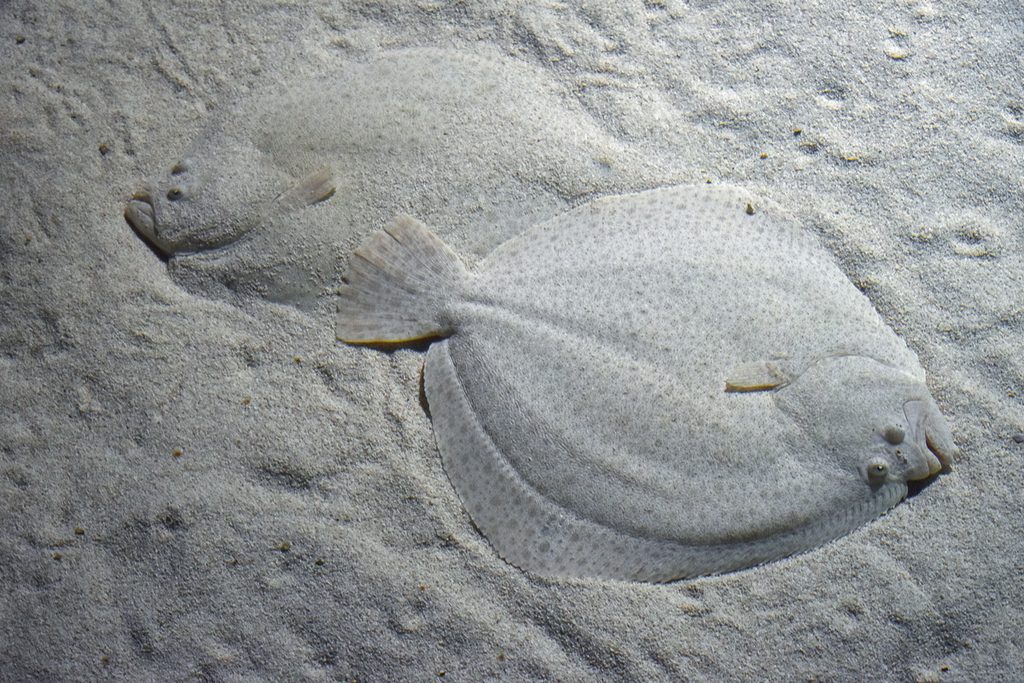
Flounder, a group of flatfishes, are covered in color-changing cells that allow them to match sand or gravel, meaning they can all but disappear when lying flat on the seabed.
Peacock flounders are particularly good at blending in with their surroundings — they’ve even been filmed making a valiant attempt to match the entirely unnatural pattern of a checkerboard. Here you can see two flounders lying flat while matching the color of the surrounding sand.
Credit: Jimmynature/stock.adobe.com
Orchid Mantis
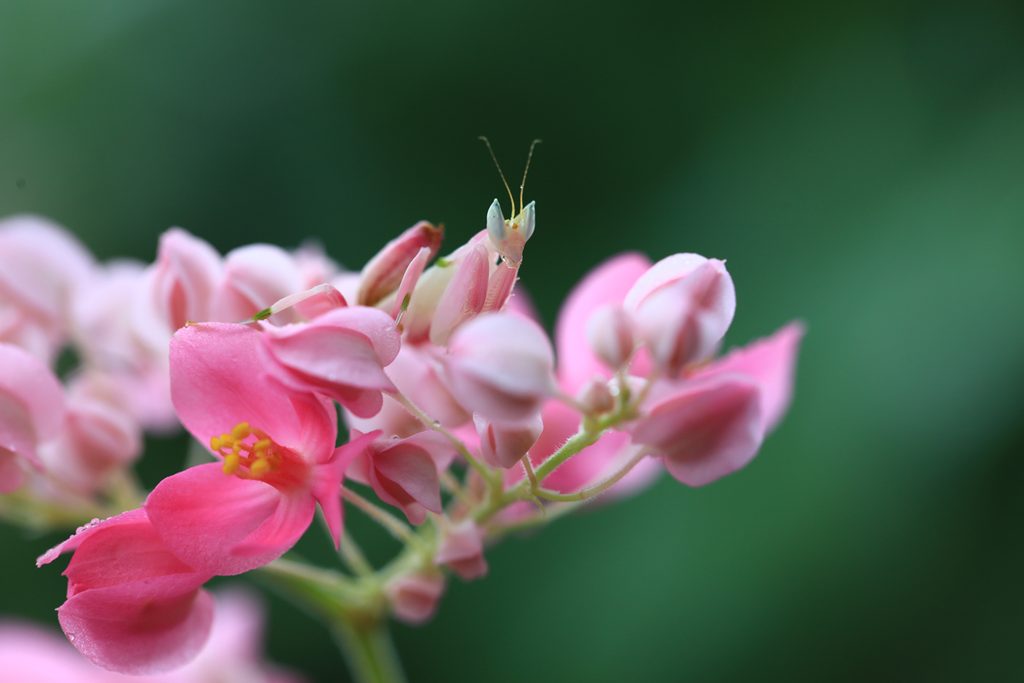
The orchid mantis uses active camouflage to match the petals among which it hides, adjusting its color to various shades of white, pink, purple, or yellowish green. Its legs and body also look very much like petals, further completing the trick.
It’s a very pretty — but very deadly — insect. It uses its camouflage to hide in plain sight, waiting until a pollinator passes by, at which point it nabs the unfortunate bee or butterfly with its forelegs. Here you can just about make out a pink orchid mantis patiently waiting to strike.
Bennett Kleinman is a New York City-based staff writer for Inbox Studio. He is also a freelance comedy writer, devoted New York Yankees and New Jersey Devils fan, and thinks plain seltzer is the best drink ever invented.
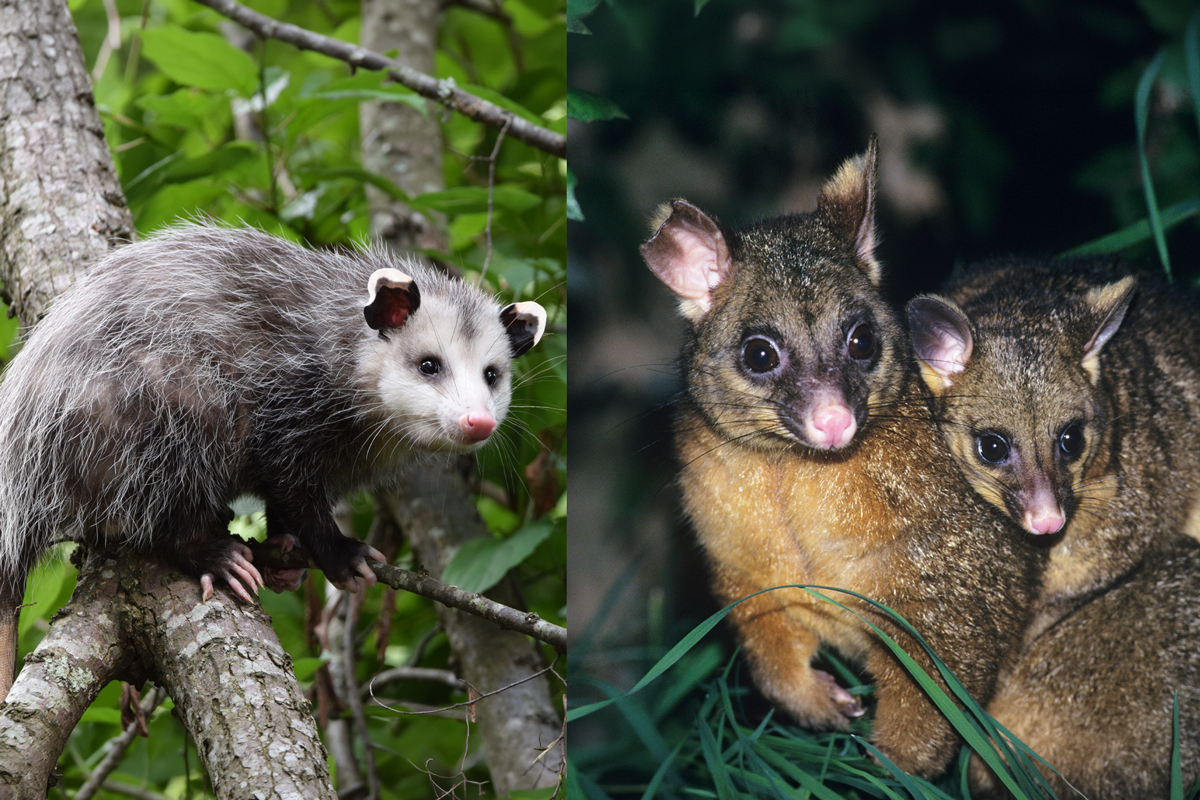
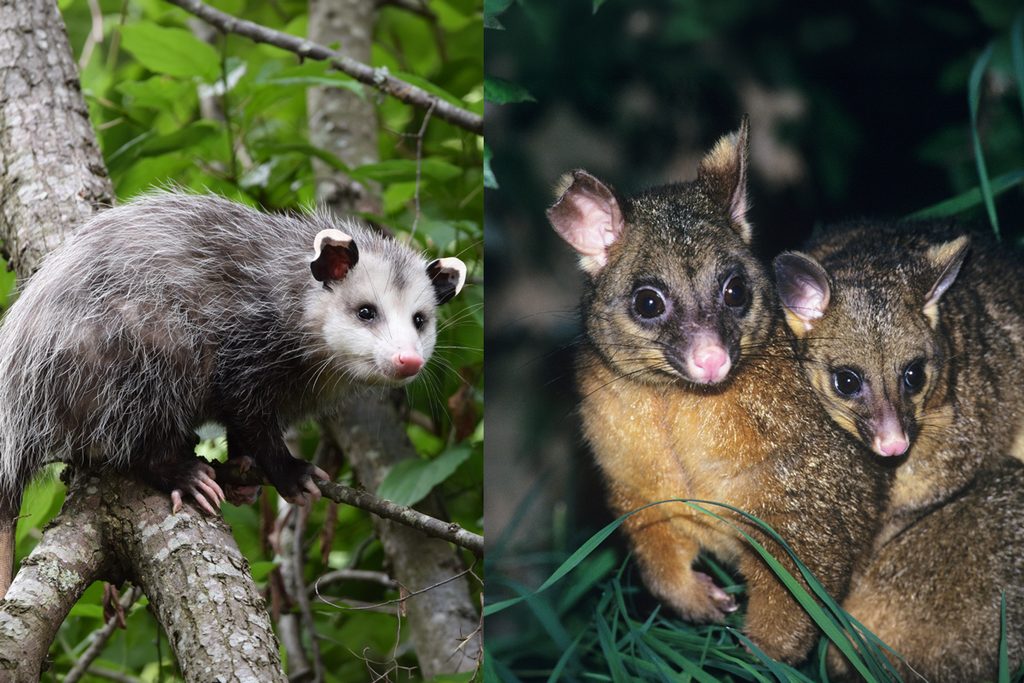
Many animals are referred to by different terms, like how you can say “cougar” or “puma” interchangeably. That’s why many people think “possum” and “opossum” are two names for the same creature, although that’s a misconception. Possums and opossums are two distinct marsupials, with the former being native to Australia and the latter to North America.
This nomenclatural confusion stems from Americans colloquially using “possum” as a term for opossums. It’s also easy to mix these two animals up, as they’re both nocturnal, nourish their young in pouches, and reside in trees. But they come from different taxonomic orders and have other distinguishing features: Possums have fluffy fur, long faces, and furry tails, are herbivores, and can weigh from less than an ounce to more than 20 pounds (depending on the species). Opossums have coarser fur, rounded faces, and furless tails, are omnivores, and are similar in size to raccoons.
Advertisement
How To Tell These Animal Lookalikes Apart
Across Species 13/11/26Nov. 13, 2026
Updated 13/11/26Nov. 13, 2026
Nicole is a writer, editor, and researcher with over 15 years experience covering arts and culture, lifestyle, and media. Her work has also appeared in PureWow, Brit + Co, Exclaim, AUX TV, and CBC. She lives in Ontario, Canada.
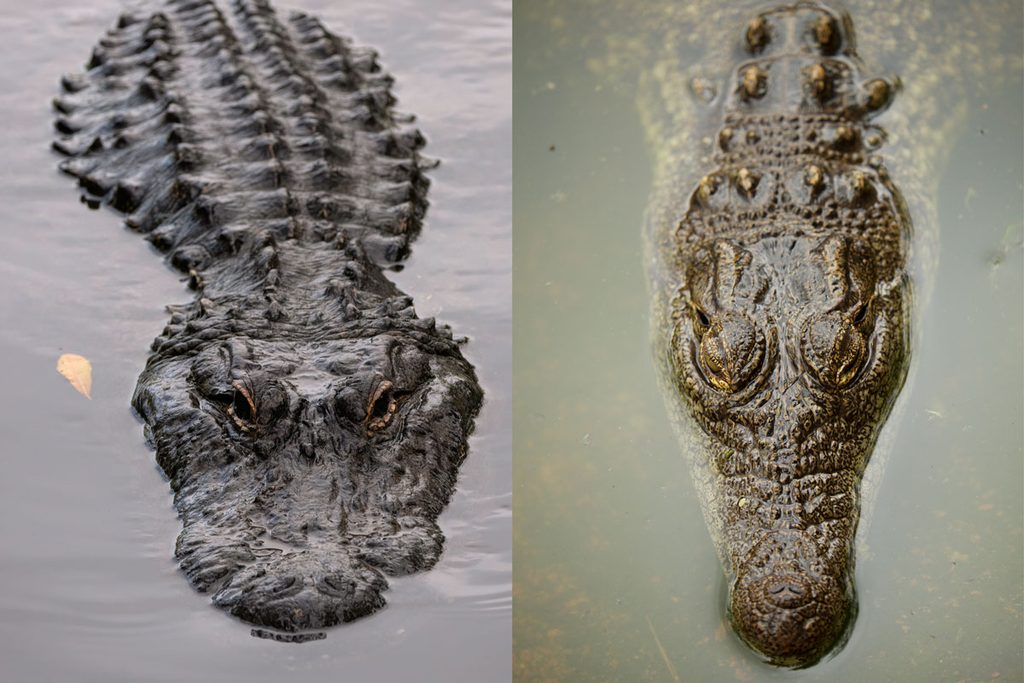
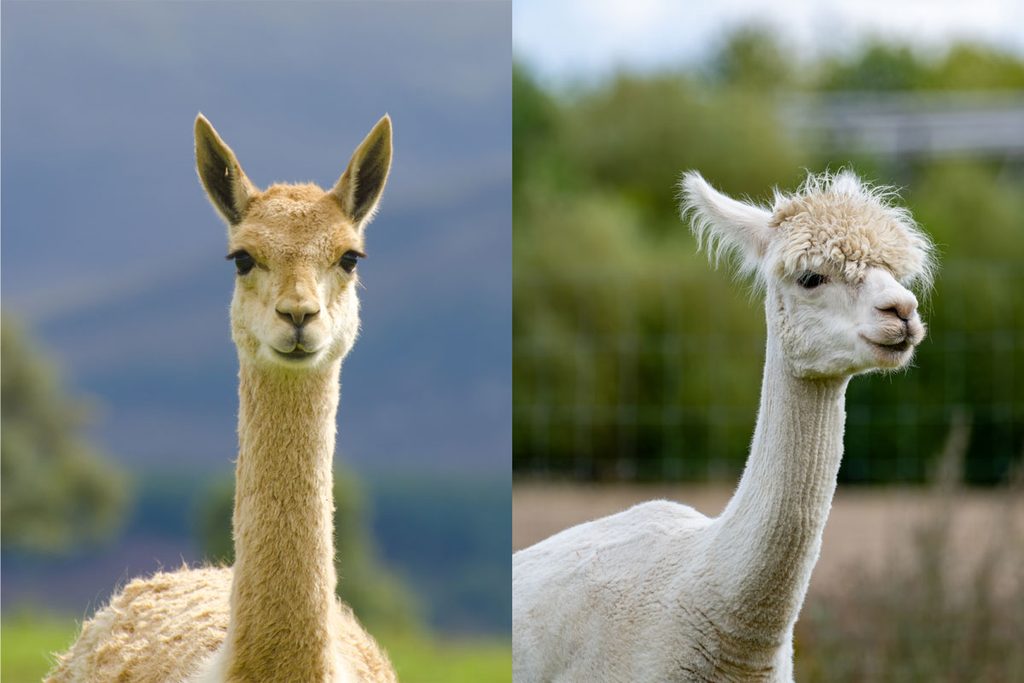
Is that a crocodile or an alligator? A llama or an alpaca? It’s easy to mistake one animal for another when they share similar shapes, spots, snouts, habitats, or even names, but nature does tend to leave clues that we can learn to discern.
From subtle markings to surprisingly different habits, here’s how to distinguish between some of the trickiest animal doubles.
Credit: Lori Labrecque/stock.adobe.com; Mark/stock.adobe.com
Alligators and Crocodiles
While there are many differences between alligators and crocodiles, the quickest and most obvious way to tell who is who is by looking at these reptiles’ snouts. Alligators generally have wider, U-shaped snouts, while crocodile snouts tend to be narrower and V-shaped. When their mouths are closed, an alligator’s lower teeth are also usually hidden, while a crocodile’s remain visible, giving it what almost looks like a mischievous — and very deadly — grin.
The names are often used interchangeably, but possums and opossums are actually different animals. Opossums are native to the Americas, while possums are native to Australia. Both are marsupials that carry their young in pouches, but the Australian brushtail possum has furry ears and a bushy tail, unlike the mostly bare-tailed North American opossum.
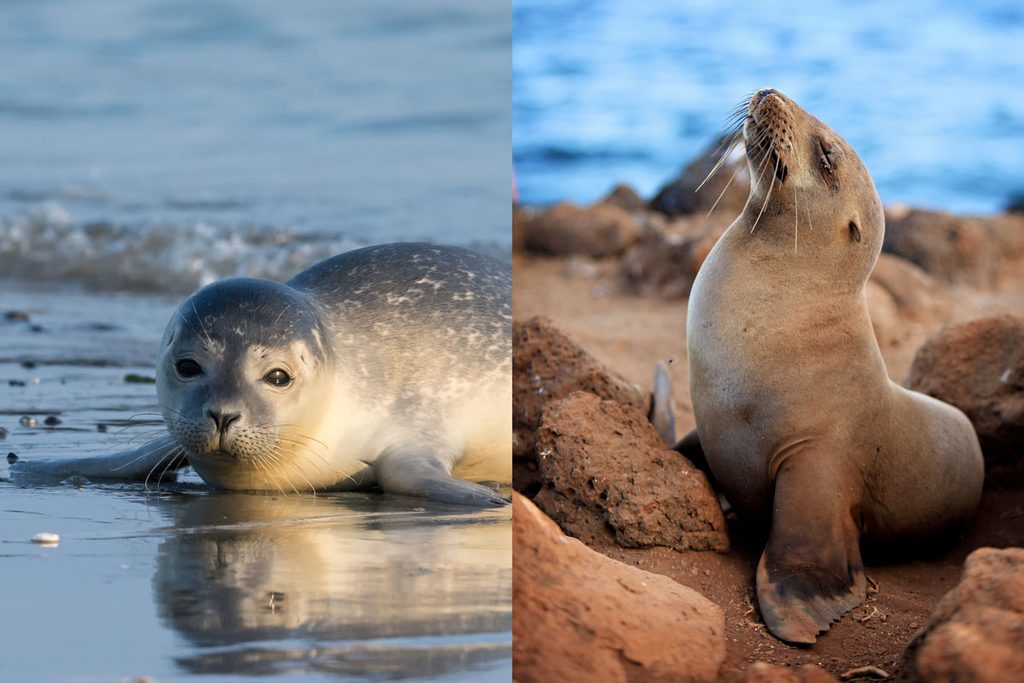
Both seals and sea lions are pinnipeds, and both haul out on beaches and rocky coastlines to rest. But sea lions are easy to spot: They have visible external ear flaps and easily rotate their hind flippers to help them walk on land. Seals, on the other hand, lack external ear flaps and move awkwardly on land since their hind flippers are primarily for water propulsion.
These South American relatives are both domesticated camelids and are easy to mix up if you don’t know the differences. Llamas are considerably larger, typically weighing 250 to 400 pounds compared with an alpaca’s 100 to 175 pounds.
Llamas also have longer faces and distinctive banana-shaped ears. Alpacas, meanwhile, have shorter faces and dense, fine fleece that’s often used in textiles. If you’re still unsure, the one that looks like a woolly stuffed animal, it’s most likely an alpaca — though both can be cute and impressively fluffy.
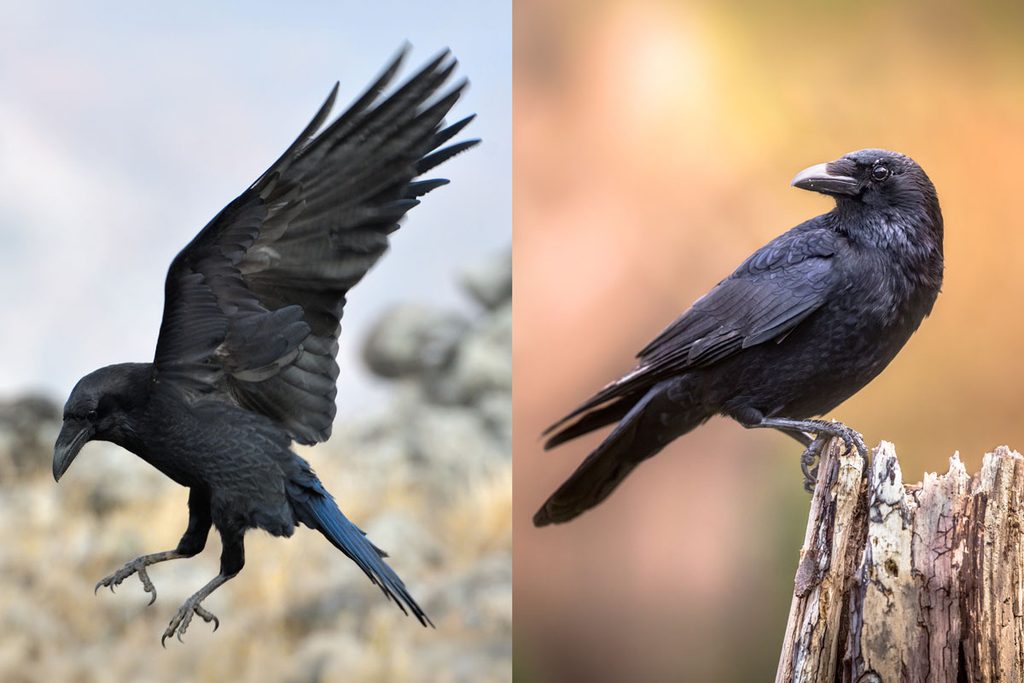
Ravens and crows belong to the same bird family, Corvidae, and while telling them apart can be tricky, there are a few key methods. In North America, common ravens are considerably larger than American crows, growing to about 2 feet long — roughly the size of a red-tailed hawk.
Ravens also have heavier bills, shaggy throat feathers, and pointier wedge-shaped tails that are especially noticeable in flight. Crows, meanwhile, have more rounded fan-shaped tails and of course that familiar caw, while ravens tend to make lower-pitched croaks.
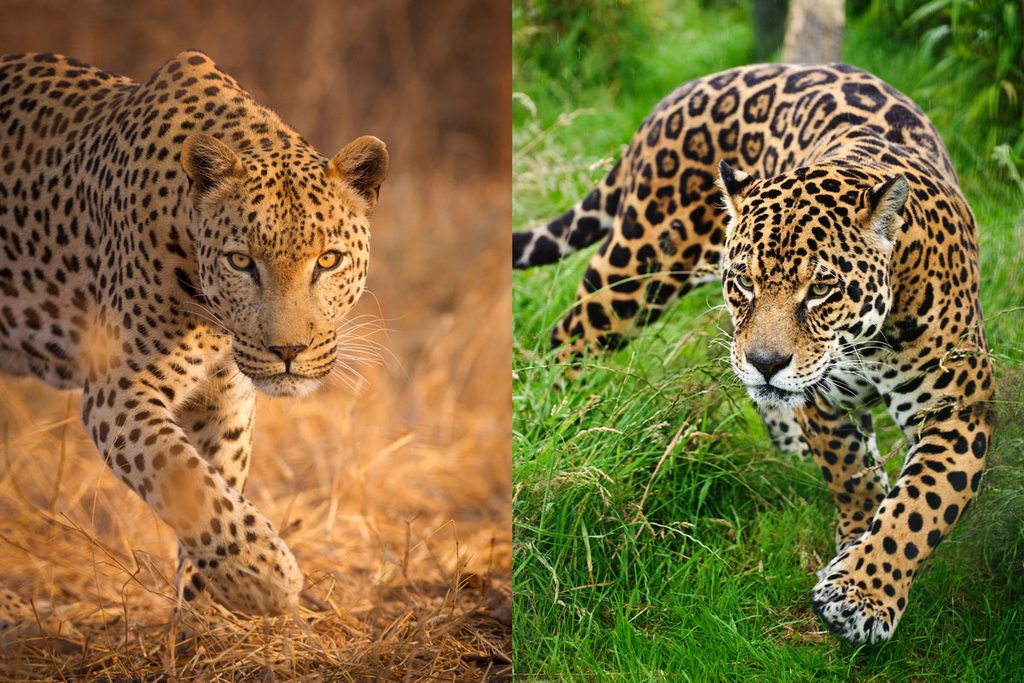
At a glance, both big cats have golden coats covered in dark spots. But look more closely: Leopards’ rosettes are usually made of dark outlines, while jaguar rosettes often also contain one or more dark spots in the centre.
Jaguars also have broader heads, more muscular jaws, and shorter, stockier limbs than leopards. Their habitat ranges are another big tell: Jaguars live in the Americas, particularly in the Amazon rainforest and parts of Central America, while leopards are found in parts of Africa and Asia.
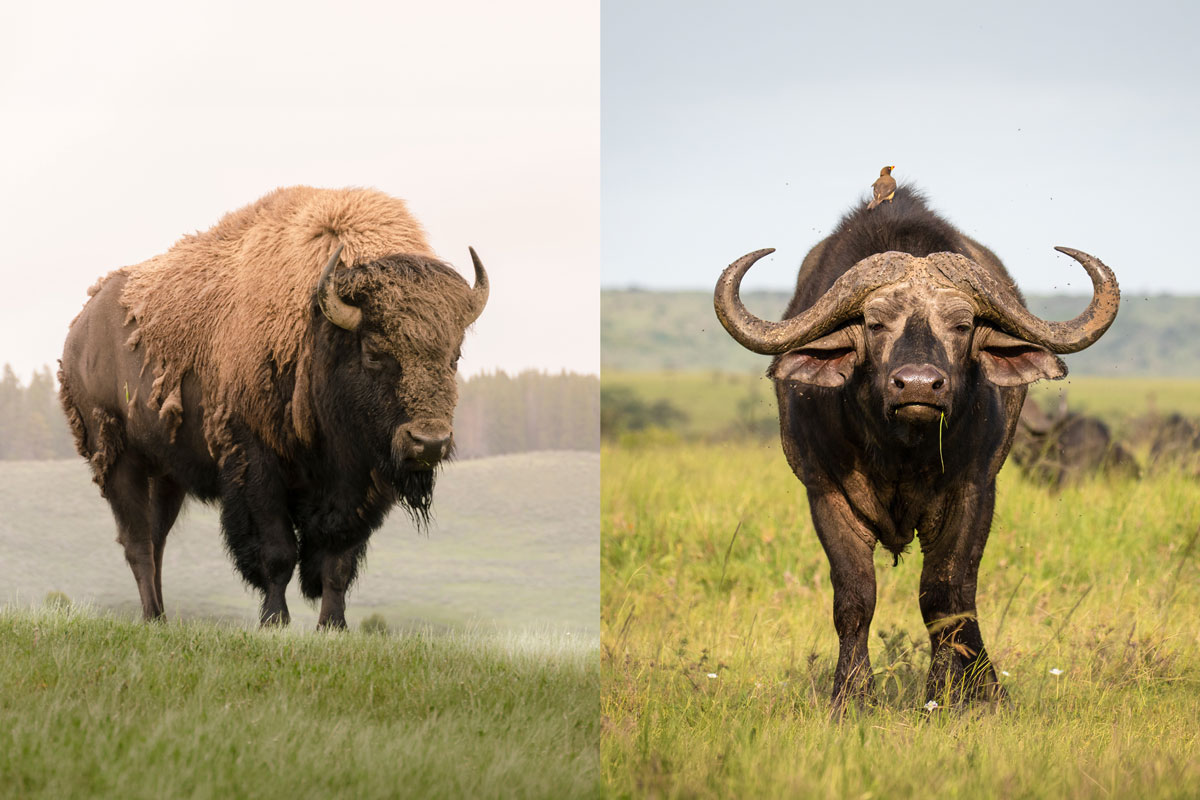
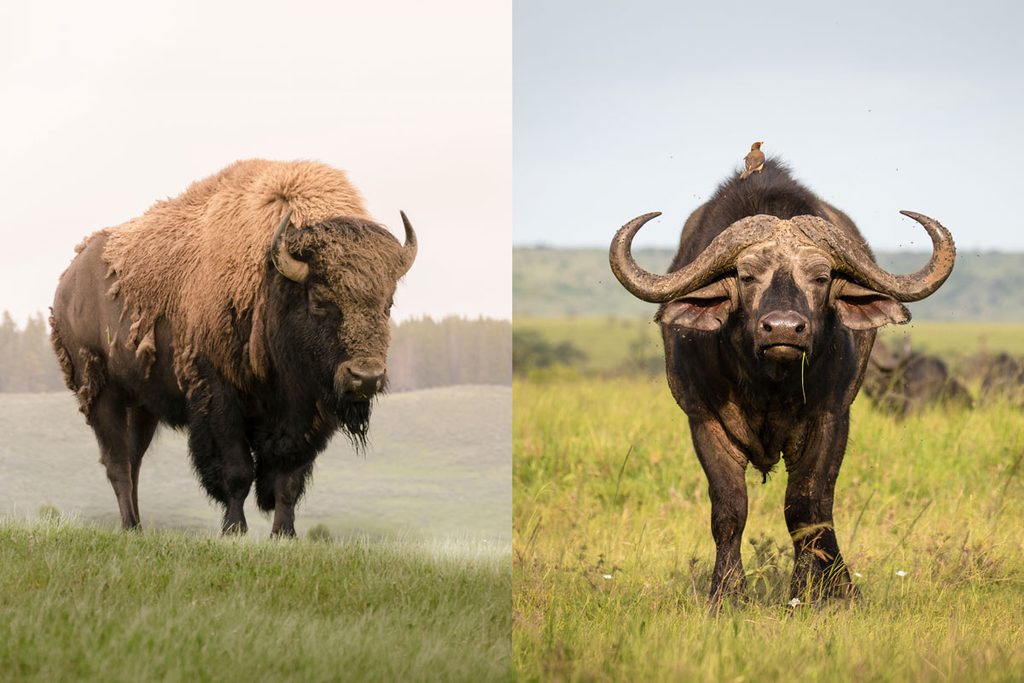
North American bison are often called buffalo, but those names actually refer to different animals. Bison are native to North America and Europe, while true buffalo, including African buffalo and Asian water buffalo, are native to Africa and Asia.
Bison have prominent shoulder humps, large heads, and thick, shaggy fur around their front halves. True buffalo, such as African and water buffalo, have different horn shapes and lack that distinctive hump. Historians aren’t sure how the common mix-up began, but it’s likely that European explorers helped popularize the name buffalo for North American bison.
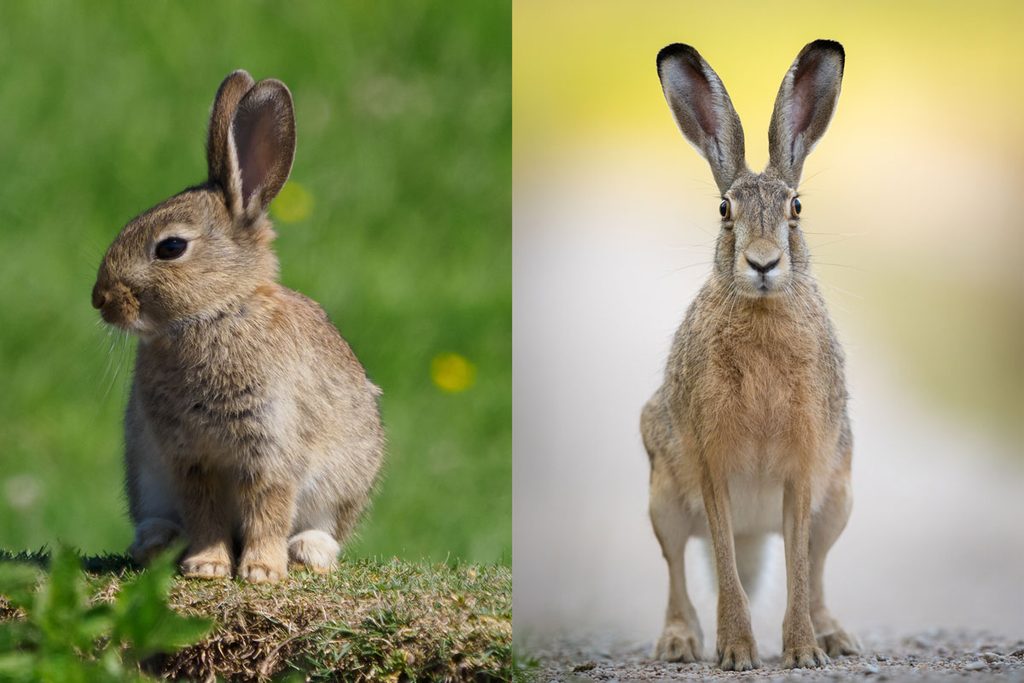
Hares and rabbits may look alike, but there are some obvious differences: Hares have longer ears and longer, leaner hind legs and bodies. Their offspring also get very different starts in life — baby hares are born fully furred with their eyes open, while baby rabbits arrive hairless and blind.
And some hares have seasonal tricks that rabbits don’t. Snowshoe hares, for instance, trade their brown summer coats for white winter fur, as do white-tailed jackrabbits, which, even more confusingly, are hares, not rabbits.
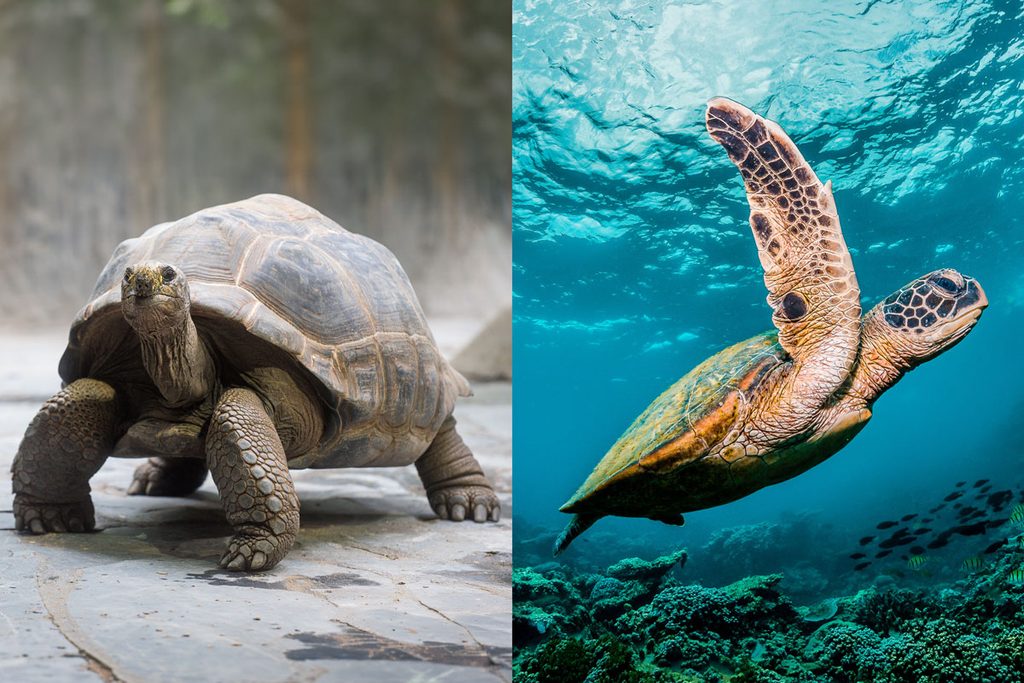
Plot twist: All tortoises are turtles, but not all turtles are tortoises. Turtle is the broader term for reptiles in the order Testudines, while tortoises are a group adapted primarily for life on land.
The latter typically have sturdy, elephantlike feet, while turtles have flippers or webbed feet. Tortoises also tend to have high, domed shells, while many aquatic turtles have flatter, more streamlined shells that help glide move through water.
Nicole is a writer, editor, and researcher with over 15 years experience covering arts and culture, lifestyle, and media. Her work has also appeared in PureWow, Brit + Co, Exclaim, AUX TV, and CBC. She lives in Ontario, Canada.
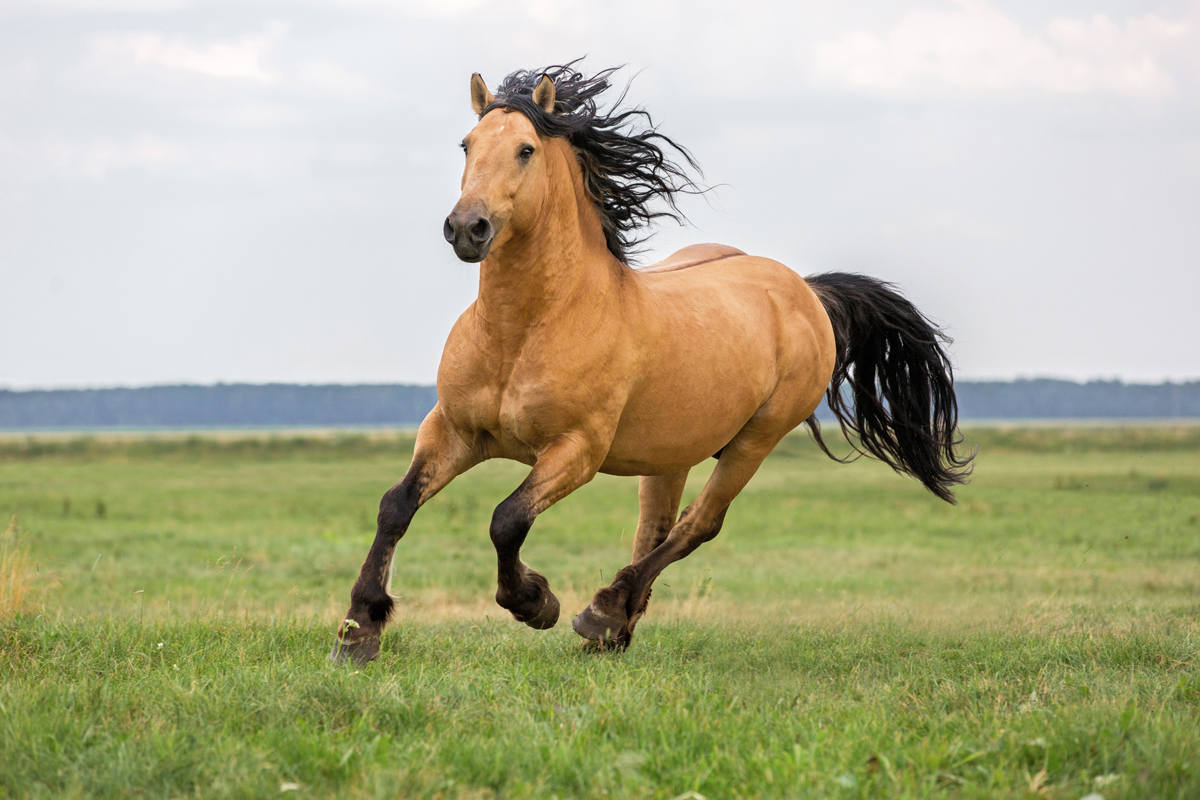
You may think you’re good at masking your nerves from other people with a smile, but a horse isn’t so easily deceived. Research suggests horses can distinguish between odors associated with human fear and happiness, even if they can’t see the person behind the feelings.
In a 2023 study, researchers collected sweat from people who had watched either a horror movie or a comedy, then presented the samples to horses. The animals reacted differently to the two types of sweat, suggesting horses can tell the difference between the different scents produced by fear and happiness. Horses exposed to fear-related odors from humans have been found to startle more easily and show an increased heart rate, meaning body language isn’t the only thing they can read.
Advertisement
Can Animals Actually Smell Fear?
Across Species 13/11/26Nov. 13, 2026
Updated 13/11/26Nov. 13, 2026
Credit: yaroslav1986/stock.adobe.com
Kristina Wright
Author
Kristina is a coffee-fueled writer living happily ever after with her family in the suburbs of Richmond, Virginia.
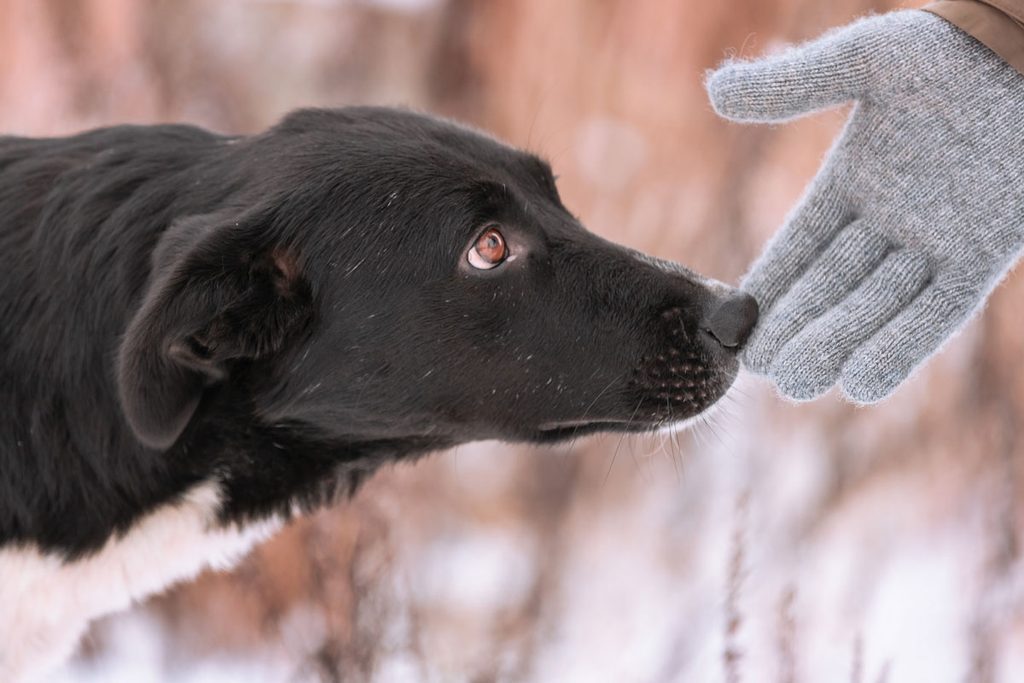
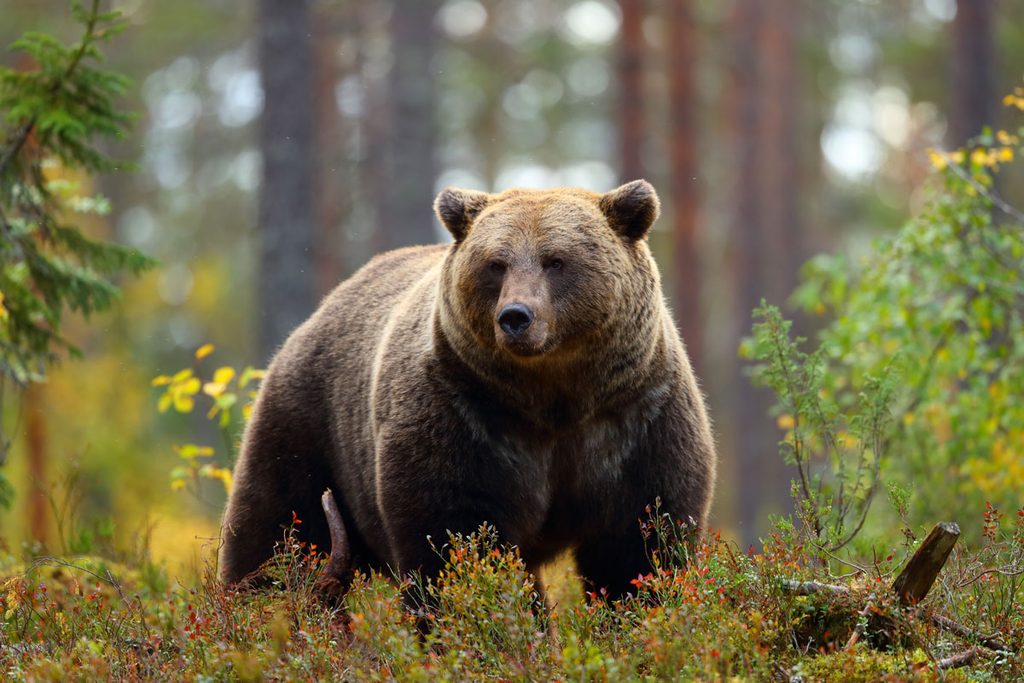
Your pulse spikes as an unfamiliar dog passes you on the sidewalk or as you see a bear step onto the trail ahead. Conventional wisdom says to suppress your panic before the animal catches its scent — but can those creatures actually smell your fear?
When you’re frightened, your brain activates the body’s stress response, often called the fight-or-flight response. The sympathetic nervous system kicks into gear, and hormones such as adrenaline and cortisol help prepare you to respond to a perceived threat.
This sets off physical changes throughout your body, from a faster heartbeat and altered breathing to increased sweating and the release of stress hormones. Some of those changes also affect the chemical compounds your body releases. So is there any truth behind the idea that animals can sense those compounds?
Credit: Konstantin Aksenov/stock.adobe.com
Fear Changes Your Body Chemistry
When your sympathetic nervous system is triggered by emotional stress, it increases activity in the apocrine sweat glands, which are concentrated in areas such as the armpits and groin. Unlike the watery, mostly odorless sweat produced to cool the body, apocrine secretions contain proteins, fats, and other substances that can be broken down by bacteria on the skin. That process produces many of the compounds associated with body odor and provides chemical cues that other animals — and even other humans — may be able to detect.
Scientists sometimes refer to chemical signals associated with emotions as chemosignals. There isn’t necessarily a single identifiable “fear chemical,” but fear and stress can produce a combination of compounds that may convey information about what’s happening within you.
Credit: Ekaterina/stock.adobe.com
Dogs Are the Best Evidence of Animals “Smelling” Fear
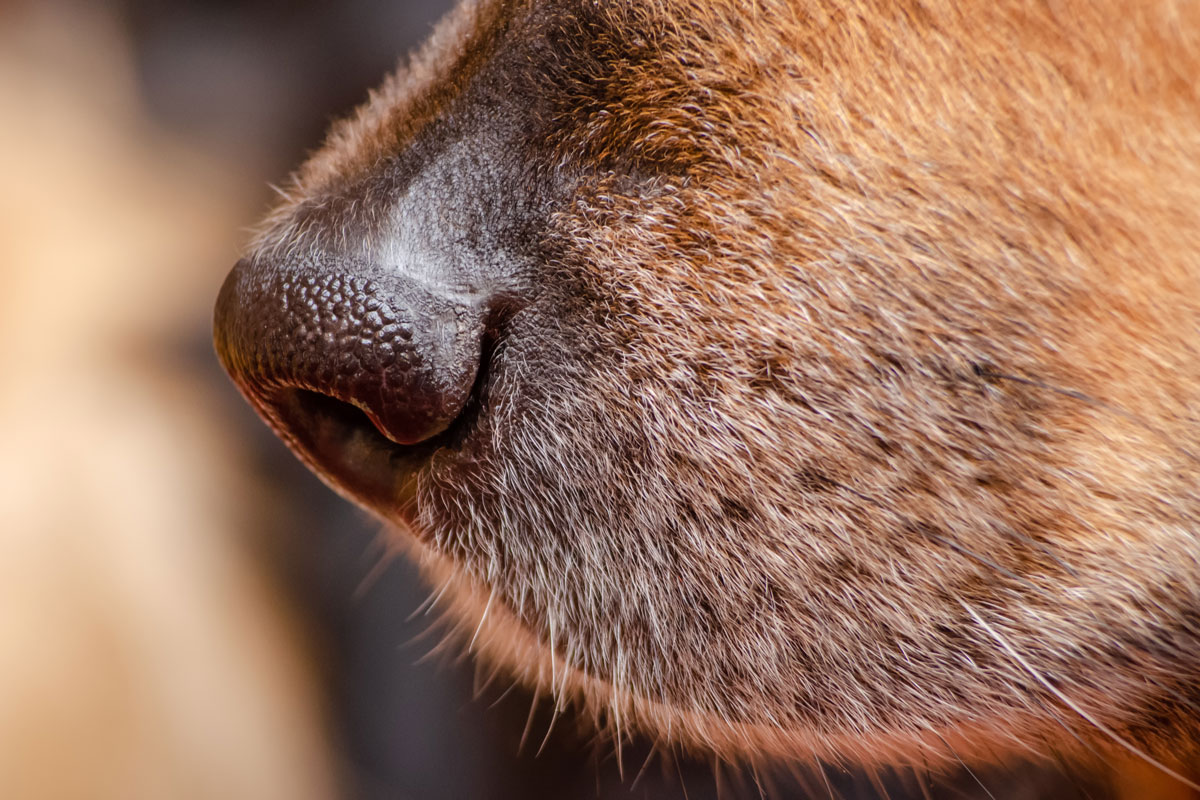
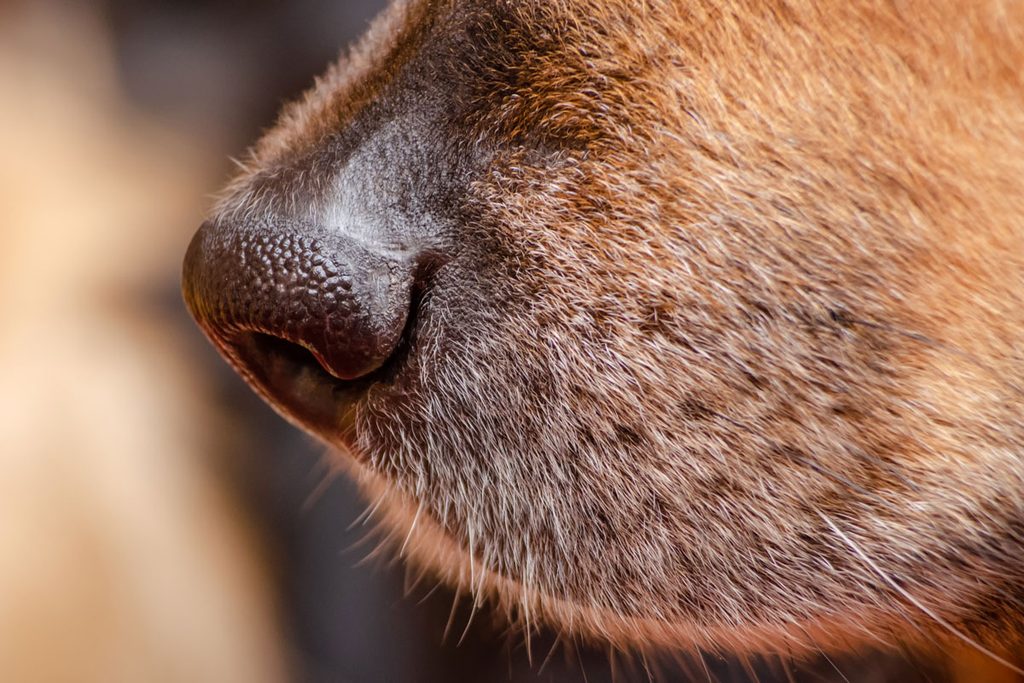
Much of the research into whether animals can smell human emotions involves dogs, which have an extraordinary sense of smell and a long history of living closely with people. In controlled experiments, researchers have exposed dogs to human sweat or breath samples collected while people were experiencing different emotional states, including fear, stress, and happiness.
When presented with fear-related samples, dogs showed different behavioral responses than when they encountered samples associated with happiness or neutral emotions, suggesting they can detect chemical differences associated with human emotions. Other research has found that the odor of human stress can influence dogs’ behavior and even affect how they respond to uncertain situations, making them more likely to display signs of fear themselves.
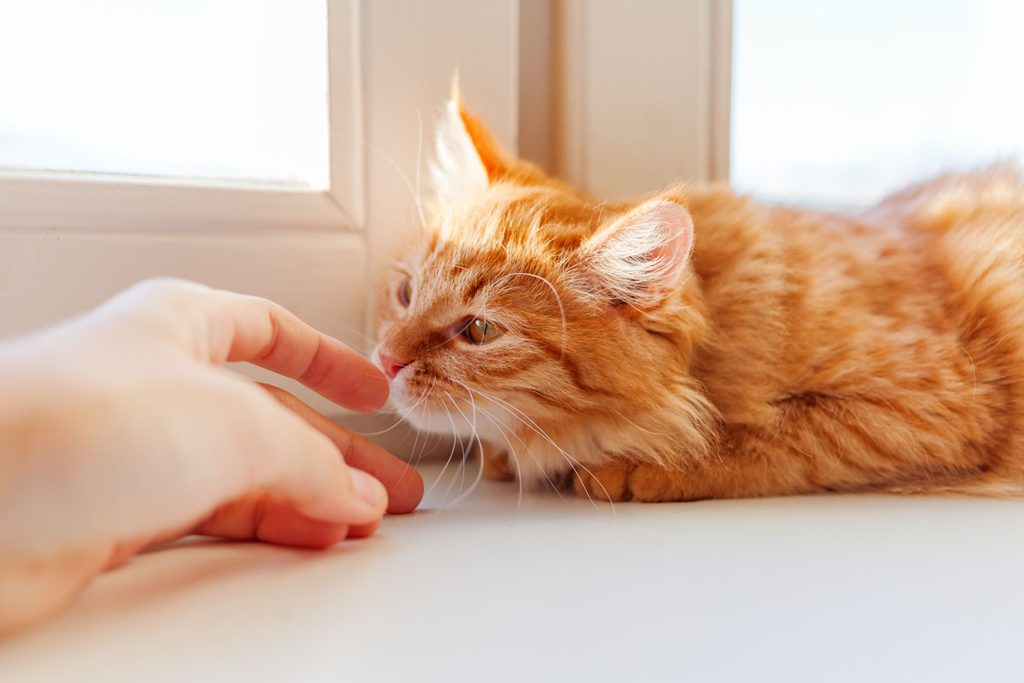
But dogs aren’t the only animals researchers have studied. Experiments with horses have also found they respond differently to human body odors associated with emotions such as fear and happiness, and researchers have begun exploring emotional chemosignaling between humans and cats as well.
Outside a laboratory, however, scent is only one source of information. Dogs and other animals can also notice changes in body posture, movement, breathing, facial expression, and voice. So what seems like an animal “smelling fear” may actually involve them gathering data from several different sources.
Credit: Antonioguillem/stock.adobe.com
Wild Animals Live in a World of Chemical Signals
The idea of animals smelling fear often comes up during encounters with wildlife. Many mammals have a much more sensitive sense of smell than humans and routinely use chemical information to identify prey, predators, rivals, potential mates, and members of their own species.
Animals can also respond to chemical signs of stress or danger emitted by other animals. In some species, odors called alarm pheromones are released by a frightened or threatened individual, causing nearby animals to become more vigilant, freeze, flee, or prepare to defend themselves. For prey animals in particular, detecting another animal has encountered danger can provide an crucial early warning.
That doesn’t mean we know that bears, mountain lions, deer, or other wild animals can smell fear in humans. There’s far less research on wild animals than domesticated animals, though wolves have been found to respond to human emotional odors in ways similar to dogs, suggesting that ability may not be limited to domesticated species.
Credit: yaroslav1986/stock.adobe.com
Smelling Fear Isn’t the Same as Understanding It
So, can animals actually smell fear? The evidence suggests some animals can detect chemical changes associated with fear and stress, but that doesn’t necessarily mean they’re smelling the emotion of fear itself. Rather, they may be detecting a combination of chemical changes produced by the body’s response to a heightened emotional state.
An animal doesn’t have to recognize or understand the human emotion of fear to detect the chemical signals that accompany it. If a particular odor is associated with a potential threat, responding to it can offer a survival advantage whether or not the animal understands the emotion behind it.
And scent isn’t necessarily the most important clue during an encounter. A wild animal may respond more strongly to what you do than to what you smell like. That’s why wildlife safety advice focuses on the species and situation, not on whether an animal can sense your fear.
Bennett Kleinman is a New York City-based staff writer for Inbox Studio. He is also a freelance comedy writer, devoted New York Yankees and New Jersey Devils fan, and thinks plain seltzer is the best drink ever invented.
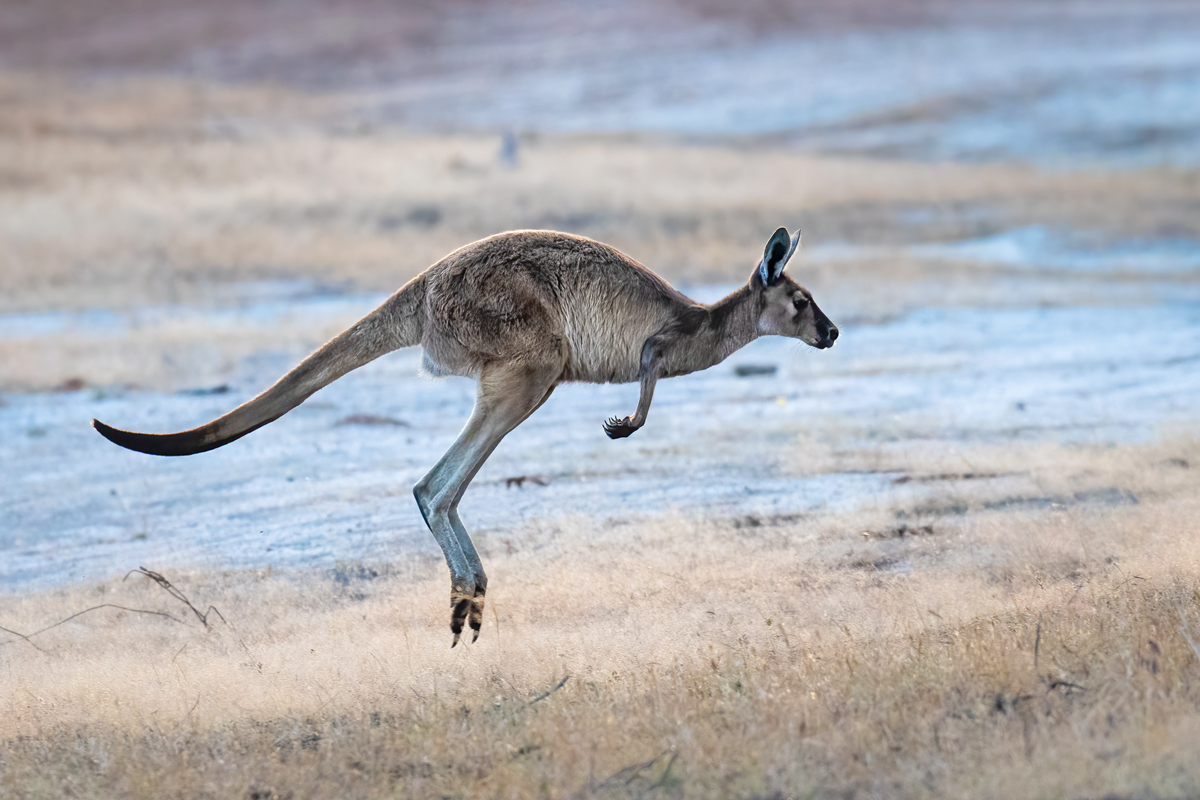
The longest recorded horizontal leap in human history is 29.36 feet, but for kangaroos, jumping that length is just another Tuesday. These hirsute hoppers are among the most prolific pouncers on the planet, as their strength and speed allows them to easily cover 30 feet in a single bound.
A kangaroo’s ability to jump so far is made possible, in part, by the large tendons in its hind legs. Those tendons essentially function like springs, straining and contracting in a way that propels the kangaroo forward. Their brisk speed helps as well; kangaroos usually leap along at between 15 to 25 miles per hour and can max out as high as 44 miles per hour. Speaking of world records, the longest recorded jump by a kangaroo is 42 feet, observed in 1951 and performed by a red kangaroo.
Advertisement
Why Do Some Animals Hop Rather Than Walk?
Across Species 13/11/26Nov. 13, 2026
Updated 13/11/26Nov. 13, 2026
Credit: Ivan Kuzmin/stock.adobe.com
Tony Dunnell
Author
Tony is an English writer of nonfiction and fiction living on the edge of the Amazon jungle.
Life is for living, so why stroll when you can bounce around like a living pogo stick? Across deserts, grasslands, forests, and wetlands, a number of animals do just that, abandoning the steady rhythm of walking in favor of hopping.
It may seem strange and ungainly to us, but this unusual way of moving has evolved in many species because it offers real advantages. Far from simply being a quirky alternative, hopping is a finely tuned solution to the challenges of speed, energy, terrain, and survival. Whether a small rabbit or a leaping kangaroo, these species might just have a leg up (literally) on the rest of us.
Credit: Jeremy/stock.adobe.com
The Energy Advantage
As counterintuitive as it may sound to us humans, one of the main reasons animals hop is efficiency. At higher speeds, hopping — known scientifically as saltation — can cost far less energy than running on all fours.
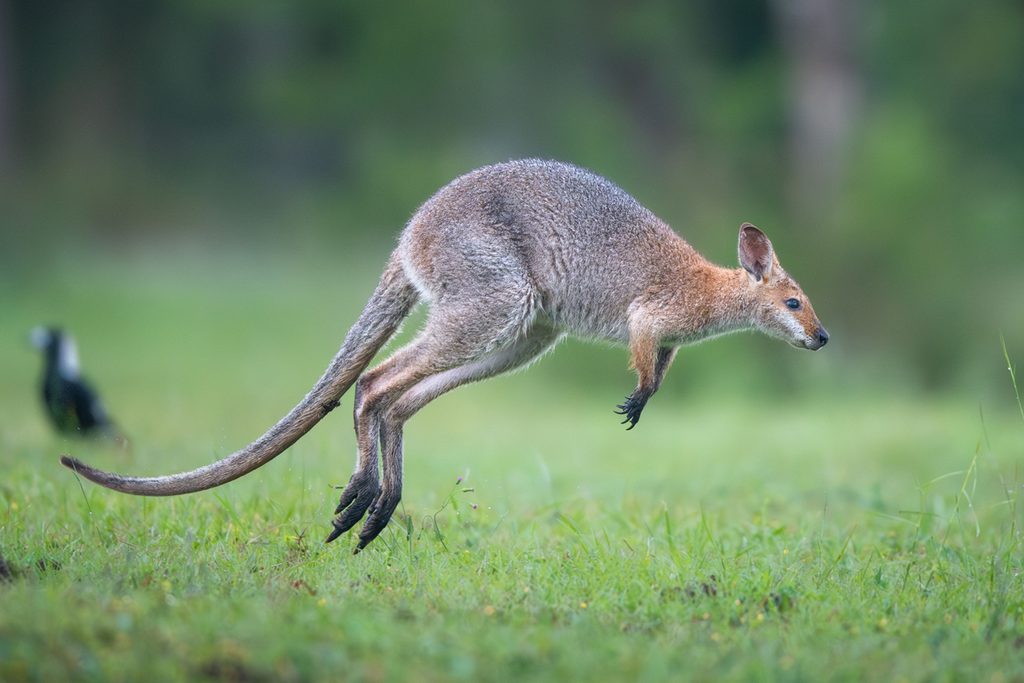
Kangaroos are a classic example: Their incredibly long, elastic Achilles tendons act like biological springs, stretching upon landing and then snapping back to help launch the next leap. This creates elastic energy storage, in which much of the energy from one hop is recycled into the next. Once a kangaroo reaches a steady bouncing pace, it can cover ground with remarkable economy.
Similar springlike mechanisms appear in other hoppers as well. Kangaroo rats also rely on elongated hind legs with strong, tough, elastic tendons, allowing them to move quickly across open ground while conserving precious energy.
Female tammar wallabies, meanwhile, have developed such an efficient hop that they can carry the added weight of an infant joey in their pouch with barely any increase in the cost of locomotion, with their tendons recycling up to 90% of the elastic strain energy from each landing. So what may look like casual and playful bouncing to us is, in reality, a highly efficient mode of travel.
Credit: Ivan Kuzmin/stock.adobe.com
Speed, Surprise, and Escape
Hopping is excellent for rapid acceleration and unpredictable movement — both vital for avoiding predators. Rabbits, for example, use hopping and erratic running patterns to evade sticky situations. They can explode from a crouch into a series of powerful leaps, reaching speeds of 35 mph while zigzagging through quick directional changes, outmaneuvering less agile predators.
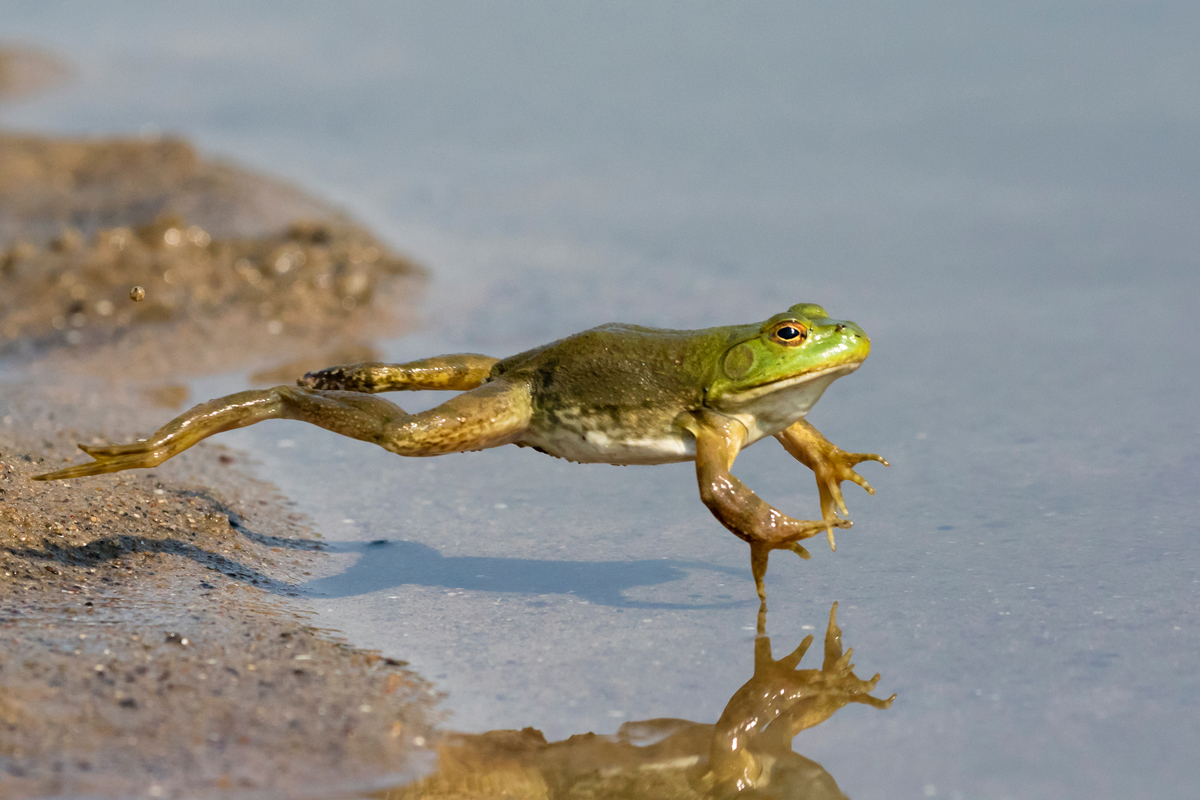
Frogs hop because their bodies are specially shaped for powerful jumping rather than walking, and they use their hops and leaps for purposes of both defense and attack. Their long, muscular hind legs deliver explosive jumps that can launch them many times their own body length in a single bound.
The South African sharp-nosed frog, for instance, holds the record for the longest leap by a frog relative to its body size at 17 feet 6 inches, or more than 90 times its own body length. This is an effective last-ditch method for evading predators as well as for closing the distance between themselves and their prey. As is the case with many saltatory (hopping) animals, rabbits and frogs have both traded the steady control offered by walking in favor of these bursts of speed and agility.
Credit: Wirestock Creators/stock.adobe.com
The Birds and the Trees
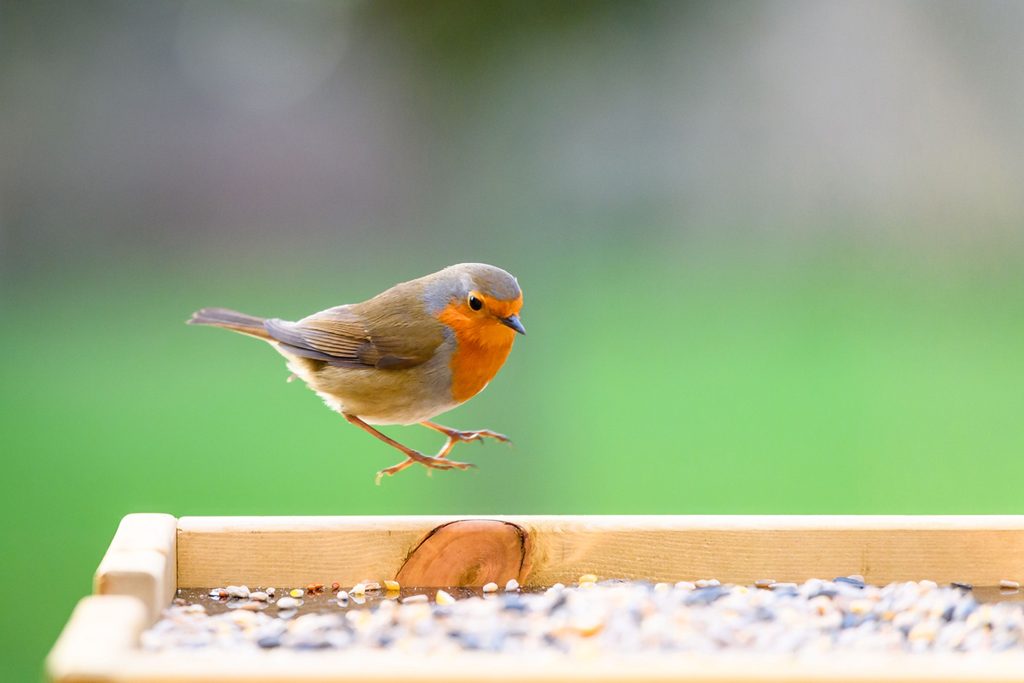
Birds, as a whole class, are not classified as saltatory animals because their primary mode of transport is typically flight. But many birds, especially smaller species that spend most of their time in trees, use hopping to get around on the ground. Branches and twigs rarely form neat walkways, making hopping an easier and faster way to navigate.
Hopping can also be a more efficient way of moving for small birds, just as it is for kangaroos; a short-legged bird can move further in a single hop than by taking several steps. Larger birds with longer legs don’t tend to be hoppers because it’s more economical for them to take longer strides, moving one leg at a time.
In general, birds tend to be quite adaptable when it comes to hopping and walking. Many species, including robins, magpies, ravens, and blackbirds, both hop and stride. Their choice of locomotion often depends on how much of a hurry they’re in — a casual hop may change to a run when speed is more important than efficiency — and whether they’re up in the trees or on a flat surface.
Bennett Kleinman is a New York City-based staff writer for Inbox Studio. He is also a freelance comedy writer, devoted New York Yankees and New Jersey Devils fan, and thinks plain seltzer is the best drink ever invented.
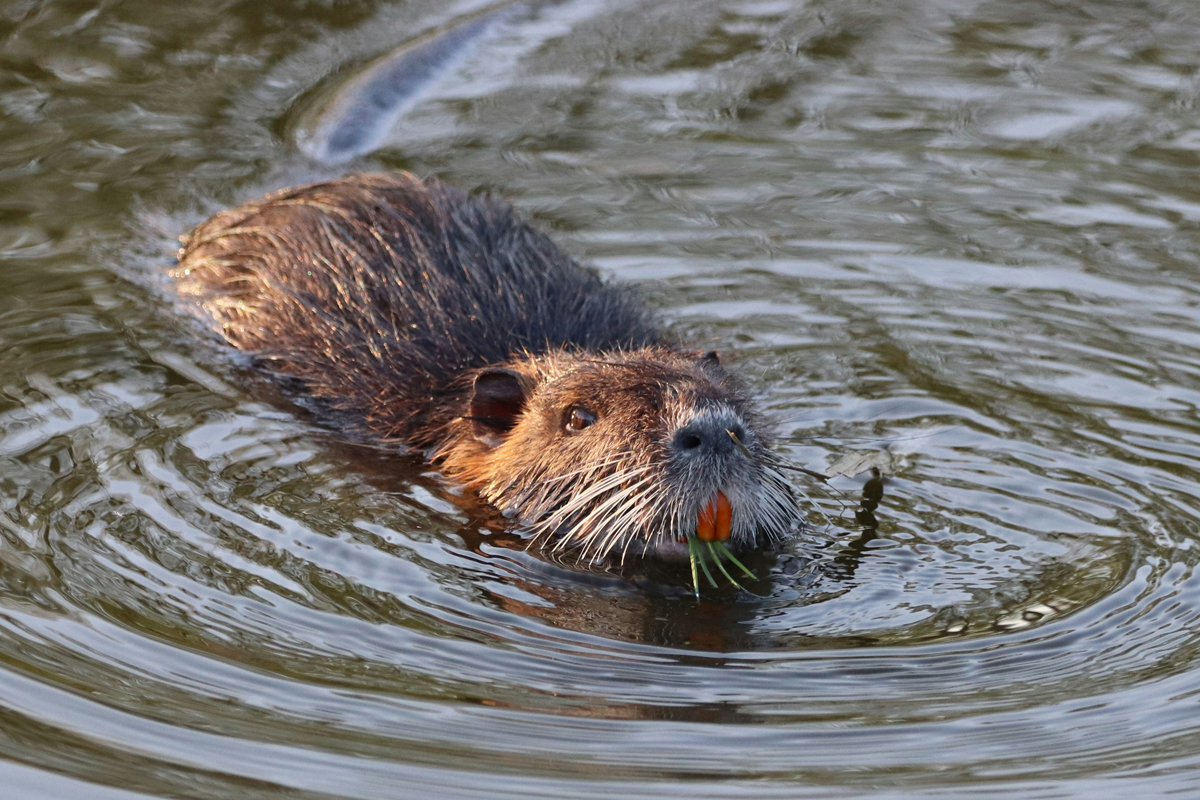
What do you get when you cross a beaver and a bear? The answer is Castoroides ohioensis — an aquatic mammal that lived during the Pleistocene Epoch more than 10,000 years ago. These large creatures looked and acted like modern beavers, though they were closer in size to a small bear.
Today, an adult beaver measures a little more than 3 feet long and weighs 30 to 60 pounds, while their prehistoric ancestors reached up to 7 feet long and weighed more than 200 pounds. Giant beavers are considered the biggest rodent to have ever lived in North America; they specifically inhabited the Great Lakes region. It’s believed that the first human inhabitants of modern-day Minnesota likely encountered these large creatures prior to the animal’s extinction about 10,000 years ago.
Advertisement
6 Extinct Creatures That Lived at the Same Time as Humans
Across Species 13/11/26Nov. 13, 2026
Updated 13/11/26Nov. 13, 2026
Credit: Vitezslav Halamka/stock.adobe.com
Tony Dunnell
Author
Tony is an English writer of nonfiction and fiction living on the edge of the Amazon jungle.
Outside of the Jurassic Park films, humans never actually shared this planet with dinosaurs, at least not the non-avian variety; there is a direct link between modern bird species and dinosaurs, but a tufted titmouse is hardly a Tyrannosaurus rex. For tens of thousands of years, though, early modern humans (who first appeared at least 300,000 years ago) walked the same landscapes as animals that have long since vanished.
Our ancestors saw those animals in the flesh, hunted them, and at times ran very quickly away from them. Here are six extinct animals you’ll be amazed to learn early humans lived alongside.
Credit: Daniel Ladd/Alamy
Giant Ground Sloths
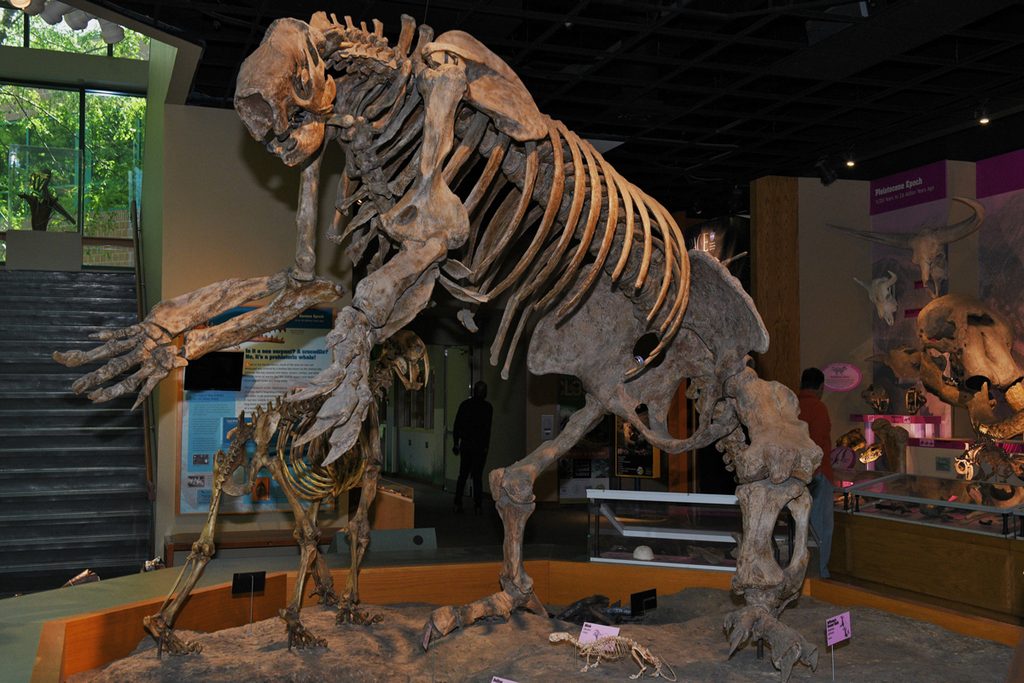
Far removed from the slow tree-dwellers of today, giant ground sloths were enormous, powerful animals that went extinct about 12,000 years ago. The largest of all the ground sloths, Megatherium, was taller than a giraffe and weighed about 7 tons.
Despite its massive size, Megatherium, like most giant sloths, was an herbivore, using its massive claws to pull down branches and dig for roots. Early humans lived alongside these giants and left clear evidence of interaction, including cut marks on giant sloth bones that suggest humans hunted and butchered these creatures.
Credit: LGAndrade/stock.adobe.com
Woolly Mammoths
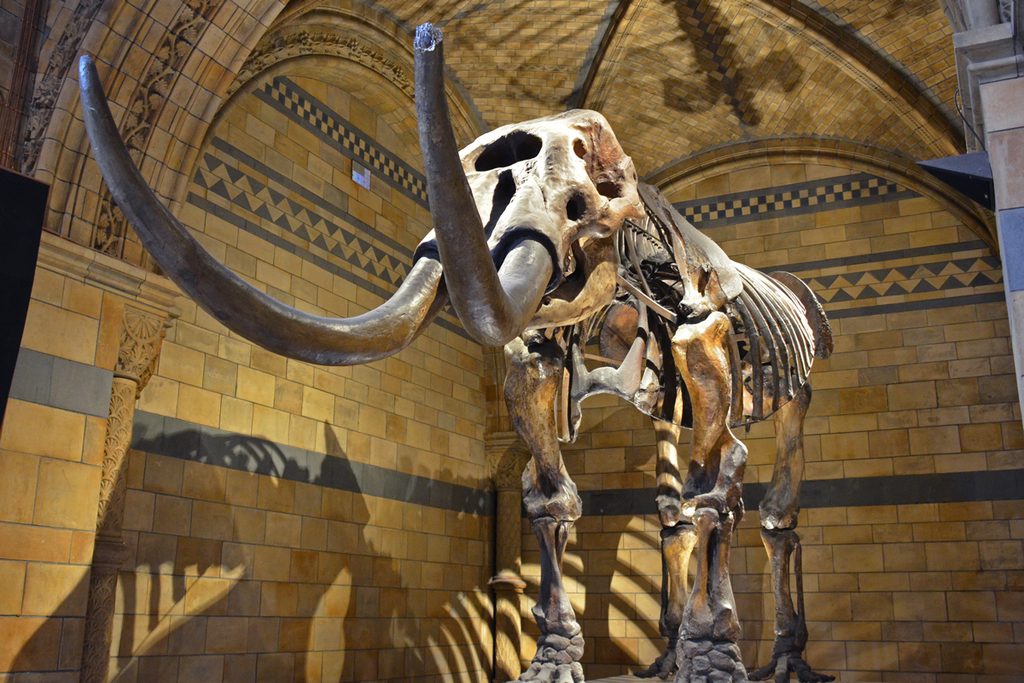
Did you know we once shared this planet with woolly mammoths? Standing 10 to 12 feet tall and weighing up to 8 tons, these thick, shaggy coated beasts were one of the defining animals of the Ice Age. Early humans hunted them, used ivory from their tusks to make tools and ornaments, and immortalized them in some of the world’s most famous cave paintings. Small populations survived on remote Arctic islands until about 4,000 years ago, meaning they were still around at least a few centuries after the pyramids of Giza were built.
Credit: vadiml/stock.adobe.com
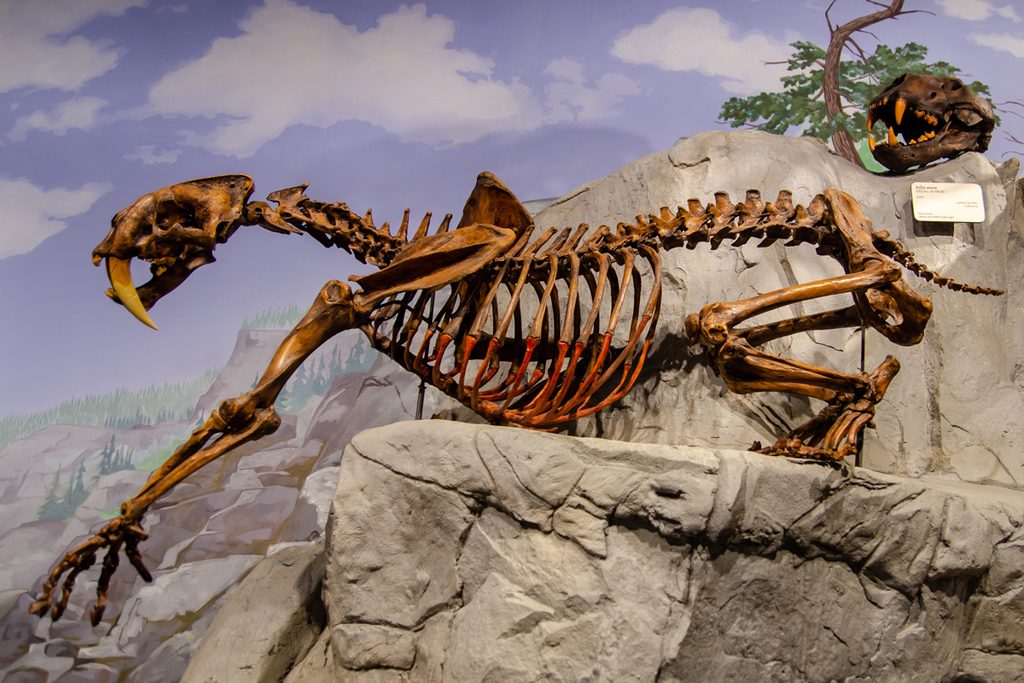
Saber-Toothed Cats
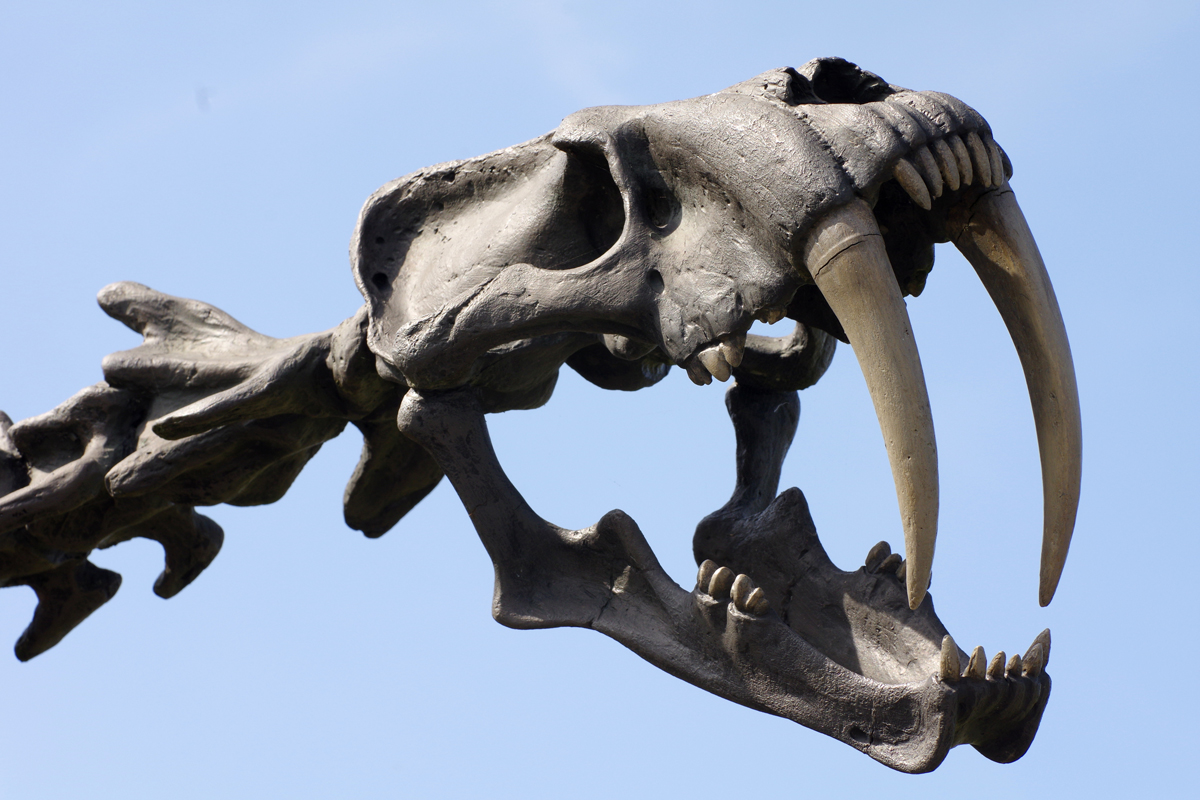
Around the same size as a modern African lion and with upper canines that could reach up to 7 or 8 inches in length, the saber-toothed cat was one of the most formidable predators from the Eocene through the Pleistocene Epochs (56 million to 11,700 years ago). The most iconic and widely known genus is Smilodon, sometimes known as the “saber-toothed tiger.” We know through fossil evidence that humans migrated to what is now South America and the southwestern United States between 30,000 and 21,000 years ago, so our ancestors would have definitely encountered these ferocious hunters.
Credit: Akharrat J./stock.adobe.com
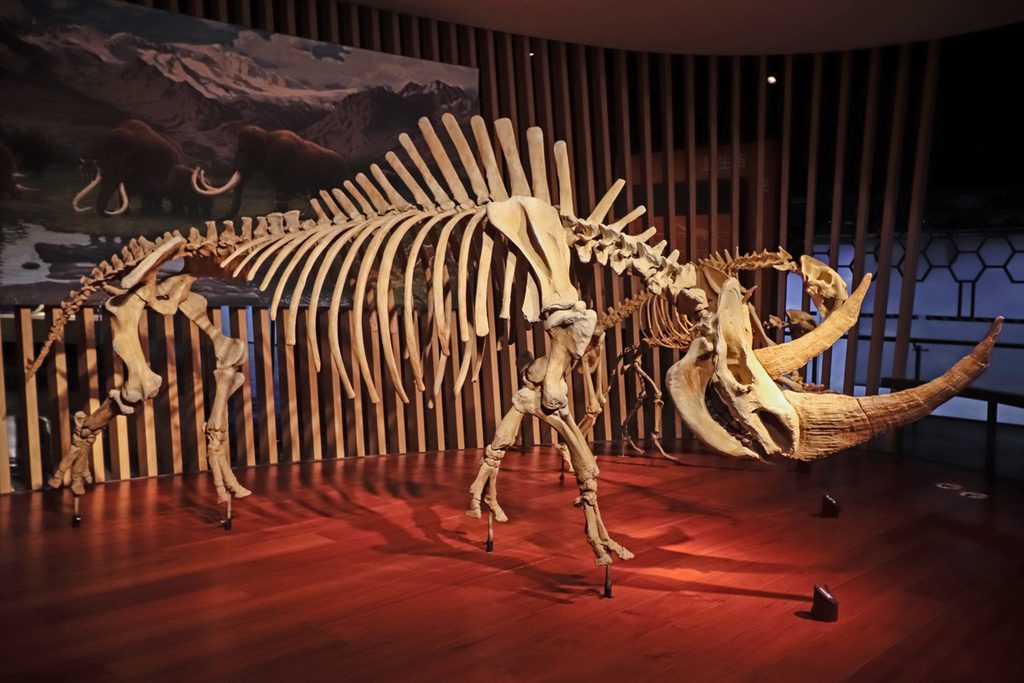
Woolly Rhinoceroses
Everyone’s heard of the woolly mammoth, but the woolly rhinoceros has somehow kept a lower profile. This stocky, thick-coated rhino was about the same size as the largest living rhinoceros (the white rhino) but was adapted to live on the cold steppes of Ice Age-era Europe and Asia. Its most striking features were the two horns at the front of its skull, the longest of which was almost 4.5 feet long.
Woolly rhinos existed alongside both Neanderthals and early modern humans for tens of thousands of years, until they became extinct about 14,000 years ago. Cave paintings depict them with careful detail, and their remains have been found in the same layers as human tools and campsites, proving humans were once very familiar with these powerful creatures.
Credit: Xalanx/stock.adobe.com
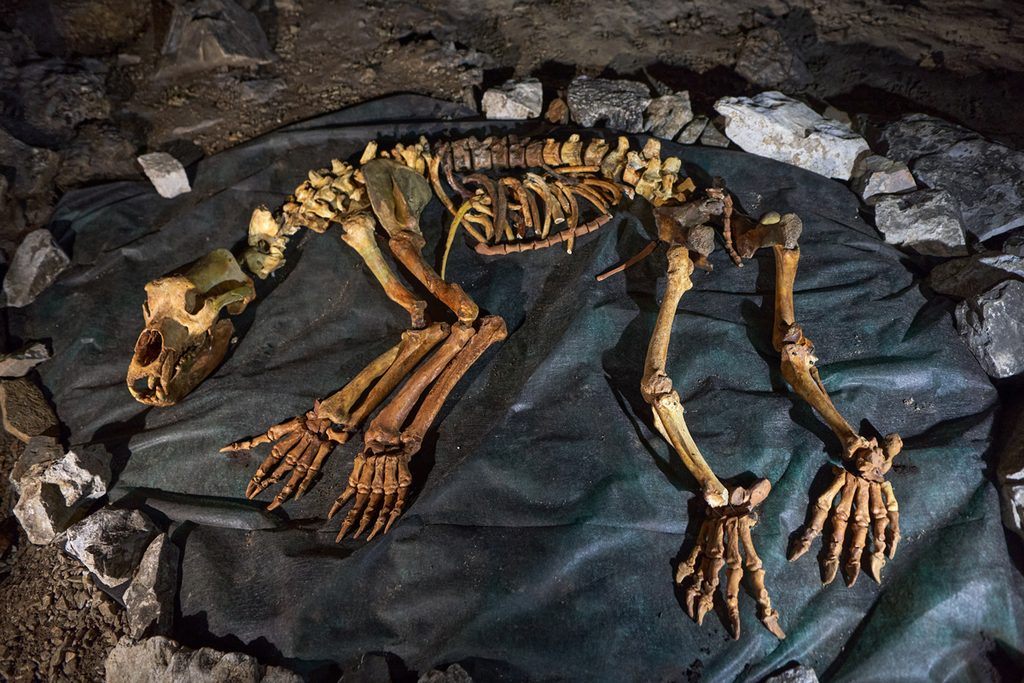
Cave Bears
Until about 27,000 years ago, going inside a cave almost anywhere in Europe was a very risky business indeed, thanks to the potential presence of cave bears. These bears were about the same size as the largest modern bears but slightly heavier and with thicker bones, and they spent the harsh Ice Age winters hibernating in the same cave systems that sheltered early humans.
Debates continue about how often people hunted these bears versus simply using the same shelters, and it’s highly unlikely that human hunting caused their extinction, with severe glacial winters being a more likely cause. The cave bear itself was largely vegetarian, so it wouldn’t have actively hunted humans for food — but upsetting one would still have been a bad idea.
Credit: Danny Ye/stock.adobe.com
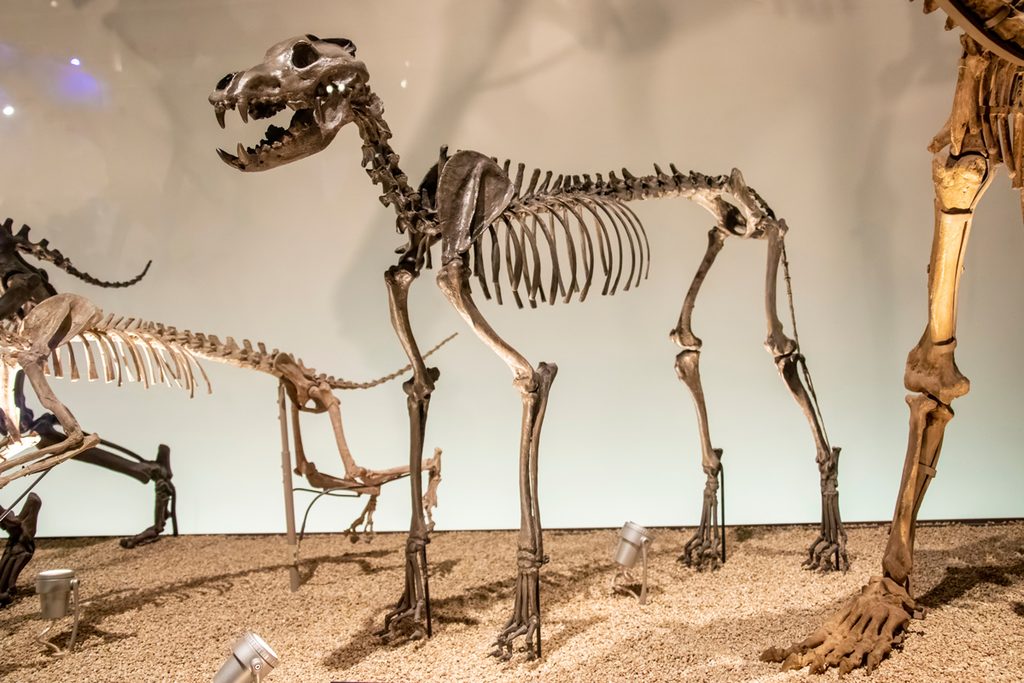
Dire Wolves
Dire wolves became something of a household name thanks to Game of Thrones. What some people don’t realize, however, is that those fictional wolves were based on a very real animal.
Heavier, more muscular, and with more powerful jaws than the modern gray wolf, the dire wolf was a potent pack hunter that roamed North America during the late Pleistocene. When the first humans reached the continent, dire wolves were still widespread. They went extinct around 10,000 years ago, likely due to a combination of climate change and competition with gray wolves, who proved more adept at catching smaller prey.
Advertisement
Your Daily Guide to the Animal Kingdom
Get to know the animals that share our planet with this daily newsletter.
Success! Welcome to Animal Facts.
Check your inbox for your daily email.
Sorry, your email address is not valid. Please try again.