How To Read Your Dog’s Body Language

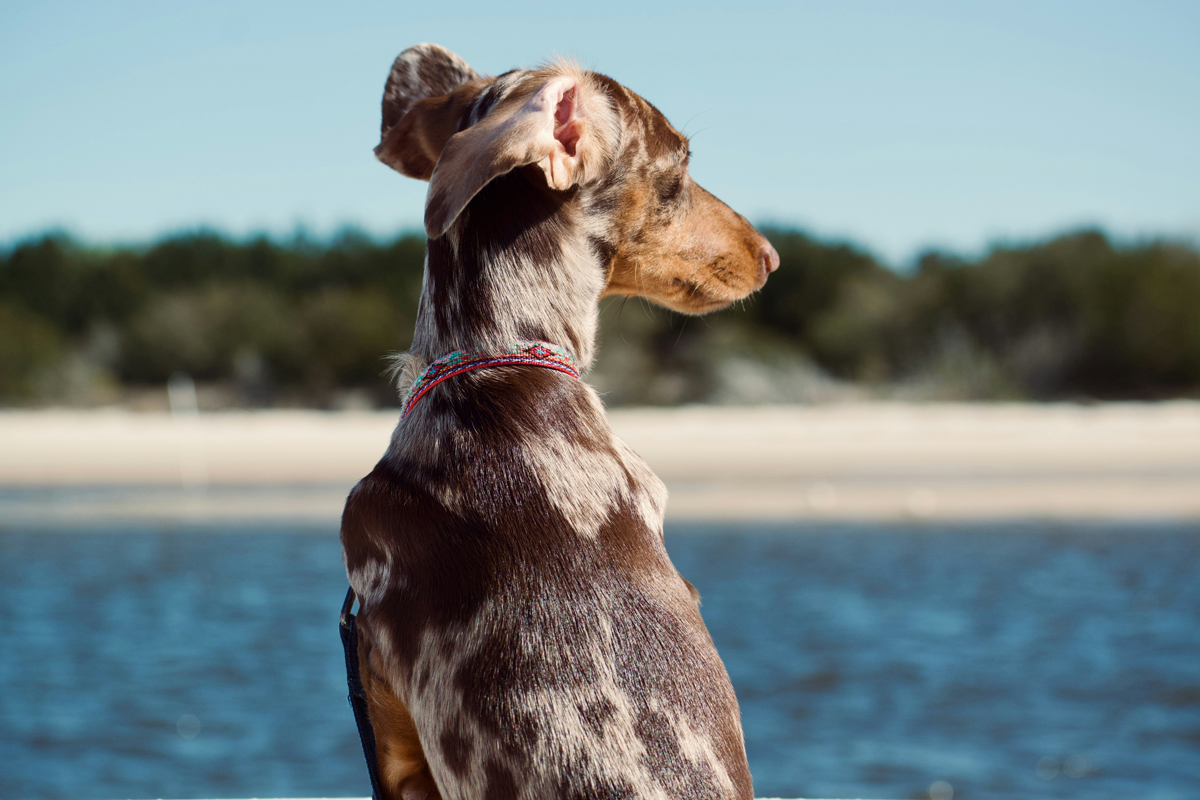
Dog sitting in front of water with back to the camera
Credit: Avery Cocozziello/Unsplash.com

Dogs can’t tell us exactly what they’re thinking, but they are communicating constantly. A wagging tail, flattened ears, or a sudden yawn can all convey information about how a dog is feeling. Deciphering a dog’s mood can be challenging, however, because individual signals don’t always have a single meaning. 

To understand what your dog is trying to tell you, you have to look at their whole body, the situation, and what happens next. A dog’s posture, facial expression, tail, ears, and movement can provide clues about whether it is relaxed, excited, worried, fearful — or in need of more space. 

Credit: Jametlene Reskp/Unsplash.com

A Relaxed Dog Looks “Loose”

When a dog is comfortable, its body usually looks soft and relaxed rather than stiff or tense. Its weight is generally distributed evenly across all four paws, its mouth may be open, and its ears will be in a natural position for that particular dog rather than pinned back or held rigidly forward.

A relaxed dog may also move with loose, fluid motions. Some dogs wiggle their entire bodies when they’re happy to see someone, from their shoulders to the base of their tail. Because natural stances, ear positions, and movements vary from dog to dog, learn what your pet looks like when it’s comfortable. That gives you a baseline for recognizing changes.

Credit: Vladibulgakov/stock.adobe.com

A Wagging Tail Doesn’t Always Mean Happy

Dogs wag their tails when they’re emotionally aroused, and that arousal can come from excitement, happiness, uncertainty, or anxiety. Pay attention to the speed, position, and movement of the tail, along with the rest of the dog’s body. A loose, sweeping wag with a relaxed body may indicate friendly excitement, while a faster, tighter wag can signal a higher level of stimulation that isn’t necessarily an invitation to approach.

A tail held low or tucked tightly beneath the body is more likely to indicate fear, anxiety, or discomfort. A high, stiff tail can also signal intense alertness and may accompany an assertive or threatening posture. Because a dog’s natural tail position varies by breed and individual, you can’t interpret a wag on its own — it’s just one part of the message.

Credit: Avery Cocozziello/Unsplash.com

The Eyes and Ears 

Dogs also use their ears to communicate. While their exact position varies considerably among breeds, ears may move forward when a dog is interested or alert, flatten or pin back when it is worried or frightened, or rest in a neutral position when the dog is relaxed. With floppy-eared dogs, look at the base of the ears for these changes, since they may be less apparent.

The eyes provide additional clues. A relaxed dog generally has soft-looking eyes, while a stressed or fearful dog may turn its head away while keeping its gaze on something. This exposes more of the whites around the eyes, an action called whale eye or half-moon eye. 

A hard, fixed stare accompanied by a stiff body can signal that a dog is uncomfortable or ready to react. When a dog is staring intensely at another animal, person, or object, consider its overall posture and the situation rather than interpreting the look alone.
Credit: Piya Kirdpanya/Unspolash.com

Recognize Your Dog’s Signs of Stress

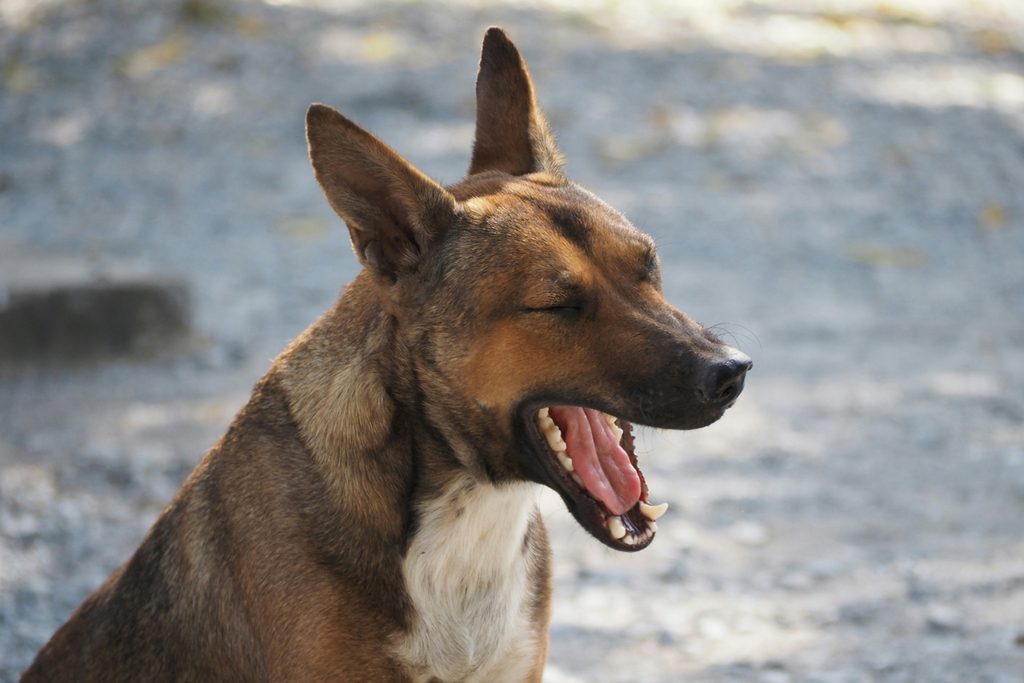
Dogs sometimes use subtle behaviors to reduce tension. Turning away, licking its lips, yawning, drooling, or avoiding eye contact can indicate discomfort or a desire for more space. These behaviors don’t always mean stress — a dog may yawn when tired or lick its lips when anticipating food — so context matters.

More obvious signs of stress include body stiffness or freezing. A dog that suddenly becomes rigid or stops moving may be uncomfortable, frightened, or emotionally aroused. Other concerning behaviors include a fixed stare, raised hackles (the fur along a dog’s back and neck standing up), growling, or bared teeth. 

Any combination of these signals together could mean the dog needs more space. The safest response is to stop the interaction causing the tension and give the dog room.

Credit: kathomenden/stock.adobe.com

Know the Difference Between Playful and Stressed

Playful dogs often combine loose movement with exaggerated gestures. A play bow, with the front end lowered and the rear end raised, is a classic invitation to play. Dogs may bark, chase, wrestle, and even briefly show their teeth during play, but their movements generally remain loose and bouncy rather than rigid. On the other hand, a dog that is hiding, holding its body low, trying to escape, or becoming increasingly stiff is typically signaling distress. 

The best way to interpret any signal is to consider the whole situation and the individual animal. Breed, age, personality, and previous experiences also matter. Most importantly, learn your dog’s normal behavior so you’ll recognize when it suddenly changes.
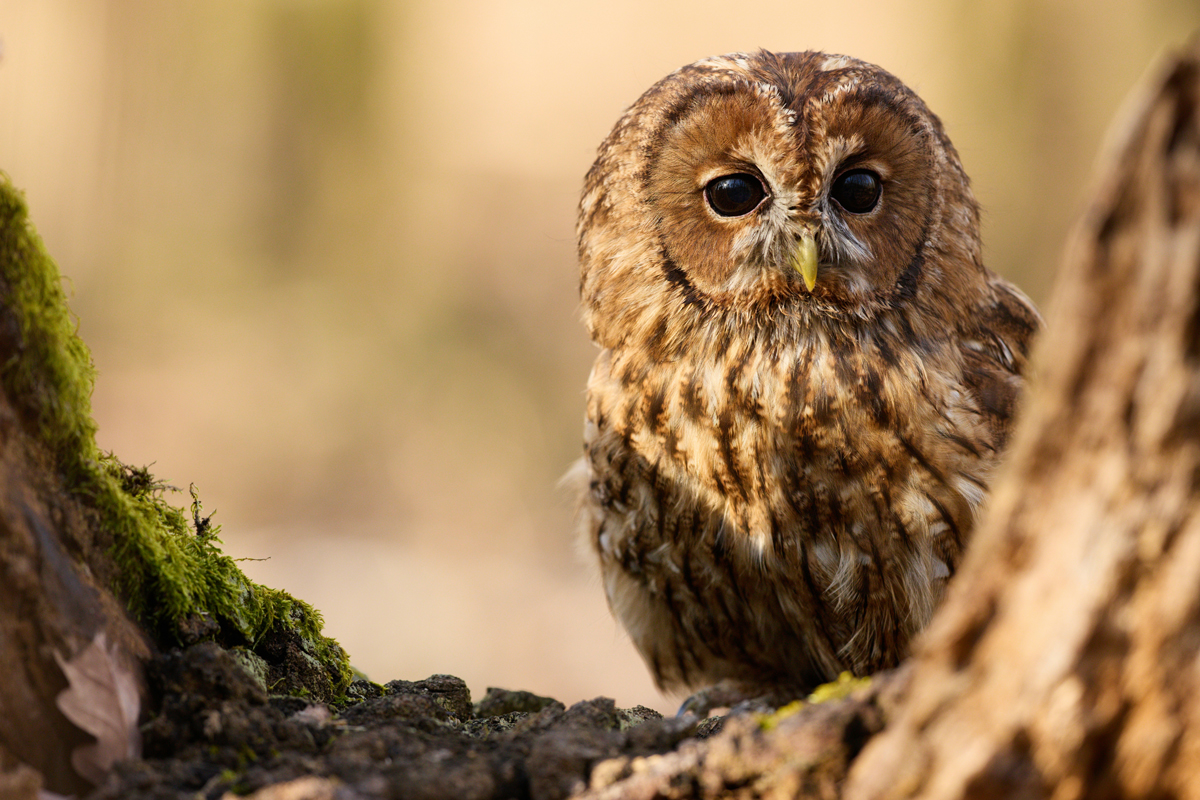

Owls can barely move their eyes.

Owl perched in the woods
Credit: Zdeněk Macháček/Unsplash.com

When you see something utterly shocking, it may feel like you can’t look away. But for owls, the inability to avert one’s eyes is more of a biological restraint than morbid curiosity. Owls can only shift their peepers about 3 degrees in any direction (roughly 1/15th the degree of movement human eyes have), as an owl’s eyes are essentially locked in place.

This immobility is due to the owl’s lack of spherical eyeballs, which have a good range of motion and are present in many other animals. Instead, an owl’s eyes are shaped more like rod-shaped tubes, and they’re held firm by bony facial structures called sclerotic rings. Despite the limitation, owls still have a full 360-degree field of vision, as they can easily rotate their necks 270 degrees horizontally and 90 degrees vertically.

6 Animals That See Colors Humans Can’t

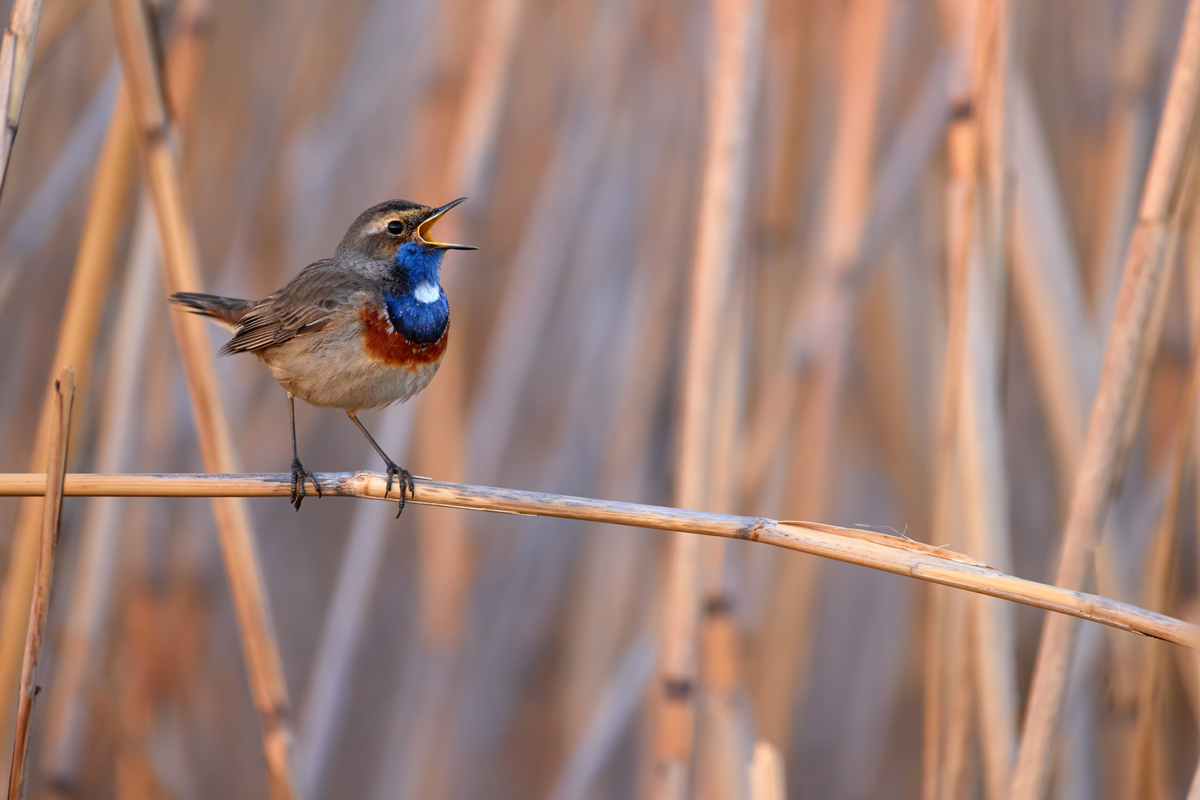
Songbird singing on a plant stalk
Credit: Martin Mecnarowski/stock.adobe.com

The human eye is a remarkable sensory organ, capable of distinguishing as many as 10 million colors. But we don’t see all the colors out there. Those that lie beyond our visible spectrum are forever hidden to the human eye. 

Some animals, however, can see these colors just as well as we see the red on an apple, thanks to their adapted ocular systems. From bees who see secret runways to spiders with built-in sunglasses, here are six animals who see colors we can’t. 

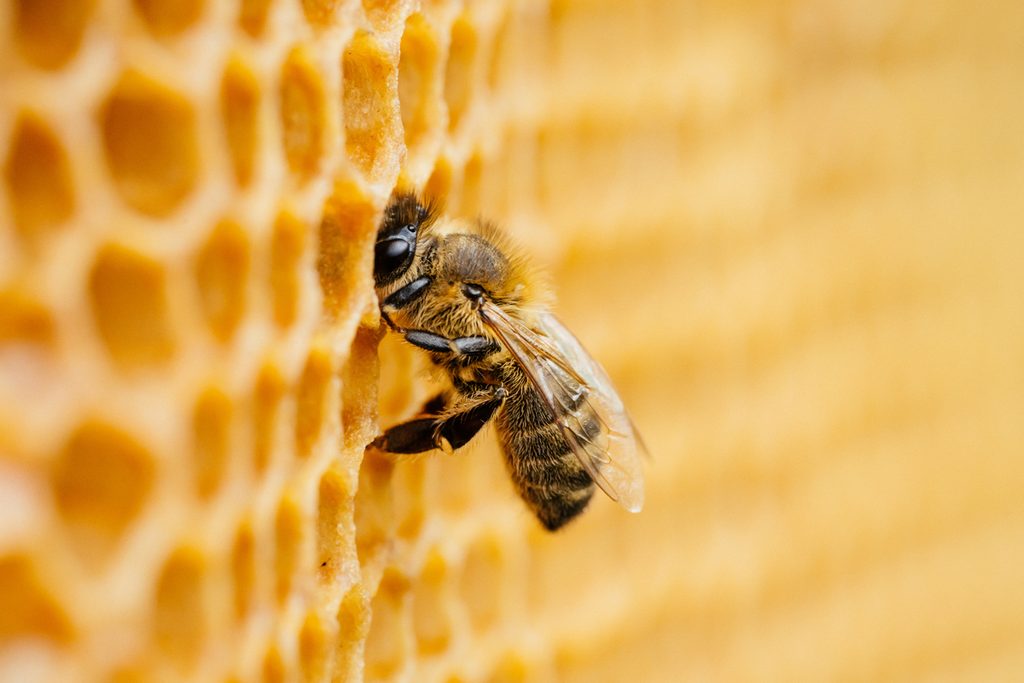
Credit: Aleksandr Rybalko/stock.adobe.com

Bees

Humans see light in wavelengths from around 390 to 750 nanometers, and that range determines the spectrum of colors we can perceive. Bees, on the other hand, see from approximately 300 to 650 nanometers, as do many insects. That makes them almost blind to the color red, while capable of seeing the ultraviolet spectrum — which we humans cannot. 

Because of this, bees see a hidden world of botanical landing strips. Many flowers sport ultraviolet patterns that are invisible to human eyes but clear to bees, essentially serving as light-up arrows guiding them straight toward the nectar. What looks like a plain yellow petal to us might appear as a bold, contrasting pattern of concentric circles to a bee — a secret display system that flowers evolved specifically because bees, not humans, are the ones doing the pollinating.

Credit: Martin Mecnarowski/stock.adobe.com

Songbirds

Most birds, especially songbirds, see a whole world of colors hidden to humans. Birds have tiny, brightly colored oil droplets inside their retinal cone cells that filter incoming light and significantly sharpen their color perception. 

While the human eye has only three types of color receptors, many birds have four, allowing them to detect colors in the ultraviolet range. This lets them see UV patterns on each other’s feathers, which is particularly important for mate selection; the birds are attracted to the flashy, colorful designs that remain completely invisible to us. 

Credit: Pav-Pro Photography/stock.adobe.com

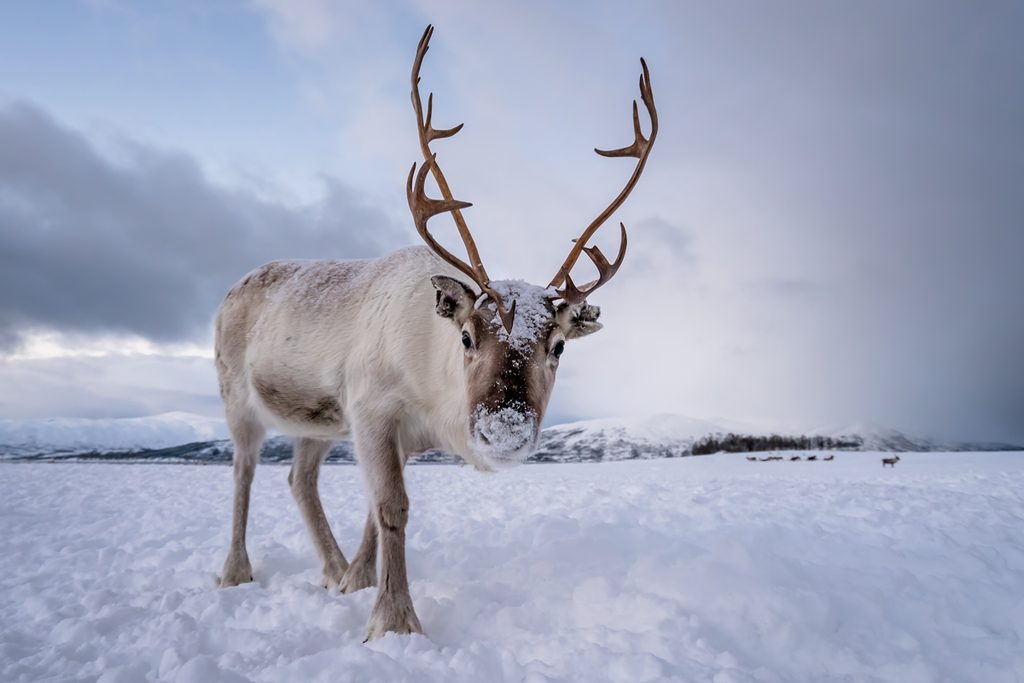
Reindeer

Reindeer have evolved a genuinely strange trick, especially among large mammals, for surviving Arctic winters: Their eyes detect ultraviolet light, which makes otherwise invisible details pop against blinding white snowscapes. This enables them to spot predators such as wolves; the canine’s coat absorbs UV light, making it appear darker against the snow to the keen-eyed reindeer. 

They’re also better equipped to identify urine trails — which can signal the presence of other reindeer — and lichen – one of their main food sources. This ability to see UV light gives reindeer a critical visual edge in an environment that would otherwise look like a featureless blank expanse. 

Credit: Margaret Burlingham/stock.adobe.com

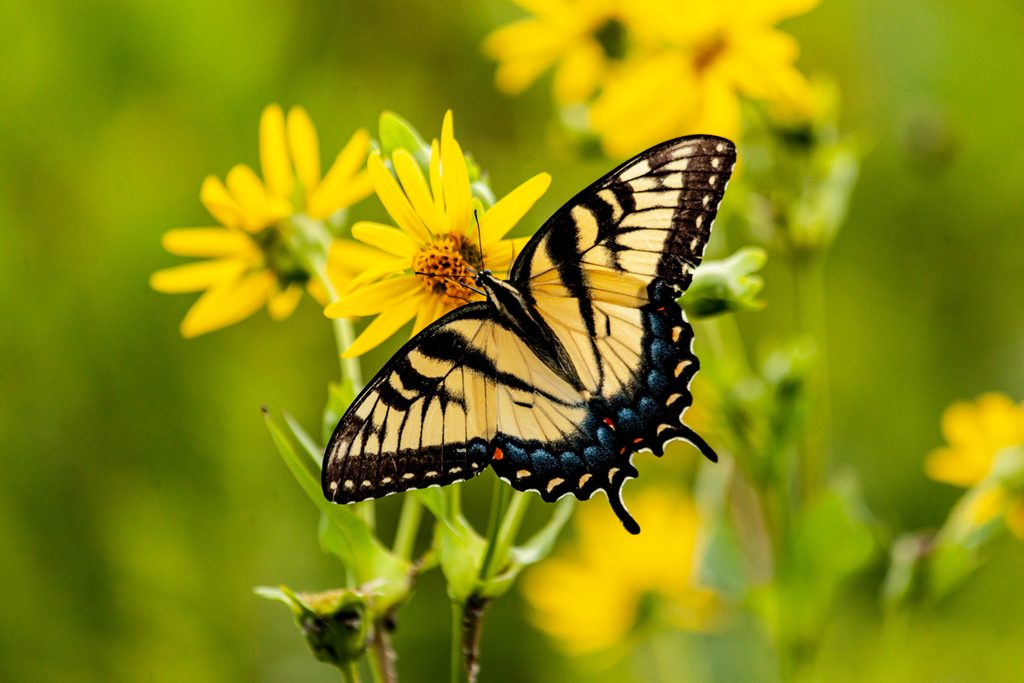
Swallowtail Butterflies

Butterflies generally have at least twice as many photoreceptor classes as humans do, with common bluebottle butterflies boasting the most. The swallowtail species has up to 15 types of these light-sensitive cells, making them the color-spotting champions of the natural world. 

These extra visual channels let them distinguish between colors that would look identical to the human eye. This is especially useful for spotting a potential mate, finding food, recognizing predators, and identifying nectar in flowers.

Credit: walter/stock.adobe.com

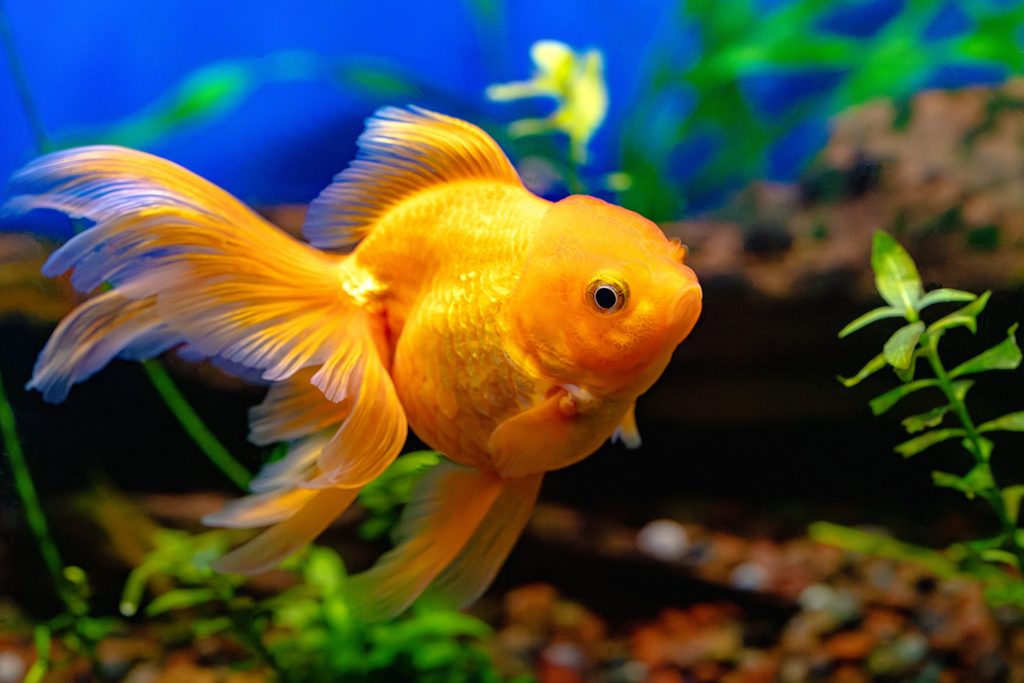
Goldfish

The notion that goldfish are uniquely forgetful is a myth; their memories can actually last for months and even years. What is true, and perhaps a little surprising, is that goldish are tetrachromats just like many birds. This means their eyes possess four independent types of cone cells, allowing them to perceive four base colors: red, green, blue, and ultraviolet light. 

This helps goldfish spot prey, predators, and each other more clearly underwater. So rather than being stereotyped as forgetful, perhaps goldfish should be known for their stellar sense of vision. 

Credit: Pawich Sattalerd/stock.adobe.com

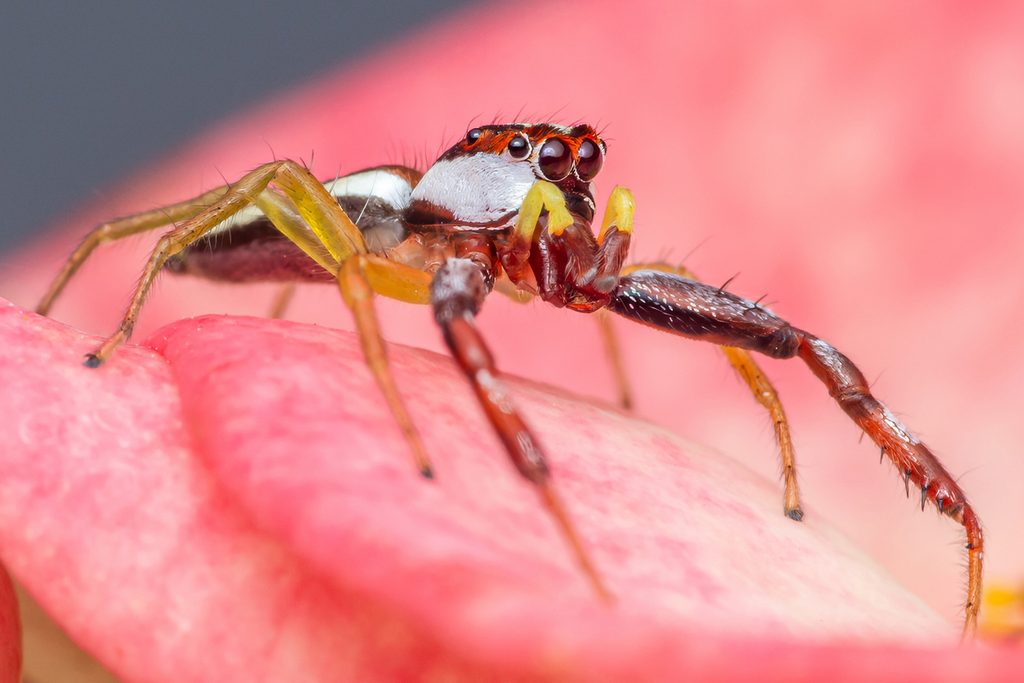
Jumping Spiders

Certain jumping spiders have evolved one of the cleverest color-vision workarounds in nature. Rather than growing a whole new type of receptor, species such as Habronattus pyrrithrix developed a built-in red filter that sits directly in front of some of their green-sensing cells. 

This filter acts almost like a tiny pair of red sunglasses, basically creating a third color channel out of thin air — and giving them the ability to see more colors than we can. With their enhanced color perception, these little eight-eyed arachnids can better spot the vivid red and orange markings that males show off during their courtship dances.

5 Animals That Ignore the Laws of Physics

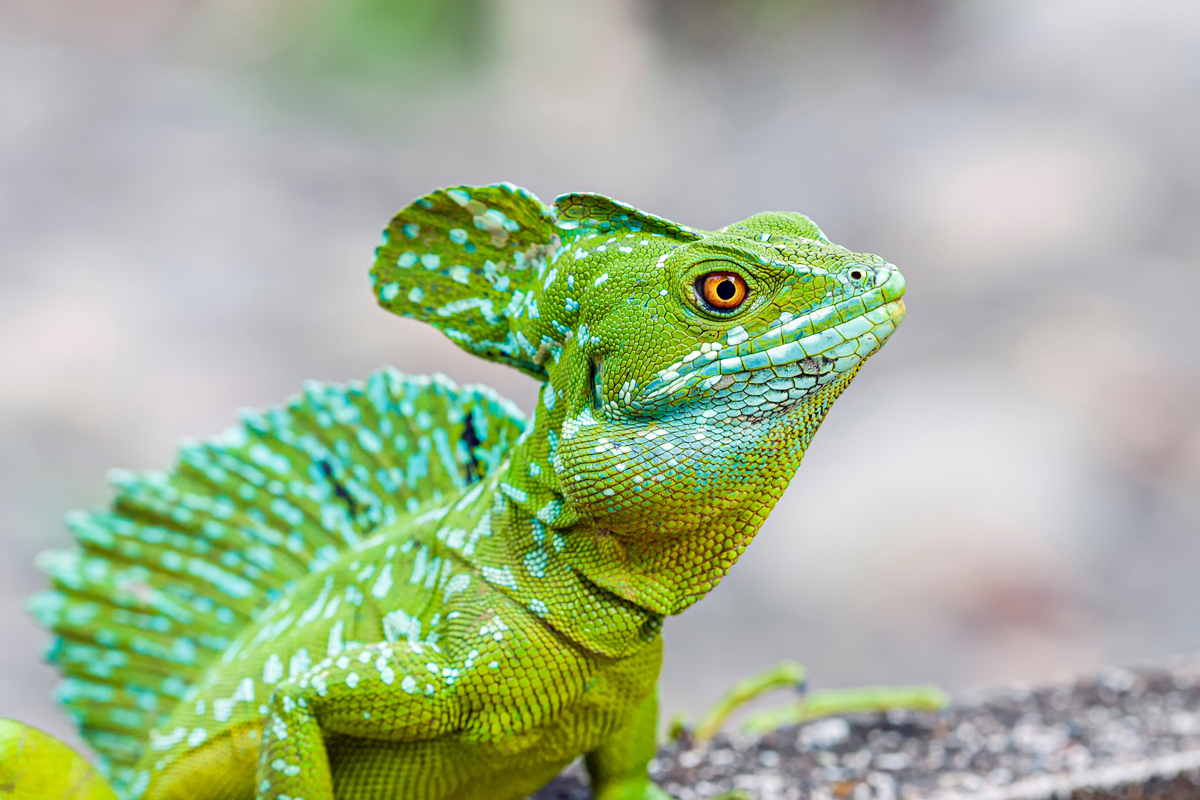
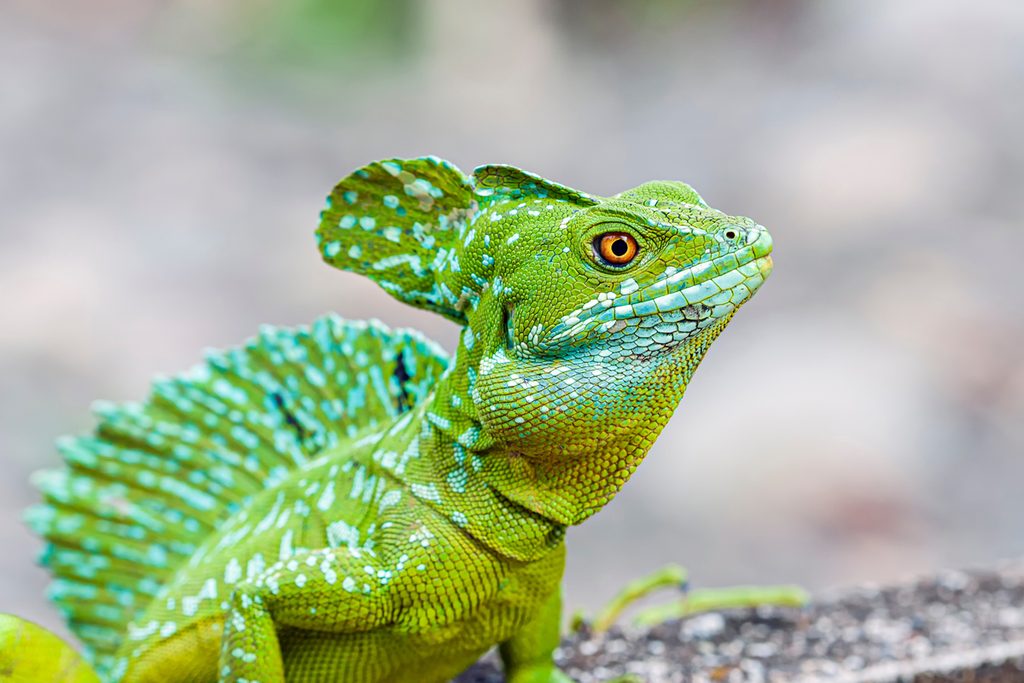
Close-up of basilisk lizard
Credit: Tom/stock.adobe.com

Gravity makes things fall, friction keeps things from sliding, and energy has to come from somewhere. These are just some of the basic rules of physics we learn in school — but in the animal kingdom, some creatures perform feats that seem to defy those rules.

Of course, no animal can actually break the laws of physics. Instead, evolution has given them ingenious ways to exploit forces that are always at work, from microscopic attractions to the elastic properties of tendons and the aerodynamics of gliding bodies. Let’s take a peek at the physics behind these seemingly impossible abilities.

Credit: Tom/stock.adobe.com

Basilisk Lizards

A lizard sprinting across a pond’s surface sounds like something out of an animated film. Yet basilisk lizards can do exactly that, using their hind feet to generate enough force to keep their bodies from sinking. As a basilisk takes a step, its foot strikes downward against the water, creating an air cavity around the foot. That foot then pushes backward against the water, generating both upward and forward forces.

Also known as Jesus lizards, these swift-footed reptiles repeat that motion rapidly to keep their bodies above the surface. An adult basilisk lizard can travel roughly 15 feet at around 3 miles per hour. Young basilisks are particularly adept at water-running because their smaller, lighter bodies require less force to stay above the surface, while their proportionally large hind feet help them more efficiently distribute force.

Credit: Tony Campbell/stock.adobe.com

Flying Squirrels

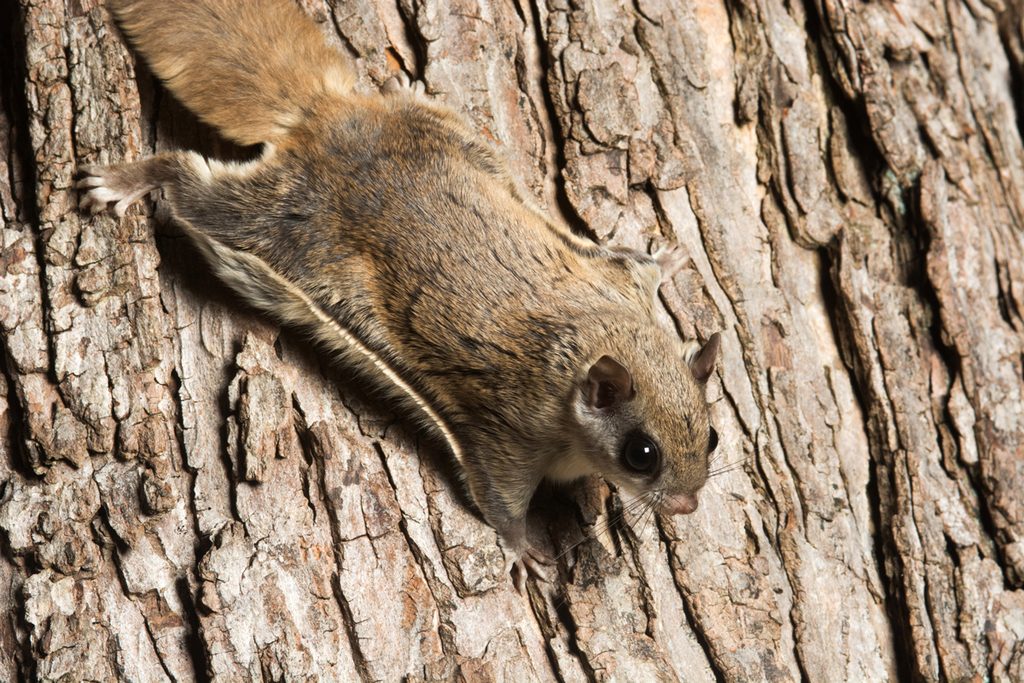
Flying squirrels don’t actually fly; they glide thanks to a loose fold of skin called a patagium that stretches between the squirrel’s front and hind legs. When it launches from a tree, the squirrel extends its limbs, stretching the membrane into a flexible gliding apparatus. Unlike a bird, it doesn’t generate powered flight: Instead, it uses its starting height to gain horizontal distance.

The squirrel can adjust its limbs and bushy tail to control its trajectory, allowing it to steer and brake as it travels between trees. Depending on the species and circumstances, flying squirrels can glide as far as 150 feet. The physics of this airborne skill is surprisingly simple: As gravity pulls the squirrel downward, the spread-out patagium creates aerodynamic lift, slowing its descent and allowing it to travel forward rather than dropping to the ground.

Credit: Роман Барабонов/stock.adobe.com

Mountain Goats

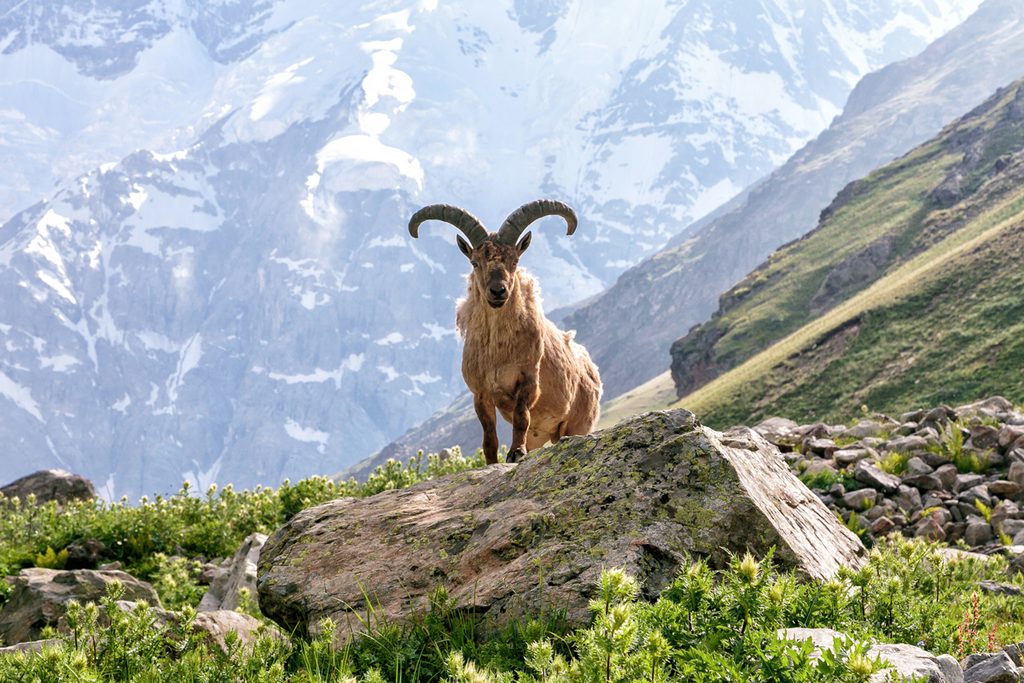
Mountain goats routinely stand on near-vertical slopes as steep as 60 degrees or more. Their impressive surefootedness starts with their hooves: The hard, sharp outer edges can catch on small ledges and cracks in the rocks, while the soft, rubbery inner pads provide traction against the surface. The split hooves, also known as cloven hooves, can spread apart, helping the goat find and hold onto small footholds.

Strong legs, flexible joints, and a low center of gravity help mountain goats maintain their balance as they move across uneven ground. They can place their feet with remarkable precision, using whatever small irregularities the rock provides. By making the most of friction, grip, and careful weight distribution, their agility allows them to scale steep mountain terrain without gravity sending them tumbling downhill.

Credit: Exotic Space/stock.adobe.com

Geckos

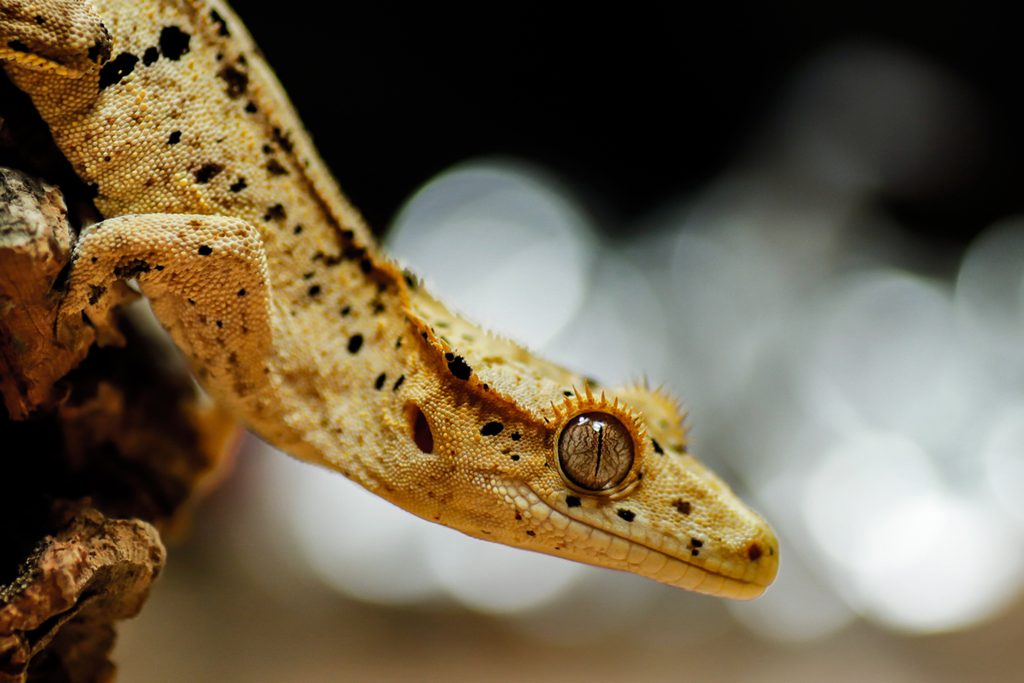
Spider-Man isn’t the only one who can cling to a wall; geckos can also scamper up smooth vertical surfaces and across ceilings, seemingly ignoring gravity altogether. The secret lies in their toes, which are covered with hundreds of thousands of microscopic hairlike structures called setae. Each seta branches into even tinier structures called spatulae, creating an enormous amount of surface contact.

At that microscopic scale, weak molecular attractions called van der Waals forces collectively become strong enough to hold a gecko against a wall. The gecko can also control when its feet stick and release by changing the angle and direction of the force it applies. For anyone who isn’t a fan of lizards, that may make the gecko’s ceiling-walking skills even more unsettling — but it’s undeniably impressive.

Credit: Tim/stock.adobe.com

Kangaroos

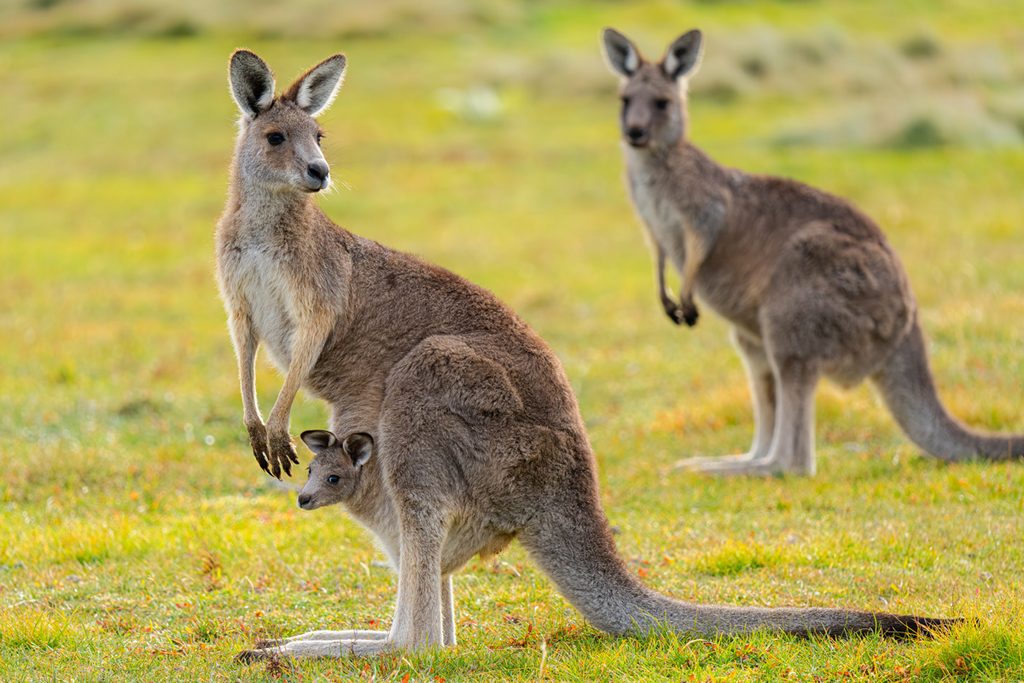
A kangaroo hopping across the Australian landscape can look effortless, especially at higher speeds. That’s because its powerful hind legs work like biological springs, with long ankle tendons that stretch and store elastic energy as the animal lands. 

As it pushes off, those tendons recoil, returning that stored energy and helping launch the kangaroo into its next hop. Large kangaroos can cover about 25 to 30 feet in a single bound and reach up to speeds of 37 mph.

That system becomes particularly efficient as the kangaroo speeds up: Rather than taking bigger leaps, it recycles energy from one hop into the next, with elastic recoil from the ankle tendons providing up to half the energy needed for steady-speed hopping. A kangaroo’s muscular tail acts as a counterbalance, helping it maintain stability and control its body as it hops. At cruising speeds, this spring-loaded system allows a kangaroo to cover substantial distances while using surprisingly little additional energy as its speed increases.

Fleas accelerate faster than a launching space shuttle.

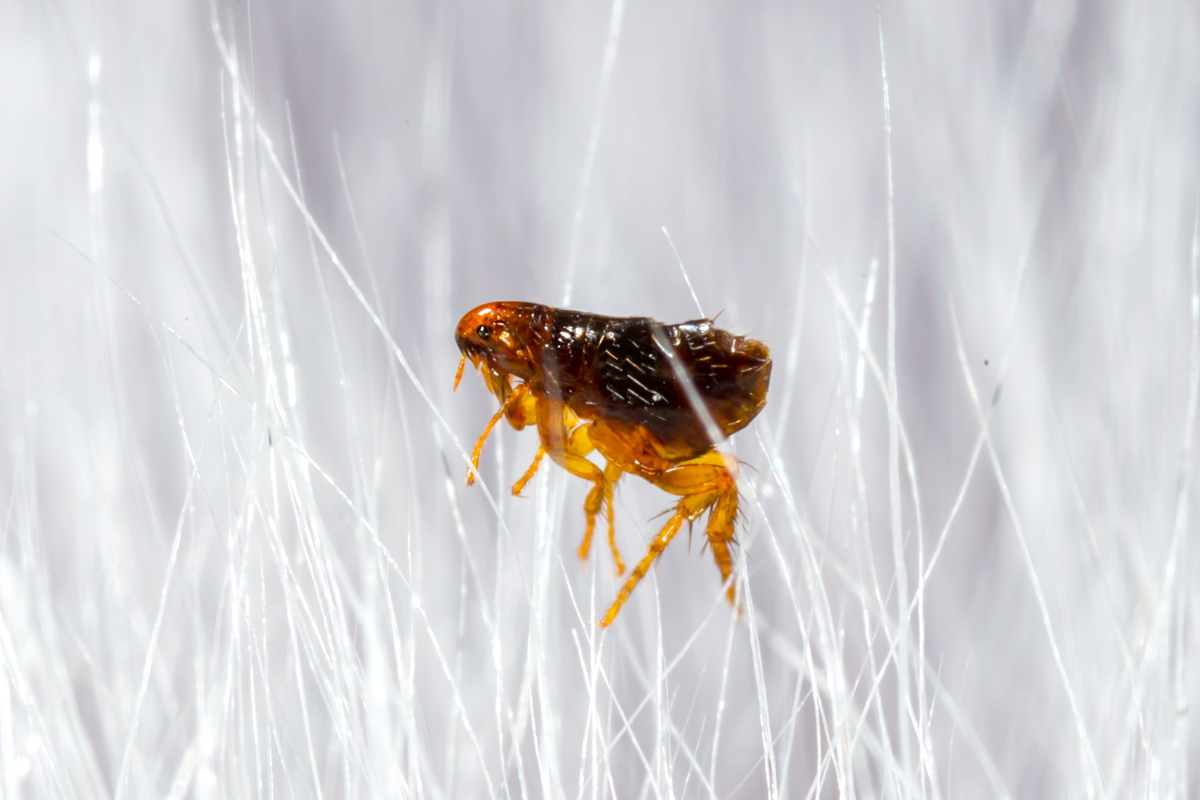
Macro shot of a flea among hairs
Credit: Vera/stock.adobe.com

When a space shuttle launches from Cape Canaveral, its acceleration often maxes out around three Gs, aka three times the force of gravity. But when a flea launches itself off the ground and onto a dog’s back, the tiny pest accelerates at up to 100 Gs, dwarfing our humanmade rockets by comparison.

Fleas achieve such incredible acceleration speeds thanks to an elasticlike protein called resilin, located in pads atop their hind legs. As fleas prepare to jump, they contract their muscles, which causes energy to build up in that resilin, not unlike how someone in a sci-fi movie may charge a laser gun before firing. The fleas then push their legs outward, releasing all the stored energy and propelling it into the air with extreme force at distances of up to 50 times the insect’s body length — not quite all the way to outer space, but impressive nonetheless.

Why Do Cats Purr — and Is It Always Happiness?

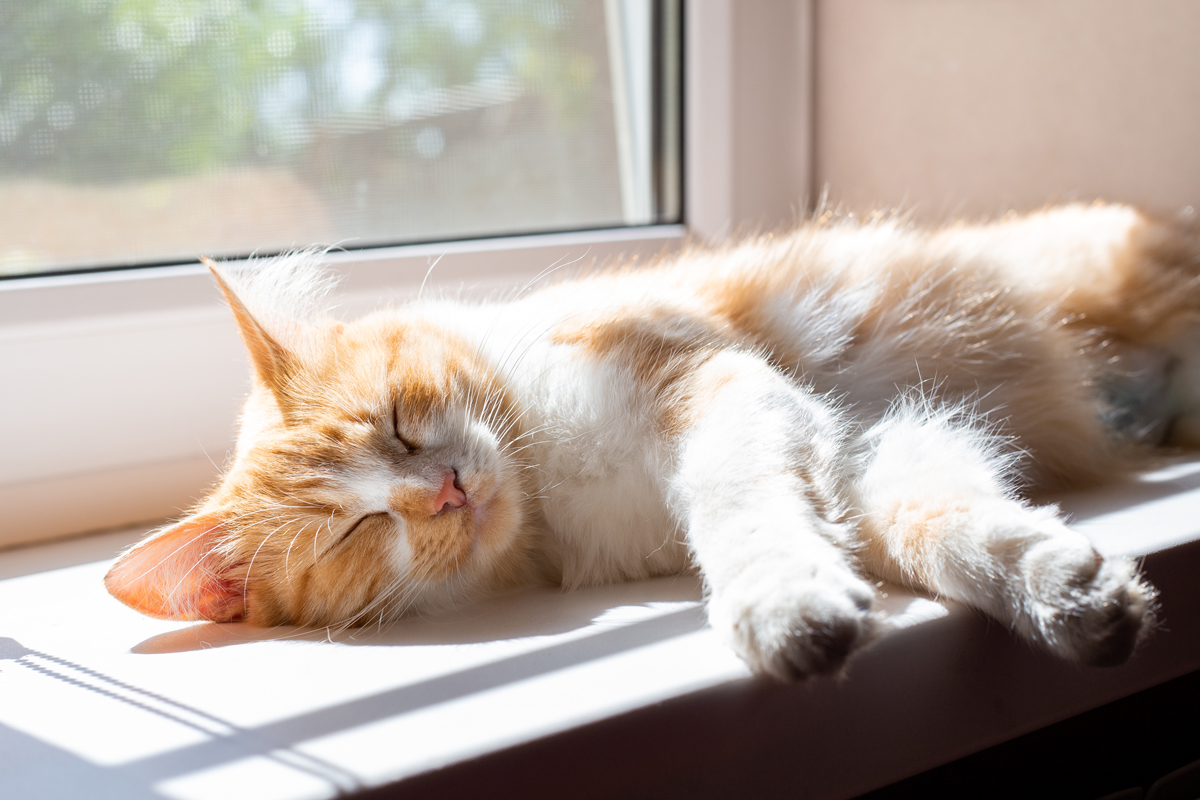
Domestic cat reclining in a sunny spot
Credit: Natalia/stock.adobe.com

A cat curled up on your lap with its eyes half-closed, rumbling away seems to signify one thing: Life is good. And in that moment, it likely is, as cats do often purr when they’re happy,comfortable, and maybe even enjoying a good head scritch.

But as it turns out, that familiar sound is a bit more nuanced than you may suppose. A cat’s purr is less a straightforward sign of happiness than it is a flexible form of communication. So why do cats purr, anyway?

Credit: Valeria Nikitina/Unsplash.com

Purring Starts Early

Kittens can start purring when they’re only a few days old, long before they open their eyes. In fact, cat experts believe it’s one of their earliest communication tools. 

They purr not only to let mom know where they are and that they’re hungry, but they’re also known to purr while nursing. The mother cat will purr too, a mutual assurance between each other that all is well. That early connection says a lot about what purring is really for: It isn’t necessarily a declaration of happiness so much as a way of maintaining contact and signalling a particular state or need. 

Credit: Natalia/stock.adobe.com

How Do Cats Purr?

For years, scientists thought cats actively produced their purrs by repeatedly contracting and relaxing muscles in the larynx, aka the voice box. But a 2023 study found that isolated larynges of eight domestic cats could produce purring sounds on their own when air was passed through them. 

Cats also have unusual pads of fibrous tissue embedded in their vocal folds, and the added mass of those pads may help the vocal folds vibrate at frequencies as low as about 20 to 30 hertz. While the aforementioned study may be scientists’ clearest understanding of how a cat’s purr works to date, it still doesn’t tell us exactly how the process works in a living animal; researchers still suspect purring does involve both signals from the brain in addition to self-sustaining vibrations in the vocal folds.

Credit: Christian Lendl/Unsplash.com

So Why All the Purring?

Much like the mechanics of purring, researchers still don’t have a single explanation for why, exactly, cats make that unmistakable sound. The more we learn about purring, the more it seems likely to be a tool of communication, reassurance, and possibly even healing. 

The most familiar reason for a purr is also the simplest: Cats do often purr when they’re relaxed and content. It’s a sign that a cat feels safe and comfortable. 

Cats also seem to use purring to develop and maintain social contact and bonding. Just as kittens purr with their mothers as newborns, adult cats may purr when interacting with other cats — and, of course, with their human caregivers. 

But cats don’t only purr when things are going well. They may also purr when they’re frightened, stressed, injured, or in pain. Cats have even been reported purring during stressful situations at veterinary clinics, which research suggests is an attempt to soothe themselves.

Cats can even tweak their purrs depending on what they want. Researchers found that hungry cats who are ready for their owners to feed them produce a higher-pitched purr with a sound component similar to a crying human baby, a trick known as a solicitation purr.

Credit: Ludemeula Fernandes/Unsplash.com

Could Purrs Be Healing?

There’s another interesting theory about those low purring frequencies: Vibration therapy has been studied for its therapeutic effects on bone and tissue healing. Domestic cats, servals, ocelots, and pumas all produce strong frequencies around 25 and 50 hertz — the two frequencies most closely associated with bone growth and fracture healing. Research has suggested that purring could potentially be used by cats to help them recover from injuries or maintain healthy bones and tissues.

Whatever the ultimate reason for a cat’s purr, one thing seems undeniably true: Having a warm cat purr contentedly in your lap is hardly a bad way to spend your time.

Cats basically only meow at humans.

Domestic cat reclining on soft surface
Credit: Valeri Luzina/stock.adobe.com

While many humans communicate with one another through chit-chat or emoji-filled texts, cats primarily interact with fellow felines through scent or touch. But when a cat wants to convey a message to its human (e.g., “Where is my dinner?!”), they may meow for attention. However, as common as it is for cats to meow at humans, they rarely meow at other members of their own species.

That isn’t to say cats never meow at other cats; newborn kittens may meow at their mothers to express hunger or other discomfort. But as cats get older, they realize physical touch and chemical pheromones are most effective for communicating with other cats. They tend to save all that meowing for us humans, as we’re less adept at picking up their physical and olfactory cues.

Fish cough.

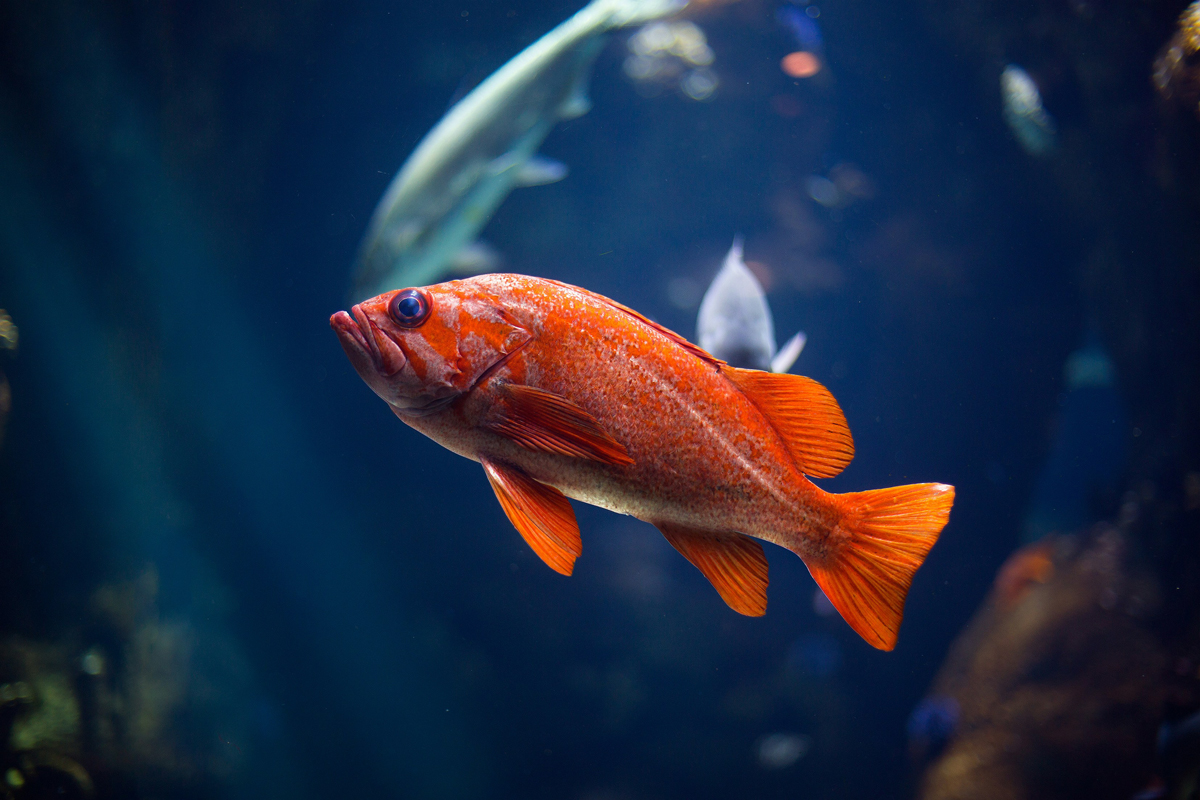
Small orange fish
Credit: Claudio Guglieri/Unsplash.com

Much like any of us when we’re feeling under the weather, and despite their vastly different respiratory systems, fish cough — though they don’t cough because they’re feeling ill. Instead, fish rely on this technique to expel unwanted matter such as debris or mucus from their gills.

When dust, sand, or other particles get lodged in a fish’s airways, they contract their buccal and opercular cavities to create intense negative pressure. This, in turn, reverses water flow through the gills, forcing out any irritants caught inside. It’s otherwise called a “gill purge,” and it removes obstructions from the airways.

Colossal squid have the biggest eyes in the animal kingdom.

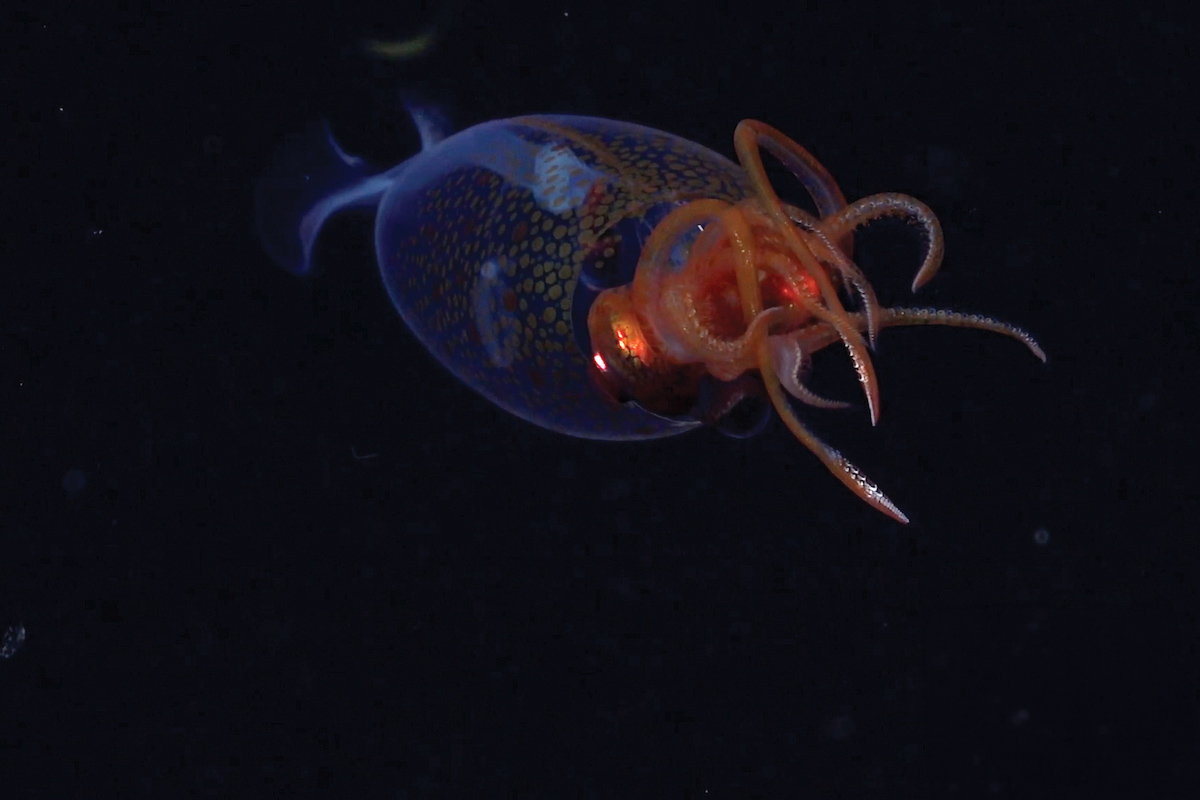
Underwater view of a colossal squid
Credit: ROV SuBastian / Schmidt Ocean Institute

They don’t call them colossal for nothing. Though they aren’t the largest animal in the world, colossal squid do have the biggest eyes in the animal kingdom. They tend to measure between 11 and 12 inches in diameter, roughly the size of a soccer ball or large dinner plate. 

In addition to helping them hunt in the dark waters they call home, colossal squids’ massive eyes are equally useful when spotting predators, especially sperm whales. Their eyes face forward, giving them stereoscopic vision, and they contain light organs that allow them to see in the dark and judge distances — both between its predators and its prey.

Can Animals Get Allergies?

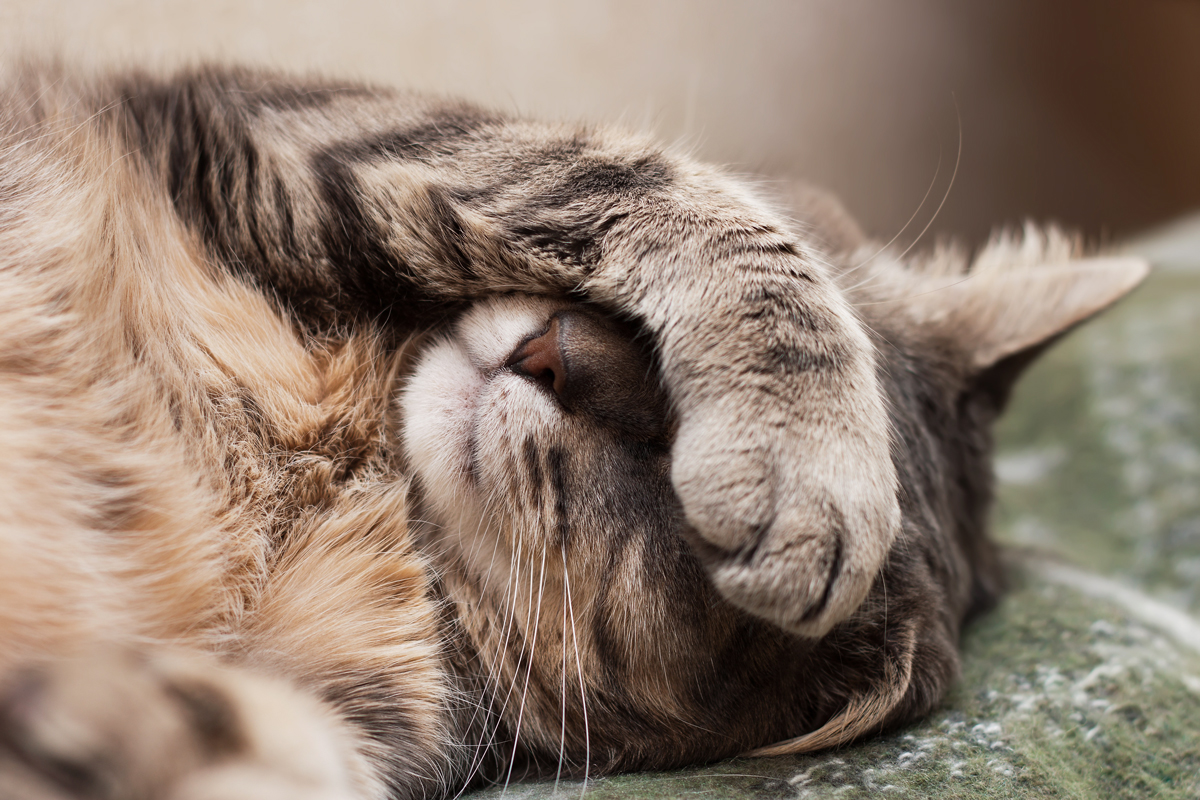
Cat covering its face with its paw
Credit: katyamaximenko/stock.adobe.com

Millions of people sneeze, itch, or develop watery eyes around animals. In fact, an estimated 10% to 20% of the world’s population experience allergies to cats and dogs, while many also react to allergens produced by other animals including rabbits, rodents, and horses. It isn’t the animal’s fur itself that usually causes the problem; allergens are proteins found in substances such as dander, saliva, and urine, which can hitch a ride on fur and become airborne.

But humans aren’t the only ones who can experience allergies. Animals have immune systems, too, and they can overreact to substances that are harmless to most other animals. So while you might blame your cat for your itchy eyes and sneezing, Fluffy may be experiencing allergies of her own. 

Credit: katyamaximenko/stock.adobe.com

Pets Are More Prone to Allergies Than Other Animals

Household pets seem to be more prone to allergies than farm or wild animals, although it’s not entirely clear why. One possibility is that pets live in relatively clean, controlled environments and are therefore less exposed to the microbes and parasites that wild animals encounter regularly. This may influence how their immune systems develop and respond to harmless substances, although scientists are still investigating the connection.

Most recognized allergies in pets fall into three categories: environmental, flea, and food allergies. Environmental allergies can be caused by pollen, mold spores, and dust mites. They may be seasonal, although some animals experience symptoms year-round. 

In dogs and cats, these allergies most commonly cause itchy, inflamed skin rather than the sneezing and watery eyes humans experience. An allergic pet may scratch, lick, chew, or rub its skin so frequently that it develops hair loss, sores, or secondary skin infections.

Flea allergies are another common problem, particularly in dogs and cats. In this case, the animal isn’t simply reacting to a flea bite; its immune system is responding to the proteins in flea saliva. Even a small number of bites can cause intense itching in a sensitive animal.

Dogs and cats can also develop immune reactions to proteins in foods such as beef, dairy, chicken, or fish, although virtually any food protein can be a culprit. Food allergies can cause skin problems as well as vomiting, diarrhea, and other gastrointestinal symptoms. Veterinarians typically diagnose them through a strict elimination diet followed by carefully reintroducing foods to see whether symptoms return. 

Such allergies are relatively uncommon, however. One review found them in just about 1%–2% of dogs and fewer than 1% of cats receiving any type of veterinary care. Among animals being seen specifically for skin disease or itching, however, the numbers are much higher — up to 40% in dogs and 21% in cats.

Credit: African Studio/stock.adobe.com

Can Your Pet Be Allergic to You?

Pets can be allergic to plenty of things found in their homes, including pollen and dust brought in on clothing as well as soaps, lotions, perfumes, and other household products. But it’s also possible that some pets may be allergic to human dander. Dogs and cats are constantly exposed to flakes of human skin, and the proteins in that dander could trigger an immune response in sensitive pets.

The problem is figuring out whether a pet is reacting to its human or something on its human. Allergy testing can help narrow down the offending substance: During an intradermal test, a veterinarian injects small amounts of suspected allergens, including human dander, into the skin and looks for a reaction. But pets aren’t routinely tested for every possible allergen, and environmental allergy testing is generally performed after other potential causes of itching have already been ruled out. 

As more dogs and cats are tested for environmental allergies, veterinarians are getting a clearer picture of human dander as a potential trigger — which means it’s certainly possible your beloved furry friend may be allergic to you too.

Credit: Nadine Haase/stock.adobe.com

Other Animals Can Experience Immune Reactions

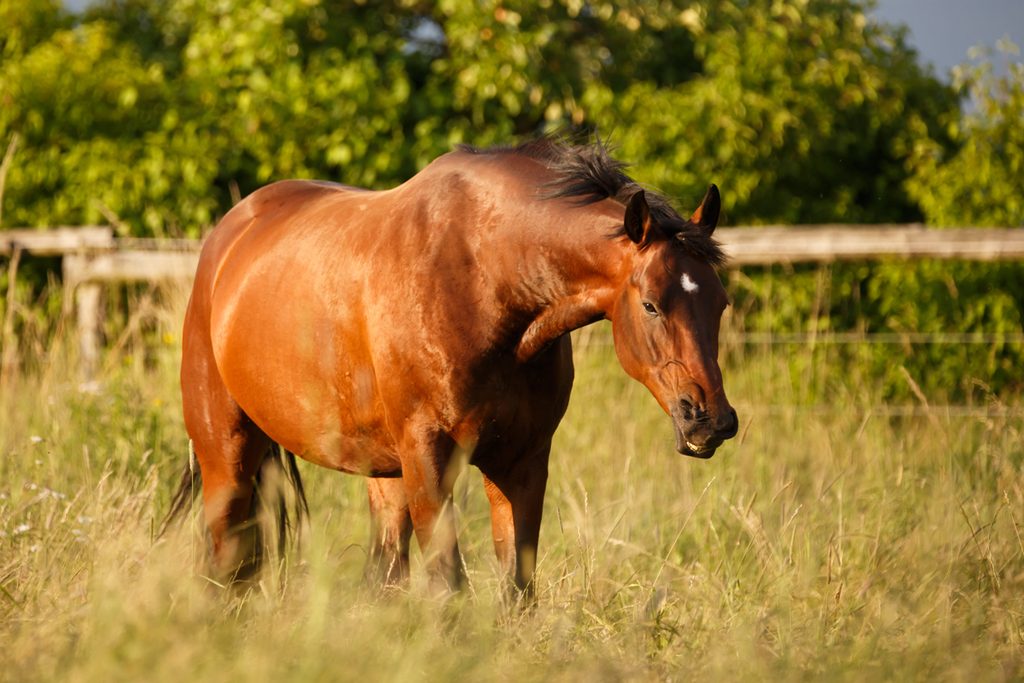
Farm animals can experience allergic and hypersensitivity reactions, but they don’t necessarily develop the same chronic allergies seen in household pets. Horses are the most common example: They can develop respiratory conditions triggered by dust, mold, and other particles in hay and stable environments, as well as allergic skin reactions to biting insects. Similar reactions to parasites, insects, plants, and other environmental substances have been documented in cattle, sheep, pigs, and other livestock.

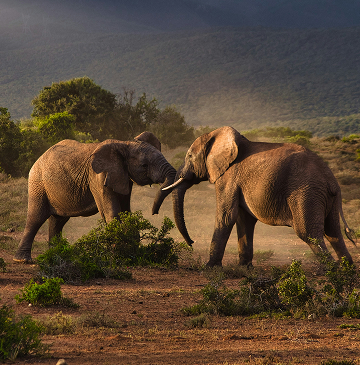
Allergic reactions have also been documented in captive wild animals, although they’re much less understood. Zoo veterinarians have diagnosed allergic skin diseases in species including Sumatran tigers, Asian elephants, and even polar bears, using allergy testing and — in some cases —successfully treating the animals with immunotherapy. 

What we don’t know is how common allergies are among wild animals overall. Free-ranging animals aren’t routinely examined the way zoo animals are, and skin problems can have many possible causes, including parasites and infections. So while we know wild animals can experience allergies, there’s no way of knowing how frequently it occurs in the wild.