Michael Nordine is a Senior Staff Writer at Britannica, where he writes the newsletter Movie Brief. He grew up with eight cats and would like to see a Komodo dragon in the wild one day.
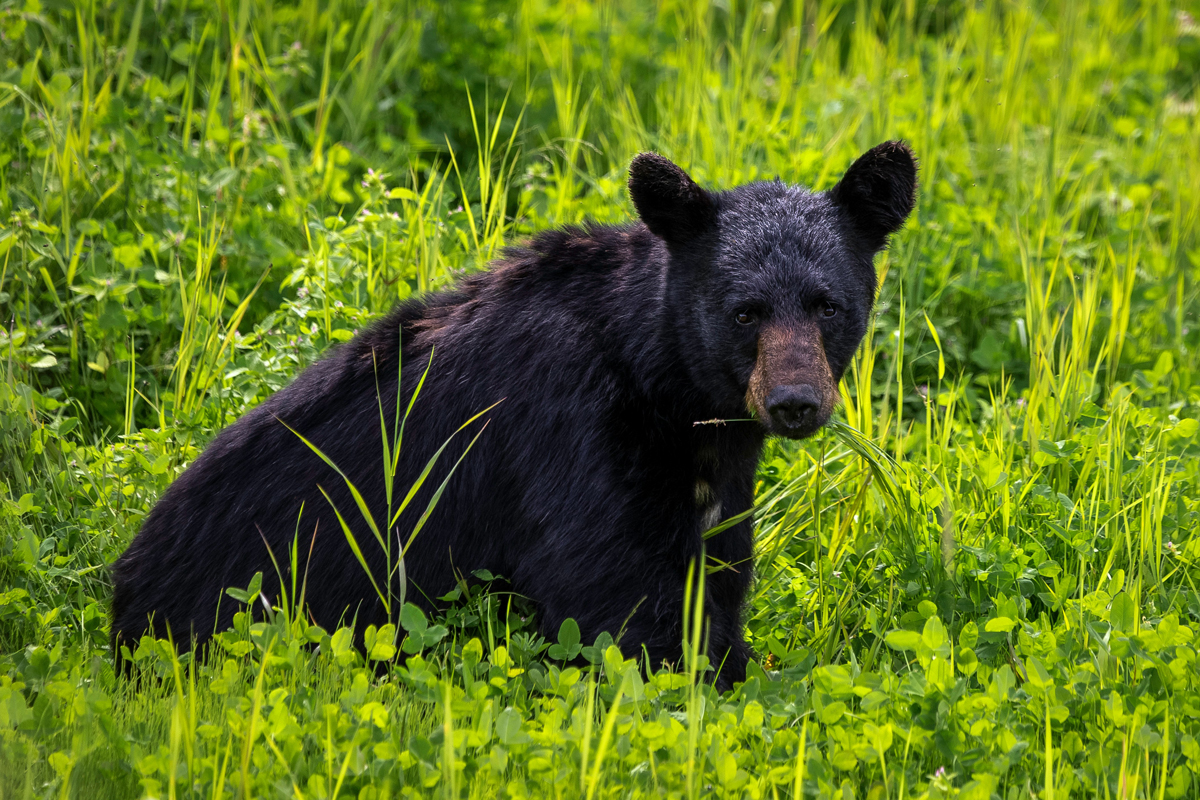
As anyone who loves Fat Bear Week already knows, our ursine friends put on a lot of weight before hibernating for the winter, sometimes even doubling their body weight before getting their beauty rest. Doing so requires them to eat as much as possible in the weeks and months prior to hibernation, with black bears consuming about 20,000 calories per day. (It takes the average human around 10 days to eat that much.)
This phase, known as hyperphagia, is prompted by extreme hunger and leads to bears spending as many as 22 hours a day foraging and eating as they gain up to four pounds daily. Because they’re more active than usual, this is also when bears are at their most dangerous to humans — talk about hangry.
Advertisement
Six Extreme Ways Animals Prep for Hibernation
Across Species 28/10/26Oct. 28, 2026
Updated 28/10/26Oct. 28, 2026
Credit: Lee/stock.adobe.com
Tony Dunnell
Author
Tony is an English writer of nonfiction and fiction living on the edge of the Amazon jungle.
Hibernation can sound kind of cozy: a long winter nap under a blanket of leaves, perhaps something Winnie-the-Pooh may partake in before waking up to devour a big pot of honey. But the reality of hibernation is far more complex than an extended period of sleeping may suggest; in many cases, it’s more like a controlled biological crisis than a nap.
To survive months without food or water, some creatures undergo some genuinely extreme processes of preparation. From drastic temperature drops to impressive pre-hibernation feasts, here are six animals that take hibernation prep to incredible levels.
Credit: Hamilton/stock.adobe.com
Wood Frogs Freeze Solid
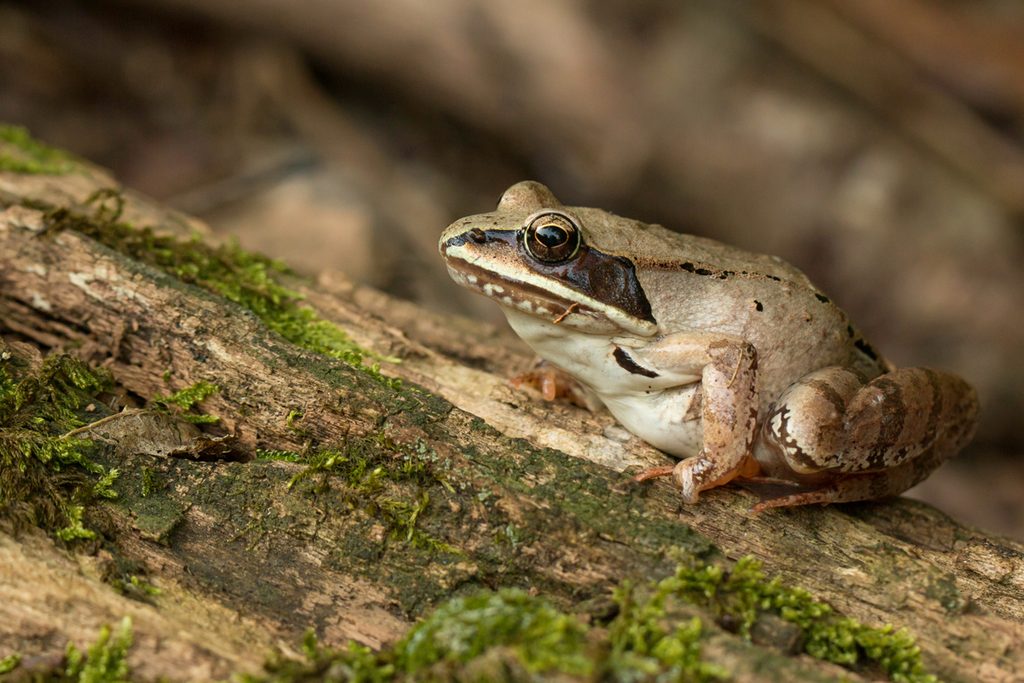
When it comes to extreme cold, the wood frog has an “if you can’t beat them, join them” attitude. As temperatures drop, 70% of the water in its body freezes into ice, at which point its heart stops beating, its breathing halts, and its kidneys shut down. It becomes metabolically inactive, so its body doesn’t consume or require oxygen while frozen, and it’s only kept alive by a flood of glucose released by its liver the moment ice starts forming.
The glucose acts as a natural antifreeze that protects individual cells even as the space around them turns solid. Wood frogs can stay frozen for up to eight months, after which they simply thaw and hop away.
Credit: TomIngramPhotography/stock.adobe.com
Arctic Ground Squirrels Supercool Their Own Blood
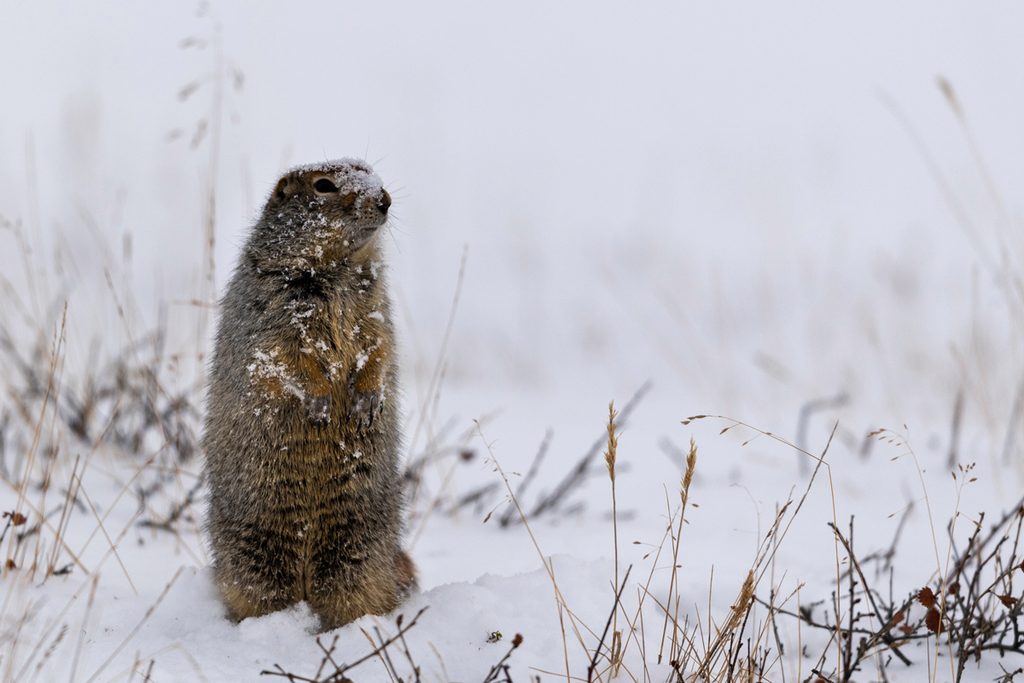
As summer draws to a close, Arctic ground squirrels start to pack on the pounds, often doubling their body weight before they enter hibernation in fall. But that’s just the beginning of their preparation: Once they’ve settled into their burrows, they pull off something that should be biologically impossible in a mammal.
As the temperature around them plummets, their brains cool to 32 degrees Fahrenheit while their limbs drop to an astonishing 26.8 degrees — the lowest temperature ever measured in a living mammal. They briefly shiver their way back to 96.8 degrees every few weeks — a process called interbout arousal, which allows the squirrel’s systems to perform vital physiological maintenance — before their body temperature drops again, conserving energy by drastically slowing their metabolism. It’s an amazing ability, and scientists aren’t yet entirely sure of the exact mechanisms that enable it.
Credit: Luca Pape/stock.adobe.com
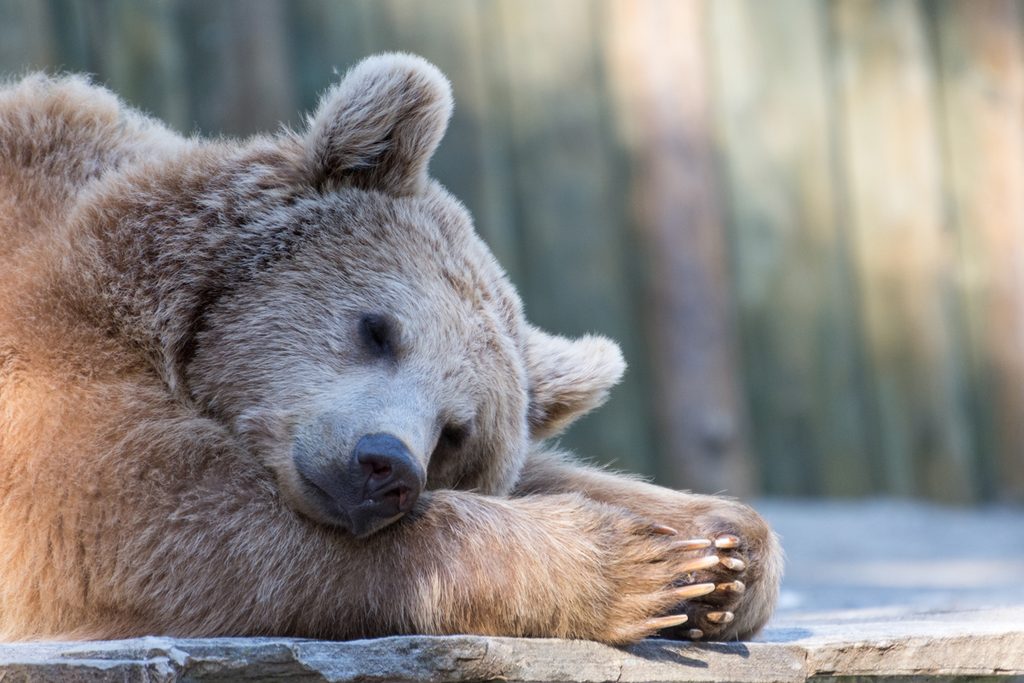
Bears Eat a Ridiculous Amount of Food
Many animals put on weight before hibernation, but bears really don’t mess around when it comes to calories. During the fall, they enter a hyperphagia phase — a period of extreme, nonstop overeating — consuming as much as 20,000 calories a day (with some gluttonous grizzlies consuming an astounding 100,000 calories a day). This builds up the stored body fat they use as survival fuel to make it through the long months of hibernation.
At the same time, they keep an eye out for a suitable den, with some securing a good spot weeks in advance. Black and grizzly bears hibernate for around seven months, during which they don’t eat, drink, urinate, or defecate. The lack of bathroom breaks would be fatal for most mammals, but bears bypass this by recycling their waste into nitrogen to build protein, helping them maintain their organs and muscle mass.
Credit: Lee/stock.adobe.com
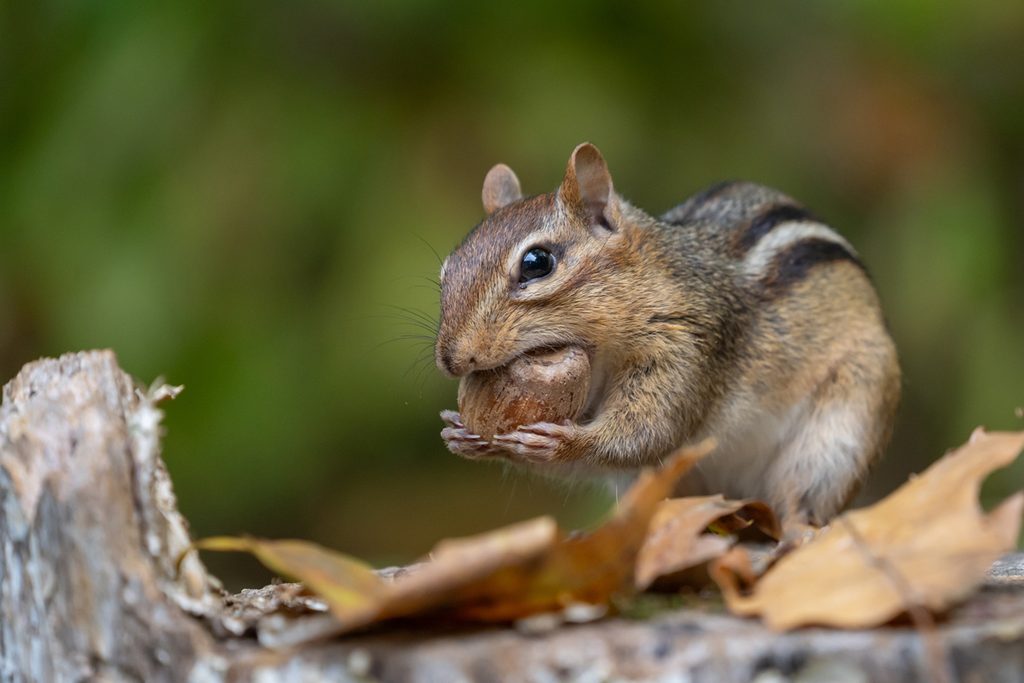
Chipmunks Build a Well-Stocked Pantry
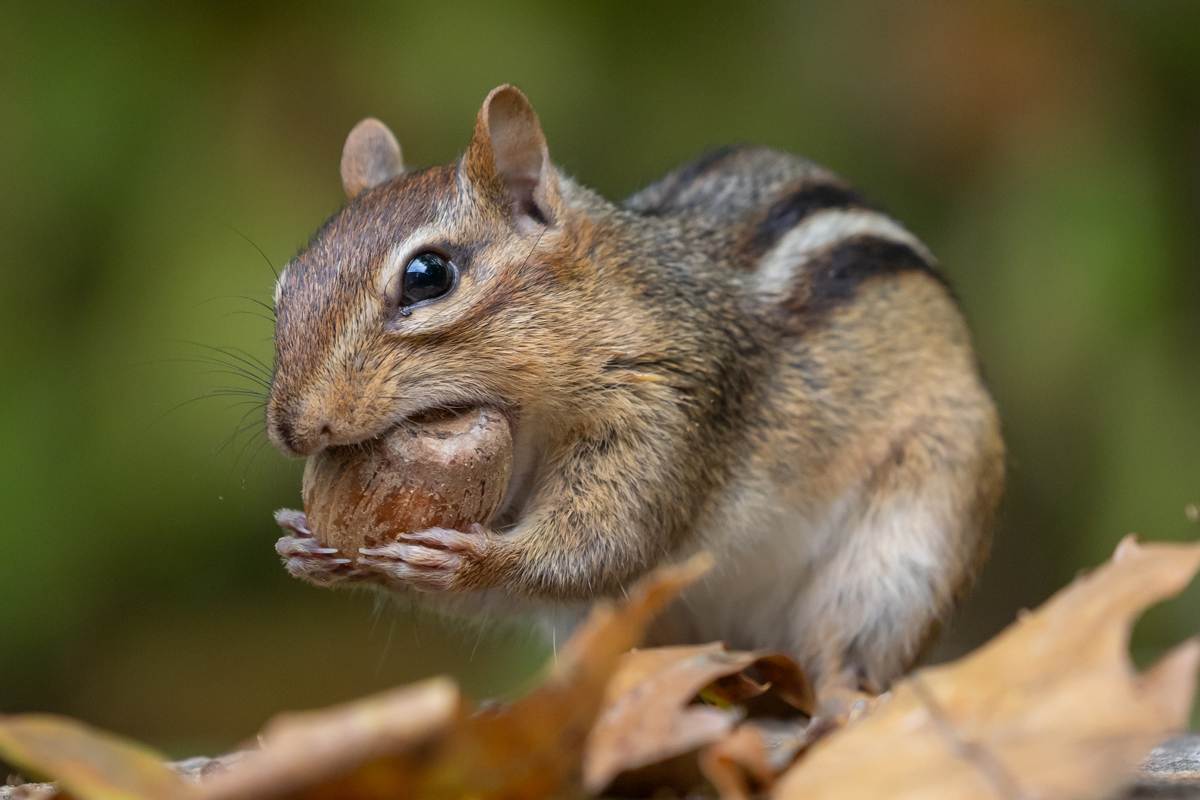
Chipmunks aren’t true hibernators; instead, they enter a period of what’s known as torpor — a short-term, daily version of the same physiological process behind hibernation. They still have to prepare for this light form of hibernation, but rather than piling on the pounds, they instead spend the fall gathering and hauling seeds, nuts, and other food into underground stockpiles inside their burrows.
After entering the torpor state — during which their heart rate drops from about 350 beats per minute to around four — they wake every few days for a snack. Their secret pantries, not their body fat, sustain them through the winter, making their autumn food-hoarding just as essential as any bear’s feeding frenzy.
Credit: Mark D. Savignac/stock.adobe.com
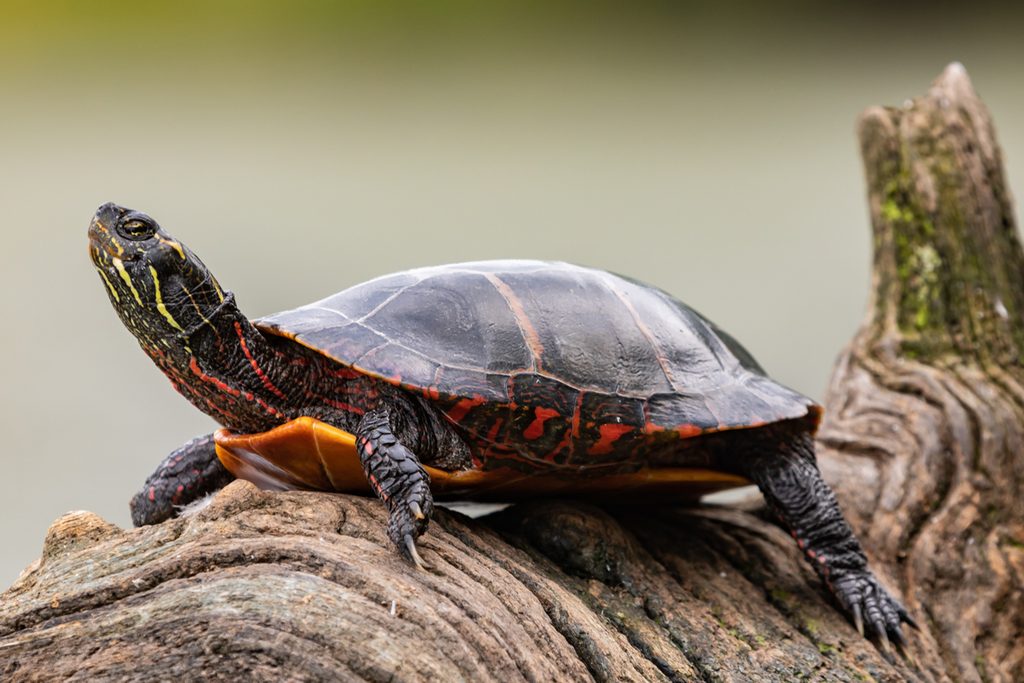
Painted Turtles Deliberately Starve Themselves
On the other end of the calorie-consumption spectrum, painted turtles take a different approach. Weeks before burying themselves in pond mud for winter, painted turtles simply stop eating. This may seem counterintuitive, but many turtle species clear out their digestive systems on purpose because their bodies aren’t able to properly digest anything once their metabolism slows down for brumation, the hibernation state or torpor that cold-blooded animals enter during winter.
Any food left to rot internally during months of dormancy could be fatal, making an empty gut a vital and very deliberate survival strategy. This is particularly important for painted turtles, who spend months buried in mud beneath frozen ponds, during which their metabolism drops as much as 99% below its normal rate. That extreme metabolic slowdown drastically reduces how much energy — and therefore calories — they require.
Credit: imageBROKER.com—Marko von der Osten/Alamy
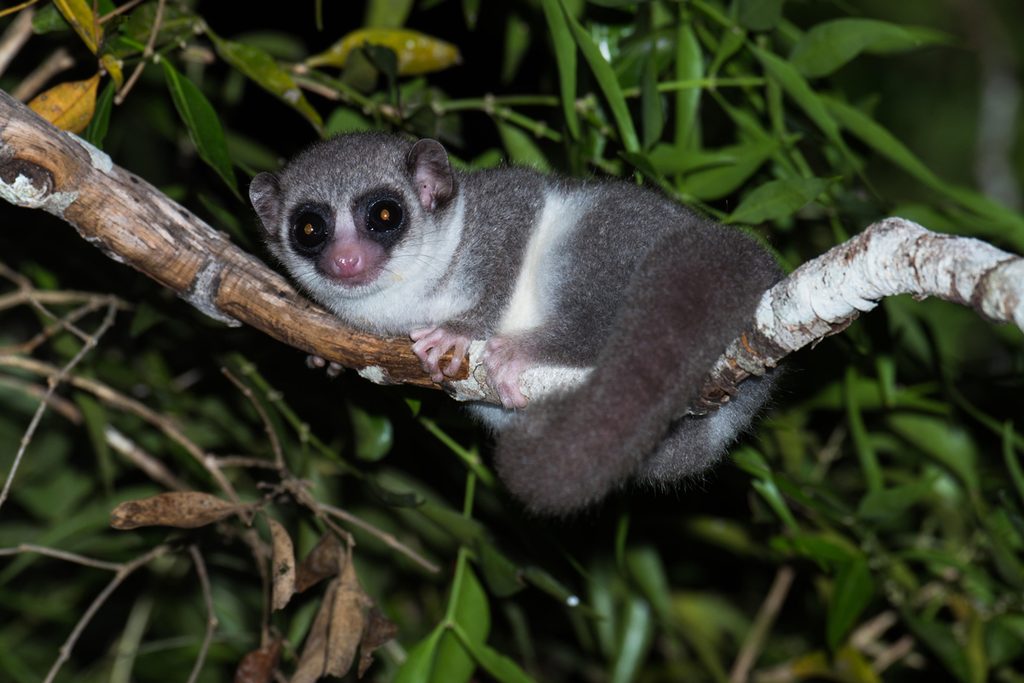
Fat-Tailed Dwarf Lemurs Supersize Their Own Tails
Madagascar’s fat-tailed dwarf lemur was given its name for a reason. Before retreating into a tree hole for up to seven months, these lemurs gorge themselves on fruits and flowers, storing so much fat in their sausagelike tails that the appendage can balloon to nearly 40% of the animal’s total body weight.
Fat-tailed dwarf lemurs are the only primates known to hibernate for a long period of time, sometimes for as long as six months. Unlike most hibernators, though, they’re not trying to survive a period of extreme cold. Instead, they go dormant during the harsh dry season, when food and water become scarce — and that oversized tail serves as a dedicated built-in fuel tank.
Advertisement
Baby hedgehogs have a trick to protect their mothers from their quills.
Kristina is a coffee-fueled writer living happily ever after with her family in the suburbs of Richmond, Virginia.
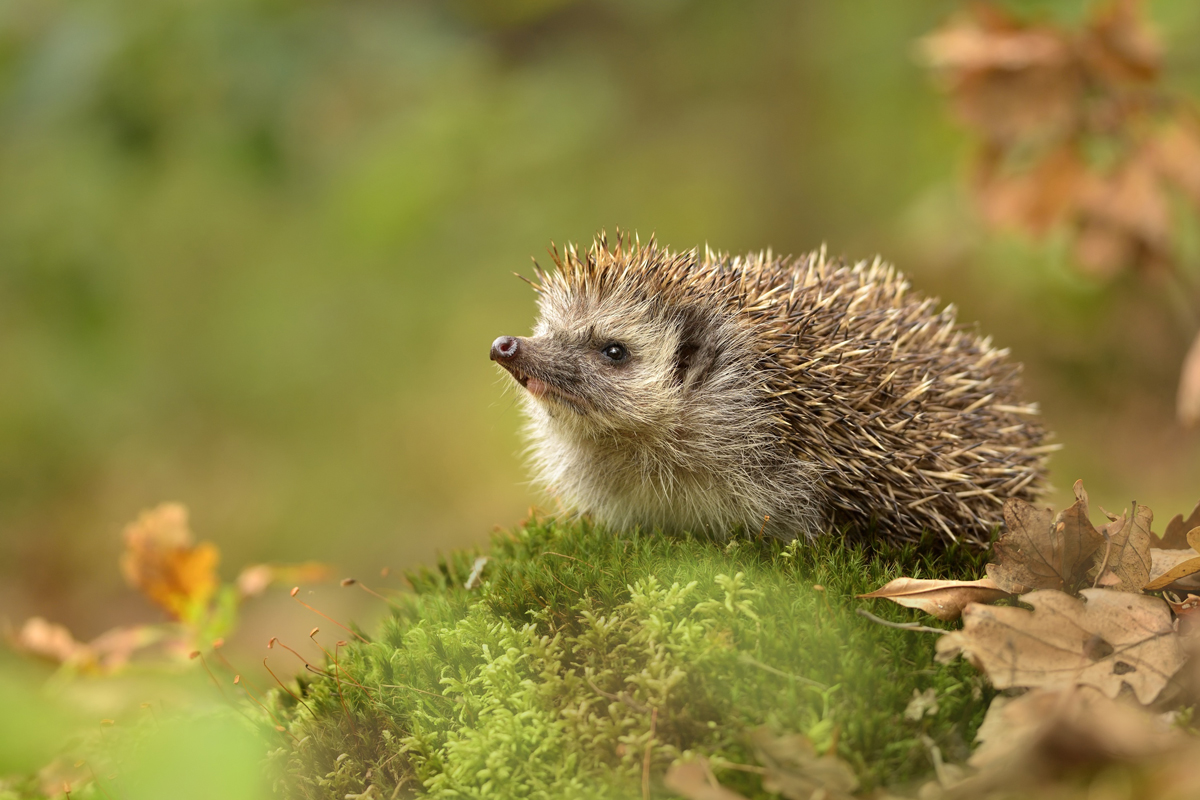
Hedgehogs are known for the sharp spines they raise when threatened, but nature gives newborns a softer start to protect their mother. Depending on the hedgehog species, a mother typically gives birth to between four and seven babies (called hoglets) each born with its first spines safely concealed beneath a swollen, fluid-filled membrane so they don’t injure her during birth. Within hours, the swelling subsides and soft white spines begin to emerge, followed by darker, stronger ones over the next several days.
Hoglets spend their first weeks tucked in the nest, nursing and relying on their mother for protection. Their eyes open at around 2 weeks, and by about 3 to 4 weeks they begin venturing outside the nest with mom and learning to forage. By then, their spines have hardened, so they can develop the classic hedgehog defense of raising their spines and curling into a tight ball to make themselves a painful mouthful for predators.
Advertisement
5 of the Most Grueling Animal Pregnancies
Across Species 28/10/26Oct. 28, 2026
Updated 28/10/26Oct. 28, 2026
Credit: Dave/stock.adobe.com
Nicole Villeneuve
Author
Nicole is a writer, editor, and researcher with over 15 years experience covering arts and culture, lifestyle, and media. Her work has also appeared in PureWow, Brit + Co, Exclaim, AUX TV, and CBC. She lives in Ontario, Canada.
Being pregnant can feel like something out of a science-fiction plot: Building another human from scratch, reshuffling organs, and that small matter of actually giving birth are just a few ways the experience can be rough on the human body. But for some animals, those things barely scratch the surface of what it’s like being pregnant and giving birth.
As it turns out, the animal kingdom is full of some truly wild ways of bringing new life into the world. From pregnancies that last for years to babies that devour their siblings before birth, here are a few animal pregnancies that may make you feel a little bit better about being human.
Credit: Matthias Pabst/stock.adobe.com
Alpine Salamanders’ Extended Pregnancies
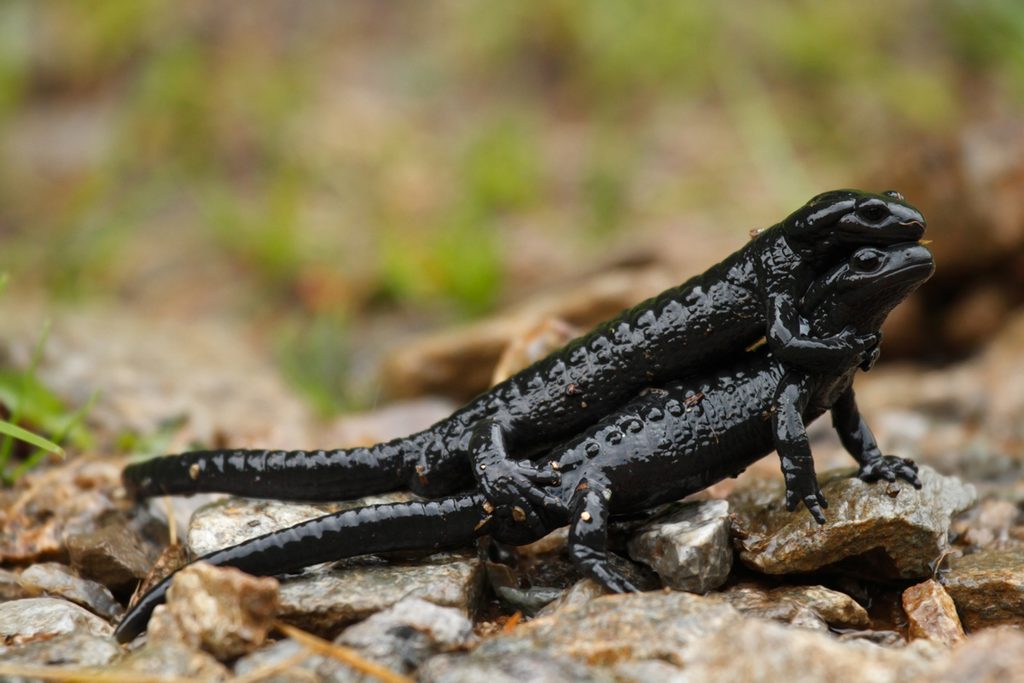
If nine months sounds like a long time to be pregnant, the Alpine salamander would like a word. This amphibian from the European Alps gives birth to one or two fully developed young on land, skipping the egg-laying and aquatic larval stage common among amphibians.
But this unique adaptation comes with a shockingly long pregnancy: Gestation generally lasts two to four years. The embryos take that time to complete their development in the uterus, and by the time they’re born, the young are already fully metamorphosed and ready for life on land.
Credit: Dave/stock.adobe.com
Sand Tiger Sharks’ Next-Level Sibling Rivalry
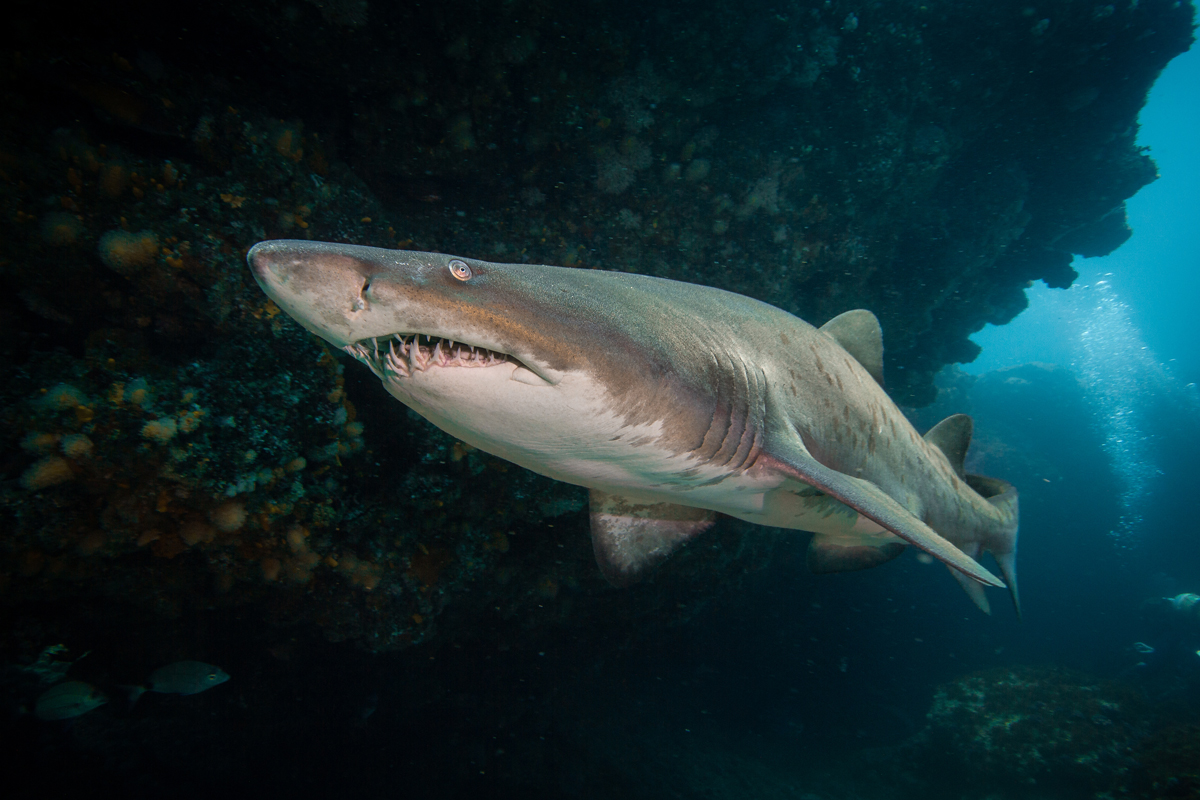
Sibling rivalry starts early with sand tiger sharks. Although the smallest offspring are often at a disadvantage in many species, for these sharks, being the runt of the litter can be a matter of life and death. Multiple embryos develop early in pregnancy, before the largest eventually begin hunting and eating their smaller would-be siblings.
This behavior is known bluntly as intrauterine cannibalism, and the process continues until only the largest embryo in each of the female sand tiger shark’s two uteri remains. The survivors continue growing, also feeding on their mother’s unfertilized eggs, until they’re born at a length of about 3 to 4 feet.
Credit: Tatiana/stock.adobe.com
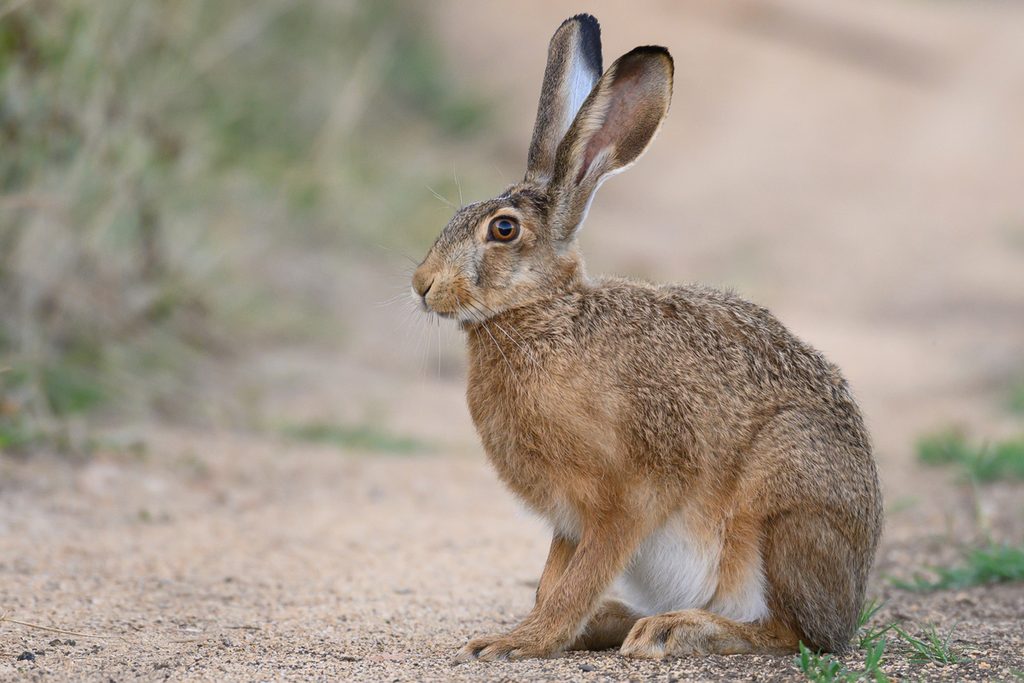
Brown Hares Can Get Pregnant While Already Pregnant
European brown hares can get pregnant again before even giving birth to the litter they’re already carrying. Even though their pregnancies only last about 41 or 42 days, a process called superfetation (or superconception) allows a new set of embryos to begin developing while the female is still pregnant. After the first litter is born, the embryos implant in the uterus, meaning the hares can potentially give birth to two litters just weeks apart.
This evolutionary reproductive adaptation can increase their reproductive output by as much as 35%, helping their populations grow and recover quickly when numbers are low.
Credit: ondrejprosicky/stock.adobe.com
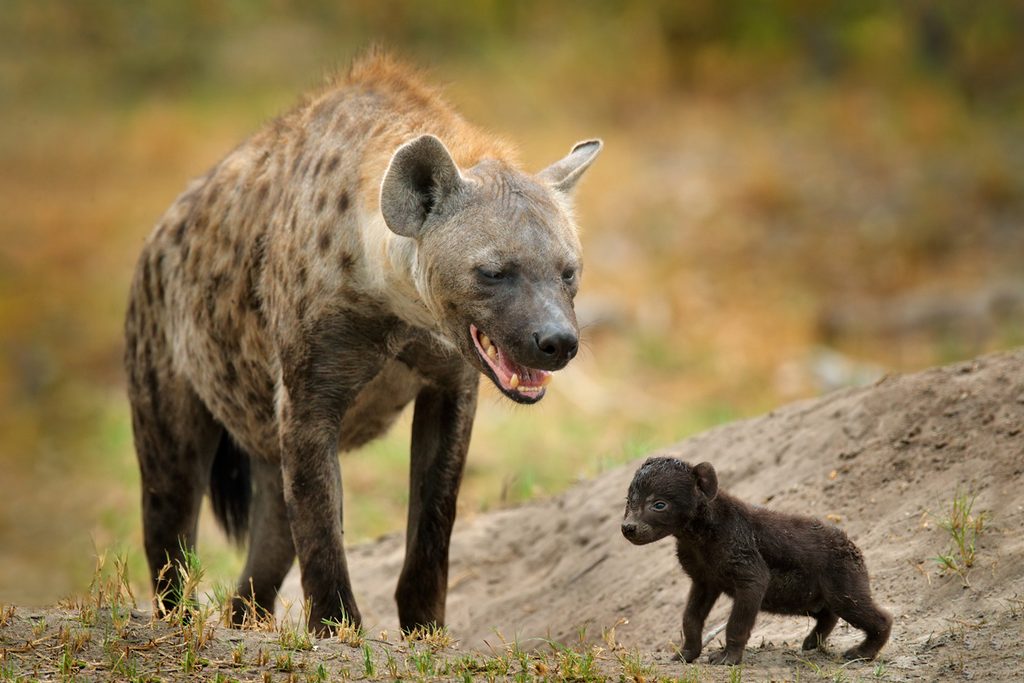
Spotted Hyenas Have Extra Difficult Births
The female spotted hyena has one of the strangest reproductive systems in the animal kingdom. She has no external vaginal opening; instead, she urinates, mates, and gives birth through an organ similar to a male’s penis, sometimes called a pseudopenis.
Because of this, childbirth is especially difficult. A hyena cub weighs roughly 3 pounds at birth, during which it has to pass through the 6-inch-long organ’s inch-wide opening.
The first birth is especially dangerous: Up to 20% of first-time spotted hyena mothers don’t survive giving birth, because the difficult passage can cause severe tearing and internal injuries. Even if the mother survives, about 60% of cubs born to first-time mothers are stillborn, often because they become stuck in the birth canal.
Credit: marina/stock.adobe.com
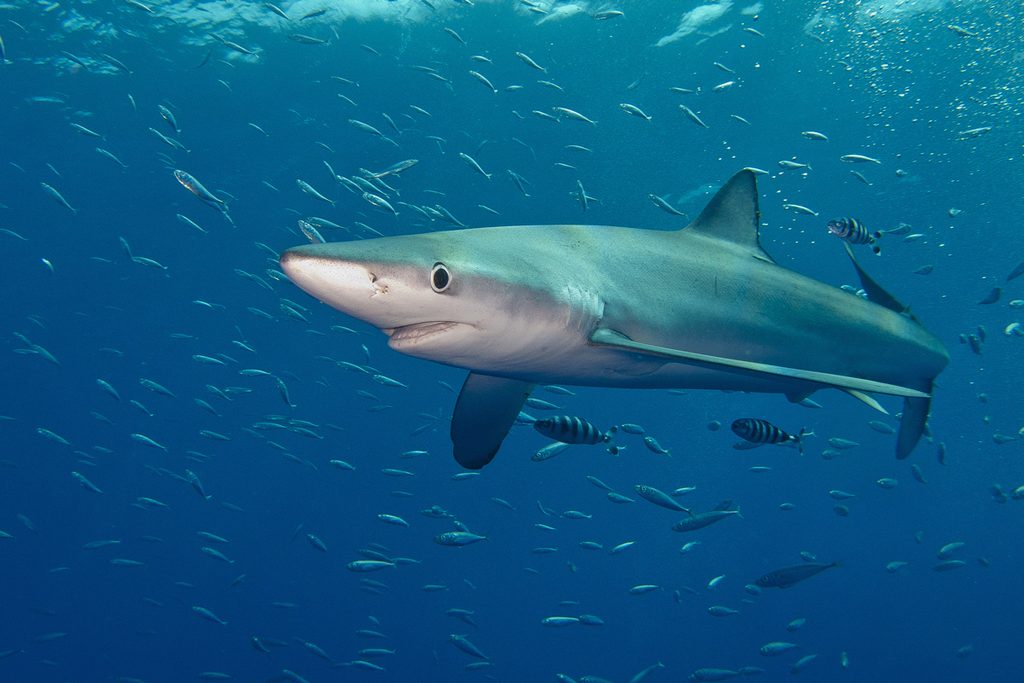
Blue Sharks Can Have More Than 100 Pups At a Time
Imagine going through an entire pregnancy and finding you’re not just having one baby, but potentially 135 of them. That’s the upper end of the reported litter size for female blue sharks.
The species gives birth to live young after a gestation of roughly nine to 12 months. Most litters aren’t quite that big, though, typically containing anywhere from just a few to — on average — about 25 to 50 pups. The pups aren’t tiny, either: Newborn blue sharks arrive measuring roughly 16 to 20 inches in length.
Advertisement
Seagulls dance on grass to trick earthworms into thinking it’s raining.
Michael Nordine is a Senior Staff Writer at Britannica, where he writes the newsletter Movie Brief. He grew up with eight cats and would like to see a Komodo dragon in the wild one day.
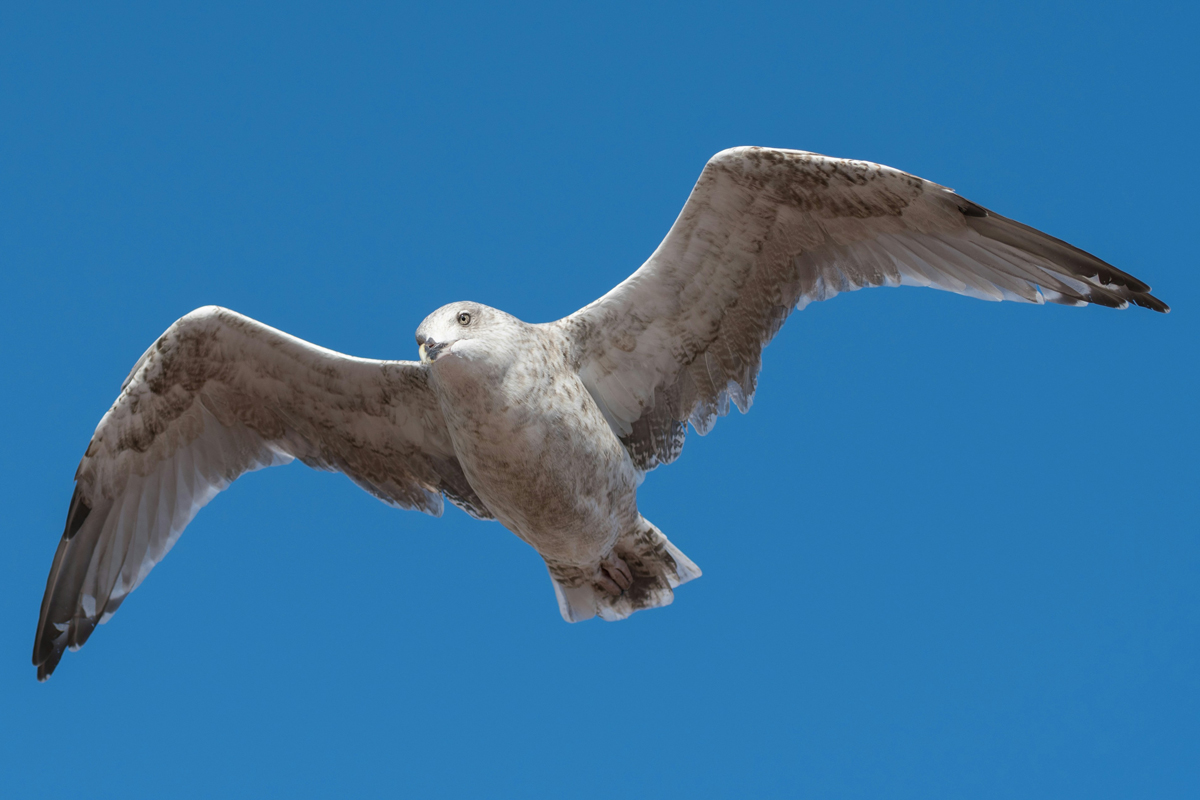
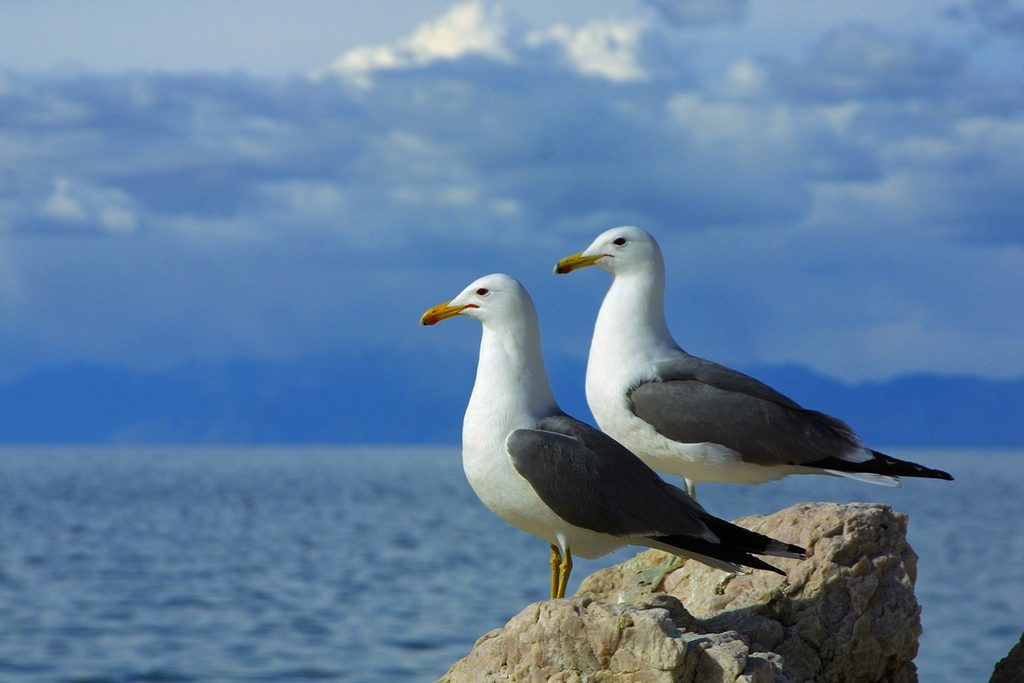
Despite being known as scavengers, seagulls do occasionally dance for their dinner — literally, when it comes to earthworms. Just as the soil dwellers instinctively make their way to the surface after it rains, seagulls rhythmically tap their feet on the ground in a “rain dance” that tricks their prey into thinking it’s raining.
Also known as “worm charming,” the dance produces vibrations that mimic the pitter-patter of raindrops and attracts earthworms in the same way an alluring flame attracts a moth. That earthworms brave the surface in search of food, thus increasing their chances of becoming food, is essentially the circle of life in microcosm — and a reminder of the ways in which species are constantly adapting to each other’s habits to gain an advantage.
Advertisement
6 Clever Tricks Predators Use To Lure Their Prey
Across Species 21/10/26Oct. 21, 2026
Updated 21/10/26Oct. 21, 2026
Credit: Shirley and Johan/stock.adobe.com
Tony Dunnell
Author
Tony is an English writer of nonfiction and fiction living on the edge of the Amazon jungle.
Hunting in the animal kingdom isn’t always about speed, brute strength, or sharp teeth. Some of nature’s most successful predators have figured out that the easiest way to catch dinner is often through trickery, deviousness, and being quick-witted. Here are six animals who’ve developed unusually clever ways to catch their prey.
Credit: Vladimir Wrangel/stock.adobe.com
Archerfish Snipe Bugs Off Branches
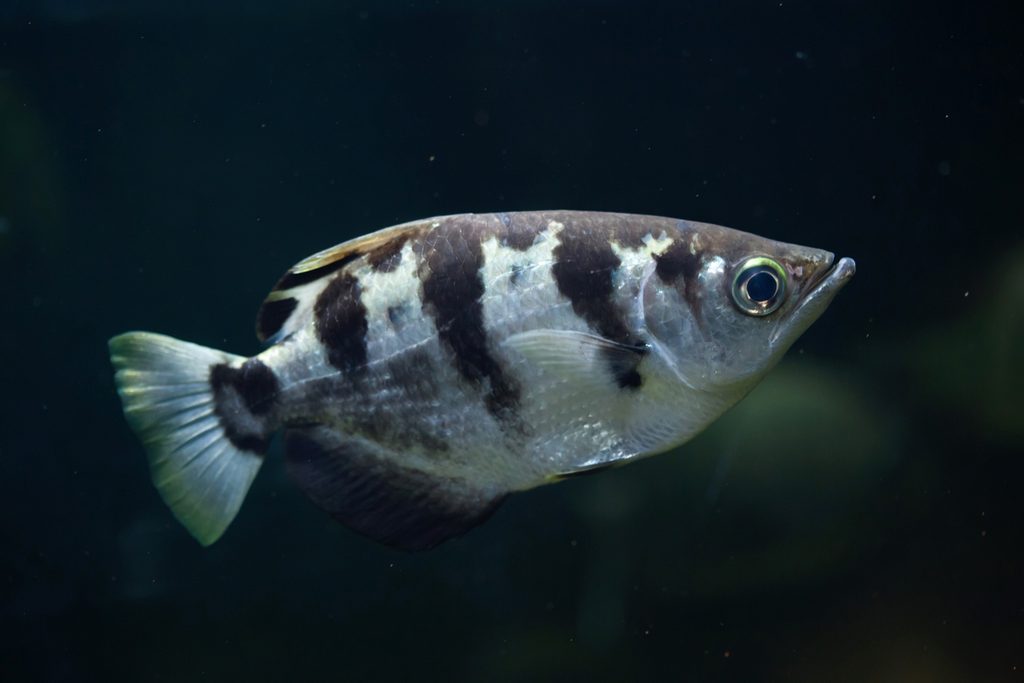
Fish typically have two ways to catch insects: Either they wait until the bugs land on the water, or they make an energetic jump above the surface to grab one passing by. But archerfish have developed a far more technical hunting method.
These tropical fish position themselves just below the surface of the water, aim at an insect resting on a leaf or branch, and fire a precisely aimed jet of water from their mouth to knock the insect into the water. This jet isn’t a simple squirt, either; it’s a carefully aimed snipe that can hit individual bugs almost 10 feet away.
Credit: Aron Hsiao/stock.adobe.com
Seagulls Fake the Rain
Seagulls have developed a sly, but quite charming, method of catching worms. Earthworms rise to the Earth’s surface when rain falls, possibly because the vibrations and moisture signal safer or easier conditions to move around in (although that’s just one theory).
Gulls have figured out that stomping their feet in a steady rhythm mimics the vibrations of rain hitting the ground, tricking worms into surfacing even on a bone-dry afternoon. This behavior, often called a “rain dance,” has been documented in multiple gull species and, when carried out to perfection, can turn an unsuspecting patch of lawn into an all-you-can-eat buffet.
Credit: Shirley and Johan/stock.adobe.com
Firehawks Spread Wildfires on Purpose
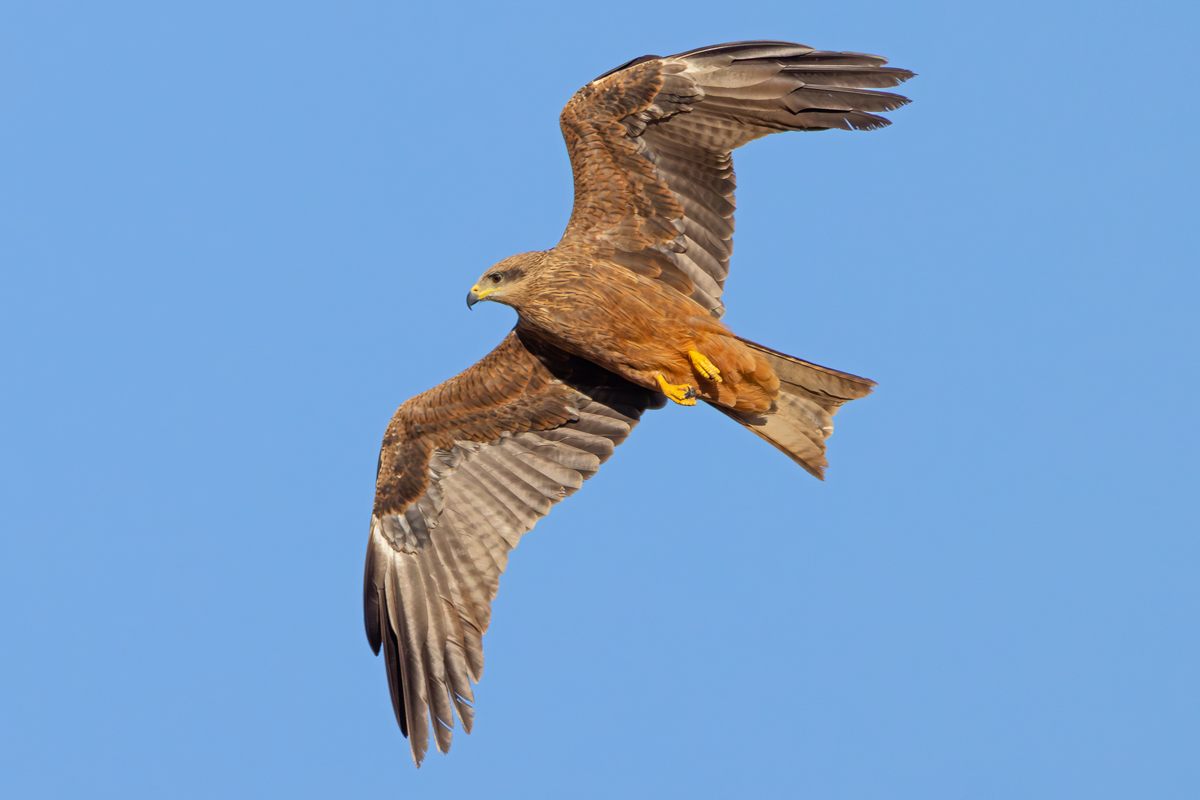
In Australia’s Northern Territory, Aboriginal communities have long described birds that carry fire — and researchers have since gathered eyewitness documentation backing that up. Black kites, whistling kites, and brown falcons — known more informally as firehawks — have been observed picking up burning sticks from an active bushfire and carrying them, sometimes hundreds of feet, to drop them in unburned grass.
The new blaze flushes out hidden lizards, insects, and small mammals, who then head straight into the path of the waiting hawks. It’s the only known case of a nonhuman animal actively using fire as a hunting tool.
Credit: Cavan/stock.adobe.com
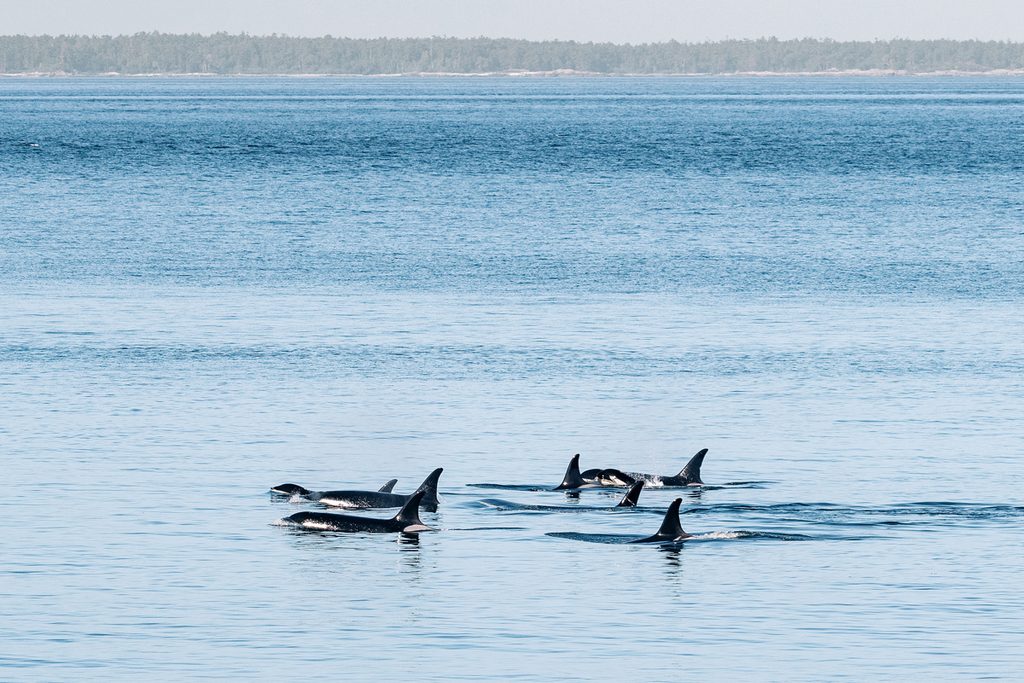
Orcas Create Their Own Mini Tsunamis
A seal resting on an isolated ice floe may appear to be out of harm’s way. Orcas, however, have developed a clever — and quite terrifying — strategy for dislodging seals from the ice.
Swimming in tight formation, the whales make a synchronized plunging motion that generates a coordinated wave powerful enough to crack the ice or wash the seal straight into the water, a technique researchers call “wave-washing.” Pods have been seen making dozens of attempts against a single floe, adjusting their formation and timing with each pass.
Credit: Gerry/stock.adobe.com
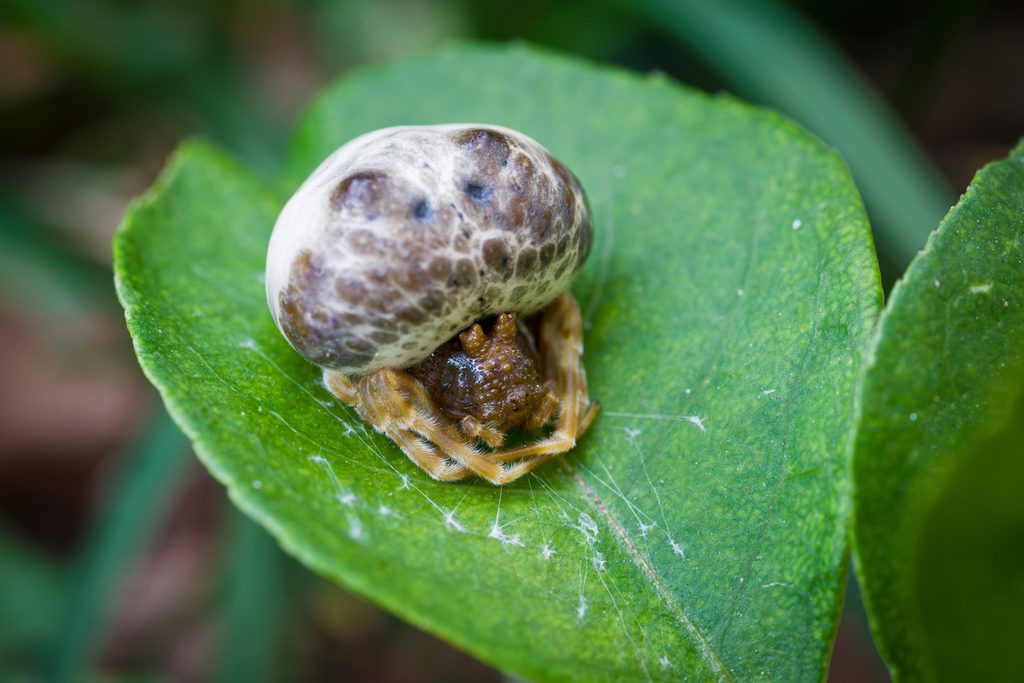
Bolas Spiders Use Chemicals to Lure Male Moths
Bolas spiders don’t waste their time spinning elaborate webs. Instead, female bolas spiders manufacture a chemical cocktail that mimics the exact mating pheromone of a specific female moth, attracting the attention of hopeful male moths who come looking for romance.
The devious spider then creates a single silk thread tipped with a sticky blob, which it uses to snag the unfortunate moth in midair. Some spiders can even tweak their chemical blend during the night to lure in an entirely different species of moth.
Credit: Natalia/stock.adobe.com
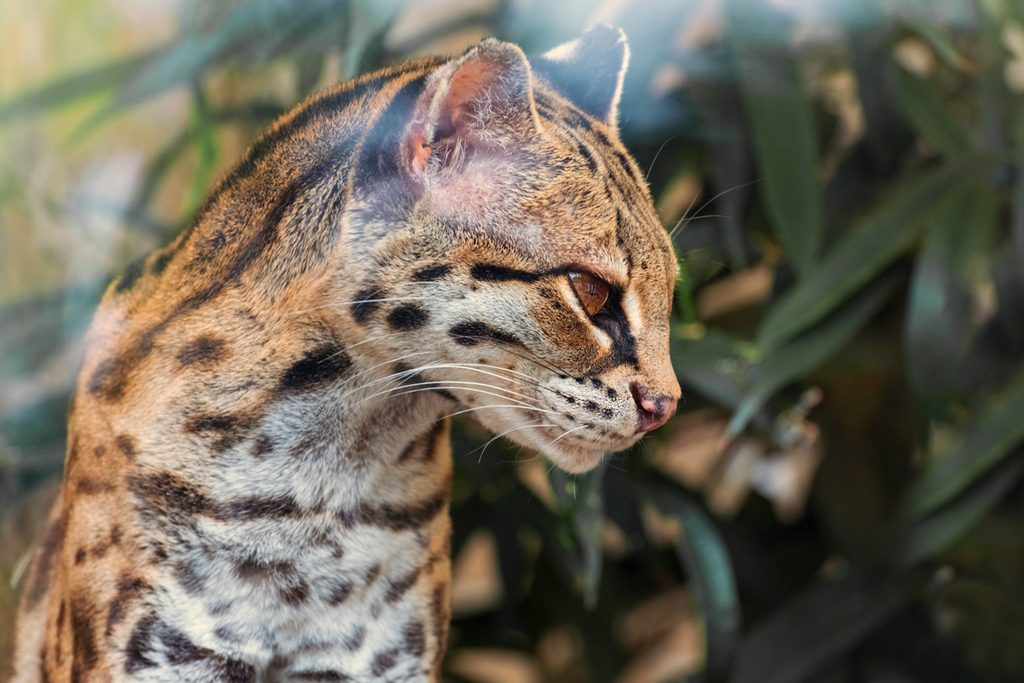
Margays Imitate Baby Monkeys
As all cat owners know, our feline friends are very clever creatures — and, some may say, quite manipulative. But cat cunning reaches new heights in Brazil’s Amazon rainforest, where researchers have observed a species of small wild cat called a margay produce an eerily accurate impression of a baby pied tamarin monkey in distress.
The margay’s very deliberate imitation drew curious adult tamarins down from the canopy to investigate — and they would have walked straight into an ambush if they hadn’t spotted the margay just in time. It remains the only scientifically documented case of a wild cat in the Americas mimicking the distress call of its prey as a calculated lure.
Advertisement
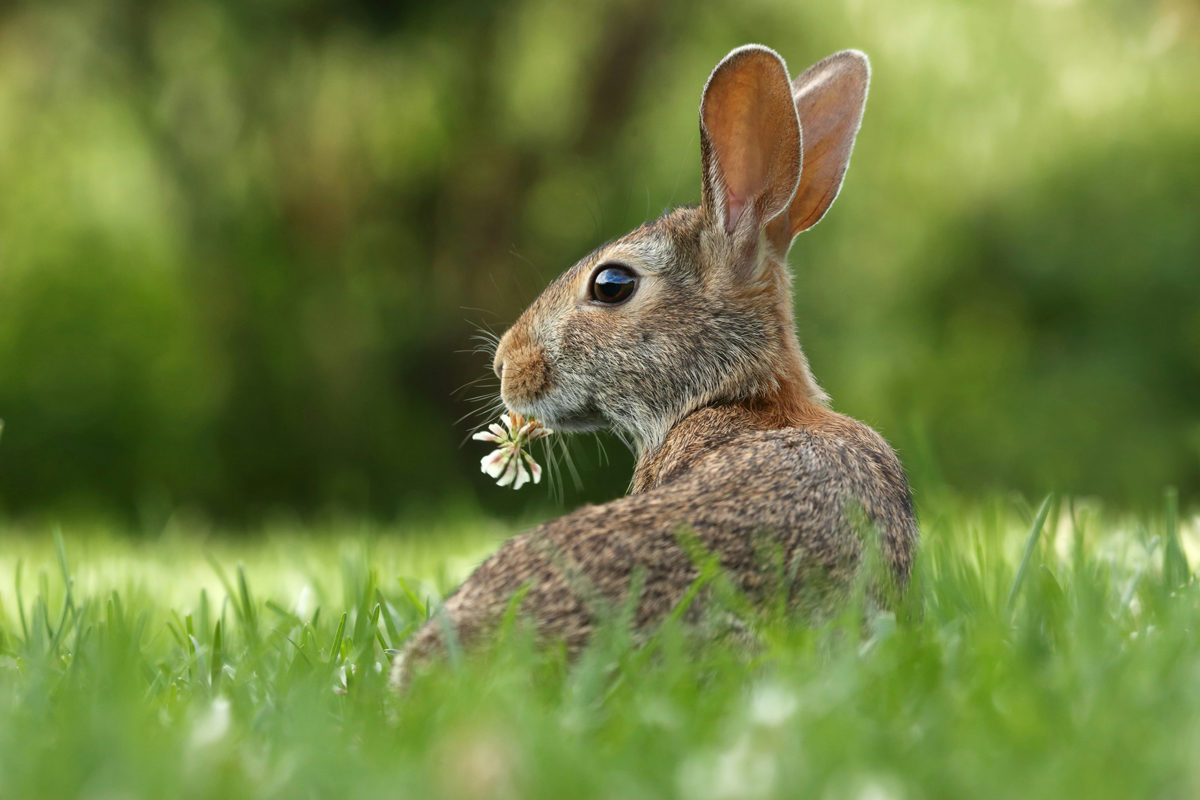
Rabbits perform a twisting jump called a ‘binky’ when they feel happy.
Michael Nordine is a Senior Staff Writer at Britannica, where he writes the newsletter Movie Brief. He grew up with eight cats and would like to see a Komodo dragon in the wild one day.
A lot of worthy, underappreciated pets get lost in the never-ending debate between cats and dogs. High among them is the humble rabbit, which is at its most adorable when it’s at its happiest. That’s when a bunny performs the “binky,” an adorably acrobatic jump in which it leaps straight up, twists its head and body, and kicks its feet; it sometimes even wiggles its ears.
The binky — which rabbit owners and animal experts alike agree is a physical expression of happiness and excitement — is often preceded by a bout of the zoomies, also known as the “bunny 500” by some rabbit aficionados. After all, if you’re known for hopping, why not do it when you’re happy?
Advertisement
What Do Wild Animals Do for Fun?
Across Species 21/10/26Oct. 21, 2026
Updated 21/10/26Oct. 21, 2026
Credit: Harry Collins/stock.adobe.com
Kristina Wright
Author
Kristina is a coffee-fueled writer living happily ever after with her family in the suburbs of Richmond, Virginia.
Humans aren’t the only animals that play. Anyone who’s watched a dog chase a ball or a cat pounce on a toy mouse knows what play looks like in domesticated pets, but wild animals have their own variations on play. They chase, wrestle, tumble, manipulate objects, and even seem to invent their own games.
Animal behavior researchers group play into three broad categories: social play, object play, and locomotor play. Social play involves interactions such as chasing and wrestling, object play involves manipulating something in the environment, and locomotor play includes activities such as running, jumping, rolling, and spinning.
The tricky part is figuring out when an animal is actually playing. Scientists look for clues that distinguish play from behaviors with a more obvious purpose, such as hunting, fighting, or finding food.
Credit: Harry Collins/stock.adobe.com
Social Play
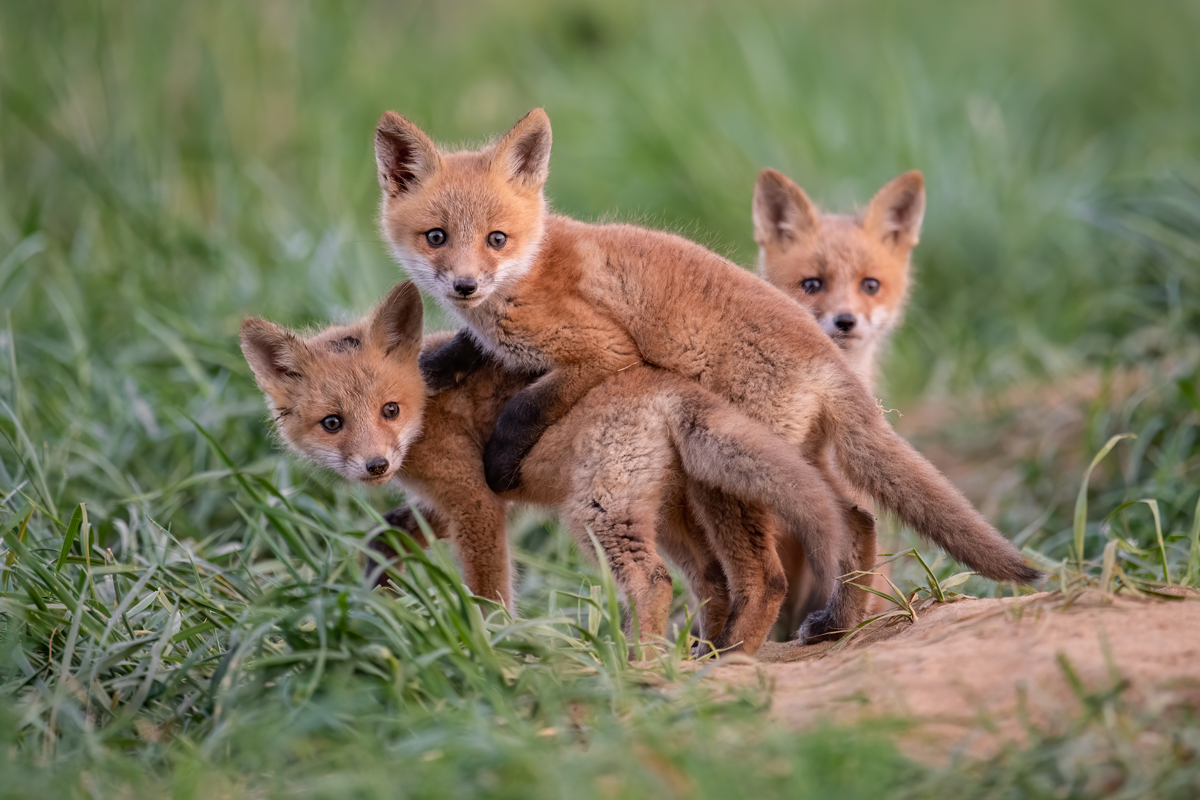
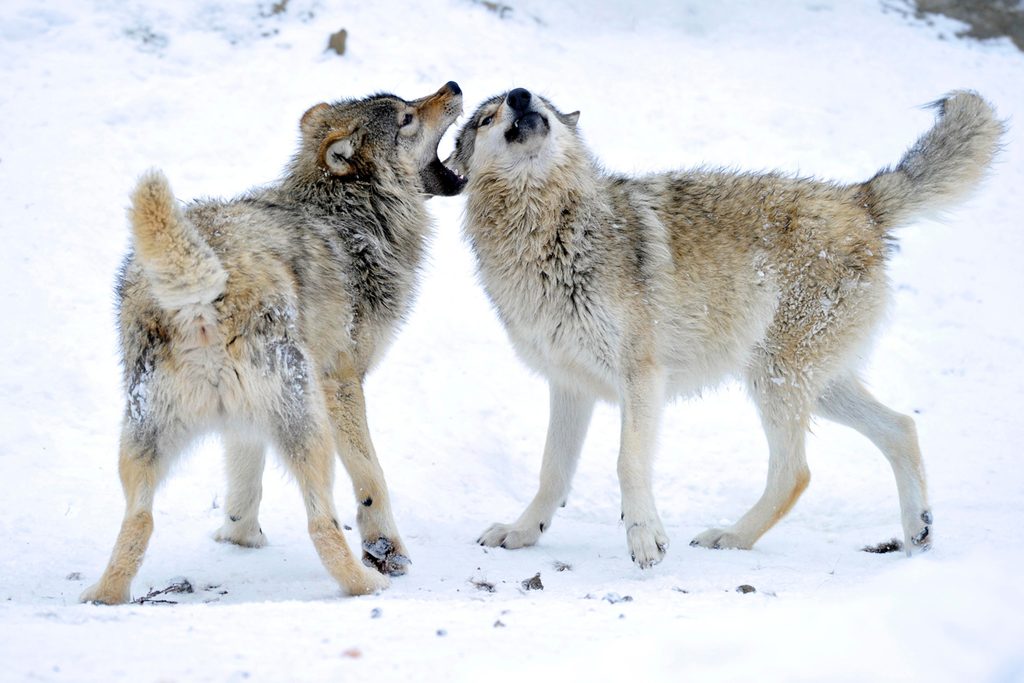
Social play is one of the most familiar forms of animal play, and it can look a lot like fighting. Young wolves, foxes, meerkats, and other predators have play fights that include chasing and wrestling.
Among primates, young chimpanzees and bonobos engage in similar games, chasing, grabbing, tumbling, and play-fighting with other members of their group. Dolphins also chase one another and engage in physical interactions that appear playful. These rough-and-tumble games can look serious, but the point isn’t necessarily to win or establish dominance.
That’s one reason scientists look for specific clues when deciding if a wrestling match is actually playful. Play often involves taking turns, changing roles, repeat behavior, and exaggerated movements without escalating into a real fight.
Scientists may also look for signals and context clues that communicate an animal’s playful intentions. When the interaction remains relatively relaxed and the animals return to the game voluntarily, researchers have stronger evidence that they’re playing rather than fighting. The fact that play is usually most common when animals are well-fed and free from immediate danger is another clue.
Credit: Alta Oosthuizen/stock.adobe.com
Object Play
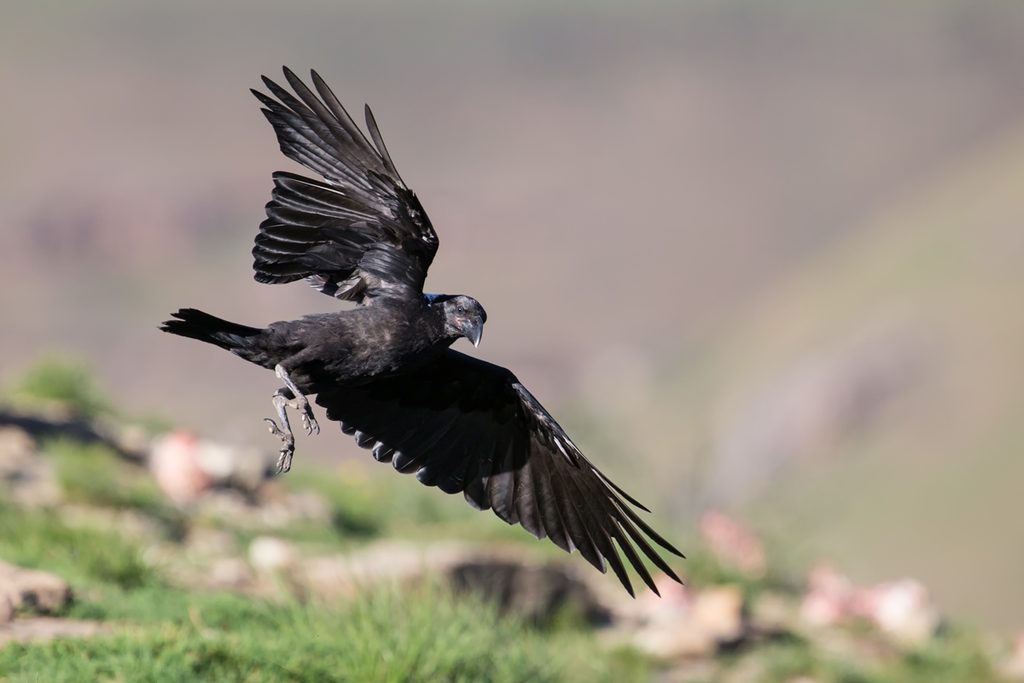
Animals don’t always need another animal to play with. Ravens have been observed dropping sticks and other objects so they can dive after them, while otters manipulate stones, shells, and other objects in ways that appear to go beyond simple exploration. These behaviors are especially interesting because the animals aren’t obviously performing them for practical reasons, such as getting food or escaping danger.
Object play has also been documented in animals that may not seem like obvious candidates for playful behavior. Komodo dragons have been observed manipulating objects such as Frisbees, plastic rings, and tin cans, while saltwater crocodiles will repeatedly interact with floating objects, and freshwater stingrays have even been observed pushing and moving objects in their environment.
These behaviors don’t prove the animals experience play exactly as humans do, but their repetition and lack of an obvious practical goal give researchers reason to consider they may be forms of play nonetheless.
Credit: Alta Oosthuizen/stock.adobe.com
Locomotor Play
Locomotor play involves movement for its own sake. Animals may run, jump, roll, spin, leap, or twist in ways that go beyond what they require to get from one place to another.
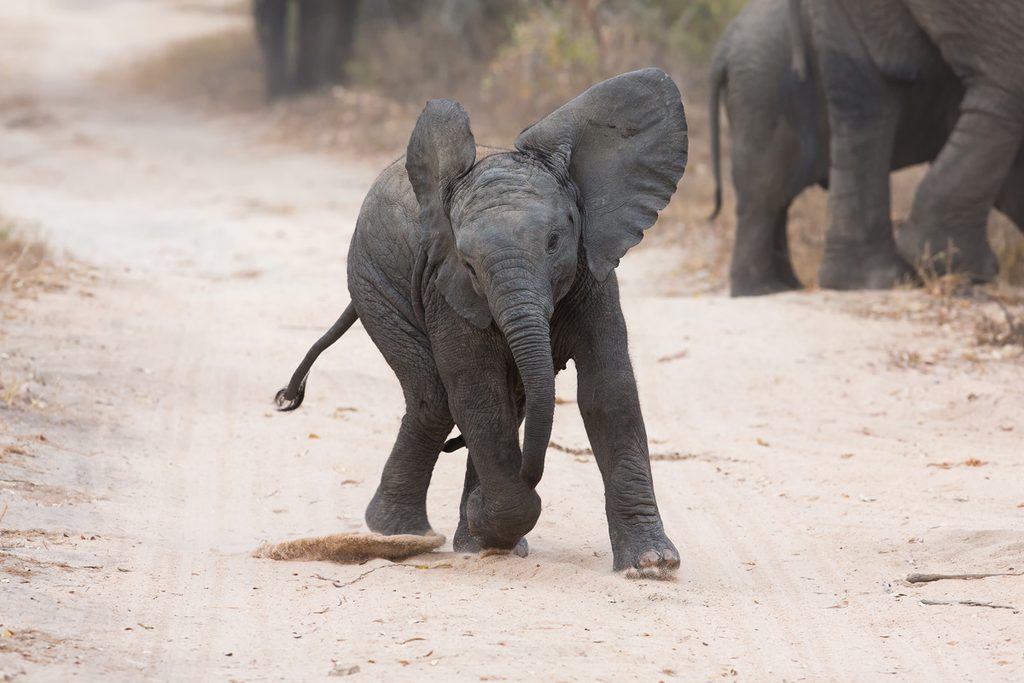
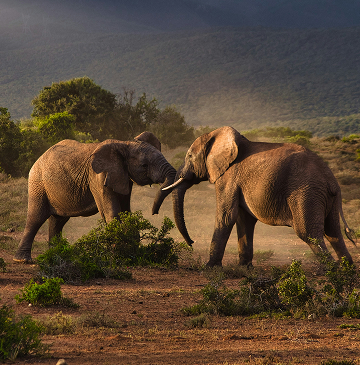
Young mammals will often race around together, and ravens sometimes perform aerial acrobatics while playing with their own shadows. Elephants “floppy-run” while swinging their head and ears or splash and dunk their heads in water. These movements can resemble ordinary activities, but playful animals often repeat or exaggerate them without any obvious practical reason.
Aquatic animals offer some especially striking examples of locomotor play. Dolphins ride waves and leap from the water, while seals chase one another, roll, and engage in playful underwater movements that are more than what they need for basic swimming.
Fish can play, too, although their behavior can look quite different from that of aquatic mammals. Some fish, such as the African cichlid, have also been observed repeatedly swimming through or interacting with their surroundings in ways that appear to have no immediate practical purpose. These observations have helped broaden scientists’ understanding of play beyond the mammals and birds that have traditionally received the most attention.
Credit: imageBROKER/stock.adobe.com
The Tricky Parts of Studying Animal Play
Across all three categories of animal play, context matters. A wolf chasing another wolf could be playing or hunting and a crocodile pushing an object could simply be exploring its surroundings rather than playing.
Scientists consider the animal’s age, the circumstances, how often the behavior is repeated, and what happens before and after the behavior. No single behavior proves an animal is playing, so researchers look for a pattern that separates play from behaviors with a more obvious goal.
Studying play in the wild isn’t easy. Researchers have to build a case from patterns of behavior, often through hours of observation and video. Sometimes, the most convincing proof of play is that an animal that keeps choosing a behavior that serves no other apparent purpose.
Advertisement
Black cats can ‘rust’ if they spend too much time in the sun.
Michael Nordine is a Senior Staff Writer at Britannica, where he writes the newsletter Movie Brief. He grew up with eight cats and would like to see a Komodo dragon in the wild one day.
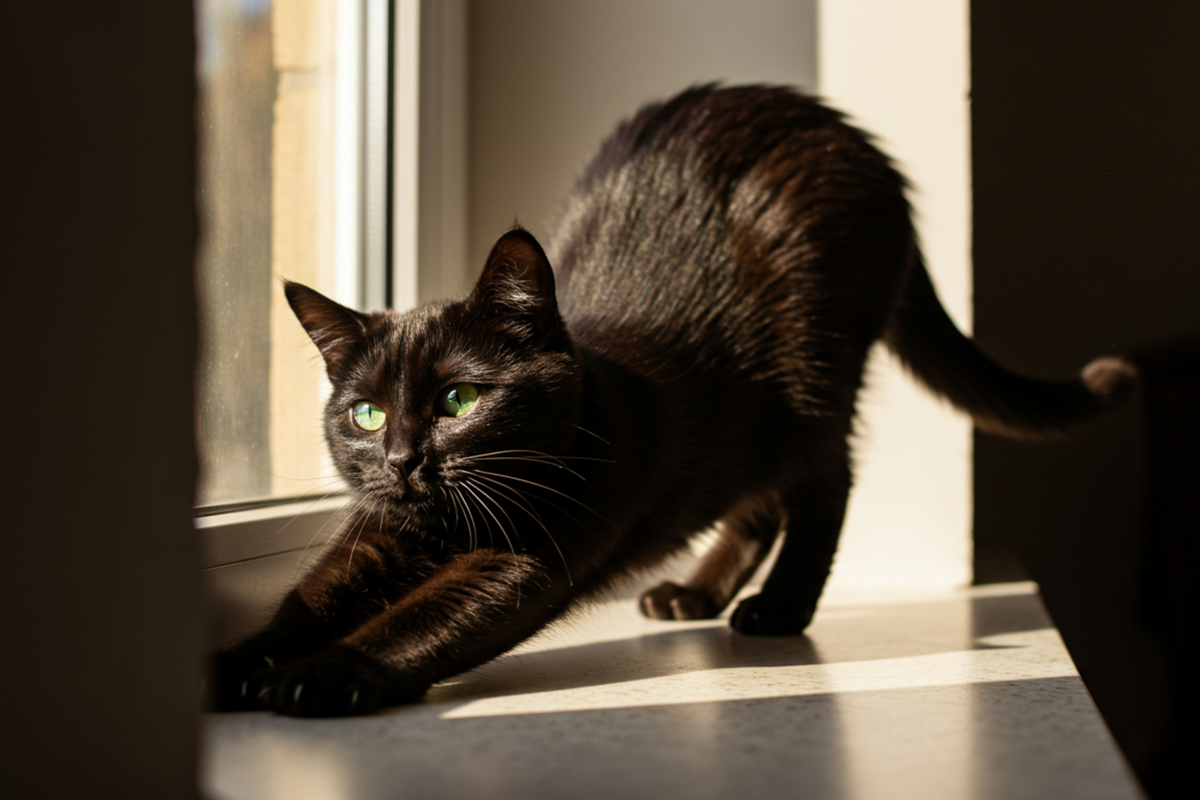
If a black cat ever crosses your path, don’t be scared — be curious as to whether their fur has changed color. This is called “rusting,” and it happens when they spend so much time in the sun that portions of their coat take on a brown, orange, or even reddish tint.
The pigment responsible for black fur is called eumelanin, and it isn’t especially hardy: Repeated exposure to ultraviolet rays causes it to break down and lose its dark hue. The change can also be caused by an amino acid deficiency, but this is less common. Rusting is also easier to spot in direct sunlight, meaning these kitties will remain as spooky as ever under cover of darkness.
Advertisement
Creepy-Crawly Animal Facts That Will Give You Chills
Across Species 21/10/26Oct. 21, 2026
Updated 21/10/26Oct. 21, 2026
Credit: Nathan/stock.adobe.com
Kristina Wright
Author
Kristina is a coffee-fueled writer living happily ever after with her family in the suburbs of Richmond, Virginia.
There’s no shortage of spooky animal imagery. From bats and owls flying through the night sky to wolves howling at the full moon and black cats slinking around dark corners, animals have long played a starring role in the macabre.
Many of these associations come from centuries-old folklore, superstition, and stories about the natural world. Nocturnal habits, unusual appearances, strange sounds, and behaviors people didn’t understand often gave these animals an eerie reputation.
But beyond folklore, nature is filled with strange real-life adaptations and creepy survival strategies. Here are five animal facts that will send shivers down your spine.
Credit: Nathan/stock.adobe.com
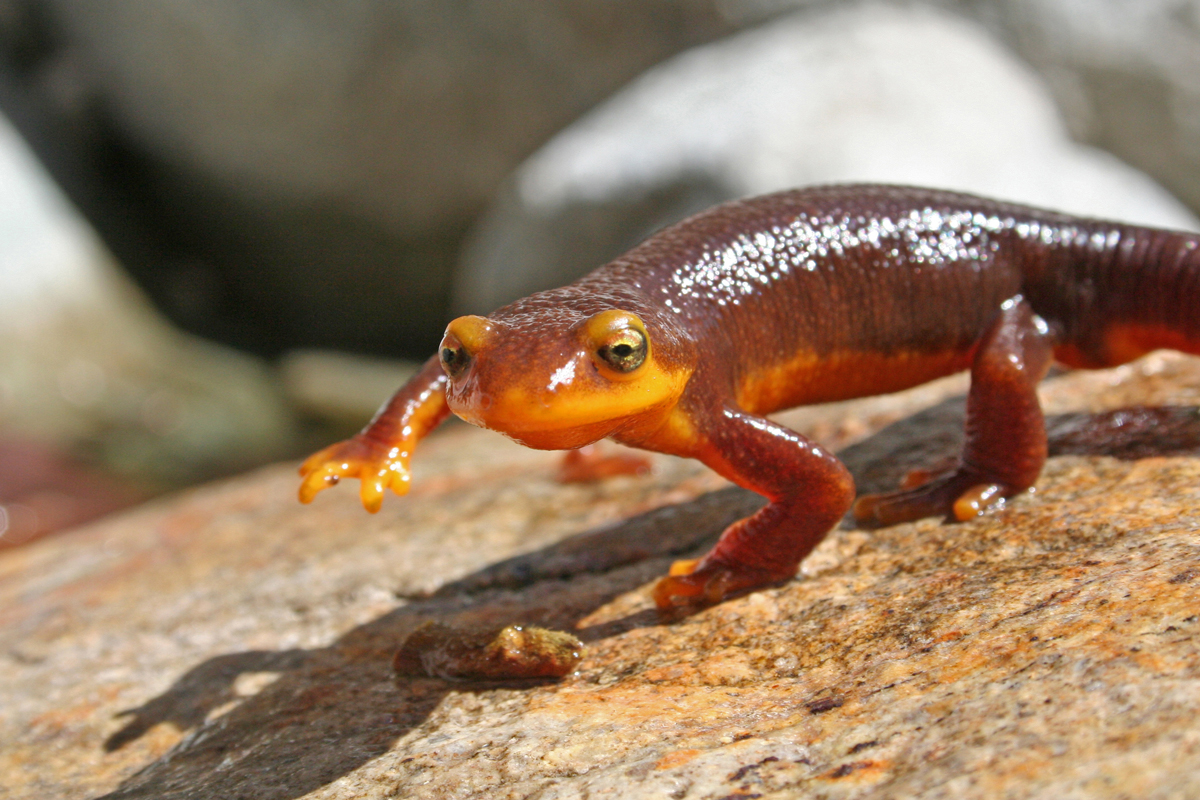
Newts Can Regenerate Lost Body Parts
“Eye of newt” may be one of the most famous ingredients in a fictional witch’s brew, thanks in part to Shakespeare’s Macbeth. But the real animal has a biological ability that sounds just as magical: Some newts can regenerate lost body parts, including limbs, tails, and parts of their brains, hearts, ears, spines, and jaw. And yes, certain species can even regenerate the lens of an eye.
These regenerative abilities vary by species, but newts can generally rebuild complex tissues after an injury. Cells at the site of a wound can form a structure called a blastema, which develops into replacement tissue. Researchers study newts and other salamanders to better understand how regeneration works and why humans have such limited ability to replace damaged body parts.
Credit: Charles Galea Bonavia—Wirestock/stock.adobe.com
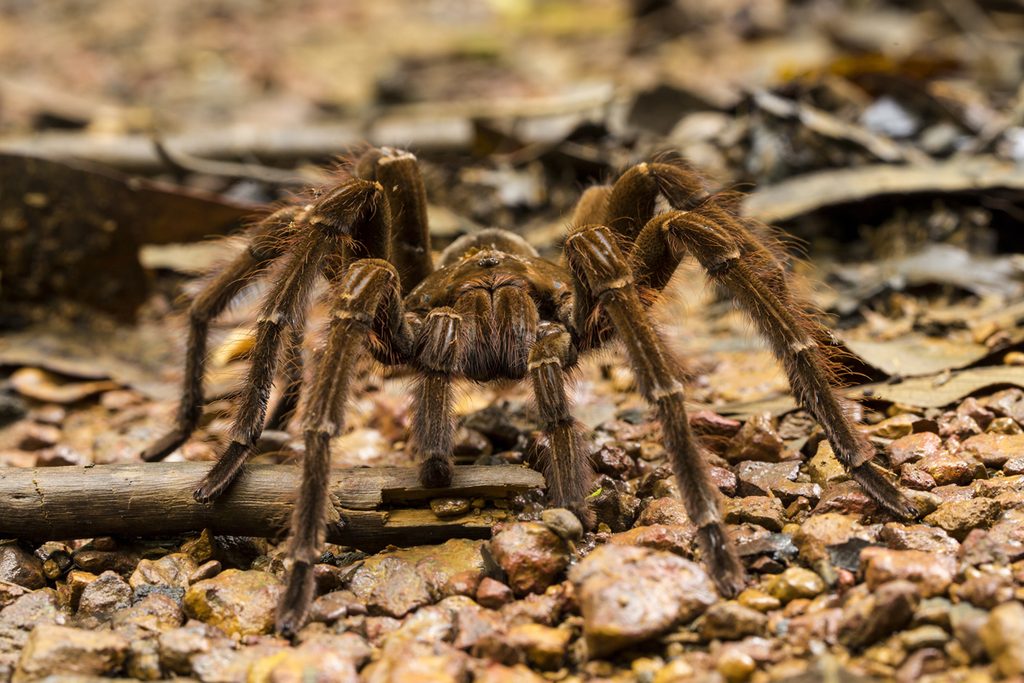
The Goliath Birdeater Is the World’s Biggest Spider
Spiders have become synonymous with all things spooky, but the Goliath birdeater, also known as the Goliath bird-eating tarantula, takes “creepy-crawly” to another level. Found in the rainforests of northern South America, it’s the largest spider in the world by mass and body length, with a leg span that can reach about 11 inches and a weight of up to 6.2 ounces.
Despite its name, the Goliath birdeater rarely eats birds; it typically hunts on the forest floor, feeding on insects, earthworms, frogs, and other small animals — and it has a surprisingly creepy defense. When threatened, it can rub its legs against its abdomen to produce a loud hissing sound and flick tiny, barbed hairs that irritate a predator’s eyes and skin. It’s perhaps no surprise that a real Goliath birdeater was cast as the monstrous spider in the 1990 horror movieArachnophobia.
Credit: Lauren/stock.adobe.com
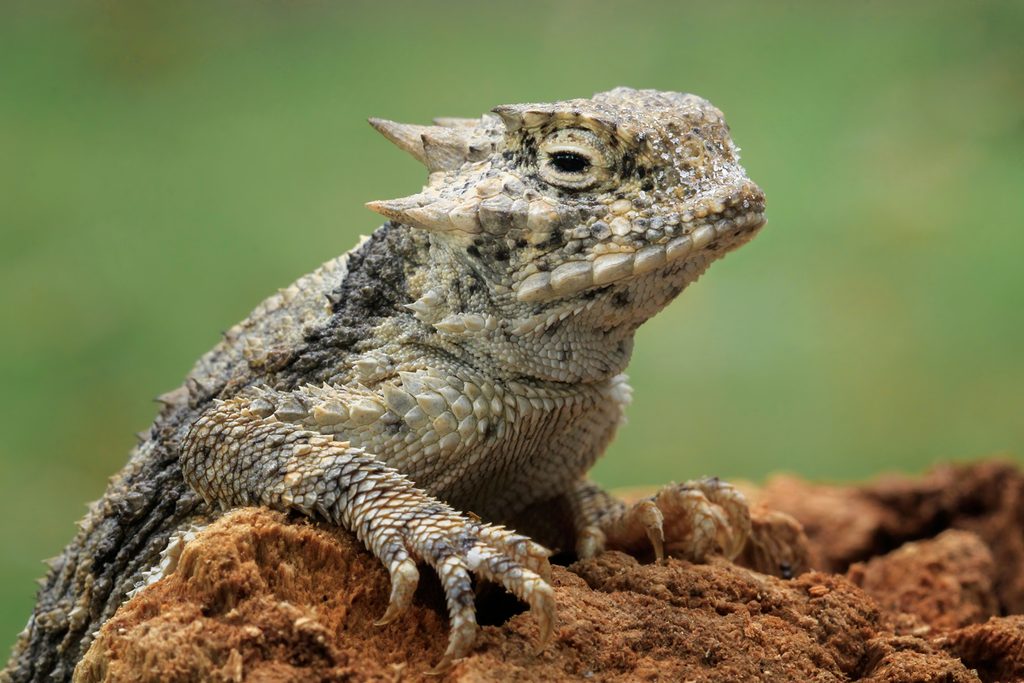
Horned Lizards Can Shoot Blood From Their Eyes
Horned lizards are small, spiky reptiles, generally only 3 to 5 inches long, but several species have a defense that sounds like something from a horror movie. When threatened by a predator, it can increase the blood pressure in vessels behind its eyes and force blood through ducts at the corners of its eyes. The streams can shoot as far as 3 feet, startling or confusing a predator long enough for the lizard to escape.
In some species, such as the short-horned lizard, the blood contains a chemical that’s noxious to canid predators such as coyotes, dogs, and wolves. Horned lizards have other impressive defenses, too. They can flatten themselves against the ground, inflate their bodies to nearly twice their normal size, and use the horns and spiny scales on their heads and bodies to make themselves difficult to swallow.
Credit: Paul Starosta/Getty Images
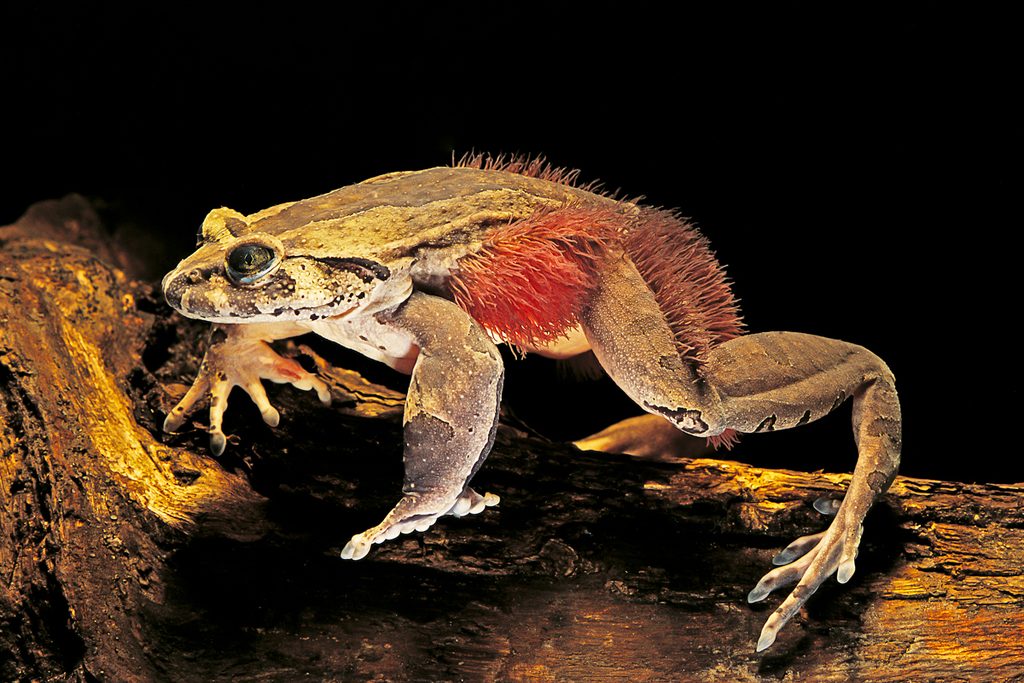
Hairy Frogs Can Break Their Own Legs
The hairy frog is a 3-to-5-inch frog from Central Africa, but its diminutive size doesn’t make its defense any less disturbing. When threatened, it can turn the bones in its hind feet into temporary weapons by contracting a muscle in its foot, breaking the connection between the tip of a toe bone and a small bony nodule. The sharp bone then slices through the skin of the toe pad, emerging as a pointed claw.
The result is as gruesome as it sounds, as the frog essentially punctures its own feet to arm itself. The exposed bone can inflict deep, bleeding wounds on a predator — or an unlucky person who handles the frog.
Researchers aren’t certain how the claws retract or how much discomfort the process causes, although the damaged tissue appears to heal afterward. The hairy frog is sometimes called the “horror frog,” a fitting nickname for an animal that carries its own bone claws beneath its skin.
Credit: Tatiana/stock.adobe.com
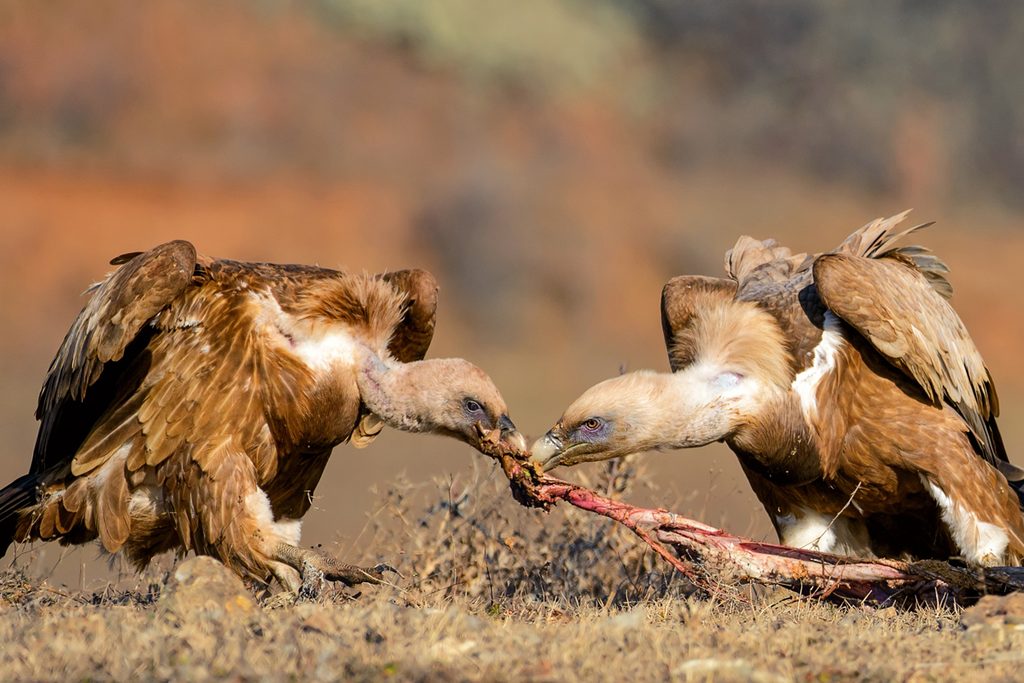
Vultures Purposely Pee on Their Legs
Vultures have long appeared in grisly imagery, often circling above scenes of death or waiting for something (or someone) to die. Their association with carrion has certainly given them a creepy reputation, but their real-life habits can be even more disgusting. New World vultures, including turkey vultures, regularly urinate and defecate on their own legs and feet.
This behavior, called urohidrosis, actually helps the birds stay cool. As the liquid evaporates from their bare legs, it lowers their body temperature, which is particularly useful when they’re soaring and feeding in hot environments. The waste may also have antimicrobial properties that help protect their feet from bacteria picked up around carcasses, although the cooling benefit is the better-established explanation.
Advertisement
Your Daily Guide to the Animal Kingdom
Get to know the animals that share our planet with this daily newsletter.
Success! Welcome to Animal Facts.
Check your inbox for your daily email.
Sorry, your email address is not valid. Please try again.