Michael Nordine is a Senior Staff Writer at Britannica, where he writes the newsletter Movie Brief. He grew up with eight cats and would like to see a Komodo dragon in the wild one day.
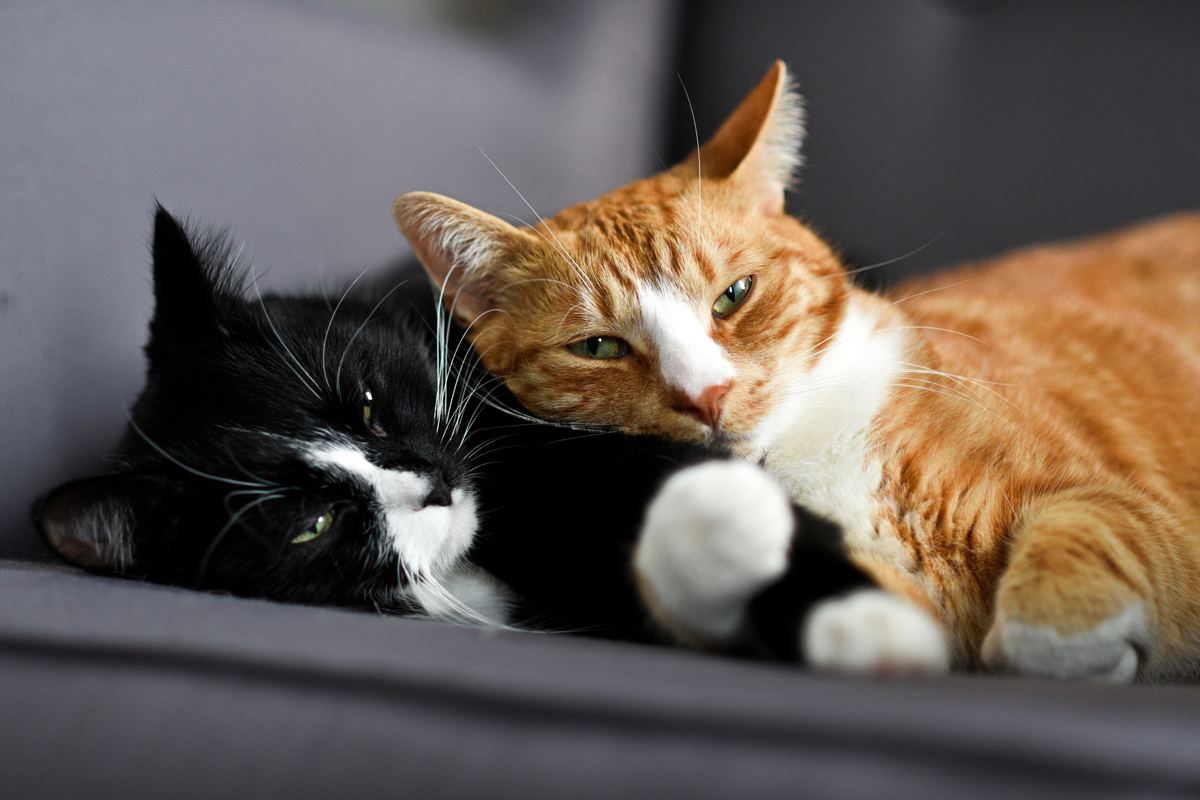
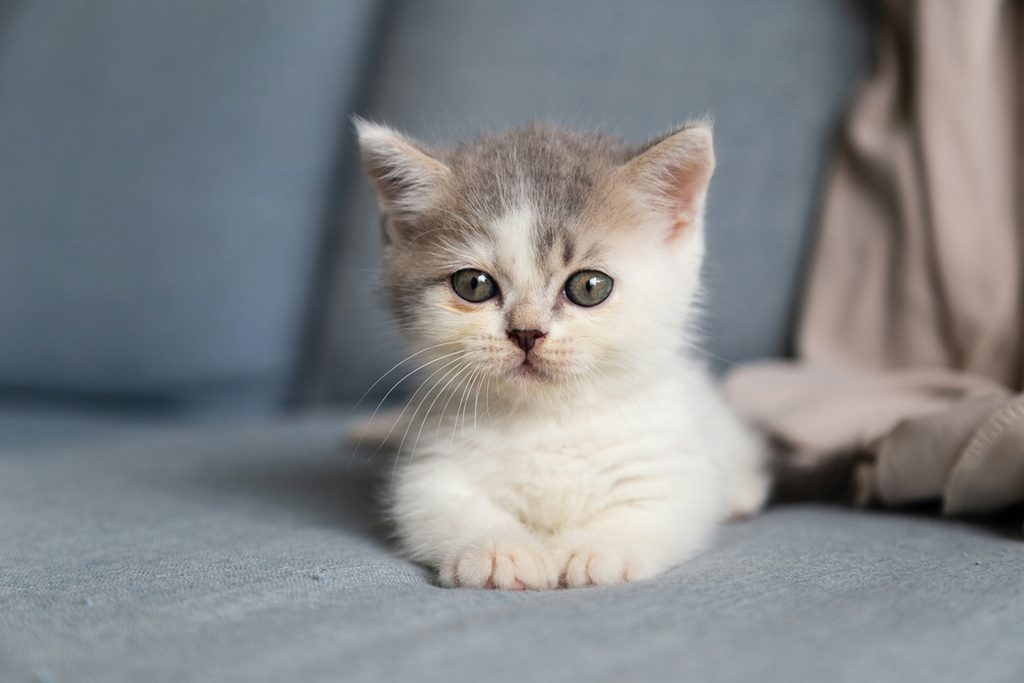
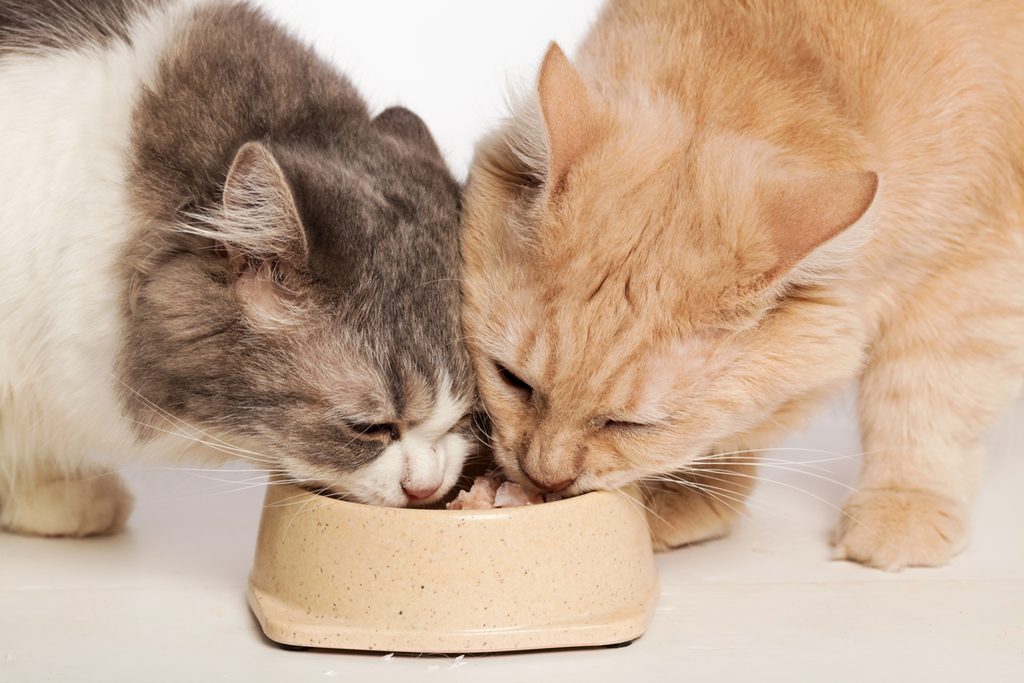
Though cartoon depictions of cats happily drinking it from a saucer suggest otherwise, milk isn’t actually good for cats. In fact, most cats are lactose intolerant, a condition that develops after kittens stop nursing, sometime between 6 and 12 weeks of age. Although kittens produce lactase, an enzyme that breaks down lactose, their bodies stop producing it once they’ve been weaned — which helps explain both why they’re still drawn to milk and why it’s no longer good for them.
Most cats can drink a small amount of milk without experiencing gastrointestinal distress, but it provides no nutritional benefits to adult felines. And while there are some lactose-free alternatives made for cats, they’re intended as occasional treats (rather than a staple of their diets. Water, though perhaps less exciting, is all your kitty needs to stay hydrated.
Bennett Kleinman is a New York City-based staff writer for Inbox Studio. He is also a freelance comedy writer, devoted New York Yankees and New Jersey Devils fan, and thinks plain seltzer is the best drink ever invented.
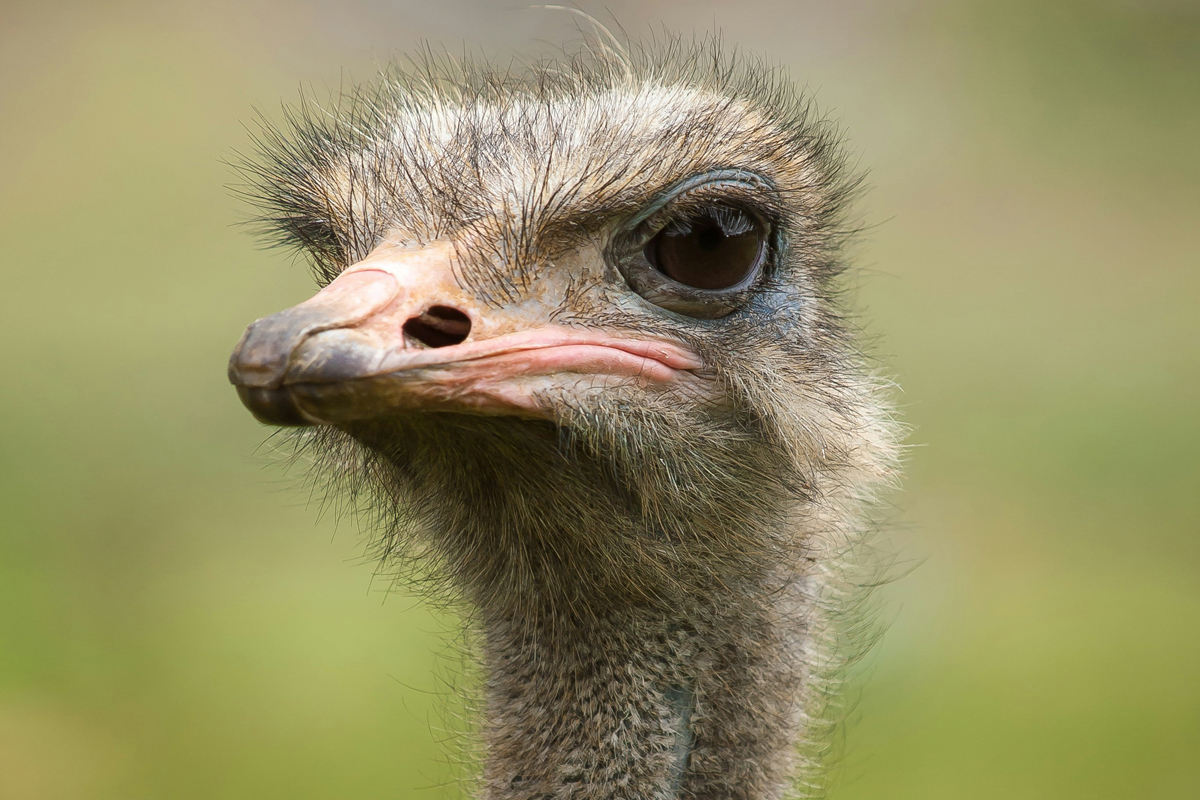
There may as well be an entire section dedicated to ostriches in the book of Guinness World Records. They’re the world’s tallest and heaviest bird, and they have the largest eyes of any land animal. In fact, a single ostrich eye is so big that it’s larger than their whole brain.
The average ostrich eye measures roughly 2 inches across and is about the size of a billiard ball, with both eyes comprising around 5% of an ostrich’s total body weight. But the bird’s brain is a bit tinier; while it measures around 2.33 inches long, it’s only 1.66 inches wide and makes up a mere 0.015% of the bird’s overall weight. And an ostrich’s giant eyeballs aren’t just for show, as they provide the bird with excellent vision that allows it to see up to 2.2 miles away in daylight.
Krissy Howard is a writer with a background in comedy, and a love for researching and writing about animal behavior. You can read some of her work at Cuteness, Byrdie, and The Hard Times. When she's not writing, she's growing food in the community garden, feeding stray cats, and learning Greek.
When it comes to cats, what you see is rarely what you get. Housecats share more than 95% of their DNA with tigers, and that wild side sometimes makes them do things that we cannot comprehend.
Even their everyday activities, such as sleeping, scratching, and sniffing, can conceal secret behaviors that make felines an endless source of fascination. Let’s dig into a few of them.
Credit: Marcos Fine Images/stock.adobe.com
Taking Measurements
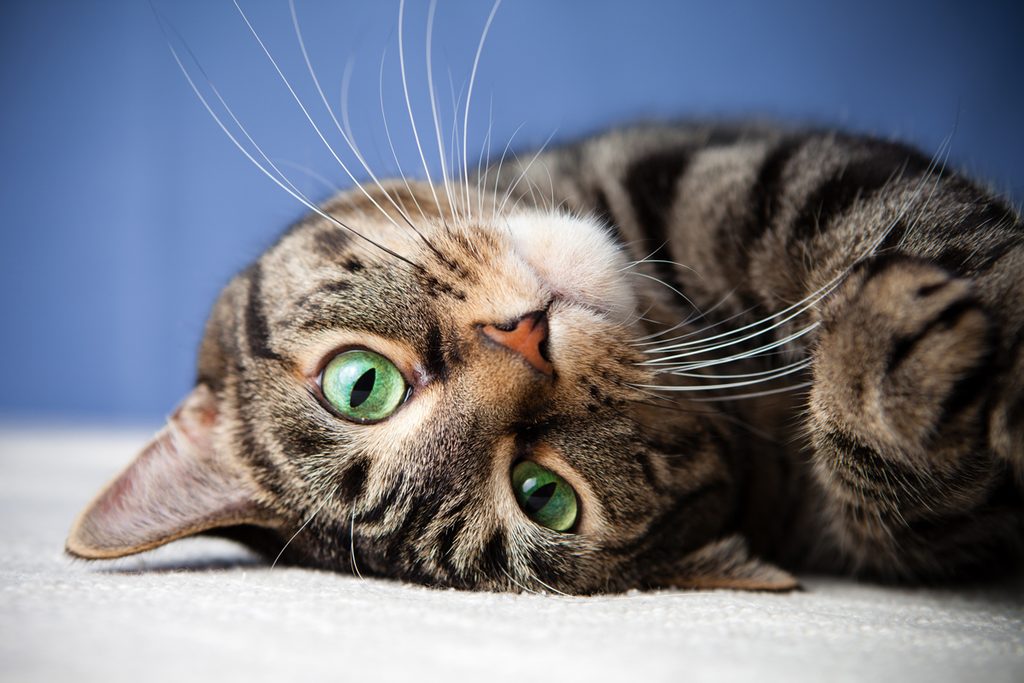
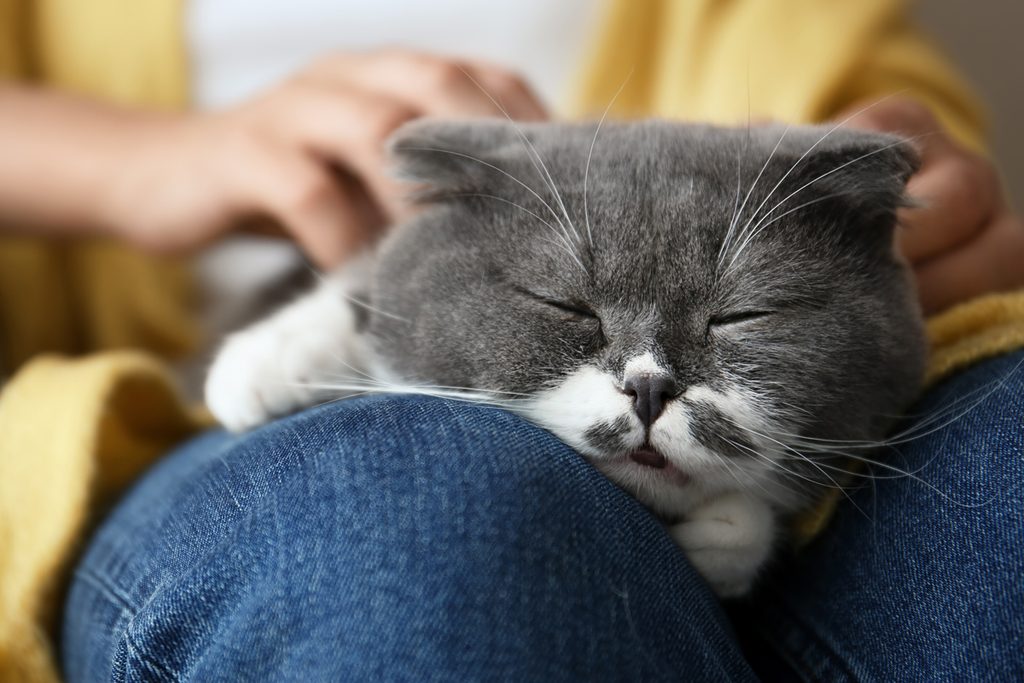
Your cat has a built-in tape measure located right on their face. Packed with nerve endings and rooted deep within the skin, whiskers are one of a cat’s handiest tools.
These tiny organs, also known as vibrissae, are fitted with proprioceptors right on the tips. They pick up vibrations and send them straight down the whisker shaft and into the brain, which decodes the signal and helps guide the cat through its environment. For example, your cat’s whiskers are as long as their body is wide, so if the tips brush against the edge of a tunnel, it could signal the passage is too tight of a squeeze to navigate.
Credit: New Africa/stock.adobe.com
Stealing Your Body Heat
Okay, perhaps “sharing” is a better word for it. Cats who sleep on your chest are usually drawn there because it’s a warm, solid surface that feels good to lie on. Not only that, but it’s believed that the rhythmic thumping of their person’s heartbeat may bring them back to their kitten days, lending a sense of comfort that results in a greater bond between both of you.
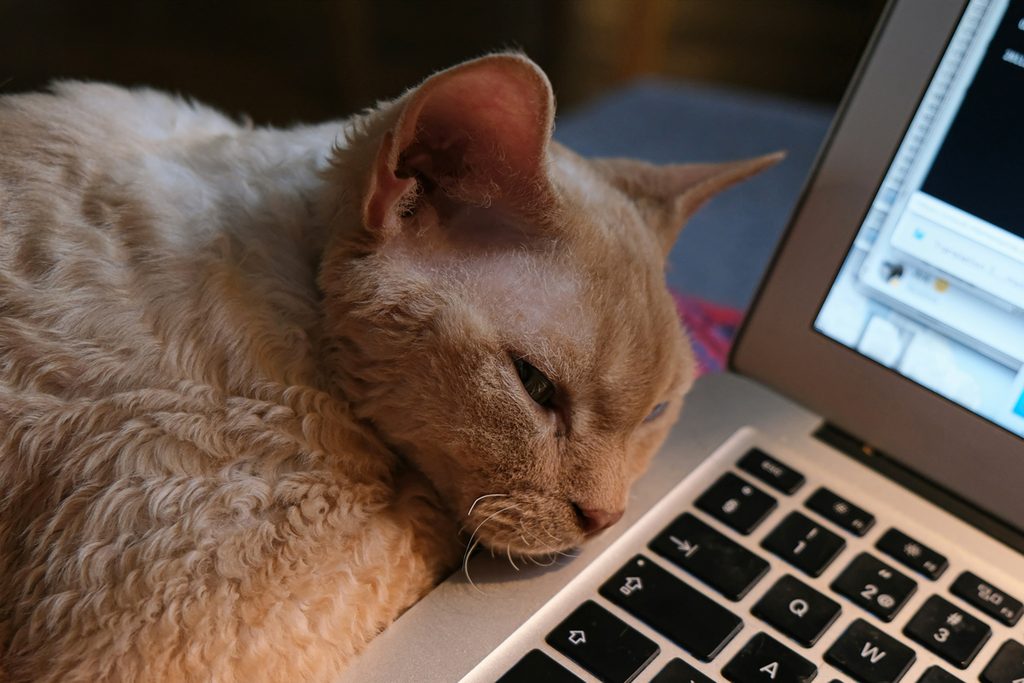
Have you ever tried working on your laptop, only for your beloved kitten to plop right down on the keyboard? It’s probably obvious that your cat isn’t interested in your career, but this is also their way of reminding you that they are your one true boss.
Scent rules everything in a cat’s world, and marking their scent is how cats establish their territories. When your cat climbs onto your workstation or pats at your phone, they’re simply transferring their smell onto something they see you touching all the time in an attempt to rebrand it as their own.
Credit: Hans Ott/Unsplash.com
Tiptoeing Around
If you’ve ever wondered how cats can lurk around the house without making a sound, it’s because they’re walking on their toes — literally. Known as digitigrade stance, cats use only their phalanges to move across the room.
In fact, their cute little paws are not actually their feet, but rather just their toes. The rest of their feet are positioned higher up on their legs, and you’ve probably seen them in action when your cat leans back to jump upward or spring forward.
Credit: furryfritz/stock.adobe.com
Giving Their Paws a Pedicure
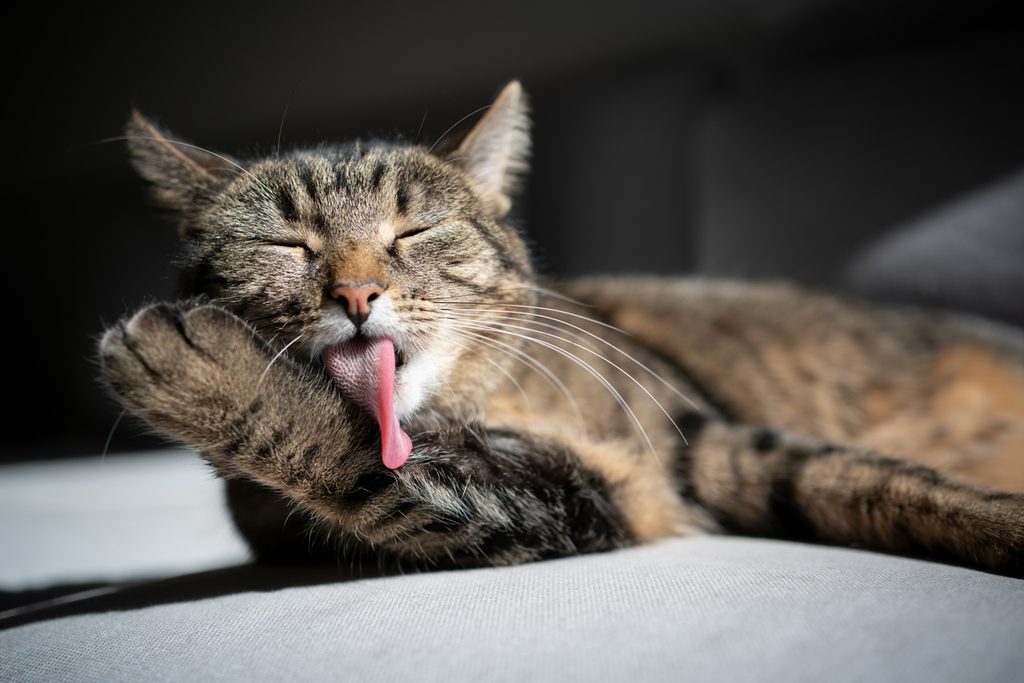
When you rely on your toes to get around, you need to keep them in tip-top shape. Many cats groom for up to 50% of the day, which includes paying close attention to their nails.
When you see your cat shredding your couch or curtains, they aren’t being merely destructive; they’re also keeping their claws in shape to help them effectively climb, dig, defend, and hunt, if need be. If you’d prefer to keep your fabrics in one piece, a scratching post may be a worthy investment.
Credit: Tran Mau Tri Tam/Unsplash.com
Picking Favorites
It may be impossible to choose your favorite cat, but when it comes to picking people, cats don’t have the same issue. Cats are the most relaxed in calm, predictable environments. Similarly, cats are drawn to calm, predictable people.
That’s why they may run from that one loud friend who immediately goes to grab them when visiting but crawl all over the person who “doesn’t like cats.” The latter energy exudes that cool, aloof cover that cats are known for — and apparently, that they appreciate in others as well. That said, they do have a special appreciation for those who care for them, so in addition to giving your cat space, feeding them, acknowledging them, and playing with them are all keys to earning that No. 1 spot.
Credit: Kencana Studio/stock.adobe.com
Keeping an Eye on the Clock
Cats may typically prefer playing it cool, but when it comes to feeding time, they’re anything but low-key. Our feline friends are creatures of habit, and they track our routines so they know when to expect their next meal.
This explains why most cats who get fed before you go to work during the week rarely allow you to sleep in on the weekends. Felines can also use their noses to get a rough sense of time passing — the longer you’ve been away from home, the more faint your smell becomes.
Advertisement
These Animals Run on Surprisingly Little Brainpower
Across Species 29/10/26Oct. 29, 2026
Updated 29/10/26Oct. 29, 2026
Credit: Francisco Vera/Wirestock Creators/stock.adobe.com
Tony Dunnell
Author
Tony is an English writer of nonfiction and fiction living on the edge of the Amazon jungle.
Intelligence is a tricky thing to measure consistently across widely differing species, so many animals that are considered unintelligent may not deserve such an unflattering appraisal. After all, what may appear as foolishness to humans, such as a dog turning in circles before lying down, may be a highly specialized evolutionary adaptation that works well for that animal’s particular purposes.
But then again, not every animal has evolved a brain running at full power (and some don’t have one at all). With all that in mind, here are seven animals who manage to survive perfectly well running on lower brainpower.
Credit: Costy/stock.adobe.com
Jellyfish
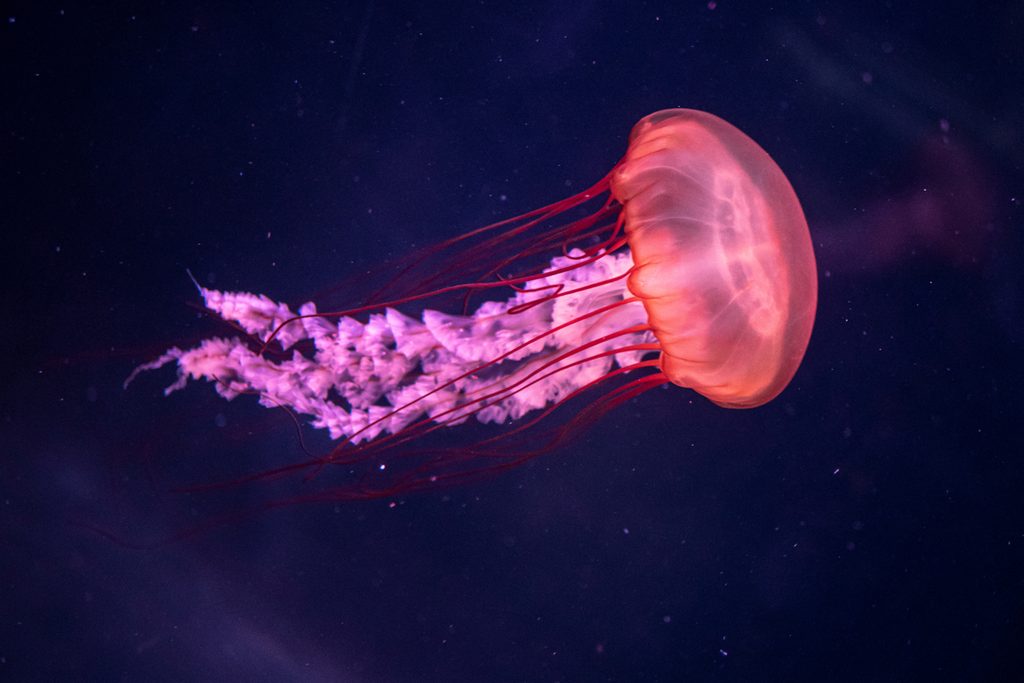
Jellyfish have survived more than 500 million years despite not having brains — or blood, or bones. Instead of a singular brain, they rely on a diffuse nerve net spread across the body, triggering swimming and feeding without anything resembling centralized thought. Despite being brainless, jellyfish are capable of recognizing obstacles and learning from past experiences ‚ and they managed to outlast the dinosaurs, which is pretty impressive.
Credit: MrPreecha/stock.adobe.com
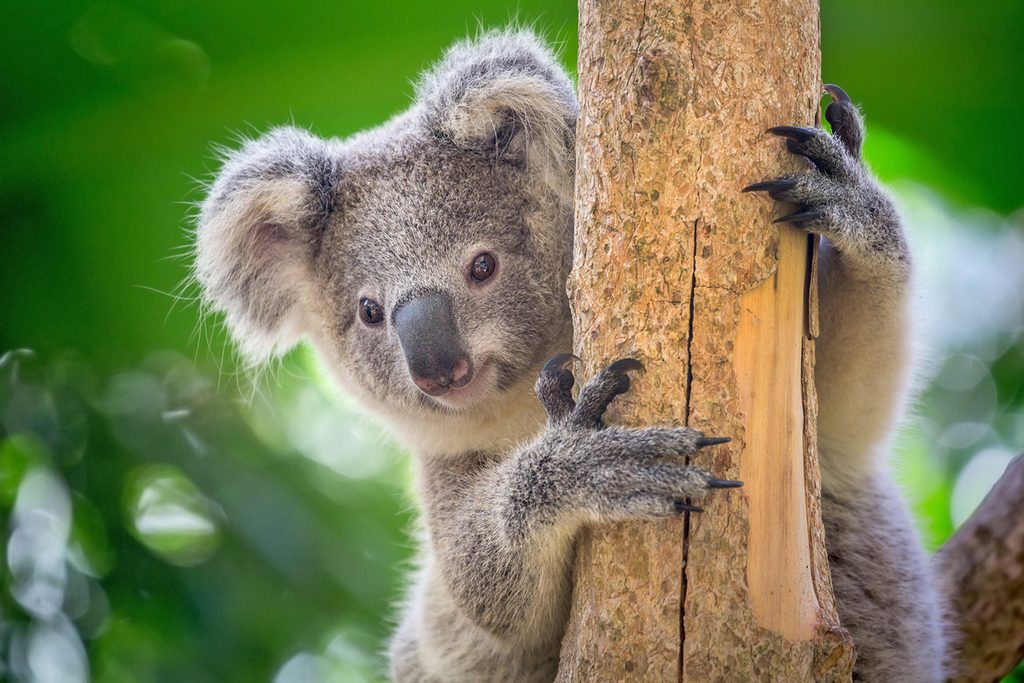
Koalas
A koala’s brain is unusually smooth, lacking most of the deep folds that gives other mammals’ brains more surface area for complex processing. They also have one of the lowest brain-to-body mass ratios of any mammal. These facts alone doesn’t make them inherently stupid — but observe one for a while and you may have some doubts about the intelligence of these furry marsupials.
For example, a koala will happily spend all day (or at least the two to six hours they actually spend awake each day) eating eucalyptus leaves off branches. But place those exact same leaves on a plate or table and the koala often won’t recognize or accept them as food at all. The little fuel they receive from their diet is usually directed to more important things than complex thought, after all.
Credit: EcoView/stock.adobe.com
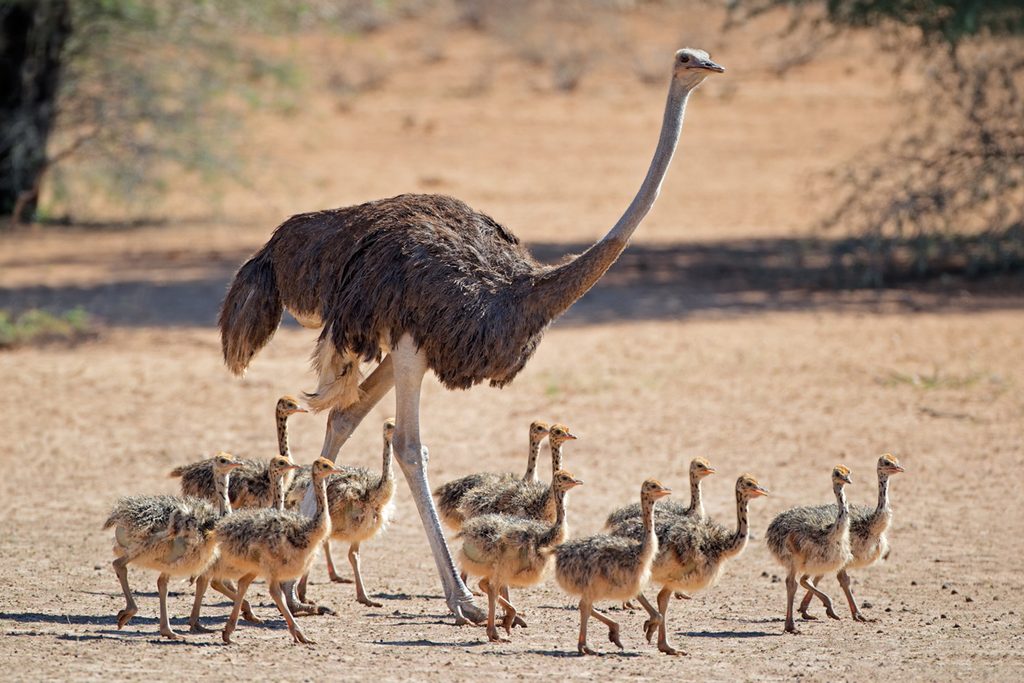
Ostriches
The ostrich is the largest living bird, but its brain is significantly smaller than one of its eyes — about the size of a walnut, in fact. The evolution of the ostrich went all in on vision, handy for spotting predators across open grassland, at the expense of actual processing power.
Their reputation for being a bit dim isn’t helped by their propensity for eating anything shiny, whether it’s a bottle cap, coin, or a bit of glass. Contrary to the popular myth, however, ostriches do not bury their heads in the sand when they’re scared, which would otherwise have been an additional IQ red flag.
Credit: GuillermoOssa/stock.adobe.com
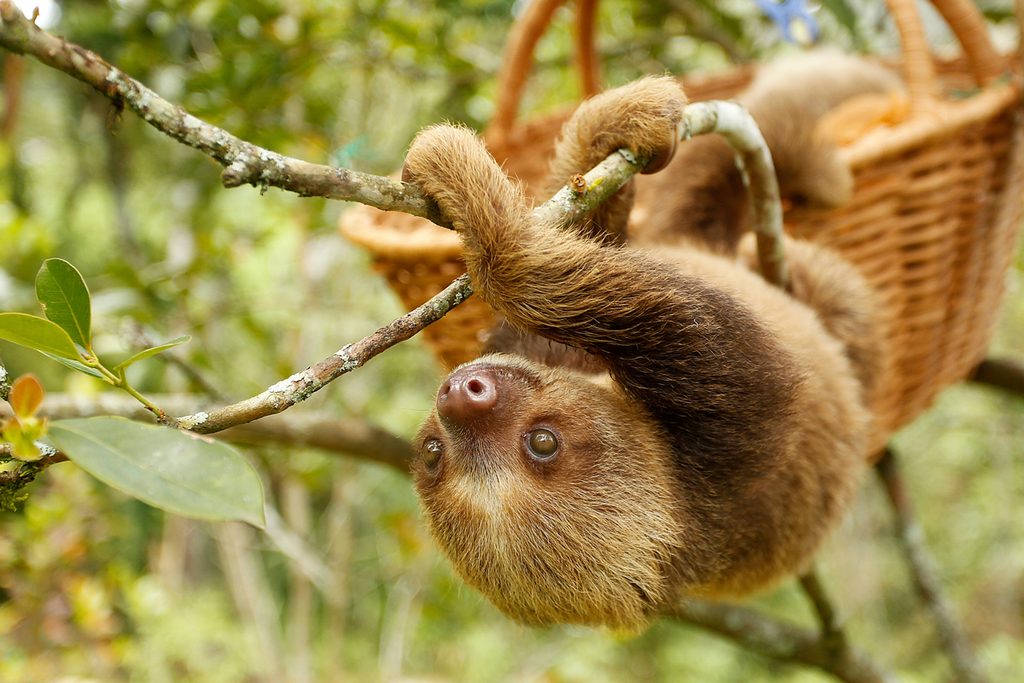
Sloths
Like koalas, three-toed sloths have one of the lowest brain-to-body ratios of any mammal. Their metabolism, which is the slowest of any non-hibernating mammal, can’t afford to fuel a demanding brain, and a leaf-only diet requires little hunting strategy or problem-solving to begin with. The result is an animal built to do as little active thinking — or anything, really — as possible.
Credit: John Anderson/stock.adobe.com
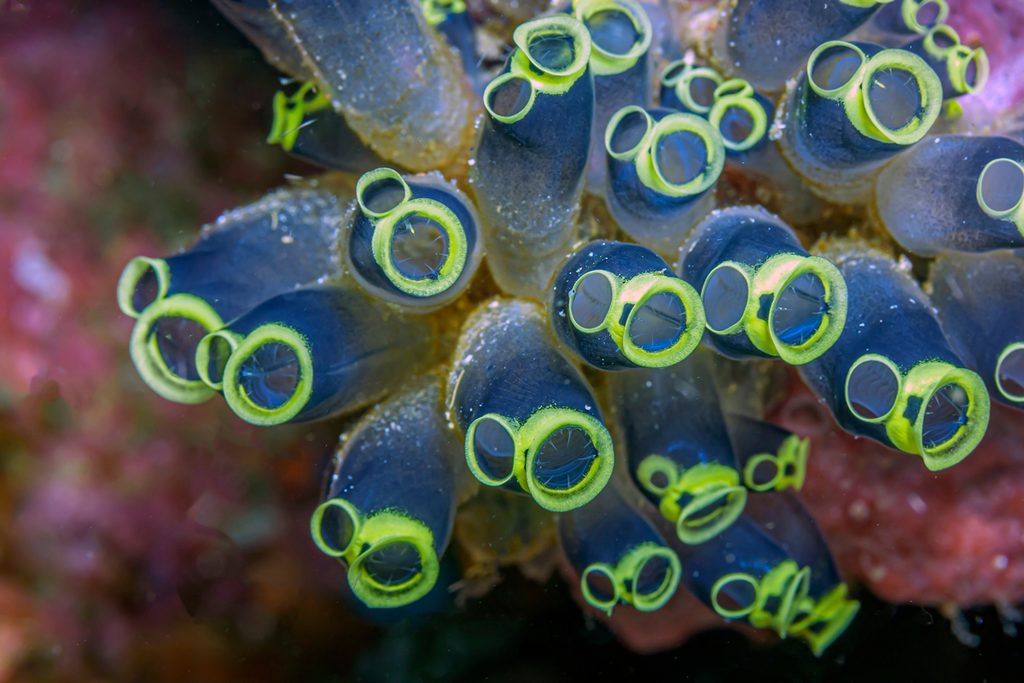
Sea Squirts
But there’s a valid reason why these tiny marine invertebrates are considered a bit slow: They eat their own brains. The sea squirt starts life as a free-swimming larva with two simple brains, which it uses to hunt for a permanent spot on the seafloor.
The moment it anchors itself for good, it starts digesting its own nervous system, brains included. Once attached, it never needs to think or move again, so being brainy is an entirely unnecessary trait.
Credit: Francisco Vera/Wirestock Creators/stock.adobe.com
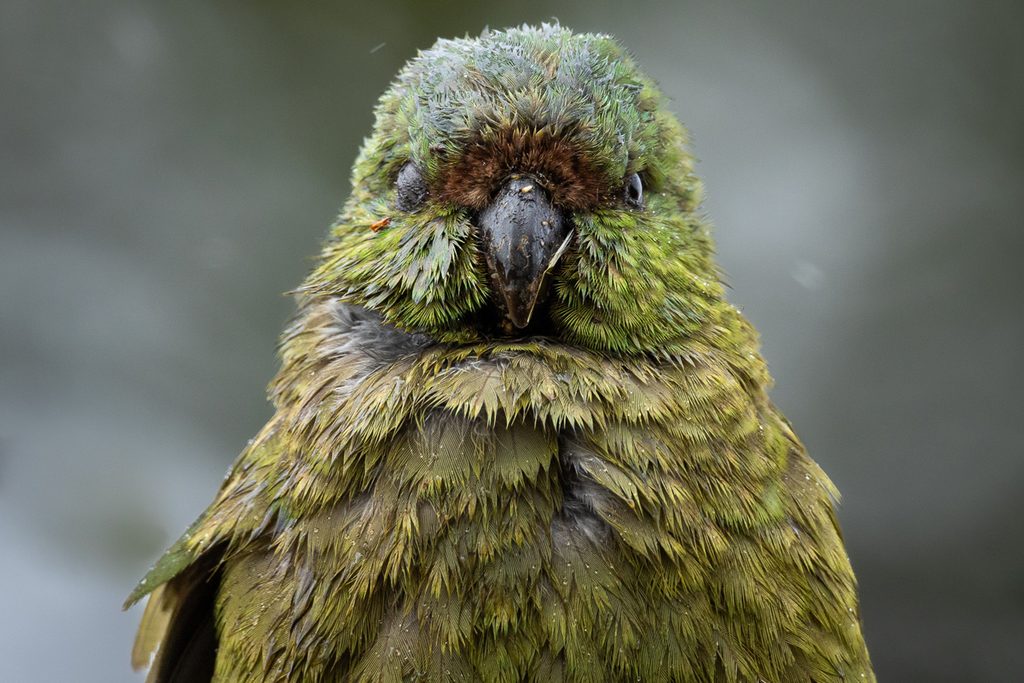
Kākāpōs
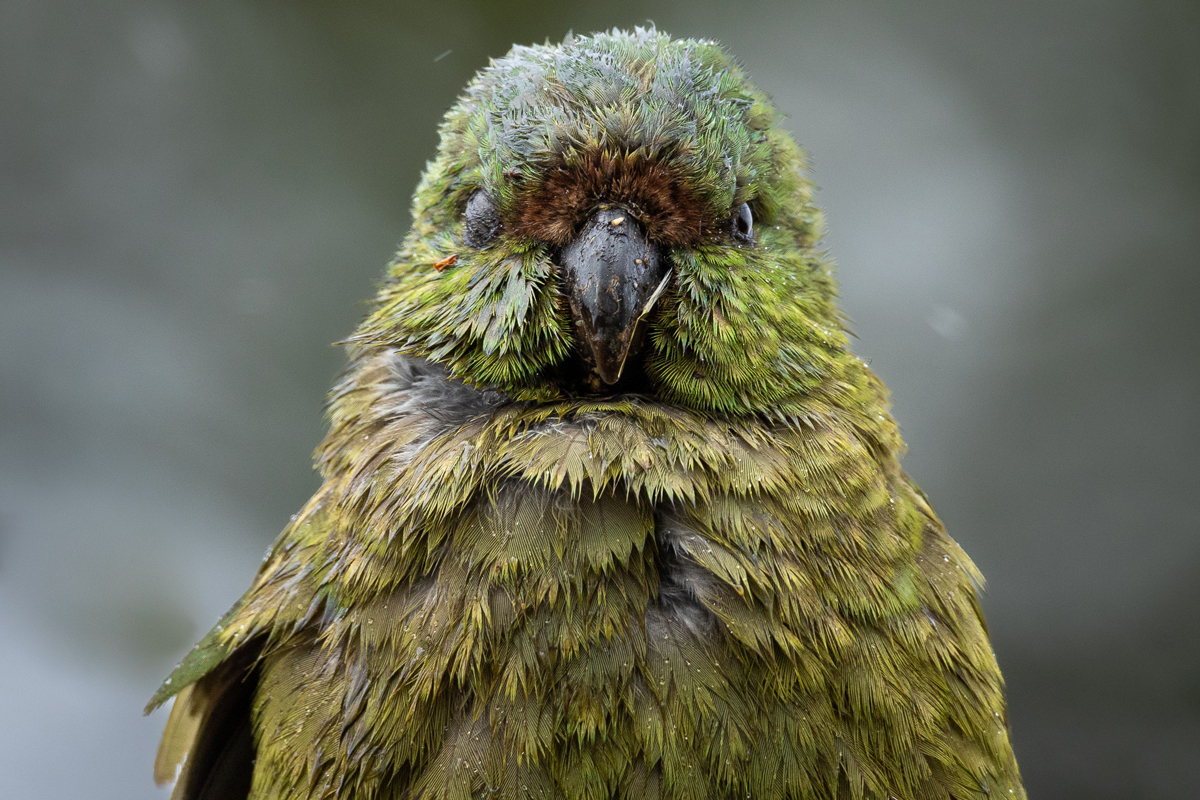
New Zealand’s kākāpō is often regarded as one of the world’s dumbest birds. It’s a bit of an unfair title, but not without reason.
These flightless parrots — the heaviest parrots in the world, in fact — evolved for millions of years with no mammalian predators. Because of that, its only defense in the face of introduced threats such as cats, stoats, and rats is to freeze in place and do absolutely nothing.
Being overly curious, docile, and quite adorable, combined with their flightlessness and terrible survival skills, makes them appear naively oblivious to danger. They’ve also been documented making highly misguided mating decisions, most famously when a male kākāpō was filmed being overly amorous with British zoologist Mark Carwardine.
Credit: Tracy/stock.adobe.com
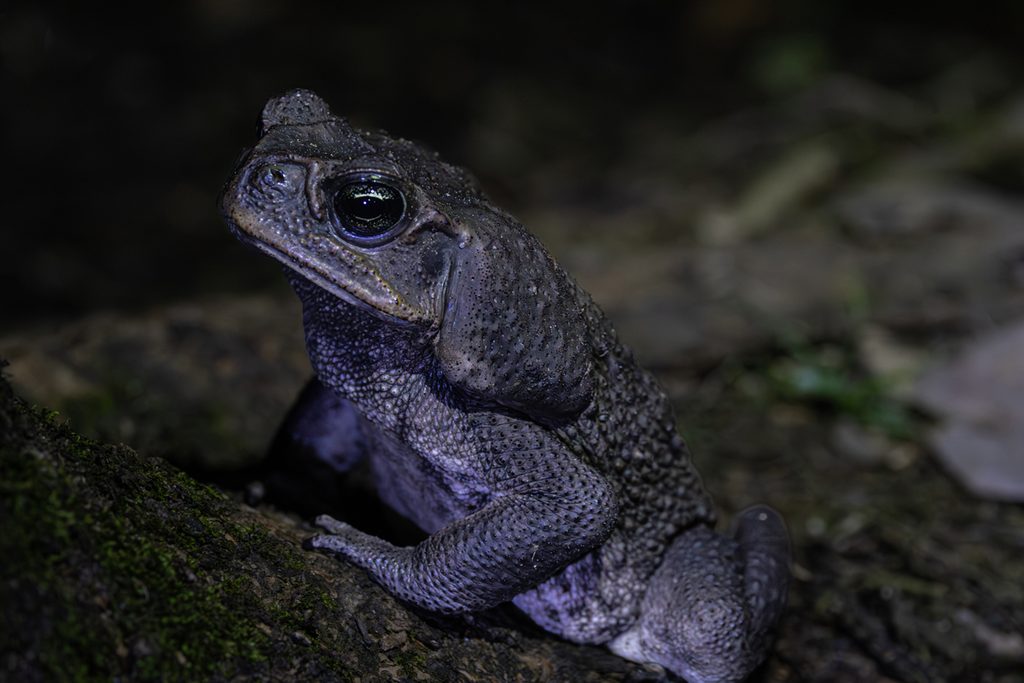
Cane Toads
Many amphibians rely heavily on instinct, but cane toads take this behavior to an extreme. They’re highly opportunistic feeders who act mainly on stimulus and response rather than any kind of judgment, and they’ll happily try to eat anything they can swallow — living or dead — whether it’s a beetle, a small bird, or pet food.
Males also take that approach into their love life. They’ll attempt to mate with almost anything —dead animals, human hands, rotting mangoes, inanimate objects, and entirely different species — often for hours without realizing they’ve made a mistake. They’ve even been photographed trying to mate, en masse, with an unfortunate python, which by any standard of behavior is quite a dumb move.
Bennett Kleinman is a New York City-based staff writer for Inbox Studio. He is also a freelance comedy writer, devoted New York Yankees and New Jersey Devils fan, and thinks plain seltzer is the best drink ever invented.
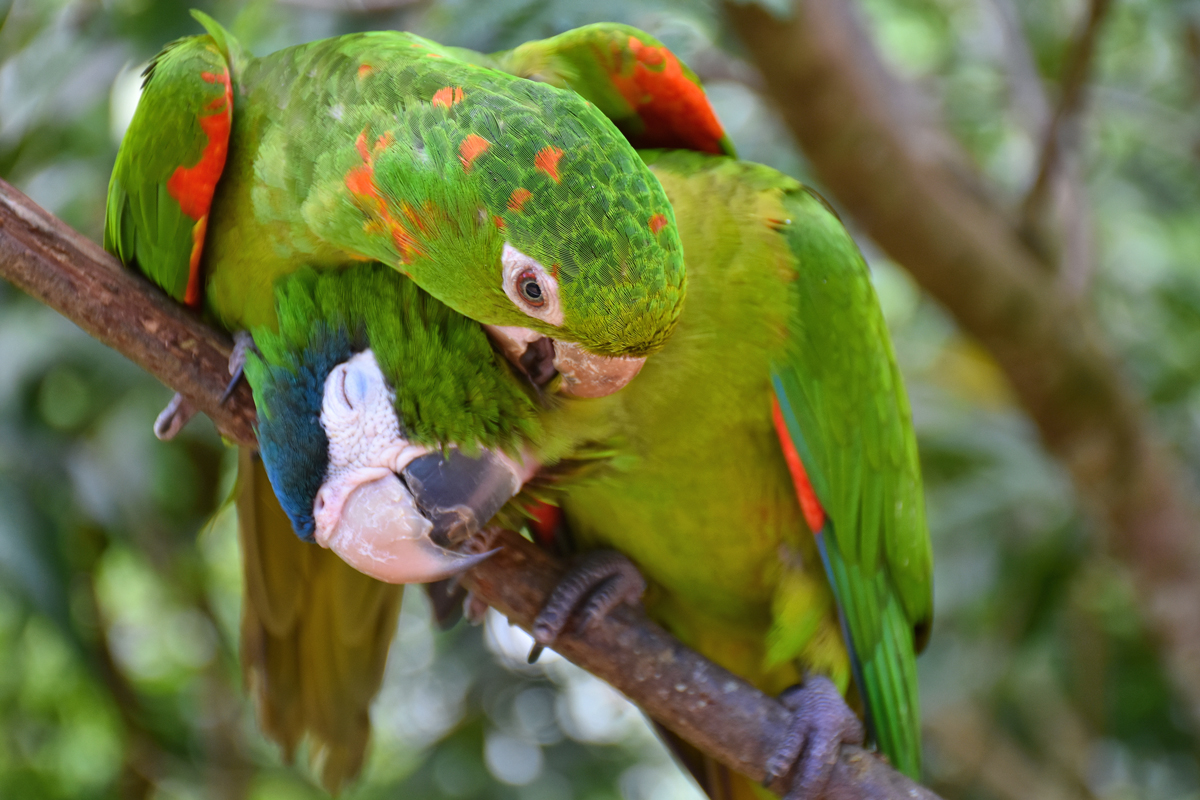
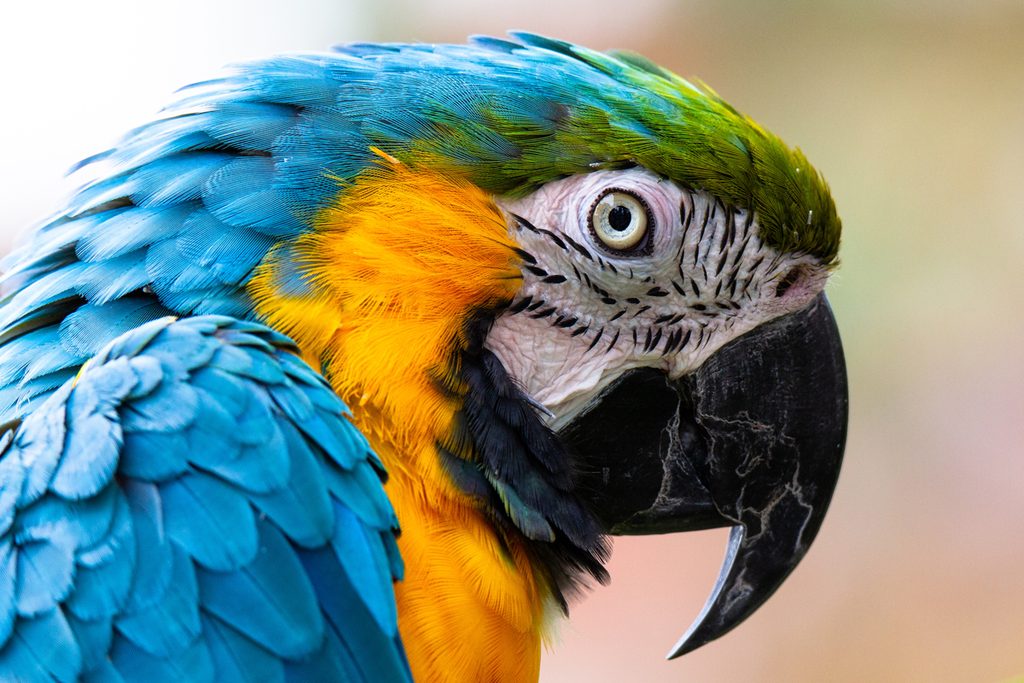
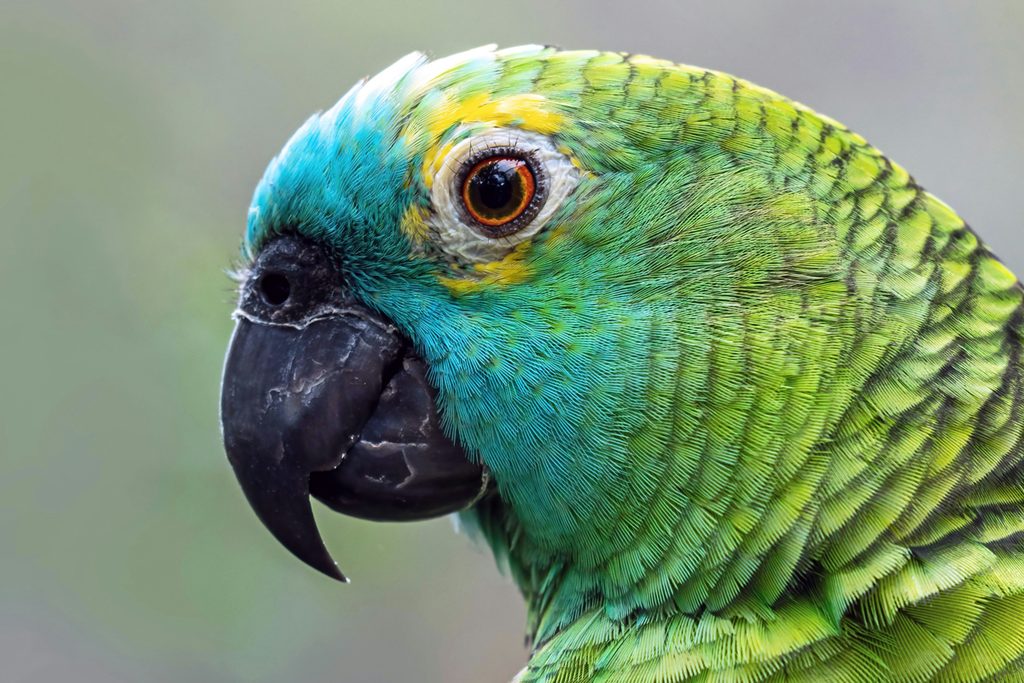
While parrots don’t refer to other parrots by names such as Polly like we humans do, it’s believed that they do indeed name their children. Those “names” aren’t audible words we would understand, but rather specialized chirps used to call out to specific offspring.
From 2007 to 2008, doctoral student Karl Berg studied groups of wild green-rumped parrots in Venezuela. Based on that analysis, it was concluded that one parrot would communicate to its own hatchlings using slightly different vocalizations than another parrot would use to speak with its own offspring. Over time, the newborns would learn which sounds they were associated with and use those specialized chirps as a way to essentially identify themselves to their fellow birds.
Kristina is a coffee-fueled writer living happily ever after with her family in the suburbs of Richmond, Virginia.
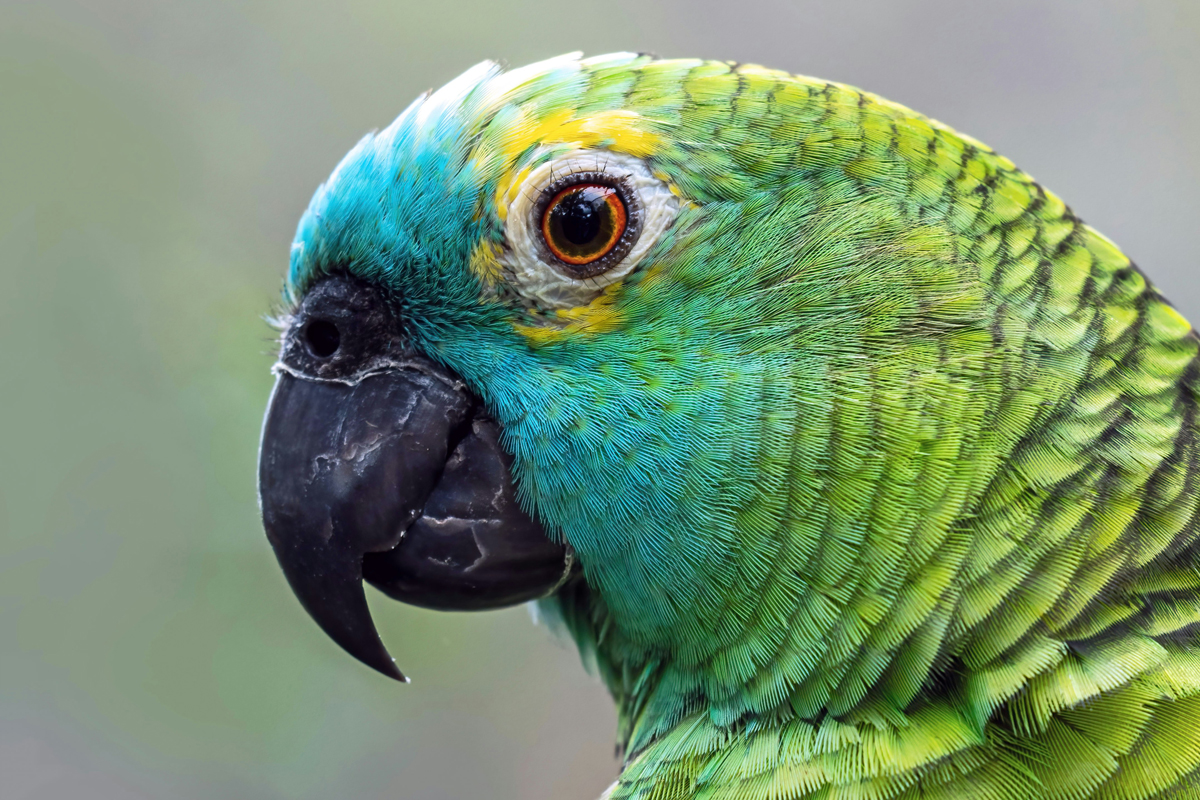
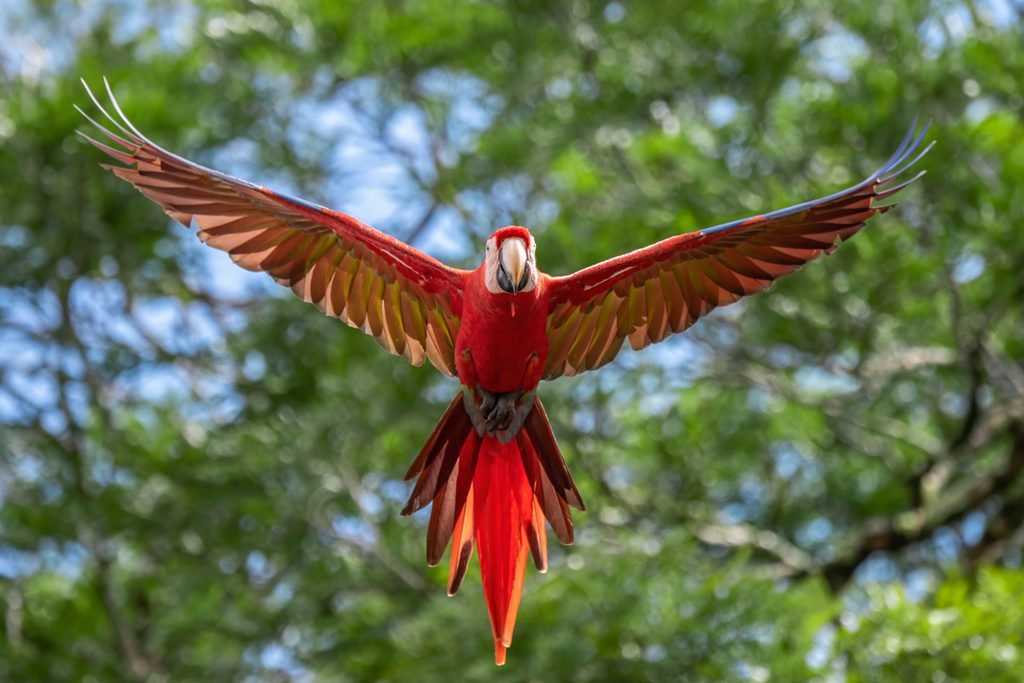
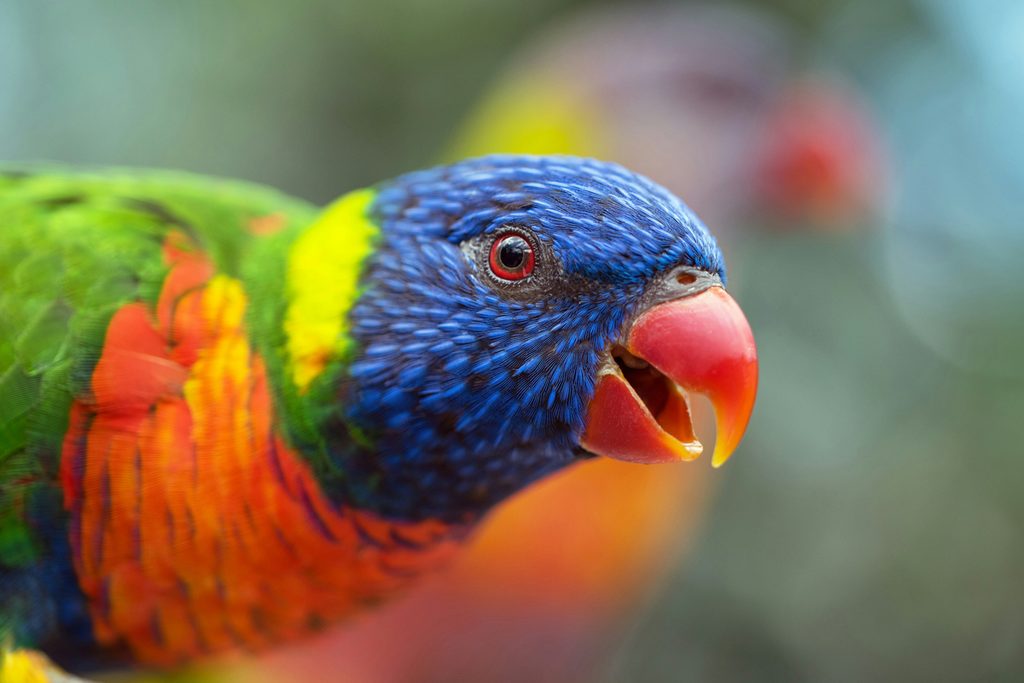
A parrot saying “hello” can sound remarkably human, especially when it delivers the word in the right context. Some birds build impressive vocabularies, imitate individual voices, and seem to know when to use a particular word or phrase. But are those birds actually talking, or are they simply copying sounds they’ve heard?
The answer is more complicated than either possibility suggests. Parrots are exceptional vocal mimics, but mimicry is only one part of their communication skill set. They also use sounds to communicate with one another, continue to learn new vocalizations throughout their lives, and, in some cases, they can learn to use human words in meaningful ways.
Credit: Martin/stock.adobe.com
Parrots Are Vocal Learners
Unlike humans, parrots don’t have vocal cords. Instead, they produce sounds with an organ called the syrinx, located where the windpipe divides into the lungs. Muscles surrounding the syrinx allow parrots to control their vocalizations with remarkable precision. Their tongues also play an important role in shaping sounds, which helps them reproduce some of the sounds they hear from humans.
But the real trick is their ability to learn new sounds: Parrots are vocal learners, meaning they can hear a sound, remember it and modify their own vocalizations to reproduce it — an ability that’s relatively rare among animals. Parrots can continue learning new vocalizations throughout their lives, rather than being limited to a set of sounds they acquire when they’re young.
Credit: David Clode/Unsplash.com
Why Do Parrots Mimic People?
In the wild, parrots don’t have any particular reason to imitate humans. They use vocalizations to communicate with other parrots, including calls that help members of a flock stay in contact.
Some parrots even develop individual contact calls that function somewhat like names. Research on wild green-rumped parrotlets found that young birds learned their signature contact calls from their parents, rather than producing them entirely through genetic programming.
That social learning helps explain why a pet parrot may become such an enthusiastic mimic. To a parrot, the humans in its household are its social group. Repeating the sounds those companions make can be a way of participating in the group’s vocal activity. In other words, your parrot isn’t necessarily sitting around trying to learn English; it’s doing something parrots are naturally inclined to do to learn the sounds of the social world around them.
Credit: Harry Collins/stock.adobe.com
Do They Know What They’re Saying?
A parrot repeating “hello” when someone walks into the room may have learned that the word is associated with greetings and attention. But a parrot that repeats “hello” randomly throughout the day may simply have learned that humans react when it makes that sound. The same vocalization can therefore be imitation in one context and a meaningful signal in another.
Some parrots have demonstrated a much more sophisticated ability to use learned human words, however. One of the best-known examples is Alex, an African grey parrot studied by researcher Irene Pepperberg for more than 30 years.
Alex learned labels for colors, shapes, and objects and could use some of those labels to answer questions and request things. His abilities became the subject of decades of research into animal cognition and communication.
Researchers have been careful to distinguish between parrots learning words and humans possessing language with its complex grammar and abstract structure. But birds such as Alex provide evidence that at least some parrots can associate vocal labels with objects and concepts and use those labels in flexible ways.
Credit: David Clode/Unsplash.com
Parrots Keep Adding to Their Vocal Repertoire
A parrot’s imitation of human speech gets most of the attention, but parrots don’t need to copy us to put their vocal abilities to work. In the wild, they used learned calls to communicate with other parrots and coordinate social interactions. Studies of budgerigars have found that birds living together develop similar contact calls while retaining individually distinctive vocal signatures that distinguish one bird from another.
That flexibility helps explain why parrots are such accomplished mimics. Unlike many birds that learn their vocalizations during a limited developmental period, parrots are open-ended vocal learners that can continue learning and modifying sounds throughout their lives.
Their brains contain specialized neural mechanisms involved in vocal learning and production, allowing their repertoires to change along with their social surroundings. To mimic human words, parrots simply tap into the vocal-learning ability they already use to communicate with each other.
Michael Nordine is a Senior Staff Writer at Britannica, where he writes the newsletter Movie Brief. He grew up with eight cats and would like to see a Komodo dragon in the wild one day.
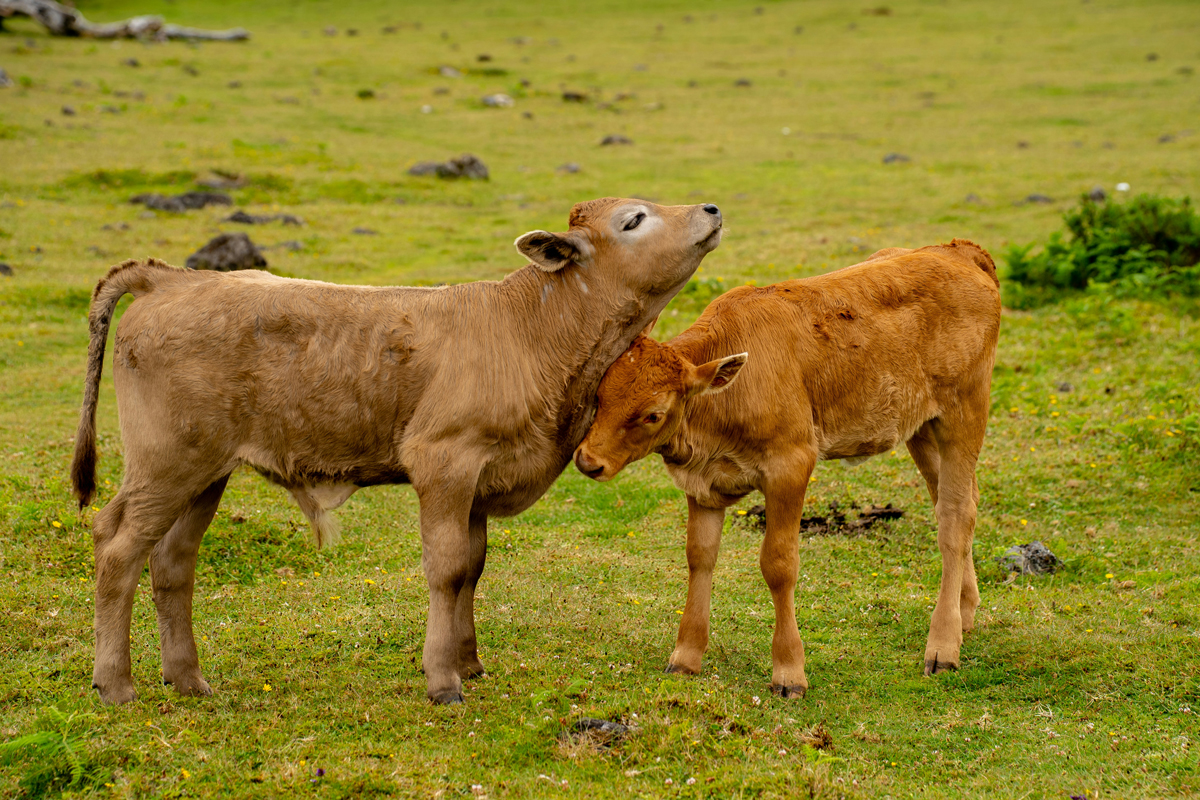
Cows aren’t usually counted among the most intelligent animals, but they possess more emotional depth than you may expect. Part of the reason these calm, soulful creatures are so docile, it turns out, is they have best friends — and they can maintain those friendships throughout their entire lives.
Studies have shown cows experience lower stress levels when they’re with their besties, often grazing with and grooming each other to strengthen their bonds. The inverse is also true: Cows get stressed out when separated from their BFFs, which they express by pacing, crying out, and eating less than they normally would. We just have one question: How has the story of two cow besties not been made into a Pixar movie yet?
Advertisement
5 Unlikely Real-Life Animal Friendships
Across Species 28/10/26Oct. 28, 2026
Updated 28/10/26Oct. 28, 2026
Credit: GaryRobertsphotography/Alamy
Nicole Villeneuve
Author
Nicole is a writer, editor, and researcher with over 15 years experience covering arts and culture, lifestyle, and media. Her work has also appeared in PureWow, Brit + Co, Exclaim, AUX TV, and CBC. She lives in Ontario, Canada.
Out in the wild, animals don’t typically make friends across species lines. They may share a habitat and learn to tolerate one another, but forming a close bond is rare. But under the right circumstances, animals can become surprisingly close companions.
Scientists are still learning how animals experience emotions and form social attachments. Although their inner lives remain difficult to fully understand, these unusual friendships offer a glimpse into the connections animals can form. Here are five of the most heartwarming, real-life examples.
Credit: GaryRobertsphotography/Alamy
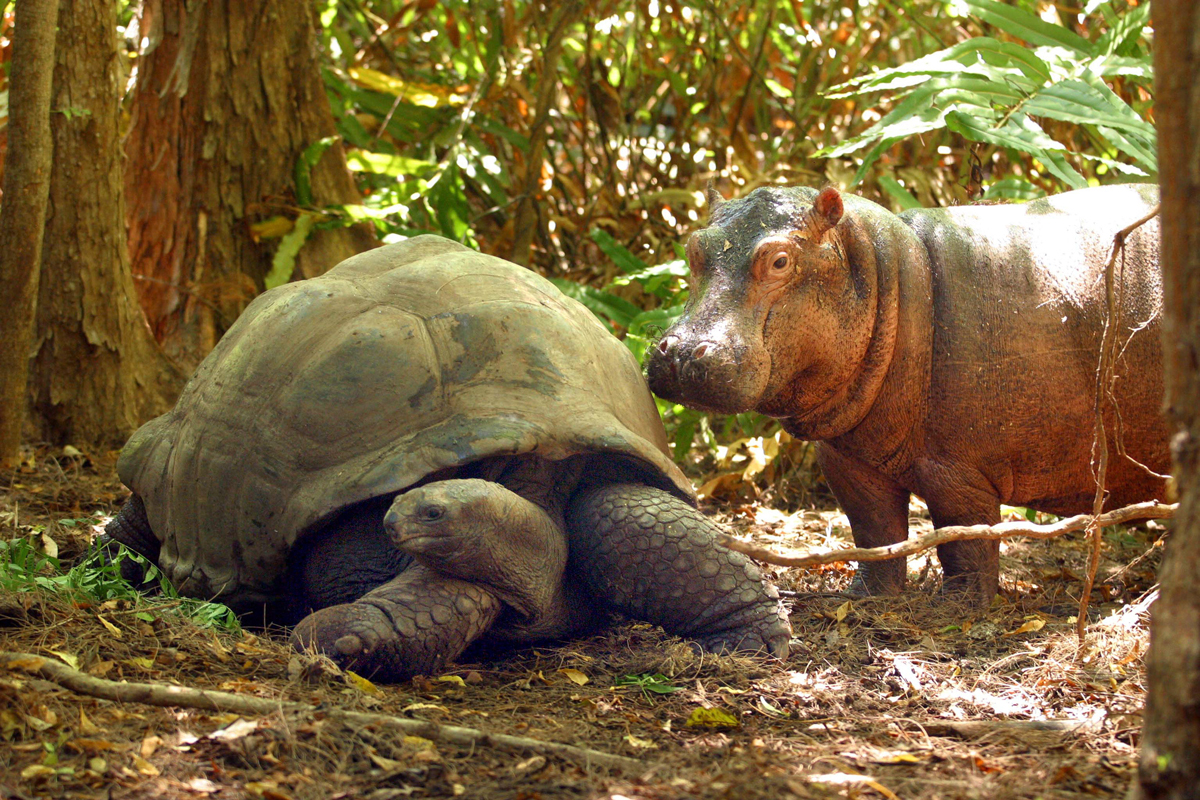
Owen the Hippo and Mzee the Tortoise
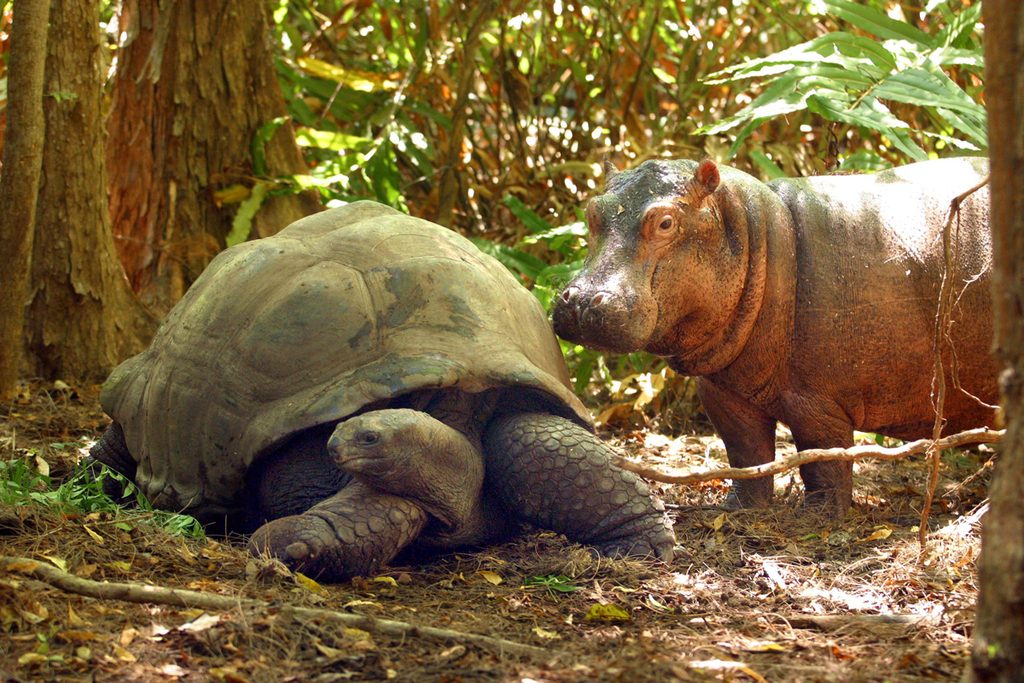
In late 2004, a young hippopotamus became separated from his family in the waters of Kenya’s Sabaki River. Rescuers brought the hippo, Owen, to Mombasa’s Haller Park wildlife sanctuary, where he happened to meet an unlikely companion: Mzee, an Aldabra giant tortoise estimated to be around 130 years old at the time.
Witnesses at the sanctuary describe Owen immediately running to Mzee and crouching behind the tortoise — not unlike how a baby hippo may hide behind its mother. The two began eating, swimming, and sleeping together, and Mzee’s guidance gradually helped Owen adjust to his new surroundings.
Owen’s time with Mzee came to an end when the hippo was introduced to Cleo, a female hippo, about three years later, but not before inspiring a children’s book about the pair’s friendship.
Credit: ZUMA Press, Inc./Alamy
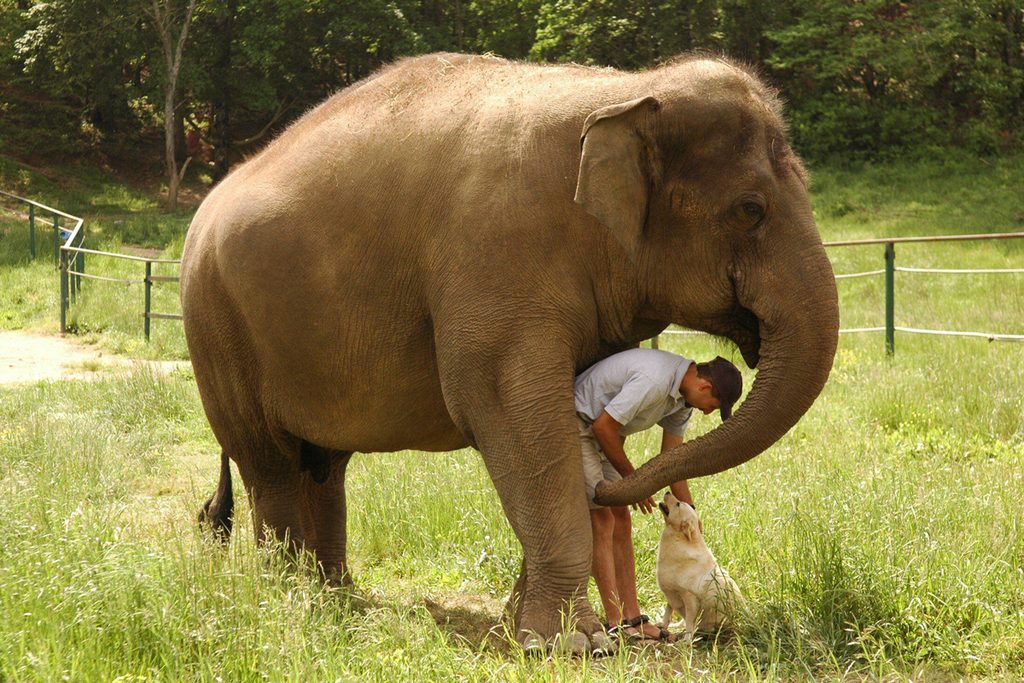
Tarra the Elephant and Bella the Dog
Tarra, an Asian elephant, and Bella, a stray mixed-breed dog, became unlikely companions at Tennessee’s Elephant Sanctuary after the latter wandered onto the grounds and made herself at home. For about eight years, the pair spent much of their time exploring together — quite a sight given their dramatic size difference.
The pair’s bond was strong: When Bella suffered a spinal injury and had to recover inside the sanctuary’s office, Tarra lingered nearby outside for weeks rather than enjoying the rest of her 2,200-acre habitat. Bella died in 2011 after a likely encounter with a coyote, but sanctuary staff said Tarra appeared to have taken the mutt away from the scene of the attack, noting signs on the underside of the elephant’s trunk. Tarra’s fellow elephants comforted her after Bella’s loss, staying close by and sharing their food with her.
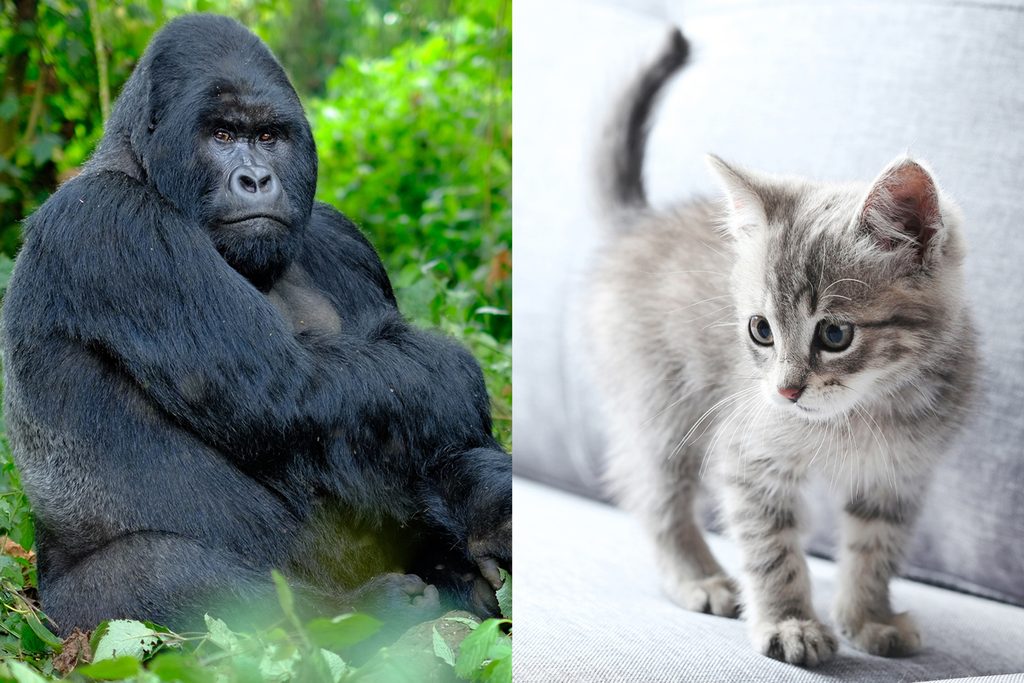
Koko the western lowland gorilla, famous for her sign language skills, chose a gray-and-white Manx kitten from a litter for her birthday in 1984. In American Sign Language, Koko named the kitten All Ball because his rounded shape reminded her of a ball (and, as it turns out, because she liked to rhyme words).
According to the Gorilla Foundation, the kitten became a beloved companion for Koko. The two played together, and pictures showed the enormous gorilla handling the tiny cat ever so gently.
Although claims about precisely what Koko understood or communicated have been debated, her apparent attachment to the kitten was extensively documented. In 1985, their friendship became its own children’s book called Koko’s Kitten.
Credit: GTCRFOTO/Alamy
Baloo the Bear, Leo the Lion, and Shere Khan the Tiger
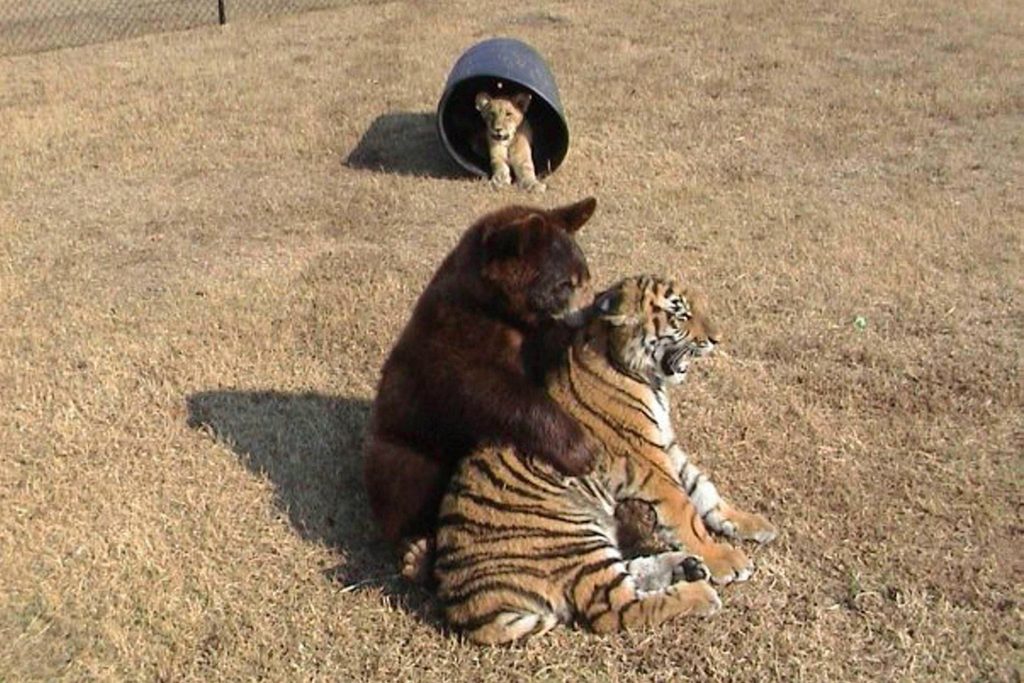
A bear, a lion, and a tiger may sound like the setup for a joke, but Baloo, Leo, and Shere Khan shared a real-life home at Noah’s Ark Animal Sanctuary in Georgia. The trio, collectively nicknamed BLT, were rescued together in 2001 from a residential Atlanta property, where they had been neglected and suffered injuries as cubs.
They played and cuddled with and groomed one another, and their attachment became especially clear when Baloo needed surgery. Separated from him for the first time, Leo and Shere Khan became agitated, pacing and vocalizing instead of playing and napping as usual. Once Baloo recovered, the trio was reunited and remained together in the same enclosure for 15 years.
Credit: Karl Umbriaco/stock.adobe.com ; Impala/stock.adobe.com
Anthony the Lion and Riley the Coyote
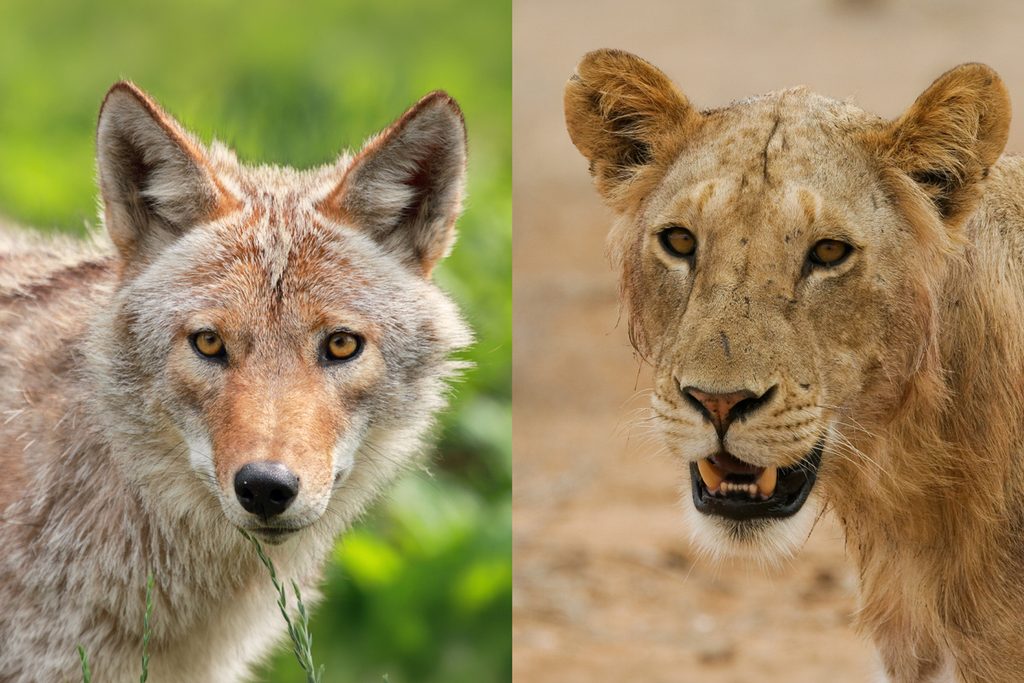
Anthony, a lion cub, and Riley, a young coyote, were each just over a month old when they met at Arizona wildlife sanctuary Keepers of the Wild. Anthony had arrived with several health issues after being auctioned off in Virginia, while Riley had been rescued by Arizona Game and Fish.
They weren’t exactly an obvious match; lions often hunt coyotes in the wild. But the two — who both belong to social species — bonded quickly, playing together, grooming each other, and watching over one another as the other rested throughout the day. Riley even accompanied Anthony when he had to leave the sanctuary for surgeries to correct a birth defect; the two became so distressed when separated that one would refuse to eat without the other nearby.
After Anthony’s death around the age of 2, Riley eventually found companionship with another coyote, named Dominic, at the sanctuary.
Advertisement
Goldfish memories last much longer than three seconds.
Fish 28/10/26Oct. 28, 2026
Updated 28/10/26Oct. 28, 2026
Credit: Hale Tat/Unsplash.com
Bennett Kleinman
Author
Bennett Kleinman is a New York City-based staff writer for Inbox Studio. He is also a freelance comedy writer, devoted New York Yankees and New Jersey Devils fan, and thinks plain seltzer is the best drink ever invented.
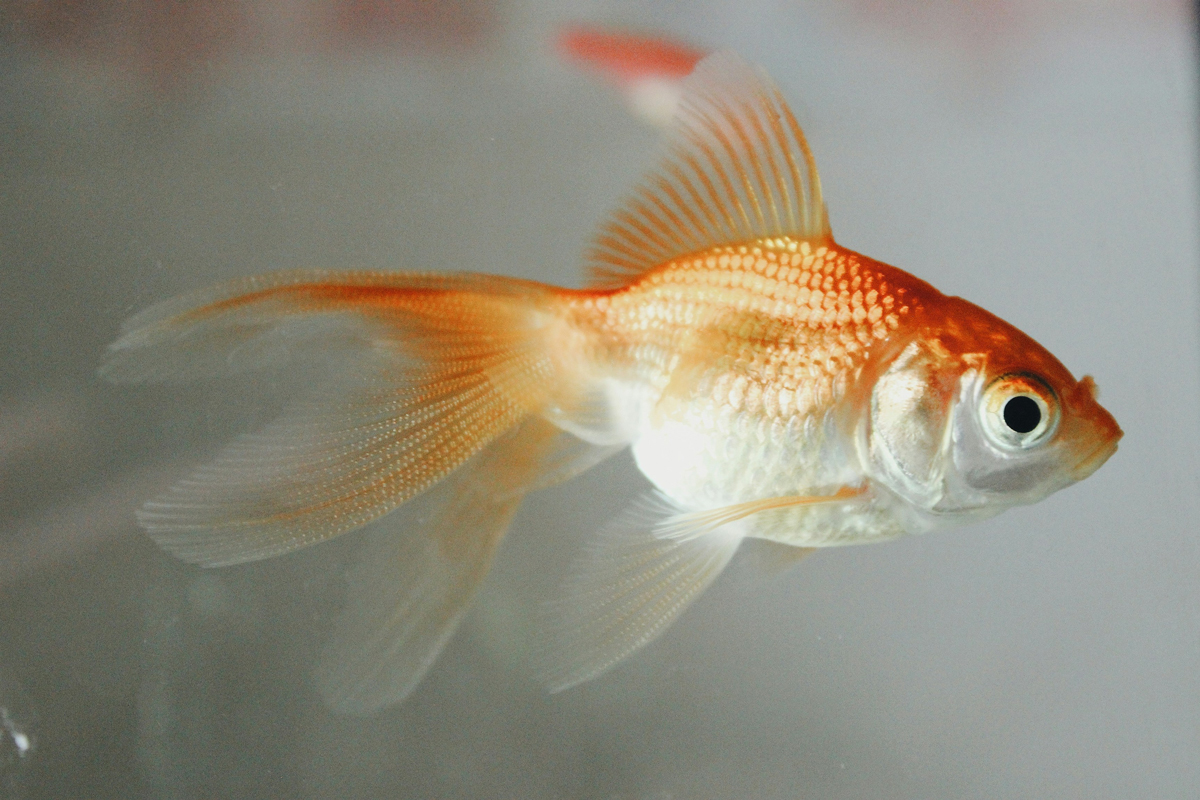
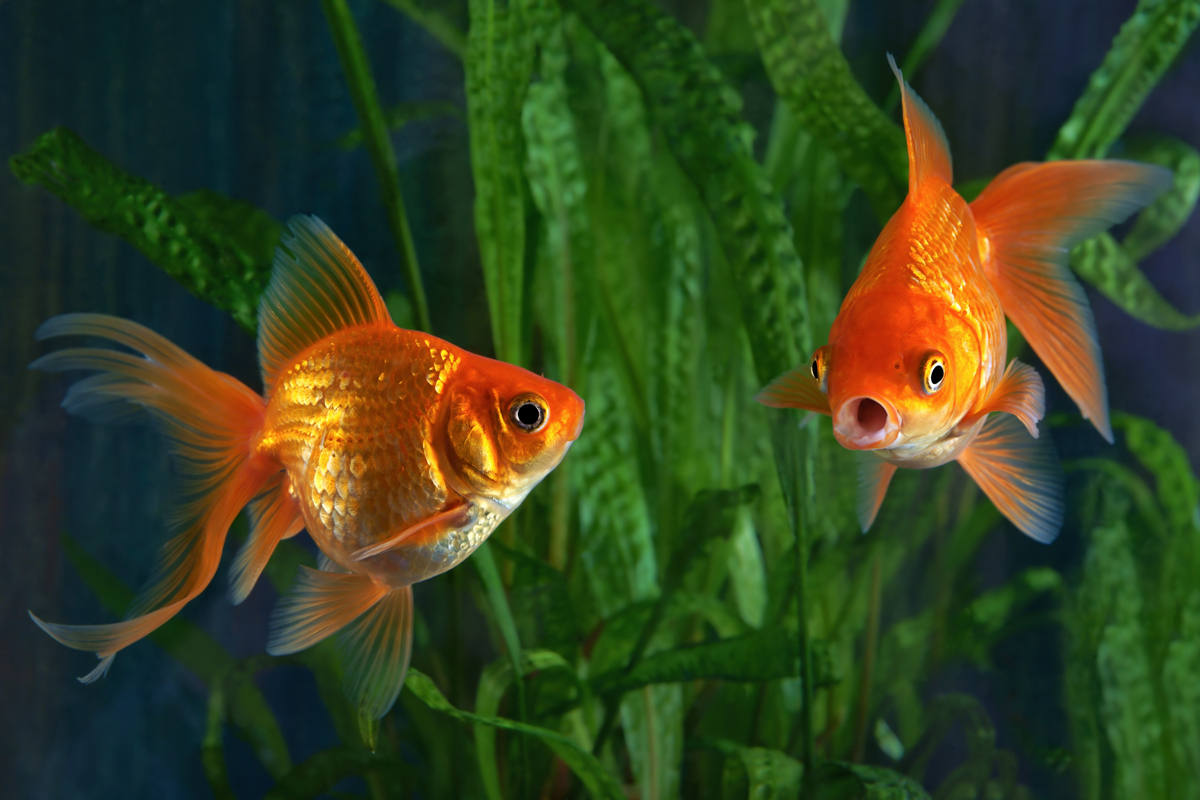
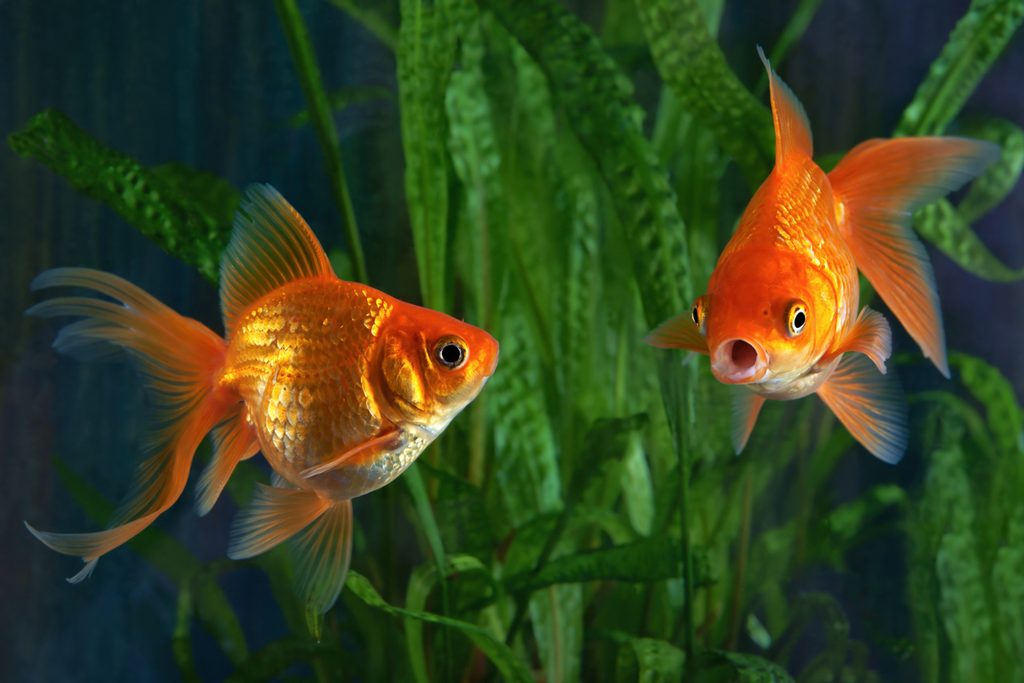
Saying someone has the memory of a goldfish is a derisive comment that implies they can only retain information for a few seconds — but this widespread belief is a common misconception, as goldfish don’t have poor memories at all. In fact, these popular pets can recall details for weeks, months, and even years.
Research has shown goldfish hold onto information for prolonged periods, especially if that knowledge is tied to receiving a tasty treat. In certain experiments, goldfish have learned which side of the tank they’re typically fed on and have been taught to press against a red paddle that rewards them with food instead of a blue-colored paddle that doesn’t. There’s even evidence of goldfish recognizing visual cues to navigate their surroundings, and they’re also able to discern between photos of frogs and turtles shown to them at varying three-dimensional angles.
These and other tests were conducted over periods of weeks or more, proving goldfish can retain learned knowledge over time and dispelling the myth of their supposed three-second memory.
Advertisement
The Biggest Pet Myths You Still Believe
Across Species 28/10/26Oct. 28, 2026
Updated 28/10/26Oct. 28, 2026
Credit: Mirek Kijewski/stock.adobe.com
Kristina Wright
Author
Kristina is a coffee-fueled writer living happily ever after with her family in the suburbs of Richmond, Virginia.
Around the world, people share their homes with animals that feel more like family than pets. In fact, in the U.S. alone, 95 million households owned at least one pet in 2025. We love our pets and want to give them the best lives possible, but with so much information available about pet behavior, nutrition, health, and general care, it can be difficult to separate sound advice from misinformation.
Some familiar beliefs about pets have been repeated for generations. Here we debunk some popular pet myths that may have you seeing your animal companions in a whole new light. How many of them have you heard — and maybe even believed?
Credit: Erwin Bosman/Unsplash.com
Myth: Cats Are Happier Living Outdoors
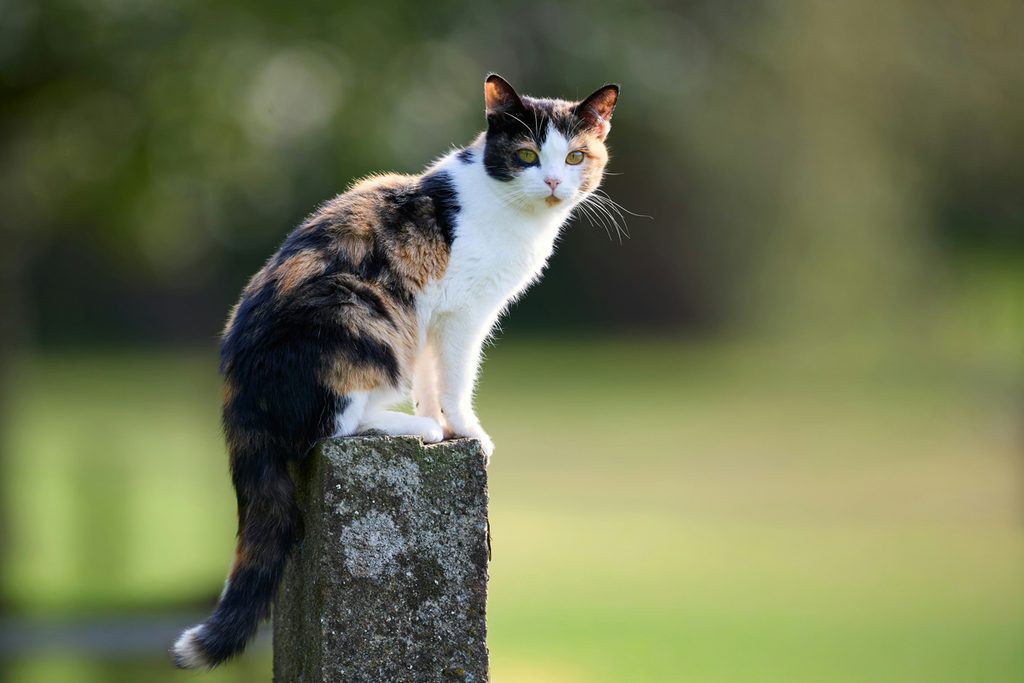
Cats have lived alongside people for thousands of years, often around farms and grain stores where they’ve hunted mice and other pests. They also retain behaviors inherited from their wild ancestors, including stalking, climbing, scratching, pouncing, and patrolling their territory. But those instincts don’t mean cats need to roam outdoors.
Indoor cats can have happy, enriching lives with plenty of opportunities to stalk toys, climb, scratch, perch by windows, and explore their surroundings. Outdoor cats face greater risks from traffic, animal fights, parasites, and infectious diseases, and they generally have considerably shorter lifespans. A feline companion may have the instincts of a little predator, but it can still be perfectly content with the living room as its jungle.
Credit: Mirek Kijewski/stock.adobe.com
Myth: Goldfish Have Short Memories
You may have heard that goldfish have only a three-second memory, but that couldn’t be further from the truth. Research has shown that goldfish can retain learned associations for days or weeks, and some studies have found evidence of even longer-lasting memories.
These popular aquarium pets can live for 10 to 15 years with proper care, and some outliers have lived for 20 years or more. During that time, they can learn to associate cues with events, remember learned behaviors, and adjust their behavior based on past experiences. For example, goldfish can learn that a particular signal, such as a light or even a color, means food is coming, and they can be trained to perform simple tasks such as pressing a lever or swimming to a designated spot to receive food.
Exactly how long they remember something depends on what they learned and how their memory is tested. So while a goldfish may not recognize its owner in the same way a dog does, it can learn to identify the visual cues associated with the person who feeds it.
Credit: Getty Images/Unsplash.com
Myth: Dogs Have No Sense of Time
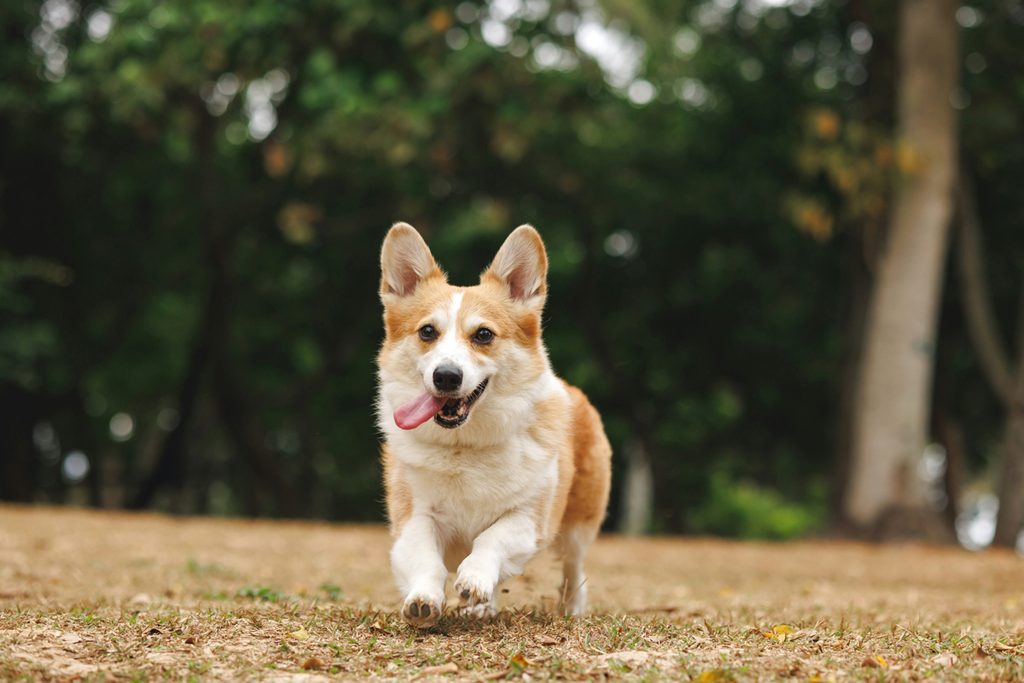
Dogs don’t read clocks, but that doesn’t mean they have no sense of time. They learn daily routines and can anticipate events based on environmental cues, such as when their owner usually comes home, when they get fed, or when it’s time for a walk. Research also suggests dogs can distinguish between different lengths of time.
In one study, dogs demonstrated stronger greeting behaviors when reunited with their owners after two hours compared with 30 minutes, suggesting they perceived the longer separation. Dogs may also use changes in their environment, including odors, to help track the passage of time. Your dog probably doesn’t know it’s 5 p.m., but it may sense it’s time for you to come home from work — and notice if you’re gone for longer than usual.
Credit: Ze Maria/Unsplash.com
Myth: Some Pets Are Hypoallergenic
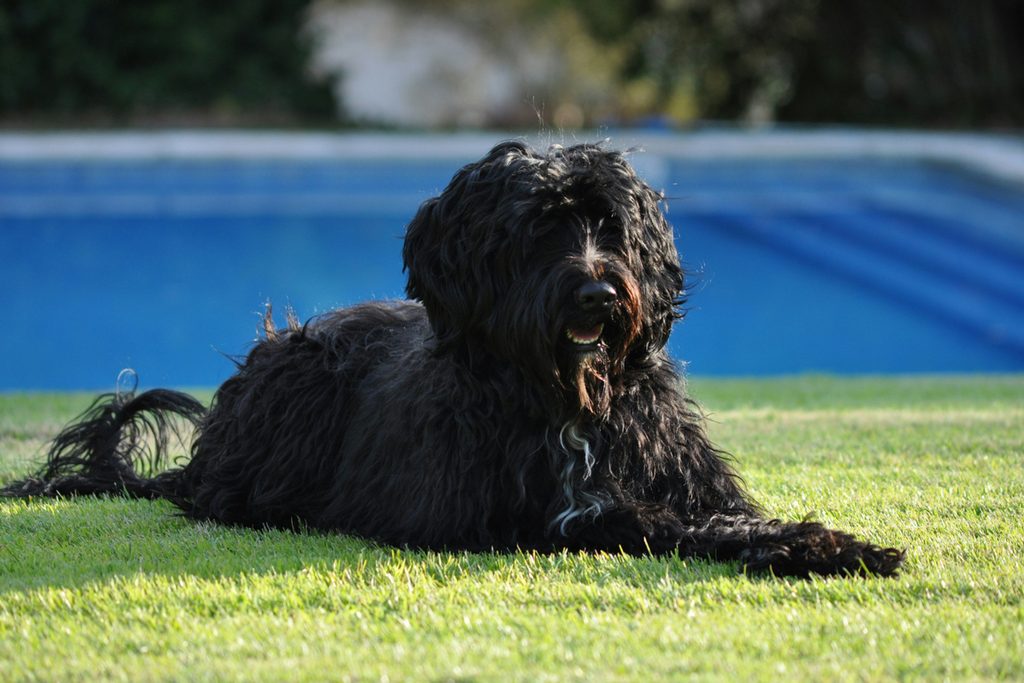
Unfortunately, there is no such thing as a completely allergen-free pet. Hairless cats are sometimes assumed to be a safe choice for people with allergies, while poodles, Portuguese water dogs, and other low-shedding dog breeds are often marketed as hypoallergenic.
But allergies aren’t caused by fur alone: People with pet allergies typically react to proteins found in an animal’s skin flakes, saliva, or urine. Hairless cats still produce those allergens, and dogs that shed very little can still trigger symptoms. Birds can also produce allergens through their feathers, skin, and droppings.
Fish are generally a better option for people with common dog and cat allergies because they don’t produce the same airborne mammalian allergens, although people can still react to fish, fish food, or substances associated with an aquarium. Hypoallergenic means less likely to cause an allergic reaction — not incapable of causing one.
Credit: FiledIMAGE/stock.adobe.com
Myth: Small Pets Don’t Need Veterinary Care
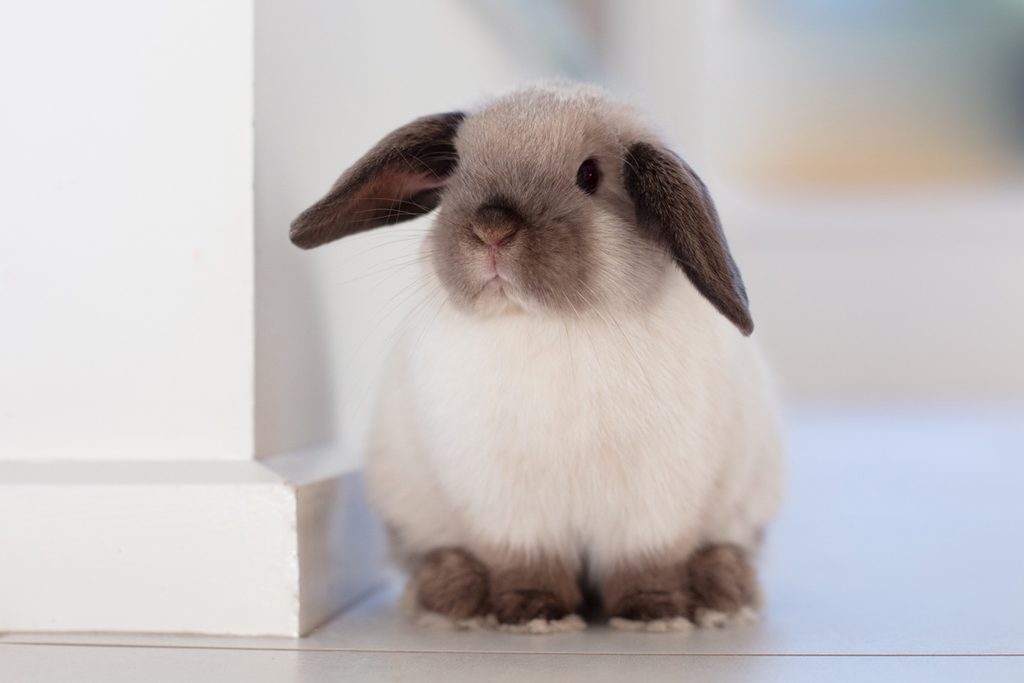
Because they’re small and often relatively inexpensive to keep, animals such as hamsters, gerbils, guinea pigs, rabbits, and other “pocket pets” are sometimes treated as pets that don’t require regular veterinary care. But small doesn’t mean indestructible. These animals can still develop dental problems, respiratory infections, parasites, injuries, and other illnesses that require professional treatment.
Many prey species instinctively hide signs of illness, so obvious symptoms can mean a problem has already progressed. Routine veterinary care and prompt attention to changes in eating, drinking, activity, weight, or behavior can make a real difference. Tiny pets still have a big need for good healthcare.
Advertisement
Your Daily Guide to the Animal Kingdom
Get to know the animals that share our planet with this daily newsletter.
Success! Welcome to Animal Facts.
Check your inbox for your daily email.
Sorry, your email address is not valid. Please try again.