Bennett Kleinman is a New York City-based staff writer for Inbox Studio. He is also a freelance comedy writer, devoted New York Yankees and New Jersey Devils fan, and thinks plain seltzer is the best drink ever invented.
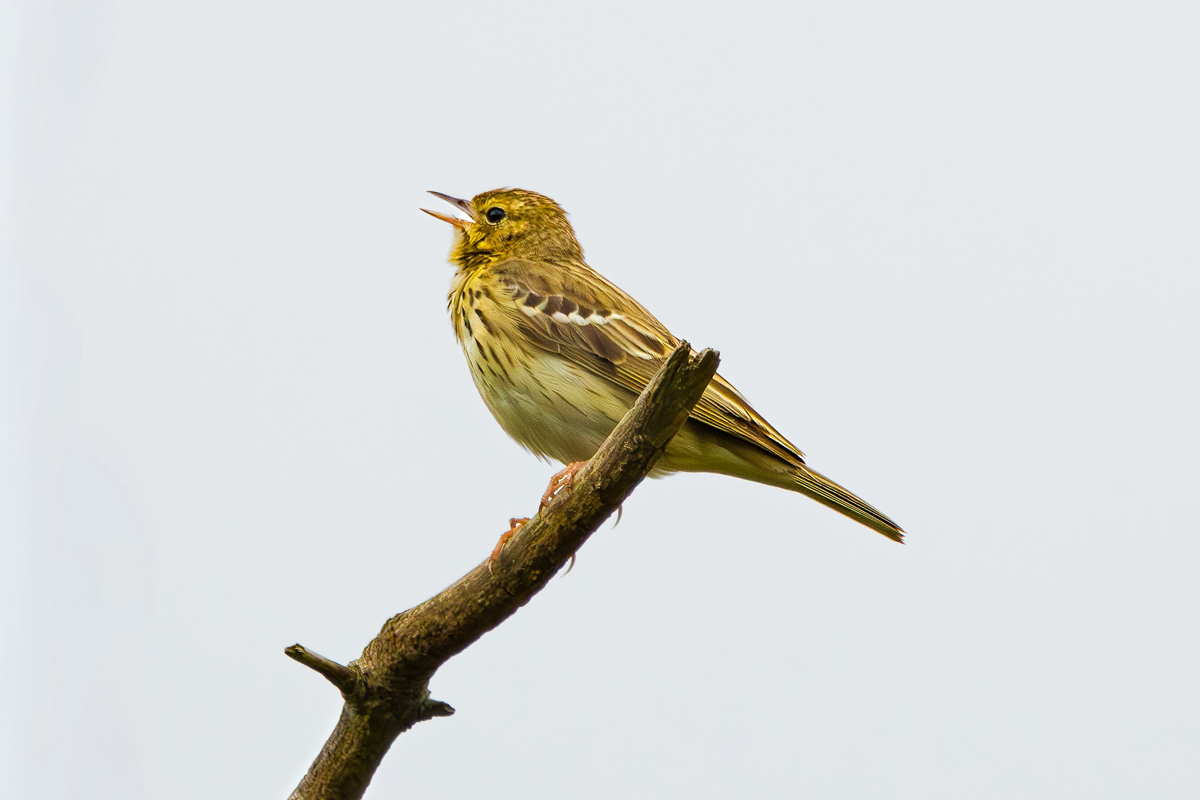
Many musicians spend countless hours in rehearsal studios perfecting their tunes. But to some songbirds, rehearsing is also second nature; they’re even known to practice singing in their sleep. This behavior is similar to how a dog’s paws twitch while it snoozes, only in the case of songbirds, it’s the vocal muscles in the throat that experience subconscious movement.
Researchers confirmed this phenomenon by implanting electrodes in sleeping birds such as the zebra finch. While zebra finches are known to croon in a more methodical staccato style when awake, the birds were observed producing disjointed, sporadic notes as they slept, a behavior researchers likened to “learning a musical instrument.” Similar — albeit less common — behavior has also been viewed in great kiskadees, which produced louder and more aggressive tones in their sleep.
Advertisement
What Do Animals Dream About?
Across Species 14/10/26Oct. 14, 2026
Updated 14/10/26Oct. 14, 2026
Credit: Barnabas Davoti/Unsplash.com
Kristina Wright
Author
Kristina is a coffee-fueled writer living happily ever after with her family in the suburbs of Richmond, Virginia.
If you’ve ever watched your dog “run” in his sleep, paws paddling against an invisible ground, or noticed your cat’s tail and whiskers twitching while she naps in a patch of sunshine, you may have wondered what’s actually happening inside that sleeping brain. Is your dog chasing something in a dream? Is your cat reliving the morning’s adventures? Or are those movements simply reflexes?
For humans, dreams can feel like entire experiences, filled with emotions and strange situations, and we know we’re dreaming because we can wake up and describe what happened. Scientists can also study the brain activity associated with our dreaming. But animals can’t tell us what they experience while asleep, so how can we know if they’re dreaming?
Credit: Joshua Earle/Unsplash.com
Dreaming Is More Than REM Sleep
Dreams are emotional, mental, or sensory experiences that occur while we’re asleep. For decades, scientists closely associated dreaming with rapid eye movement (REM) sleep. During REM sleep, brain activity becomes more similar to that of waking activity while most of the body’s muscles are temporarily inhibited. People awakened during REM sleep frequently report dreams, which has helped to establish the connection between the two.
But REM sleep and dreaming aren’t quite the same thing. People can report dreams after being awakened from non-REM sleep, too. REM is better understood as a sleep state in which dreaming commonly occurs, rather than specifically an on-off switch for dreams.
When scientists study animals, they can identify sleep stages and measure brain activity, but they can’t ask a sleeping animal what it experienced while asleep. Instead, they have to look for patterns that suggest the animals’ sleeping brains are doing something similar to a dreaming human brain.
Credit: Alexei Alekhin/stock.adobe.com
Animals Show Signs of Dream-Related Sleep
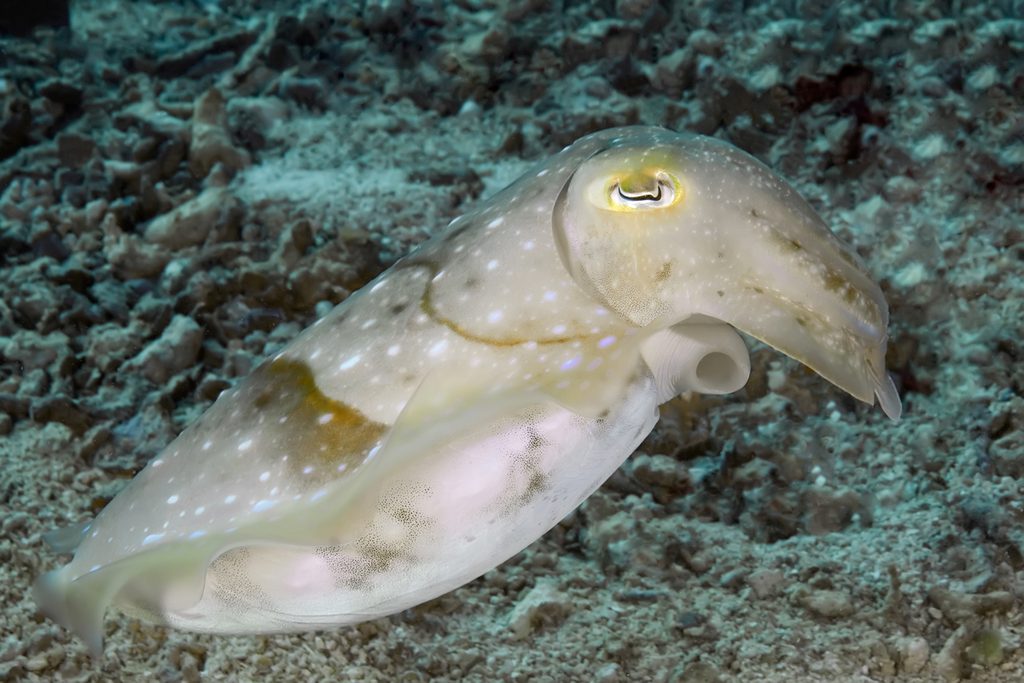
Many animals experience REM sleep or forms of sleep that share some of its characteristics. REM sleep has been documented in mammals and birds, as well as in some reptiles and even cuttlefish. Researchers have observed combinations of brain activity, muscle changes, eye movements and other physiological patterns that resemble aspects of human REM sleep.
Cats provided some of the earliest clues that something more than ordinary sleep may be happening. During REM sleep, most muscles are temporarily paralyzed (a state called atonia) which helps keep a sleeping animal from acting out its movements. When researchers disrupted that mechanism in cats, the animals made complex movements during REM sleep, including behaviors that appeared to involve stalking, attacking, or interacting with something that wasn’t actually there.
Similar dream-enactment behavior occurs in humans with certain REM sleep disorders. This behavior provides intriguing evidence that cats’ brains generated something complex enough to influence their movements while asleep.
Credit: bilanol/stock.adobe.com
Rats Might Replay Experiences During Sleep
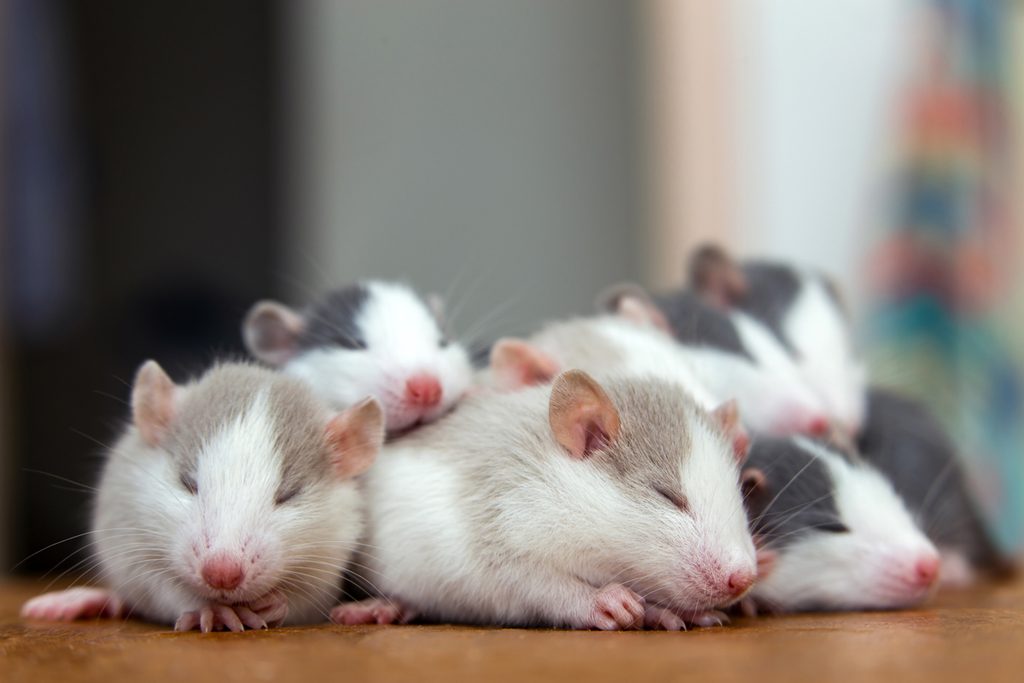
Researchers have found more intriguing clues by studying what happens in an animal’s brain before, during, and after an experience. In experiments with rats, scientists have recorded activity from individual neurons while the animals explored a maze. Neurons in the hippocampus, a brain region involved in learning and memory, fired in patterns corresponding to different locations in the maze.
During later sleep, those same patterns reappeared, effectively replaying sequences from the rats’ earlier experiences. That kind of neural replay is thought to help the brain process and consolidate memories. It isn’t concrete evidence that the rats were consciously reliving or dreaming about their experiences, but it does show that the sleeping brain remains active, processing information from waking life rather than simply shutting down.
Credit: Barnabas Davoti/Unsplash.com
Animals Sleep and Dream Differently
While researchers believe animals likely dream, this is where the evidence reaches its limit. Scientists can measure brain activity, track eye movements, record muscle activity, and observe what happens when particular brain circuits are disrupted. What they can’t directly measure is the animal’s subjective experience.
Even with humans, scientists rely on people reporting their dreams after waking. Brain scans and sleep studies can reveal what the brain was objectively doing, but not exactly what someone experienced; with animals, that missing piece can’t be filled in afterward. A dog that whimpers and paddles its paws during REM sleep may be dreaming, but the movements can’t tell us whether it’s dreaming about chasing a rabbit, replaying a walk, or experiencing something less concrete.
Sleep also varies widely among species. Dolphins and other cetaceans have unusual sleep patterns that differ from the familiar REM sleep seen in humans and many terrestrial mammals. Birds experience REM sleep too, but their episodes are typically shorter and their muscle atonia is less complete than in mammals, while reptiles and some invertebrates have sleep states that don’t neatly fit into the mammalian model.
All of this gives scientists reason to think that dreaming may extend far beyond humans. But what those dreams actually feel like from inside an animal’s sleeping brain remains unknowable. Your dog may really be chasing that rabbit in his sleep, but for now, he’s the only one who knows for sure.
Advertisement
Wombats use their armored butts to block burrow entrances.
Bennett Kleinman is a New York City-based staff writer for Inbox Studio. He is also a freelance comedy writer, devoted New York Yankees and New Jersey Devils fan, and thinks plain seltzer is the best drink ever invented.
Perhaps no animal takes the phrase “butt out” more literally than the wombat. These creatures use their armored rumps to create an impenetrable barrier at the entrance of their burrows, thus keeping potential predators from invading their space.
Wombat rear ends feature a thick, tough fascia plate made of cartilage with minimal nerve endings, so even if a predator bites or claws at it, the wombat isn’t likely to feel pain. Their hardened butt is then covered by a layer of short fur, so the predator isn’t able to snatch onto the fur and pull the wombat out of its burrow. If a predator does manage to peek its head beyond the butt and into the burrow, wombats are known to pivot from using their butts as shields to blunt weapons, bashing the invader’s skull against the burrow’s dirt walls.
Advertisement
8 Animal Diggers That Can Move Some Serious Dirt
Across Species 14/10/26Oct. 14, 2026
Updated 14/10/26Oct. 14, 2026
Credit: AB Photography/stock.adobe.com
Nicole Villeneuve
Author
Nicole is a writer, editor, and researcher with over 15 years experience covering arts and culture, lifestyle, and media. Her work has also appeared in PureWow, Brit + Co, Exclaim, AUX TV, and CBC. She lives in Ontario, Canada.
Humans tend to talk about “digging ourselves into a hole” as though it’s a bad thing, but in the animal world, digging oneself a good hole is a means of survival. For some, it means creating a safe place to sleep; for others, it’s a way of finding food, escaping predators, or surviving extreme temperatures.
Many animals are capable diggers, but some have taken that skill to impressive extremes. From reptiles that excavate corkscrew-shaped tunnels to rodents that work together to construct miles of underground passages, here are eight of the best diggers in the animal kingdom.
Credit: Fearless on 4 Wheels/stock.adobe.com
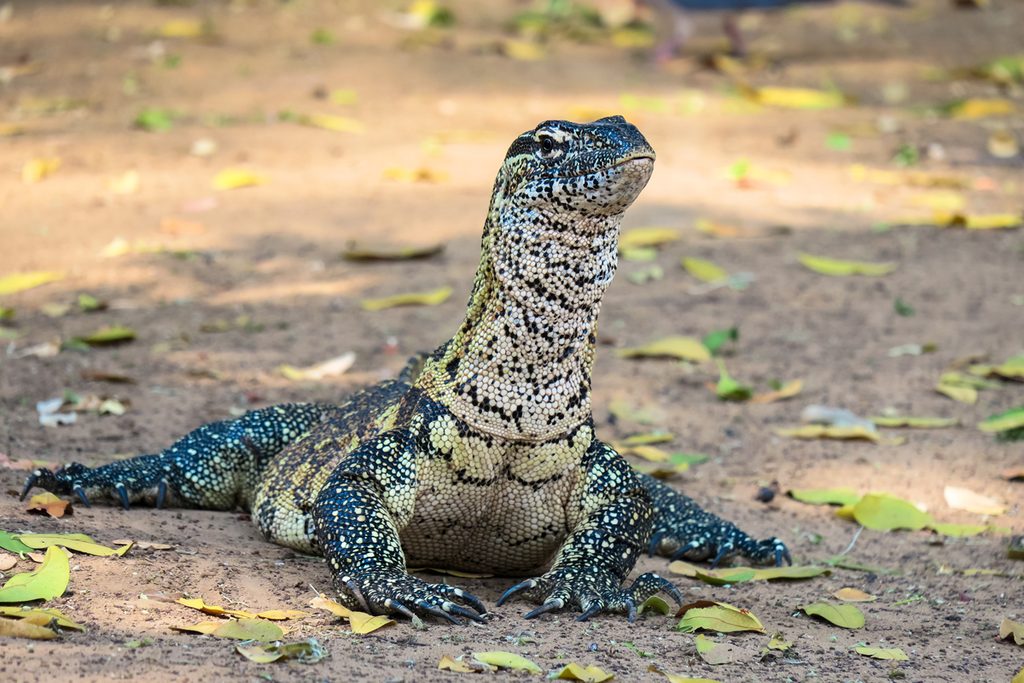
Yellow-Spotted Monitors
The yellow-spotted monitor, also known as the Argus monitor, digs some of the deepest and most elaborate burrows known among vertebrates. In Western Australia, females excavate corkscrew-shaped nesting burrows that can descend nearly 12 feet underground.
The deepest part contains a chamber where eggs are laid, and some burrows have as many as eight twists and turns. These creations aren’t only the deepest-known digs made by any vertebrate; they’re also the only known helical (aka corkscrew-shaped) burrows made by a reptile.
Credit: garpinina/stock.adobe.com
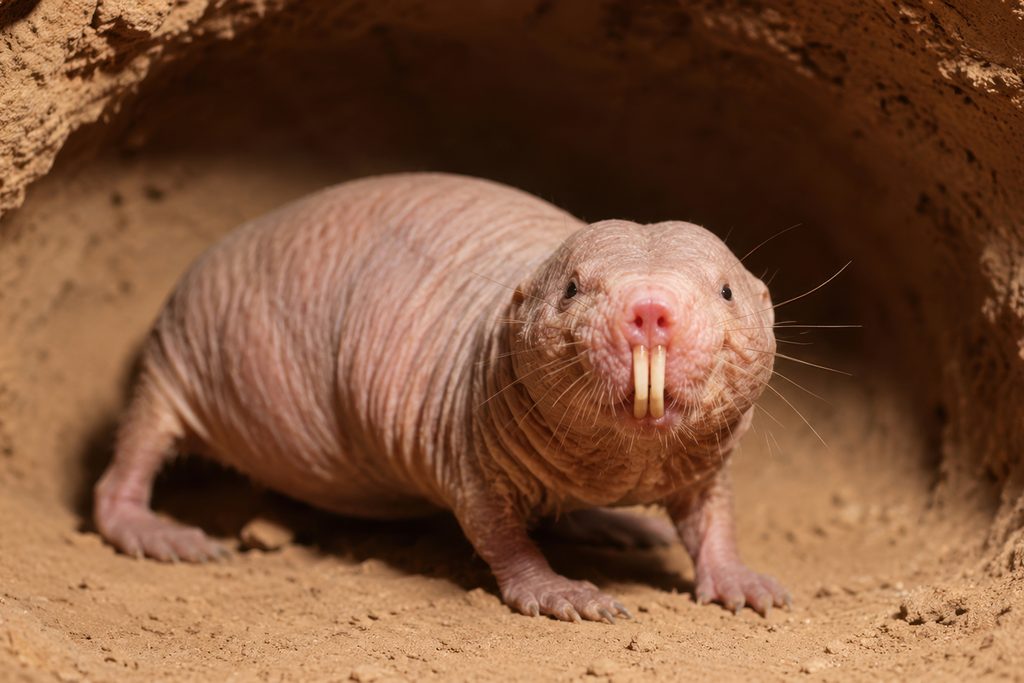
Naked Mole-Rats
Naked mole-rats may be tiny, typically measuring just a few inches in length, but they work together to create surprisingly extensive tunnel systems. Colonies can excavate networks stretching up to 2.5 miles, with tunnels connecting separate chambers for sleeping, eating, and using the bathroom.
These animals do most of their digging using their enormous front teeth, which are powered by their unusually strong jaw muscles. Their lips also close behind their teeth, allowing them to dig through soil without inhaling a mouthful of dirt.
Credit: David/stock.adobe.com
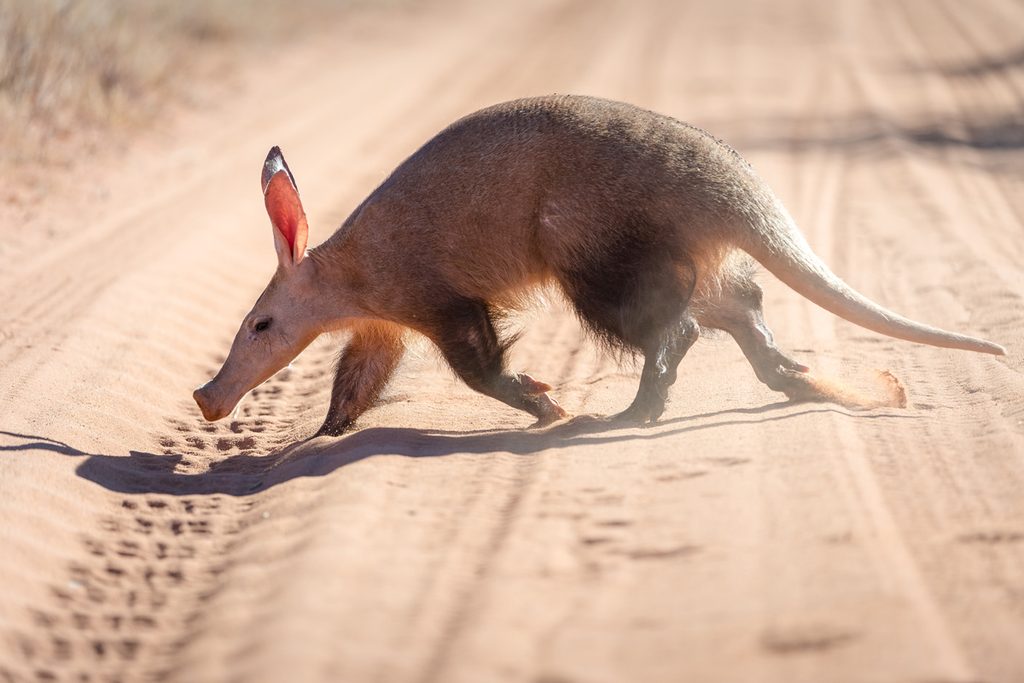
Aardvarks
Aardvarks don’t just dig well — they dig fast. Their powerful front claws can move about 2 feet of soil in 15 seconds, allowing them to quickly excavate termite mounds and ant nests at feeding time. Digging also comes in handy when aardvarks feel threatened and find themselves out of range of an existing burrow, as they can dig a hole and cover themselves with soil in about five to 10 minutes.
Credit: phototrip.cz/stock.adobe.com
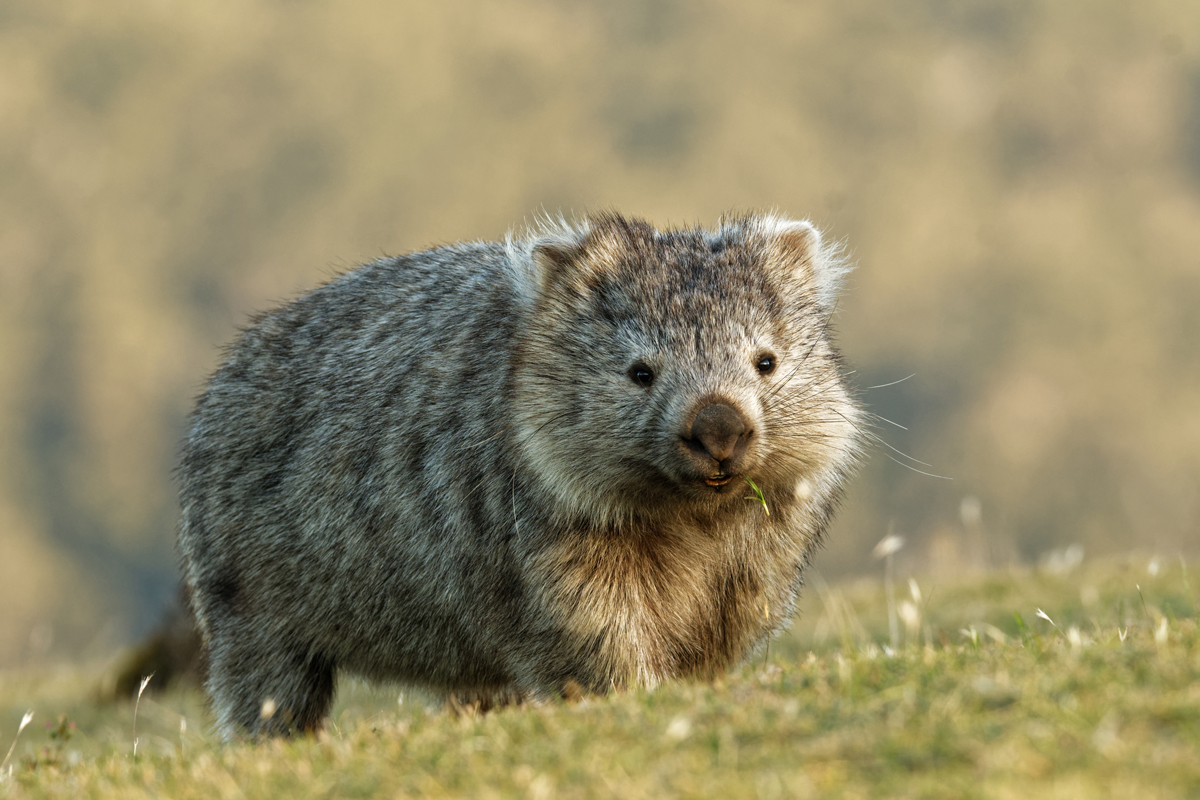
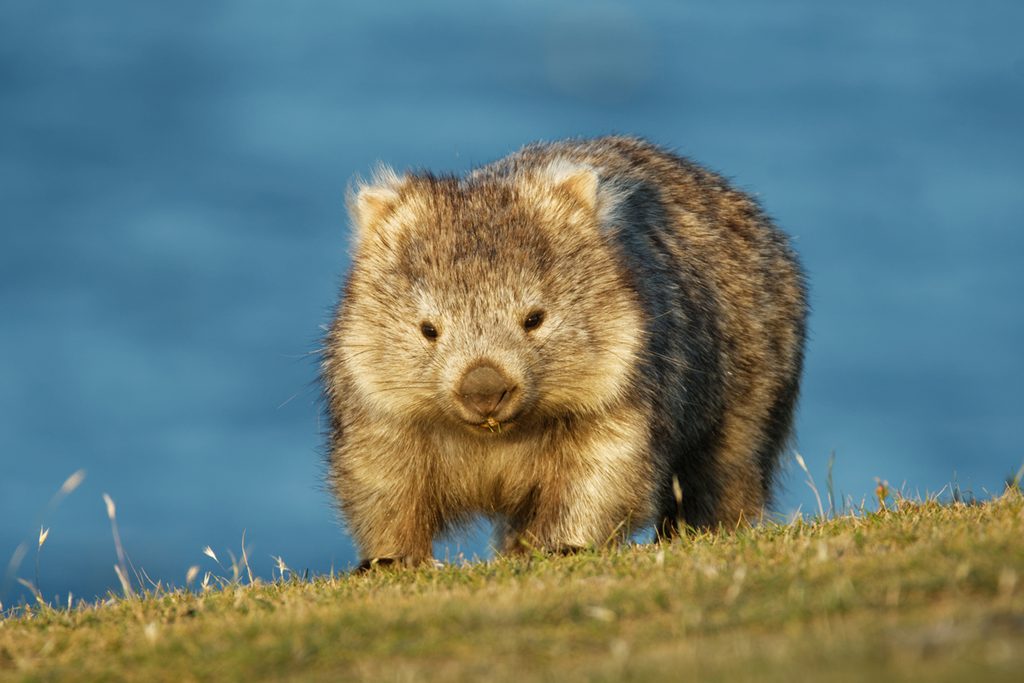
Wombats
Wombats are among the world’s largest burrowing animals, their stocky bodies basically purpose-built for heavy-duty excavation. Their burrows can stretch anywhere from 10 to 100 feet across and upward of 11.5 feet deep, and they often feature interconnected tunnels, sleeping chambers, and sometimes several entrances. There’s a good reason for all that time and effort: These Australian marsupials spend much of their lifetime — up to two-thirds of it — underground.
Credit: AB Photography/stock.adobe.com
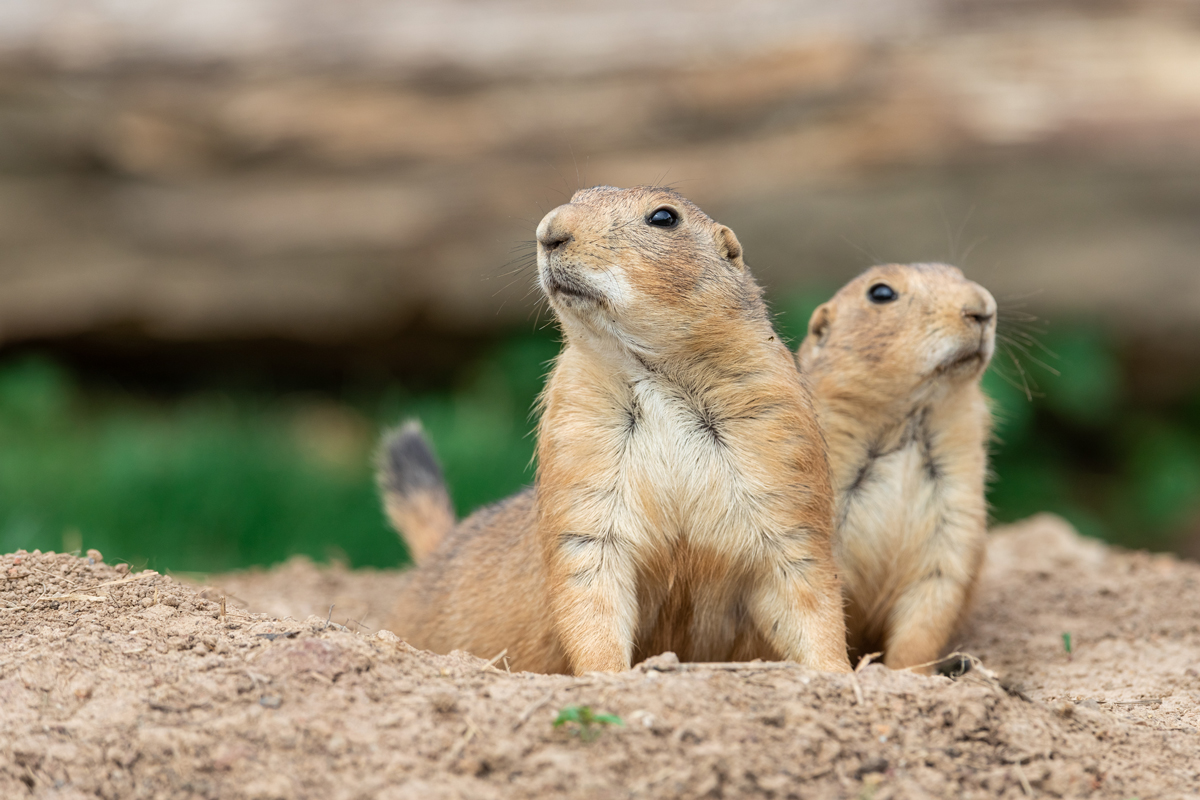
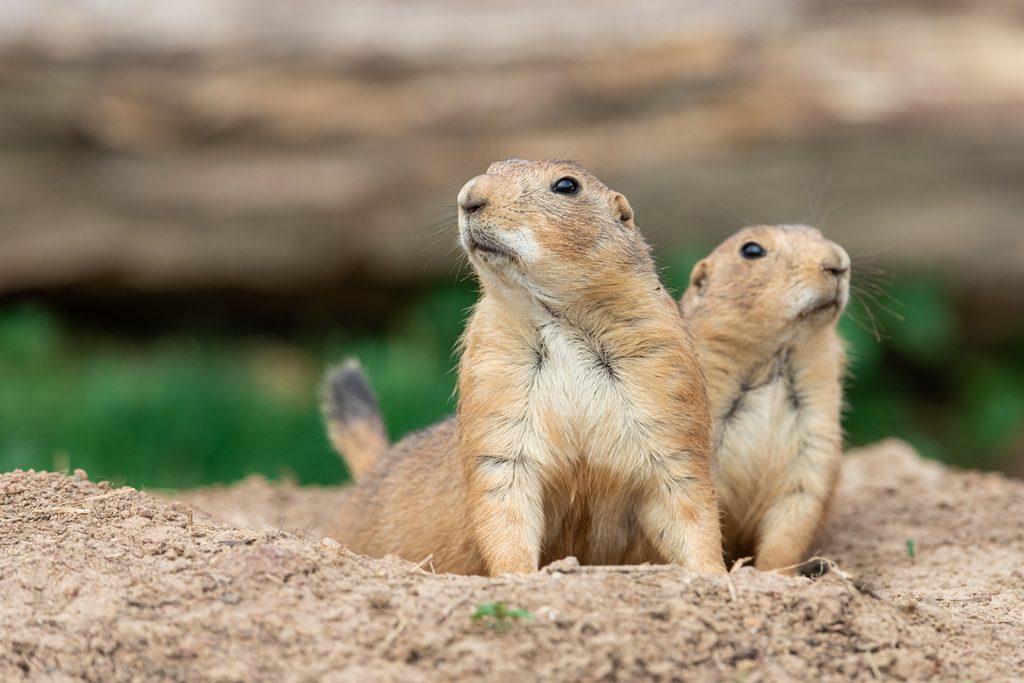
Prairie Dogs
Prairie dogs don’t simply dig burrows; they build entire underground neighborhoods. Their U-shaped creations contain interconnected tunnels and separate chambers for sleeping, raising young, and escaping predators, and they can reach depths of about 15 feet.
Groups of burrows form colonies known as towns, which can cover hundreds or even thousands of acres. The tunnels also provide homes for other species, making prairie dogs not just skilled homemakers, but also important ecosystem engineers.
Credit: Tim/stock.adobe.com
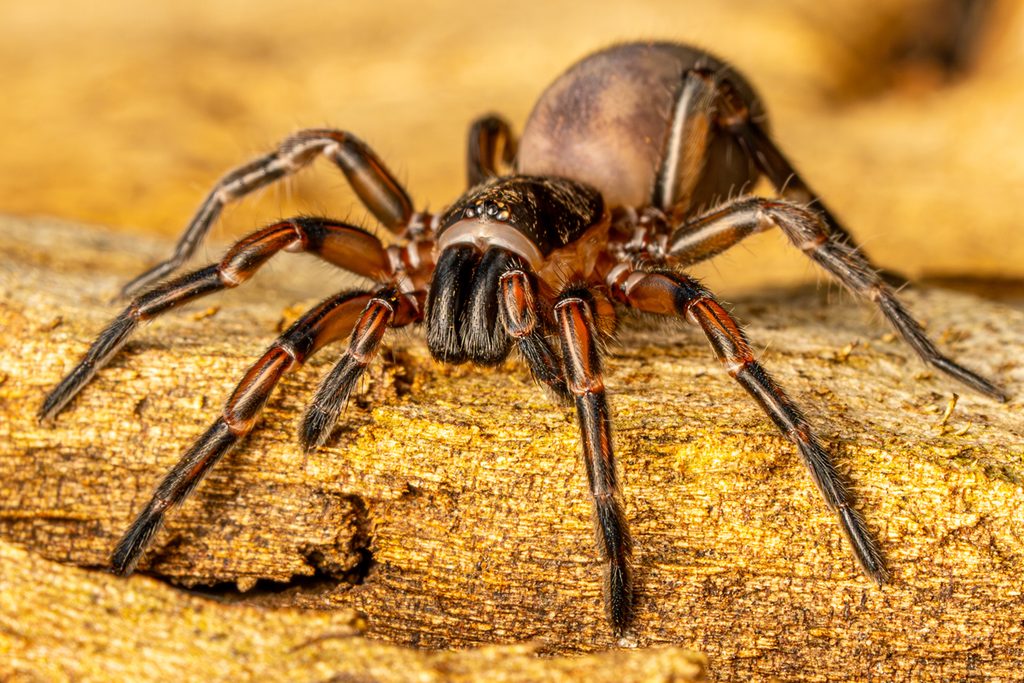
Trapdoor Spiders
Trapdoor spiders tend to dig for a different reason than most animals: They turn their burrows into well-hidden hunting posts. After excavating a vertical tunnel, the spider reinforces it with silk and constructs a hinged door from soil, leaves, and, yes, more silk.
Threads around the entrance act as trip wires, and the spider can detect vibrations from passing prey such as crickets, beetles, grasshoppers, and other insects. The spider waits patiently inside its covered burrow before skillfully ambushing its unsuspecting meal.
Credit: Tony Campbell/stock.adobe.com
Nile Crocodiles
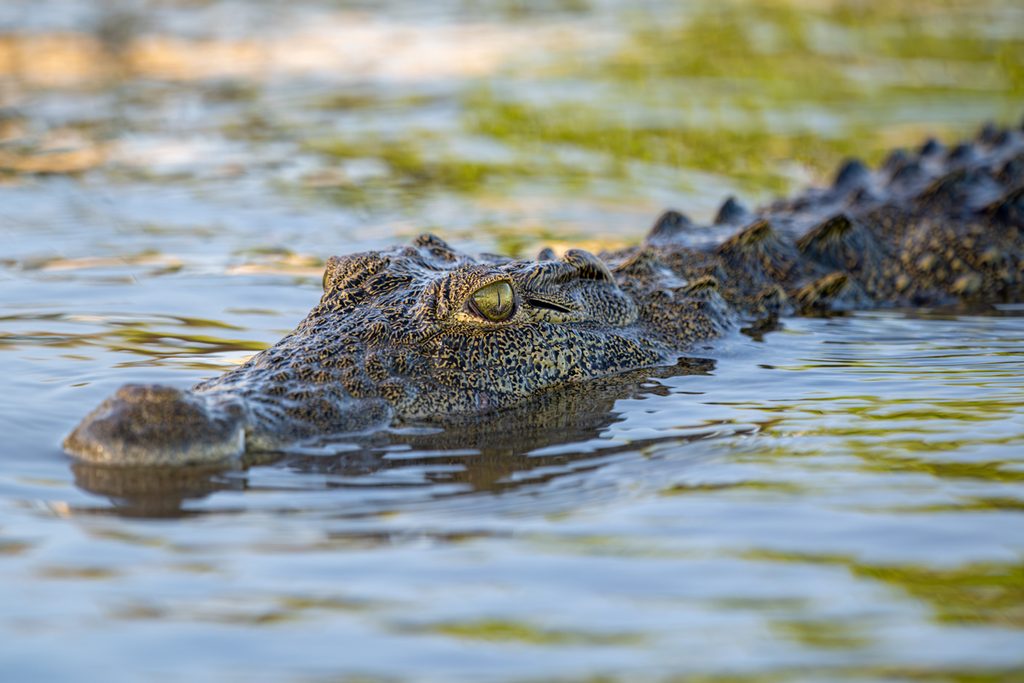
Nile crocodiles may not be the first animals that come to mind when you think of burrowing, but these sub-Saharan African reptiles can excavate burrows up to 40 feet deep, making them the deepest-burrowing crocodilians currently known.
These massive crocs, which average about 16 feet long and 900 pounds, use their powerful feet and large snouts to dig into the soil and form burrows that serve as a cool place to escape the heat and a den for laying eggs. Their dens are typically dug into the banks of rivers or lakes, offering easy access to their preferred environment.
Credit: zest_marina/stock.adobe.com
Earthworms
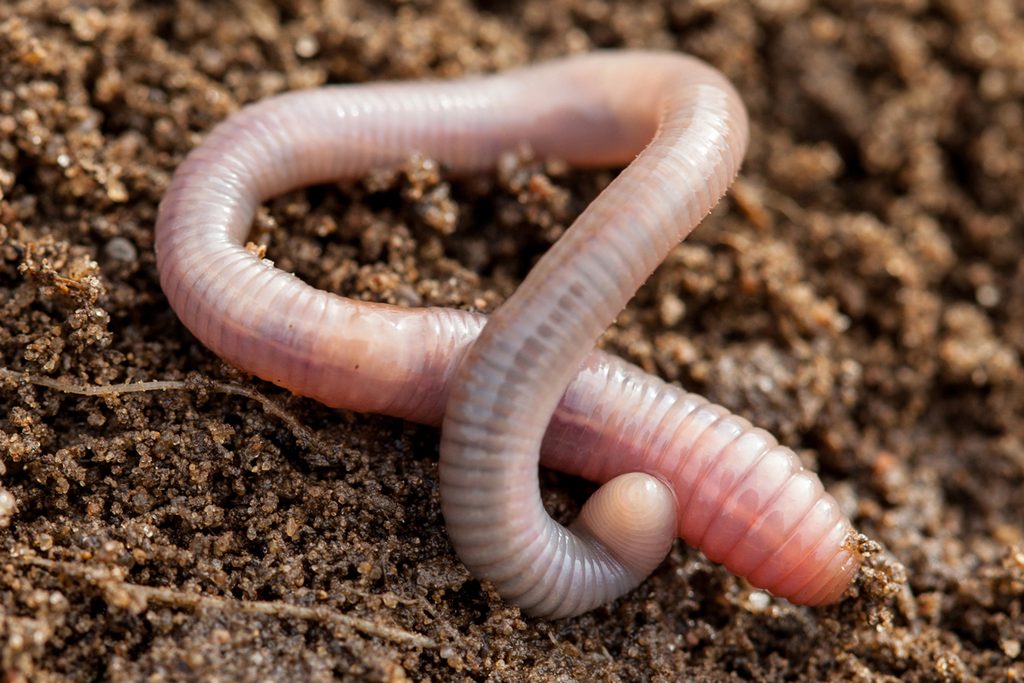
And who could forget the humble common earthworm? These unassuming little diggers spend much of their lives moving through soil, burrowing up to about 10 feet underground and moving approximately 50 tons of soil per hectare each year. Their tunnels help water and air better penetrate the soil and give plant roots easier pathways, while the worms drag leaves and other organic matter underground to break down and recycle nutrients.
Kristina is a coffee-fueled writer living happily ever after with her family in the suburbs of Richmond, Virginia.
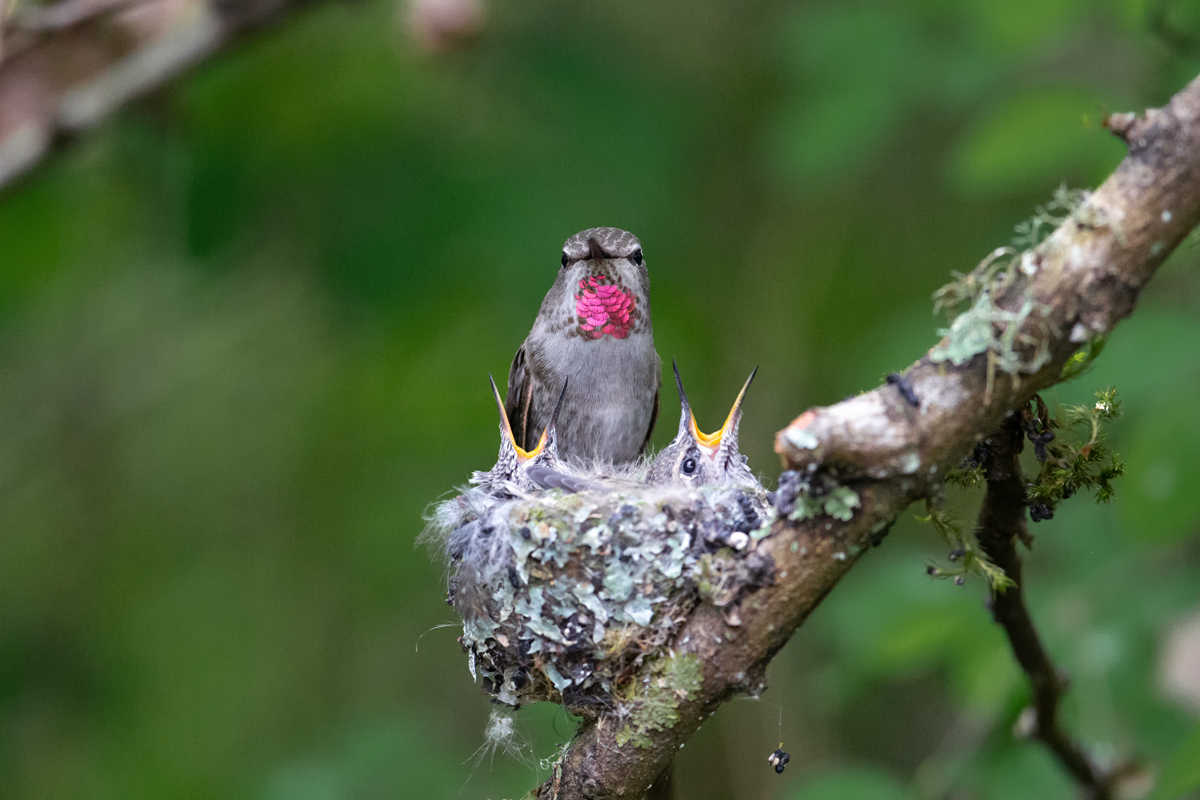
A hummingbird’s nest may look like a walnut-sized cup stuck to a branch, but they’re artfully engineered with spiderwebs to hold them together. The female hummingbird gathers strands of spider silk and uses them to bind plant fibers, moss, lichen, and other soft materials into a tiny cup. Depending on the species, she may build it on a tree branch, shrub, vine, or even a sheltered human-made structure.
And the spider silk does more than keep the nest together: It’s strong and elastic, allowing the nest to stretch and expand as the chicks grow, which is especially useful considering the finished nest may initially be only 1 or 2 inches in diameter. The female often lines the inside with soft plant fibers and down, creating a snug space for her eggs and chicks.
Krissy Howard is a writer with a background in comedy, and a love for researching and writing about animal behavior. You can read some of her work at Cuteness, Byrdie, and The Hard Times. When she's not writing, she's growing food in the community garden, feeding stray cats, and learning Greek.
Dinosaurs were among the largest creatures to ever walk the Earth. Today, the smallest of their descendants would barely fill the palm of your hand.
Small birds play a huge role in balancing the world’s ecosystems, and most of them do so while flying under the radar — literally. Here are five of the tiniest birds, trilling through treetops from Europe to the Caribbean and everywhere in between.
Credit: Getty Images/Unsplash.com
Hummingbirds
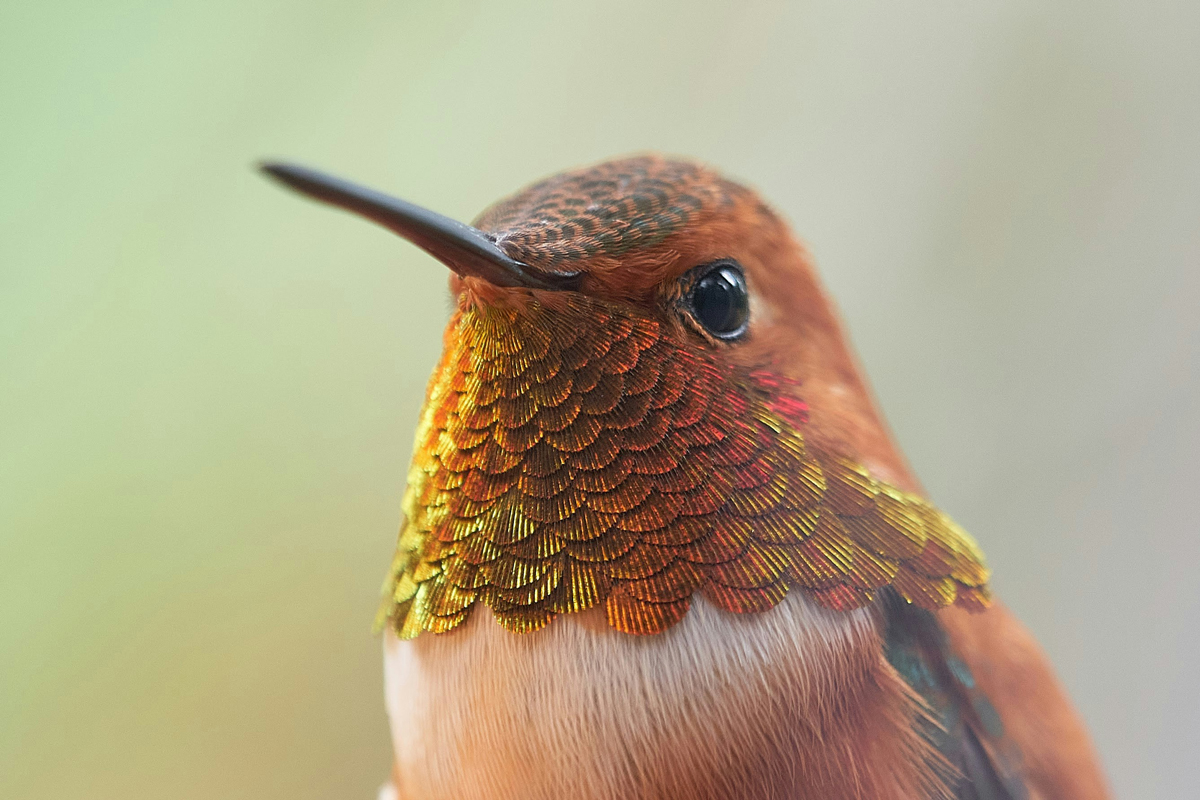
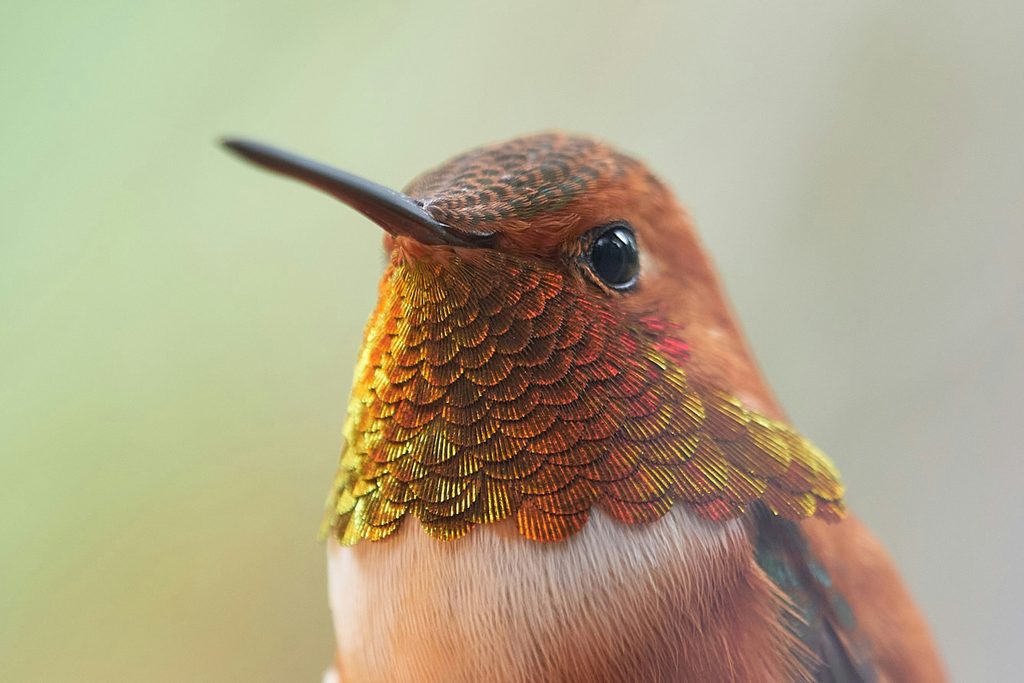
With more than 300 species of hummingbirds spanning the globe, these little guys are probably the first to come to mind when thinking of small birds. Five of the smallest bird species in the world are hummingbirds. The vervain hummingbirds of the Caribbean, woodstars in Ecuador, bumblebees in Mexico, and calliopes throughout the rest of North America are all under 3.5 inches long and less than 3.5 grams in weight.
The tiniest of them all, however, can be found fluttering around Cuba. Bee hummingbirds measure just over 2 inches and weigh around 2 grams, earning them the title of not just the littlest hummingbird, but the smallest bird in the world. Barely bigger than a quarter, they consume about half of their weight in nectar and bugs every day, fueling up to 200 wing beats per minute.
Credit: Imogen/stock.adobe.com
Weebills
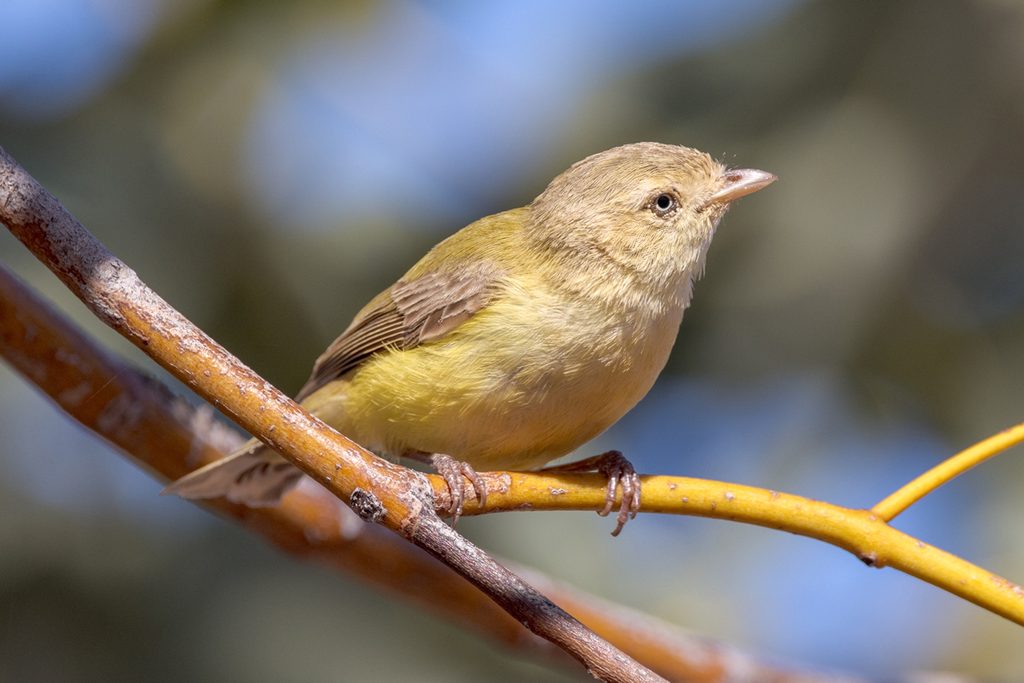
On the other side of the Pacific Ocean, you’ll find the smallest bird in Australia: the weebill. They’re nearly double the size of the biggest hummingbirds, measuring close to 6 inches long and weighing about 6 grams. Common throughout the continent, Northern weebills are smaller and paler than their Southern counterparts.
Though they’re small in overall stature, they’re named specifically for their minuscule mouths. Their scientific name Smicrornis brevirostris means “short beak” in Latin, and that “wee” bill comes in handy when munching on local delights like eucalyptus.
Credit: Arnau Soler/stock.adobe.com
Tits
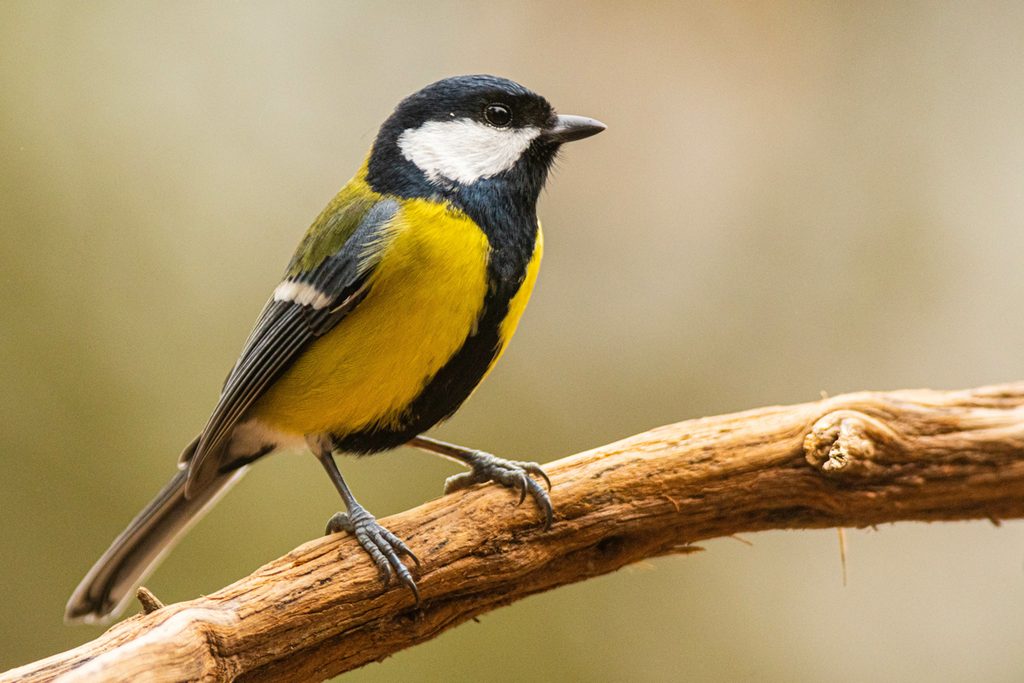
All tit birds are tiny, with the biggest measuring just over 5 inches long. The smallest among them is the coal tit at just 4 inches. You can find these bitty birds all over the UK, from remote woodlands to parks, gardens, and other urban green spaces.
If you’re unfamiliar with tits, you may recognize a closely related bird with its own funny name: the chickadee. Though they’re separate species, these two birds belong to the same family, Paridae, and go by different informal names based on where they’re located. North Americans call these birds “chickadees,” while the rest of the world knows them as “tits.”
Credit: Mojahid Mottakin/stock.adobe.com
Flowerpeckers
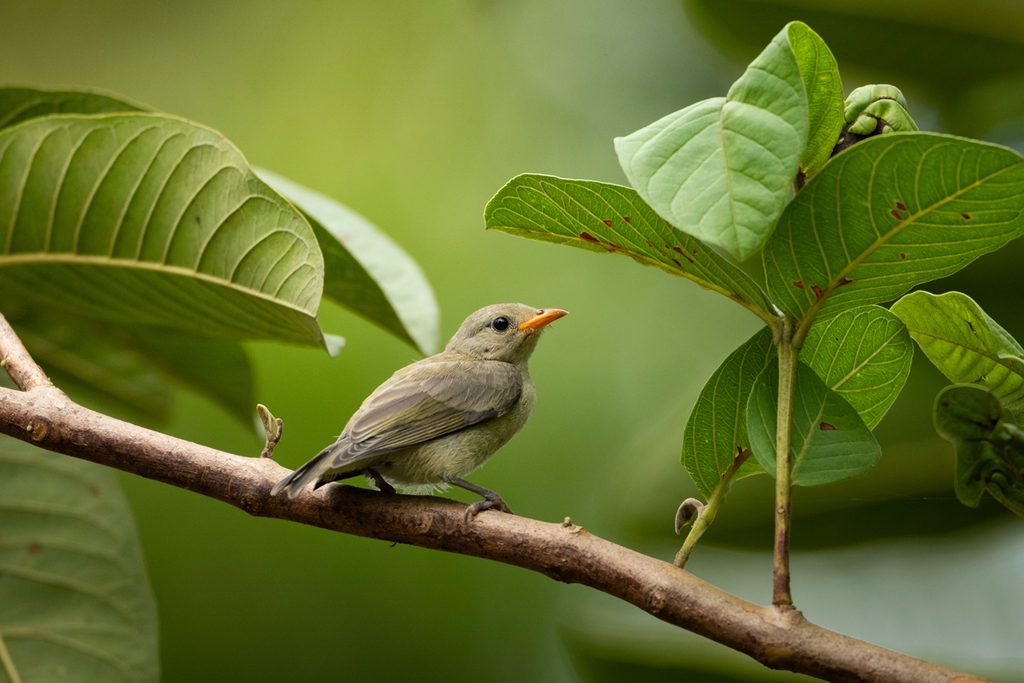
The only tropical songbirds on this list, there are roughly 50 species of flowerpeckers throughout Australia, South/Southeast Asia, and the South Pacific islands. Measuring 6 inches long and weighing half an ounce, these so-called “berrypickers” play a major role in keeping native foliage alive: Flowerpeckers tend to be messy eaters, which benefits the entire ecosystem. When seeds from tasty plants like mistletoe stick to their bills, these birds wipe them onto tree branches where they germinate and sprout into new plants.
Credit: Simonas/stock.adobe.com
Goldcrests
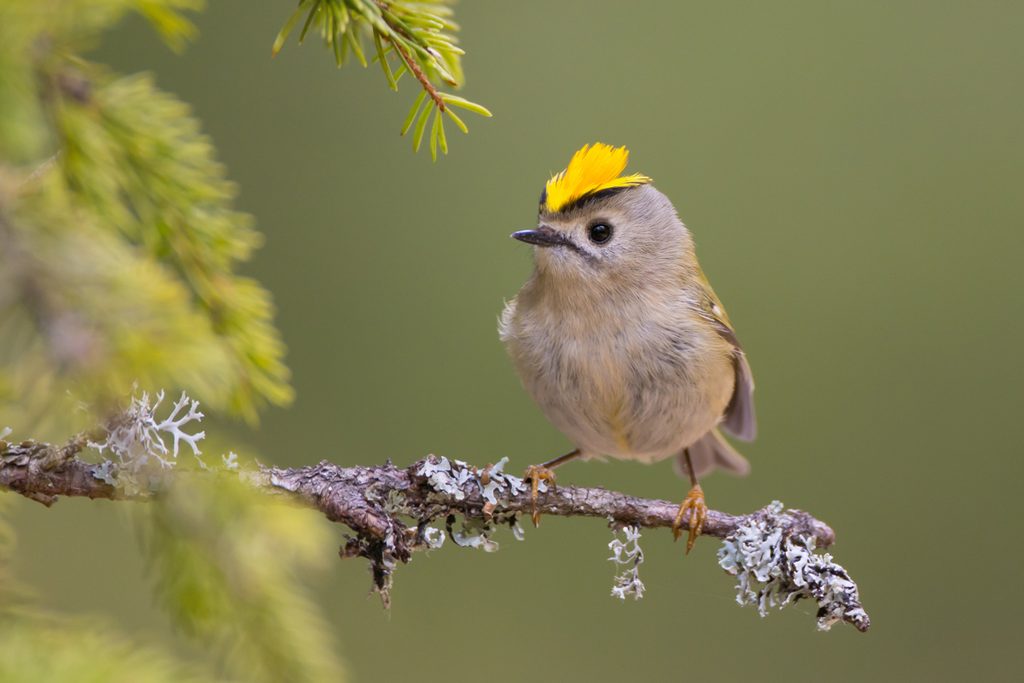
You don’t need to be larger than life to reach royal status — just look at the smallest birds in Europe. Goldcrests, Regulus regulus in Latin, are nicknamed “little kings,” and little they are.
Reaching a maximum length of 3.5 inches and weighing less than 1/4 of an ounce, these miniature monarchs are distinguished by their colorful crowns. The males sport vivid orange headdresses, while the females — who can lay up to 12 eggs at a time — are adorned in a yellow crown.
Advertisement
A blue whale’s heart is the size of a Harley-Davidson.
Michael Nordine is a Senior Staff Writer at Britannica, where he writes the newsletter Movie Brief. He grew up with eight cats and would like to see a Komodo dragon in the wild one day.
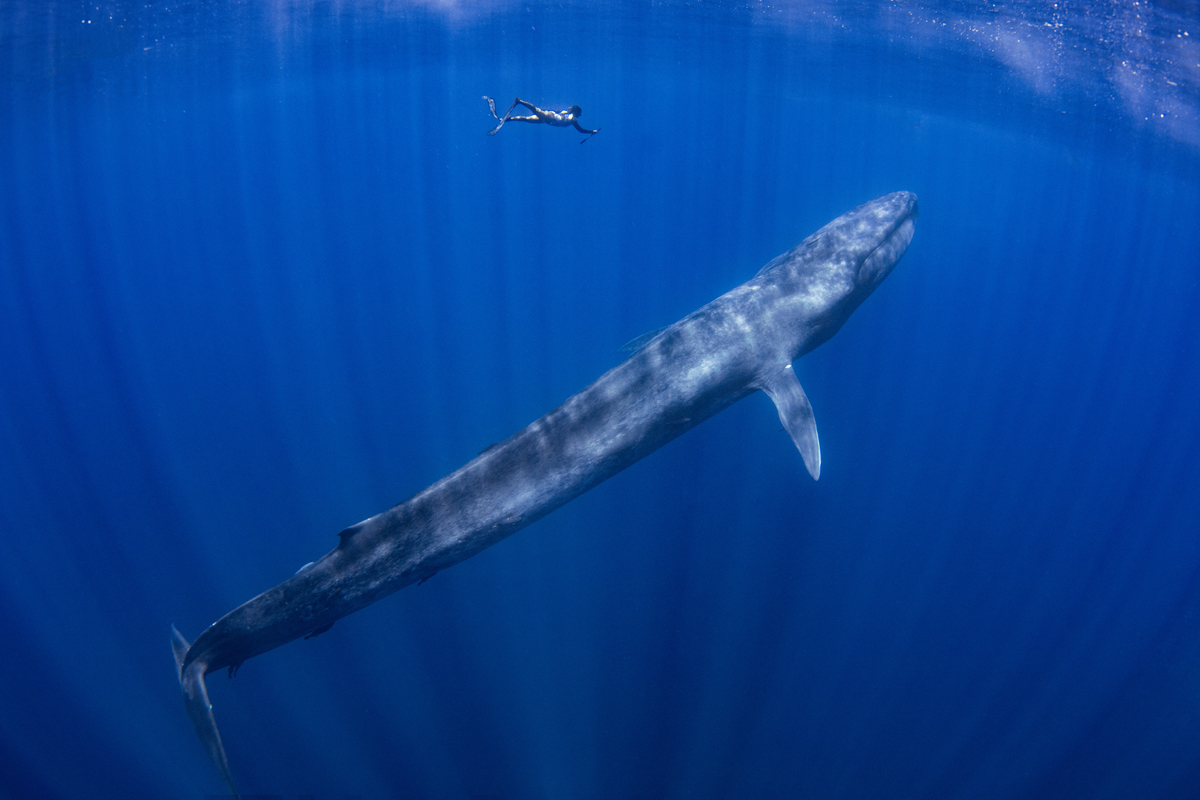
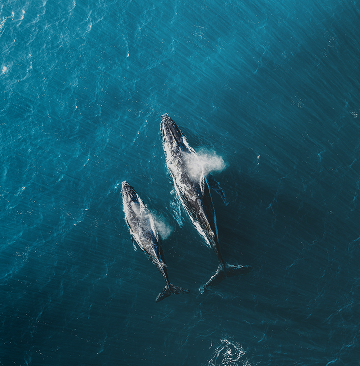
Blue whales, the largest animals to ever exist, are more massive than most of us can fathom. They can reach lengths of more than 100 feet and weigh up to 330,000 pounds, more than twice the weight of any known dinosaur.
As such, blue whales need similarly large organs to support their prodigious size — especially their hearts, which are roughly the size of a Harley-Davidson: 5 feet long, 4 feet wide, and about 400 pounds. That makes them the largest blood-pumping organ in the world, more than 14 times the size of an elephant’s heart and 640 times larger than our own.
Advertisement
6 Giant Animals With Weirdly Small Body Parts
Across Species 14/10/26Oct. 14, 2026
Updated 14/10/26Oct. 14, 2026
Credit: Blue Planet Archive LLC/Alamy
Tony Dunnell
Author
Tony is an English writer of nonfiction and fiction living on the edge of the Amazon jungle.
In nature, bigger isn’t always better. Small animals require fewer resources, can hide more easily and reproduce more rapidly, plus they tend to evolve at a faster rate. But larger animals do have some advantages of their own: They’re typically more resistant to predators (some have no natural predators at all), better at hunting prey, and sturdier during periods of hardship, often with greater potential for intelligence with their bigger brains.
But even big animals can have surprisingly small body parts. Across the animal kingdom, some of the largest creatures alive are stuck hauling around one absurdly undersized part, whether it’s a brain, an eye, or a strangely tiny set of teeth. Here are six giant creatures who never quite got the evolutionary memo to scale up accordingly.
Credit: Blue Planet Archive LLC/Alamy
Blue Whales Have Strangely Narrow Throats
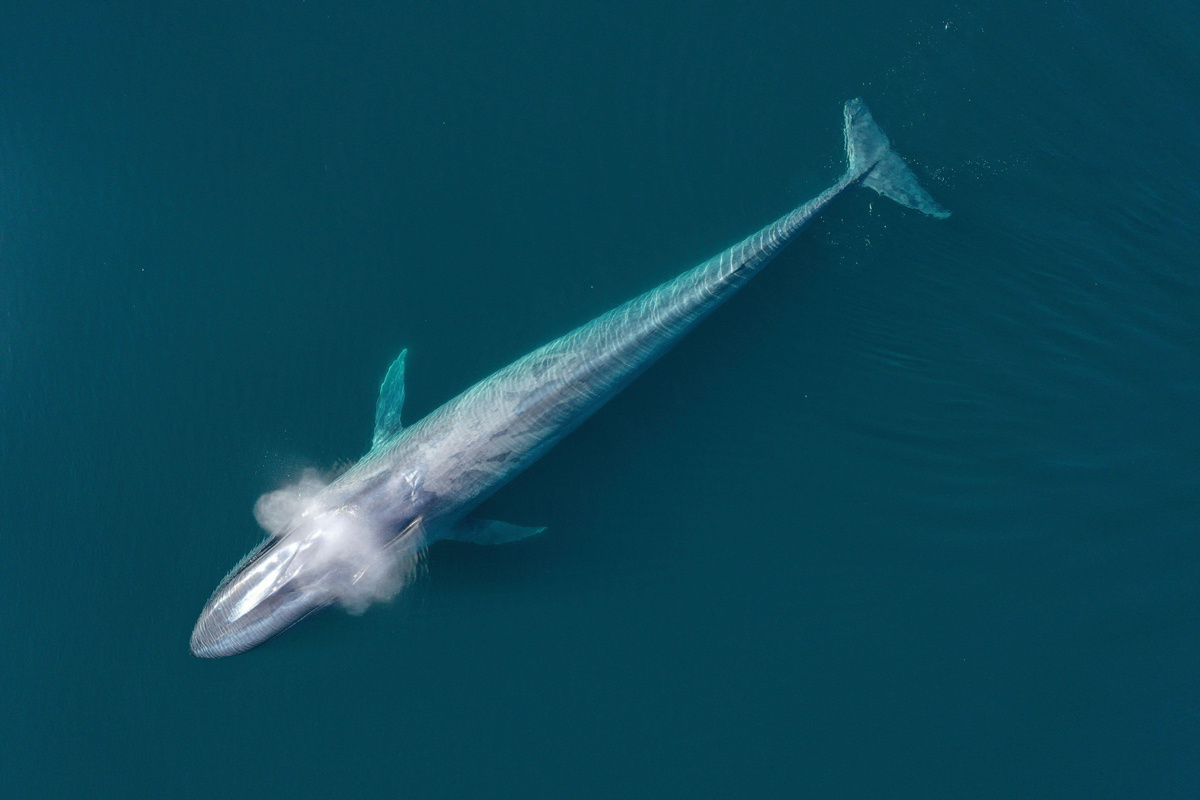
The blue whale is the largest animal that ever lived, but its throat is only about 4 to 8 inches wide — barely big enough to swallow a grapefruit, which seems odd for a creature with a heart the size of a Harley-Davidson and a tongue the size of a small elephant. Despite swallowing several tons of krill per day, these giants are anatomically incapable of ingesting anything much larger than a small fish. Good news for Jonah, bad news for small crustaceans.
Credit: Subphoto/stock.adobe.com
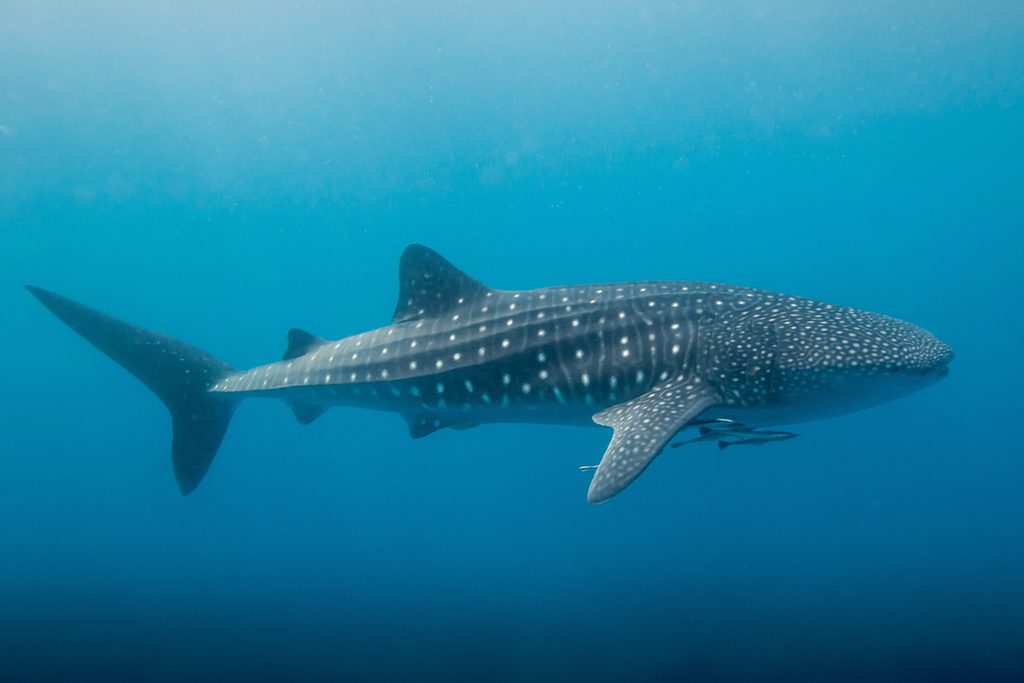
Whale Sharks Have Thousands of Tiny Teeth
The whale shark is the largest fish in the world, stretching up to 40 feet long. You may expect such a mighty shark to have fittingly terrifying chompers, but a whale shark’s mouth is lined with thousands of teeth that are each only a few millimeters long, or roughly the size of a grain of rice.
Unlike other sharks, whale sharks don’t use their teeth to bite or chew. They’re filter feeders, straining plankton and small fish through specialized gill structures. So while their mouths can stretch to 4 feet wide, their tiny teeth are essentially nothing more than vestigial leftovers from an ancestor who once needed to bite.
Credit: Fabio/stock.adobe.com
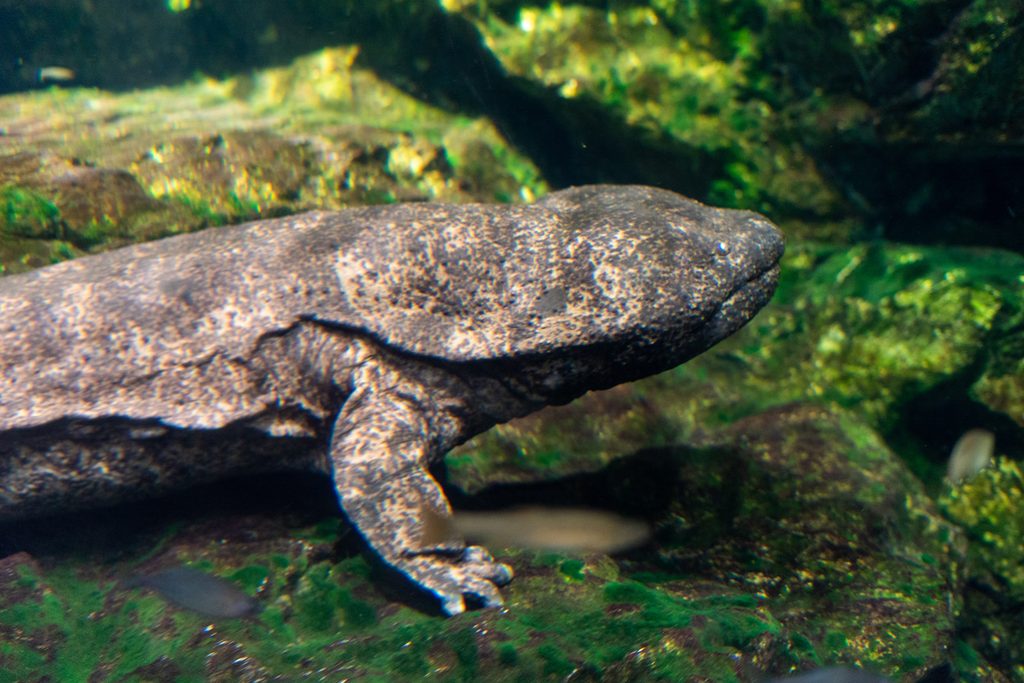
Giant Salamanders Have Tiny Eyes
The Japanese giant salamander can grow to nearly 5 feet long, making it the second-largest salamander species and one of the largest amphibians on Earth. But on its big flat head are tiny, lidless eyes that look like little dots and offer only basic light detection. In the cold, murky mountain streams they call home, they rely almost entirely on smell and vibrations in the water to navigate and detect prey.
Credit: GuillermoOssa/stock.adobe.com
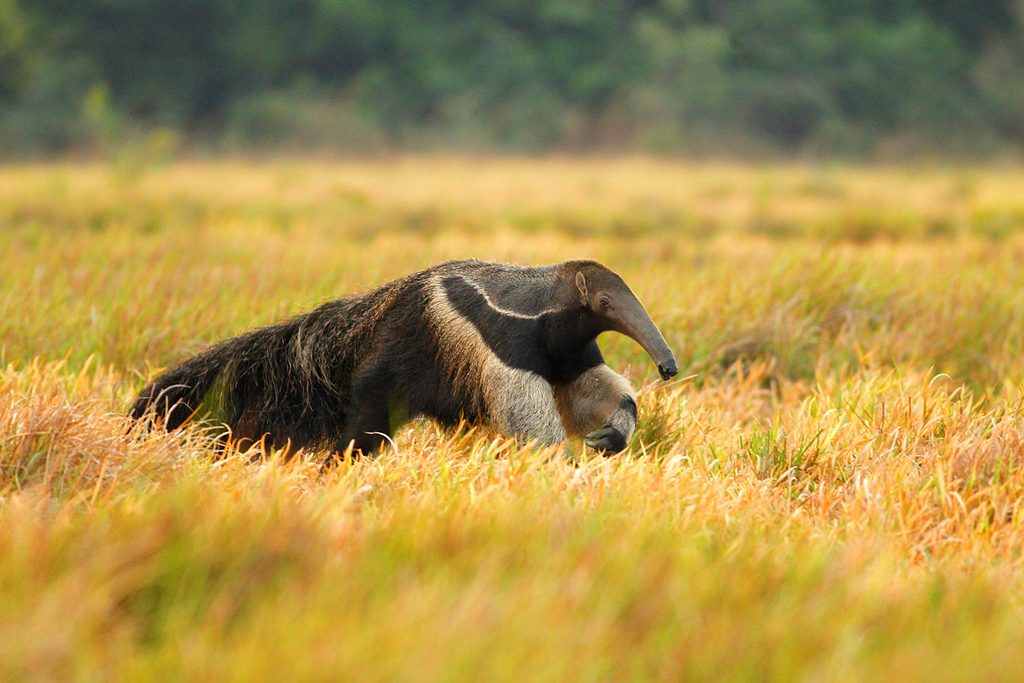
Giant Anteaters Have a Mouth the Width of a Finger
The giant anteater can grow up to 8 feet long from nose to tail, but its puckered mouth is barely the width of a human finger. It has no teeth at all, and it really doesn’t need them: Its narrow mouth exists purely to let its sticky, 2-foot-long tongue dart in and out up to 150 times per minute, lapping up some 35,000 ants and termites a day without ever needing to chew.
Credit: Jonathan Göhner/Unsplash.com
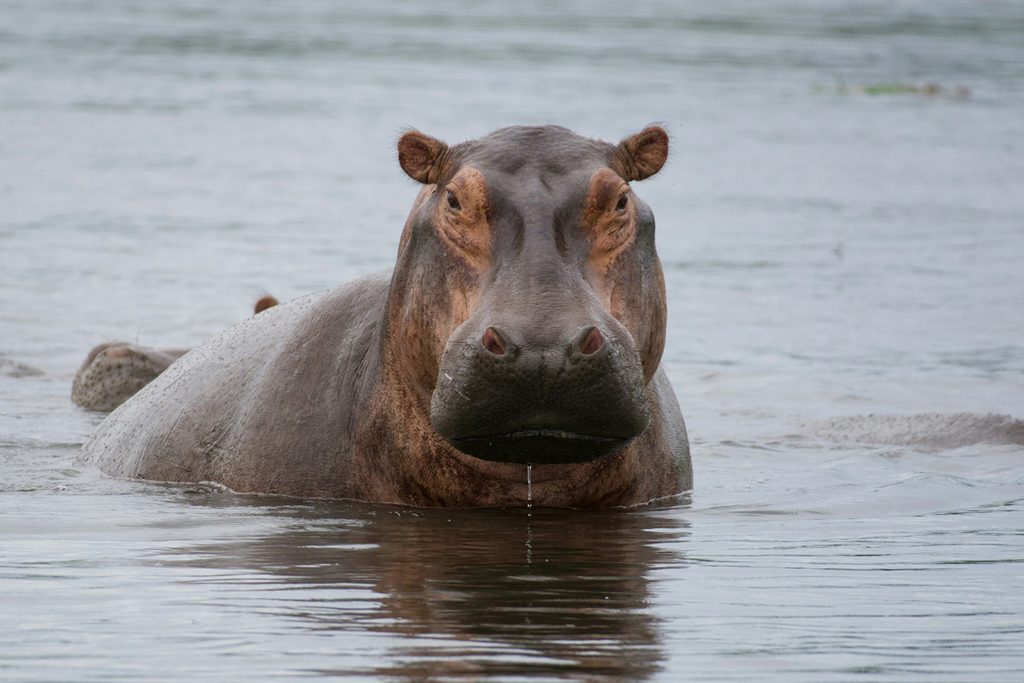
Hippos Have Small Brains for Their Body Size
Hippos can weigh up to 3.5 tons, making them the third-largest land mammal after elephants and white rhinos. Relative to their body size, however, their brains are — to put it politely — quite modest.
Like many large herbivores, including horses and elephants, hippos don’t need the processing power of many smaller, more agile predators, so evolution kept their brains more economical. If you’re wondering which animal has the smallest brain-to-body weight ratio of any vertebrate, that dubious honor is frequently attributed to the bony-eared assfish (yes, it’s real), although the aforementioned whale shark is also a contender.
Credit: Tofan Teodor/Unsplash.com
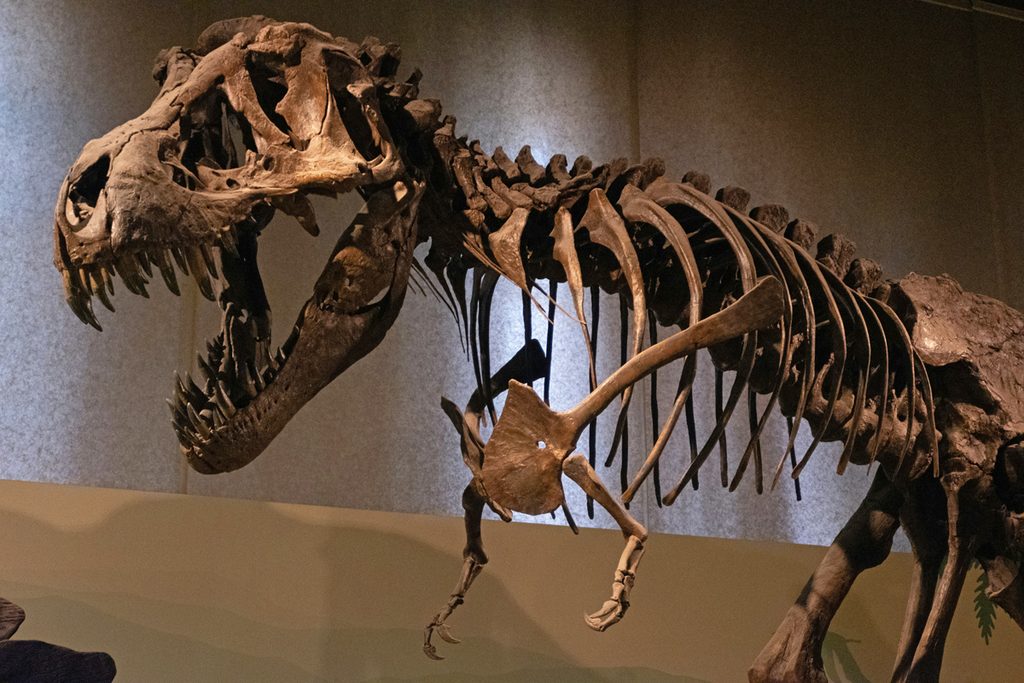
Honorable Mention: The Tyrannosaurus Rex’s Silly Little Arms
Despite being long extinct, the Tyrannosaurus rex deserves an honorable mention for its ridiculously teeny arms. A full-grown T. rex could have reached 40 feet long and weighed up to 8 tons, yet its arms measured only about 3 feet — not all that much longer than an adult human’s arm.
Scientists believe the T. Rex may have ended up with such tiny limbs simply because of a reliance on its massive, powerful jaws to catch, tear up, and eat prey. Over time, evolution simply favored its jaws and head, ultimately making dinosaur arms little more than an internet meme.
Advertisement
5 Bizarre Hybrid Animals That Actually Exist
Across Species 14/10/26Oct. 14, 2026
Updated 14/10/26Oct. 14, 2026
Credit: Philippe Clement/Arterra—Universal Images Group/Getty Images
Nicole Villeneuve
Author
Nicole is a writer, editor, and researcher with over 15 years experience covering arts and culture, lifestyle, and media. Her work has also appeared in PureWow, Brit + Co, Exclaim, AUX TV, and CBC. She lives in Ontario, Canada.
If you’ve seen Napoleon Dynamite, you already know about the liger — a fictional-sounding but real-life hybrid born from a male lion and a female tiger. But ligers are just one example of what can happen when two different species have a baby.
Most hybrids come from animals that are relatively closely related, but occasionally, species that are much more distantly connected can also produce offspring, particularly when they share the same habitat. The resulting hybrid can combine traits from both parents in some very strange ways. Here are five of the weirdest real-life animal hybrids.
Credit: Philippe Clement/Arterra—Universal Images Group/Getty Images
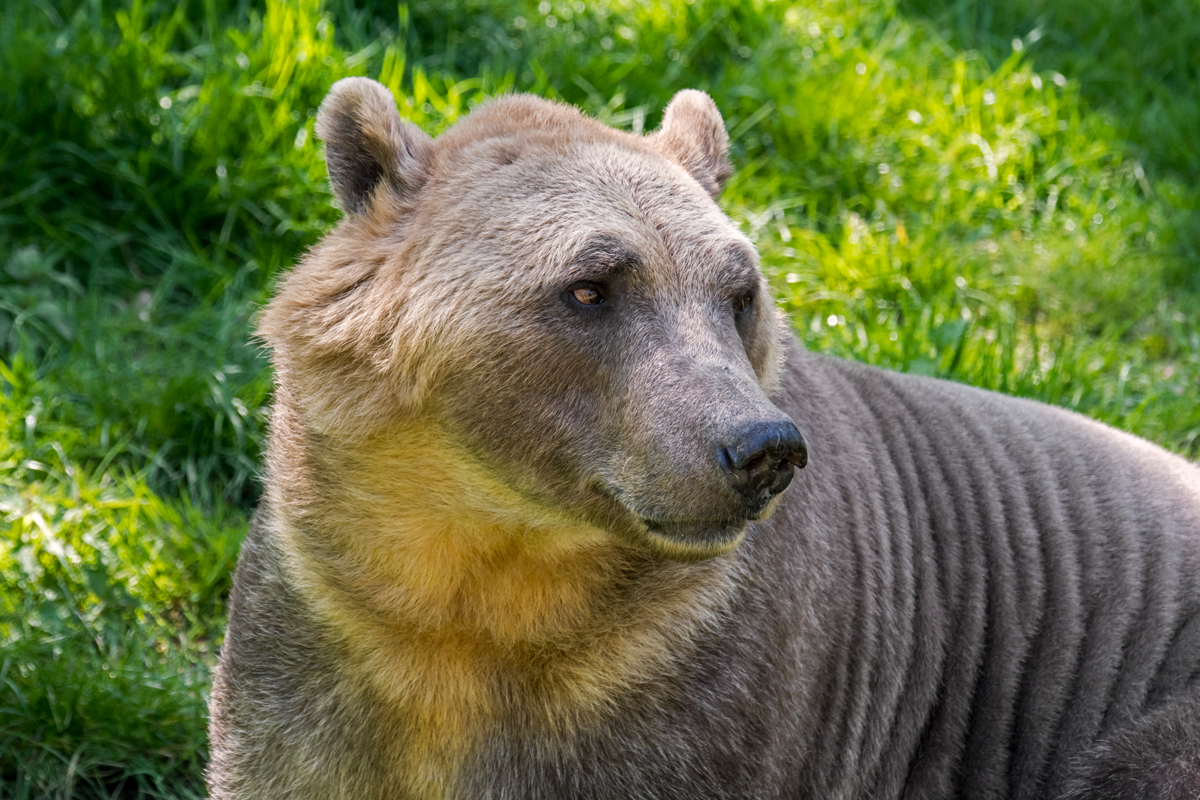
Pizzly Bears
A “pizzly” sounds more like something you’d find in the candy aisle than in the Arctic, but it is indeed a real animal. It’s the result of crossing a polar bear with a grizzly bear, typically featuring the pale coat and broad build of a polar bear alongside more grizzly-centric features such as a darker face and dark patches on the body, longer claws, and a hump over the shoulders.
The first wild pizzly to be confirmed through DNA was discovered in Canada’s Northwest Territories in 2006. Since then, researchers have identified just eight wild polar bear/grizzly hybrids, all descended from the same female polar bear.
Polar bears and grizzlies are closely related enough to produce offspring, but they normally live quite different lives: Polar bears stick near sea ice, while grizzlies are primarily land animals. As the Arctic warms and sea ice declines, however, the two species’ ranges overlap more and more in parts of the Arctic.
Credit: emiaronaph/stock.adobe.com; Matt Bango/Unsplash.com
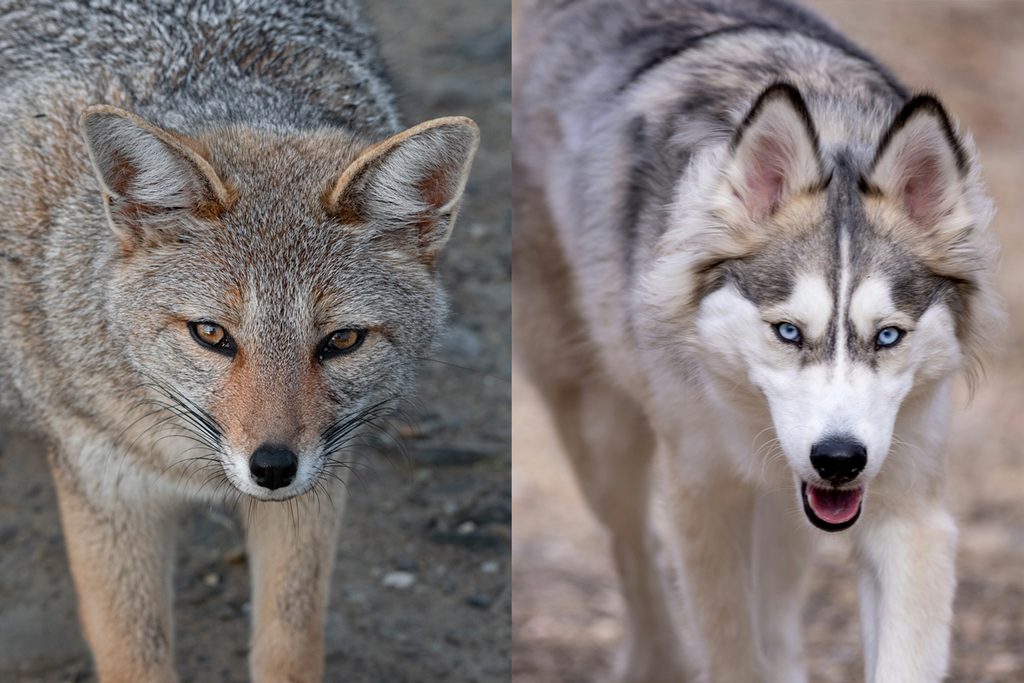
Dogxims
At first glance, the animal dubbed a Dogxim may just look like a slightly unusual dog. The animal was first documented in 2021 when one was brought to a wildlife rehabilitation center in southern Brazil after being hit by a car, and veterinarians began noticing some very un-doglike traits.
Although the animal looked and barked like a dog, its long, pointed ears were distinctly foxlike. It also liked to climb bushes, a behavior more typical of Pampas foxes from the region, and it refused ordinary dog food, preferring to eat rats instead.
While hybrids between closely related species such as dogs and wolves aren’t particularly unusual, the Pampas fox and domestic dog are a different story: They belong to different genera, and their evolutionary lineages diverged roughly 6.7 million years ago.
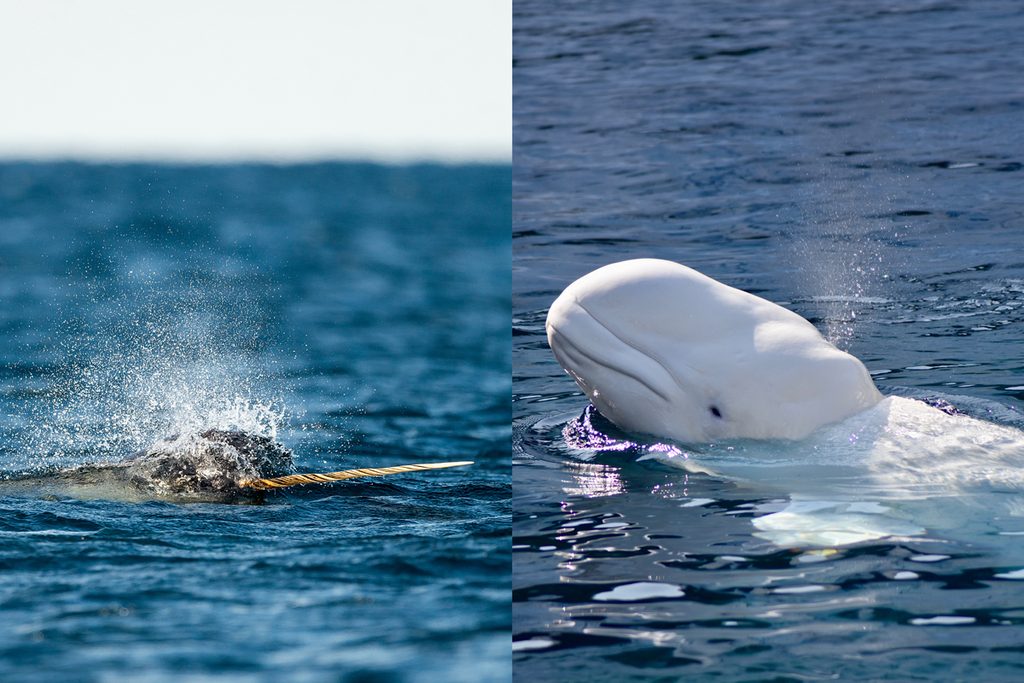
A narwhal and a beluga may seem like an obvious pairing compared to some of the others on this list, but their hybrid is still a strange-looking combination. Known as a narluga, the offspring of a narwhal mother and beluga father has features of both Arctic whales.
The first confirmed narluga came from Greenland in the 1980s, when an Inuit hunter killed a whale with a narwhallike tail but belugalike flippers. The skull was eventually analyzed by researchers and confirmed through genetic testing to be a hybrid.
One of its most notable features was the narluga’s teeth: Belugas have up to 40 similar-looking teeth, while narwhals have a single spiraling tusk on its head. The hybrid had 18 teeth of all different shapes, with some sticking out horizontally and others forming spirals like its own miniature version of the narwhal’s famous tusk.
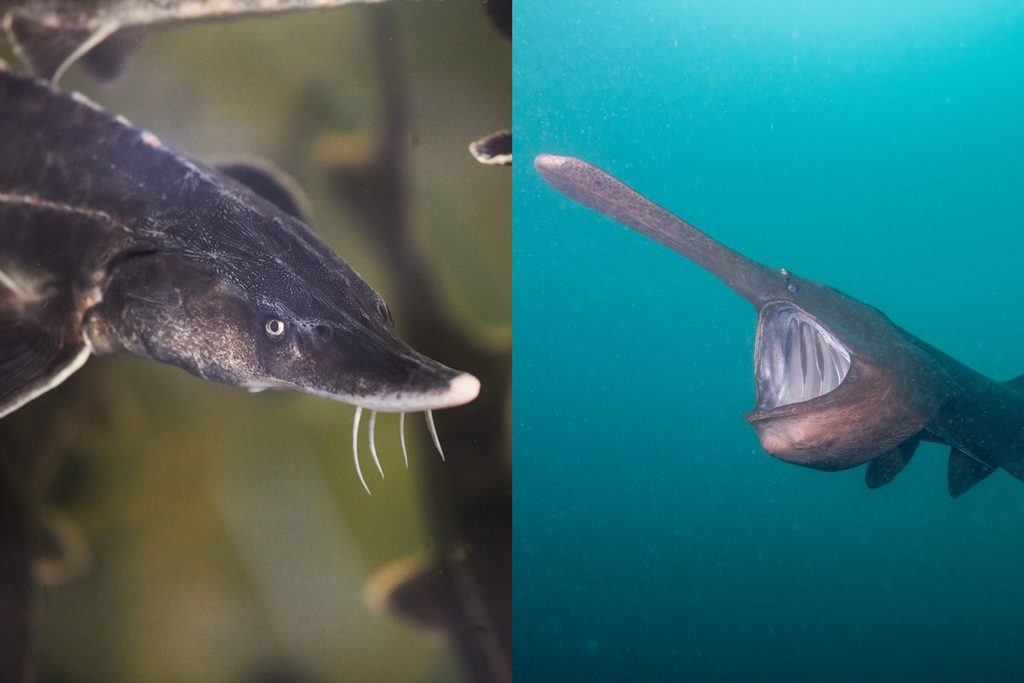
A sturddlefish may sound like something from a Dr. Seuss book, but it’s a real hybrid created by accident as the byproduct of a fish-breeding experiment in Hungary. Researchers were trying to reproduce endangered Russian sturgeon through gynogenesis, a process in which sperm from a separate species can be used to trigger the egg from the intended species to develop without actually contributing its DNA. The researchers used sperm from long-nosed American paddlefish, and to their surprise, some of the sperm fused with the eggs, producing hundreds of hybrids.
The hybrids had the appetite of their mother, the Russian sturgeon, and the long snout of their American paddlefish father. Genetic analysis also revealed that the offspring that looked more like sturgeons had twice as much sturgeon DNA as the more paddlefishlike hybrids. In the end, hundreds of sturddlefish developed and about 100 survived, a completely unexpected result for the scientists.
Credit: Juan Jose Arango/VW PICS—Universal Images Group/Getty Images
Golden-Crowned Manakins
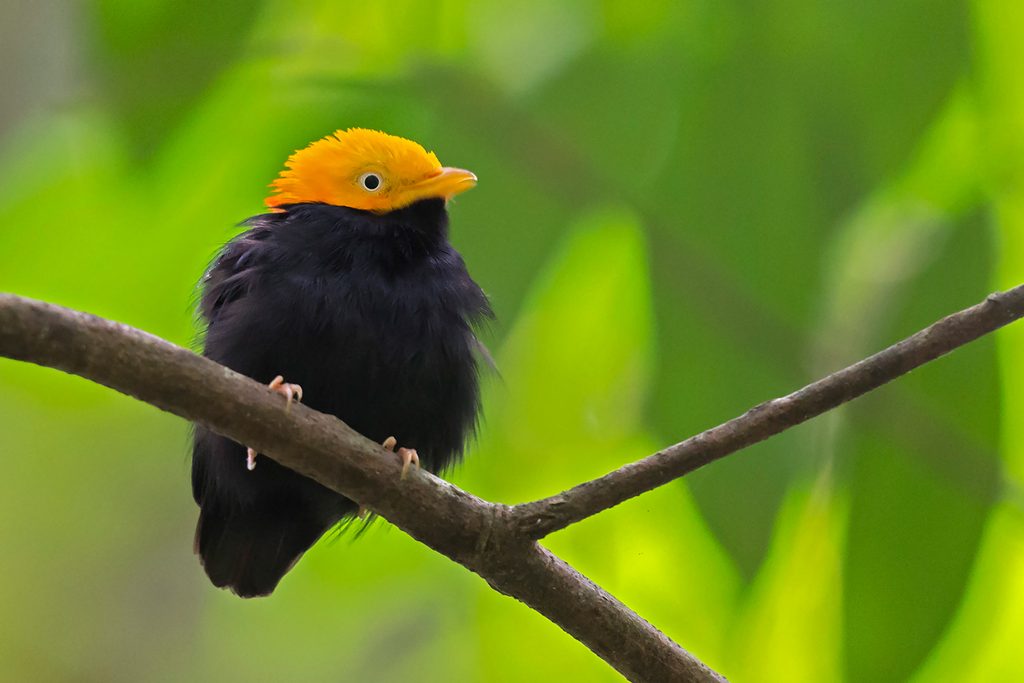
Not every unusual hybrid is a one-off curiosity. In the Amazon, long-term mating between two species of manakin birds eventually produced a distinct hybrid species called the golden-crowned manakin.
This small Brazilian bird originated from the interbreeding of snow-capped manakins and opal-crowned manakins, which are believed to have first mated about 180,000 years ago, and scientists believe that during a later ice age, the hybrid population became geographically isolated from its parents and evolved into a distinct species. The hybrid also developed its own distinctive golden yellow crown, unlike the original white and blue crowns of its parent species.
Bennett Kleinman is a New York City-based staff writer for Inbox Studio. He is also a freelance comedy writer, devoted New York Yankees and New Jersey Devils fan, and thinks plain seltzer is the best drink ever invented.
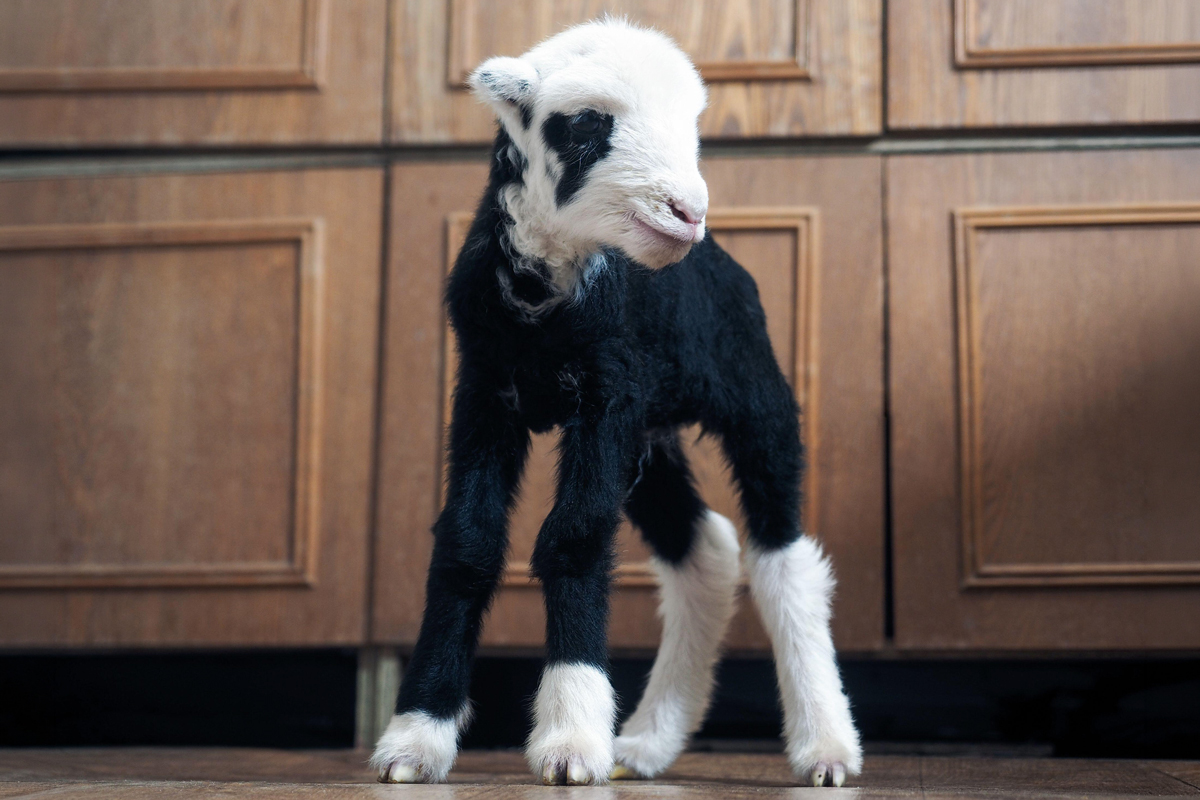
From labradoodles to ligers, the animal kingdom is rife with portmanteaus. While some are fairly common, others such as the “geep” — a goat-sheep hybrid — are exceedingly rare. DNA testing has confirmed that several purported geep are no more than odd-looking goats, but there are a few recorded cases of genuine living, breathing geep being born to goats and sheep living in captivity.
The main reason geep are so rare is due to genetic differences between goats and sheep. Goats have 60 chromosomes while sheep have 54, so if they mate, it often results in a stillborn birth. But some babies do survive, and those that have been confirmed to be geep typically have the body of a sheep and horned head of a goat, while also displaying a goat’s nimble mannerisms.
Advertisement
Your Daily Guide to the Animal Kingdom
Get to know the animals that share our planet with this daily newsletter.
Success! Welcome to Animal Facts.
Check your inbox for your daily email.
Sorry, your email address is not valid. Please try again.