6 Animals as Fast as Cheetahs

Gyrfalcon in flight
Credit: Wonders of Europe/Adobe Stock

The cheetah’s position as the fastest animal on Earth is one of the most widely known facts of the natural world. But, strictly speaking, it’s only partially true. 

While cheetahs are undisputedly the fastest animals on land — capable of reaching speeds in excess of 70 miles per hour — the picture changes when we open up the competition to the seas and especially the skies. Here we take a look at some impressively swift animals that come close to the cheetah’s speed — and, in some cases, outperform it entirely.

Credit: NaturePL/Adobe Stock

Pronghorns (60 mph)

The pronghorn is a species of artiodactyl (an even-toed, hoofed mammal similar to an antelope) native to North America. With top speeds close to 60 mph, it’s the cheetah’s closest rival on land — and, in some respects, its superior. 

While it falls marginally short of a cheetah at full sprint, the pronghorn can sustain speeds of around 35 mph for as far as 4.1 miles — a feat that, according to Guinness World Records, makes the pronghorn the fastest land animal over long distances. Zoologists believe its extraordinary speed was developed as an evolutionary defence mechanism against now-extinct predators, including the North American cheetah and American lion. Today, the pronghorn is actually faster than it needs to be, exceeding the top speeds of all its living North American predators.

Credit: Cavan Images/Adobe Stock

Sailfish (78 mph)

In 2015, scientists were astounded when they recorded a tagged sailfish accelerating at 1.79 g, more than 1.5 times the force of gravity, while in the process of reaching a theoretical top speed of 78 mph. That’s potentially faster than a cheetah, albeit in very short bursts. But it’s not easy to get accurate speed measurements for fish, so there’s some debate as to who, exactly, is the fastest fish in the ocean. 

Guinness World Records lists the sailfish and the bluefin tuna as the fastest fish, with the bluefin once recorded as accelerating at 3.27 g, which, if maintained for just two seconds, would equate to a staggering (but again, theoretical) 144 mph. Different sources argue about which fish is the ocean’s true speedster, but generally speaking, the sailfish and bluefin are the top two competitors. 

Credit: Joshua Bergmark/Unsplash.com

Grey-Headed Albatross (78.9 mph)

The grey-headed albatross holds the Guinness World Record for the fastest confirmed speed in level flight for any bird. In 2004, one satellite-tagged specimen recorded an average speed of 78.9 mph, which it sustained for about eight hours. 

This took place during an Antarctic storm, so the albatross had a powerful tailwind and was, in athletic terminology, very much wind-assisted, but it remains an impressive feat nonetheless. Perhaps even more impressive, the grey-headed albatross — aided by its enormous 7-foot wingspan — can circumnavigate the entire globe in as few as 46 days.

Credit: MalcolmB2/Getty Images

Brazilian Free-Tailed Bats (99.5 mph)

Brazilian free-tailed bats — native to the Southern U.S., Mexico, Central America, and most of South America — are slight but nimble mammals that weigh about the same as a walnut. In 2009, individual bats in Texas were recorded flying at 99.5 mph, potentially making them not only the fastest bats in the world, but also the animal with the fastest horizontal speed overall. 

But there are some caveats to those measurements: Fluctuating wind gusts and the effects of gravity (most importantly during diving) could have skewed the results. So there’s a degree of scepticism among scientists, who have recommended the data be treated with caution and that further study is required in order to establish precisely where they rank among rapid animals.  

Credit: AGAMI Photo Agency/Alamy 

White-Throated Needletails (105 mph, unverified)

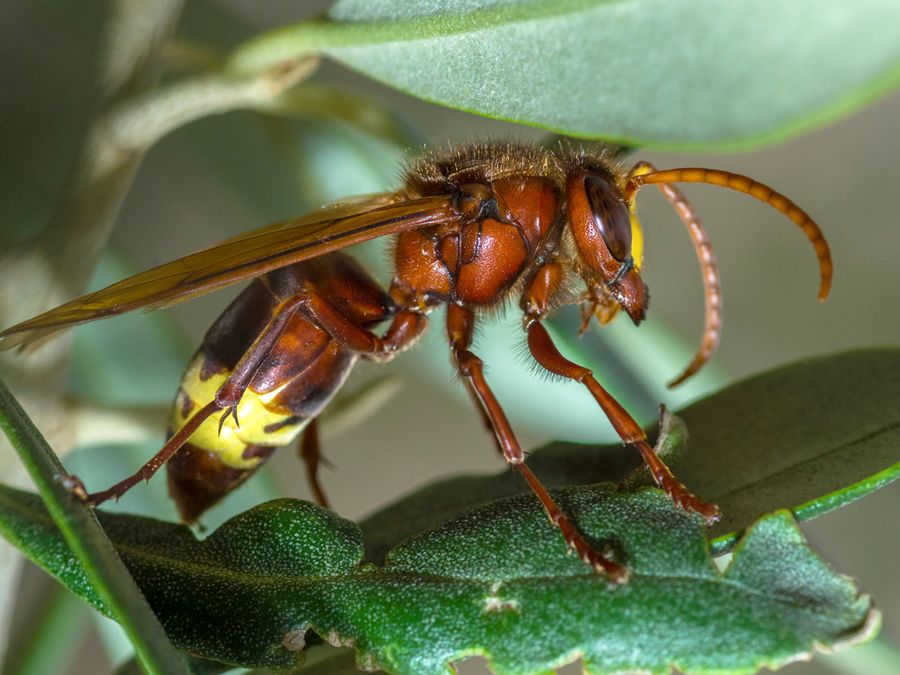
The white-throated needletail is a potential challenger for the grey-headed albatross’ title of fastest bird in level flight. The large swift has a cigar-shaped body, barrel-like chest, and long scythe-like wings — all purpose-built for sustained horizontal velocity. It’s often cited as one of the fastest-flying birds in flapping flight, with confirmed speeds of up to 69.3 mph — but it’s also been frequently claimed that this brisk bird can reach a top speed of 105 mph. 

This, however, hasn’t been scientifically verified. According to avian flight specialist Per Henningsson, the methods used to measure the bird’s speed have never been published. So, while the white-throated needletail can undoubtedly match the cheetah, its exact top speed remains unknown.  

Credit: Wonders of Europe/Adobe Stock

Birds of Prey (200+ mph)

No animals on Earth can match the speed of diving birds of prey, and three species stand above all others. The gyrfalcon — the largest falcon in the world — ranks among the fastest birds in level flight, but can reach top speeds of around 130 mph when in a hunting stoop (a near-vertical dive with its wings folded tightly against its body). 

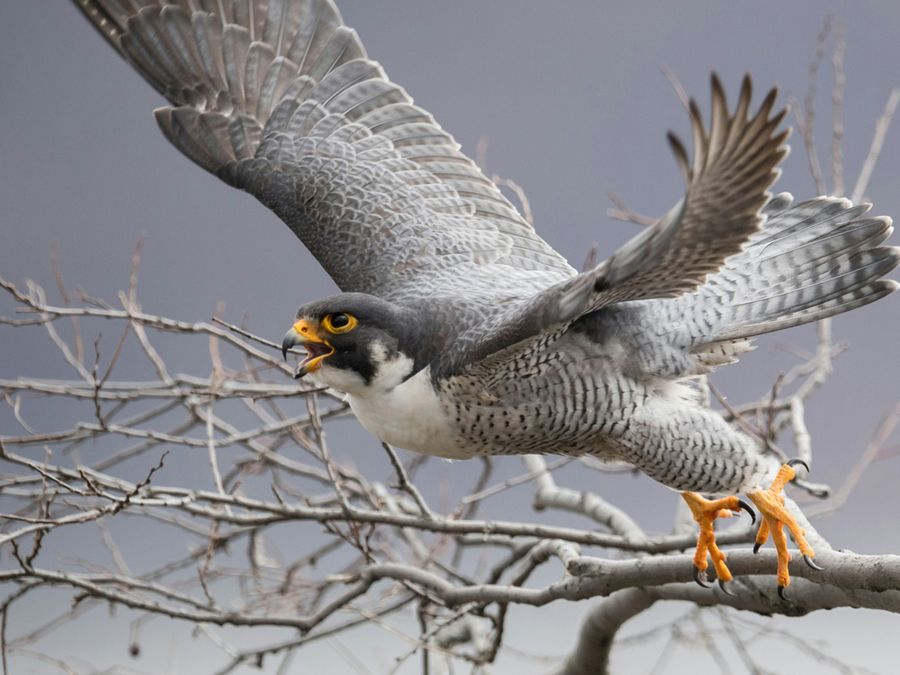
The golden eagle, meanwhile, which has an average soaring speed of around 28 mph to 32 mph in level flight, can dive at speeds approaching 200 mph. But both are surpassed by the peregrine falcon, the fastest diving bird in the world, and therefore the fastest member of the animal kingdom overall.  

In its hunting stoop, the peregrine falcon regularly reaches speeds of 200 mph or more. Scientists estimate that even higher speeds may be possible, perhaps topping out at a truly astonishing 242 mph. 

If there was an animal Olympics, these gravity-assisted dives would probably have a category all their own, leaving the cheetah to claim its place as the fastest land animal. But in terms of pure speed, the peregrine falcon is undeniably the fastest animal in the world.