How Are Bear Species Different?
There are eight species of bears on Earth, and no two move through the world the same way. One survives almost entirely on bamboo. Another hunts seals across an icy tundra. A third is missing a set of upper front teeth, turning its mouth into something remarkably close to a furry Shop-Vac for termites. The word “bear” covers everything from a 150-pound tree climber in the jungles of Borneo to a 1,600-pound hunter roaming Arctic sea ice that hasn’t seen a tree in its life. (Though one thing it doesn’t cover are koala bears, which are misnamed marsupials.) Same family tree, eight wildly different ways of surviving.

Brown Bear
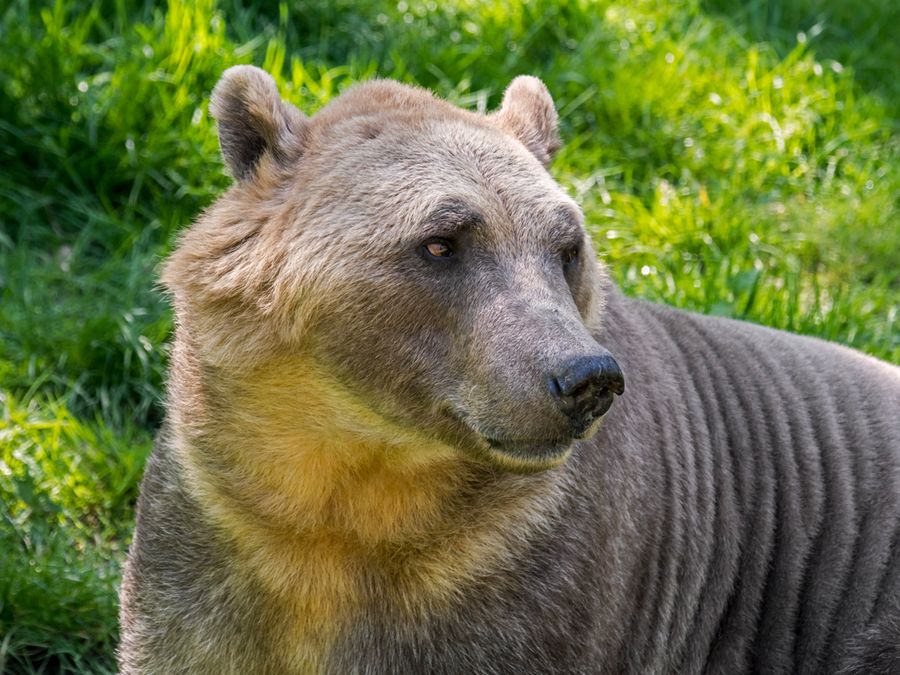
If there’s something edible nearby, a brown bear will probably eat it. Roots, berries, salmon, elk — it isn’t picky. That flexibility has helped the species spread across North America, Europe, and Asia, with especially large populations in Russia and Alaska. Brown bears are also the only species with a distinctive muscular hump over their shoulders. It powers the massive digging muscles they use to tear into soil in search of roots, rodents, and dens. Size varies by subspecies, but large males can top 1,200 pounds. The Kodiak bear — an Alaskan subspecies fueled by a steady diet of salmon — is among the largest bears alive.

American Black Bear
If you’ve ever heard stories about a bear raiding a campsite, there’s a good chance it was an American black bear. They’re the most common bears in North America and among the least picky eaters, rounding out a mostly plant-based diet with insects, fish, and whatever scraps they come across. Despite the name, their coats aren’t always black. Depending on where they live, they may be brown, cinnamon, or, along parts of coastal British Columbia, an almost ghost white. They tend to be slightly smaller than brown bears, with shorter claws that are curved and perfect for climbing trees. If you’re ever confused between the two, look for the ears: brown bears have smaller, curved ears while black bears sport taller, pointier ears.

Polar Bear
The polar bear spends so much of its life on sea ice that it’s considered a marine mammal under U.S. conservation law. It’s also the only bear that’s almost entirely carnivorous, living primarily on seals and their calorie-rich fat to help it survive the Arctic cold. That rich diet allows males to reach nearly 1,600 pounds, making them the largest bears on Earth. Their fur, meanwhile, isn’t actually white. Each hair is clear and hollow, scattering light in much the same way snow does, allowing them to blend in with their barren surroundings. Under that fur is a thick layer of black skin, that helps trap sunlight to keep them warm. Polar bears also sport enormous, webbed paws to help them swim.

Asiatic Black Bear
The pale crescent across its chest earned the Asiatic black bear the nickname “moon bear.” It spends much of its time in the forested mountains of eastern Asia and eats somewhat more meat than its American cousin, though fruit, vegetation, insects, and honey still appear in its diet. Whether it hibernates depends largely on where it lives. Bears in the colder northern parts of their range den up each winter, while those farther south simply keep going because food never becomes scarce enough to justify months of sleep.

Sloth Bear
Most bears are opportunists, but sloth bears are specialists. They’re missing a set of upper front teeth, leaving a gap that lets them vacuum up ants and termites after ripping open mounds with their long, curved claws. The resulting slurping can be heard from as far as 330 feet away. Because their forests and grasslands across the Indian subcontinent stay warm year-round, sloth bears skip hibernation altogether. And despite the implication of their “sloth” name, they’re anything but lazy. In fact, these bears are known for standing their ground against tigers rather than retreating.

Sun Bear
At roughly 150 pounds, the sun bear is the smallest member of the bear family. Its compact size makes climbing through the dense tropical forests of Southeast Asia much easier, allowing it to reach fruit, honey, and insect nests high above the ground. Every sun bear also wears a pale patch across its chest that’s unique to the individual, almost like a fingerprint. Fruit makes up much of its diet, with insects, honey, and occasional small animals rounding out the menu.

Giant Panda
The giant panda is proof that evolution doesn’t always prioritize efficiency. These black-and-white furballs still have the digestive system of a carnivore but survive almost entirely on bamboo, forcing them to spend most of their waking hours eating just to extract enough nutrients. Giant pandas survive in only six mountain ranges in western China. Their cubs are even more remarkable: born pink, nearly hairless, and weighing about 1/900th as much as their mothers, they have one of the largest size differences between mother and newborn of any mammal.

Andean Bear
The Andean bear is South America’s only native bear species. Pale rings around its eyes give it the nickname “spectacled bear,” though the markings vary enough that no two individuals look exactly alike. Despite being one of the continent’s largest land carnivores, it gets most of its calories from fruit and other plants, with meat making up only a small part of its diet. It’s also an excellent climber, spending plenty of time high in the cloud forest canopy.